Buying Guide
Best Power Station for CPAP Machines: Sleep Anywhere Off-Grid

TL;DR
Need a power station for your CPAP machine? Here's exactly how much battery you need, which models work best, and how to sleep soundly off-grid.
If you use a CPAP machine, losing power means losing sleep — and that’s not an option. Whether you’re camping, traveling in an RV, or preparing for outages, a portable power station keeps your CPAP running all night.
How Much Power Does a CPAP Use?
CPAP power draw varies by model, pressure settings, and whether you use a heated humidifier:
| CPAP Mode | Watts | 8-Hour Night |
|---|---|---|
| CPAP without humidifier | 30-40W | 240-320 Wh |
| CPAP with humidifier (low) | 50-60W | 400-480 Wh |
| CPAP with humidifier (high) | 70-90W | 560-720 Wh |
| BiPAP / high pressure | 60-80W | 480-640 Wh |
For most CPAP users, plan on 300-500Wh per night.
Our Top CPAP Power Station Picks
Best Overall: Anker SOLIX C1000 ($699)
The Anker SOLIX C1000 at 1,056Wh gives you 2-3 nights of CPAP use without recharging (without humidifier) or 1-2 nights with a humidifier.
- 58-minute charge means last-minute prep is easy
- 6 AC outlets let you charge other devices alongside CPAP
- 26.9 lbs — manageable for travel
- LiFePO4 battery lasts 3,000+ cycles
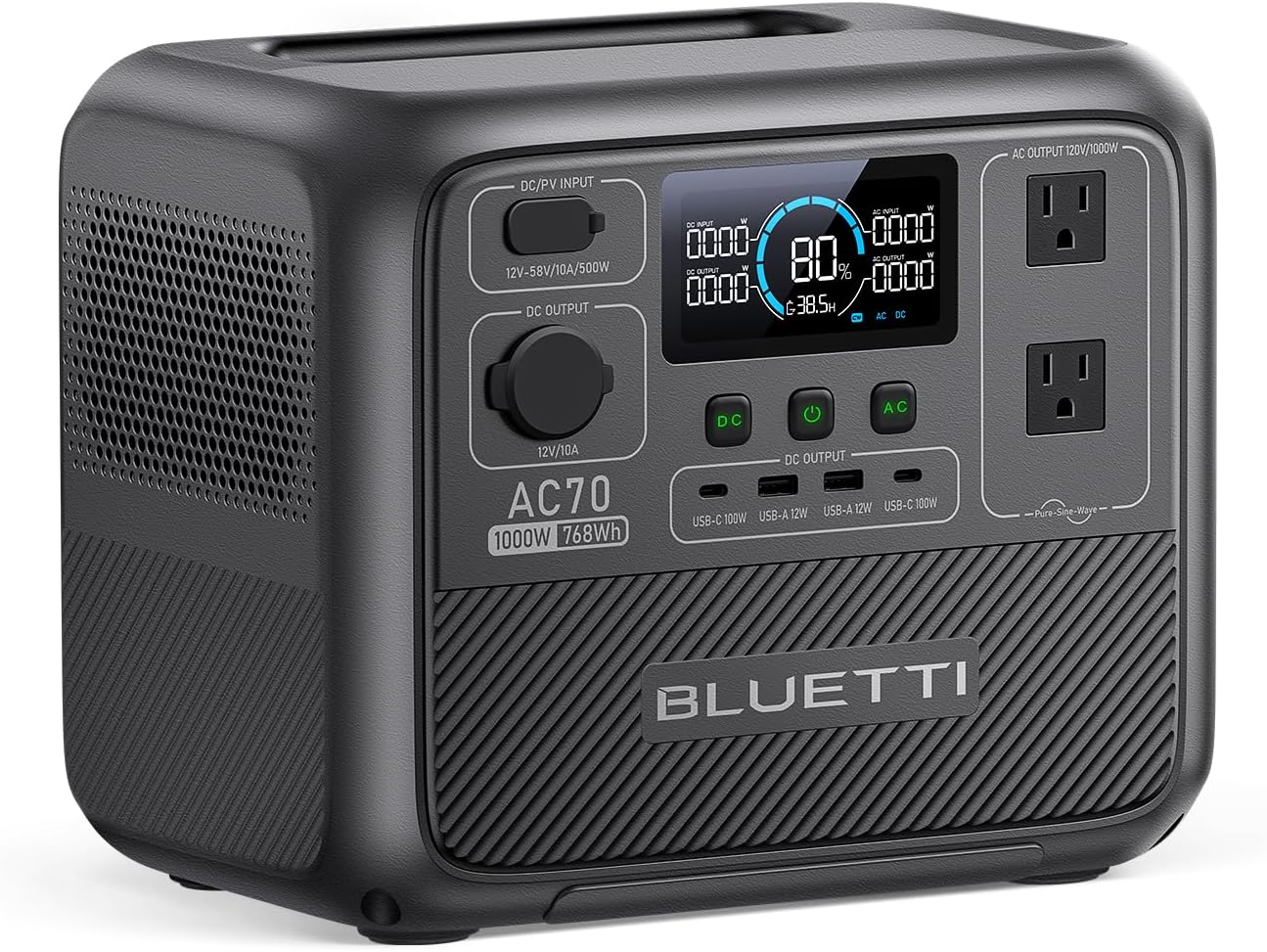
Best Budget: Bluetti AC70 ($499)
The Bluetti AC70 at 768Wh handles 1-2 nights of CPAP use. It’s the most affordable LiFePO4 option that reliably runs a CPAP.
- $499 price point is accessible
- 22.5 lbs — lightest option that still powers CPAP all night
- 45-minute 80% charge
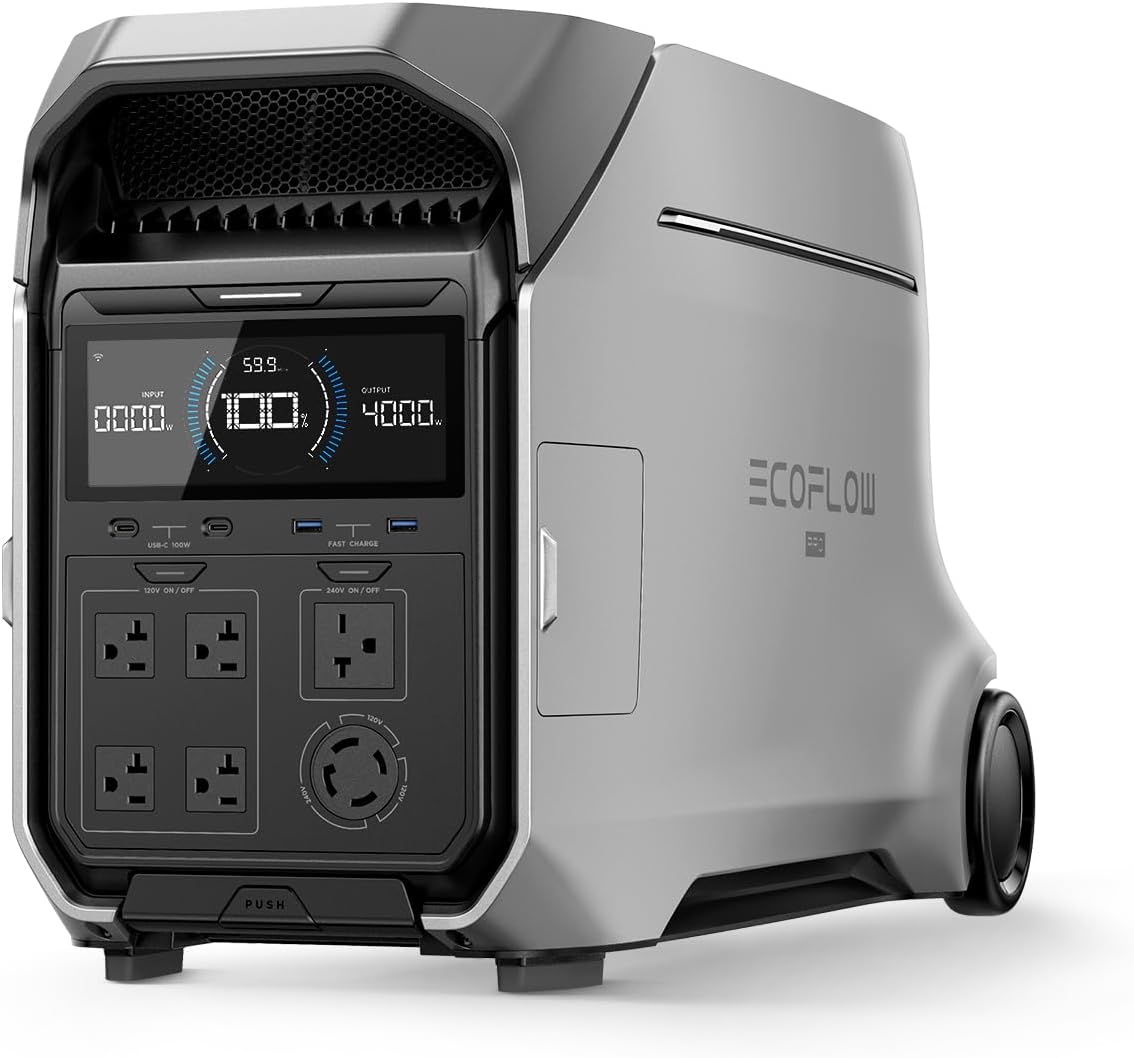
Best for Extended Trips: EcoFlow DELTA 3 Plus ($649)
The EcoFlow DELTA 3 Plus at 1,024Wh offers 2-3 nights per charge plus expandability to 5kWh for week-long trips.
- Expandable — add batteries for 5+ nights per charge
- UPS functionality prevents any power gap when switching sources
- 56-minute charge time
Best Ultraportable: EcoFlow RIVER 3 ($199)
The EcoFlow RIVER 3 at 245Wh handles 1 night of CPAP use (without humidifier only). At 7.8 lbs, it’s the lightest option.
- Only 7.8 lbs — fits in a carry-on
- $199 — cheapest option that works
- Best for single-night trips where weight matters
Tips for CPAP Users
1. Use DC power when possible. Many CPAP machines accept 12V or 24V DC input. Using DC avoids the inverter conversion, saving 10-15% battery life. Check if your CPAP manufacturer sells a DC adapter.
2. Skip the heated humidifier when camping. The humidifier can double your power draw. Use a heat moisture exchanger (HME) filter instead — it’s passive and uses zero power.
3. Lower your pressure if your doctor allows. Higher pressures draw more watts. Talk to your sleep doctor about whether a lower setting is appropriate for travel.
4. Add solar panels for multi-day trips. A 100-200W solar panel can replenish 300-600Wh per day — enough to offset one night of CPAP use and keep you going indefinitely.
5. Test at home first. Before relying on a power station for medical equipment, test it at home for a full night. Make sure the power station’s fan noise doesn’t interfere with your sleep.
What About Airline Travel?
Power stations over 100Wh are not allowed in airplane carry-on or checked baggage (FAA regulation). The only exception is the Jackery Explorer 100 Plus at 99Wh — but it has no AC outlets and can’t power a CPAP.
For air travel with CPAP, your best option is a CPAP-specific battery pack (like the Medistrom Pilot-24) that’s designed for airline use. Use a power station for road trips and camping instead.
The Bottom Line
For most CPAP users, the Anker SOLIX C1000 ($699) offers the best balance of capacity, charging speed, and price. If you camp frequently and want to expand later, the EcoFlow DELTA 3 Plus ($649) is the smarter long-term investment.
Compare these models side-by-side with our comparison tool.
Recommended Power Stations
EcoFlow
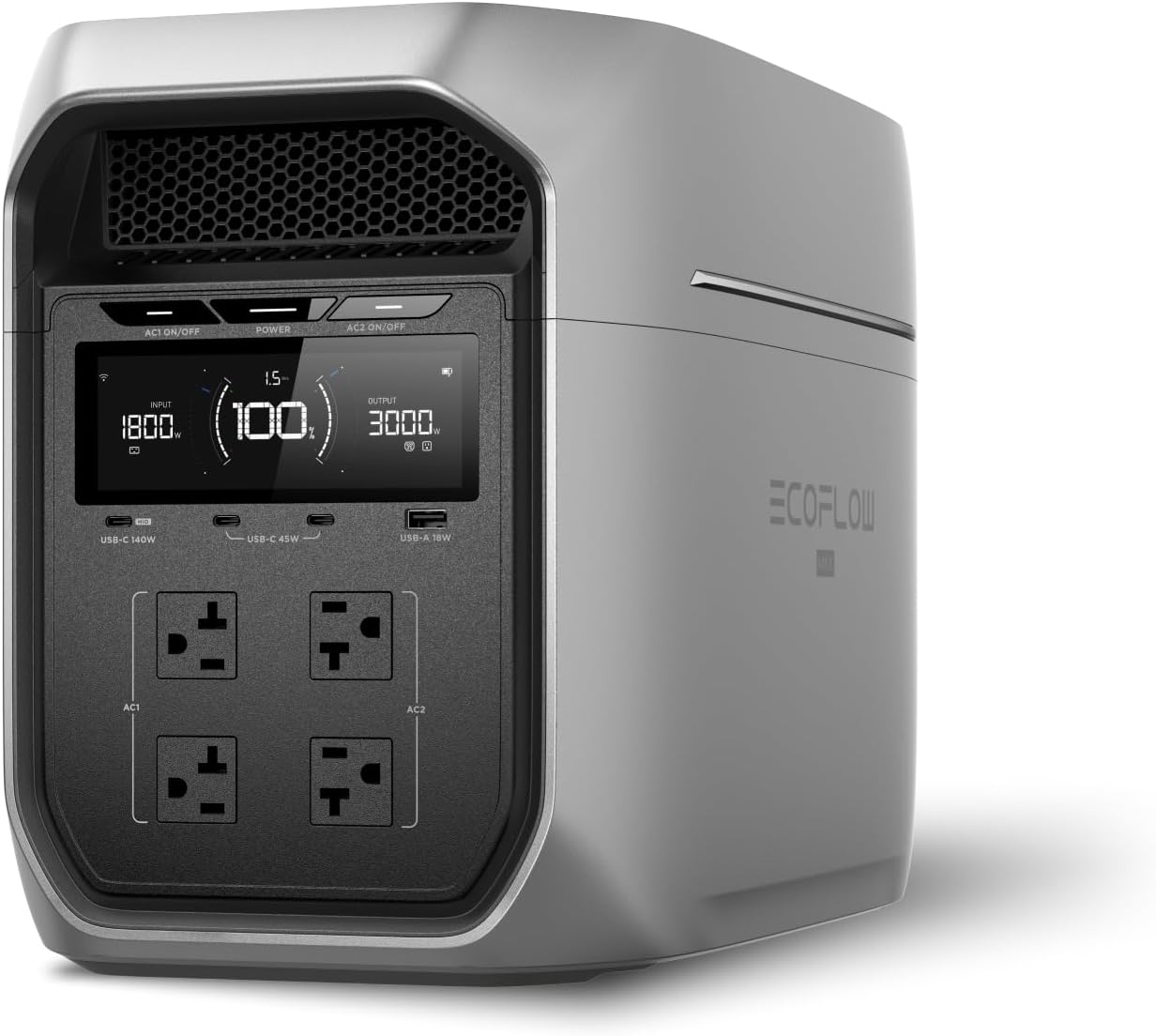
EcoFlow DELTA 3 Plus
EcoFlow's newest mid-range flagship. The DELTA 3 Plus improves on the Delta 2 with faster charging, LiFePO4 chemistry, and UPS functionality — all at a lower price.
Frequently Asked Questions
What size power station do I need for a CPAP machine?
Most CPAP machines use 30-60W. Without a humidifier, plan for 300Wh per night. With a humidifier, plan for 500Wh per night. A 1,000Wh power station gives you 2-3 nights without a humidifier or 1-2 nights with one.
What is the best power station for CPAP?
The Anker SOLIX C1000 ($699) is the best overall CPAP power station. Its 1,056Wh capacity provides 2-3 nights of use, and it charges in under an hour. For extended trips, the EcoFlow DELTA 3 Plus ($649) offers expandable capacity up to 5kWh.
Can I take a power station on a plane for my CPAP?
Power stations over 100Wh are not allowed on airplanes (FAA regulation). The Jackery Explorer 100 Plus (99Wh) is airline-approved but cannot power a CPAP. For air travel, use a CPAP-specific battery like the Medistrom Pilot-24.
How can I make my power station last longer with a CPAP?
Use DC power instead of AC to avoid inverter losses (saves 10-15%). Turn off the heated humidifier and use an HME filter instead. Lower your pressure setting if your doctor allows. These steps can nearly double your runtime.
Ready to Buy? Here's What We Recommend
Based on our testing and this guide, these are the best options for most people: