Buying Guide
Best Solar Panels for Portable Power Stations in 2026

TL;DR
Which solar panels work best with portable power stations? We cover wattage, compatibility, and the best panel-station combos for camping and off-grid use.
A portable power station without solar panels is just a big battery. Add solar, and you have unlimited off-grid power. Here’s how to choose the right panels and pair them with the right power station.
How Solar Charging Works
Solar panels convert sunlight into DC electricity. You connect them to your power station’s solar input port, and they recharge the battery. Most power stations accept standard MC4 solar connectors.
Key concept: solar input wattage. Every power station has a maximum solar input rating. The panel wattage you connect cannot exceed this limit.
How Much Solar Do You Need?
The math is simple: more watts = faster charging.
| Solar Wattage | Daily Energy (6 hrs sun) | Best For |
|---|---|---|
| 40-60W | 200-300 Wh | Phone/laptop charging |
| 100-200W | 500-1,000 Wh | Weekend camping |
| 200-400W | 1,000-2,000 Wh | Extended off-grid |
| 400W+ | 2,000+ Wh | Full-time RV/cabin |
Real-world note: You’ll typically get 4-6 hours of effective solar per day (not 8+), and panels produce about 70-80% of their rated wattage in real conditions. Plan accordingly.
Best Solar Panel + Power Station Combos
Budget Camping: Jackery 100 Plus + 40W Panel ($169 bundle)
The Jackery Explorer 100 Plus with the Jackery SolarSaga 40W panel is the cheapest entry point into solar charging. It’ll charge phones and small devices indefinitely with sunlight.
- Total cost: ~$169 (bundle price)
- Solar charge time: ~4 hours
- Best for: Day hikers, ultralight campers
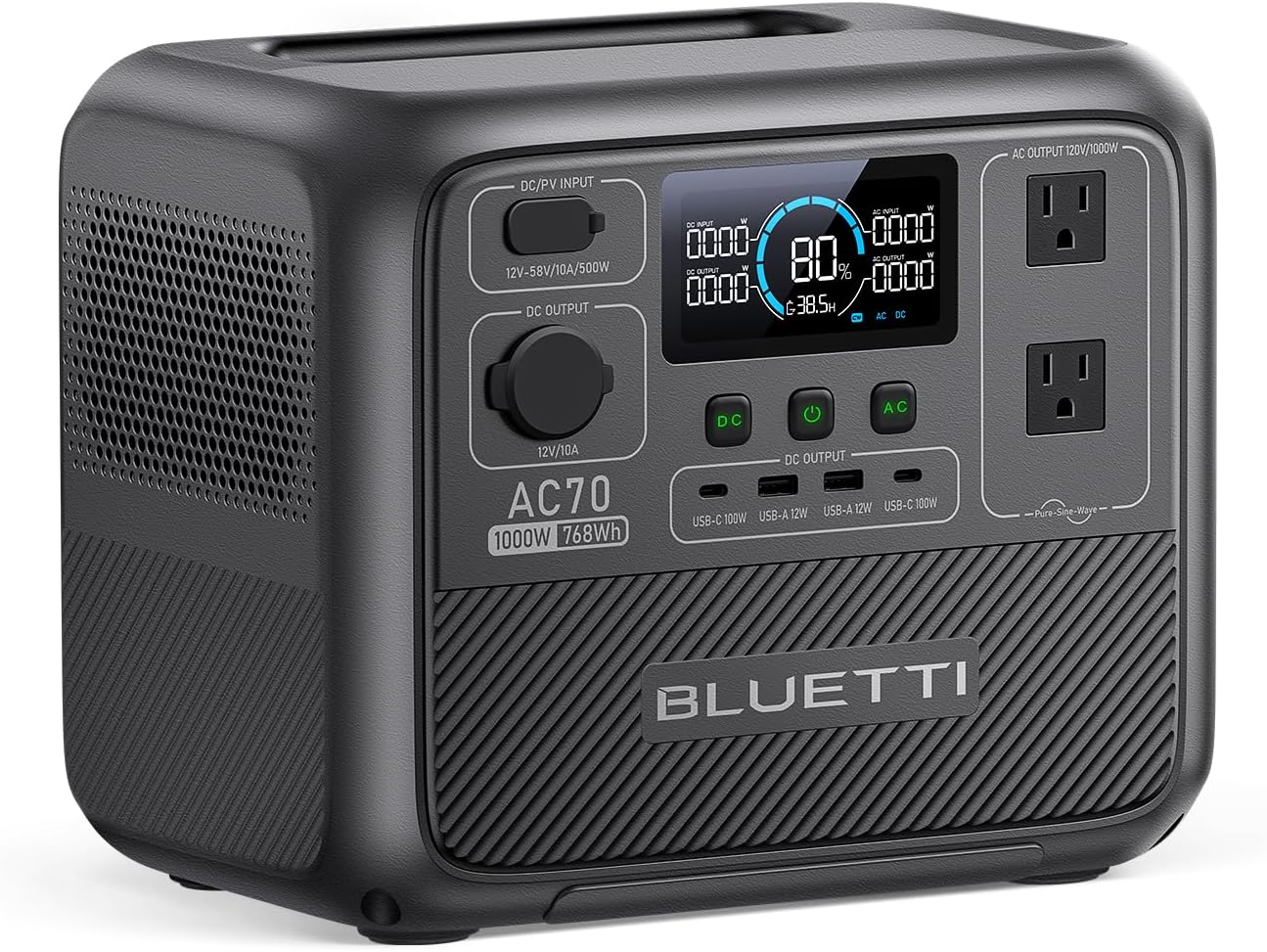
Weekend Camping: Bluetti AC70 + 200W Panel (~$700 total)
The Bluetti AC70 (768Wh) paired with a 200W portable panel gives you enough solar to fully recharge in about 5-6 hours of sun. That means you can run all night and recharge all day.
- Total cost: ~$700
- Solar charge time: ~5-6 hours
- Best for: Weekend campers, festival-goers
Extended Off-Grid: EcoFlow DELTA 3 Plus + 400W Panels (~$1,100 total)
The EcoFlow DELTA 3 Plus (1,024Wh) with dual 220W EcoFlow panels provides fast solar charging and expandable capacity for week-long trips.
- Total cost: ~$1,100
- Solar charge time: ~3-4 hours
- Best for: Extended camping, off-grid cabins
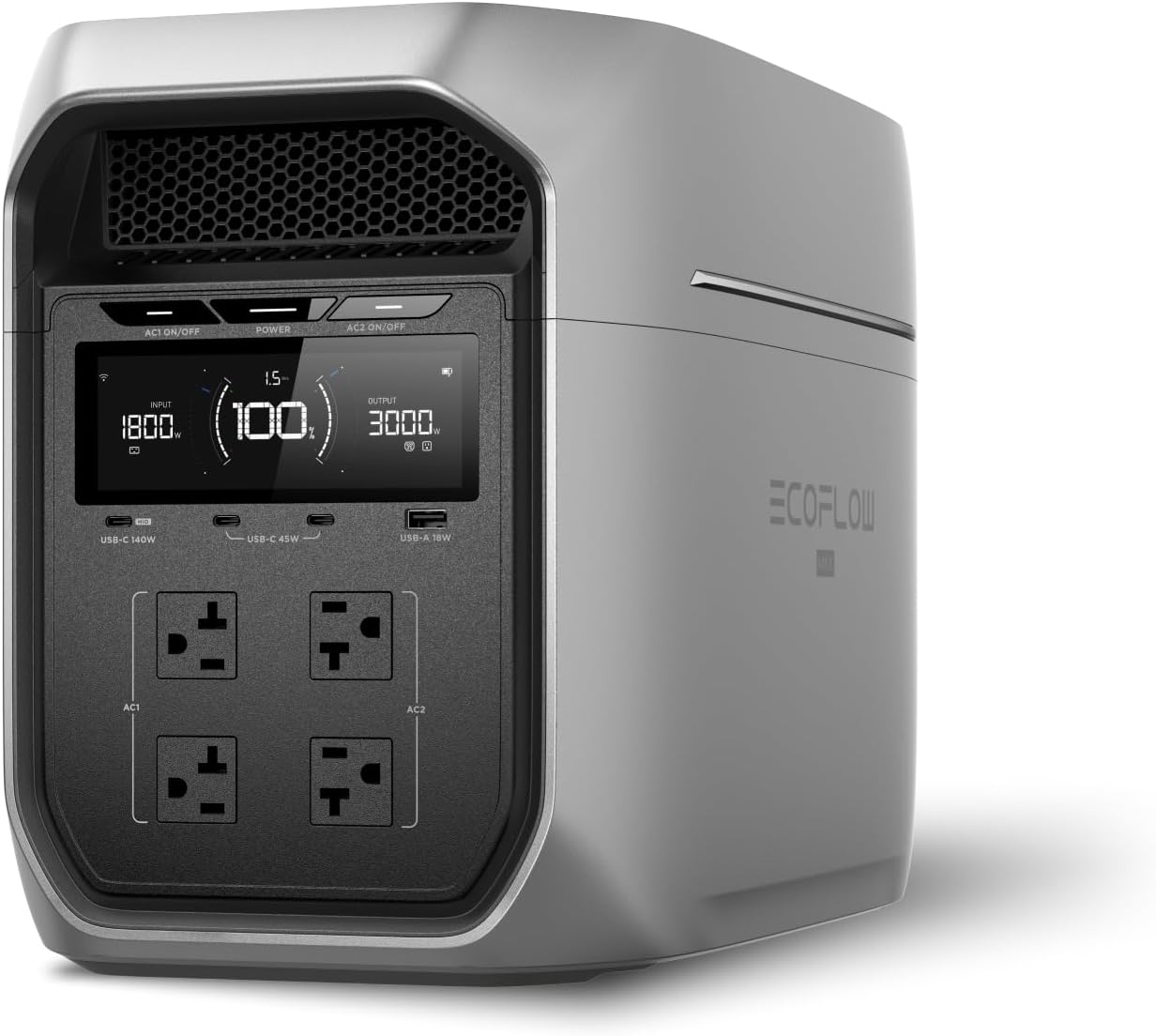
Full-Time RV: EcoFlow Delta 2 Max + 400W Panels (~$2,300 total)
The EcoFlow Delta 2 Max (2,048Wh, expandable to 6kWh) with 400W of panels handles daily RV power needs with room to spare.
- Total cost: ~$2,300
- Solar charge time: ~5-6 hours (base battery)
- Best for: Full-time RV, van life
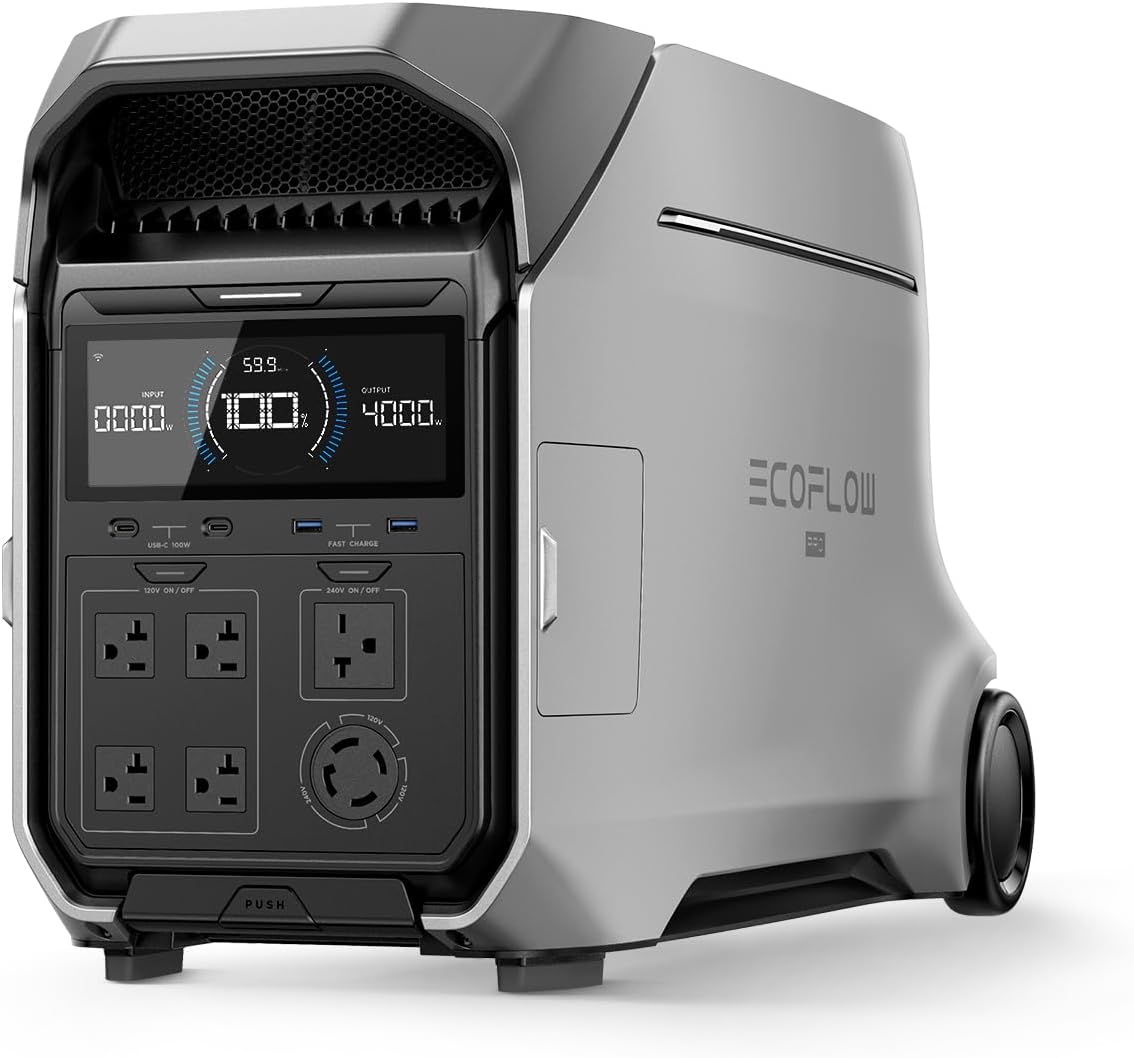
Whole-Home Solar: EcoFlow DELTA Pro 3 + 800W+ Panels ($3,000+ total)
The EcoFlow DELTA Pro 3 (4,096Wh, expandable to 48kWh) with 800W+ of rigid or portable panels creates a full home solar backup system.
- Total cost: $3,000+
- Solar charge time: ~5-6 hours (base battery)
- Best for: Home backup, off-grid living
Solar Panel Types
Portable/Foldable Panels
- Fold up like a briefcase
- 60-400W range
- Best for: Camping, travel
- More expensive per watt
Rigid Panels
- Fixed mount (RV roof, cabin)
- 100-400W per panel
- Best for: Permanent installations
- Cheaper per watt, more efficient
Tips for Maximizing Solar Output
-
Angle toward the sun. Panels produce the most power when perpendicular to sunlight. Adjust throughout the day if possible.
-
Avoid partial shade. Even small shadows on part of a panel can dramatically reduce output. One shaded cell can cut total output by 30-50%.
-
Clean your panels. Dust, dirt, and dew reduce efficiency. Wipe them with a damp cloth before use.
-
Use the right cable length. Longer cables mean more power loss. Keep cables as short as practically possible.
-
Check compatibility. Match your panel’s voltage and connector type to your power station’s solar input. Most use MC4 connectors, but some brands use proprietary connectors.
Max Solar Input by Power Station
| Power Station | Max Solar Input | Recommended Panels |
|---|---|---|
| EcoFlow RIVER 3 | 110W | 1× 100W |
| Bluetti AC70 | 500W | 1-2× 200W |
| Anker SOLIX C1000 | 600W | 2-3× 200W |
| EcoFlow DELTA 3 Plus | 500W | 2× 220W |
| EcoFlow Delta 2 Max | 1,000W | 3-4× 220W |
| EcoFlow DELTA Pro 3 | 2,600W | 6-8× 400W |
The Bottom Line
Solar panels transform a power station from a one-time battery into an unlimited power source. Start with a 200W portable panel for camping, or go bigger for RV and home use.
Not sure which power station to pair with panels? Use our comparison tool to compare solar input ratings side-by-side.
Recommended Power Stations
EcoFlow
EcoFlow DELTA 3 Plus
EcoFlow's newest mid-range flagship. The DELTA 3 Plus improves on the Delta 2 with faster charging, LiFePO4 chemistry, and UPS functionality — all at a lower price.
Frequently Asked Questions
What size solar panel do I need for a portable power station?
A 200W portable solar panel is the best all-around choice. It recharges a 1,000Wh power station in about 6-8 hours of sunlight. For smaller stations (under 500Wh), a 100W panel is sufficient. For large 2,000Wh+ stations, use 400W or more of panels.
Can any solar panel charge a portable power station?
Most portable power stations use standard MC4 solar connectors and accept a wide voltage range, so most panels are compatible. Check your power station's maximum solar input wattage and voltage range. Some brands like Jackery use proprietary connectors that require their own panels or an adapter.
How long does it take to solar charge a power station?
With a 200W panel in good sunlight, a 1,000Wh power station charges in about 6-8 hours. Real-world conditions (clouds, angle, temperature) typically produce 70-80% of rated panel output. Expect 4-6 effective solar hours per day in most locations.
Ready to Buy? Here's What We Recommend
Based on our testing and this guide, these are the best options for most people: