Guide
How to Size a Power Station for Your Needs (Calculator + Guide)

TL;DR
Not sure what size power station you need? Use our simple watt-hour calculator and guide to find the right capacity for camping, home backup, RV, and more.
The most common mistake when buying a portable power station is getting the wrong size. Too small and it dies before your trip is over. Too large and you’ve overpaid for capacity you’ll never use. Here’s how to get it right.
The Simple Formula
Add up the watts of everything you want to run. Multiply by the hours you need to run them. That’s your minimum watt-hours (Wh).
Device Watts × Hours of Use = Wh neededAdd all your devices together, then add a 20% buffer (batteries don’t deliver 100% of rated capacity in real-world conditions). That’s your target.
Common Device Power Draws
| Device | Watts | 8 hrs usage |
|---|---|---|
| Smartphone charge | 15W | 15 Wh (one charge) |
| Laptop charge | 60W | 60 Wh (one charge) |
| LED camp light | 10W | 80 Wh |
| 12V mini fridge | 60W | 480 Wh |
| CPAP machine | 30-60W | 240-480 Wh |
| Electric blanket | 100W | 800 Wh |
| Coffee maker | 1,000W | 15 Wh (1 min brew) |
| Microwave | 1,000W | 50 Wh (3 min use) |
| Portable heater | 1,500W | 12,000 Wh |
| Full-size fridge | 150W | 400 Wh (compressor cycles) |
| WiFi router | 15W | 120 Wh |
Sizing by Use Case
Weekend Camping (2 nights)
Target: 500-1,000Wh
Typical needs: phone charging, LED lights, maybe a small fan or portable speaker. A mini fridge pushes you toward the higher end.
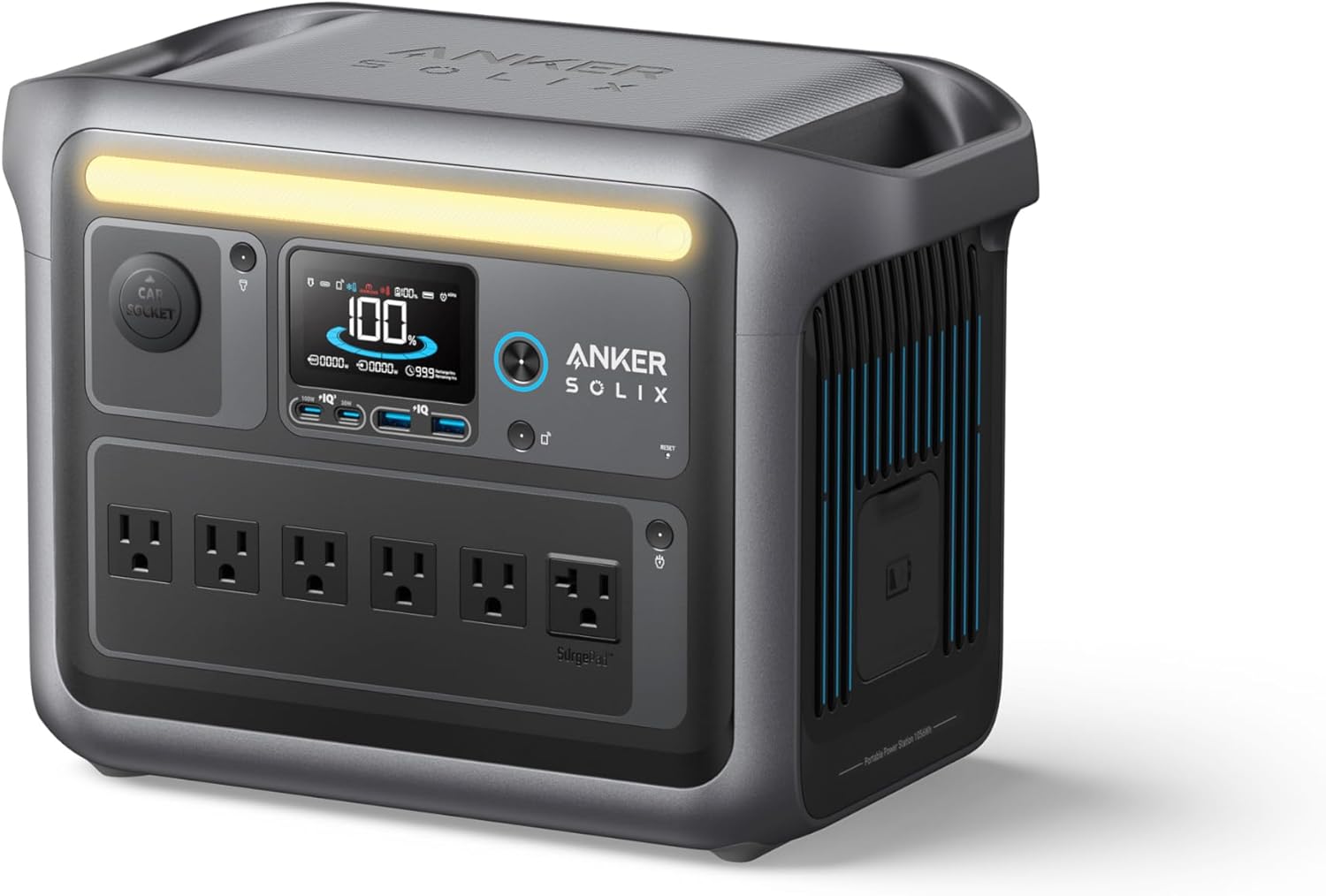
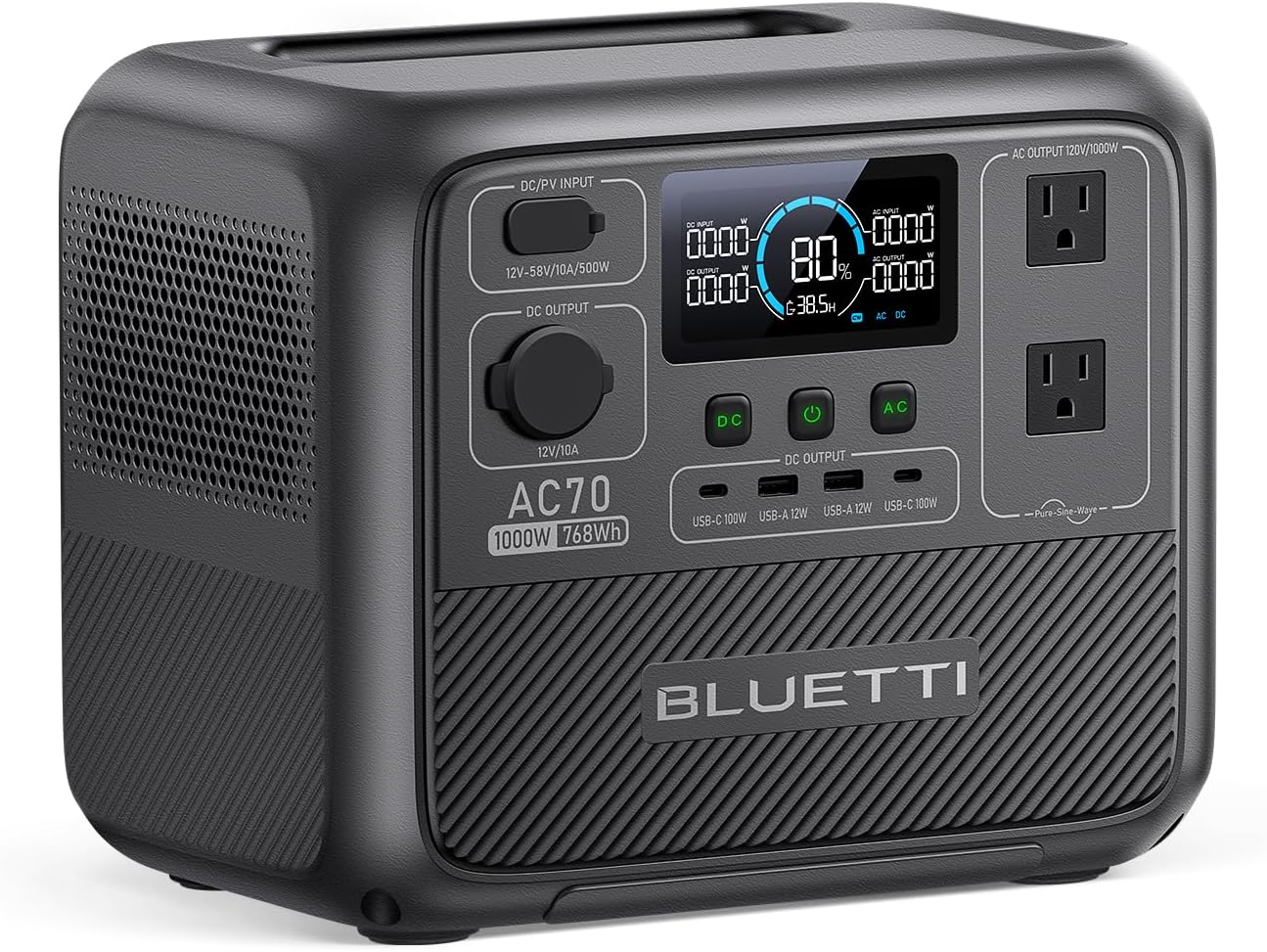
Our picks: Bluetti AC70 (768Wh, $499) or Anker SOLIX C1000 (1,056Wh, $699)
Extended Camping with Solar (5+ days)
Target: 1,000-1,500Wh + solar panels
With solar panels recharging during the day, you don’t need to carry all your energy at once. A 1,000Wh station with 200W of solar panels will replenish about 600-800Wh per sunny day.
Our picks: EcoFlow DELTA 3 Plus (1,024Wh, $649) or Jackery Explorer 1000 v2 (1,070Wh, $799)
Home Emergency Backup (12-24 hours)
Target: 1,500-3,000Wh
Running a fridge, WiFi router, phone chargers, and lights for 24 hours requires serious capacity. A 2,000Wh unit handles this comfortably.
Our picks: Bluetti Elite 200 V2 (2,073Wh, $1,099) or EcoFlow Delta 2 Max (2,048Wh, $1,699)
Whole-Home Backup (multi-day)
Target: 4,000Wh+ with expansion
If you want to run AC, washer, dryer, and full kitchen during an extended outage, you need a big system. Expandable units let you scale to your needs.
Our picks: EcoFlow DELTA Pro 3 (4,096Wh expandable to 48kWh, $1,999) or Jackery Explorer 2000 Plus (2,042Wh expandable to 24kWh, $1,999)
RV / Van Life (daily use)
Target: 1,000-2,000Wh + solar
You need enough to get through the night, with solar panels to recharge during the day. Focus on units with good solar input and quiet operation.
Our picks: EcoFlow Delta 2 (1,024Wh, $849) or Bluetti AC180 (1,152Wh, $699)
Don’t Forget Output Wattage
Capacity (Wh) tells you how long you can run things. Output (W) tells you what you can run. Make sure the continuous output wattage exceeds the draw of your most demanding device:
- Under 500W devices (phones, laptops, lights): Any power station works
- 500-1,500W devices (blenders, small tools): Need 1,500W+ output
- 1,500-2,000W devices (microwaves, hair dryers): Need 1,800W+ output or Power Lifting/X-Boost
- 2,000W+ devices (space heaters, large tools): Need 2,000W+ output
The Bottom Line
- List your devices and their wattage
- Estimate daily hours of use for each
- Add up total watt-hours
- Add 20% buffer
- Choose a power station at or above that number
- Make sure the output wattage handles your most demanding device
Still unsure? Use our comparison tool to see the specs side-by-side.
Recommended Power Stations
EcoFlow
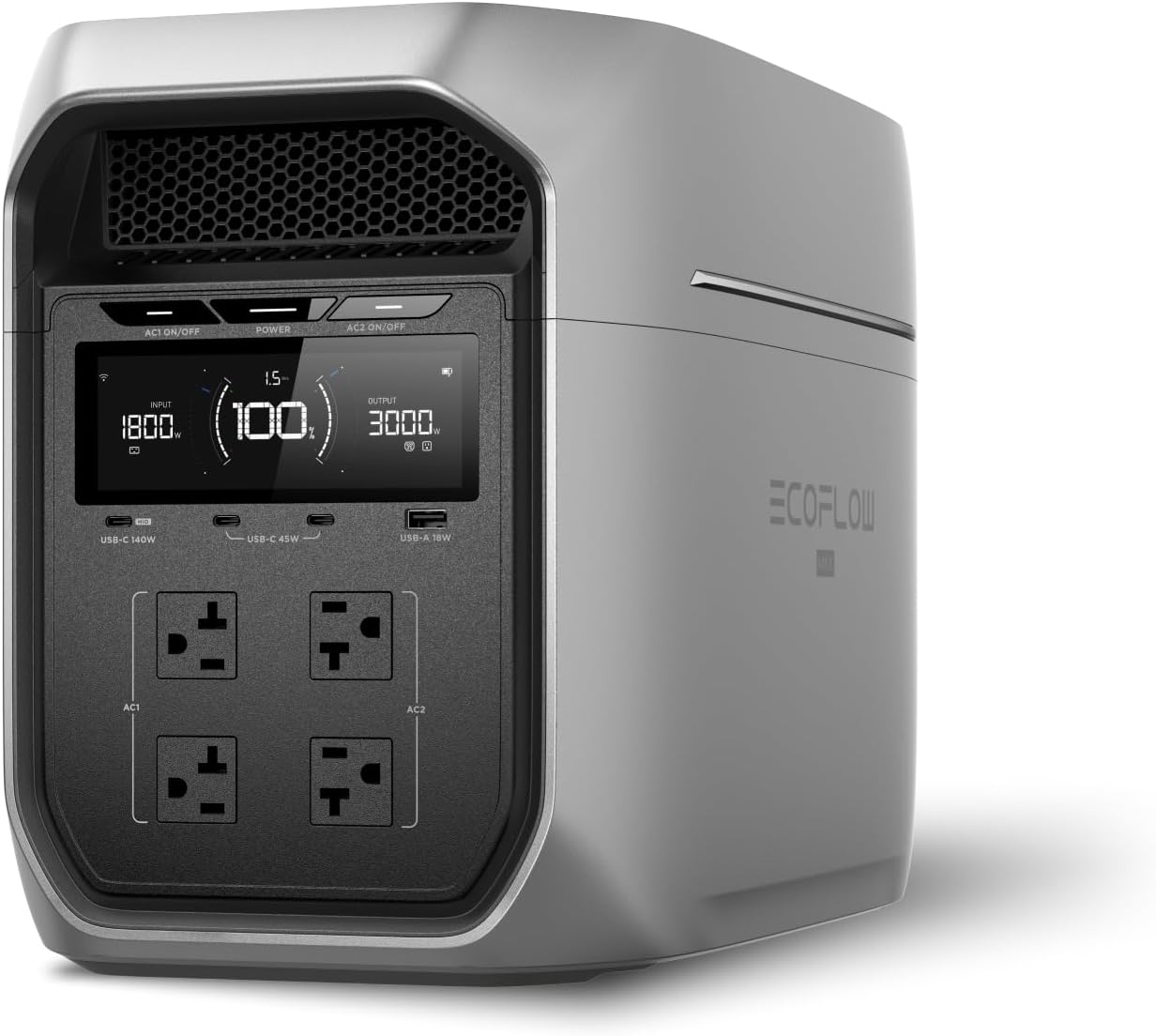
EcoFlow DELTA 3 Plus
EcoFlow's newest mid-range flagship. The DELTA 3 Plus improves on the Delta 2 with faster charging, LiFePO4 chemistry, and UPS functionality — all at a lower price.
Frequently Asked Questions
How many watts do I need in a portable power station?
It depends on what you're powering. For phone and laptop charging, 300-500Wh is enough. For camping with a fridge and lights, choose 500-1,000Wh. For home backup running a refrigerator, you need 1,000-2,000Wh. For whole-home backup, look at 4,000Wh+ systems.
What is the difference between watts and watt-hours?
Watts (W) measure power draw — how much electricity a device uses at any moment. Watt-hours (Wh) measure total energy capacity — how much electricity a power station stores. A 100W device running for 10 hours uses 1,000Wh of energy.
How do I calculate power station runtime?
Divide the power station's capacity (in Wh) by your device's wattage (in W). For example, a 1,000Wh power station running a 50W device lasts about 20 hours. Multiply by 0.85 for a more realistic estimate that accounts for inverter efficiency losses.
Ready to Buy? Here's What We Recommend
Based on our testing and this guide, these are the best options for most people: