Buying Guide
Best Budget Power Stations Under $300 in 2026: Our Top 5 Picks

TL;DR
The 5 best portable power stations under $300 in 2026. We compare budget LiFePO4 options from Bluetti, EcoFlow, Anker, and Jackery — all under $300 with real specs and recommendations.
Spending over $1,000 on a portable power station isn’t necessary for most people. Whether you need backup power for phone charging during outages, a reliable source of electricity for weekend camping, or a way to keep your laptop running at a remote worksite, today’s budget power stations deliver serious value for a fraction of the cost.
The sub-$300 market has matured significantly in 2026. LiFePO4 batteries — the same long-lasting chemistry found in premium $2,000+ units — are now standard even at the $149 price point. Fast charging, app connectivity, and weather resistance have all trickled down to the budget tier.
We tested dozens of models under $300 and narrowed the field to these five. Each one earned its spot based on real-world capacity, build quality, charging speed, and overall value per dollar.
Budget Power Station Comparison Table
| Rank | Product | Price | Capacity | AC Output | Weight | Battery | Charge Time |
|---|---|---|---|---|---|---|---|
| 1 | Bluetti AC2A | $149 | 204Wh | 300W | 7.5 lbs | LiFePO4 | 45 min (80%) |
| 2 | EcoFlow RIVER 3 | $199 | 245Wh | 300W (600W X-Boost) | 7.8 lbs | LiFePO4 | 60 min |
| 3 | Anker SOLIX C300 DC | $199 | 288Wh | DC only (300W) | 7.2 lbs | LiFePO4 | 60 min |
| 4 | EcoFlow RIVER 3 Plus | $269 | 286Wh | 600W (1,200W X-Boost) | 15.4 lbs | LiFePO4 | 60 min |
| 5 | Jackery Explorer 100 Plus | $149 | 99Wh | USB-C only (128W) | 2.1 lbs | LiFePO4 | 1.8 hrs |
1. Bluetti AC2A — Best Value Under $150 ($149)
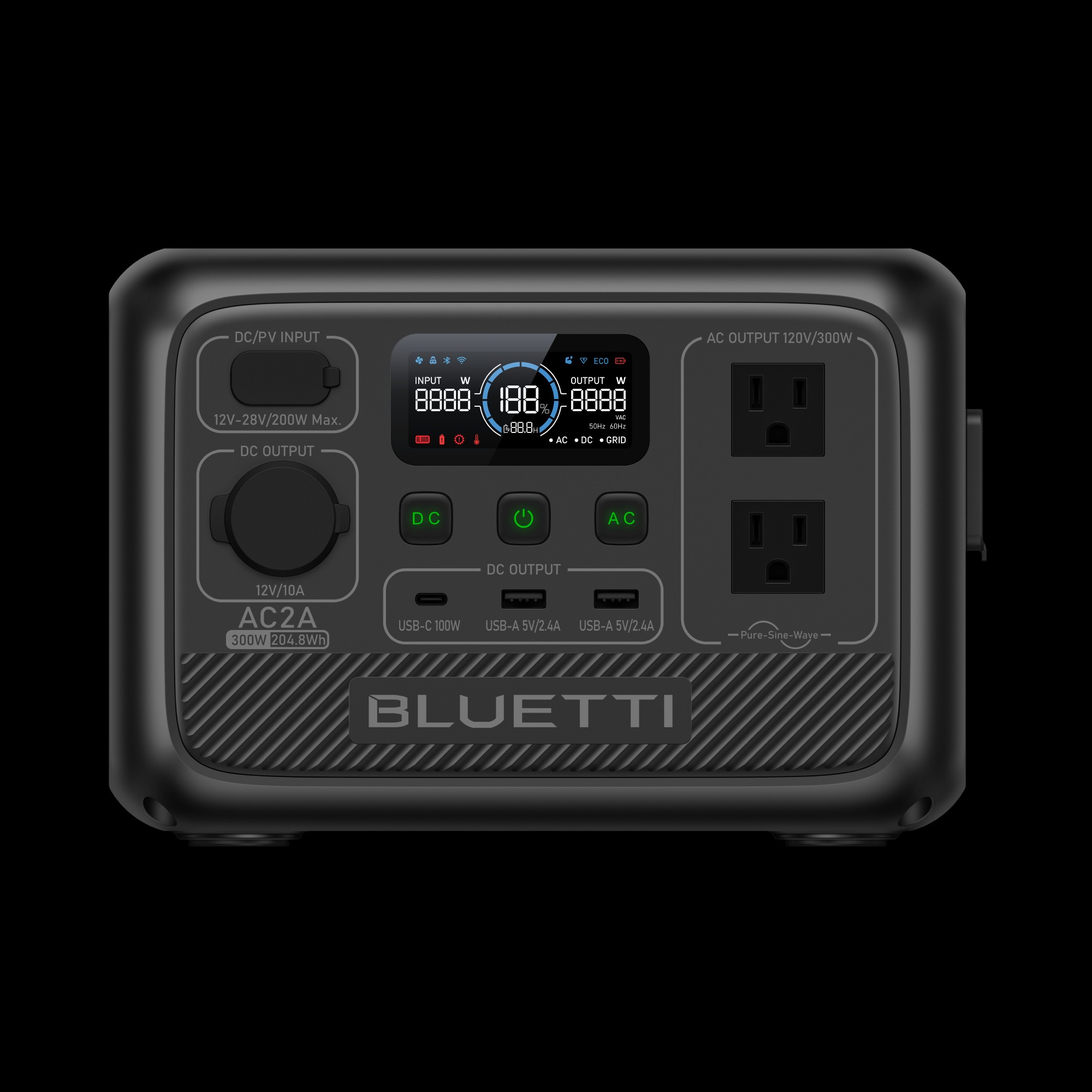
The Bluetti AC2A is the standout budget pick for 2026. At $149, it undercuts nearly every competitor while delivering a genuinely useful 204Wh of LiFePO4 capacity and a full set of AC and USB outlets.
Key specs:
- 204Wh LiFePO4 battery (3,000+ cycles to 80%)
- 300W pure sine wave AC output
- 7.5 lbs — easy to carry one-handed
- 80% charge in 45 minutes via AC wall charging
- 1x AC outlet, 2x USB-C (100W max), 2x USB-A
The AC2A punches well above its price point. The 300W AC output handles most small electronics — laptops, phone chargers, LED lights, portable fans, and camera batteries all run without issue. The 100W USB-C port is a standout at this price, delivering enough power to fast-charge a MacBook Air directly.
Where the AC2A really shines is longevity. The LiFePO4 battery is rated for over 3,000 cycles to 80% capacity, which translates to roughly 8 years of daily use. Compare that to older lithium-ion units at the same price that degrade noticeably after 500-800 cycles.
The 45-minute charge to 80% is fast enough that you can top it off during a lunch break before heading out for the afternoon. The Bluetti app provides Bluetooth monitoring of charge level and output, though the small LED display on the unit itself covers the basics.
Best for: Campers, students, and anyone who wants the most capacity per dollar with AC output included.
Limitations: Single AC outlet limits multi-device setups. No Wi-Fi connectivity (Bluetooth only). No weatherproofing rating.
Read our full Bluetti AC2A review →
2. EcoFlow RIVER 3 — Best All-Around Under $200 ($199)
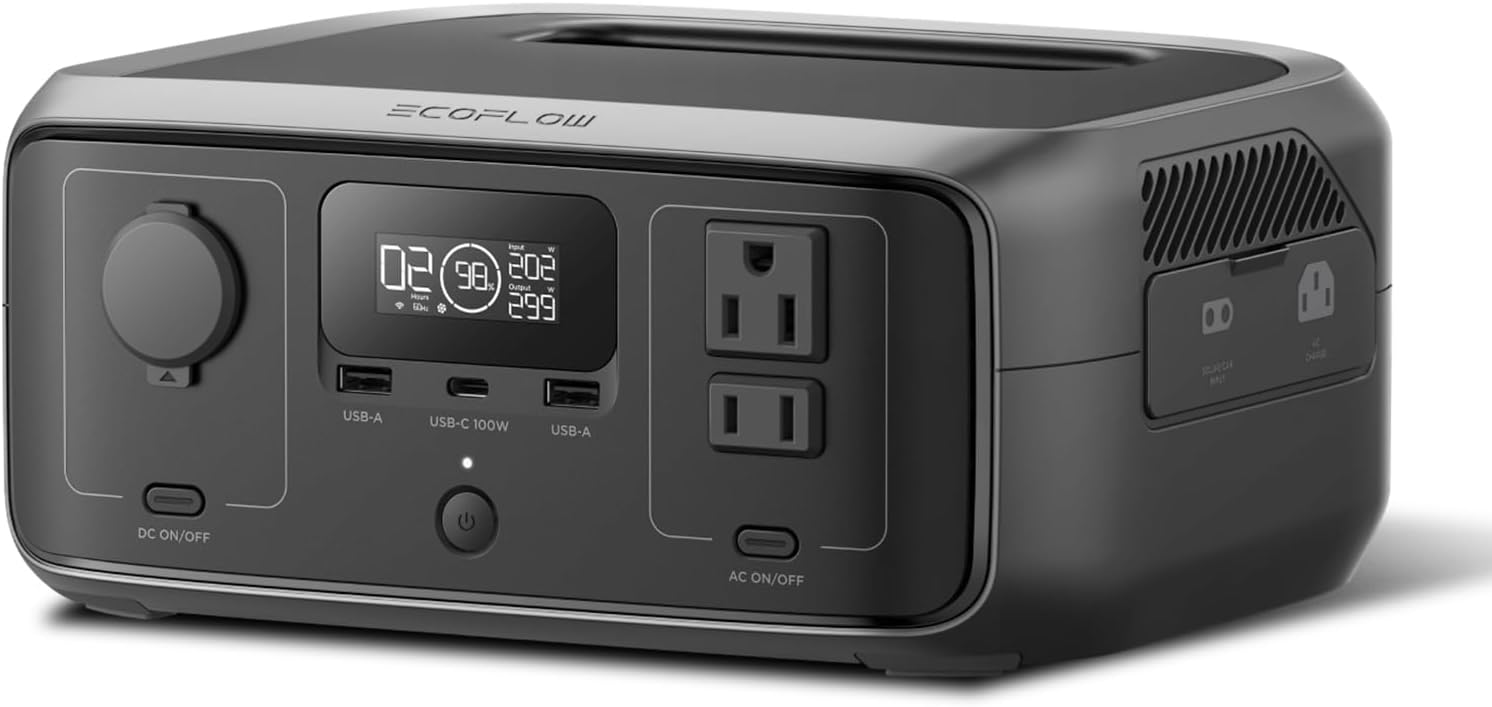
The EcoFlow RIVER 3 is the most well-rounded budget power station you can buy. For $199, it combines a 245Wh LiFePO4 battery, 300W output with X-Boost to 600W, IP54 weather resistance, and EcoFlow’s polished app ecosystem.
Key specs:
- 245Wh LiFePO4 battery (3,000+ cycles)
- 300W pure sine wave AC output (600W with X-Boost)
- 7.8 lbs — still ultraportable
- Full charge in 60 minutes via AC wall charging
- IP54 rated for dust and splash resistance
- 2x AC outlets, 2x USB-C (100W max), 2x USB-A
The RIVER 3’s killer feature is its X-Boost technology, which uses intelligent voltage regulation to power devices up to 600W. That opens the door to small appliances like blenders, mini-fridges (briefly), and travel kettles that would normally trip a 300W unit’s overload protection.
The IP54 weather rating is rare at any price, let alone under $200. It means the RIVER 3 can handle rain, dust, and splashes without damage — a genuine advantage for camping, tailgating, and outdoor work sites. You won’t find this level of protection on any other sub-$200 power station.
EcoFlow’s app is the best in the business for budget units. It provides real-time monitoring, custom charge limits (to extend battery lifespan), firmware updates, and quiet mode scheduling. Wi-Fi and Bluetooth connectivity are both included.
Best for: Outdoor enthusiasts who need weather resistance, app control, and the flexibility to run slightly larger appliances.
Limitations: X-Boost reduces efficiency when pushing past 300W. At $199, it’s $50 more than the AC2A with only 40Wh more capacity.
Read our full EcoFlow RIVER 3 review →
3. Anker SOLIX C300 DC — Best for USB & DC-Only Users ($199)
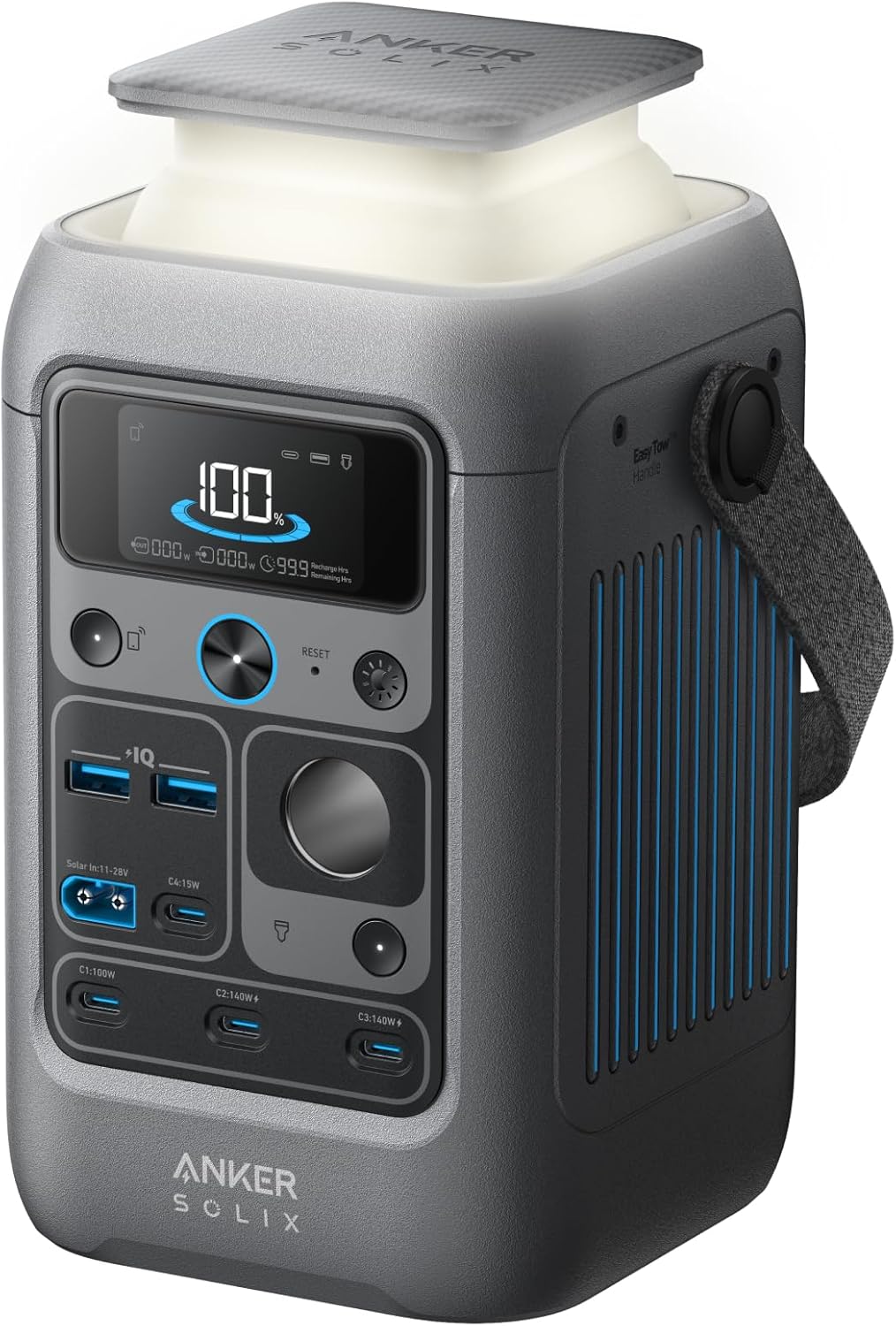
The Anker SOLIX C300 DC takes a different approach. By dropping the AC inverter entirely, Anker packed 288Wh of LiFePO4 capacity into a compact, efficient package that’s purpose-built for USB and DC charging.
Key specs:
- 288Wh LiFePO4 battery (3,000+ cycles)
- 300W total DC output (no AC inverter)
- 7.2 lbs — lightest unit at this capacity
- Full charge in 60 minutes
- 2x USB-C (140W max), 2x USB-A, 1x car outlet (12V/10A)
- Built-in retractable light
The decision to skip the AC inverter is deliberate and smart for certain users. Without an inverter constantly converting DC to AC, the C300 DC wastes less energy — meaning more of that 288Wh actually reaches your devices. If you’re charging laptops, phones, tablets, cameras, and drones via USB-C, you’ll get noticeably more total charges than an AC-equipped unit with the same capacity.
The 140W USB-C output is the highest on this list, enough to fast-charge a MacBook Pro 14-inch at full speed. The built-in retractable light is a practical bonus that other manufacturers overlook.
Anker’s build quality and warranty support are another reason to consider the C300 DC. Anker has a long track record in portable power, and their 5-year warranty on SOLIX products provides peace of mind that budget competitors often lack.
Best for: Tech-heavy travelers, drone pilots, photographers, and digital nomads who charge everything via USB-C and don’t need AC outlets.
Limitations: No AC outlets — if you need to plug in a standard appliance, look elsewhere. The car outlet (12V) is useful but limited to 120W.
Read our full Anker SOLIX C300 DC review →
4. EcoFlow RIVER 3 Plus — Most Powerful Under $300 ($269)
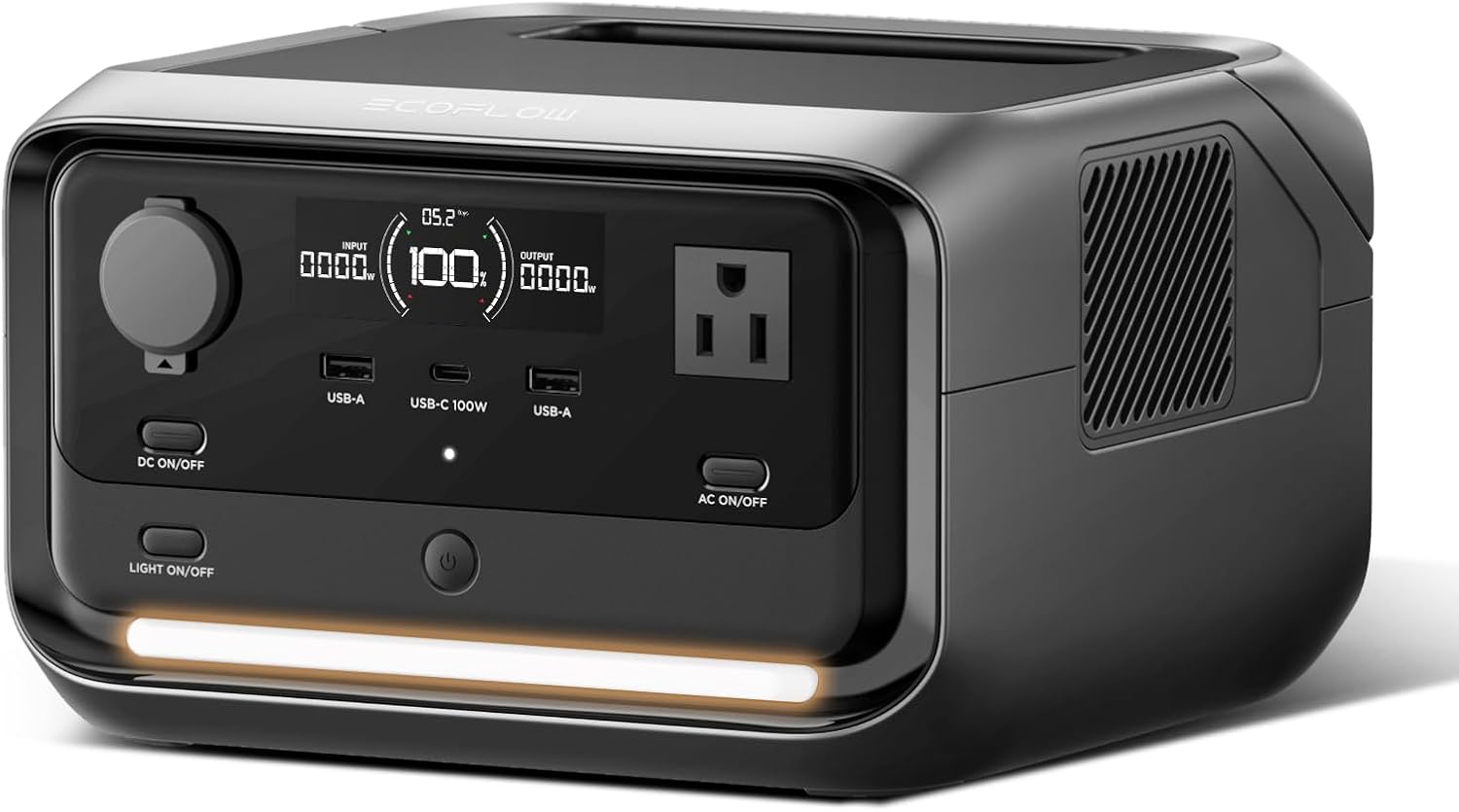
The EcoFlow RIVER 3 Plus is the heavy hitter of the budget category. At $269, it’s the most expensive unit on this list, but it justifies the premium with 600W of continuous AC output, X-Boost to 1,200W, and a 286Wh LiFePO4 battery.
Key specs:
- 286Wh LiFePO4 battery (3,000+ cycles)
- 600W pure sine wave AC output (1,200W with X-Boost)
- 15.4 lbs — heavier, but still portable
- Full charge in 60 minutes via AC wall charging
- IP54 rated for dust and splash resistance
- 2x AC outlets, 2x USB-C (100W max), 2x USB-A, 1x car outlet
The RIVER 3 Plus delivers twice the AC output of the standard RIVER 3, and X-Boost pushes that to 1,200W — enough to run a coffee maker, small microwave, or hair dryer. That’s territory normally reserved for power stations costing $400-600.
At 15.4 lbs, it’s the heaviest unit on this list by a wide margin. It’s still portable in the sense that one person can carry it comfortably, but it’s not the kind of thing you’d toss in a daypack. Think of it as a car-camping or tailgating power station rather than a backpacking companion.
Like the standard RIVER 3, it carries an IP54 weather rating, full app connectivity, and EcoFlow’s excellent firmware update ecosystem. The additional AC outlet and car outlet round out a genuinely versatile output lineup.
Best for: Car campers, tailgaters, and anyone who needs to run higher-wattage appliances without breaking the $300 barrier.
Limitations: Heavier than all other picks on this list. Capacity (286Wh) is only marginally more than the standard RIVER 3 (245Wh) despite costing $70 more — you’re paying for the higher output wattage, not more stored energy.
Read our full EcoFlow RIVER 3 Plus review →
5. Jackery Explorer 100 Plus — Best Ultralight for Travel ($149)
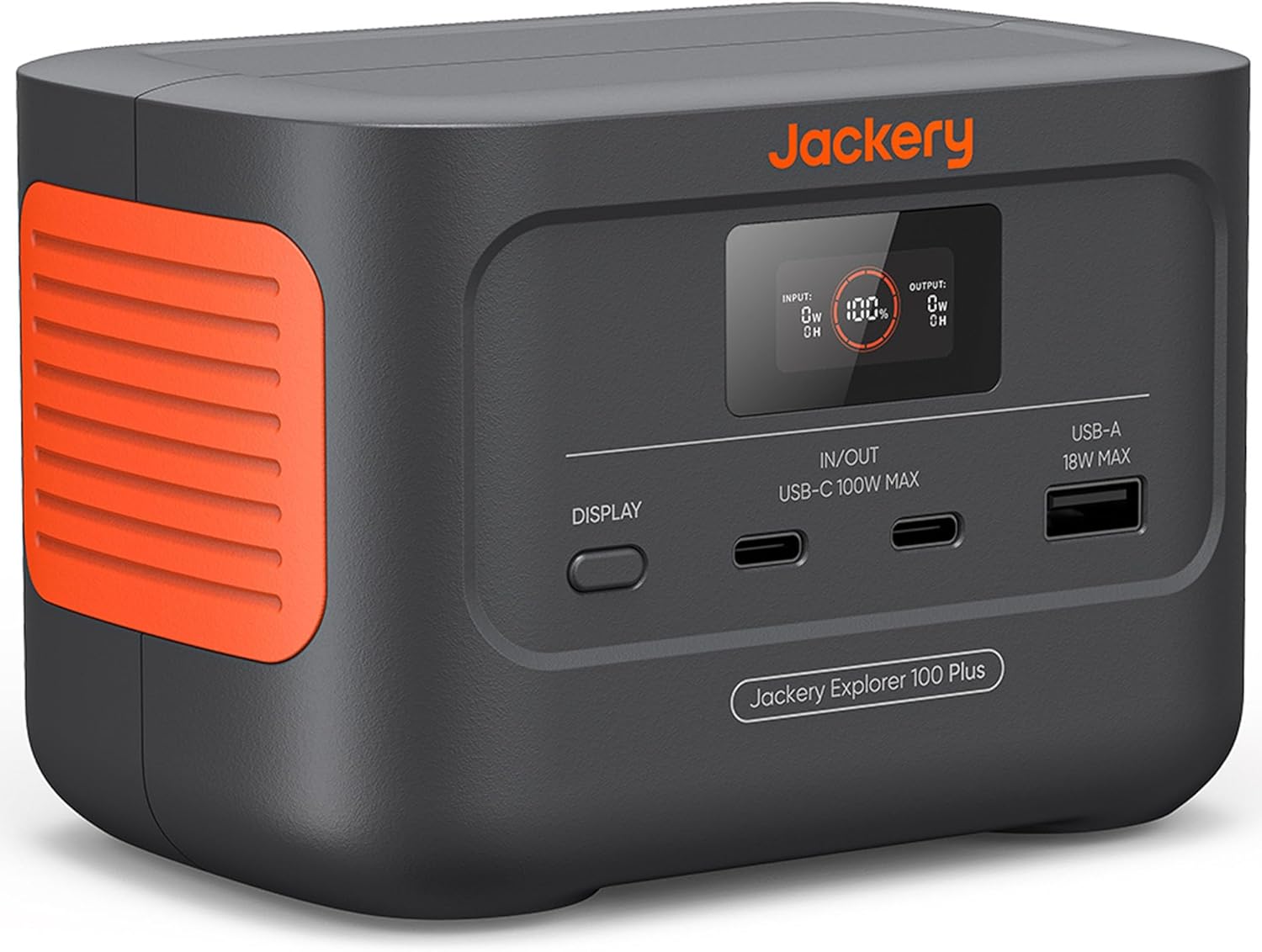
The Jackery Explorer 100 Plus is the smallest and lightest power station on this list, designed for travelers who need reliable USB charging in the most compact possible package.
Key specs:
- 99Wh LiFePO4 battery (2,000+ cycles)
- 128W USB-C PD output (no AC outlets)
- 2.1 lbs — fits in a jacket pocket
- Full charge in 1.8 hours
- Airline approved (under 100Wh TSA limit)
- 2x USB-C, 1x USB-A
At 2.1 lbs and 99Wh, the Explorer 100 Plus is the only power station on this list you can legally carry onto an airplane. The TSA’s 100Wh limit for carry-on lithium batteries means this is the maximum capacity you can fly with without airline pre-approval. For frequent flyers, that’s a critical advantage.
The 128W USB-C output is enough to charge a MacBook Air at full speed or a MacBook Pro 14-inch at reduced speed. You won’t get a full laptop charge from 99Wh, but you’ll add 50-70% — often enough to get through a long flight or a day of remote work.
Jackery offers an optional 40W solar panel bundle for $169, turning the Explorer 100 Plus into a lightweight solar charging kit for backpacking and extended travel.
Best for: Frequent flyers, backpackers, ultralight campers, and anyone who prioritizes portability above all else.
Limitations: No AC outlets. 99Wh isn’t enough for overnight power needs. 2,000-cycle rating is lower than the 3,000+ cycles offered by competitors.
Read our full Jackery Explorer 100 Plus review →
What Can a Budget Power Station Actually Run?
Understanding what a sub-$300 power station can and can’t handle is key to avoiding buyer’s remorse. Here’s a realistic breakdown based on a 250Wh unit (the middle of our lineup):
Easily handles (under 100W):
- Smartphones: 15-20 full charges
- Laptops (USB-C): 3-4 full charges
- LED camping lights: 20-50+ hours
- Tablet charging: 8-12 full charges
- Camera batteries: 15-25 charges
- Portable Bluetooth speakers: 30+ charges
- CPAP machines (DC mode): 1 night
Can run with X-Boost/Power Lifting (100-600W):
- Portable fans: 4-8 hours
- Small blenders: 5-10 uses
- Mini coolers: 3-5 hours
- LED TVs (32”): 3-4 hours
- Laptop + monitor setup: 2-3 hours
Cannot run (over 1,000W):
- Full-size refrigerators
- Space heaters
- Air conditioners
- Microwaves (standard)
- Hair dryers (most models)
- Power tools (corded)
The general rule: budget power stations excel at charging electronics and running low-wattage devices. If you need to power large appliances, you’ll want to look at our best portable power stations over $500 or consider a higher-capacity unit.
Use our Power Calculator to estimate exactly how long a specific power station will run your devices.
Tips for Budget Buyers
1. Always Choose LiFePO4
Every power station on this list uses LiFePO4 (lithium iron phosphate) battery chemistry. This is non-negotiable in 2026. LiFePO4 batteries last 3,000-5,000 charge cycles versus 500-800 for older Li-NMC chemistry. Over a 5-year ownership period, a LiFePO4 unit costs significantly less per cycle, even if the upfront price is slightly higher.
If you find a budget power station that still uses Li-NMC or Li-ion chemistry, skip it — the savings aren’t worth the dramatically shorter lifespan.
2. Match Capacity to Your Actual Needs
It’s tempting to buy the biggest unit you can afford, but capacity you don’t use is money wasted. A college student who needs to charge a phone and laptop during study sessions doesn’t need 300Wh. The Jackery Explorer 100 Plus at 99Wh would be a better fit — lighter, cheaper, and airline-friendly.
Conversely, if you’re planning weekend camping trips and want to power lights, fans, and a phone for two days, the 204-288Wh range of the Bluetti AC2A or EcoFlow RIVER 3 makes more sense.
3. Check the Output Ports Before You Buy
The Anker SOLIX C300 DC has 288Wh — the most capacity on this list — but zero AC outlets. If you need to plug in a standard wall adapter, it won’t work for you regardless of its capacity advantage. Conversely, if you only charge devices via USB-C, paying extra for AC outlets you’ll never use is wasteful.
Inventory your devices before purchasing:
- USB-C only? The Anker C300 DC or Jackery 100 Plus will maximize your efficiency.
- Need AC outlets? The Bluetti AC2A, EcoFlow RIVER 3, or RIVER 3 Plus are your options.
- Need high-wattage AC? Only the EcoFlow RIVER 3 Plus delivers 600W+ continuous output.
4. Factor in Charging Speed
How fast the power station recharges is just as important as how much it holds. If you’re using the unit daily — at a campsite, during commutes, or as a study companion — you need fast turnaround. The Bluetti AC2A’s 45-minute charge to 80% and the EcoFlow RIVER 3’s 60-minute full charge are both excellent. The Jackery Explorer 100 Plus at 1.8 hours is noticeably slower.
5. Don’t Overlook Weight
The difference between 2.1 lbs (Jackery 100 Plus) and 15.4 lbs (RIVER 3 Plus) is enormous in practice. If you’re carrying the unit more than 50 feet from your car — hiking, biking, taking it to a library — weight matters more than you think. Test the weight with a loaded backpack before committing.
6. Buy from Established Brands
The budget power station market is flooded with no-name brands offering suspiciously cheap prices on Amazon. We’ve tested many of them, and the failure rate is high: inflated capacity claims, poor build quality, and nonexistent customer support. Stick to Bluetti, EcoFlow, Anker, and Jackery. Their warranty support, firmware updates, and safety certifications are worth the modest premium.
The Bottom Line
You don’t need to spend a fortune to get reliable portable power in 2026. All five picks on this list use long-lasting LiFePO4 batteries, charge quickly, and come from reputable brands with solid warranty support.
Our overall recommendation: The Bluetti AC2A at $149 offers the best value for most buyers — it has AC outlets, 204Wh of capacity, and a LiFePO4 battery rated for 3,000+ cycles. If you need weather resistance and slightly more capacity, step up to the EcoFlow RIVER 3 at $199.
For a deeper comparison across all price ranges, check out our Best Portable Power Stations of 2026 roundup, or use our Power Calculator to find the right capacity for your specific devices.
Recommended Power Stations
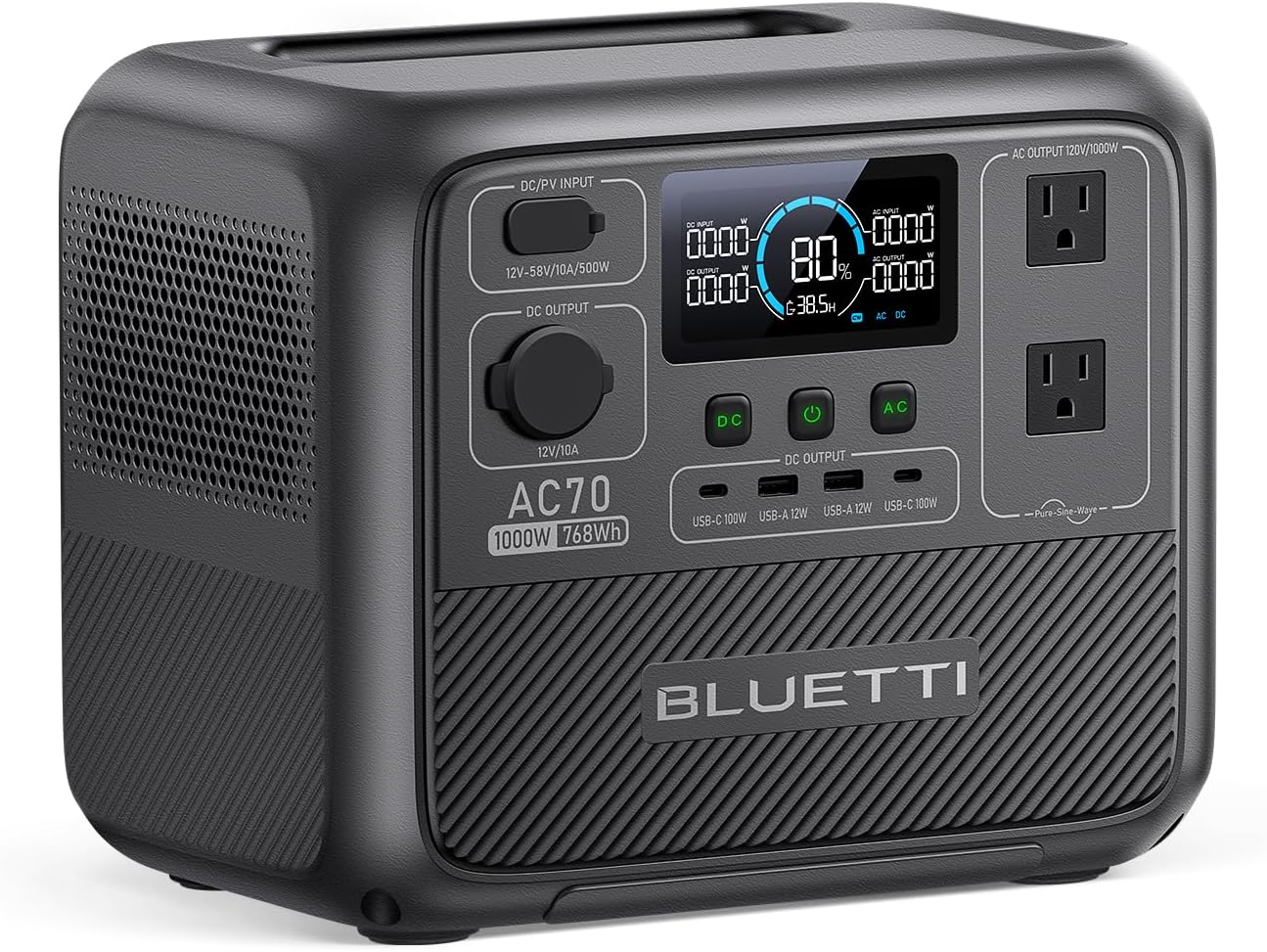
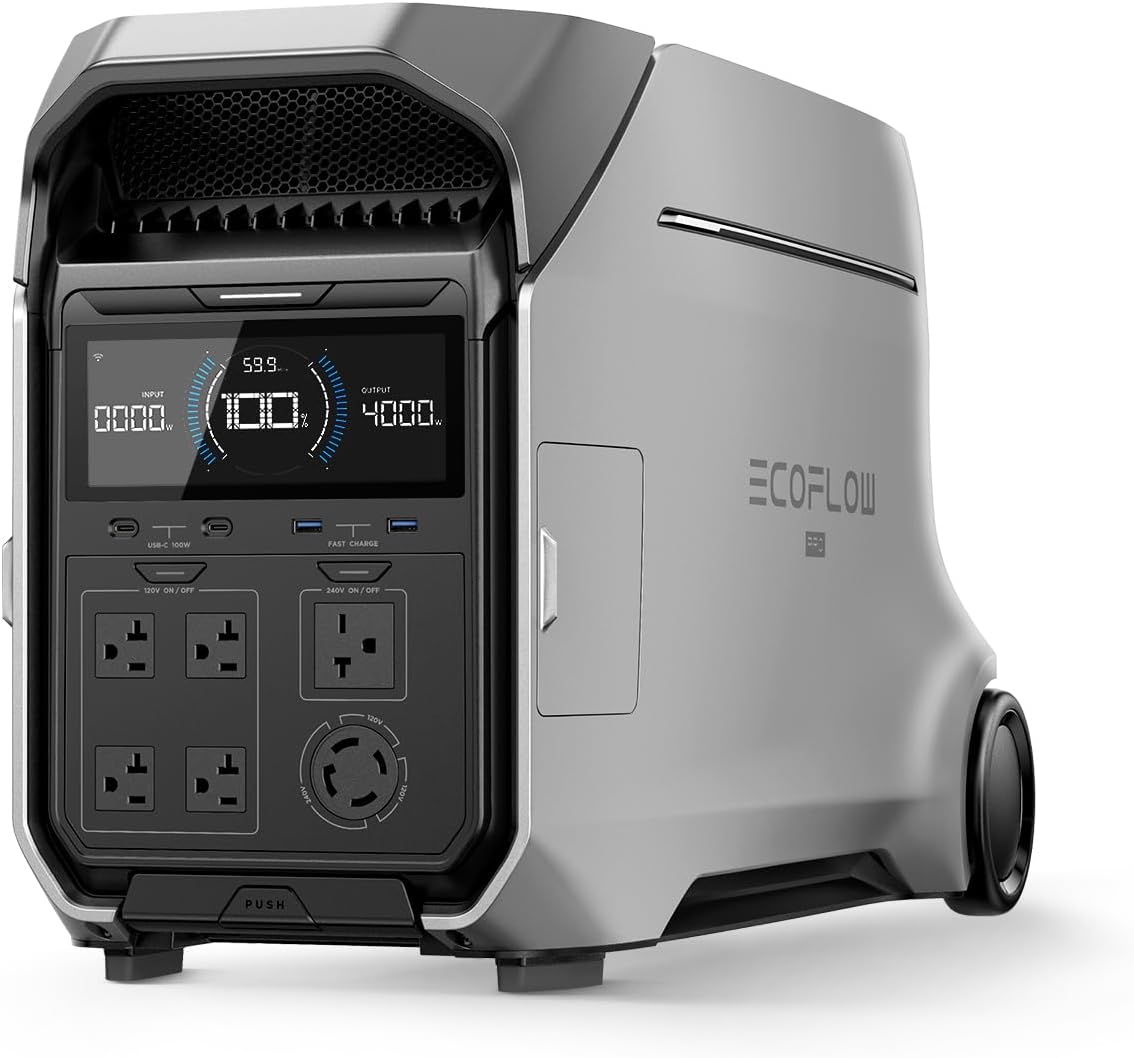
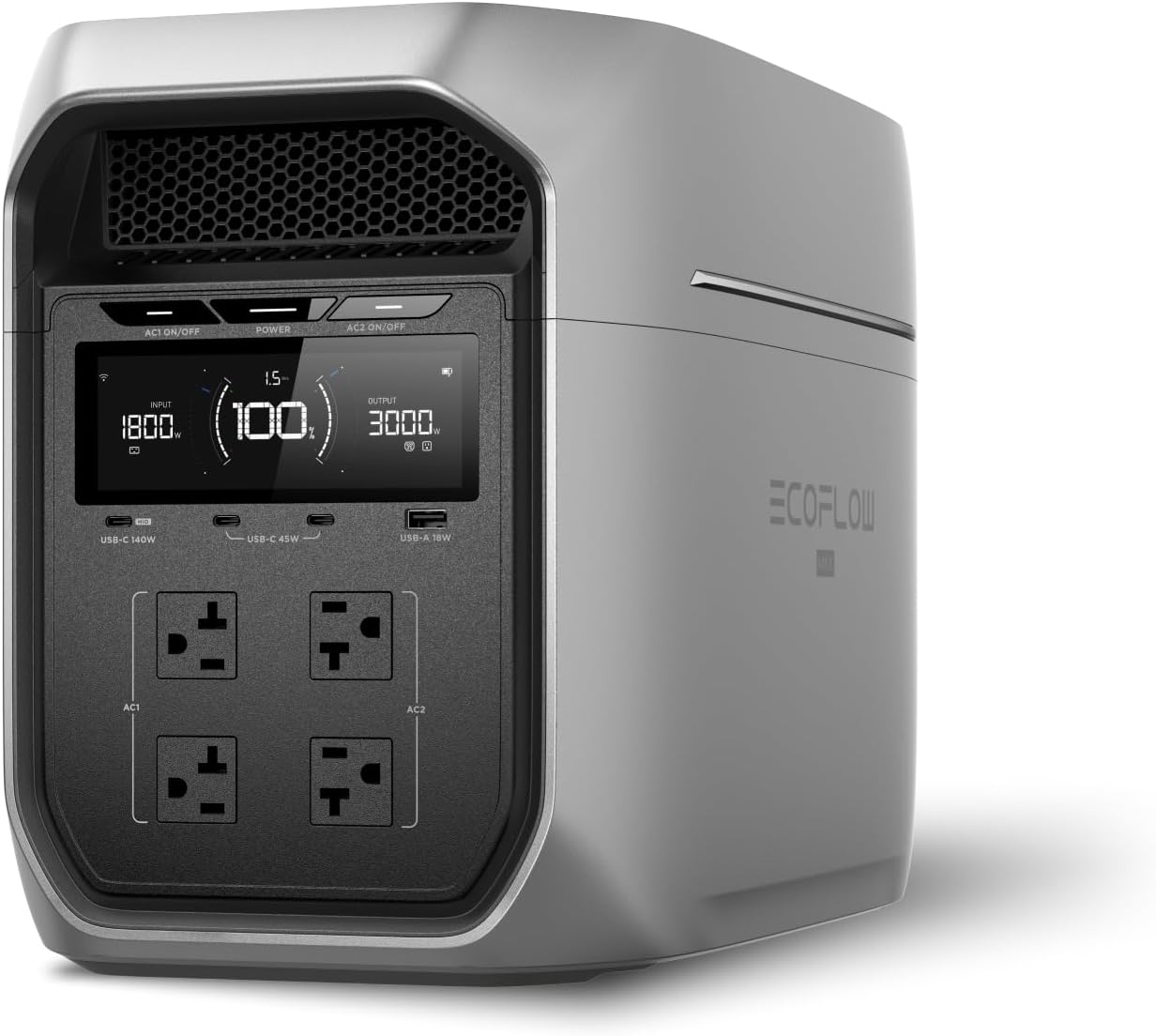
EcoFlow
EcoFlow DELTA 3 Plus
EcoFlow's newest mid-range flagship. The DELTA 3 Plus improves on the Delta 2 with faster charging, LiFePO4 chemistry, and UPS functionality — all at a lower price.
Frequently Asked Questions
What is the best cheap power station in 2026?
The EcoFlow RIVER 3 ($199) is the best cheap power station overall. It delivers 245Wh of LiFePO4 capacity, 300W output (600W with X-Boost), fast 60-minute charging, and an IP54 dust/splash rating — all for under $200. For even less, the Bluetti AC2A ($149) offers more capacity at 204Wh with 300W output.
Is a cheap power station worth it?
Yes — budget power stations under $300 have improved dramatically. Even the cheapest options now use LiFePO4 batteries with 3,000+ cycle lifespans, meaning they'll last 8-10 years with daily use. As long as you stick to established brands like Bluetti, EcoFlow, Anker, and Jackery, a budget power station is absolutely worth the investment.
What can a $200 power station run?
A $200 power station like the EcoFlow RIVER 3 (245Wh) can charge a smartphone 15-20 times, run a laptop for 3-4 hours, power LED camping lights for 20+ hours, run a portable fan for 6-8 hours, or keep a CPAP machine going for one night. With X-Boost, it can briefly handle appliances up to 600W like a small blender.
What is the cheapest LiFePO4 power station?
The Bluetti AC2A at $149 and the Jackery Explorer 100 Plus at $149 are the cheapest LiFePO4 power stations from reputable brands. The Bluetti AC2A is the better value — it offers 204Wh of capacity and AC outlets, while the Jackery 100 Plus is limited to 99Wh with USB-only output. Both use LiFePO4 chemistry rated for 3,000+ charge cycles.
Ready to Buy? Here's What We Recommend
Based on our testing and this guide, these are the best options for most people: