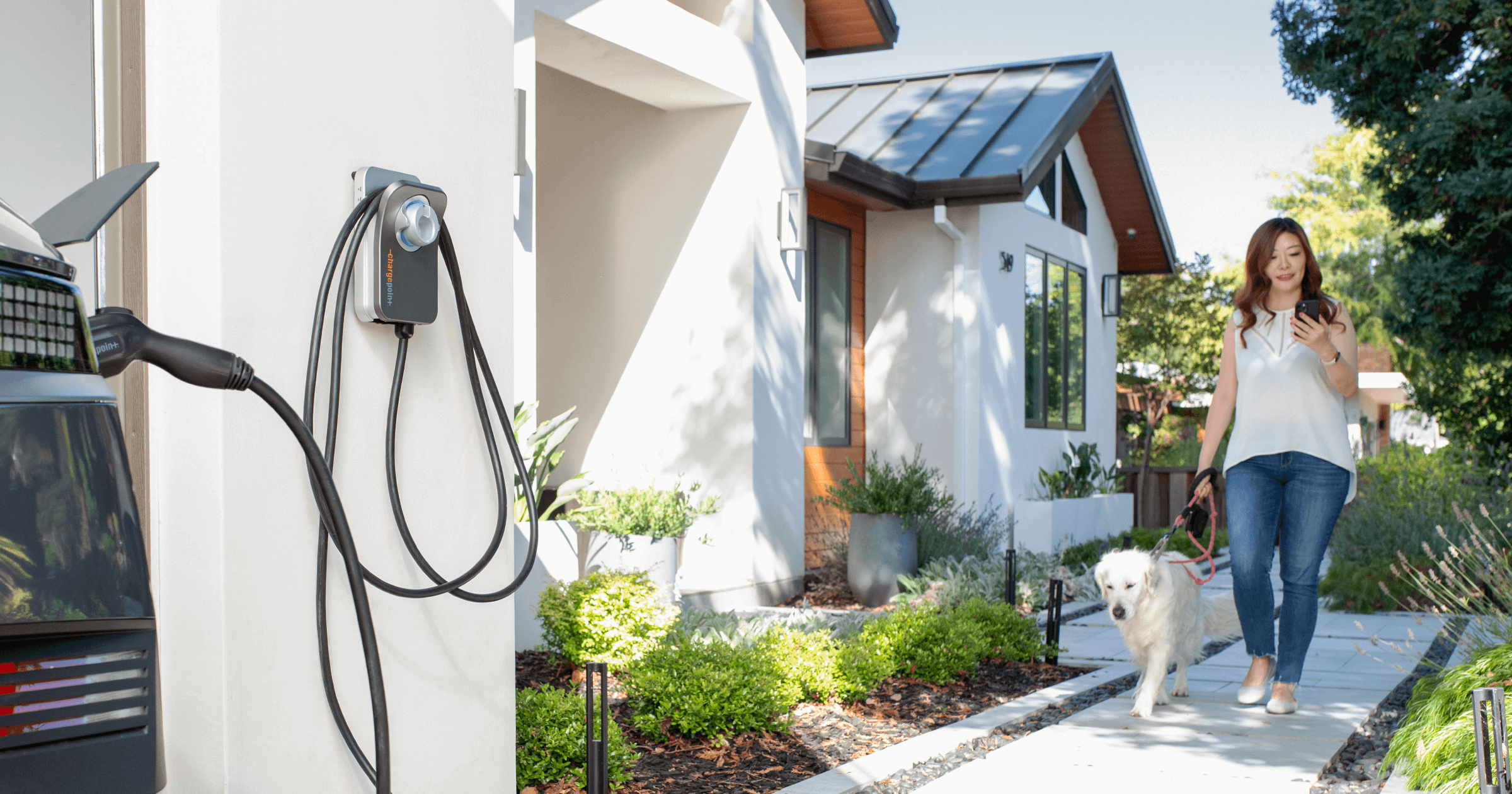
ChargePoint
ChargePoint Home Flex
4.6
The most versatile Level 2 home EV charger. Adjustable 16-50A output, a 23-foot cable, and the best companion app in the business make it the top pick for any EV owner.
Max Power
12kW
Amps
50A
Cord
23ft
Charging your EV at home is the most convenient and cost-effective way to keep your battery full. A Level 2 home charger delivers 25-50 miles of range per hour of charging, meaning most drivers wake up to a full battery every morning. From budget-friendly plug-in units you can install yourself to premium smart chargers with app scheduling and energy monitoring, we have tested the leading options for every EV and garage setup.
Higher amperage means faster charging. A 40A charger delivers about 9.6 kW (25-30 miles of range per hour). A 48A charger delivers 11.5 kW (30-37 miles per hour). Most EVs max out at 48A for home charging, so going higher than 48A provides no benefit. Your electrical panel needs a circuit breaker rated 25% above the charger's amperage.
Cord length determines how far from the charger you can park. Most chargers offer 21-25 feet of cable. Measure the distance from where you will mount the charger to your EV's charge port in every parking position. A longer cord gives flexibility but adds weight to the unit.
Smart chargers connect via WiFi or Bluetooth and offer app-based scheduling to charge during off-peak electricity rates, energy usage tracking, and voice assistant integration. If your utility offers time-of-use pricing, smart scheduling can save you hundreds per year. Basic "dumb" chargers are cheaper but lack these savings tools.
Plug-in chargers use a NEMA 14-50 outlet (the same as a dryer or oven) and can be installed DIY if you already have the outlet. Hardwired chargers are permanently wired into your electrical panel, require an electrician, but are often required by code for 48A+ installations. Plug-in models are portable if you move homes.
All Level 2 chargers use the J1772 connector, which works with every EV sold in North America. Tesla vehicles now use the NACS port but come with a J1772 adapter. The Tesla Wall Connector uses NACS natively. For non-Tesla EVs, any J1772 charger will work regardless of brand.
Tesla · $475 · 4.7/5
The ideal charger for Tesla owners. The Wall Connector offers seamless vehicle integration, a clean design, and power sharing — all at a competitive $475 price point.
Read full review →ChargePoint · $700 · 4.6/5
The most versatile Level 2 home EV charger. Adjustable 16-50A output, a 23-foot cable, and the best companion app in the business make it the top pick for any EV owner.
Read full review →Autel · $499 · 4.6/5
A premium smart EV charger with 12kW charging speed, ENERGY STAR certification, and AI-driven cost optimization. Triple connectivity ensures reliable app control.
Read full review → ChargePoint
The most versatile Level 2 home EV charger. Adjustable 16-50A output, a 23-foot cable, and the best companion app in the business make it the top pick for any EV owner.
Max Power
12kW
Amps
50A
Cord
23ft
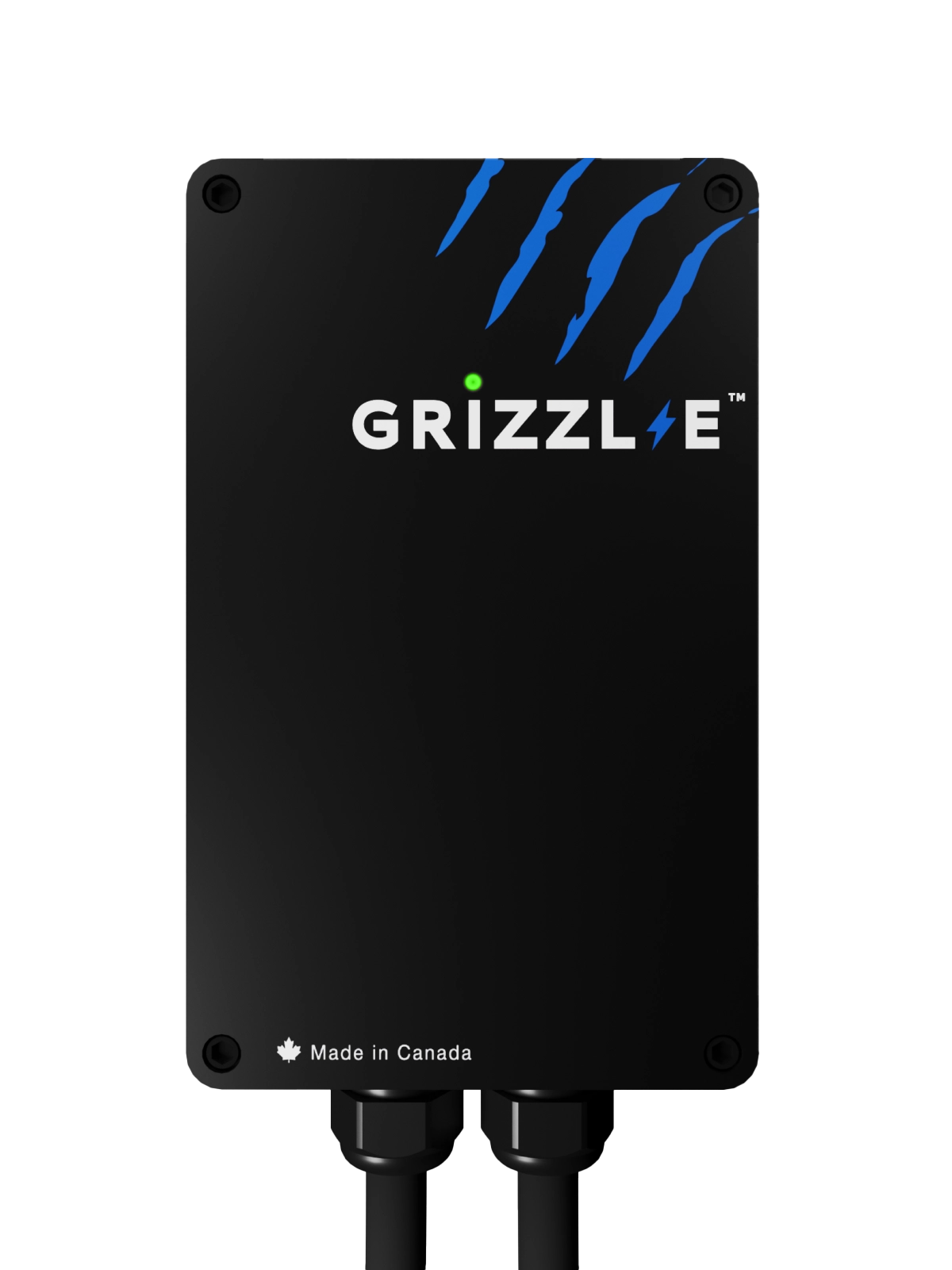
Grizzl-E
A rugged, no-frills Level 2 EV charger built to last in any weather. At $400 with a 24-foot cord and NEMA 4 enclosure, it's the best value for plug-and-charge simplicity.
Max Power
9.6kW
Amps
40A
Cord
24ft
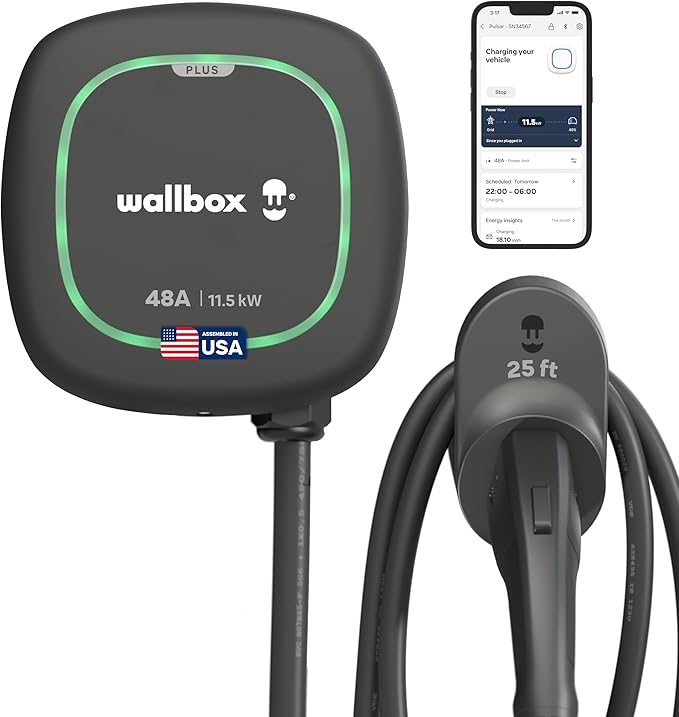
Wallbox
A beautifully designed smart EV charger with one of the smallest footprints in its class. The myWallbox app, power sharing, and 48A output make it a top pick for connected homes.
Max Power
11.5kW
Amps
48A
Cord
25ft
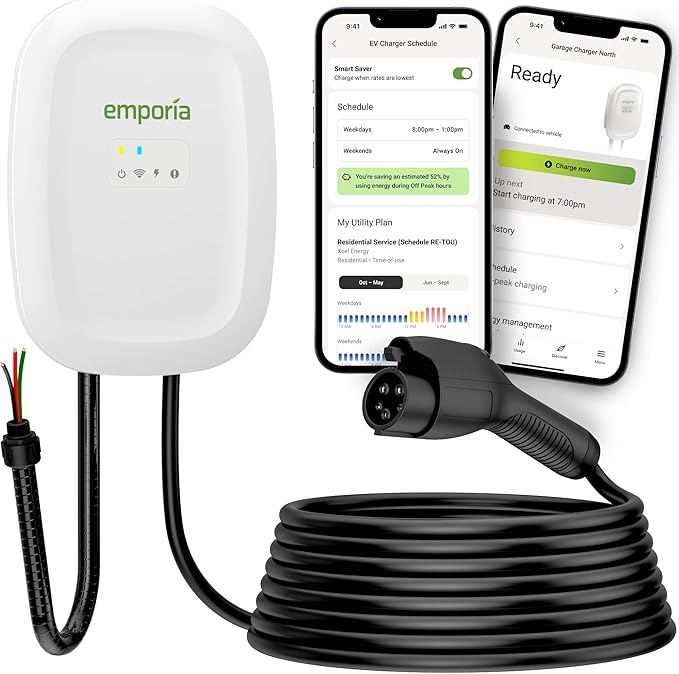
Emporia Energy
The best budget-friendly smart EV charger. Emporia pairs a 48A charger with their energy monitoring ecosystem, giving you whole-home energy visibility at a price $200+ below premium competitors.
Max Power
11.5kW
Amps
48A
Cord
24ft
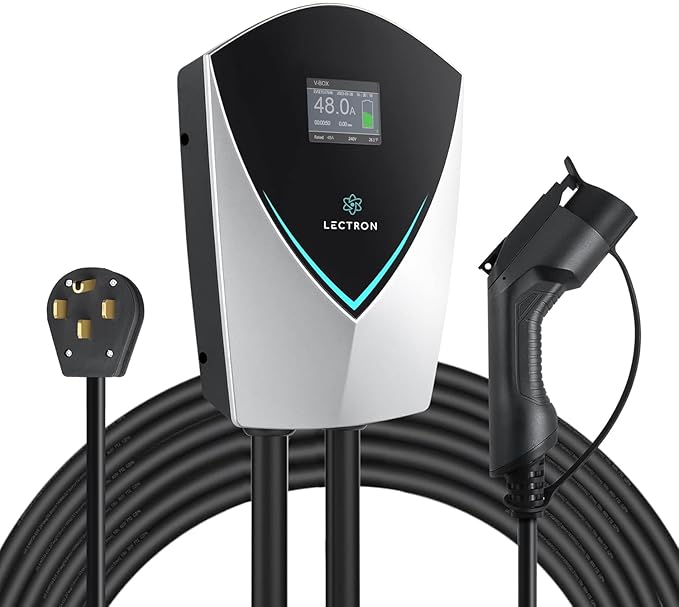
Lectron
An affordable 48A smart charger that punches above its price class. WiFi connectivity and Energy Star certification at under $400 make the V-Box a compelling value pick.
Max Power
11.5kW
Amps
48A
Cord
21ft
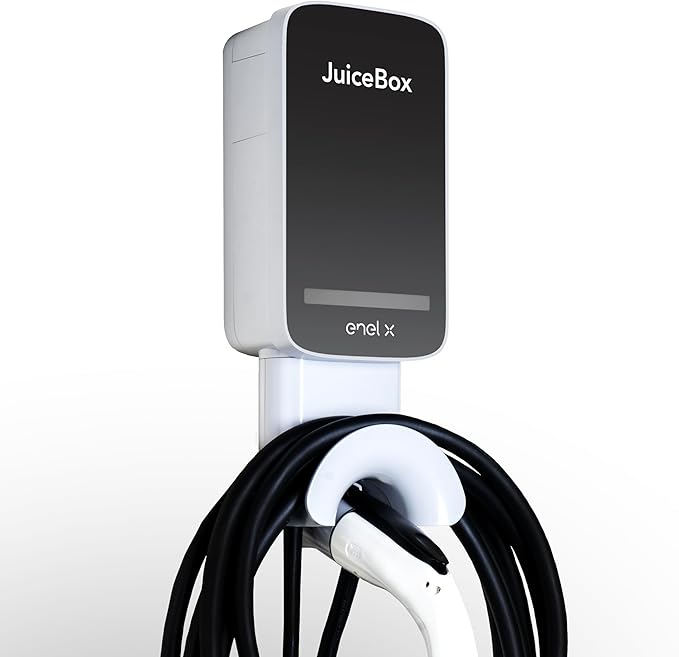
JuiceBox
A feature-rich smart charger with the broadest voice assistant ecosystem support. The 25-foot cable and smart home integrations make it ideal for tech-forward households.
Max Power
9.6kW
Amps
40A
Cord
25ft
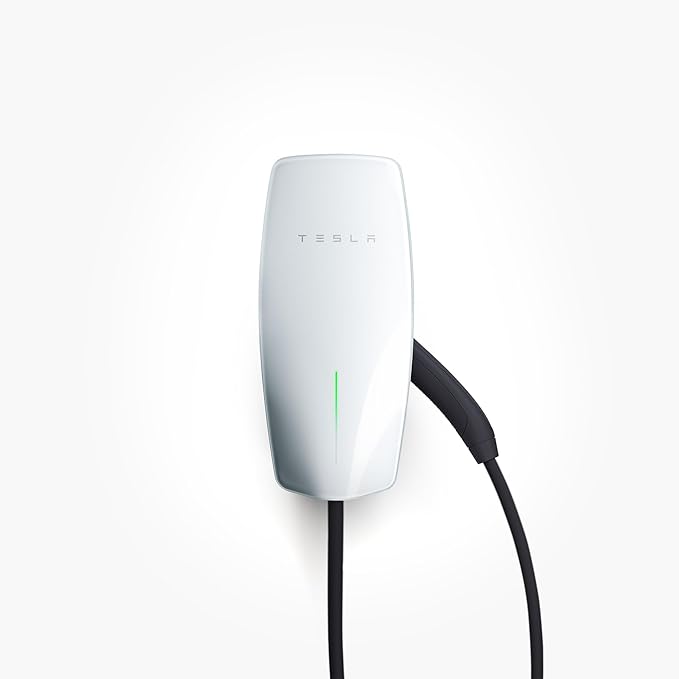
Tesla
The ideal charger for Tesla owners. The Wall Connector offers seamless vehicle integration, a clean design, and power sharing — all at a competitive $475 price point.
Max Power
11.5kW
Amps
48A
Cord
24ft
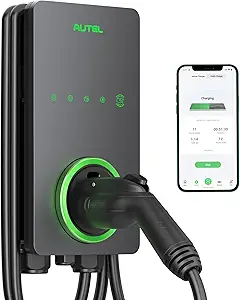
A premium smart EV charger with 12kW charging speed, ENERGY STAR certification, and AI-driven cost optimization. Triple connectivity ensures reliable app control.
Max Power
12kW
Amps
50A
Cord
25ft
Level 1 charging uses a standard 120V household outlet and adds only 3-5 miles of range per hour. Level 2 uses a 240V circuit (like a dryer outlet) and delivers 25-50 miles per hour, charging most EVs overnight. Level 2 is 5-10x faster and is what all the chargers on this page provide. Level 1 is only practical for plug-in hybrids with small batteries.
With a 48A Level 2 charger (11.5 kW), a typical 60-80 kWh EV battery charges from 20% to 80% in about 3-4 hours. A full 0-100% charge takes 6-8 hours. Most drivers plug in with 30-50% remaining and wake up to a full battery. Even a slower 32A charger can fully charge most EVs overnight during the 8-10 hours it sits in the garage.
If you already have a 240V NEMA 14-50 outlet in your garage, you can plug in a compatible charger yourself with no electrician needed. If you need a new circuit run from your electrical panel or want a hardwired installation, hire a licensed electrician. Expect to pay $200-800 for installation depending on your panel's capacity and the distance to the charger location.
The federal Alternative Fuel Vehicle Refueling Equipment Credit covers 30% of the cost (up to $1,000) for charger hardware and installation. Many states and utilities offer additional rebates of $200-500. Energy Star certified chargers may qualify for extra utility incentives. Check the Database of State Incentives for Renewables and Efficiency (DSIRE) for your area.