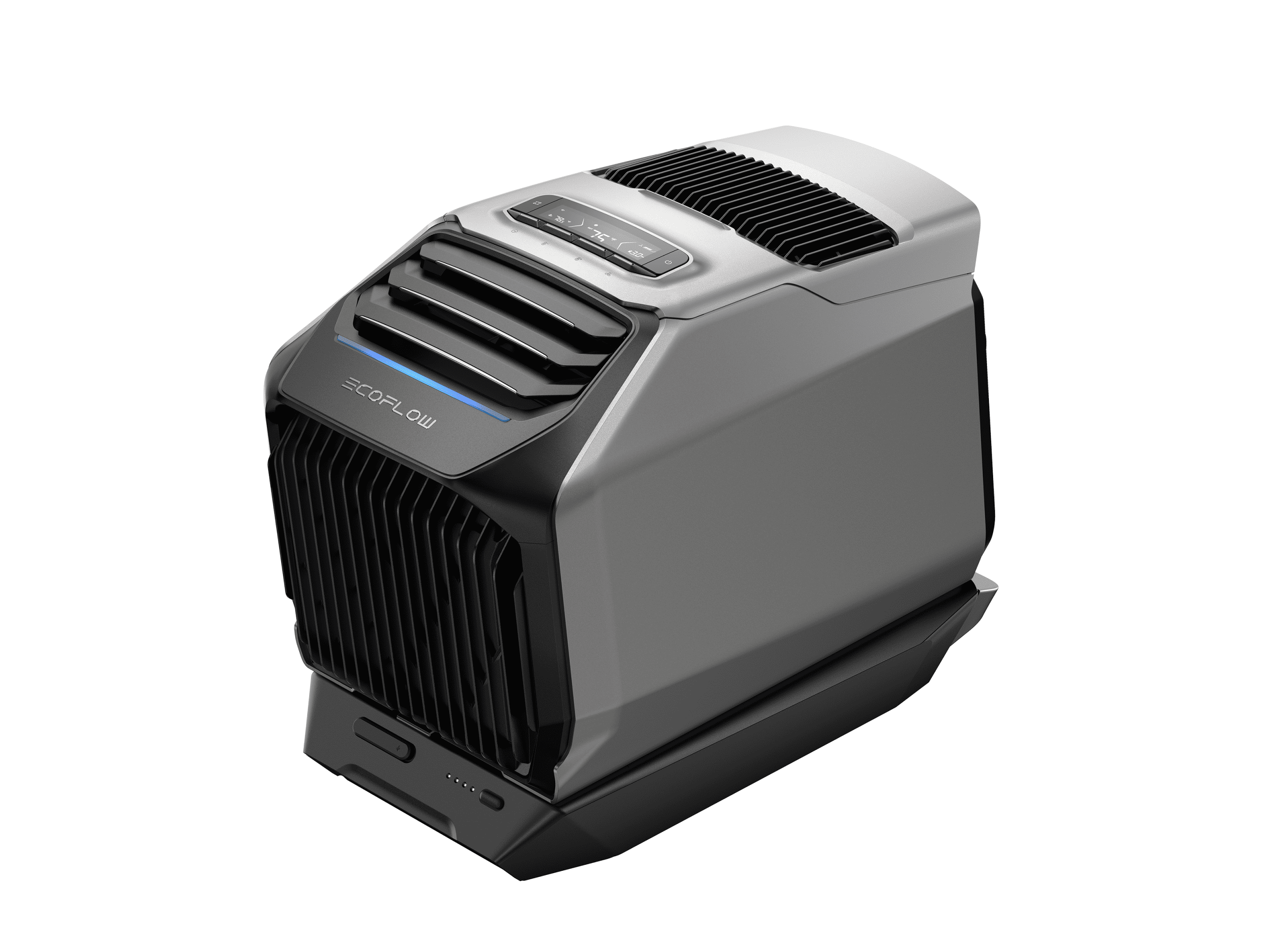
EcoFlow
EcoFlow Wave 2
4.5
A battery-compatible portable AC with both cooling and heating. Runs on AC power, 12V DC, or EcoFlow's add-on battery for fully off-grid climate control.
BTU
5100BTU
Weight
30.9 lbs
Battery
1159Wh
Portable air conditioners bring cooling anywhere, from sweltering campsites and RVs to garages and rooms without central AC. The category spans battery-powered units you can take completely off-grid to traditional plug-in models that deliver serious BTU output for RVs with shore power. Whether you are looking for a compact battery AC for tent camping or a powerful unit to cool your RV on the road, we have tested the best options across every price point.
BTU (British Thermal Units) measures cooling power. A 2,300-3,000 BTU unit can cool a small tent or personal space. A 5,000-8,000 BTU unit handles a small room or RV. For a full-size room (200+ sq ft), you need 8,000-10,000+ BTU. Battery-powered units typically max out around 5,100 BTU due to energy constraints.
Battery-powered portable ACs run off built-in or add-on batteries for fully off-grid cooling, but offer limited BTU and runtime. AC-powered units plug into a standard outlet (or power station) and deliver much higher cooling output with unlimited runtime. Some models accept both, giving you the best of both worlds.
Battery-powered units designed for camping weigh 16-31 lbs. Traditional plug-in portable ACs weigh 50+ lbs and are designed to stay in one room or RV. If you need to carry the unit from a car to a campsite, weight is a top priority. For permanent RV or room installations, weight matters less.
Compressor-based portable ACs typically run at 44-56 dB on low settings, comparable to a quiet conversation. Higher BTU units can be louder at full power. If you plan to sleep with the unit running, look for models with a quiet or sleep mode that keeps noise below 50 dB.
Real-world cooling depends on the space size, insulation, and outdoor temperature. A 5,100 BTU unit like the EcoFlow Wave 2 can drop the temperature in a well-insulated tent by 15-20 degrees. In a poorly insulated RV on a 100-degree day, the same unit might only manage a 5-10 degree drop. Match BTU to your space realistically.
EcoFlow · $1099 · 4.5/5
A battery-compatible portable AC with both cooling and heating. Runs on AC power, 12V DC, or EcoFlow's add-on battery for fully off-grid climate control.
Read full review →BougeRV · $700 · 4.1/5
BougeRV's entry into portable AC offers solid cooling at a lower price point. Works on 12V/24V DC power for direct vehicle integration.
Read full review →BLACK+DECKER · $380 · 4.1/5
A reliable traditional portable AC from BLACK+DECKER with self-evaporating technology. Best for RVs with shore power or small rooms at home.
Read full review → EcoFlow
A battery-compatible portable AC with both cooling and heating. Runs on AC power, 12V DC, or EcoFlow's add-on battery for fully off-grid climate control.
BTU
5100BTU
Weight
30.9 lbs
Battery
1159Wh
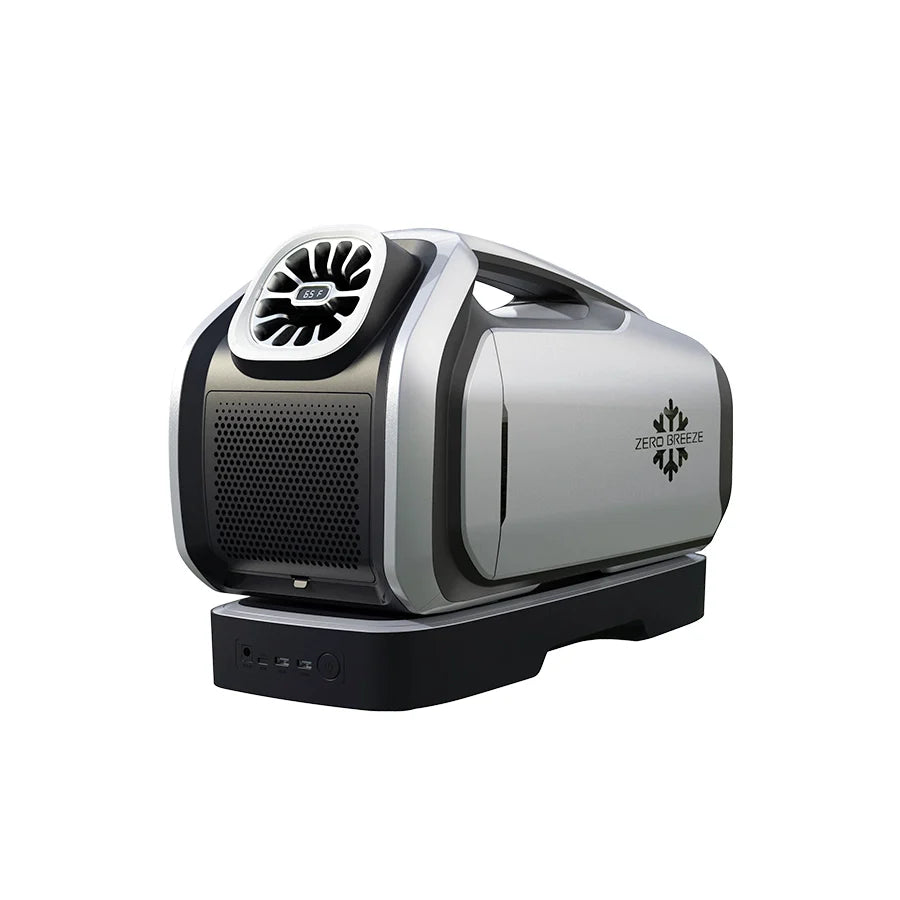
Zero Breeze
The most portable true compressor-based AC on the market. At 16.5 lbs with battery-powered operation, it's built for tent camping and personal cooling.
BTU
2300BTU
Weight
16.5 lbs
Battery
1100Wh
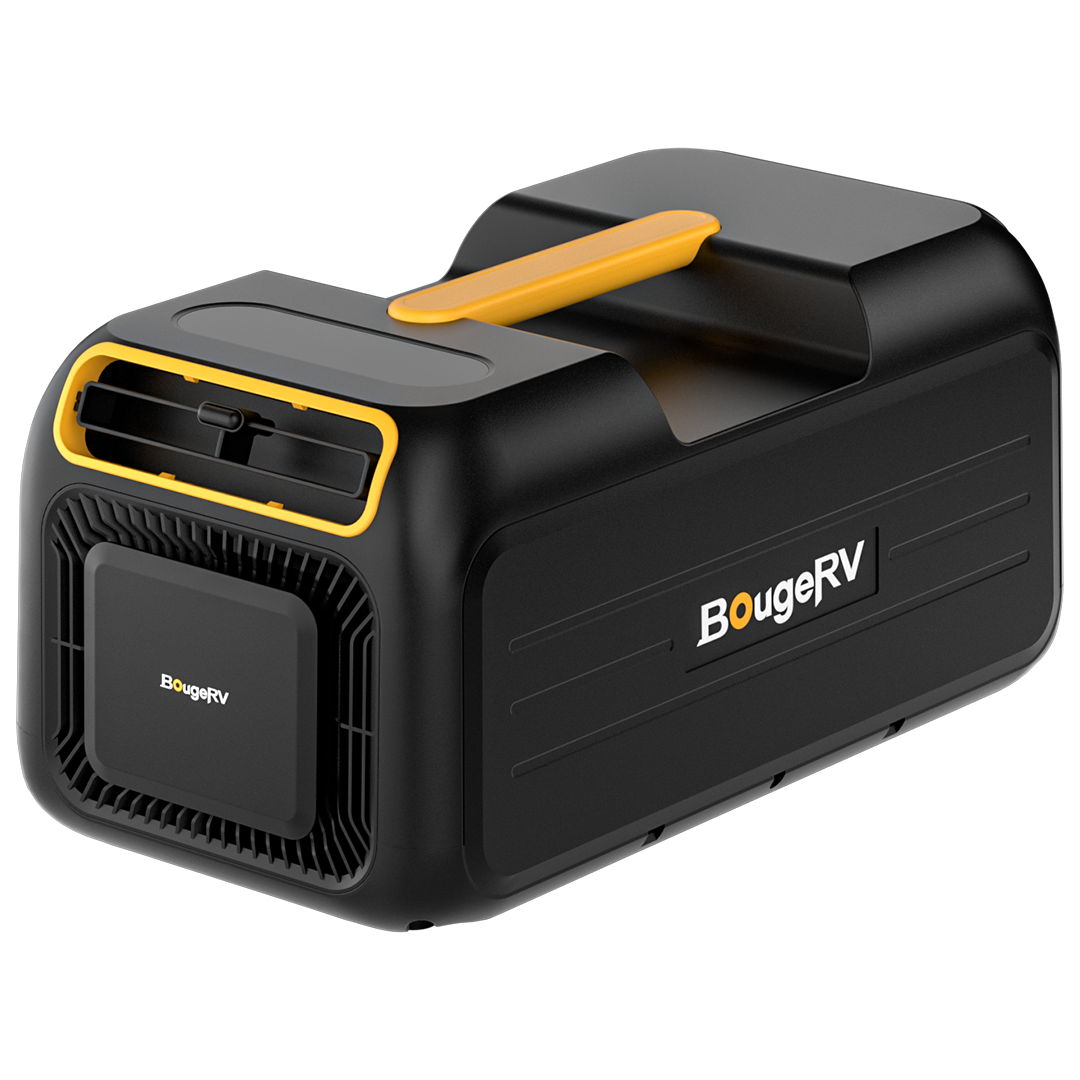
BougeRV
BougeRV's entry into portable AC offers solid cooling at a lower price point. Works on 12V/24V DC power for direct vehicle integration.
BTU
2899BTU
Weight
27.6 lbs
Battery
0Wh
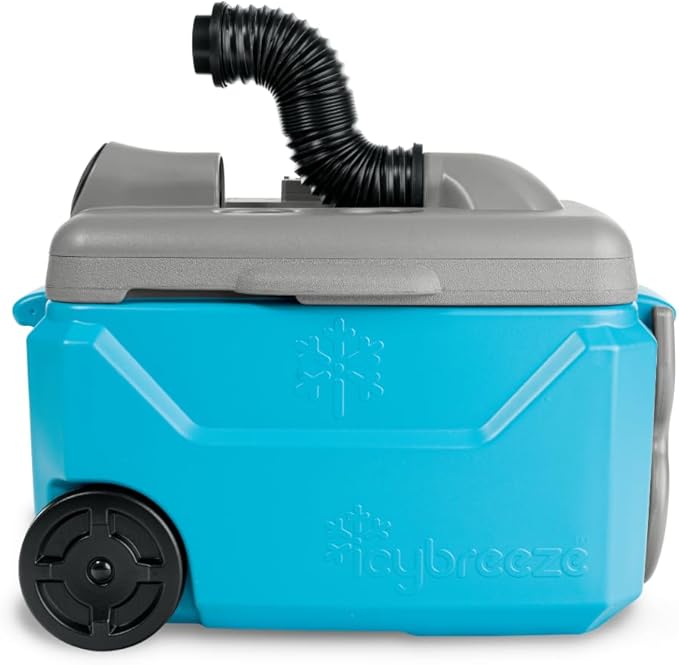
IcyBreeze
A unique hybrid cooler-AC that blows cold air using ice evaporation. Best for personal cooling at tailgates, beaches, and outdoor events — not tent cooling.
BTU
1200BTU
Weight
18 lbs
Battery
240Wh
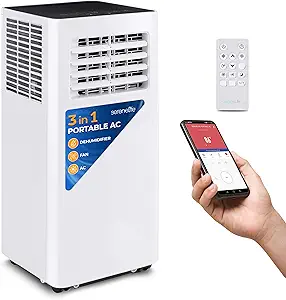
SereneLife
A traditional portable AC sized for RVs and small rooms. At $350 for 10,000 BTU, it delivers real cooling power when you have shore power available.
BTU
10000BTU
Weight
52.9 lbs
Battery
0Wh
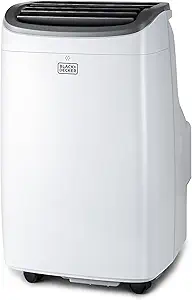
BLACK+DECKER
A reliable traditional portable AC from BLACK+DECKER with self-evaporating technology. Best for RVs with shore power or small rooms at home.
BTU
8000BTU
Weight
52.5 lbs
Battery
0Wh
It depends on your use case. Battery-powered ACs like the EcoFlow Wave 2 offer true portability for camping, tailgating, and off-grid use, but they are limited in BTU output and runtime. Traditional plug-in portable ACs deliver far more cooling power (8,000-10,000+ BTU) with unlimited runtime but require a power outlet. For RV use with shore power, a traditional unit is more practical. For tent camping, battery-powered is the only real option.
For a 2-person tent, 2,300-3,000 BTU is usually sufficient. For a small RV or camper (under 150 sq ft), aim for 5,000-8,000 BTU. For a large RV or small room (150-250 sq ft), you need 8,000-10,000 BTU. Keep in mind that insulation quality, sun exposure, and outdoor temperature all affect real-world performance significantly.
Yes, but check the wattage requirements carefully. A small 5,100 BTU AC draws around 700-900W. A 10,000 BTU unit can draw 1,200W+. You need a power station with enough continuous output wattage and sufficient capacity (Wh) for your desired runtime. A 1,000Wh station might run a 5,100 BTU AC for about 1-1.5 hours on battery alone.