Guide
Power Station + Generator Combo: The Ultimate Outage Strategy

TL;DR
Why pairing a portable power station with a generator is the smartest outage strategy. Best combos, how to use them together, and fuel storage tips for extended blackouts.
Most people preparing for power outages pick a side: generator or power station. But the real answer is both.
Generators are unbeatable for sustained high-draw loads — keeping the fridge cold, running a well pump, powering a space heater. But they’re loud, they burn fuel, and you can’t safely run them indoors or overnight. Power stations are silent, safe for indoor use, and perfect for overnight essentials, but they run out of stored energy and can’t handle heavy loads for extended periods.
Pairing them together gives you the best of both worlds with none of the gaps. Here’s exactly how to set up the combo and which pairings work best.
Why the Combo Beats Either Alone
The generator handles daytime heavy lifting. Run it during waking hours to power high-draw appliances: refrigerator (150W continuous), microwave (1,000W), well pump (1,000-1,500W), space heater (1,500W), washing machine (500W). These are the loads that drain a power station fast and the times when generator noise doesn’t matter.
The power station handles quiet nighttime loads. When you go to bed, shut off the generator. The power station silently runs your CPAP machine (30-60W), keeps phones charging (15W each), powers LED lights (10W), and maintains your Wi-Fi router (12W). A 1,000Wh station running these essentials lasts 8-12 hours easily — more than enough to cover overnight.
The generator recharges the station. Here’s the key move: while the generator is running during the day, plug in your power station to recharge it. Most modern stations charge from 0 to 100% via AC in 1-2 hours. So you’re topping off your nighttime power supply as a byproduct of running the generator anyway.
This cycle — generator by day, power station by night, recharge during overlap — can sustain you indefinitely as long as you have fuel.
Best Combo Pairings
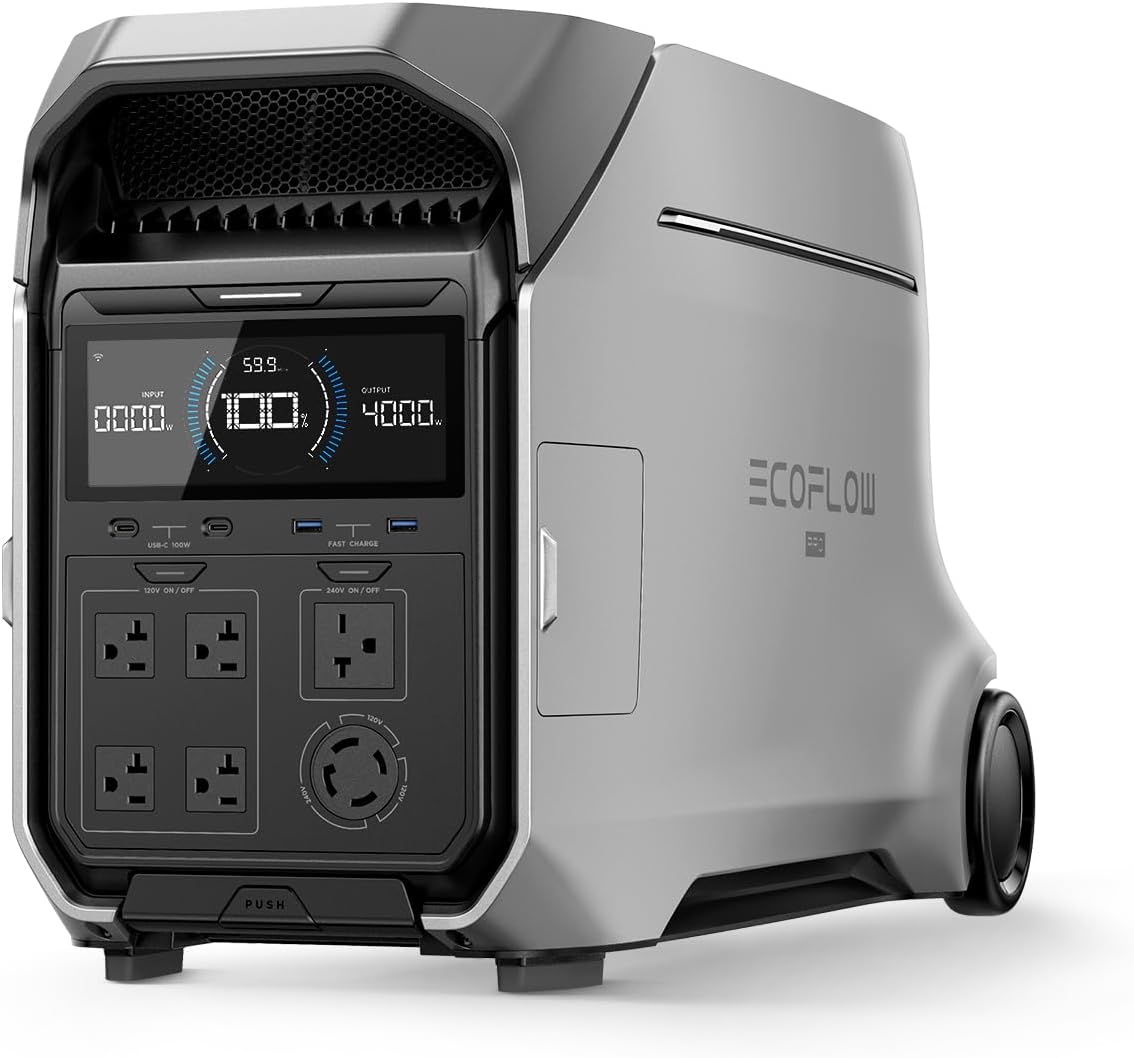
Best Overall: Honda EU2200i + EcoFlow DELTA 3 Plus (~$1,800 total)
The gold standard pairing. The Honda EU2200i is the most reliable inverter generator on the market — it’s the one contractors, campers, and preppers have trusted for years. Pair it with the EcoFlow DELTA 3 Plus and you get a system that handles virtually any residential outage scenario.
Why it works:
- Honda EU2200i produces 2,200W starting / 1,800W running — enough for a fridge, lights, and charging the DELTA 3 Plus simultaneously
- DELTA 3 Plus charges to 100% in 56 minutes from the generator’s AC outlet
- The DELTA 3 Plus’s 1,024Wh battery runs CPAP + phone + router + lights for 10+ hours overnight
- Honda’s fuel efficiency: 0.57 gallons per hour at 25% load, so a single gallon stretches a long way
- Both are compact enough to store in a garage or closet
Best for: Homeowners who want the most reliable, proven setup and don’t mind paying for Honda quality.
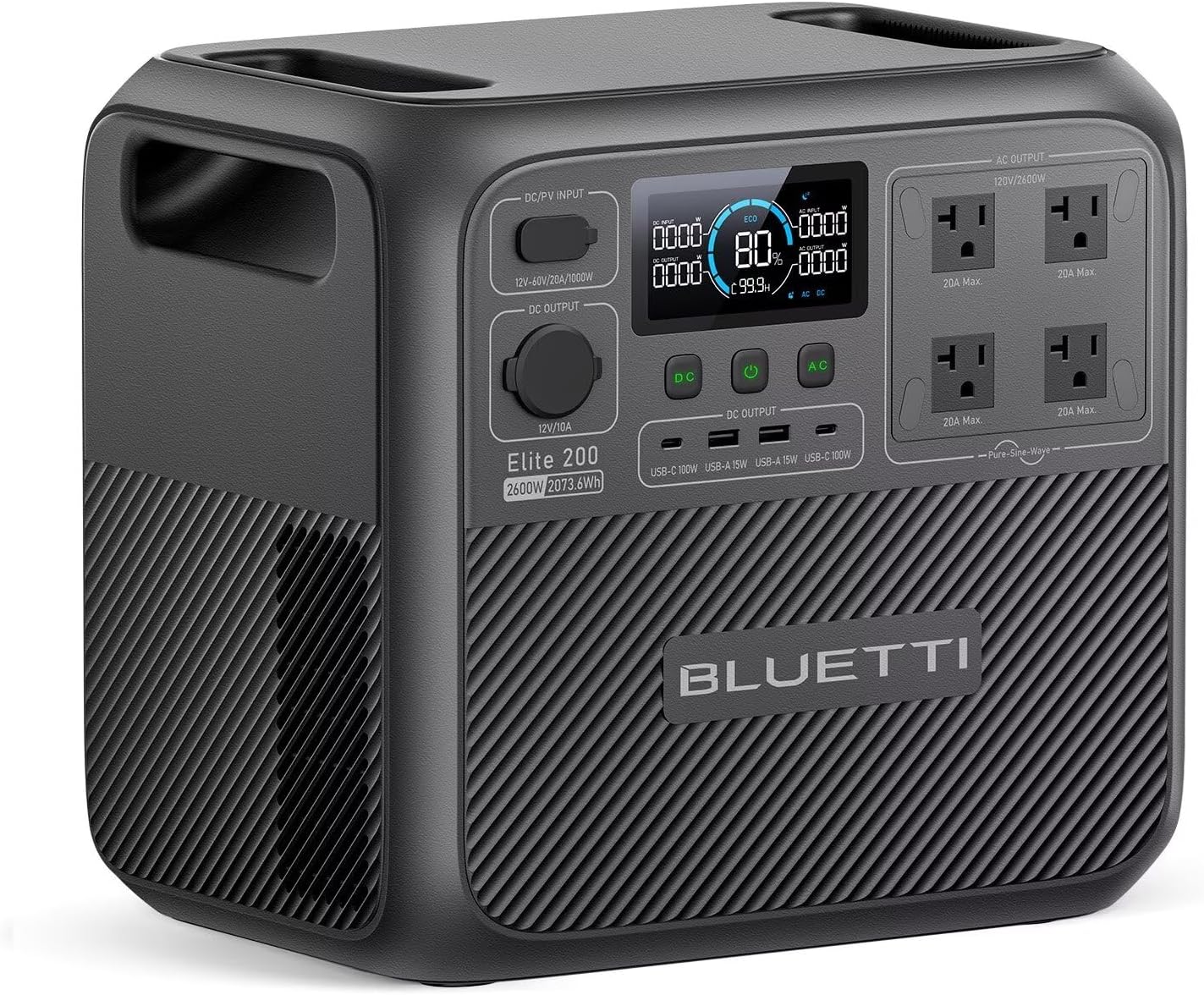
Best Value: Champion 4500W Dual Fuel + Bluetti Elite 200 V2 (~$1,700 total)
If you want more generator power for less money and the flexibility to run on propane, the Champion 4500W Dual Fuel paired with the Bluetti Elite 200 V2 is the value pick.
Why it works:
- Champion’s 4,500W starting power handles everything the Honda does plus bigger loads like a window AC unit or well pump
- Dual fuel capability means you can run gasoline or propane — propane stores indefinitely and doesn’t go stale
- The Bluetti Elite 200 V2’s 2,073Wh capacity provides nearly double the overnight runtime of the DELTA 3 Plus
- At ~$1,700 combined, it’s comparable in price to the Honda combo but with more capacity across the board
Best for: Households with higher power needs (well pumps, window AC) or anyone who wants propane as a backup fuel option.
Budget Pick: Westinghouse iGen2200 + Anker SOLIX C1000 (~$1,200 total)
For a capable combo under $1,300, the Westinghouse iGen2200 and Anker SOLIX C1000 deliver solid performance at a lower buy-in.
Why it works:
- The iGen2200 matches the Honda EU2200i’s output at roughly half the price
- Anker C1000’s 1,056Wh battery and 58-minute charge time make the recharge cycle fast and efficient
- 1,800W continuous output from the C1000 can even handle brief high-draw loads if the generator needs a break
- Total investment under $1,300 makes this accessible for most households
Best for: Budget-conscious buyers who want a proven combo without the Honda premium.
How to Set Up the Daily Cycle
Here’s the routine that maximizes fuel efficiency and keeps everything running:
Morning (7-8 AM): Start the generator. Plug in the fridge, power station, and any devices that need charging. The power station will charge while you’re running daytime loads anyway — no wasted fuel.
Daytime (8 AM - 9 PM): Generator runs your heavy loads. Use the microwave, run the washing machine, charge laptops and tablets. Keep the power station plugged in to stay topped off.
Evening (9 PM): Shut off the generator. Switch the fridge to the power station if your station can handle it (most 1,000Wh+ stations can run a modern fridge for 8-12 hours). Otherwise, the fridge stays off overnight — it’ll hold temperature for 4-6 hours with the door closed.
Overnight: Power station silently runs CPAP, phones, router, and lights. No noise, no fumes, no worrying about carbon monoxide.
Repeat until power is restored.
Fuel Storage Tips for Extended Outages
Your generator is only useful if you have fuel. Plan ahead:
- How much to store: Budget 1 gallon per hour at moderate load. For a 3-day outage running 8 hours per day, you need 20-24 gallons. For a week, 40+ gallons.
- Use approved containers. 5-gallon Jerry cans are the standard. Store them in a detached garage or shed — never inside your living space.
- Add fuel stabilizer. Untreated gasoline degrades in 3-6 months. Fuel stabilizer (like STA-BIL) extends shelf life to 12-24 months. Add it to every can.
- Rotate your supply. Every 6 months, pour stored gas into your car’s tank and refill with fresh fuel. This keeps your supply usable without waste.
- Consider propane. If your generator supports dual fuel, keep a few 20 lb propane tanks on hand. Propane doesn’t degrade, doesn’t spill, and stores safely for years.
Bottom Line
A generator alone leaves you noisy and fumeless at night. A power station alone runs out during multi-day events. Together, they cover every gap.
Start with the combo that fits your budget, practice the day/night cycle before you actually need it, and keep your fuel supply rotated. For help sizing the right power station for your overnight needs, try our Power Station Calculator. And for a deeper comparison of generators vs. power stations as standalone options, read our Generator vs. Power Station Guide.
Recommended Power Stations
EcoFlow
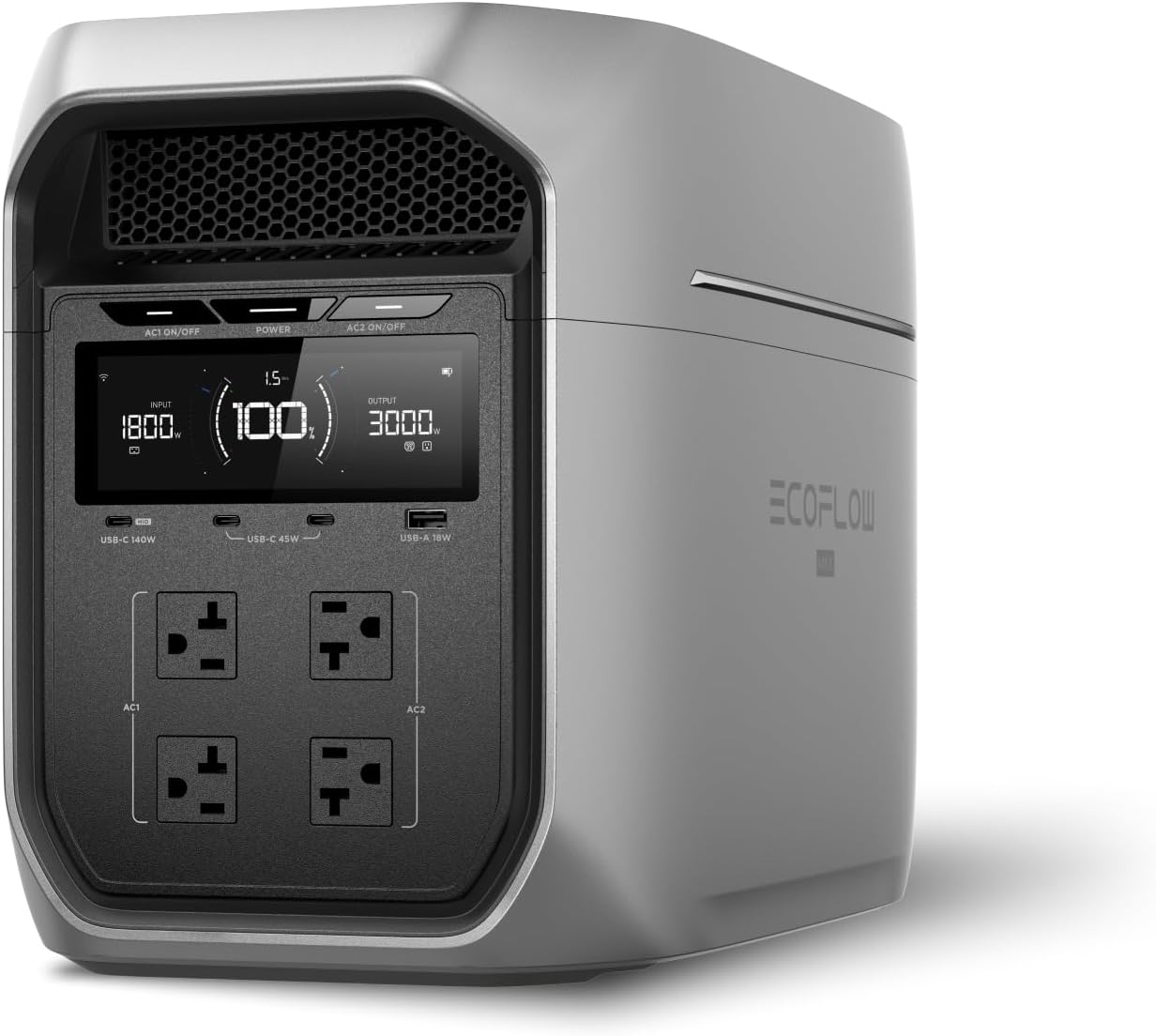
EcoFlow DELTA 3 Plus
EcoFlow's newest mid-range flagship. The DELTA 3 Plus improves on the Delta 2 with faster charging, LiFePO4 chemistry, and UPS functionality — all at a lower price.
Frequently Asked Questions
Can I charge a power station with a generator?
Yes. Most portable power stations charge from any standard 120V AC outlet, including a generator's outlet. Just plug the station's AC charging cable into the generator like you would a wall outlet. Some stations like the EcoFlow DELTA 3 Plus can charge from 0-100% in under an hour this way, so you only need to run the generator briefly.
Is a power station or generator better for a power outage?
Neither is best alone — they solve different problems. Generators handle high-draw, long-duration loads like refrigerators, well pumps, and space heaters. Power stations handle quiet nighttime loads like CPAP machines, phone charging, and LED lights. Together, they cover every scenario a multi-day outage throws at you.
How much fuel do I need to store for an extended outage?
A 2,200W inverter generator burns about 0.5-1 gallon per hour depending on load. For a 3-day outage running the generator 6-8 hours per day, plan for 12-20 gallons. Store fuel in approved containers, add fuel stabilizer (extends shelf life to 12-24 months), and rotate your supply every 6-12 months.
Ready to Buy? Here's What We Recommend
Based on our testing and this guide, these are the best options for most people: