Guide
Sunday Funday: Best Portable Power Stations for Day Trips & Picnics

TL;DR
The best lightweight portable power stations for day trips, picnics, and beach outings in 2026. Real-world picks that fit in a tote bag and keep speakers, phones, and a blender running all afternoon.
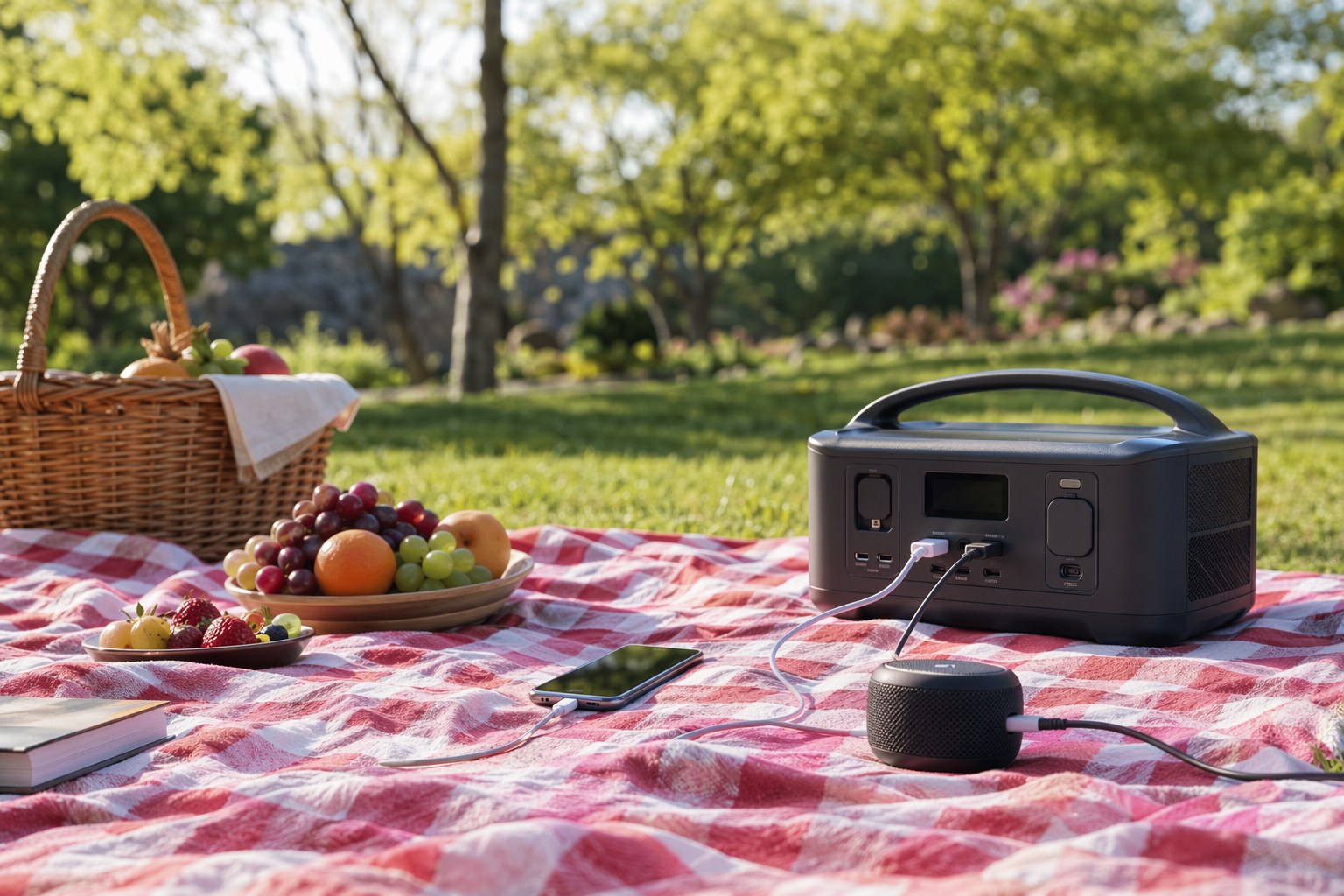
Not every adventure needs a 50-pound battery and a roof full of solar panels. Some of my favorite power setups are the ones I barely think about: throw a little box in the tote bag, drive to the lake, and never worry about a dead phone or a speaker quitting halfway through the playlist. After three years living out of my van and dragging power gear to more beaches, riverbanks, and shady park tables than I can count, I’ve learned that day trips reward going small.
This is the gear I actually grab for a Sunday picnic, a beach afternoon, or a quick trailhead lunch. No overkill, no aching shoulders, no babysitting a battery. Just enough power to keep the good times running until the sun goes down.
How Much Power a Day Trip Actually Needs
The biggest mistake I see at the park is people hauling a giant 1,500Wh station to charge two phones. You don’t need it. A day trip is a low-draw event, and the math is forgiving.
Here’s what a typical afternoon of gear pulls:
| Device | Typical Draw | 5 Hours |
|---|---|---|
| Phone charging | 15-20W | ~30Wh per top-off |
| Bluetooth speaker | 20-40W | 100-200Wh |
| Portable fan | 15-30W | 75-150Wh |
| Personal blender | 300-600W | ~25Wh per smoothie |
| Laptop (working outdoors) | 50-90W | 250-450Wh |
| String lights / lantern | 5-15W | 25-75Wh |
Add it up and a realistic picnic — a couple of phones, a speaker all afternoon, and a fan when it gets warm — lands somewhere around 200-350Wh of total consumption. That’s why a tiny 245Wh station genuinely does the job for most casual days, and why anything past 1,000Wh is dead weight you’ll regret carrying across a sandy parking lot.
If you want to understand the watt-hour math in plain English before you buy, I walk through it in our guide to portable power stations for camping. The same sizing logic applies to day trips, just scaled way down.
My Top Picks for Day Trips and Picnics
EcoFlow RIVER 3 — The Goldilocks Pick (245Wh)
This is the one that lives in my van’s side door, and it’s the unit I recommend first to anyone asking about day trips. The EcoFlow RIVER 3 weighs just 7.8 pounds — lighter than a full water bottle in a backpack — and tucks into a beach tote without a fight.
What makes it perfect for casual outings:
- 245Wh charges a phone roughly 15 times or runs a 30W speaker for about 7 hours
- 300W output (600W with X-Boost) handles a personal blender, a fan, and a string of lights at once
- LiFePO4 chemistry rated for 3,000+ cycles, so it’ll outlast a decade of Sundays
- Recharges to full in about an hour — top it off Saturday night, grab it Sunday morning
It won’t run a coffee maker or a griddle, but for a picnic blanket’s worth of gadgets, it’s the most no-brainer pick on this list. If you mostly need to keep phones and a speaker alive, you don’t need to spend more than this.
Bluetti AC70 — When You Want a Little More Muscle (768Wh)
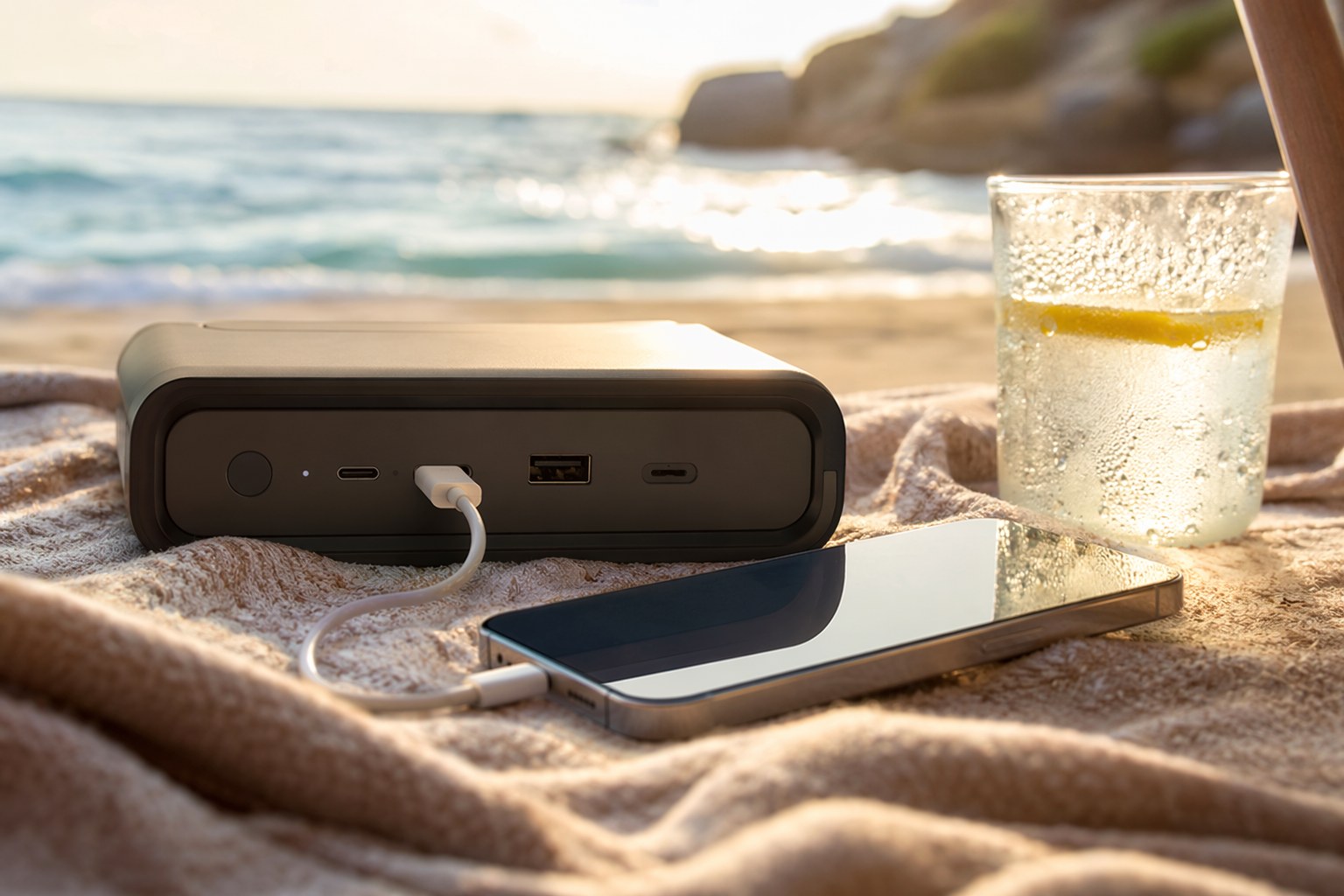
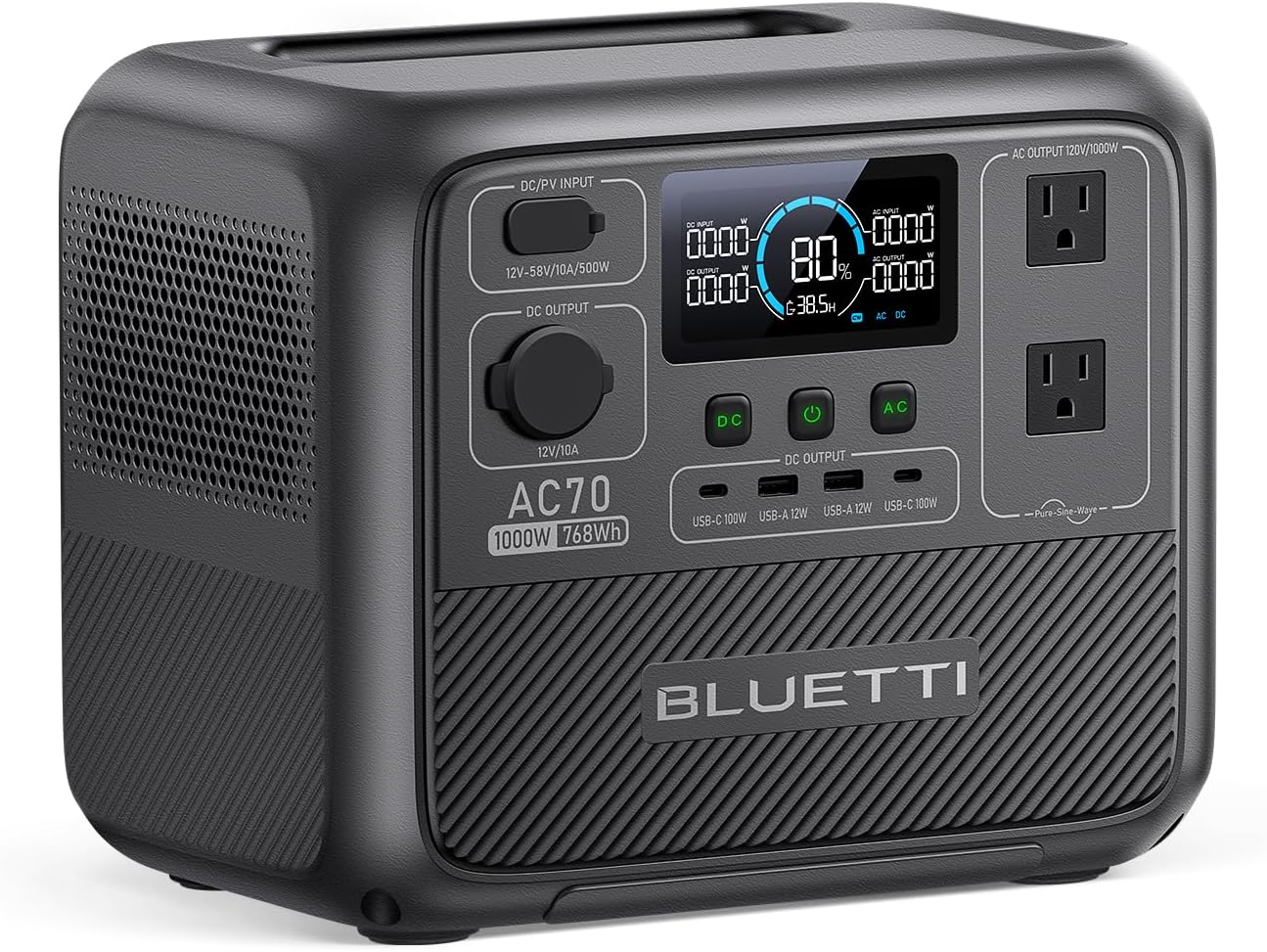
Some “day trips” turn into all-day affairs — a tailgate, a long beach setup, a riverside hangout where someone wants to run a mini fridge or blend frozen drinks on repeat. That’s where the Bluetti AC70 earns its spot.
At 768Wh and 22.5 pounds, it’s still tote-able for one person from the car to the table, but it has real headroom:
- 1,000W continuous output (2,000W in Power Lifting mode) runs a blender, a small griddle, or a coffee maker
- 768Wh keeps a 12V cooler humming for 12-15 hours while charging everything else
- 80% charge in about 45 minutes if you forgot to plug it in the night before
- A built-in handle that actually feels balanced when you carry it across a gravel lot
This is my pick for the group picnic — the person who shows up and quietly powers everyone’s afternoon.
Jackery Explorer 100 Plus — Truly Pocketable (99Wh)
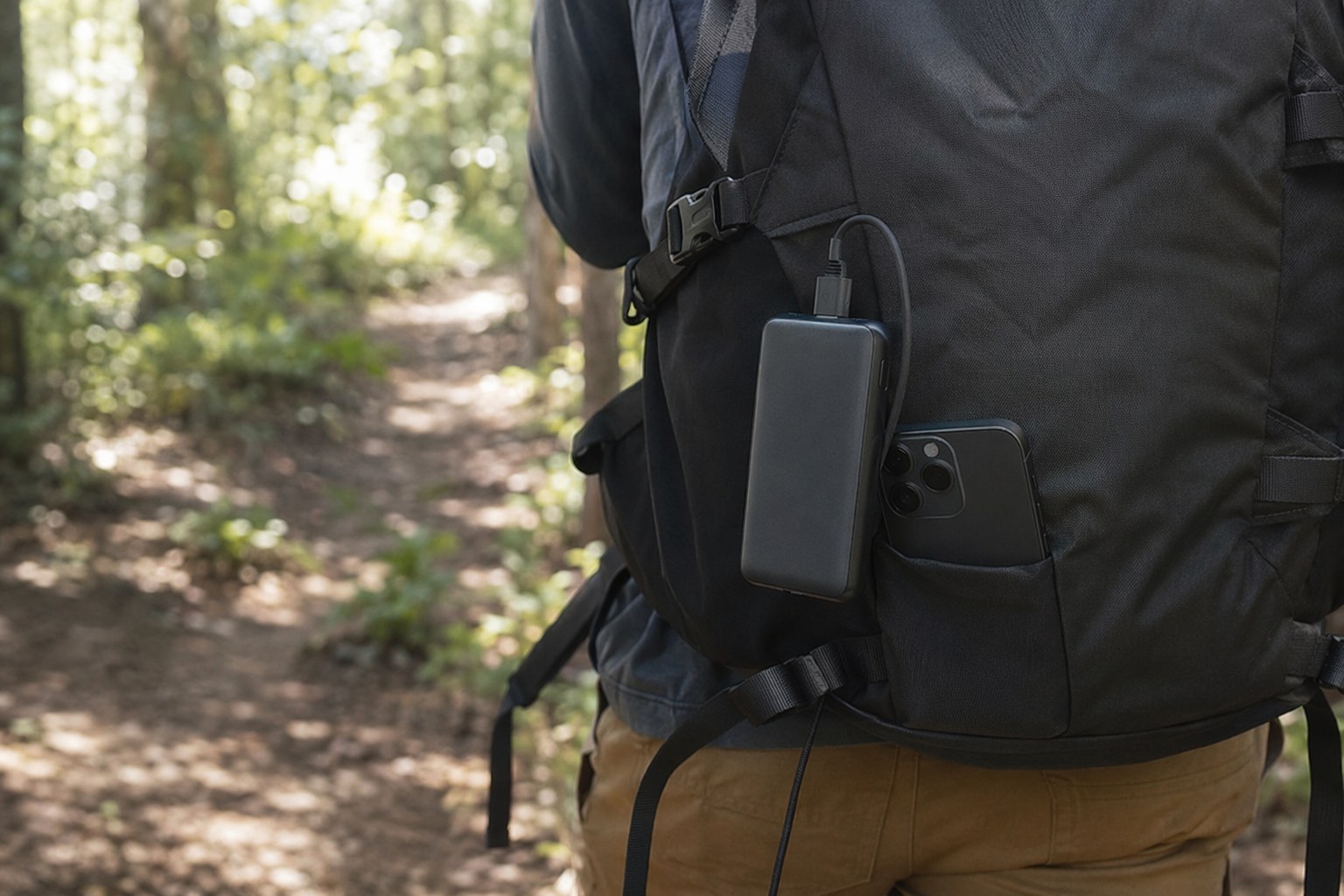
If “day trip” for you means a trailhead lunch or a paddle out to a sandbar, weight beats everything. The Jackery Explorer 100 Plus weighs just 2.1 pounds and is small enough to forget it’s in your daypack.
- 99Wh is also TSA and airline-approved, so it doubles as your travel charger
- 128W USB-C PD tops off phones, a GoPro, or even a laptop in a pinch
- No AC outlets, but for a hike-and-picnic combo, USB is all you actually use
- Charges fully in about two hours
For minimalist outings where every ounce counts, this is the one. It overlaps a lot with what I’d recommend for travel — see our best power bank for travel roundup if you want to compare it against pure battery banks.
EcoFlow DELTA 3 Plus — The Do-Everything Day-and-Beyond Unit (1,024Wh)
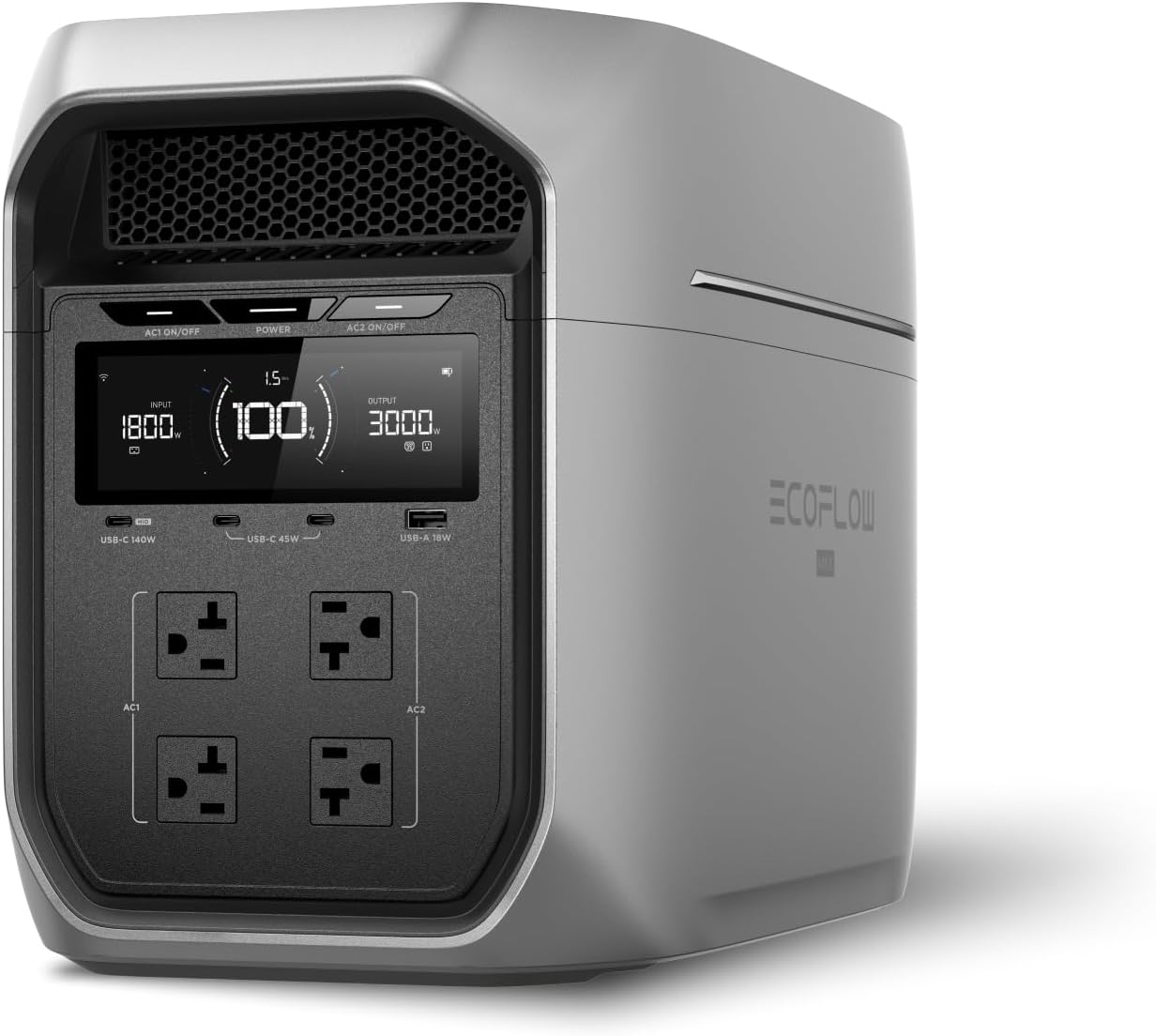
I’ll be honest: for a strict day trip, the EcoFlow DELTA 3 Plus is more than you need. But if you’re someone whose “picnic” is really a portable command center — a laptop for outdoor work, a coffee maker, speakers, and a fan all going at once — it’s the one box that never says no.
- 1,024Wh and 1,800W output run anything you’d plausibly bring outdoors
- Full recharge in under an hour, so turnaround between trips is fast
- At 27.6 pounds it’s the heaviest here, but it doubles as your home-backup and camping unit
Buy this if you want one station that covers day trips, weekend camping, and a blackout at home. For a picnic alone, save your money and your back with the RIVER 3.
Anker Prime Power Bank — The Bag Essential (250Wh)
The Anker Prime 27,650mAh power bank isn’t a power station, but it belongs in this lineup because it’s the thing I never leave without. At about 1.3 pounds, this 99.5Wh-class bank delivers up to 250W across three ports — enough to fast-charge a laptop and two phones simultaneously from a side pocket.
It’s the difference between “we have to head back, my phone’s dead” and “stay as long as you want.” Toss it in the bag alongside whatever station you pick, and you’ve got a redundant charging layer for the whole crew.
Matching the Pick to Your Day
After enough Sundays, I’ve boiled it down to three questions:
- Just phones and a speaker? The EcoFlow RIVER 3 or the Anker Prime power bank. Both fit in a tote and weigh almost nothing.
- Running a blender, cooler, or coffee maker? The Bluetti AC70. Enough output for real appliances, still one-hand portable.
- Hiking in or flying somewhere? The Jackery Explorer 100 Plus. Pocketable and airline-legal.
If you want the broader landscape across every category and budget, our best portable power stations of 2026 guide ranks the full field.
A Few Hard-Won Day-Trip Tips
Keep it out of direct sun. Lithium batteries hate heat. On a beach day, tuck your station under the edge of the blanket or in the shade of a cooler. A station baking at 110°F will throttle its output and age faster.
They are not waterproof. None of these are. A splash from a cooler or a surprise sprinkler will not be kind to the electronics. Toss a dry bag or a towel in your kit.
Pre-charge the night before, every time. Lithium units self-discharge slowly, but the real risk is forgetting. I plug mine in Saturday evening as a ritual so Sunday morning is grab-and-go.
Bring more cables than you think. The single most common point of failure on a group outing isn’t the battery — it’s that nobody brought the right cable. Keep a USB-C, USB-A, and Lightning cable permanently in the bag.
The Bottom Line
For 90% of day trips and picnics, the EcoFlow RIVER 3 is the sweet spot — light, cheap, and more than enough to keep an afternoon humming. Step up to the Bluetti AC70 if you want to run real appliances, drop down to the Jackery Explorer 100 Plus if you’re counting ounces, and always keep the Anker Prime power bank in the bag as backup.
Pack light, charge ahead, and go enjoy the sunshine. The best power setup is the one you forget you’re even carrying.
Recommended Power Stations
EcoFlow
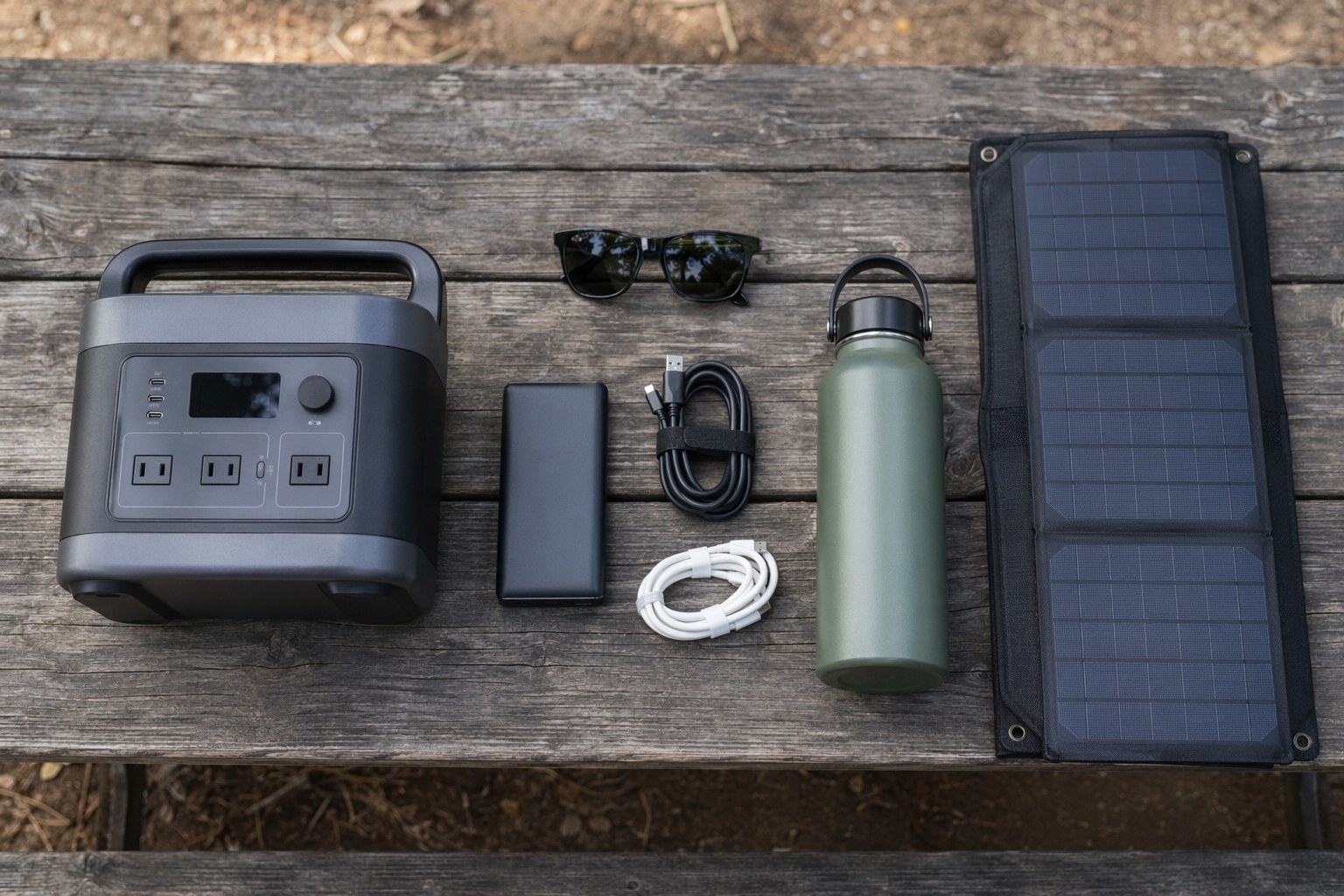
EcoFlow DELTA 3 Plus
EcoFlow's newest mid-range flagship. The DELTA 3 Plus improves on the Delta 2 with faster charging, LiFePO4 chemistry, and UPS functionality — all at a lower price.
Frequently Asked Questions
What size power station do I need for a day trip or picnic?
For a single afternoon of phone charging, a speaker, and maybe a fan, a 100-300Wh unit is plenty. That covers a beach day or park picnic with power to spare. If you want to run a blender, a small electric griddle, or charge a laptop while you work outdoors, step up to a 500-800Wh station. You almost never need more than 1,000Wh for a day trip unless you're powering a 12V cooler all day.
Can a portable power station run a blender or coffee maker at a picnic?
Yes, as long as the station's continuous output rating beats the appliance's wattage. A personal blender pulls 300-600W and runs fine on almost any station with a 300W+ inverter. A drip coffee maker or electric kettle spikes to 800-1,200W, so you need a unit rated for at least 1,000W continuous, like the EcoFlow DELTA 3 Plus. Check the wattage printed on the appliance before you go.
Are portable power stations allowed at public parks and beaches?
In nearly all cases, yes. Power stations are silent, sealed lithium batteries with no fumes or exhaust, so they don't fall under the gas-generator bans common at beaches, state parks, and event grounds. They're treated like any other battery-powered gadget. Gas generators are the ones that get you a ticket, not these.
How long will a small power station last on a day trip?
It depends entirely on what you plug in. A 245Wh unit charges a phone about 15 times, runs a 30W speaker for roughly 7 hours, or powers a 25W fan for 8-9 hours. Most day trips only sip a fraction of that, so a small station easily lasts from morning until sunset on a single charge.
Ready to Buy? Here's What We Recommend
Based on our testing and this guide, these are the best options for most people: