Buying Guide
Best Solar Generators for Off-Grid Living (2026 Guide)

TL;DR
The best solar generator systems for off-grid cabins and homesteads in 2026. Complete solar panel and power station combos tested for real-world off-grid use.
Off-grid living demands reliable, renewable power — and in 2026, solar generators have finally matured to the point where they can be your primary energy source, not just a supplement. A “solar generator” is simply a portable power station paired with solar panels: the panels harvest energy during the day, the station stores it, and you draw from it around the clock.
For cabins, homesteads, and remote properties, the right solar generator system means true energy independence. No utility bills, no fuel runs, no noisy gas generators shattering the peace you moved off-grid to find.
We’ve tested the best solar generator combos for off-grid use, evaluating them on total capacity, solar charging speed, expandability, and long-term reliability. Here are our top picks.
Our Top Solar Generator Picks at a Glance
| Rank | System | Capacity | Solar Input | Output | Best For |
|---|---|---|---|---|---|
| 1 | EcoFlow DELTA Pro 3 + 220W Panels | 4,096Wh (expandable to 12,288Wh) | 2,600W max | 4,000W | Full Off-Grid Cabin |
| 2 | Jackery Explorer 2000 Plus + SolarSaga Panels | 2,042Wh (expandable to 12,000Wh) | 1,400W max | 3,000W | Expandable Homestead |
| 3 | Bluetti AC200P + PV200 Panels | 2,000Wh | 700W max | 2,000W | Budget Off-Grid Setup |
1. EcoFlow DELTA Pro 3 + 220W Bifacial Solar Panels — Best Overall Off-Grid System
The EcoFlow DELTA Pro 3 paired with EcoFlow 220W Bifacial Solar Panels is the most capable off-grid solar generator system you can build in 2026. With 4,096Wh of base capacity, 4,000W output, and the ability to accept up to 2,600W of solar input, this system can legitimately serve as the primary power source for a small off-grid cabin.
Why it’s our top pick:
- 4,096Wh LiFePO4 battery expandable to 12,288Wh with two add-on batteries
- 2,600W maximum solar input — one of the fastest solar charge rates available
- 4,000W continuous output runs fridges, power tools, well pumps, and more
- 220W bifacial panels capture light from both sides, boosting output by 10-25%
- Smart home panel integration for hardwiring into cabin electrical systems
- 4,000+ cycle battery lifespan means 10+ years of daily cycling
- EcoFlow app provides real-time monitoring of solar production and consumption
Recommended panel configuration: Four to six EcoFlow 220W Bifacial Panels (880-1,320W total) provide enough daily solar harvest to fully recharge the battery in 4-6 hours of direct sunlight. In most US climates, this generates 3,500-5,000Wh per day — enough to sustain lights, a fridge, internet equipment, laptop charging, and small appliances indefinitely.
The bifacial panels are particularly well-suited for off-grid setups. Ground-mounted or tilted on light-colored surfaces, they capture reflected light on the rear side, which meaningfully increases yield during morning and evening hours. At roughly $350 per panel, a four-panel setup runs about $1,400, bringing the total system cost to approximately $3,400 before add-on batteries.
Read our full EcoFlow DELTA Pro 3 review → Read our full EcoFlow 220W Bifacial Solar Panel review →
2. Jackery Explorer 2000 Plus + SolarSaga Panels — Most Expandable System
The Jackery Explorer 2000 Plus is built for exactly this use case: modular off-grid power that grows with your needs. Starting at 2,042Wh, it expands to a massive 12,000Wh with up to five add-on battery packs. Paired with Jackery’s SolarSaga panels, it forms a flexible system that can scale from weekend cabin to full-time homestead.
What stands out:
- 2,042Wh base capacity expandable to 12,000Wh — the largest expansion range available
- 1,400W maximum solar input for fast recharging
- 3,000W continuous output handles heavy loads
- LiFePO4 battery with 4,000+ cycle rating for decade-plus lifespan
- SolarSaga panels fold flat for easy seasonal storage or repositioning
- ChargeShield technology protects battery health during daily solar cycling
Recommended panel configuration: Four Jackery SolarSaga 200W panels (800W total) will recharge the base 2,042Wh battery in approximately 3-4 hours of peak sunlight. For expanded setups with additional batteries, scale up to six or seven panels (1,200-1,400W) to match the station’s maximum solar input.
The Jackery system’s greatest strength is its modular approach. You might start with the base unit and two panels for a weekend cabin, then add batteries and panels over the next year as you spend more time off-grid. Each add-on battery runs about $999, and you can add them one at a time as budget allows. This phased investment approach makes serious off-grid power more accessible than buying a massive system all at once.
Read our full Jackery Explorer 2000 Plus review →
3. Bluetti AC200P + PV200 Panels — Best Budget Off-Grid Setup
The Bluetti AC200P has been a workhorse in the off-grid community for years, and for good reason. At 2,000Wh with 2,000W output, it covers the essentials for off-grid living at a significantly lower price than the flagship systems above. Paired with Bluetti’s PV200 foldable panels, it’s the most affordable path to solar-powered off-grid living.
Key strengths:
- 2,000Wh LFP capacity at a lower price point than competitors
- 2,000W continuous output (4,800W surge) for running essential appliances
- 700W maximum solar input — slower than flagships but sufficient for daily cycling
- Dual charging capability — combine solar and AC for faster recharging when grid access is available
- PV200 panels fold compactly for easy transport to remote sites
- Proven reliability — the AC200P has one of the longest track records in the industry
Recommended panel configuration: Three to four PV200 panels (600-800W) will recharge the AC200P in approximately 4-6 hours of direct sunlight. While the 700W solar input cap means you can’t charge as quickly as the EcoFlow or Jackery systems, this is rarely an issue for daily off-grid use where panels are deployed all day.
The AC200P is the right choice for off-grid users with moderate power needs: LED lighting, phone and laptop charging, a small fridge, fan, and occasional power tool use. It won’t run a full kitchen or air conditioning, but for the cabin lifestyle — simple, intentional, efficient — it’s proven and affordable.
What to Look For in a Solar Generator for Off-Grid Use
Choosing a solar generator for off-grid living is different from picking one for camping or emergency backup. Here’s what matters most:
Solar Input Capacity (W)
This determines how fast you can harvest energy. For off-grid use, you want at least 700W of solar input capability, and ideally 1,400W+. Higher solar input means you can fully recharge your battery even on partially cloudy days or during shorter winter daylight hours.
Battery Capacity and Expandability
Off-grid living means cycling your battery daily. Start with at least 2,000Wh for basic cabin use. More importantly, choose a system that’s expandable — your needs will grow as you add appliances, tools, or spend more time off-grid. Both the DELTA Pro 3 and Explorer 2000 Plus expand to 12,000Wh+.
Battery Chemistry and Cycle Life
LiFePO4 (lithium iron phosphate) is mandatory for off-grid use. With 3,000-4,000+ charge cycles, LiFePO4 batteries handle daily cycling for over a decade. Older Li-NMC batteries at 500-1,000 cycles would wear out in 2-3 years of daily off-grid use. All three of our picks use LiFePO4.
Panel Compatibility and Efficiency
Matched solar panels from the same manufacturer guarantee compatibility and optimal performance. Bifacial panels boost yield by 10-25% by capturing reflected light. Look for panels with high efficiency ratings (22%+) and durable construction rated for permanent outdoor installation.
Output Wattage for Your Loads
List every appliance you plan to use and add up the running wattage. A fridge (150W), lights (50W), router (15W), laptop (60W), and fan (40W) total roughly 315W — well within any system here. Add a microwave (1,000W) or power tools (1,500W), and you’ll need 2,000W+ output capacity.
The Bottom Line
For serious off-grid living, the EcoFlow DELTA Pro 3 paired with 220W Bifacial Panels delivers the most capable, future-proof system available. Its 2,600W solar input and 12,288Wh expansion potential can support a full-time off-grid cabin. The Jackery Explorer 2000 Plus offers the best modular growth path for those who want to build up gradually. And the Bluetti AC200P + PV200 proves that meaningful off-grid solar power is achievable for well under $3,000.
Whichever system you choose, the math is clear: in most US locations, a well-sized solar generator pays for itself in 3-5 years compared to gas generator fuel costs — and then provides free energy for another decade after that.
Recommended Power Stations
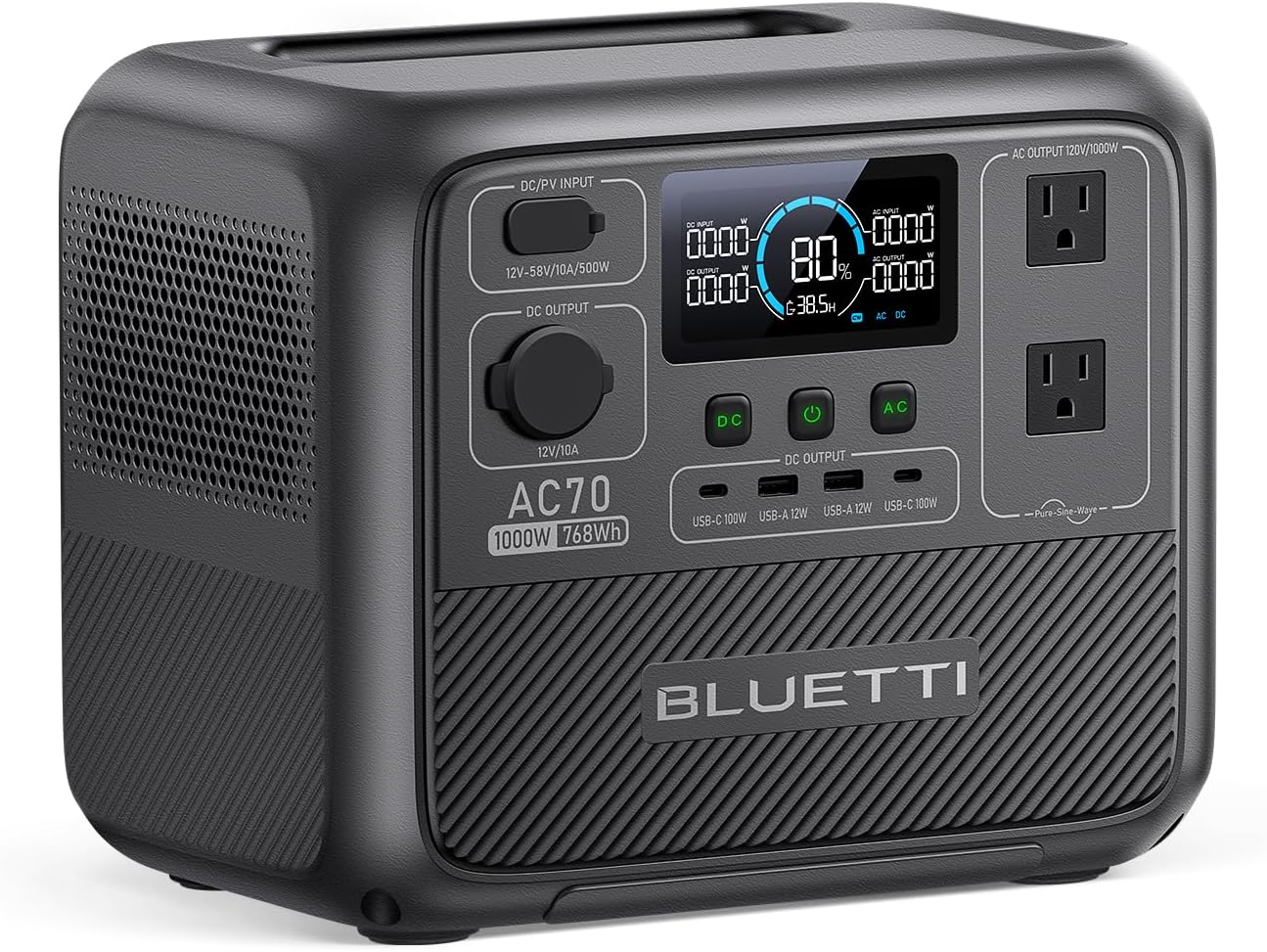
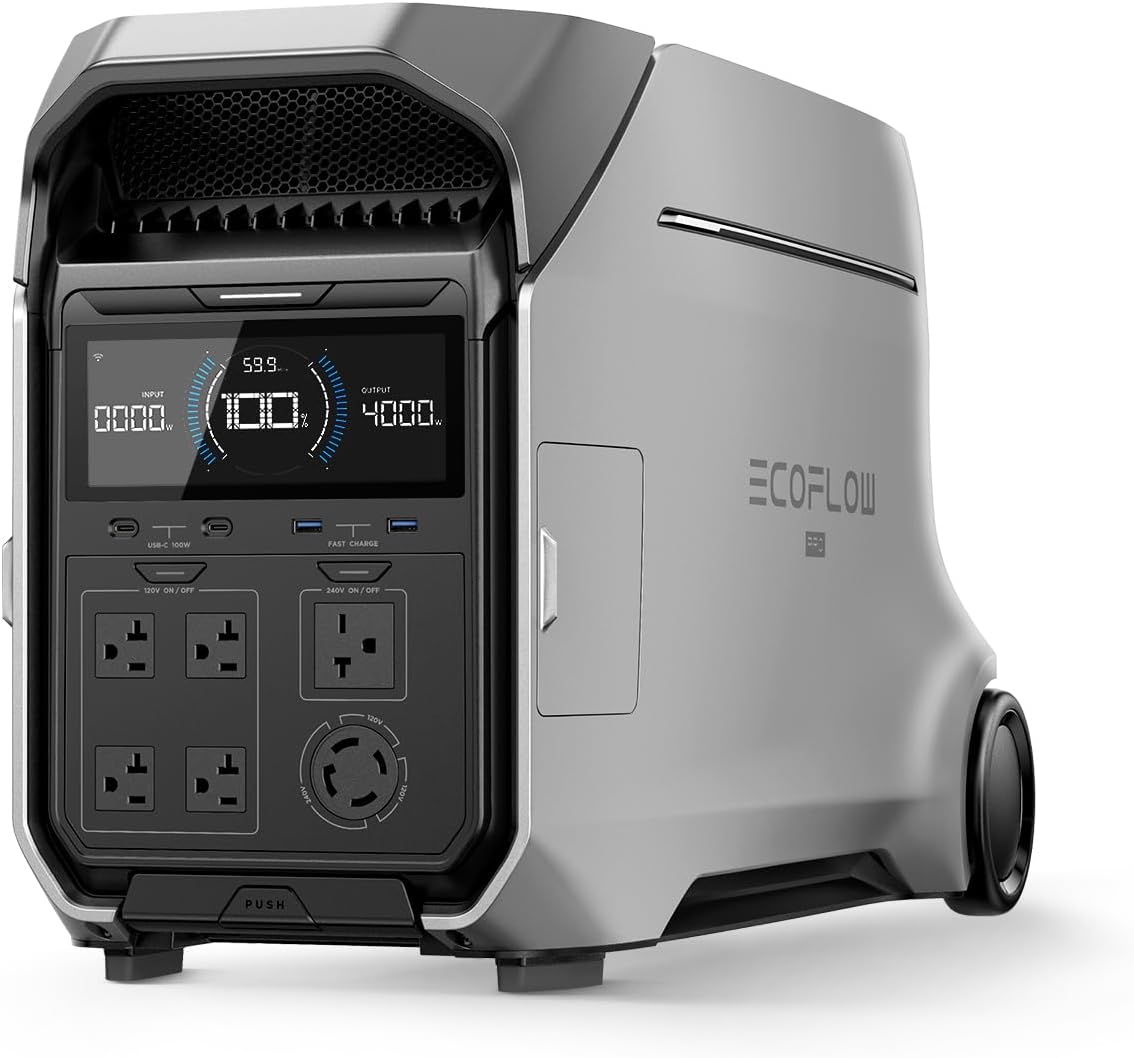
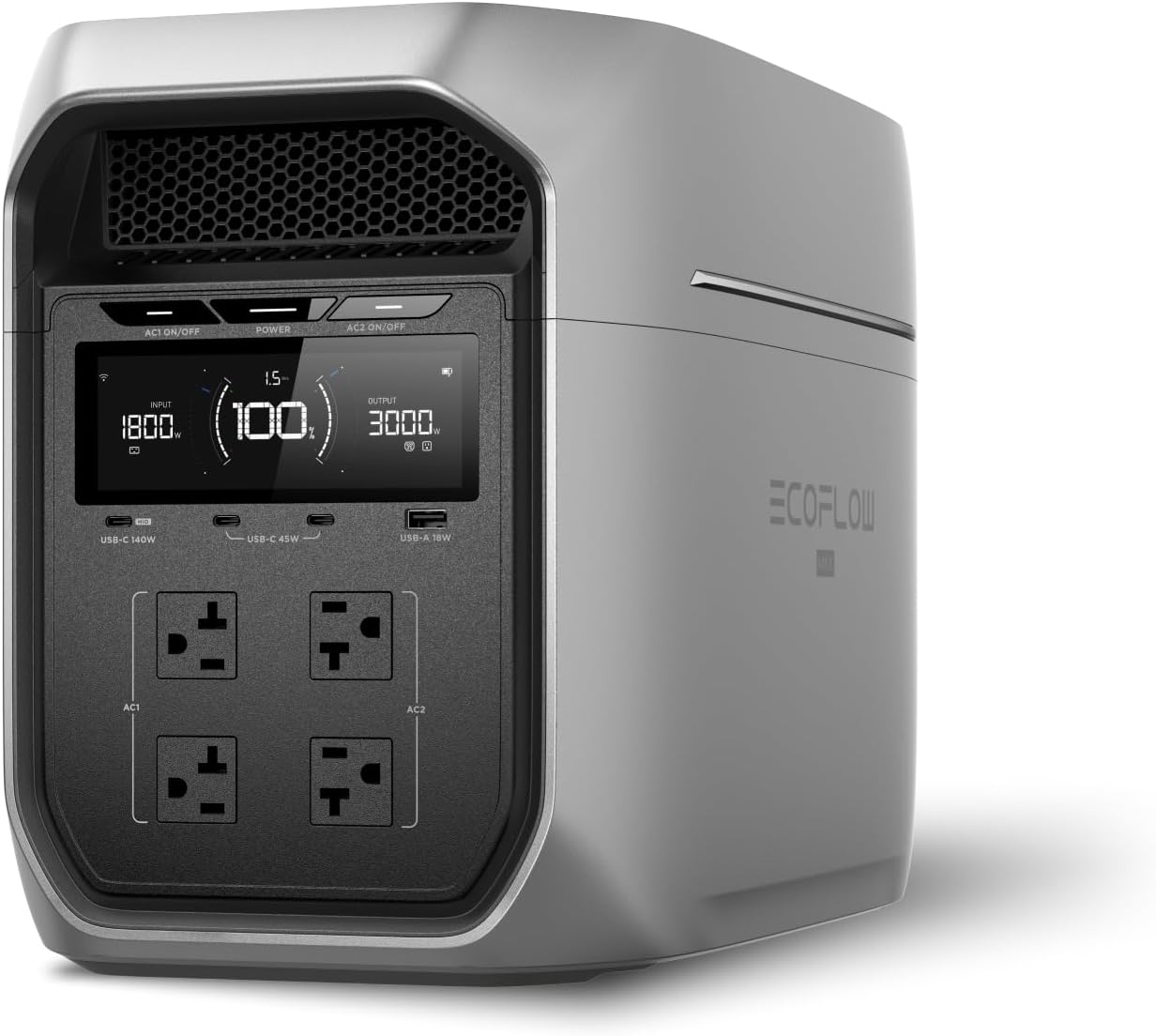
EcoFlow
EcoFlow DELTA 3 Plus
EcoFlow's newest mid-range flagship. The DELTA 3 Plus improves on the Delta 2 with faster charging, LiFePO4 chemistry, and UPS functionality — all at a lower price.
Frequently Asked Questions
How many solar panels do I need for off-grid living?
It depends on your daily energy consumption and sunlight hours. A typical off-grid cabin using 2-3kWh per day needs 600-1,000W of solar panels in most US climates (4-5 peak sun hours). Start by calculating your daily usage, then divide by your area's average peak sun hours to get the panel wattage you need.
Can a solar generator power a cabin full-time?
Yes, with the right setup. A system like the EcoFlow DELTA Pro 3 (4,096Wh) with 800-1,200W of solar panels can sustain a modest cabin with LED lights, a fridge, phone/laptop charging, and a fan. For heavier loads like AC or electric cooking, you'll need multiple batteries and 2,000W+ of solar panels.
How long do solar generators last?
Modern solar generators with LiFePO4 batteries last 3,000-4,000+ charge cycles, which translates to 10-15 years of daily use. Solar panels last even longer — most are warrantied for 25 years and can produce power for 30+ years with minimal degradation.
What's the difference between a solar generator and a gas generator?
A solar generator is a portable power station paired with solar panels — it's silent, emission-free, and maintenance-free but limited by battery capacity and sunlight. A gas generator produces power continuously but is loud, requires fuel, produces carbon monoxide, and needs regular maintenance. For off-grid living, solar generators are better for daily use while gas generators serve as backup for extended cloudy periods.
Ready to Buy? Here's What We Recommend
Based on our testing and this guide, these are the best options for most people: