Guide
What Does It Actually Cost to Run Devices on a Power Station vs the Grid?

TL;DR
A real cost breakdown comparing power stations to grid electricity. We crunch the per-kWh math across 3,000+ charge cycles and show when solar makes stations cost-competitive.
Power stations aren’t cheap. A decent 1,000Wh model runs $500-800. So it’s natural to wonder: am I paying a premium every time I use this thing instead of just plugging into the wall?
The short answer is yes — in the short term. But the long-term math tells a more interesting story, especially once solar enters the equation. Let’s break it down with real numbers.
The Baseline: What Grid Electricity Costs
The average US residential electricity rate is approximately $0.16 per kilowatt-hour (kWh). That varies significantly by state — Hawaii pays over $0.40/kWh, Louisiana pays around $0.10/kWh — but $0.16 is the national average and what we’ll use as our benchmark.
At that rate, running a device costs very little from the wall:
| Device | Wattage | Daily Use | Daily Cost | Monthly Cost |
|---|---|---|---|---|
| Refrigerator | 150W avg | 24 hrs | $0.58 | $17.28 |
| CPAP machine | 30W | 8 hrs | $0.04 | $1.15 |
| Phone charging | 15W | 2 hrs | $0.005 | $0.14 |
| Laptop | 60W | 8 hrs | $0.08 | $2.30 |
| LED lights (5 bulbs) | 50W | 6 hrs | $0.05 | $1.44 |
| TV | 80W | 4 hrs | $0.05 | $1.54 |
Grid electricity is absurdly cheap per use. That’s the reality a power station is competing against.
The Power Station Cost: Upfront vs. Lifetime
Here’s where most people’s math goes wrong: they divide the purchase price by the capacity and get a horrifying cost-per-kWh number. But that ignores the fact that you use the station thousands of times.
The upfront calculation (misleading):
A 1,000Wh power station at $700 gives you 1 kWh of storage. If you used it once, that’s $700 per kWh. Terrible.
The lifetime calculation (accurate):
Modern LiFePO4 power stations are rated for 3,000+ charge cycles to 80% capacity. Many are rated for 4,000-6,000 cycles. Let’s use a conservative 3,000 cycles:
- Purchase price: $700
- Usable capacity per cycle: ~0.9 kWh (accounting for inverter efficiency losses)
- Total lifetime energy delivered: 0.9 kWh x 3,000 cycles = 2,700 kWh
- Cost per kWh (hardware only): $700 / 2,700 kWh = $0.26/kWh
- Cost per kWh (including wall charging cost): $0.26 + $0.18 per charge / 0.9 kWh = $0.46/kWh
So over its full lifespan, a power station charged from the wall costs roughly $0.46/kWh — about 3x grid price. Not free, but not the absurd premium the upfront math suggests.
But wait — add solar and the math changes dramatically.
The Solar Factor: Where It Gets Interesting
When you charge a power station from a solar panel instead of the wall, you eliminate the ongoing electricity cost entirely. The only cost is the solar panel hardware itself.
Solar charging calculation:
- 200W solar panel cost: ~$300
- Real-world daily output: ~800-1,000Wh in good sun (5-6 peak sun hours)
- Panel lifespan: 20-25 years (degrading gradually)
- Conservative usable lifespan for portable panels: 10 years
Over 10 years, a $300 solar panel producing 900Wh per day for ~200 sunny days per year delivers approximately 1,800 kWh of free energy. The panel’s cost per kWh: $300 / 1,800 kWh = $0.17/kWh. That’s essentially grid parity.
Combined power station + solar panel lifetime cost:
- Station hardware: $700 / 2,700 kWh = $0.26/kWh
- Solar panel hardware: $300 / 1,800 kWh = $0.17/kWh
- Wall charging cost: $0 (solar replaces it)
- Effective cost: ~$0.23/kWh (blended, since you’ll sometimes charge from the wall)
That’s competitive with grid electricity in many states and cheaper than grid in high-rate states like California ($0.30+/kWh) and Hawaii ($0.40+/kWh).
Cost-Per-Use for Common Scenarios
Here’s what it actually costs to run common tasks on a power station vs. the grid:
Running a Fridge for 8 Hours (Emergency Outage)
- Energy consumed: ~1,200Wh (150W x 8 hrs)
- Grid cost: $0.19
- Power station cost (wall-charged): $0.55
- Power station cost (solar-charged): $0.31
Charging Phones for a Year (Daily Use)
- Energy consumed: ~11 kWh (30Wh per charge x 365 days)
- Grid cost: $1.76
- Power station cost (wall-charged): $5.06
- Power station cost (solar-charged): $2.53
Powering a CPAP Every Night for a Year
- Energy consumed: ~88 kWh (240Wh per night x 365 nights)
- Grid cost: $14.08
- Power station cost (wall-charged): $40.48
- Power station cost (solar-charged): $20.24
Weekend Camping Trip (2 Days of Mixed Use)
- Energy consumed: ~1,500Wh (lights, phone charging, fan, small cooler)
- Grid cost: N/A (no grid available)
- Power station cost (wall-charged): $0.69
- Power station cost (solar-charged): $0.35
That last line is the key insight. In off-grid situations, the power station isn’t competing with the grid — it’s competing with having no power at all. The cost per use is irrelevant when the alternative is sitting in the dark.
The Real Value Proposition
Let’s be honest about what you’re paying for with a power station:
You’re NOT paying for: Cheap electricity. The grid will always be cheaper per kWh for daily home use. A power station is not a money-saving device for running your household.
You ARE paying for:
- Portable power — Electricity where there are no outlets. Camping, tailgating, outdoor events, job sites.
- Emergency backup — Power during outages when the grid fails completely. The value of keeping your fridge cold and CPAP running isn’t measured in cents per kWh.
- Energy independence — With solar, you’re generating your own electricity. Over time, the math genuinely works in your favor.
- Quiet, clean operation — No gas, no fumes, no noise. The $0.30 premium over a generator’s fuel cost per kWh buys you silence and zero emissions.
Bottom Line
Power stations cost more per kWh than grid electricity in the short term — roughly 3x more when charged from the wall. But over a full 3,000-cycle LiFePO4 lifespan with solar charging, the effective cost drops to around $0.23/kWh, which is competitive with grid rates in many states.
The real question isn’t “is it cheaper than the wall?” It’s “is the value worth the cost?” For camping, emergencies, and off-grid use, the answer is almost always yes.
Use our Power Station Calculator to estimate your actual usage costs, and check our best portable power stations rankings to find the most cost-effective option for your needs.
Recommended Power Stations
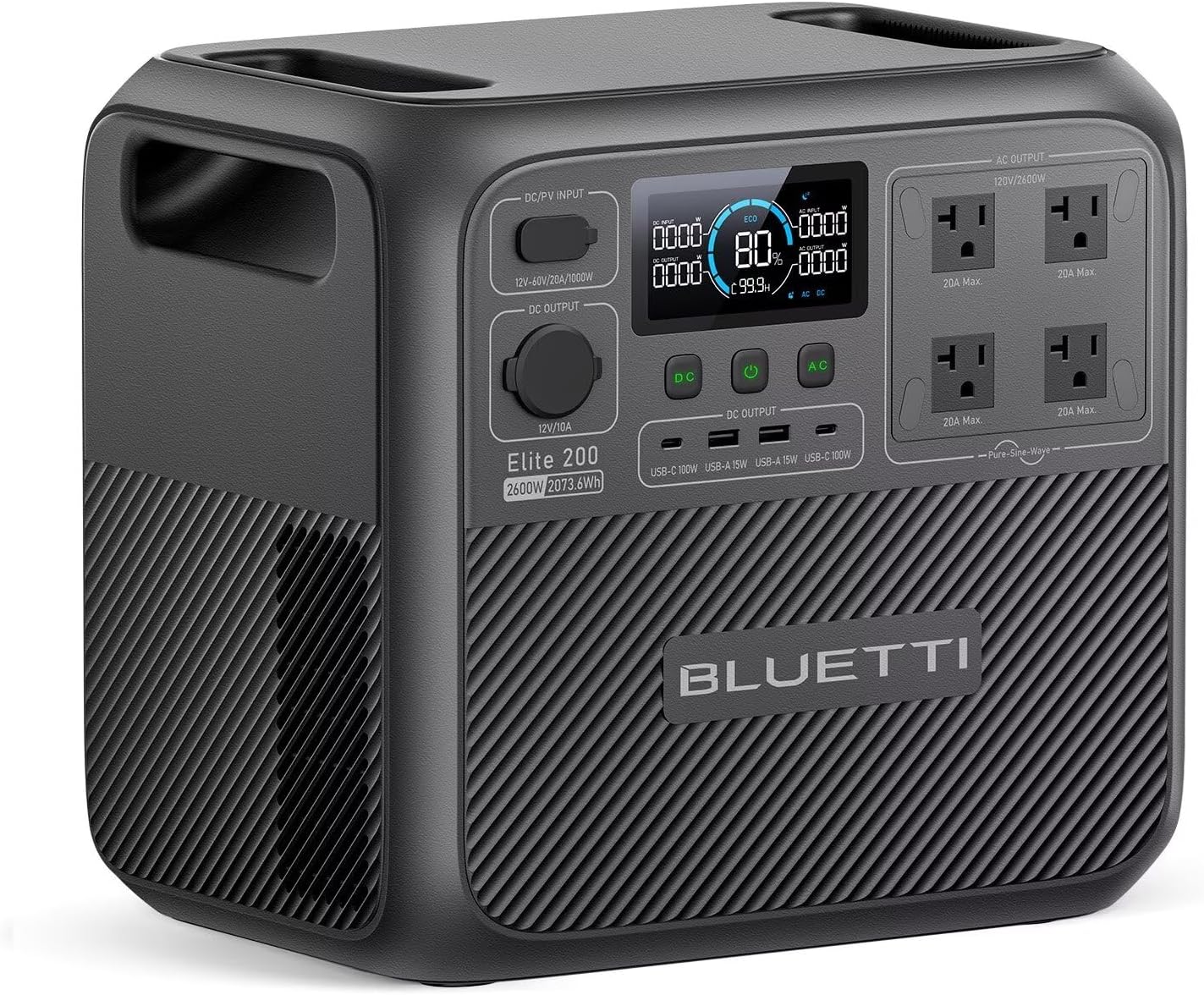
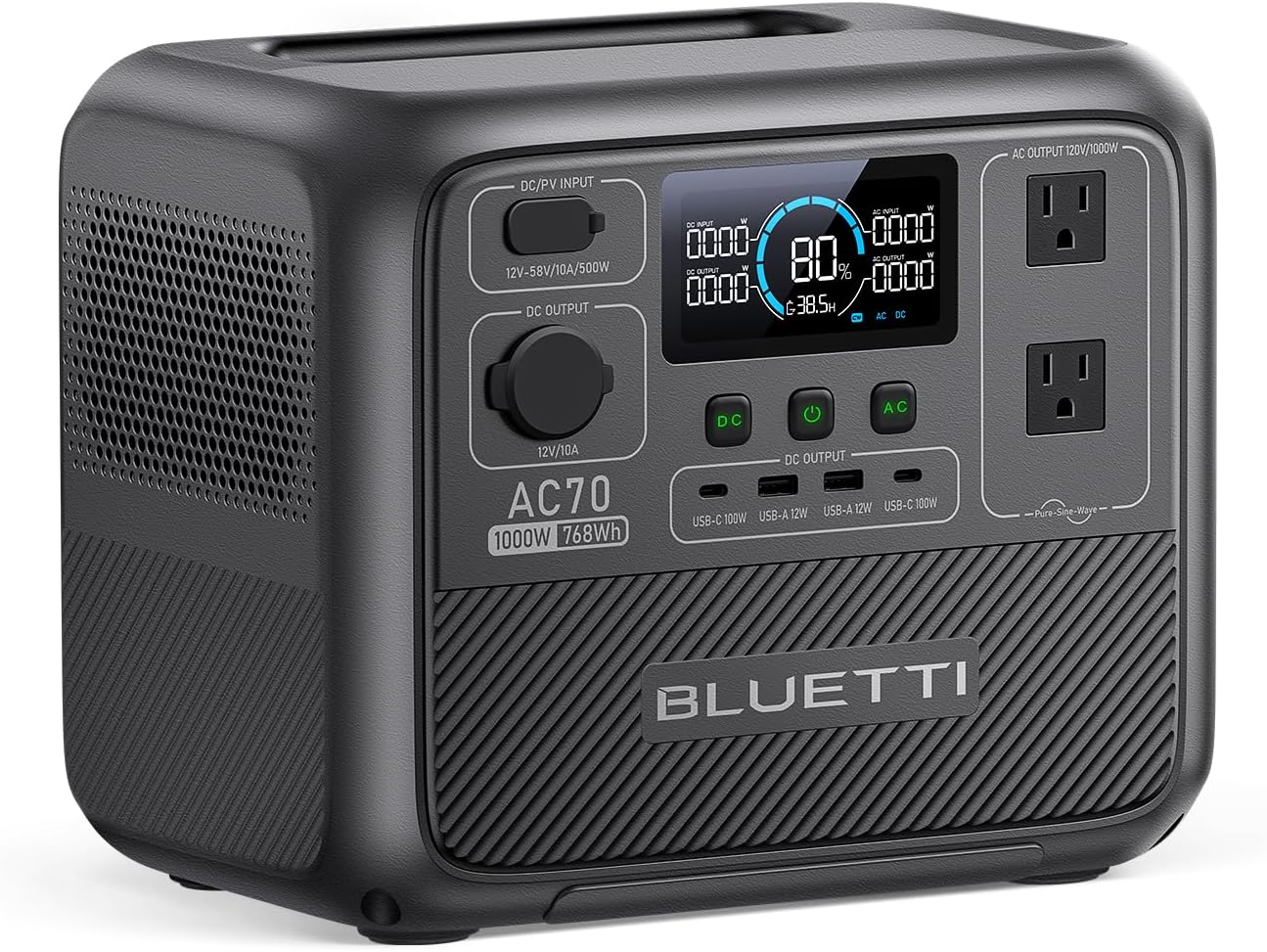
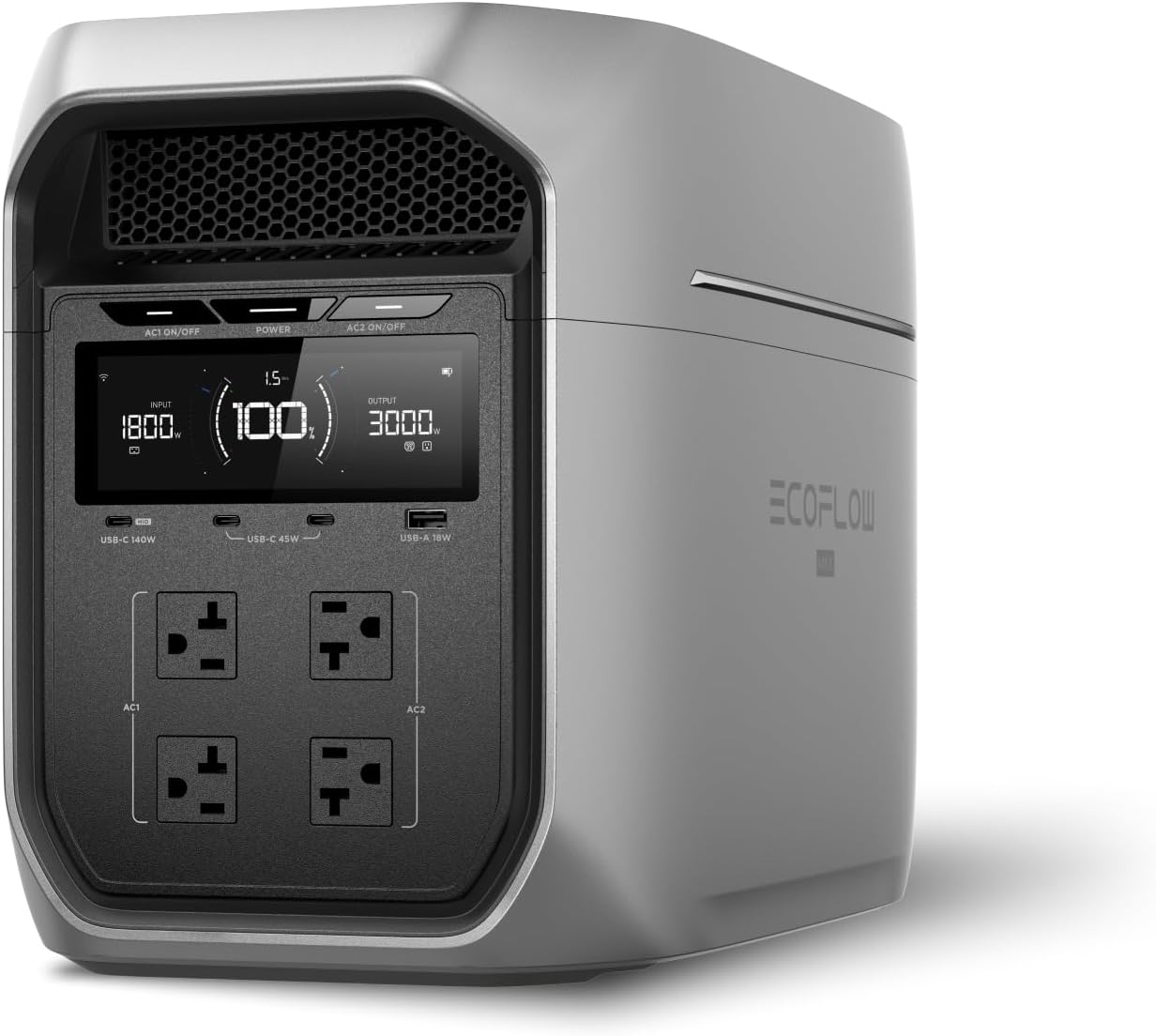
EcoFlow
EcoFlow DELTA 3 Plus
EcoFlow's newest mid-range flagship. The DELTA 3 Plus improves on the Delta 2 with faster charging, LiFePO4 chemistry, and UPS functionality — all at a lower price.
Frequently Asked Questions
Is a power station cheaper than grid electricity?
Not in the short term. Grid electricity costs about $0.16/kWh on average, while a power station's effective cost starts much higher. But over its full 3,000+ cycle lifespan, a LiFePO4 station's cost per kWh drops to roughly $0.23/kWh — approaching grid parity. Add a solar panel and the marginal cost of each charge drops to essentially zero after the equipment pays for itself.
How many charge cycles does a power station last?
Modern LiFePO4 power stations last 3,000-6,000 charge cycles before the battery degrades to 80% of original capacity. At one full cycle per day, that's 8-16 years. Most people cycle their station far less frequently, meaning the battery will likely outlast the electronics. Older NMC (lithium nickel manganese cobalt) stations lasted only 500-1,000 cycles.
Does charging a power station from the wall cost a lot of electricity?
Very little. Charging a 1,000Wh power station from a wall outlet uses about 1.1-1.2 kWh (accounting for charging efficiency losses of 10-15%). At the national average of $0.16/kWh, that's roughly $0.18-0.19 per full charge. Even charging daily, that's under $6 per month — less than a streaming subscription.
Ready to Buy? Here's What We Recommend
Based on our testing and this guide, these are the best options for most people: