Buying Guide
Best Inverter Generators for Home Backup Power (2026)

TL;DR
Our top inverter generators for whole-home backup during extended outages. We compare the Honda EU2200i, Champion 3500W, and Westinghouse iGen2500 on runtime, noise, and reliability.
When the power goes out for hours — or days — a portable power station may not be enough. Gas inverter generators remain the gold standard for extended home backup, delivering sustained high-wattage output as long as you have fuel. Unlike older open-frame generators, modern inverter models run quietly, produce clean power safe for electronics, and sip fuel efficiently.
We evaluated inverter generators on the criteria that matter most for home backup: runtime, noise level, power output, fuel efficiency, and long-term reliability. Here are our top picks for 2026.
Our Top Picks at a Glance
| Rank | Product | Running Watts | Peak Watts | Runtime (25% load) | Noise Level | Best For |
|---|---|---|---|---|---|---|
| 1 | Honda EU2200i | 1,800W | 2,200W | 8.1 hours | 48 dBA | Best Overall |
| 2 | Champion 3500W | 3,200W | 3,500W | 14.5 hours | 59 dBA | Best Value |
| 3 | Westinghouse iGen2500 | 2,200W | 2,500W | 10.7 hours | 52 dBA | Best Mid-Range |
1. Honda EU2200i — Best Overall
The Honda EU2200i is the generator that professionals, contractors, and emergency preparedness experts reach for first — and for good reason. Honda’s inverter technology delivers exceptionally clean power (under 1.5% THD), whisper-quiet operation at 48 dBA, and the legendary Honda GXR120 engine that starts on the first pull for years.
Why it wins:
- 48 dBA at rated load — quieter than a normal conversation
- Ultra-clean sine wave output safe for all electronics and medical devices
- Parallel-capable: connect two units for 3,600W of combined power
- Honda’s reputation for reliability and resale value is unmatched
- Eco-Throttle mode adjusts engine speed automatically to save fuel
- Compact at 46.5 lbs — easy to store and move
The EU2200i sits at a premium price point compared to the competition, but you’re paying for proven reliability and the quietest operation in its class. If you lose power during a winter storm and need your fridge, furnace blower, and lights running without waking the neighbors, the Honda is the generator to own.
Read our full Honda EU2200i review —>
2. Champion 3500W Dual Fuel — Best Value
The Champion 3500W Dual Fuel inverter generator delivers significantly more power than the Honda at a substantially lower price. Its dual-fuel capability lets you run on gasoline or propane, which is a serious advantage during extended outages when gas stations may be closed or out of fuel.
What stands out:
- 3,200W running / 3,500W peak — enough for a fridge, sump pump, lights, and a window AC
- Dual-fuel operation: gasoline or propane for fuel flexibility
- 14.5-hour runtime on gasoline at 25% load (1.6-gallon tank)
- Electric start with included battery — no more pull-cord struggles
- Quiet Technology keeps noise to 59 dBA
- Roughly half the price of the Honda EU2200i
The Champion is our pick for homeowners who want the most power and flexibility for their dollar. The dual-fuel option alone makes it worth considering — when a storm knocks out power for several days, having a propane tank as backup fuel can be the difference between comfort and crisis.
3. Westinghouse iGen2500 — Best Mid-Range
The Westinghouse iGen2500 slots neatly between the Honda and Champion, offering more power than the EU2200i at a lower price point while keeping noise levels impressively low.
Why we recommend it:
- 2,200W running / 2,500W peak — 400W more than the Honda EU2200i
- 52 dBA noise level — still very quiet for residential use
- 10.7-hour runtime at 25% load on a 1.0-gallon tank
- LED data center displays fuel level, wattage, and voltage in real time
- Two USB ports built in for direct device charging
- 48 lbs — lightweight and portable
The iGen2500 is an excellent choice for homeowners who want a step up from the Honda’s wattage without jumping to a larger, heavier unit. It’s particularly well-suited for powering a refrigerator, modem/router, and a few lights simultaneously.
What to Look For in a Home Backup Generator
Choosing the right inverter generator for home backup comes down to five key factors:
1. Running Wattage vs. Starting Wattage Running watts is the sustained output your generator delivers continuously. Starting watts is the brief surge needed to start motors (fridges, sump pumps, AC units). Add up the running watts of everything you need to power simultaneously, then make sure the generator’s starting watts can handle the highest-draw motor in your lineup.
2. Runtime and Fuel Efficiency During extended outages, runtime per tank matters enormously. Look for Eco-Throttle or Economy modes that adjust engine speed based on actual load — this can nearly double your runtime compared to running at full speed. A generator that runs 8+ hours at 25% load means fewer middle-of-the-night refueling trips.
3. Noise Level Inverter generators are dramatically quieter than traditional open-frame models. For residential use, look for units under 60 dBA. Anything in the 48–55 dBA range will let you sleep and won’t disturb neighbors. Compare this to traditional generators that can hit 70–80 dBA.
4. Clean Power Output (THD) Total Harmonic Distortion under 3% is safe for electronics. All three of our picks produce clean sine wave power, but this is a critical spec to check — especially if you’re powering a computer, NAS, or medical equipment like a CPAP machine.
5. Parallel Capability If you want the flexibility to double your output later, choose a generator with parallel capability. The Honda EU2200i and Westinghouse iGen2500 both support parallel operation, letting you connect two identical units when you need more power without buying a single larger generator.
Gas Generators vs. Solar Power Stations
Wondering whether you should skip gas entirely and go with a solar power station instead? The short answer: it depends on how long your outages typically last.
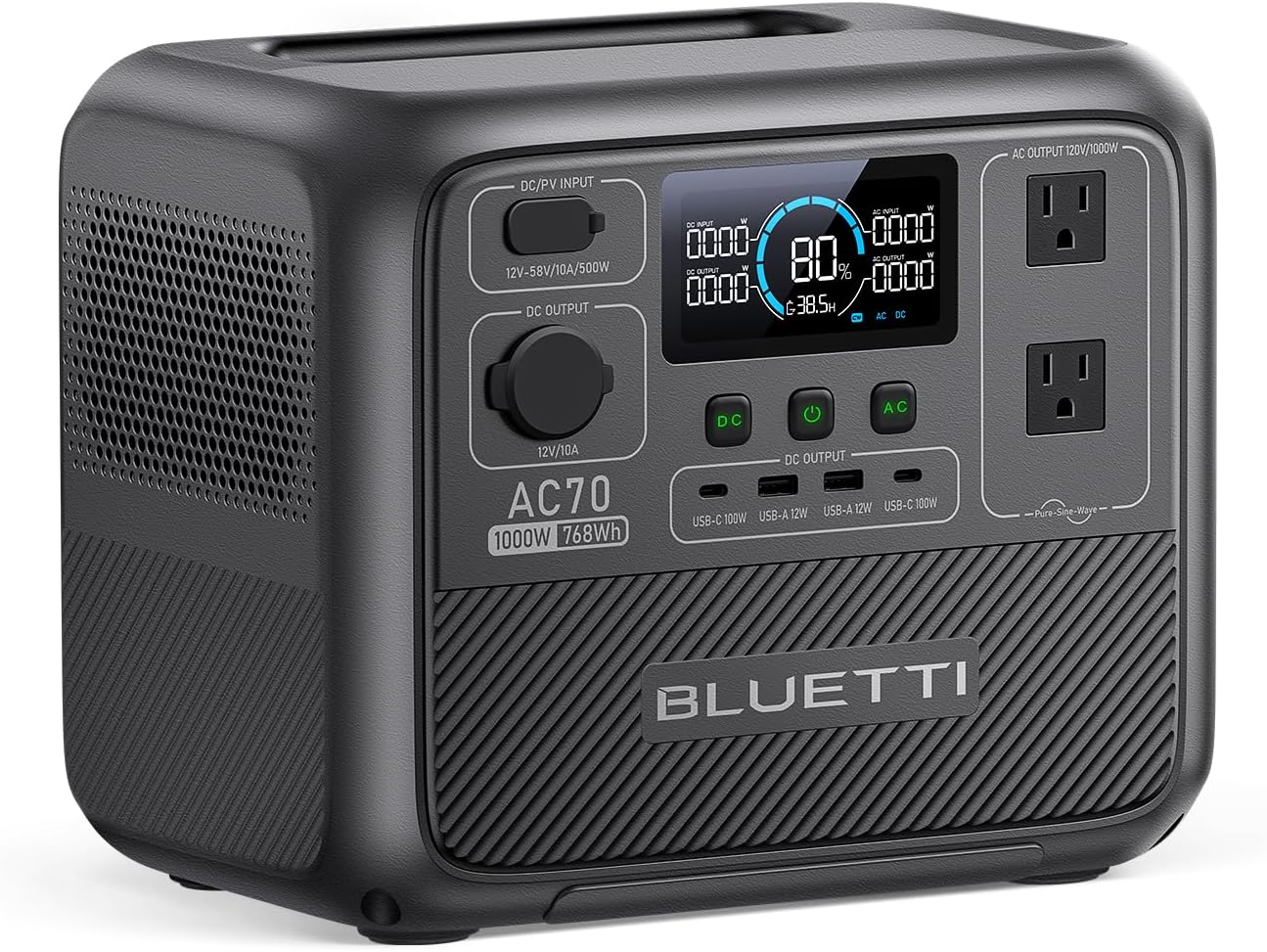
For outages under 8 hours, a quality power station like the EcoFlow DELTA 2 or Bluetti AC200L may be all you need — no fuel, no fumes, no noise, and you can use it indoors. But for multi-day outages during ice storms, hurricanes, or grid failures, a gas generator’s unlimited runtime (with fuel) is irreplaceable.
Many prepared homeowners own both: a power station for short outages and daily use, and an inverter generator for the extended events when the grid stays down.
The Bottom Line
For most homeowners, the Honda EU2200i is the best inverter generator you can buy for home backup. Its reliability, quiet operation, and clean power output justify the premium price — this is a tool you may depend on during an emergency, and Honda’s track record is unmatched.
If you need more power or want fuel flexibility on a tighter budget, the Champion 3500W Dual Fuel delivers exceptional value. And the Westinghouse iGen2500 is the sweet spot for those who want more wattage than the Honda without the size or price of the Champion.
Whichever you choose, pair your generator with a transfer switch or interlock kit for safe, code-compliant connection to your home’s electrical panel. Never run a generator indoors or in an enclosed garage — carbon monoxide is a silent, deadly risk.
Recommended Power Stations
EcoFlow
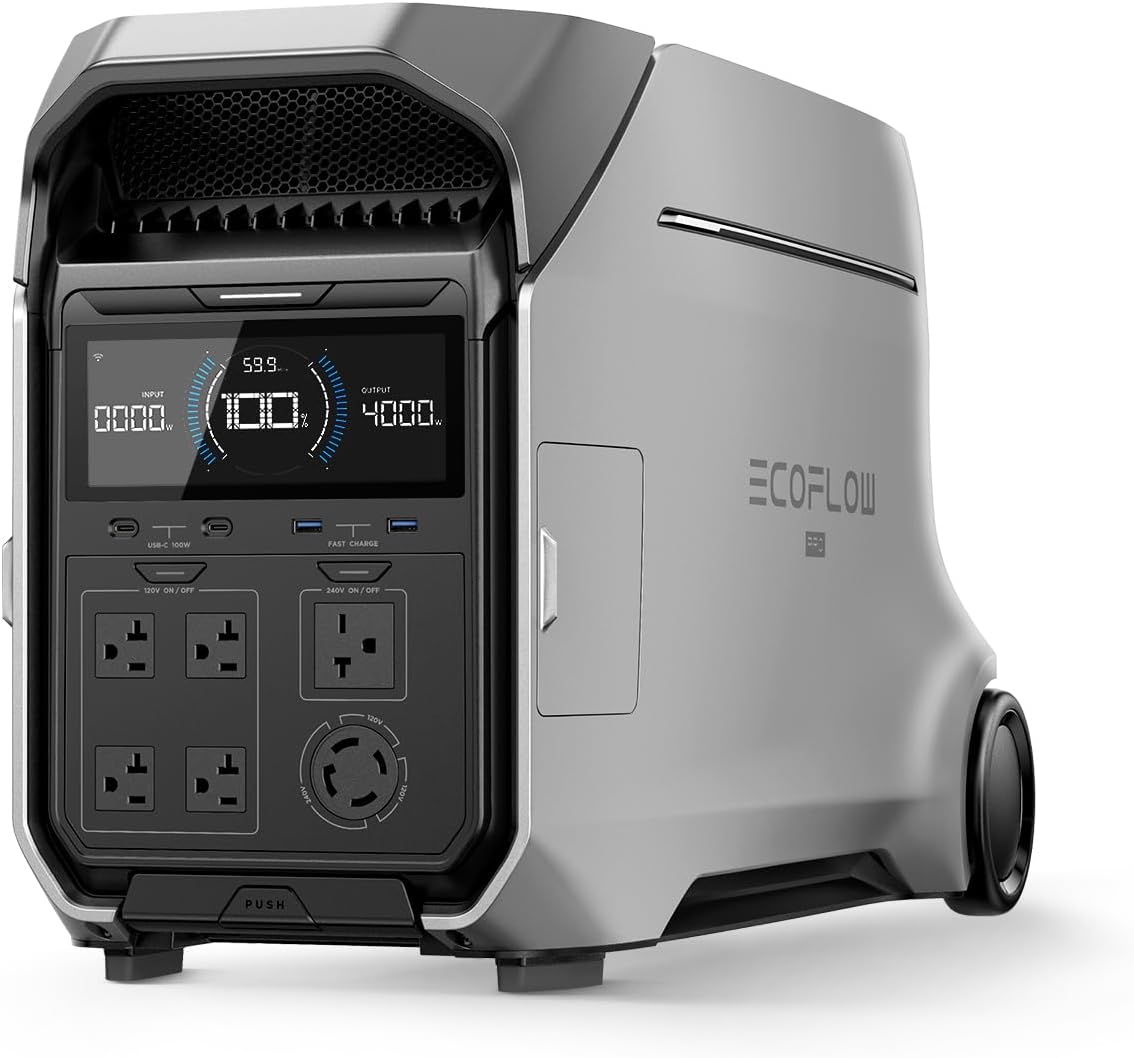
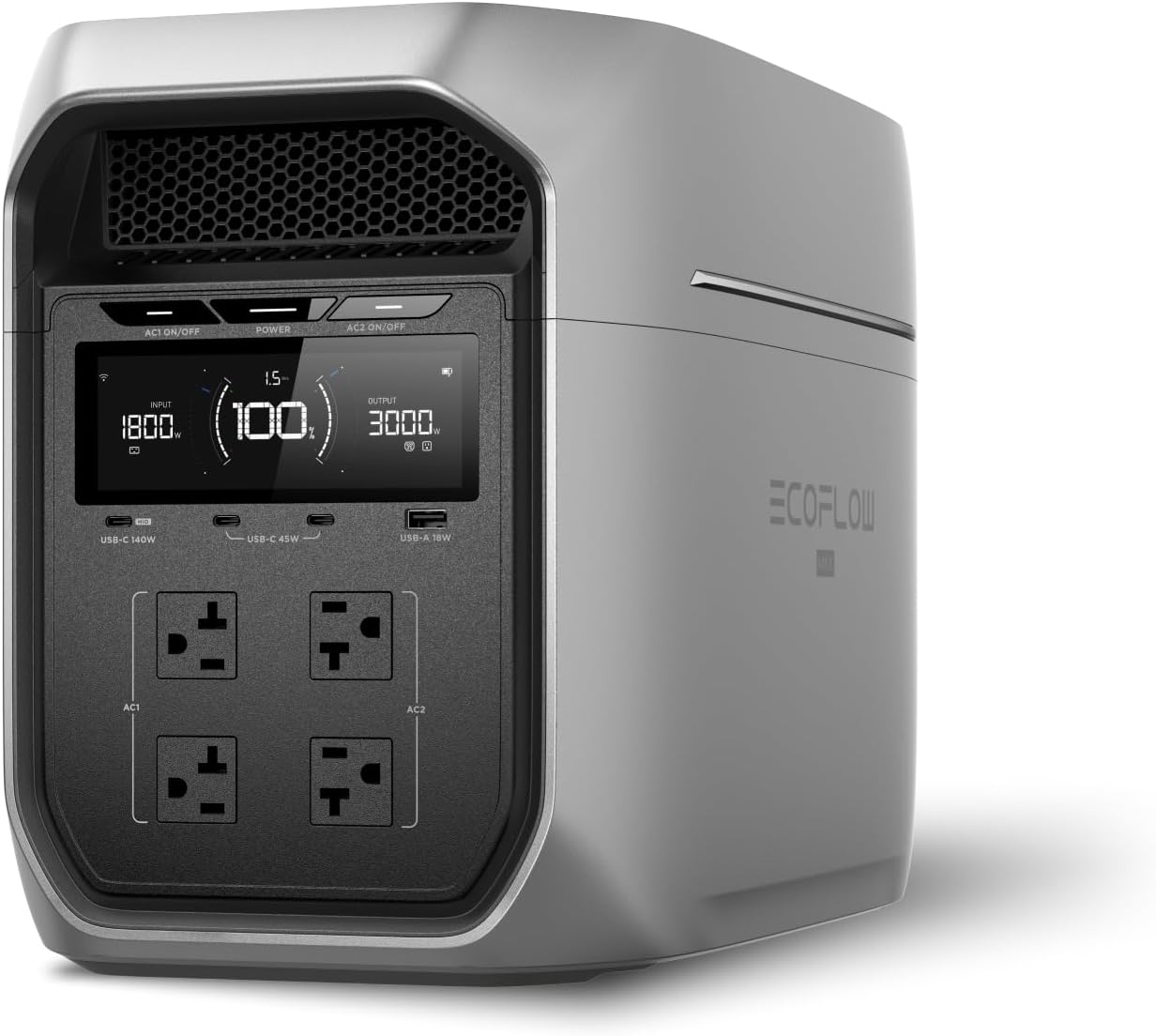
EcoFlow DELTA 3 Plus
EcoFlow's newest mid-range flagship. The DELTA 3 Plus improves on the Delta 2 with faster charging, LiFePO4 chemistry, and UPS functionality — all at a lower price.
Frequently Asked Questions
What size generator do I need for home backup?
For essential circuits (fridge, lights, phone chargers, sump pump), a 2,200–3,500W inverter generator is sufficient. For whole-home backup including central AC or electric range, you'll need 5,000W or more. Most homeowners find a 3,000–3,500W unit covers all their critical needs during an outage.
Are inverter generators safe for electronics?
Yes. Inverter generators produce clean sine wave power (under 3% THD), which is safe for laptops, phones, TVs, and sensitive medical equipment. Traditional open-frame generators produce rougher power that can damage electronics over time.
How long will a generator run during an outage?
Most inverter generators run 8–18 hours on a single tank at 25% load. The Honda EU2200i runs up to 8.1 hours on 0.95 gallons. For multi-day outages, fuel efficiency and tank size matter more than raw wattage.
Should I get a gas generator or a solar power station for home backup?
Gas generators provide unlimited runtime (as long as you have fuel) and higher sustained wattage, making them better for extended multi-day outages. Solar power stations are quieter, maintenance-free, and better for short outages or daily use. Many homeowners benefit from having both. See our full comparison at /blog/solar-generator-vs-gas-generator.
Ready to Buy? Here's What We Recommend
Based on our testing and this guide, these are the best options for most people: