Guide
Best Solar Panel + Power Station Combos 2026: Complete Bundles Ranked

TL;DR
The best solar panel and power station combos for 2026 at three budget tiers. We break down connector compatibility, charging math, and why matched bundles simplify setup.
Buying a power station and solar panel separately means juggling connector types, voltage specs, and compatibility charts. Buying the wrong combo means you’re stuck with adapters, reduced charging speeds, or equipment that flat-out won’t work together.
We’ve paired the best solar panels with compatible power stations at three price tiers so you can skip the guesswork and get a system that works out of the box.
How We Picked These Combos
Every pairing on this list meets three criteria:
- Connector compatibility — Either native MC4-to-MC4 or same-brand proprietary connections with no adapters needed
- Voltage and amperage match — The panel’s output falls within the station’s solar input specs
- Balanced value — The panel is powerful enough to charge the station in a reasonable timeframe (under 8 hours in good sun)
For a deeper dive into how connectors, voltage, and amperage work together, read our Solar Panel + Power Station Compatibility Guide.
Quick Comparison
| Tier | Solar Panel | Power Station | Bundle Cost | Charge Time |
|---|---|---|---|---|
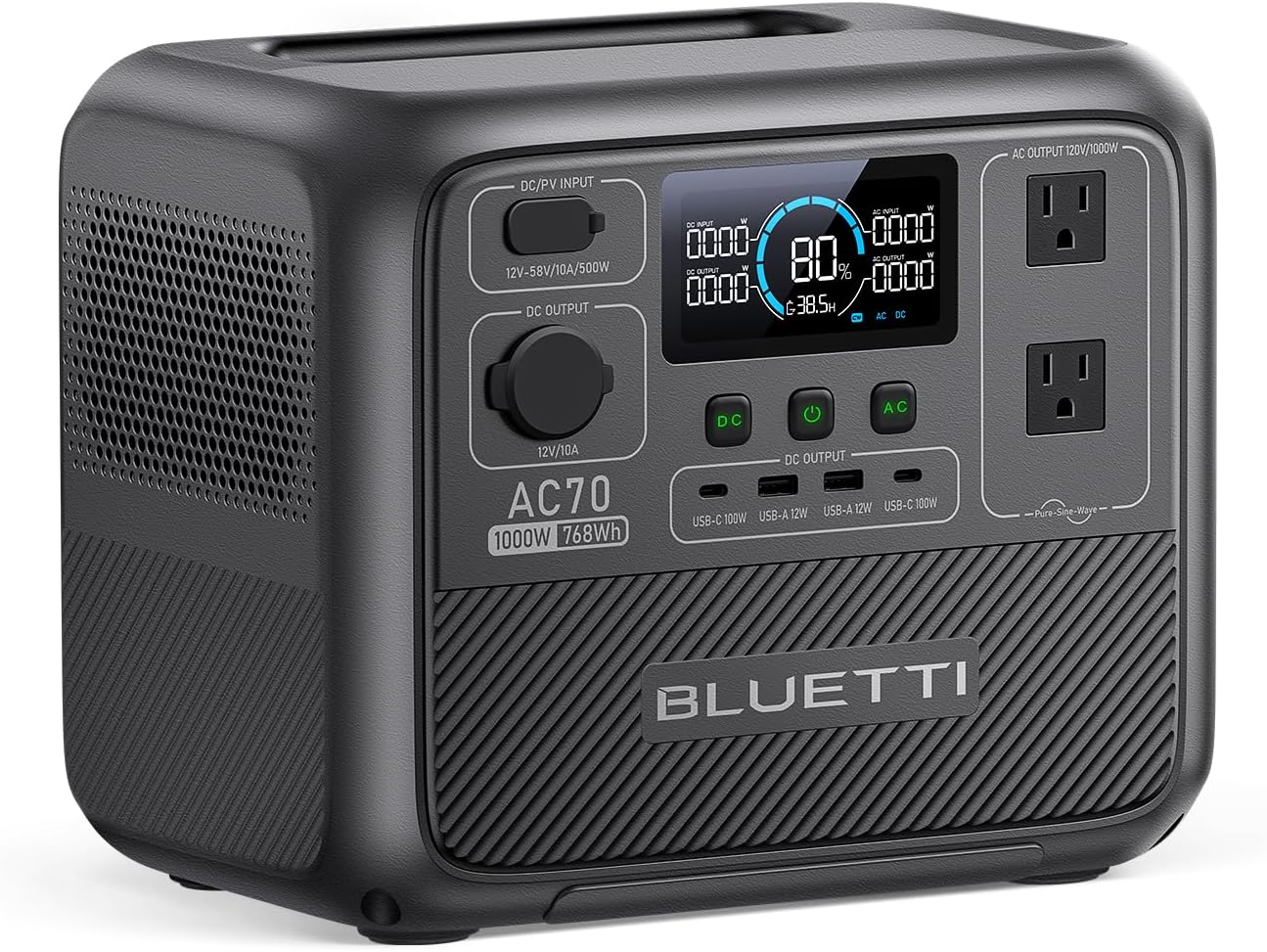
| Budget | Renogy 100W | Bluetti AC70 | ~$600 | ~8-9 hrs |
| Mid-Range | EcoFlow 220W | DELTA 3 Plus | ~$950 | ~5-6 hrs |
| Mid-Range | Jackery SolarSaga 200W | Explorer 1000 v2 | ~$1,100 | ~6-7 hrs |
| Premium | EcoFlow 400W | DELTA Pro 3 | ~$2,400 | ~10-12 hrs |
Budget Tier (~$500-700): Renogy 100W + Bluetti AC70
Best for: Weekend camping, emergency phone and laptop charging, light-duty use
The Renogy 100W portable solar panel paired with the Bluetti AC70 is the cheapest way to get a reliable solar charging setup without sacrificing build quality.
Why this combo works:
- Both use standard MC4 connectors — plug and play, no adapters
- The Renogy 100W panel outputs ~18-20V, well within the AC70’s 12-28V solar input range
- Real-world output of ~70-80W charges the AC70’s 768Wh battery in about 8-9 hours of good sun
- Combined weight under 25 lbs makes it genuinely portable
The Renogy panel is a workhorse — it’s one of the most-recommended budget panels for a reason. And the AC70’s Power Lifting mode lets it handle appliances up to 2,000W, which is unusual at this price. You’re getting a legitimately capable system for around $600.
The charging math: 80W real-world output / 768Wh capacity = ~9.6 hours. In peak summer sun (5-6 good hours), you’ll get roughly 60-70% charge per day. For weekend camping, that’s more than enough.
Mid-Range Tier (~$900-1,200): Two Great Options
EcoFlow 220W Bifacial + DELTA 3 Plus (~$950)
Best for: Extended camping, tailgating, home outage prep
The EcoFlow 220W Bifacial Solar Panel and EcoFlow DELTA 3 Plus is our favorite mid-range combo. Same-brand MC4 connections, zero compatibility worries, and the bifacial panel picks up reflected light from the ground for an extra 10-15% output.
Why this combo wins the mid-range:
- 220W panel realistically produces ~170-180W in direct sun
- Charges the DELTA 3 Plus’s 1,024Wh battery in about 5-6 hours
- The DELTA 3 Plus’s 500W maximum solar input leaves room to add a second panel later
- EcoFlow’s app lets you monitor solar input in real time
This is the combo we’d recommend to most people. The DELTA 3 Plus is already our top overall power station pick, and the 220W panel charges it fast enough to be practical for daily use off-grid.
Jackery SolarSaga 200W + Explorer 1000 v2 (~$1,100)
Best for: Campers who want the simplest possible setup
The Jackery SolarSaga 200W and Jackery Explorer 1000 v2 is the “it just works” option. Jackery uses proprietary Anderson connectors on both their panels and stations, so everything snaps together with zero confusion. The tradeoff: you’re locked into Jackery’s ecosystem.
Why it’s worth considering:
- Truly plug-and-play — one cable, one connection, no guesswork
- SolarSaga 200W delivers ~160W real-world, charging 1,070Wh in about 6-7 hours
- The Explorer 1000 v2 is compact and lightweight for its capacity
- Jackery’s build quality and customer support are consistently strong
The downside is flexibility. If you later want to pair that SolarSaga panel with a non-Jackery station, you’ll need a $20 Anderson-to-MC4 adapter. Not a dealbreaker, but worth knowing before you commit.
Premium Tier (~$1,500-2,500): EcoFlow 400W + DELTA Pro 3
Best for: Extended off-grid living, whole-home backup, RV power systems
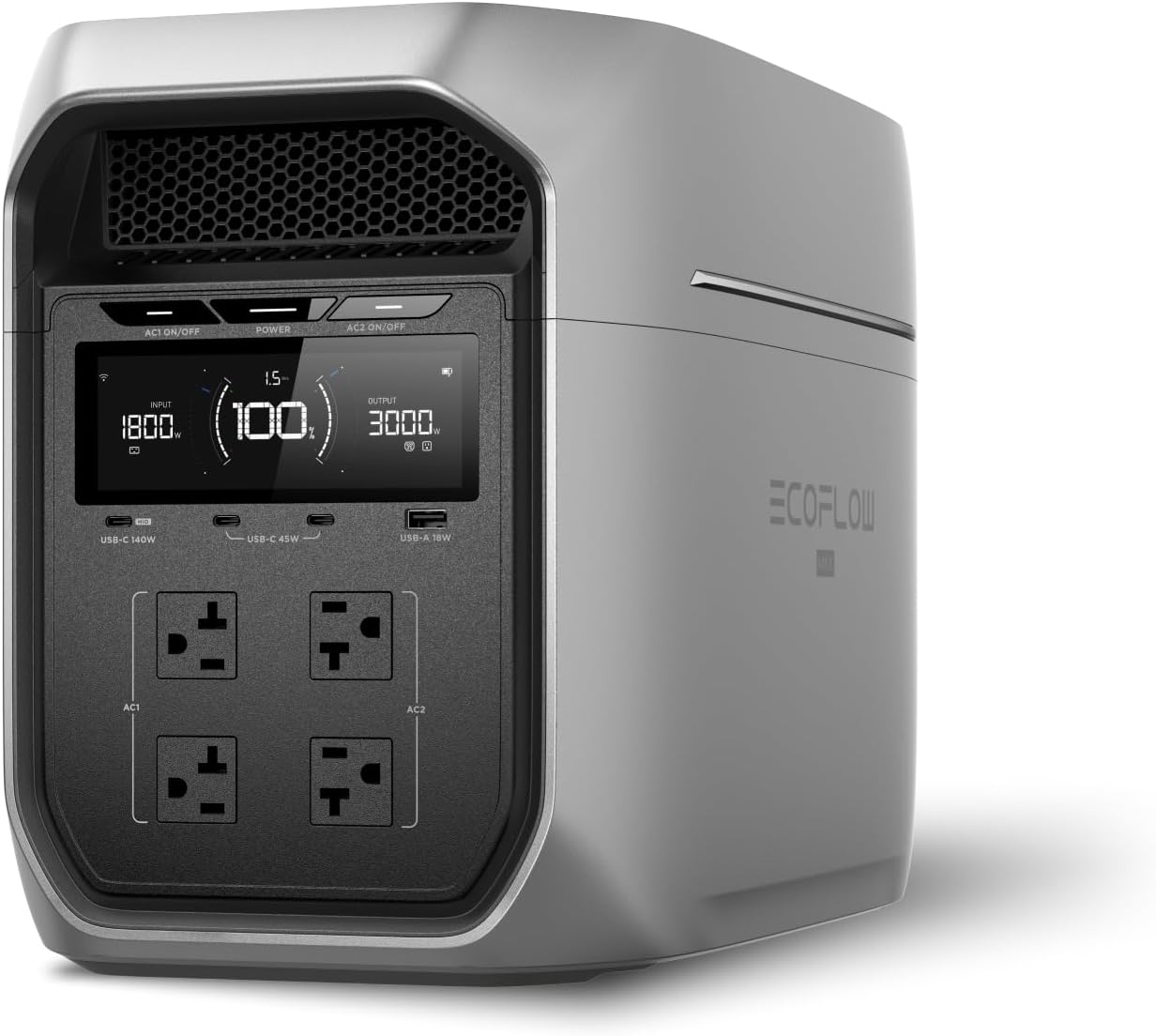
The EcoFlow 400W Rigid Solar Panel paired with the EcoFlow DELTA Pro 3 is the setup for people who are serious about energy independence. The DELTA Pro 3’s massive 4,096Wh battery can power a home’s essential circuits for hours, and the 400W panel makes a meaningful dent in recharging it.
Why this is the premium pick:
- 400W panel produces ~300-320W real-world, delivering about 1,600-1,900Wh per day in 5-6 hours of sun
- That’s roughly 40-45% of the DELTA Pro 3’s capacity per day from solar alone
- Add a second 400W panel (within the station’s 1,600W solar input max) and you can fully recharge in a single day
- MC4 connectors, same ecosystem, seamless EcoFlow app integration
The charging math: 320W real-world output / 4,096Wh capacity = ~12.8 hours with one panel. With two 400W panels (~640W real-world), that drops to ~6.4 hours. For a system this large, two panels is the sweet spot.
At around $2,400 for the combo, this isn’t cheap. But consider what it replaces: a gas generator, fuel costs, noise, and maintenance. For RV owners, off-grid cabins, or anyone in a state prone to extended outages, the long-term value is real.
Why Matching Brands Simplifies Everything
Cross-brand pairing works — we’re not saying it doesn’t. But same-brand combos eliminate three headaches:
- No adapter hunting. MC4-to-Anderson cables, barrel connector adapters, and voltage converters add cost and failure points.
- Guaranteed voltage matching. Brands design their panels to sit in the sweet spot of their stations’ input ranges.
- Bundle discounts. EcoFlow, Jackery, and Bluetti all offer panel+station bundles at 10-20% off buying separately.
If you’re comfortable checking specs and don’t mind ordering an adapter, cross-brand pairing with MC4 gear can save money. But if you want the closest thing to “plug in and forget,” stay in one family.
Bottom Line
For most people, the EcoFlow 220W + DELTA 3 Plus at ~$950 is the best balance of price, charging speed, and future expandability. Budget shoppers should start with the Renogy 100W + Bluetti AC70, and anyone building a serious off-grid system should look at the EcoFlow 400W + DELTA Pro 3.
Use our Power Station Calculator to estimate how much solar capacity you need based on your actual device usage, and check our solar panel reviews and power station reviews for detailed breakdowns of every product mentioned here.
Recommended Power Stations
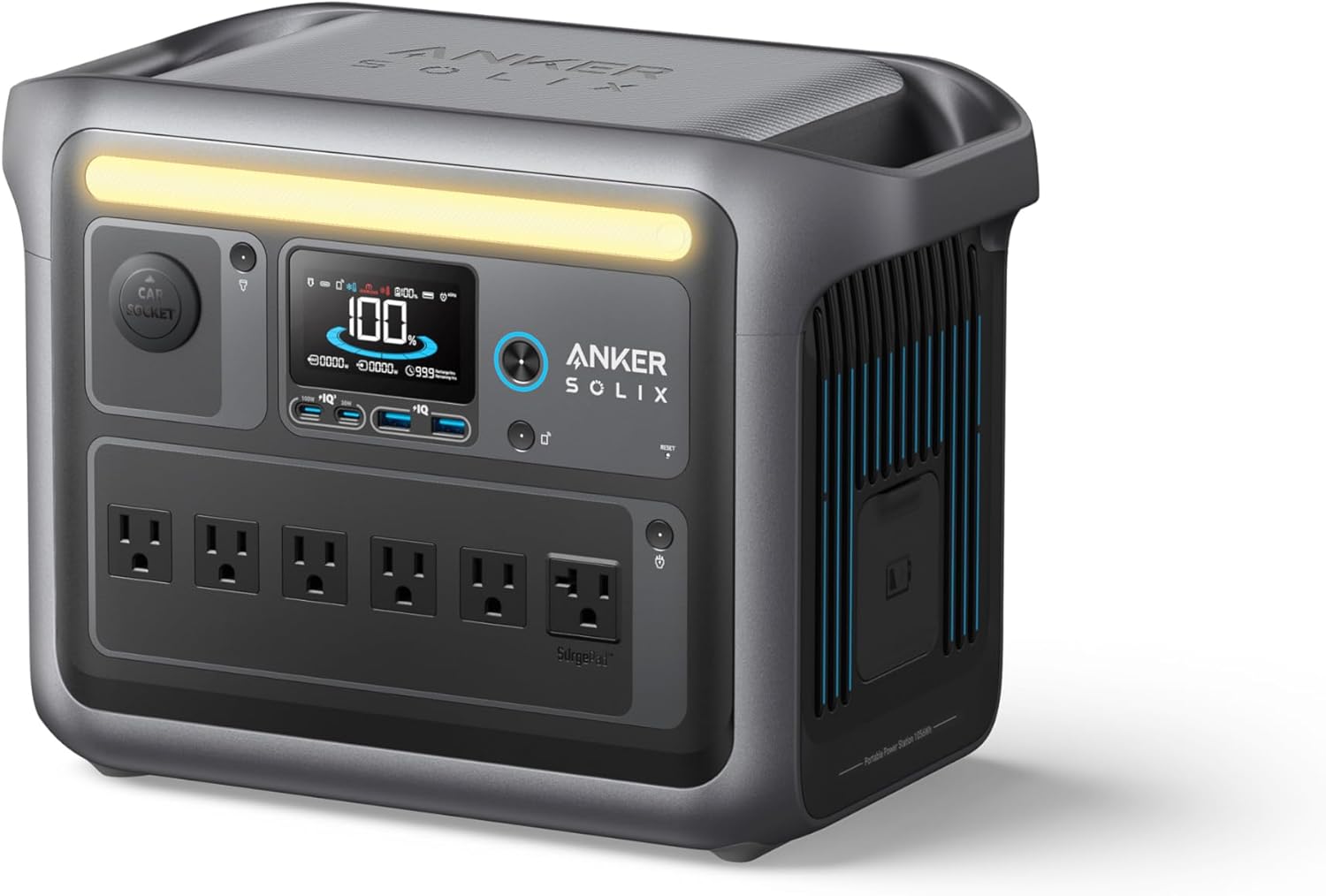
EcoFlow
EcoFlow DELTA 3 Plus
EcoFlow's newest mid-range flagship. The DELTA 3 Plus improves on the Delta 2 with faster charging, LiFePO4 chemistry, and UPS functionality — all at a lower price.
Frequently Asked Questions
Can I use any solar panel with any power station?
Not always. You need to match three things: connector type (MC4 vs proprietary), voltage range, and amperage limits. Most brands like EcoFlow, Bluetti, and Renogy use universal MC4 connectors, making cross-brand pairing easy. Jackery uses proprietary Anderson connectors, so you'll need an adapter for third-party panels.
How long does it take to charge a power station with solar panels?
Divide the station's capacity by the panel's realistic output (typically 70-80% of rated watts). A 200W panel producing ~160W real-world output will charge a 1,000Wh station in roughly 6-7 hours of direct sunlight. Adding more panels in parallel shortens that time proportionally, up to the station's maximum solar input.
Should I buy the same brand solar panel and power station?
It's the easiest route — same-brand combos guarantee connector compatibility and often come with bundle discounts. But it's not required. Cross-brand pairing with MC4-equipped gear works perfectly fine and sometimes gets you better value. Just verify voltage and amperage specs before buying.
Ready to Buy? Here's What We Recommend
Based on our testing and this guide, these are the best options for most people: