Guide
Solar Panel Compatibility Guide: Which Panels Work With Which Power Stations?

TL;DR
Not every solar panel works with every power station. This guide breaks down connectors, voltage matching, brand compatibility, and adapters so you can pair the right panel with your station.
You bought a power station. Now you want to charge it with solar. Simple enough — until you realize your panel’s connector doesn’t fit, or the voltage is wrong, or the brand you picked uses proprietary cables that only work with their own gear.
Solar panel and power station compatibility is straightforward once you understand the basics, but the industry does a terrible job of explaining it upfront. This guide fixes that.
The Three Things That Determine Compatibility
Every solar panel and power station pairing comes down to three factors:
- Connector type — Can you physically plug it in?
- Voltage range — Does the panel’s voltage fall within the station’s accepted input range?
- Amperage limit — Does the panel’s current stay under the station’s maximum solar input?
Get all three right, and you’re good. Miss one, and you’re either ordering adapters or returning equipment.
Connector Types: MC4 vs. Proprietary
MC4 Connectors (The Universal Standard)
MC4 connectors are the industry standard for solar panels. They’re the cylindrical, snap-lock connectors you’ll find on roughly 80% of portable solar panels and most power stations. If both your panel and station use MC4, you can plug them together directly.
Brands that use MC4 on both panels and stations include:
- EcoFlow — MC4 on all stations and panels
- Bluetti — MC4 on all stations and panels
- Renogy — MC4 on all panels and most stations
- Goal Zero — MC4-compatible with adapters included on newer models
- Anker — MC4 on SOLIX series
Proprietary Connectors (The Headache)
Jackery is the biggest offender here. Their power stations use a proprietary Anderson-style connector for solar input, and their panels come with matching proprietary cables. This means:
- Jackery panels don’t plug directly into non-Jackery stations (you’d need an Anderson-to-MC4 adapter)
- Non-Jackery MC4 panels don’t plug directly into Jackery stations (you’d need an MC4-to-Anderson adapter)
These adapters exist and cost $15-30, but it’s an annoying extra step that other brands don’t require.
Goal Zero previously used an 8mm barrel connector (HPP) on older models, though they’ve largely moved to MC4-compatible setups on newer Yeti stations like the Goal Zero Yeti 1000X.
Voltage and Amperage Matching: The Critical Step
Connector compatibility gets your panel physically plugged in. Voltage and amperage matching is what determines whether it actually works — and whether it’s safe.
How to Check
Every power station lists a solar input range in its specs. It looks something like this:
Solar Input: 11-60V, 15A max, 500W max
This tells you three things:
- The station accepts panels with voltage between 11V and 60V
- It can handle up to 15 amps of current
- It will cap solar charging at 500 watts total
Now check your solar panel’s specs for:
- Open-circuit voltage (Voc): The maximum voltage the panel produces (when nothing is connected). This number — not the operating voltage — must be under the station’s max input voltage.
- Short-circuit current (Isc): The maximum current the panel can produce. Must be under the station’s max amperage.
- Operating voltage (Vmp): Must be above the station’s minimum voltage.
A Real Example
Say you want to pair the EcoFlow 220W Bifacial Solar Panel with a Bluetti AC200L:
- Panel specs: Voc 24.8V, Isc 12.4A, Vmp 20.5V, 220W
- Bluetti AC200L solar input: 12-150V, 15A max, 1,200W max
Check: Voc (24.8V) is between 12V and 150V? Yes. Isc (12.4A) is under 15A? Yes. Connector is MC4? Yes on both. Fully compatible.
Brand Cross-Compatibility Table
Here’s a practical overview of which panels work with which stations. “Direct” means no adapter needed. “Adapter” means you’ll need a $15-30 cable.
| Panel Brand | EcoFlow Stations | Bluetti Stations | Jackery Stations | Renogy Stations | Anker Stations |
|---|---|---|---|---|---|
| EcoFlow | Direct | Direct | Adapter needed | Direct | Direct |
| Bluetti | Direct | Direct | Adapter needed | Direct | Direct |
| Jackery | Adapter needed | Adapter needed | Direct | Adapter needed | Adapter needed |
| Renogy | Direct | Direct | Adapter needed | Direct | Direct |
| Anker | Direct | Direct | Adapter needed | Direct | Direct |
| BougeRV | Direct | Direct | Adapter needed | Direct | Direct |
| Rich Solar | Direct | Direct | Adapter needed | Direct | Direct |
The pattern is clear: Jackery is the outlier. Everyone else in the MC4 ecosystem plays nicely together.
Important caveat: Even with “Direct” compatibility, you still need to verify voltage and amperage. The connector fitting doesn’t guarantee the electrical specs match.
Connecting Multiple Panels
When you add more panels, the math changes depending on how you wire them:
Series Connection (Daisy-Chain)
Panels connected in series add their voltages together while keeping the same amperage. Two 24V/10A panels in series = 48V/10A.
Watch out: If your combined Voc exceeds the station’s maximum input voltage, you’ll trip the protection circuit (or worse, damage the charge controller). Always add the Voc values of all series panels together and check against the max.
Parallel Connection (Y-Splitter)
Panels connected in parallel add their amperages while keeping the same voltage. Two 24V/10A panels in parallel = 24V/20A.
Watch out: Make sure the combined Isc doesn’t exceed the station’s max amperage rating.
Which Should You Use?
Most power station manufacturers recommend series connections for their products because the higher voltage results in more efficient charging and less current loss through cables. But you need a station with a high enough voltage ceiling to support it. The EcoFlow DELTA 3 Plus, for example, supports up to 500W of solar input, making it well-suited for multi-panel series setups.
For stations with narrow voltage ranges (like some smaller units that cap at 30V), parallel may be your only option for adding panels.
Common Compatibility Mistakes
Mistake 1: Checking wattage but not voltage. A 200W panel’s wattage doesn’t tell you if it’s compatible — the voltage and amperage do. Two 200W panels can have completely different voltage outputs.
Mistake 2: Using the panel’s operating voltage instead of Voc. The open-circuit voltage is always higher than the operating voltage. If Vmp is 20V, Voc might be 24V+. That extra headroom matters when checking against a station’s maximum input.
Mistake 3: Assuming same-brand panels are automatically optimized. While same-brand pairings are guaranteed to be connector-compatible, they’re not always the best deal. A Renogy 200W panel might outperform a station manufacturer’s own panel at a lower price. Compare efficiency, weight, and cost — not just brand name.
Mistake 4: Forgetting about real-world conditions. Panel specs are rated at ideal lab conditions (STC — 25°C, 1000W/m² irradiance). In the real world, expect 70-85% of rated output. Factor that in when calculating charge times. Our Power Sizing Calculator can help you estimate realistic charge times and energy needs.
The Quick Compatibility Check
Before you buy any solar panel for your power station:
- Check the connector. MC4 on both sides? You’re probably fine. Jackery involved? Budget for an adapter.
- Find your station’s solar input specs. Look for min/max voltage, max amps, and max watts.
- Check the panel’s Voc and Isc. Voc must be under station’s max voltage. Isc must be under station’s max amps.
- Plan for multiples. If you’re connecting more than one panel, do the series/parallel math before buying.
For more details on choosing the best panels, check out our roundup of the best solar panels for power stations, or browse our complete solar panel rankings and power station rankings to find pairings that work together. You can also use our comparison tool to put any two stations side by side and check their solar input specs.
Related Reading
- Best Solar Panels for Power Stations — our top panel picks with real-world performance data
- Solar Generator vs. Gas Generator — how solar-powered setups compare to traditional generators
- Best Solar Generator for Off-Grid Use — complete solar station bundles for off-grid living
- EcoFlow vs. Jackery 2026 — brand comparison including solar ecosystem differences
Recommended Power Stations
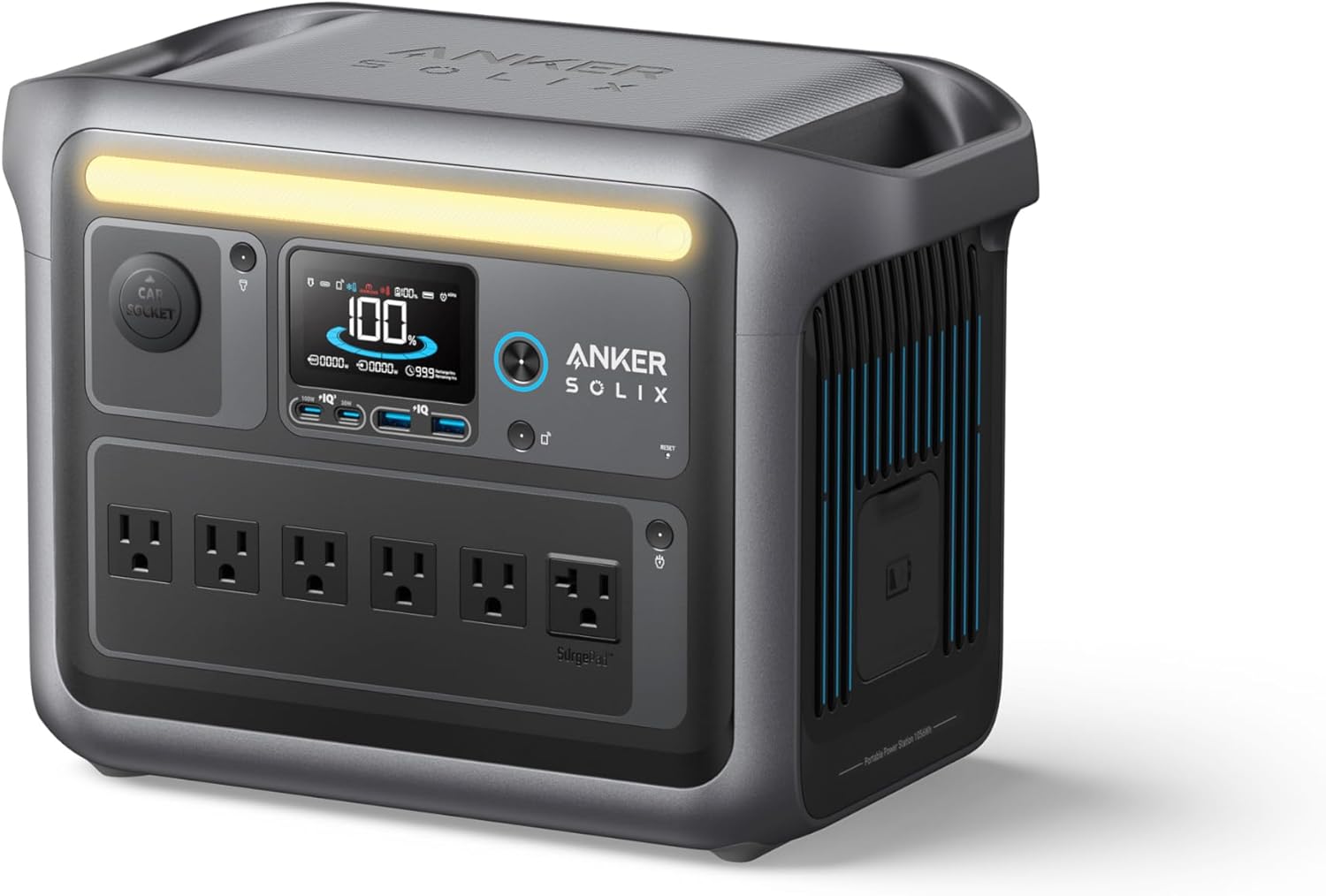
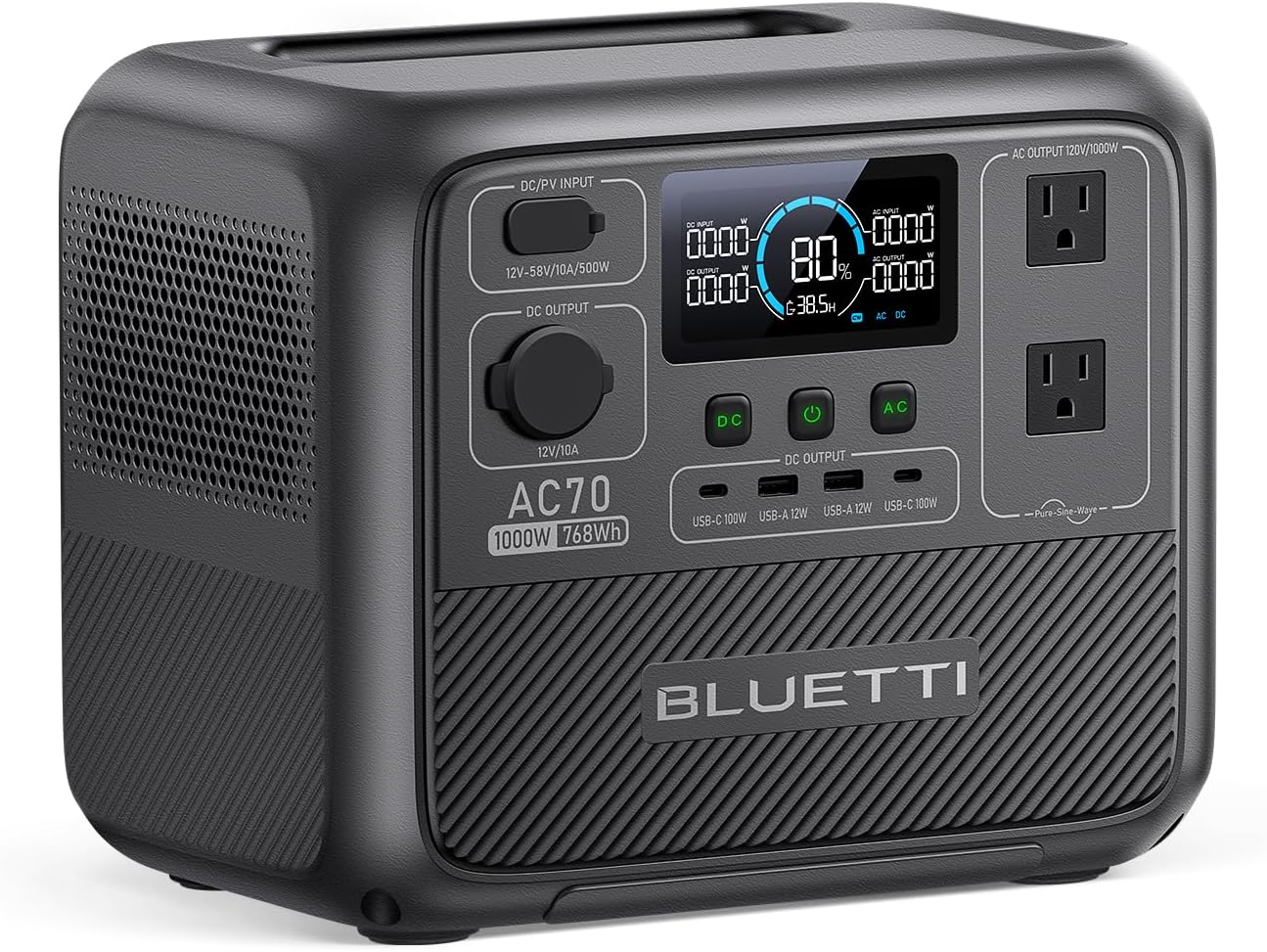
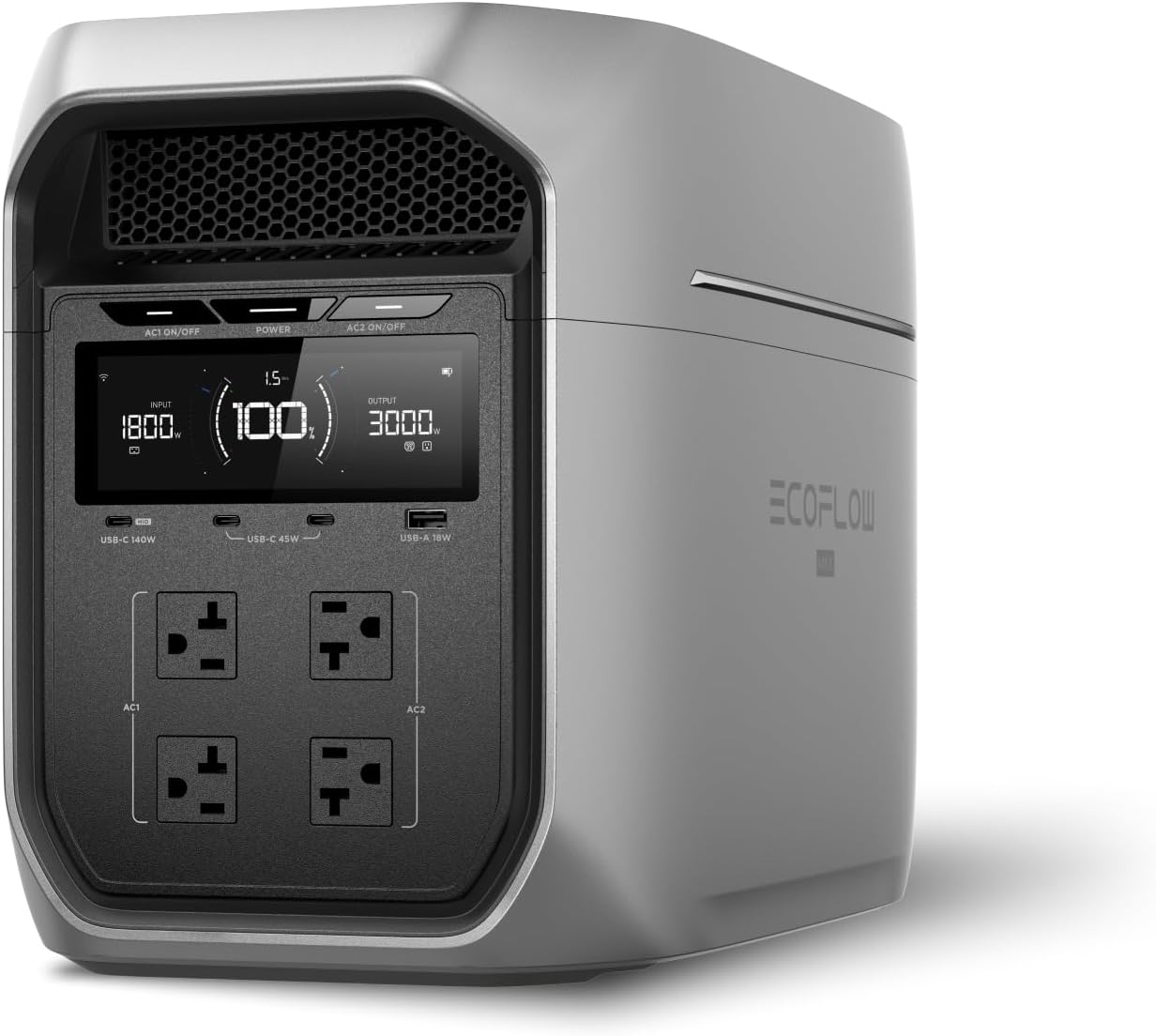
EcoFlow
EcoFlow DELTA 3 Plus
EcoFlow's newest mid-range flagship. The DELTA 3 Plus improves on the Delta 2 with faster charging, LiFePO4 chemistry, and UPS functionality — all at a lower price.
Frequently Asked Questions
Can I use a different brand's solar panel with my power station?
In most cases, yes — as long as the connector type matches (or you use an adapter) and the panel's voltage and amperage fall within your station's solar input specs. EcoFlow, Bluetti, and Renogy panels with MC4 connectors are widely cross-compatible. Jackery is the main exception, as their panels use proprietary Anderson connectors.
What happens if my solar panel voltage is too high for my power station?
If the panel's open-circuit voltage (Voc) exceeds the station's maximum input voltage, the station's charge controller will reject the input to protect itself. In rare cases with cheap stations lacking proper protection, overvoltage can damage the charge controller. Always check the Voc rating — not just the operating voltage — before connecting.
Can I mix different wattage solar panels together?
You can, but it's not ideal. When panels are connected in series, the lowest-current panel limits the entire string. When connected in parallel, the lowest-voltage panel limits output. For best results, use identical panels. If you must mix, connect panels of similar voltage in parallel or similar current in series.
Do I need a special cable to connect solar panels to a power station?
Most panels with MC4 connectors come with cables that plug directly into stations with MC4 solar inputs. For stations that use proprietary connectors (like Jackery's Anderson-style port), you'll need a brand-specific MC4-to-proprietary adapter cable, usually sold separately for $15-30.
Ready to Buy? Here's What We Recommend
Based on our testing and this guide, these are the best options for most people: