Guide
Bike Tour & Cycling Adventures: Ultralight Power for Multi-Day Rides

TL;DR
A van-dweller's real-world guide to ultralight power for multi-day bike tours. How to keep your phone, GPS computer, lights, and battery cache alive for a week without weighing down your bags.
I have spent the last four years living out of a van and chasing routes across 34 states, but my favorite trips are still the ones where I leave the van behind and load everything onto the bike. There is something honest about a fully loaded touring rig. You carry exactly what you need and nothing else, and every gram you strap on you feel on the first real climb.
Power is the part of bikepacking people overthink. They either pack way too much, lashing a five-pound power station to a rear rack like it’s a saddlebag, or they pack nothing and end up at a gas station outlet at hour 14 babysitting a dead phone. Neither is fun. After a lot of trial and error, here’s the lean, reliable power kit I actually carry, what it weighs, and how I size it for trips from a quick overnighter to a two-week tour.

What You Actually Power on a Bike Tour
Before you buy anything, figure out your real energy budget. Bikepacking electronics are modest, and the numbers surprise people who assume they need to haul a small power plant. Here’s my typical daily draw on a multi-day route:
| Device | Daily Wh | Notes |
|---|---|---|
| Phone (navigation, photos, evening check-in) | 6-12 Wh | More if running maps live all day |
| GPS bike computer (Garmin Edge, Wahoo) | 2-4 Wh | Charged every 2-3 days, not daily |
| Front and rear bike lights (rechargeable) | 3-6 Wh | Depends on night and tunnel riding |
| Headlamp for camp | 1-2 Wh | A few minutes to an hour per night |
| Earbuds, watch, satellite messenger | 1-3 Wh | Small but adds up |
| Daily total | 13-27 Wh | |
| Weekly total | 90-190 Wh |
Most tourers land around 15-20Wh per day in practice, because the bike computer and lights only need charging every couple of days. That means a single quality power bank in the 75-100Wh range covers a full week with margin. If those units are unfamiliar, my glossary of watt-hours, volts, and amps breakdown in the laptop guide explains why the Wh rating matters far more than the mAh number on the box.
Why a Power Station Is the Wrong Tool Here
I love portable power stations. I have several in the van and they run my fridge, my laptop, and my fairy lights for days. But they are basecamp gear, full stop. The lightest sub-300Wh units still weigh 5 to 8 pounds, and that weight riding high in a trunk bag or strapped to a rack does ugly things to your handling. You feel it wagging on fast descents and fighting you on switchbacks.
The only exception is if you are doing a credit-card tour with a support vehicle, or a basecamp-style trip where you ride out and back from one site. In that case, leave a station at camp and ride with just a bank. For self-supported touring where every gram is on the bike with you, a 1 to 1.5 lb USB-C power bank delivers the same useful capacity for typical trips at a tiny fraction of the weight. If you want the full reasoning on this, I went deep on it in my backpacking and bikepacking ultralight power setups guide.
My Actual Bike Touring Power Kit
Here’s what rides with me on a self-supported week, broken down by tier so you can match it to your trip length.
The workhorse bank: Anker Prime 27,650mAh
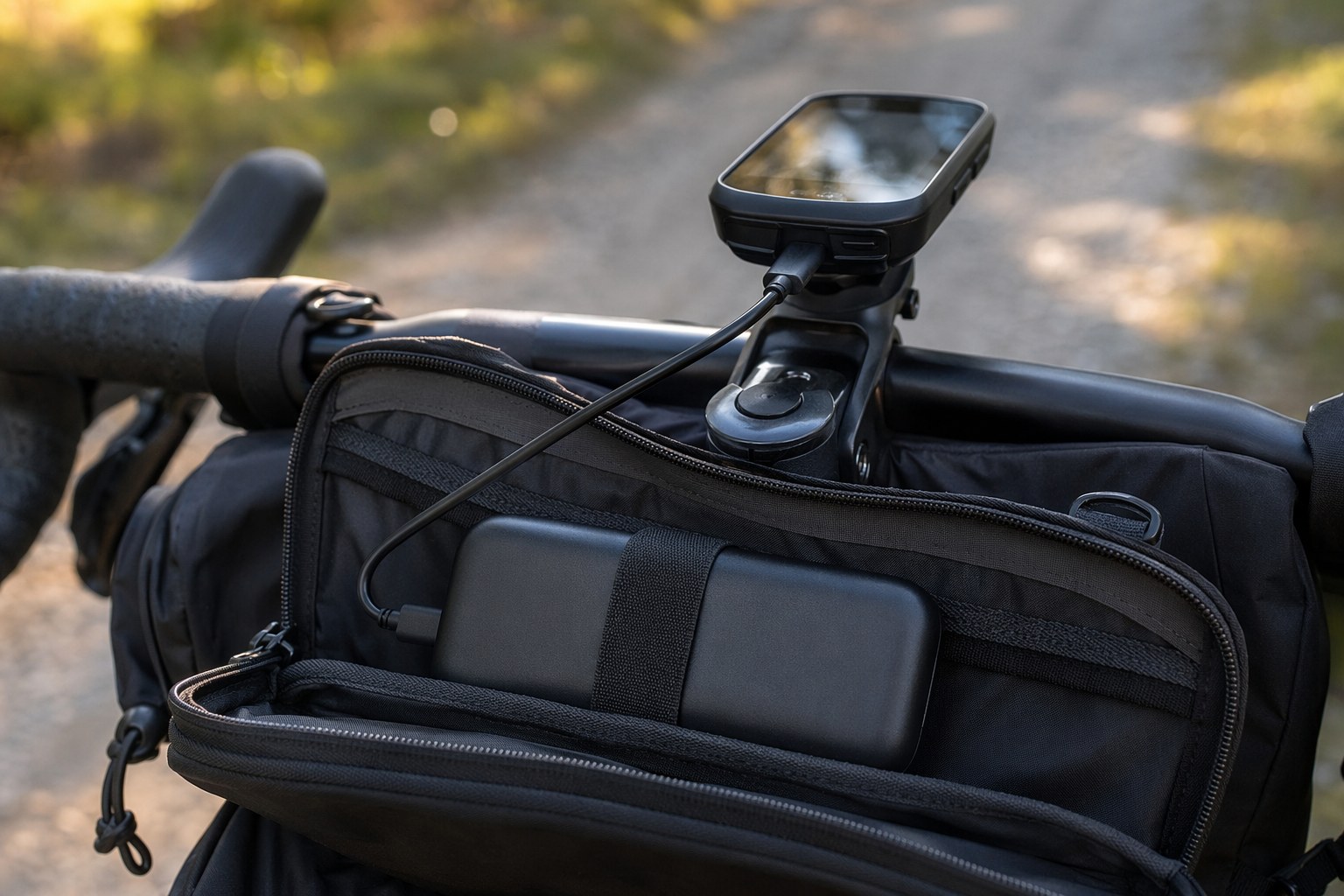
This is the one I reach for most. The Anker Prime 27650 is 99.5Wh, weighs about 1.3 lbs, and squeaks in just under the 100Wh airline limit, which matters because I fly to a lot of trailheads with the bike boxed. It charges a phone five to six times, tops off a GPS computer instantly, and recharges itself fast when I do get to a real outlet at a motel or coffee stop. The little digital readout that shows actual watts in and out has saved me from more than one bad guess about whether I had enough left for two more days.
The ultralight overnighter pick: Anker Nano 10,000mAh
For a single overnight or a fast two-day route, I don’t need 100Wh. The Anker Nano 10,000mAh is 37Wh, about 7 ounces, and disappears into a frame bag. It gives me roughly two full phone charges plus a light top-off, which is exactly right for a sub-24-hour bivvy where I leave home with everything charged. Half the weight of the Prime, and for short trips the extra capacity is just dead mass you’re hauling.
The multi-device option: UGREEN Nexode 25,000mAh
When I’m touring with a partner or running more gadgets, the UGREEN Nexode 25,000mAh earns its spot. It’s a 90Wh-class bank with multiple ports and strong USB-C PD output, so two of us can top phones, a GPS, and earbuds at once around the picnic table at camp without a port traffic jam. It’s a hair heavier than the Anker Prime but the multi-port convenience is real on shared trips.
The thin-profile laptop pick: Baseus Blade 2
A surprising number of bike tourers carry a laptop now, whether for editing photos on a creative trip or staying half-employed on a long one. The Baseus Blade 2 is flat, slides into a frame bag alongside a 13-inch laptop, and pushes up to 140W of USB-C Power Delivery at 99Wh. If your tour involves keeping a laptop alive between towns, this is the bank that actually does it at full charging speed. I cover more laptop-focused options in the best power banks for laptops guide.
The featherweight wildcard: Jackery Explorer 100 Plus
This one blurs the line between power bank and tiny power station. The Jackery Explorer 100 Plus is a 99Wh unit with a real AC outlet, which means you can run or charge something with a wall plug, like a camera battery charger or a small CPAP setup, without hunting for a USB adapter. It’s heavier than a pure bank at around 2 lbs, so I only bring it when I genuinely need that AC outlet on the road. For pure phone-and-GPS touring, skip it and save the weight.
Stretching Range on Trips Over a Week
For anything past 7 to 9 days off-grid, I add range instead of just more battery. There are two ways to do it.
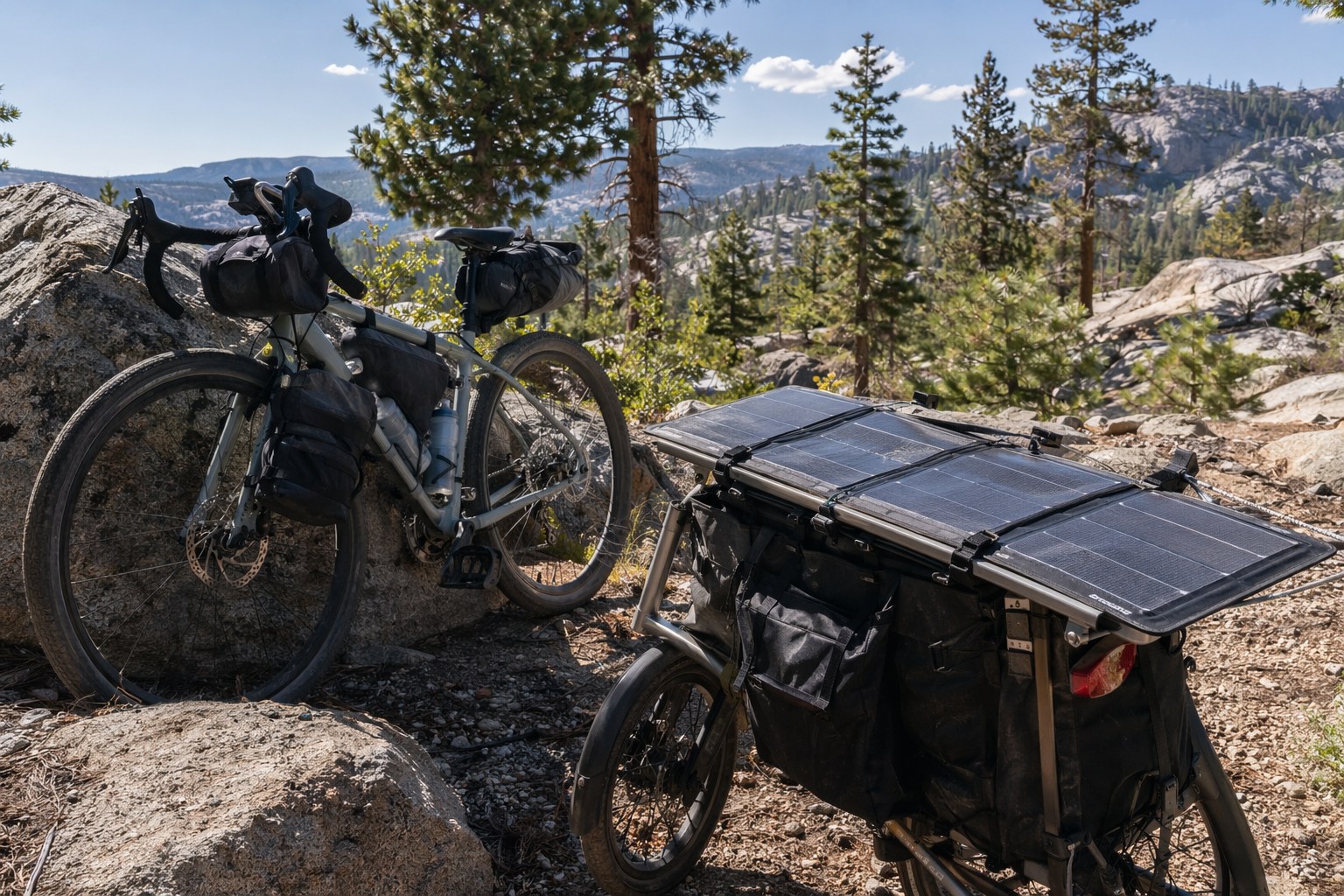
A small foldable solar panel in the 10-20W range adds maybe 7 to 18 ounces and, strapped to the top of a rear rack, trickles charge into your bank while you ride and while it sits in the sun at camp. On a sunny day you’ll claw back 30-60Wh, enough to keep a phone and GPS alive indefinitely. It’s slow and it’s weather-dependent, so I treat it as insurance, not a primary source.
The other route is a dynamo hub. If you tour seriously, a front dynamo wheel paired with a USB charger is a game changer, producing usable power any time you’re rolling above 8-10 mph. The catch is that you still want a small buffer bank, because dynamos trickle slowly and produce nothing when you stop. The realistic setup is dynamo plus a 10,000-20,000mAh cache, not one in place of the other.
Habits That Save More Power Than Gear
Gear matters less than how you use it. A few habits I never skip:
- Charge everything the night before you roll out. A full phone, GPS, lights, and headlamp at the trailhead is 30-50Wh of free capacity you didn’t have to carry separately.
- Run your phone in low-power mode with offline maps downloaded. Live cellular mapping in the backcountry, where the radio is constantly hunting for signal, is the single biggest battery killer on tour. Offline maps plus low brightness can triple your phone’s runtime.
- Charge the bike computer and lights every two or three days, not daily. They have plenty of internal capacity. Topping them off on a schedule beats anxiety-charging everything every night.
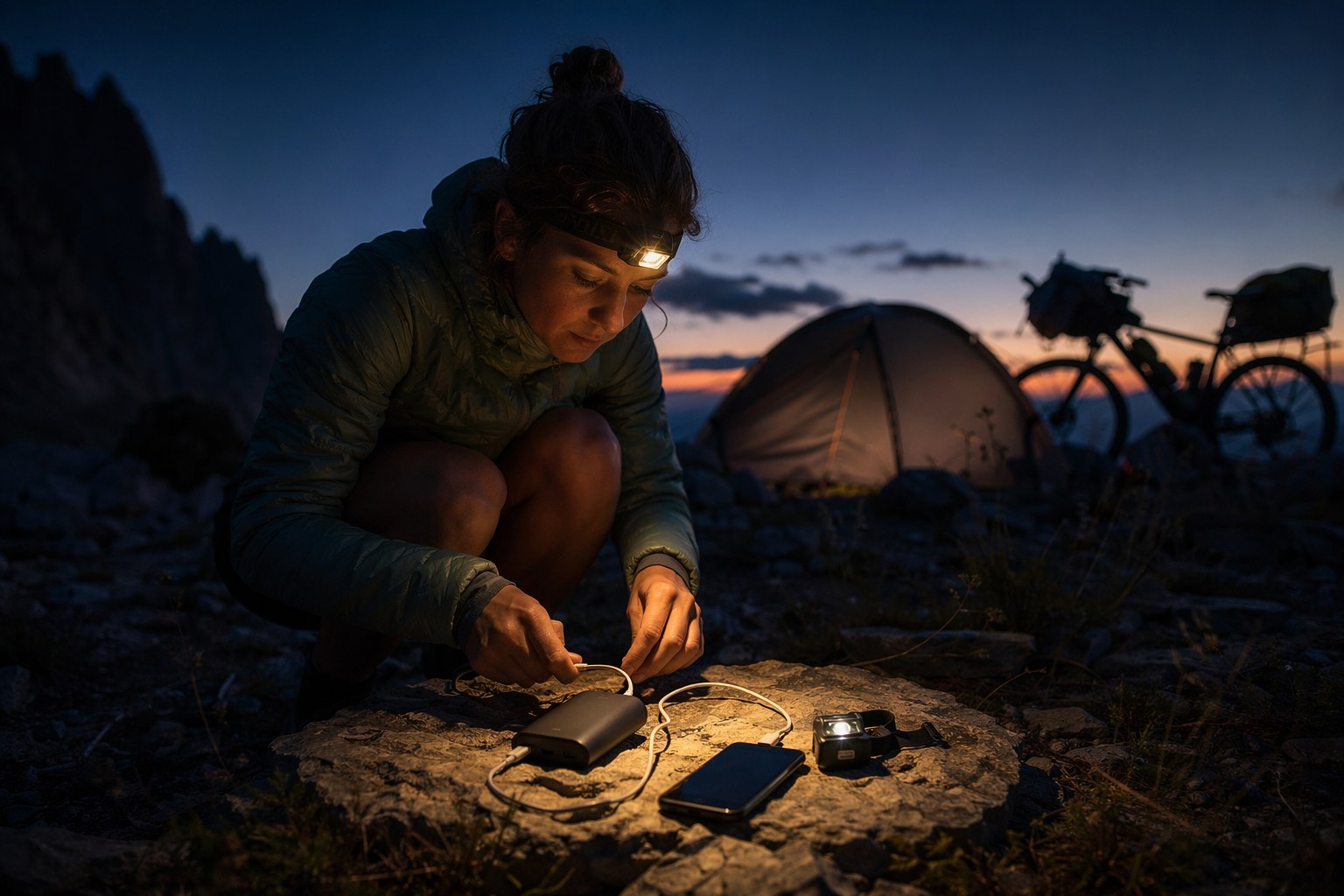
- Sleep with your power bank and electronics in your bag on cold nights. Lithium capacity can drop 20-40% near freezing, and a cold bank looks dead when it’s really just cold.
I dig into more navigation and charging tricks in the best power banks for travel writeup, since a lot of the airline and TSA rules overlap when you fly with the bike.
Frequently Asked Questions
How much battery capacity do I need for a week-long bike tour? For a part-time-navigating phone, a GPS computer, a headlamp, and bike lights, plan on roughly 60-90Wh of useful capacity per week, which is one 24,000-27,000mAh USB-C bank. Add a camera or all-day live GPS and you’ll want 100-160Wh, meaning two banks or a small solar panel.
Should I bring a portable power station on a bike tour? No. The lightest stations weigh 5-8 lbs and that high-mounted mass wrecks handling. Stations are basecamp and car-camping gear. A 1 to 1.5 lb power bank covers realistic touring needs.
Can a dynamo hub replace a power bank? Not entirely. A dynamo gives near-indefinite range above 8-10 mph but trickles slowly and makes nothing when stopped, so you still want a small buffer bank to charge from while riding and draw from at camp.
The Bottom Line
The right bike touring power kit is almost always lighter and simpler than you think. For most multi-day rides, one quality USB-C bank like the Anker Prime 27650 is the whole system. Drop to the Anker Nano for overnighters, scale up to the UGREEN Nexode for shared trips, and only reach for a panel or dynamo when you’re truly off-grid for more than a week. Pack light, charge before you roll, and you’ll spend your evenings watching the sunset instead of hunting for an outlet.
Recommended Power Stations
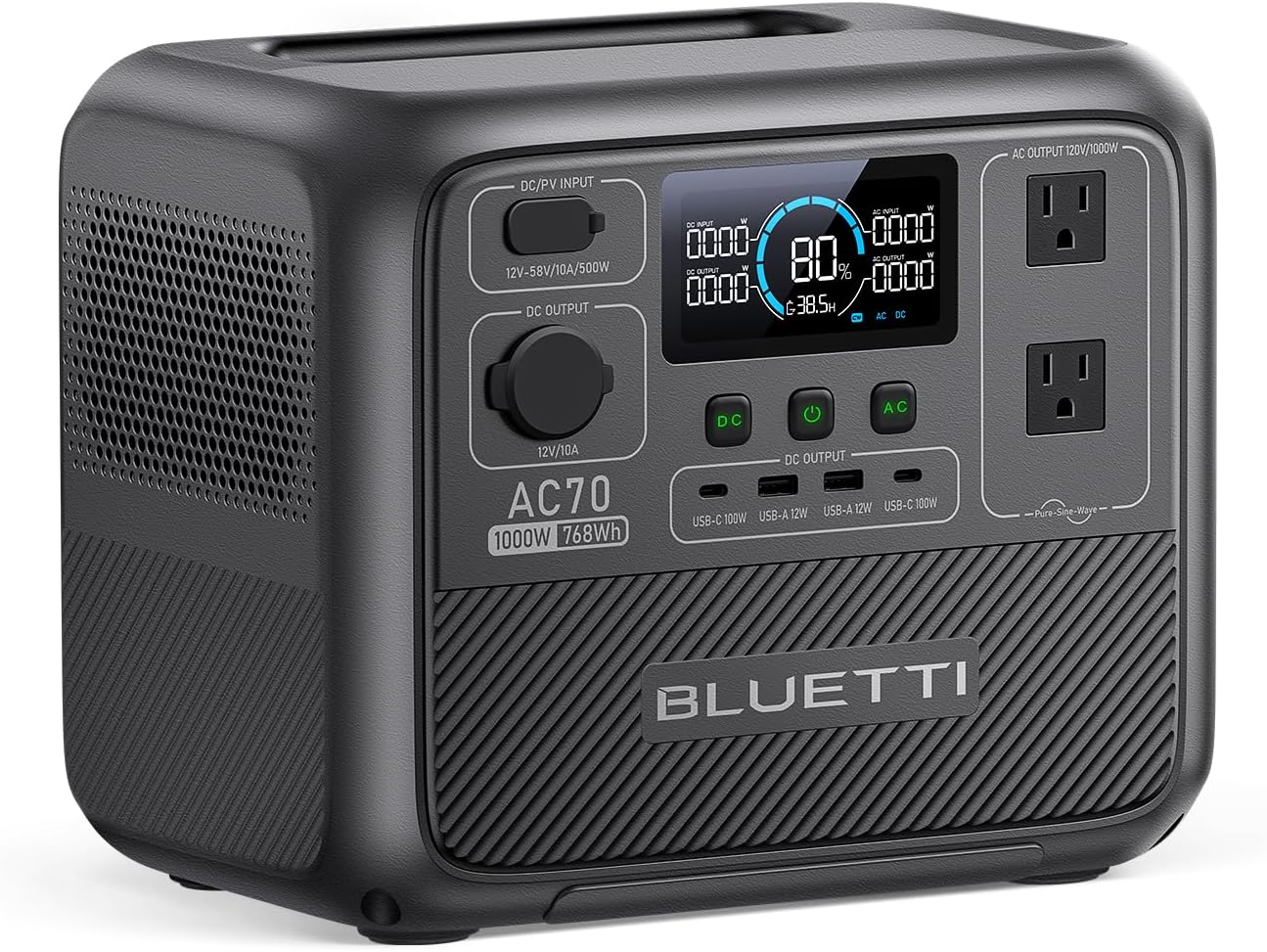
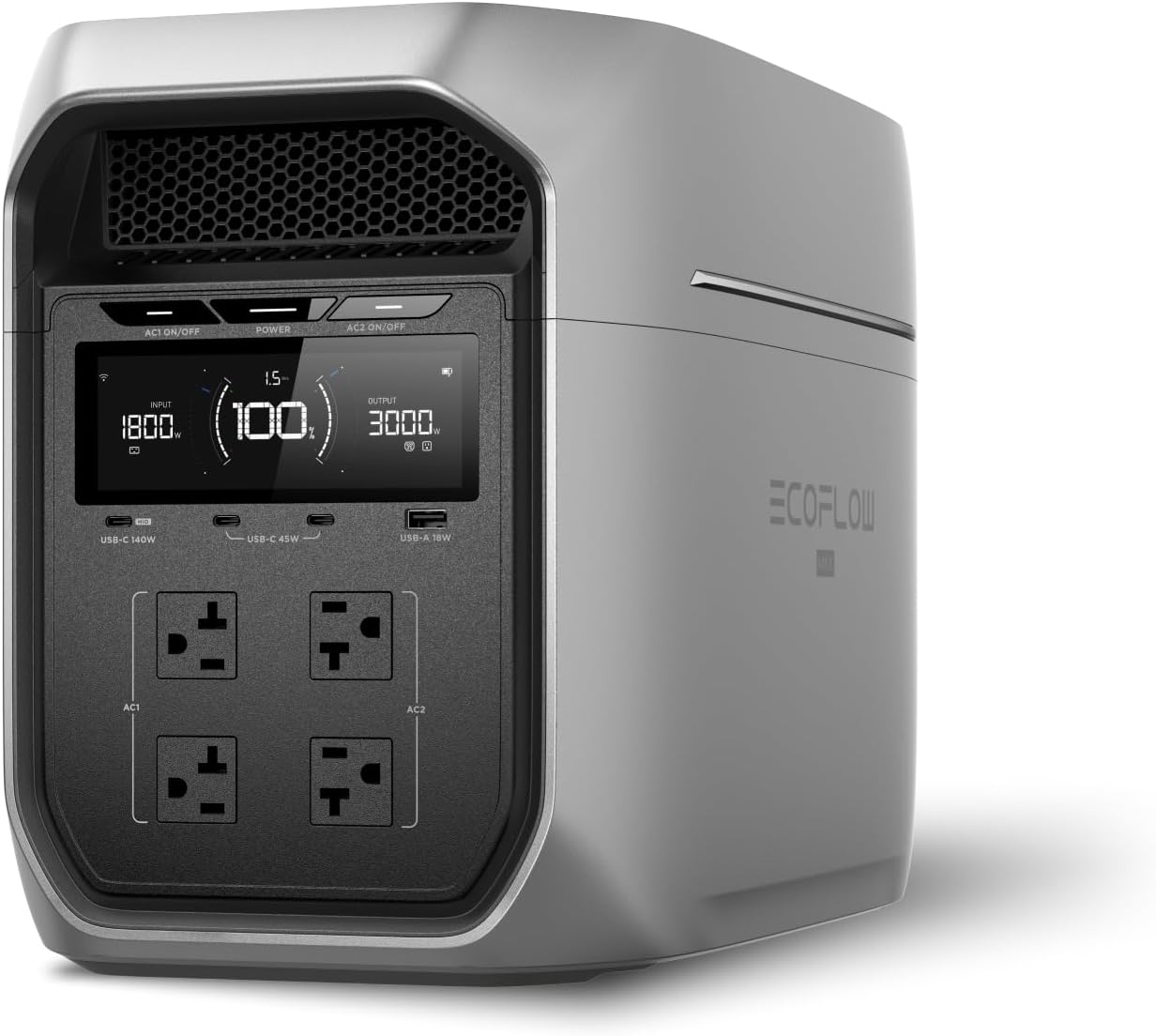
EcoFlow
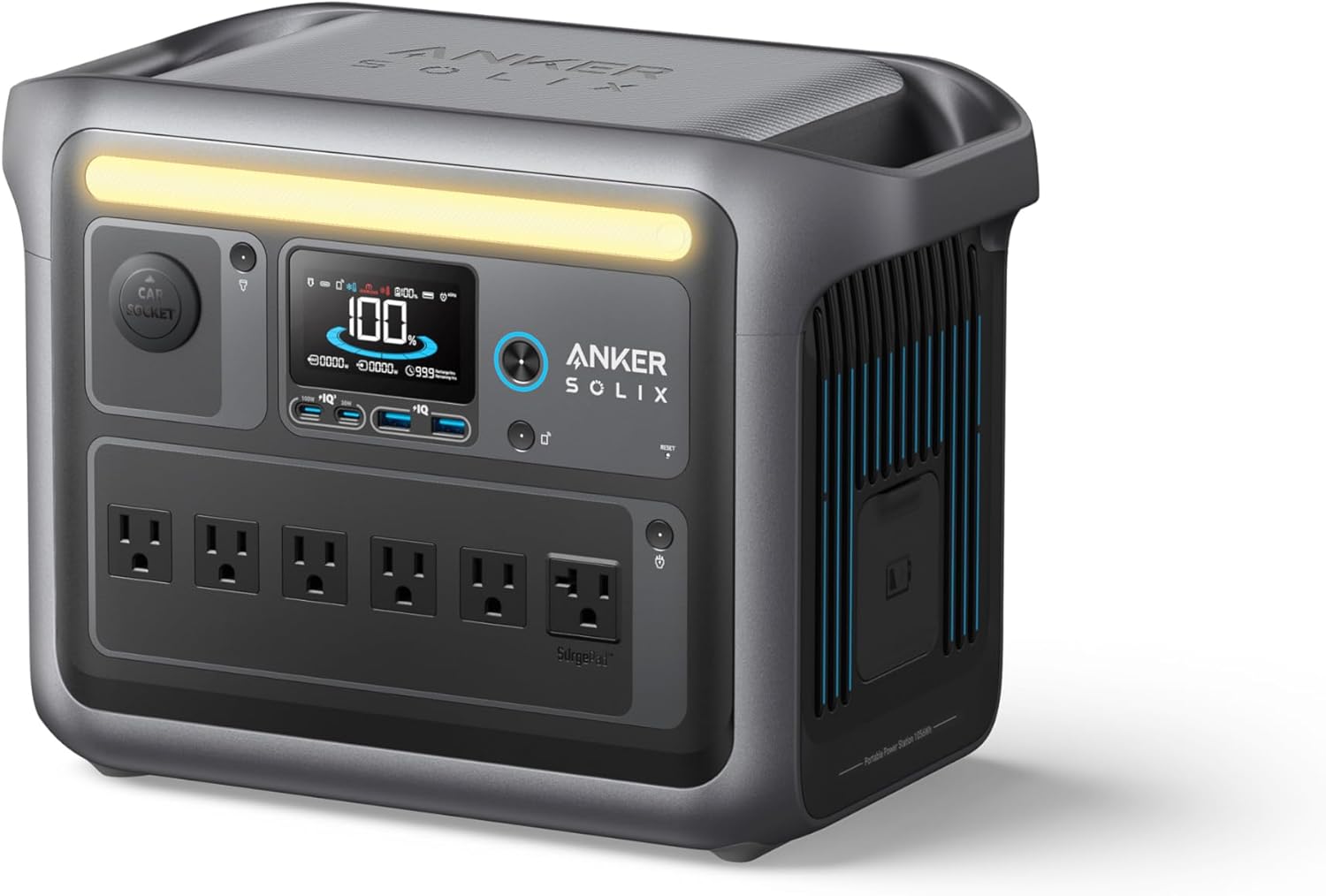
EcoFlow DELTA 3 Plus
EcoFlow's newest mid-range flagship. The DELTA 3 Plus improves on the Delta 2 with faster charging, LiFePO4 chemistry, and UPS functionality — all at a lower price.
Frequently Asked Questions
How much battery capacity do I need for a week-long bike tour?
For a phone navigating part-time, a GPS bike computer, a rechargeable headlamp, and a set of bike lights, plan on roughly 60-90Wh of useful capacity per week. That's a single 24,000-27,000mAh USB-C power bank weighing about 1.1 to 1.5 lbs. If you also charge a camera or run your phone as a full GPS all day, bump that to 100-160Wh, which usually means carrying two banks or adding a small solar panel for opportunistic top-ups.
Should I bring a portable power station on a bike tour?
No. Even the lightest 240Wh power stations weigh 5 to 8 lbs, and that mass riding high in a rack bag or trunk wrecks your bike's handling on descents and climbs. Power stations are car-camping and basecamp gear. For touring, a 1 to 1.5 lb USB-C power bank delivers all the realistic capacity you need at a fraction of the weight and bulk.
Can a dynamo hub replace a power bank for bike touring?
A dynamo hub paired with a USB charger is excellent for indefinite range, but it is not a replacement for a buffer battery. Dynamos produce usable charge only above roughly 8-10 mph and trickle power slowly, so you charge a cache battery while riding and pull from that cache at camp. The realistic setup is dynamo plus a small power bank as a buffer, not one or the other.
Ready to Buy? Here's What We Recommend
Based on our testing and this guide, these are the best options for most people: