Guide
Graduation Trip Planning: Gap Year Adventures with Portable Power

TL;DR
A practical gap year power plan for new graduates: which portable power stations and banks survive 6-12 months of travel, what actually keeps your gear charged abroad, and the mistakes to avoid.
I get a lot of emails in May. Half of them are from parents asking what to buy a kid who just graduated, and the other half are from the graduates themselves, who have a plane ticket, a backpack, and a vague plan to “figure it out for a few months.” The power question always comes up second, right after the backpack question, and it’s usually framed wrong. People ask which power station is “the best.” For a gap year, that’s not the question. The question is which gear survives six to twelve months of being dropped, rained on, jammed in overhead bins, left in hot vans, and charged off dodgy outlets in places where the wall socket sparks when you plug it in.
I run a small testing bench, and I’ve put every unit below through real abuse — not lab abuse, the kind where you forget it on a tailgate in the sun and find it three hours later. Here’s how I’d actually power a gap year, broken down by the way people really travel, with specific picks and the reasons behind them.

First, Be Honest About How You’re Traveling
The single biggest mistake I see new graduates make is buying for the trip they imagine instead of the trip they’ll take. There are three broad gap year styles, and they need completely different gear.
The flyer. You hop between cities and countries by plane, sleep in hostels and cheap rooms, and you’re rarely more than a day from a wall outlet. You do not need a power station. You need one excellent power bank and the discipline to charge it every night. A station is dead weight you’ll abandon in a locker by month two.
The grounder. You buy or share a van, do an overland route, or post up in long-stay rentals with unreliable power. Now a power station earns its keep — it’s your base battery, your blackout insurance, and the thing that lets you work or edit photos off-grid for a few days at a stretch.
The hybrid. Most people, honestly. You fly into a region, then spend weeks moving by ground. You fly with a power bank and pick up or borrow a station for the overland legs.
Sort yourself into one of these before you spend a dollar. Everything below is organized around it.
The Power Bank Every Graduate Should Own
Whatever your style, start here. A power bank is the only battery you can legally fly with, it’s the one you’ll use every single day, and it’s the cheapest insurance against a dead phone in a country where your phone is your map, translator, ticket, and bank.
My pick is the Anker Prime 27650. It’s 99.54Wh — deliberately just under the 100Wh TSA ceiling, so it flies in carry-on with zero paperwork. It pushes 250W total across its ports, enough to fast-charge a laptop and a phone at the same time, and it’ll give a typical phone five to six full charges before it needs a refill. At 1.3 pounds it’s not the lightest bank on the market, but for a year of travel I want the capacity headroom, and this one has survived months on my bench without the port-flakiness cheaper banks develop.
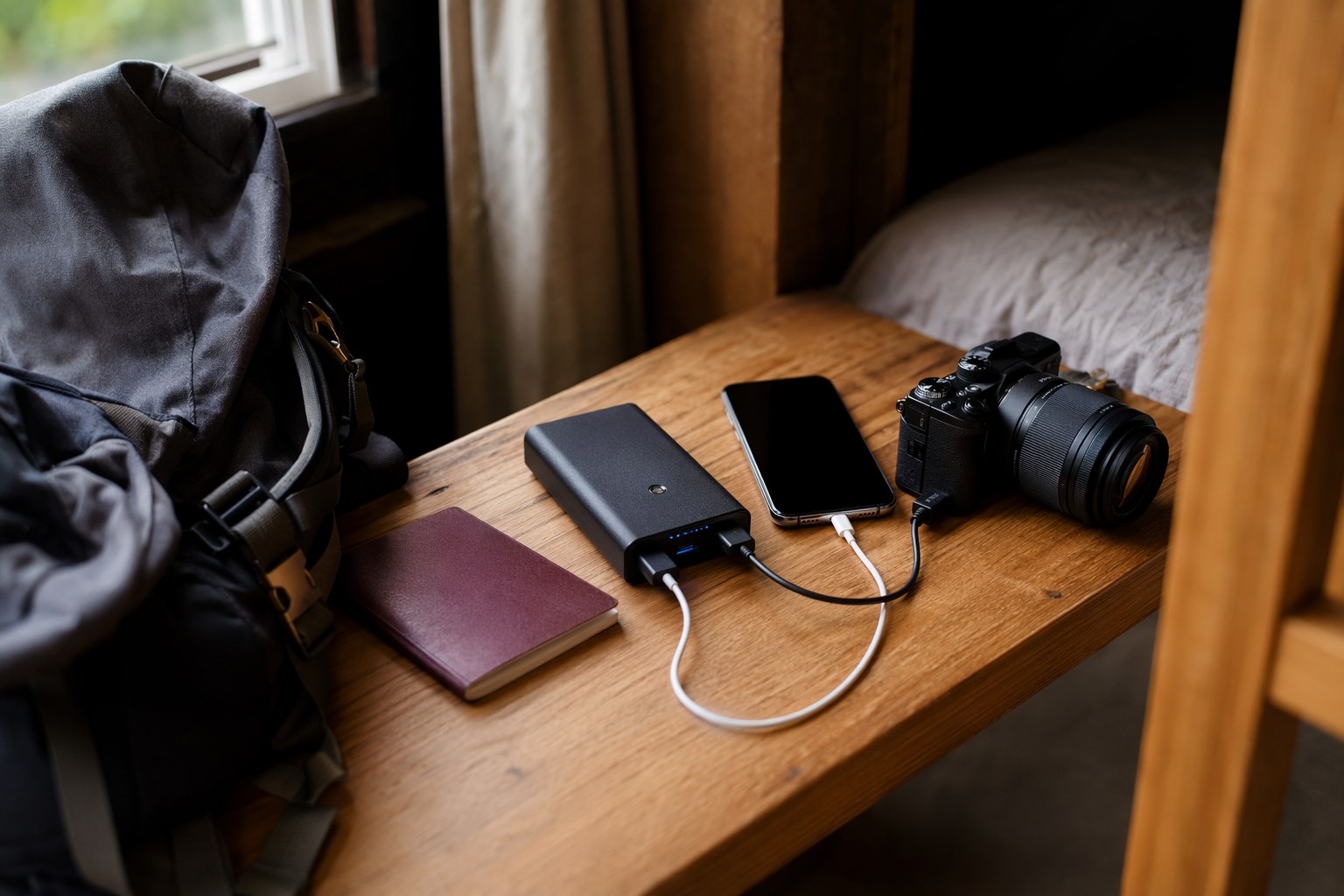
One rule I’ll repeat until people are sick of it: power banks ride in your carry-on, always, never checked. Lithium batteries in the hold are a fire risk and airlines confiscate them. Keep it in the bag that stays with you.
If you only do one thing after reading this, buy the bank. The station section below is for grounders and hybrids.
Power Stations for Grounders and Hybrids
Once you’re traveling by ground for weeks at a time, a power station changes the math. It’s the difference between rationing your phone and running a laptop, a camera battery charger, a small fan, and a string of lights off-grid for two or three days without thinking about it. Here are the three I’d trust for a year of travel, in order of how most people should think about them.
EcoFlow DELTA 3 Plus — The One I’d Pack First
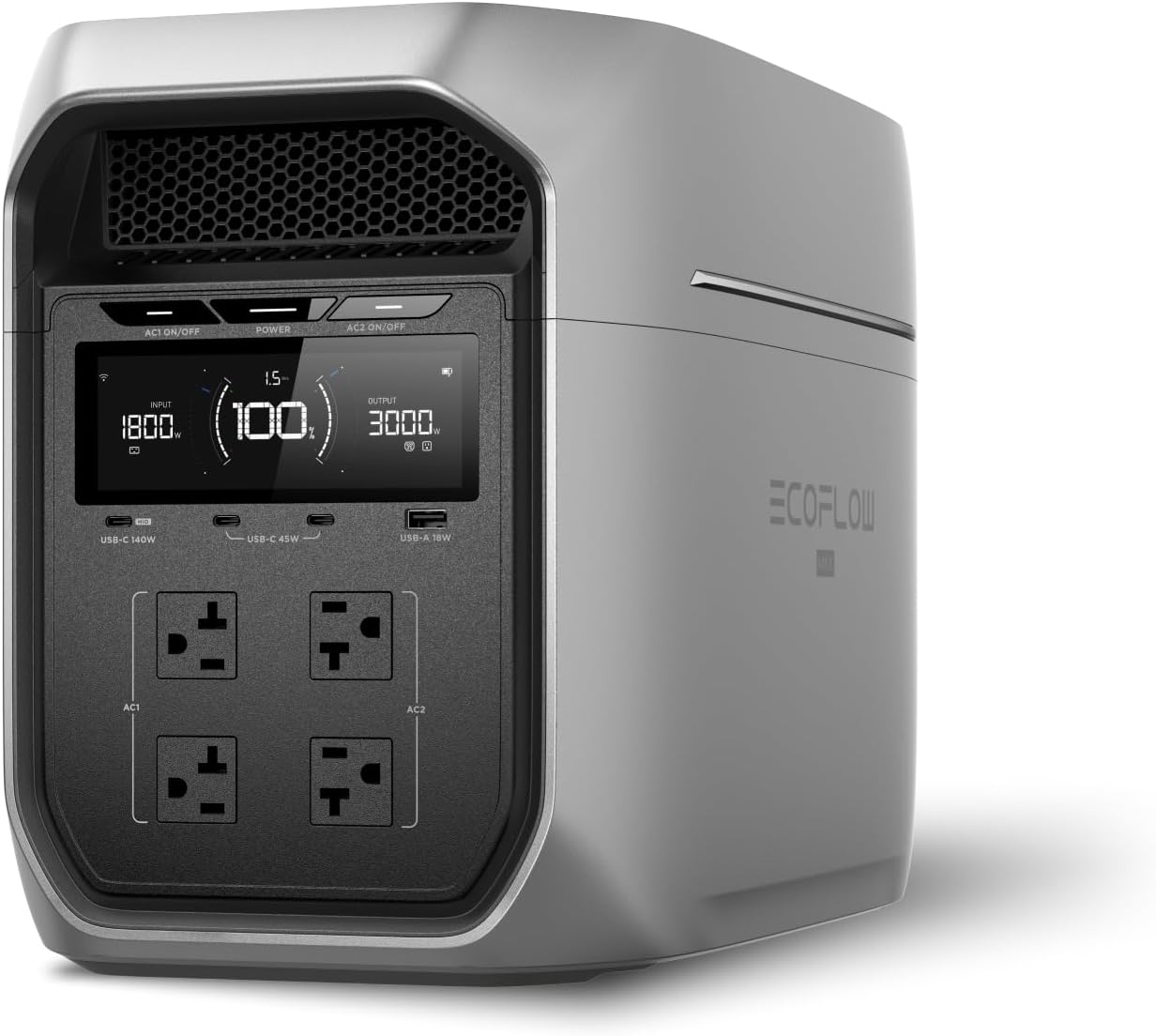
The EcoFlow DELTA 3 Plus is my default recommendation for gap year travel, and weight is the reason. It’s 1,024Wh of LiFePO4 capacity and 1,800W of output in a package that’s only 17.6 pounds — lighter than units with far less capacity. When you’re moving every few days and lifting your own gear in and out of a van, those pounds are real.
The travel-relevant specs are the ones that matter here. It accepts 100-240V input, so it charges off any grid you’ll plausibly encounter, and it’ll refill from near-empty to 80% in under an hour off a wall. That fast charge is underrated for travelers: when you get a few hours of reliable power in a café or rental, you want to bank as much as possible before you move on. The app shows live input and draw, which turns “do I have enough power for two more days” from a guess into a number.
For a year of phones, laptops, a camera kit, and the occasional small appliance, 1,024Wh is the sweet spot. I’d start here unless you have a specific reason not to.
Anker SOLIX C1000 — Best for the Group Trip
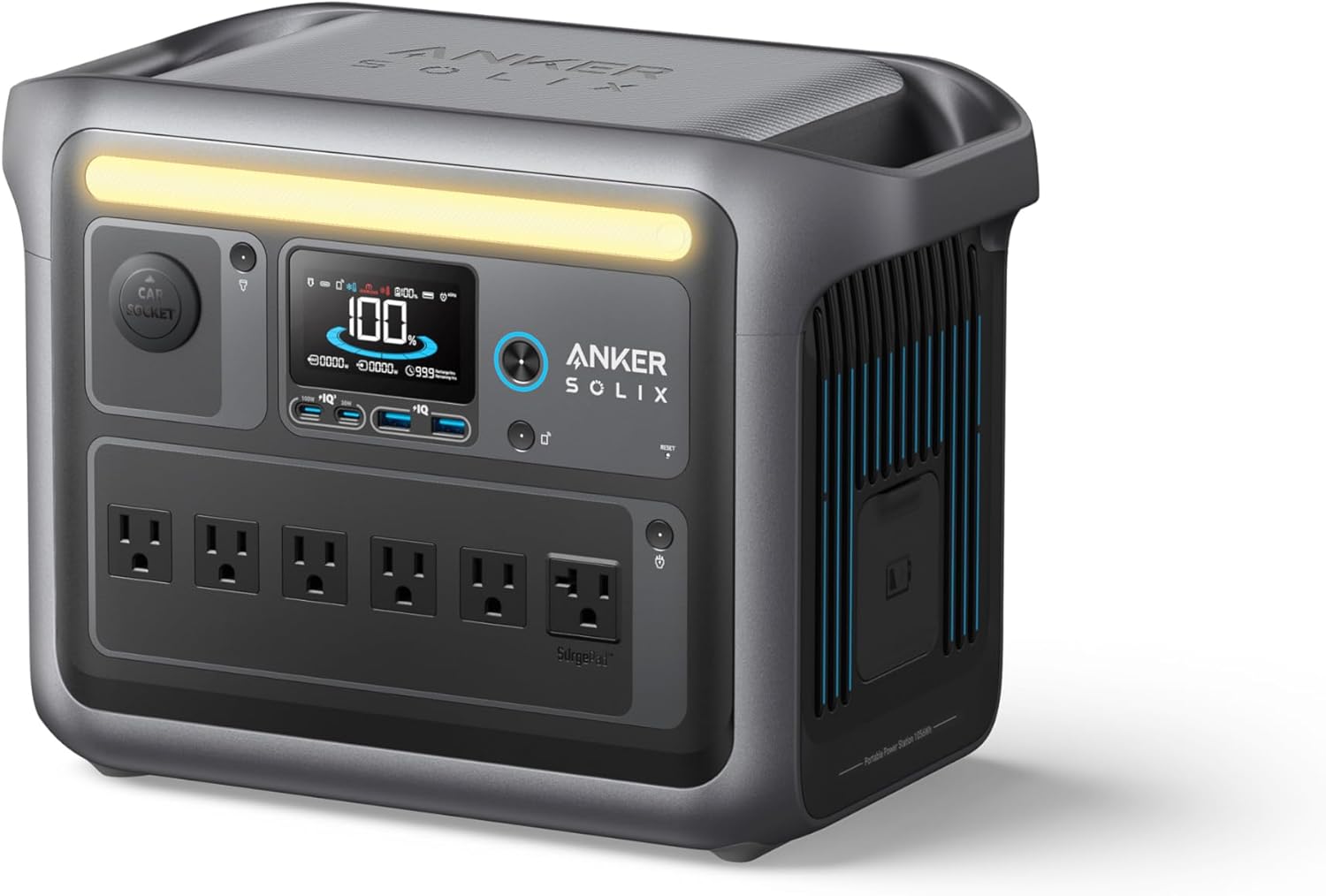
If you’re traveling with friends — and a lot of gap years are two or three people in one van — the Anker SOLIX C1000 is the smarter buy. It’s 1,056Wh and, critically, has more outlets than the EcoFlow. When three people all want to charge a phone, a laptop, and a camera battery at the same time, outlet count stops being a spec sheet footnote and becomes the thing that prevents arguments.
It’s heavier at around 27.6 pounds, so it’s not the one to carry across a parking lot solo. But for a shared base battery that lives in a vehicle and gets unpacked once per stop, the extra capacity and ports are worth the weight. Anker’s build quality has been consistently good on my bench, and the C1000 is the unit I’d hand to a group that wants one battery for everyone.
Jackery Explorer 1000 v2 — The Solar-Friendly Workhorse
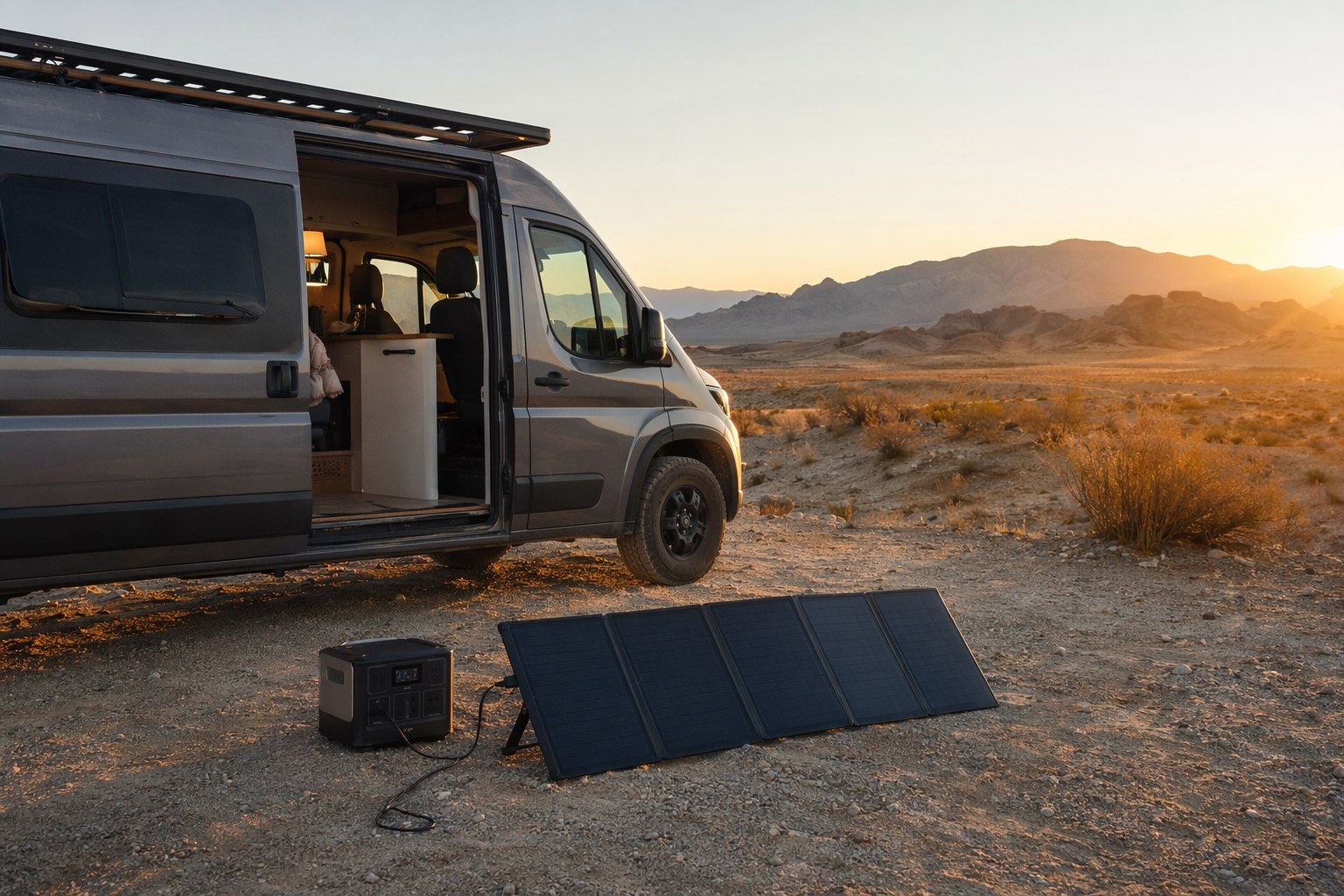
The Jackery Explorer 1000 v2 earns its place if solar is central to your plan. It’s 1,070Wh with 1,500W output and pairs cleanly with foldable panels, which matters when your gap year includes long off-grid stretches where the only reliable energy income is the sun on your roof. The app is straightforward and the build is rugged — Jackery’s units take knocks well, which is exactly what you want in checked-van luggage that bounces down washboard roads.
The one caveat is output. At 1,500W it’ll happily run laptops, fans, lights, and chargers, but it’s not the unit for high-draw appliances. For a traveler that’s fine — most of what you run abroad is small electronics — but know the ceiling before you assume you can boil a kettle on it.
Bluetti AC70 — The Budget Entry Point
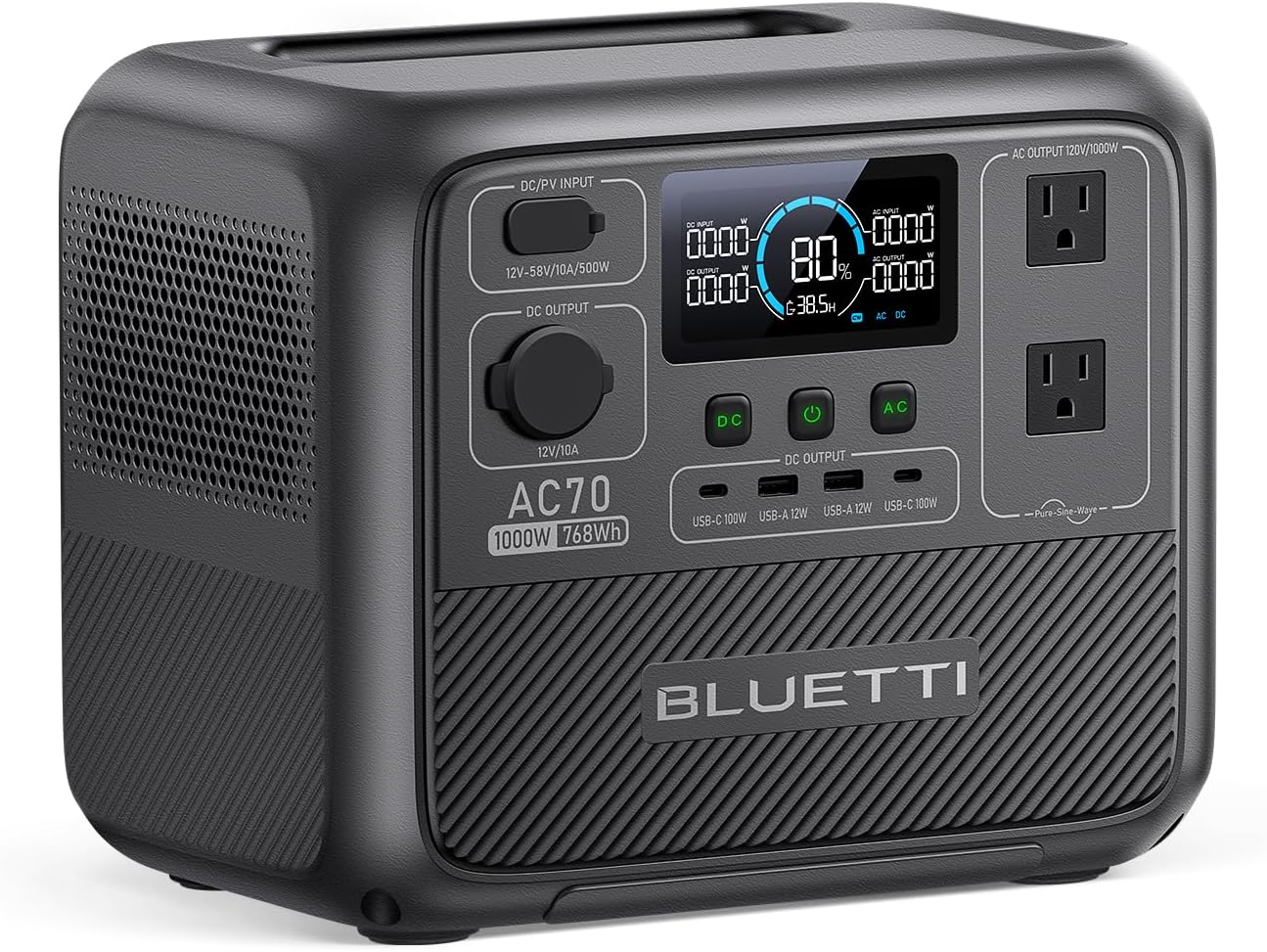
Not everyone has a station budget after buying a plane ticket. The Bluetti AC70 is where I send people who want real off-grid capability without spending big. It’s 768Wh, 1,000W output (2,000W with the power-lifting mode), and around 22.5 pounds, and it regularly sells under $500. It charges fast and uses the same LiFePO4 chemistry as the pricier units, so it’ll survive thousands of cycles.
It’s a one-or-two-person battery, not a group base. For a solo grounder on a tight budget, though, it’s genuinely enough — it’ll keep a phone, laptop, and camera alive through a couple of off-grid days, and that’s most of what a gap year demands.
What Actually Matters Over a Year of Abuse
Specs get you in the door. These are the things that decide whether your gear is still working in month ten.
Chemistry. Every station above is LiFePO4, and that’s non-negotiable for a long trip. These cells handle 3,000-plus charge cycles and tolerate heat far better than the older lithium chemistry. A year of daily cycling barely dents them.
Input voltage range. Confirm 100-240V before you fly anywhere. The units here all handle it, but it’s the spec that bricks a station if you ignore it.
Weather. None of these are waterproof. Pack a dry bag or a contractor trash bag and keep the station off wet ground — a folding stool or the van floor, never the dirt. I’ve covered the rest of the avoidable mistakes in detail in portable power station mistakes to avoid, and it’s worth ten minutes before you leave.
Plug adapters. The station converts voltage internally, but it can’t change the shape of a wall socket. Carry a multi-region adapter and a small power strip so one wall outlet charges everything.
Building Your Actual Kit
Here’s how I’d assemble it, by traveler type.
The flyer: Anker Prime 27650, a multi-region plug adapter, and good cables. That’s the whole kit. Don’t overthink it.
The solo grounder on a budget: Power bank plus the Bluetti AC70, and a 100-200W foldable panel if you’ll be off-grid for more than two days at a time.
The solo grounder with room in the budget: Power bank plus the EcoFlow DELTA 3 Plus. The lighter weight pays off every time you move.
The group: Power bank each, plus the Anker SOLIX C1000 as the shared base battery, plus solar if the route is remote.
If you’re going truly ultralight — bikepacking or long-distance trekking rather than van travel — skip the station entirely and read backpacking and bikepacking ultralight power setups, because every gram counts and a station is the wrong tool. And if you want to compare the full field before committing, our best portable power stations of 2026 roundup lays out the whole market.

The Bottom Line
A gap year is the rare stretch of life where your gear has to be both portable and bombproof, because you can’t easily replace it from a beach in another hemisphere. Buy the power bank no matter what — it’s the daily workhorse and the only thing you can fly with. Add a station only if you’re traveling by ground, and match it to your style: the EcoFlow DELTA 3 Plus for solo travelers who value weight, the Anker SOLIX C1000 for groups, the Jackery for solar-heavy routes, and the Bluetti AC70 when the budget is tight. Get that right, and power becomes the one thing on your whole trip you never have to worry about. That’s exactly how it should be.
Recommended Power Stations
EcoFlow
EcoFlow DELTA 3 Plus
EcoFlow's newest mid-range flagship. The DELTA 3 Plus improves on the Delta 2 with faster charging, LiFePO4 chemistry, and UPS functionality — all at a lower price.
Frequently Asked Questions
Do I need a full power station for a gap year, or is a power bank enough?
It depends on your trip. If you're hostel-hopping through cities with reliable outlets, a single 100Wh power bank like the Anker Prime 27650 is enough — it keeps a phone, camera, and laptop alive between charges and is fully TSA-approved for carry-on. If you're doing van travel, long-distance trekking, multi-day off-grid stretches, or working remotely from places with shaky grids, add a 700-1,100Wh power station. Most gap year travelers I talk to end up using both: the bank for daily mobility, the station as a base camp battery in a vehicle or long-stay rental.
Can I fly internationally with a portable power station?
No. Any battery over 160Wh is banned from all flights, checked or carry-on, and every power station on this list is far larger than that. Power stations are for road trips, van travel, overlanding, and long-stay rentals you reach by ground. For flying, you're limited to power banks 100Wh or under in carry-on (100-160Wh needs airline approval). If your gap year mixes flights with overland legs, buy the station at your overland start point or ship it ahead, and fly with the power bank only.
Will my power station charge on foreign voltage and plugs?
Almost certainly yes, but check the input rating. Quality LiFePO4 stations like the EcoFlow DELTA 3 Plus and Anker SOLIX C1000 accept 100-240V at 50/60Hz, so they work on both North American and European/Asian grids. You still need a physical plug adapter for the wall socket shape, and you should confirm the AC outlet type on the station matches your devices or carry a small travel strip. The internal electronics handle the voltage conversion automatically — you are not running a transformer.
Ready to Buy? Here's What We Recommend
Based on our testing and this guide, these are the best options for most people: