Guide
9 Expensive Mistakes People Make When Buying Their First Power Station

TL;DR
Don't waste money on the wrong power station. We cover the 9 most common buying mistakes — from ignoring battery chemistry to forgetting about weight — and how to avoid every one of them.
Power stations are a significant purchase — $200 to $2,000. Making the wrong choice means either wasting money on features you don’t need, or frustration when it can’t do what you bought it for. After reviewing 100+ power stations and reading thousands of customer complaints, here are the 9 most expensive mistakes buyers make — and how to avoid each one.
Mistake #1: Buying Too Small
The mistake: “I’ll just get the 300Wh model — I only need to charge my phone.”
The reality: People always end up wanting to power more than they initially planned. That 300Wh station charges phones great, but it can’t run a fridge during an outage, power a CPAP overnight, or keep a mini fridge cold while camping. You’ll be shopping for a bigger unit within months.
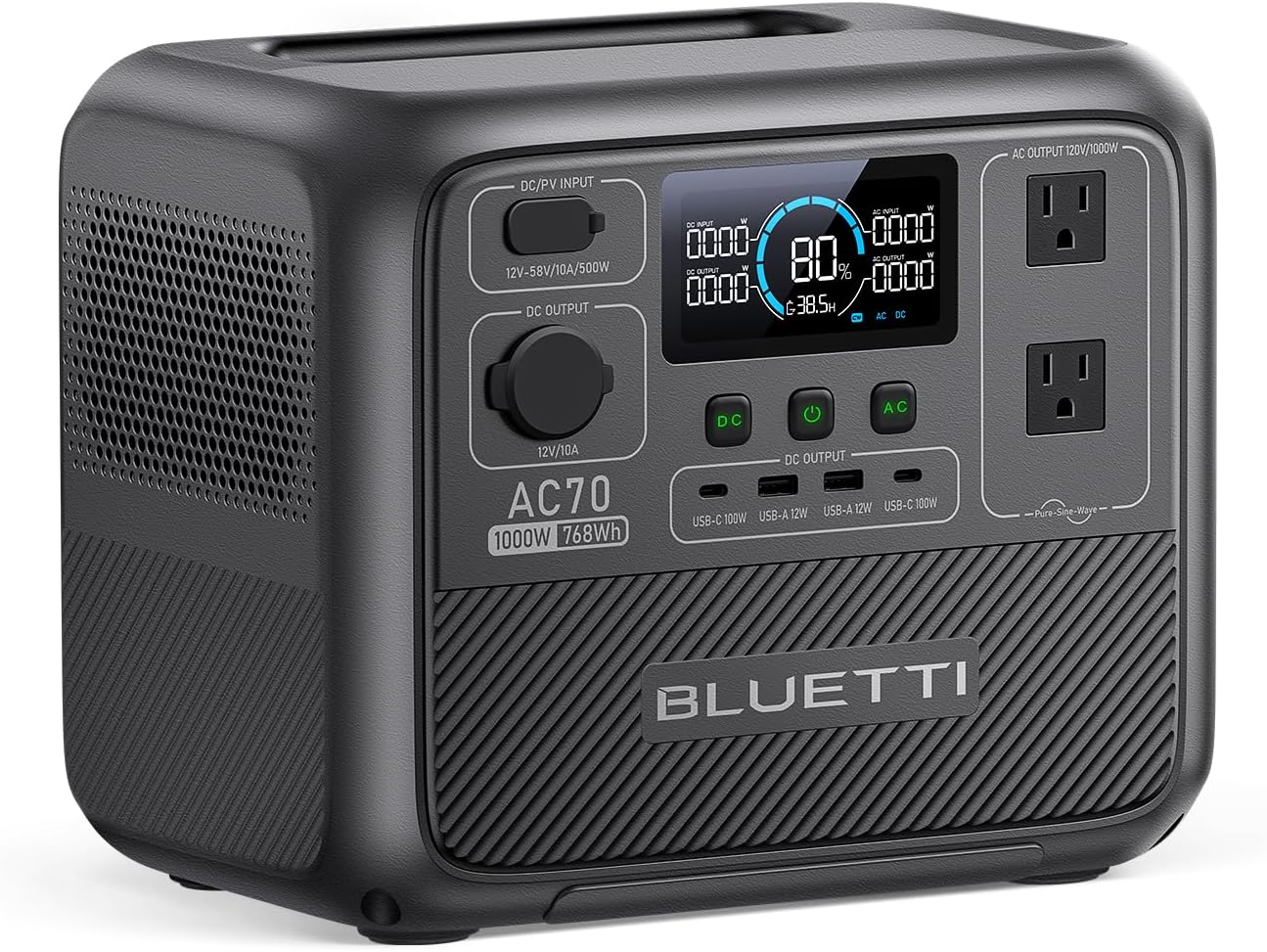
The fix: Calculate your actual needs with our power station sizing guide, then buy one size up from what you calculate. The sweet spot for most people is 768-1,056Wh. The Bluetti AC70 (768Wh, $499) and EcoFlow DELTA 3 Plus (1,024Wh, $649) cover the vast majority of use cases.
Mistake #2: Ignoring Battery Chemistry
The mistake: Choosing a power station based on price or capacity without checking whether it uses LiFePO4 or Li-NMC batteries.
The reality: Li-NMC batteries last 500-2,500 cycles. LiFePO4 batteries last 3,000-6,000 cycles. That’s the difference between a 2-year lifespan and a 10-year lifespan with daily use. Some budget stations still use Li-NMC and will die years sooner.
The fix: Only buy LiFePO4 in 2026. Every power station we recommend uses LiFePO4 chemistry. If a product page doesn’t specify the battery chemistry, that’s a red flag — it’s probably NMC. Read our LiFePO4 vs NMC guide for the full breakdown.
Mistake #3: Confusing Watts and Watt-Hours
The mistake: “This 2,000W power station should last longer than the 1,000W one, right?”
The reality: Watts (W) measure output power — how much the station can deliver at once. Watt-hours (Wh) measure capacity — how much total energy it stores. A 2,000W station with 500Wh drains faster than a 1,000W station with 2,000Wh.
You need to match BOTH specs to your needs: enough watts to run your most demanding device, and enough watt-hours to run everything for the time you need. Our watts vs. watt-hours guide explains this in detail.
Mistake #4: Forgetting About Weight
The mistake: Buying a 3,000Wh beast that you can barely lift.
The reality: A 50-pound power station sitting in your garage because it’s too heavy to carry to the campsite is worthless. Weight matters — a lot — for any portable use case. The difference between 17 lbs and 50 lbs is the difference between “easy one-handed carry” and “needs two people.”
The fix: Consider weight per watt-hour as a key metric. The EcoFlow DELTA 3 Plus offers an outstanding 58Wh per pound — 1,024Wh in a 17.6-lb package. If you need more capacity, consider two smaller units instead of one massive one, or get an expandable system where you can leave the extra battery in the car.
Mistake #5: Not Checking Solar Input Limits
The mistake: Buying a power station and expensive solar panels, then discovering the station only accepts 200W of solar when you bought 400W worth of panels.
The reality: Every power station has a maximum solar input wattage. Panels beyond this limit won’t damage anything, but the extra wattage is wasted — the charge controller caps intake at the maximum. You’re carrying extra weight and spending extra money for zero benefit.
The fix: Check the max solar input BEFORE buying panels. Match (or slightly exceed) the solar input limit. Slight over-paneling (10-20% above the limit) is actually fine — it helps maintain closer to maximum input when conditions aren’t ideal. Our solar panel compatibility guide covers specific pairings.
Mistake #6: Buying an Off-Brand to Save $50
The mistake: Choosing an unknown brand’s 1,000Wh station for $350 instead of a trusted brand at $500.
The reality: Power stations contain powerful lithium batteries and high-voltage inverters. Quality control matters — cheap BMS circuits, inconsistent cell quality, and poor thermal management can lead to premature failure, inflated capacity claims, or even safety hazards. Unknown brands often disappear within a year, leaving you with no warranty support.
The fix: Stick with established brands: EcoFlow, Bluetti, Jackery, Anker, Goal Zero, and VTOMAN. These companies have track records, honor warranties, and invest in safety testing. The $100-150 premium over no-name brands buys you reliability, safety certification (UL Listed), and actual customer support.
Mistake #7: Not Planning for Expansion
The mistake: Buying a non-expandable 1,000Wh station, then needing 2,000Wh six months later.
The reality: Many power stations are standalone units — what you buy is what you get. If your needs grow (longer camping trips, more devices, extended outage protection), you’re stuck buying an entirely new unit.
The fix: If there’s any chance your needs will grow, buy an expandable system. The EcoFlow DELTA Pro 3 starts at 4,096Wh and expands to 48kWh. The Jackery Explorer 2000 Plus starts at 2,042Wh and expands to 24kWh. Even smaller units like the EcoFlow DELTA 3 Plus accept expansion batteries. Buy the platform, not just the battery.
Mistake #8: Ignoring Charging Speed
The mistake: Assuming all power stations charge at similar speeds.
The reality: Charging speed varies enormously. Some 1,000Wh stations take 6-8 hours to charge from a wall outlet. Others do it in 40 minutes. If you need to recharge between uses (back-to-back outages, day-to-day camping), slow charging is a serious limitation.
The fix: Check the AC charging wattage and time. Stations with 1,000W+ AC input charge in 1-2 hours. The EcoFlow DELTA 3 Plus charges in 40 minutes at 1,800W — genuinely grab-and-go fast. If rapid charging matters, EcoFlow’s X-Stream technology is the current industry leader.
Mistake #9: Buying for Aspirational Needs Instead of Real Needs
The mistake: “I might run my whole house during a hurricane someday, so I should get the biggest one.”
The reality: A $2,000, 4,000Wh power station is overkill for someone who mainly wants to keep their phone charged and fridge running during a 6-hour outage. Conversely, buying too small because “I’ll only use it for phone charging” ignores the fact that once you own a power station, you’ll find uses for it you never imagined (camping, tailgating, outdoor events, workshops).
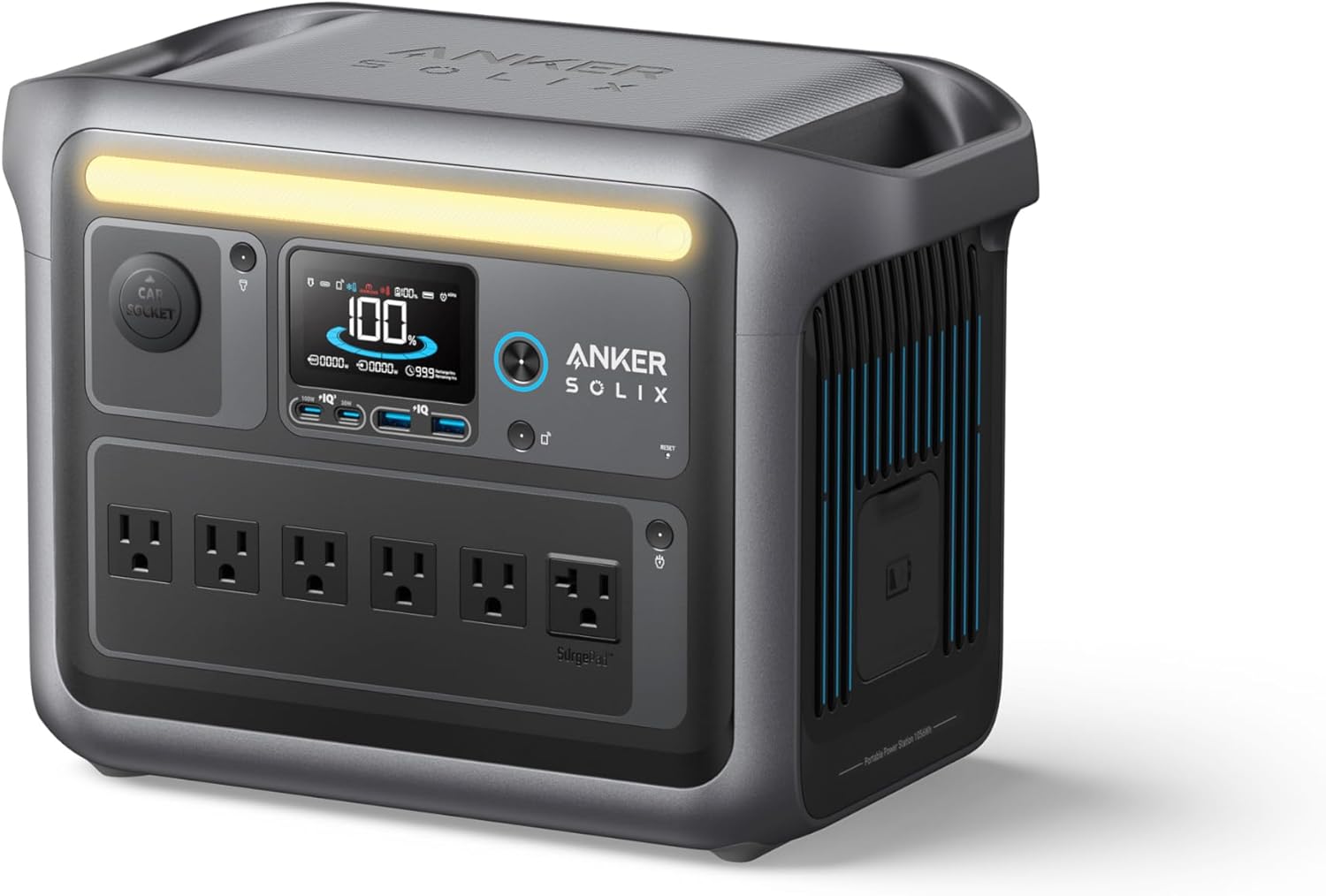
The fix: Buy for your most likely use case, not your most extreme scenario. For most families, that’s a 1,000Wh unit for camping and emergency backup — the EcoFlow DELTA 3 Plus at $649 or Anker SOLIX C1000 at $699. If your needs genuinely grow, expandable systems let you add capacity later without starting over.
The Smart Buying Checklist
Before you click “buy,” confirm:
- Battery chemistry: LiFePO4 (not Li-NMC)
- Capacity (Wh): Matches your calculated daily needs + 20% buffer
- Output (W): Exceeds your most demanding device
- Weight: You can comfortably carry it where you need it
- Solar input: Matches the panels you plan to buy (if applicable)
- Charging speed: Fast enough for your recharge needs
- Brand: Established manufacturer with warranty support
- Expandable: Future-proofs your investment (if applicable)
- Price/Wh ratio: Compare across models for value
Use our comparison tool to evaluate models side by side against these criteria.
Related Reading
- How to Size a Power Station — calculate your exact needs
- Best Portable Power Stations 2026 — our top picks
- LiFePO4 vs NMC Batteries — battery chemistry explained
- Are Portable Power Stations Worth It? — honest cost analysis
- Best Budget Power Stations Under $500 — value picks
Recommended Power Stations
EcoFlow
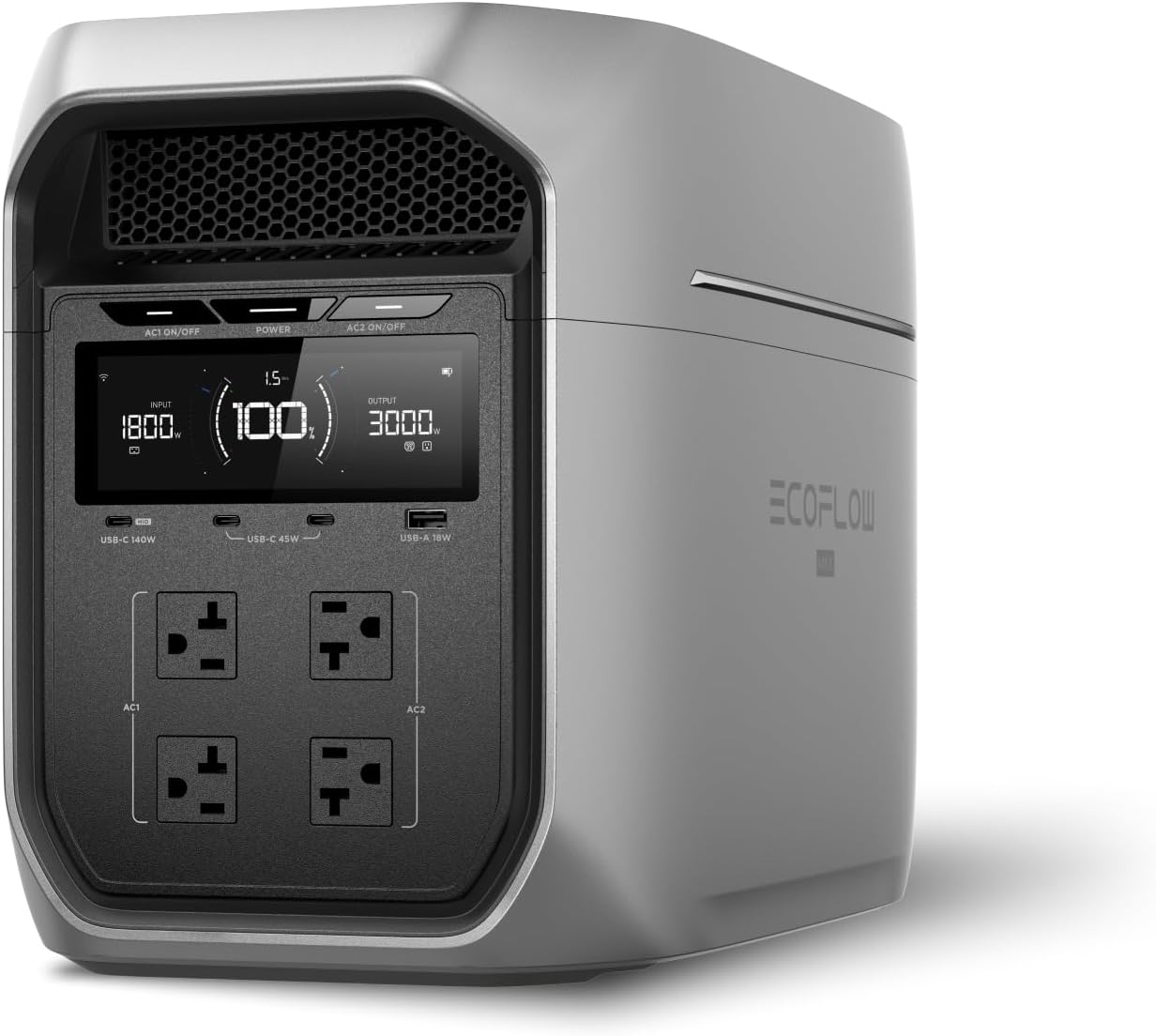
EcoFlow DELTA 3 Plus
EcoFlow's newest mid-range flagship. The DELTA 3 Plus improves on the Delta 2 with faster charging, LiFePO4 chemistry, and UPS functionality — all at a lower price.
Frequently Asked Questions
What is the biggest mistake people make when buying a power station?
Buying too small. The most common regret is purchasing a power station that can't handle the devices you actually want to run. People underestimate how quickly a mini fridge, laptop, and a few lights add up. Calculate your actual watt-hour needs before buying — our sizing guide walks you through the process.
Do I need an expensive power station?
Not necessarily. A $500-700 power station in the 768-1,056Wh range handles camping, home office backup, and basic emergency power for most families. You only need to spend $1,000+ if you need more than 1,500Wh capacity (extended outages), expandability, or 2,000W+ output for heavy appliances. Don't pay for capacity you won't use.
Is it worth buying a solar panel with my power station?
If you'll use the power station for camping, RVing, or emergency backup, absolutely yes. Solar panels pay for themselves by extending your power station from a finite battery to a renewable energy system. For home-only use where you recharge from the wall between outages, solar is nice to have but not essential. Buy the power station first, add solar later when you understand your needs.
Ready to Buy? Here's What We Recommend
Based on our testing and this guide, these are the best options for most people: