Guide
Hurricane Season 2026 Power Prep: Complete Guide to Keeping the Lights On

TL;DR
How to prepare for hurricane season 2026 with portable power stations, generators, and solar panels. Three tiers of power prep from basic to full home backup.
Hurricane season runs from June 1 through November 30 every year. If you live anywhere along the Atlantic or Gulf coasts, power outages aren’t a question of if — they’re a question of when. The time to prepare is now, not when a storm is bearing down and every power station on Amazon shows “Currently Unavailable.”
We watched it happen in 2024 and 2025: the moment a named storm enters the Gulf, power station prices spike 20-30%, inventory vanishes, and shipping times stretch to weeks. Buying in February or March means better prices, full selection, and zero stress.
Three Tiers of Hurricane Power Prep
Your ideal setup depends on your budget, your home, and how long you need to be self-sufficient. Here’s how we break it down.
Tier 1: Basic — Keep Phones Charged and Lights On ($50-200)
Best for: Apartments, short outages (1-2 days), minimal budget
What you need:
- A quality power bank (20,000-25,000mAh) — charges phones 4-6 times
- USB-rechargeable flashlights or lanterns
- Battery-powered or hand-crank radio
How long it lasts: 1-2 days for phone charging and lighting
Our pick: The Anker Nano 10,000mAh or INIU 25,000mAh keeps your phone alive for days. For a step up, the EcoFlow RIVER 3 at $199 gives you 245Wh — enough to charge phones, run a fan, and power USB lights for 2-3 days.
This tier keeps you connected and safe but won’t run major appliances. It’s the minimum everyone in a hurricane zone should own.
Tier 2: Moderate — Fridge, Fans, and Devices ($500-1,200)
Best for: Houses, families, 2-5 day outages, most people
What you need:
- 1,000Wh portable power station
- 100-200W portable solar panel for recharging
- LED lanterns and USB fans
How long it lasts: 2-5 days with daily solar recharging
Our picks:
- EcoFlow DELTA 3 Plus ($649) — 1,024Wh, charges in 56 minutes, our top pick
- Anker SOLIX C1000 ($699) — 1,056Wh, 1,800W output, best value
- Pair either with a 200W solar panel for daily recharging
What it runs: Fridge (12-18 hours per charge), box fan, LED lights, laptops, phones, internet router. With solar recharging on partly sunny days, you can stretch this setup for a week or more.
This is the sweet spot for most families. A 1kWh station plus solar keeps your food cold, your phones charged, and your sanity intact through a multi-day outage. Use our power calculator to confirm this tier covers your specific needs.
Tier 3: Full Backup — Extended Self-Sufficiency ($1,500-4,000+)
Best for: Long outages (5+ days), medical devices at home, larger households
What you need:
- 2,000Wh+ power station or portable generator (or both)
- 200-400W solar panel array
- Transfer switch for generator users (professional installation required)
- Extension cords and power strips
How long it lasts: 5+ days to indefinite with solar/fuel
Our picks:
- Bluetti Elite 200 V2 ($1,099) — 2,073Wh with 6,000+ cycle battery
- EcoFlow DELTA Pro 3 ($1,999) — 4,096Wh, expandable to 48kWh, 240V output
- Jackery Explorer 2000 Plus ($1,999) — expandable to 24kWh
- For generators: Honda EU2200i or Champion 3500W
This tier runs everything in Tier 2 plus window AC units, CPAP machines, well pumps (with a generator), and multiple refrigerators/freezers. If you depend on medical equipment or live in an area with historically long outages, this is where you want to be.
What to Charge First When the Power Goes Out
When a storm hits and the grid drops, prioritize power in this order:
- Medical devices — CPAP machines, oxygen concentrators, medication fridges. Non-negotiable.
- Phones — Communication is critical. Keep at least one phone fully charged at all times for emergency calls and weather updates.
- Refrigerator — A full fridge and freezer can hold hundreds of dollars in food. Keep the door closed and it’ll stay cold for 4 hours without power, 24-48 hours for a full freezer.
- Lighting — LED lanterns and USB lights draw almost nothing. A few watts keeps your home livable after dark.
- Fans — In a Gulf Coast hurricane without AC, a box fan (50-75W) is the difference between discomfort and heat-related illness.
- Internet router — Most routers draw 10-15W. Staying connected to weather updates and communication is worth the small power draw.
Solar Panels: Your Hurricane Season Force Multiplier
A power station without solar is a countdown timer. A power station with solar is a renewable power plant. Even on overcast post-storm days, a 200W solar panel can recover 400-800Wh — enough to keep a fridge running and phones charged indefinitely.
Panel recommendations by tier:
- Tier 2: Jackery SolarSaga 100W or Renogy 100W — affordable, portable, enough for daily phone and device charging
- Tier 2-3: Bluetti PV200 or Jackery SolarSaga 200W — good daily recharge for a 1kWh station
- Tier 3: EcoFlow 400W or dual 200W panels — full daily recharge for 2kWh+ stations
Check our solar panel compatibility guide to make sure your panel works with your power station.
Generator vs. Power Station: Which Is Right for Hurricanes?
This is the most common question we get during storm season. Here’s the honest answer: it depends on what you need to run. Read our full comparison for the deep dive, but the short version:
Choose a power station if: You need to run a fridge, fans, lights, and devices. You live in an apartment or condo. You want indoor-safe, silent power. You don’t want to stockpile fuel.
Choose a generator if: You need to run central AC, a well pump, or multiple large appliances simultaneously. You have fuel storage space. You’re comfortable with outdoor-only operation and regular maintenance.
Consider both if: You want generator power for daytime heavy loads and quiet power station operation overnight. Many experienced hurricane-zone residents swear by this combo.
Use Our Emergency Checklist
We built an interactive emergency power checklist specifically for hurricane preparation. It walks you through exactly what you need based on your household size, climate, medical needs, and budget. Run through it now while you have time to shop and prepare — not when the Weather Channel is showing a cone of uncertainty headed your way.
The Bottom Line
The best time to prepare for hurricane season is right now. Prices are stable, inventory is full, and you have time to test your setup before you actually need it. For most families, a 1,000Wh power station paired with a 200W solar panel (Tier 2) provides the best balance of protection and value. If you’re in a high-risk area with long outage history, step up to Tier 3 with a 2,000Wh+ expandable system.
Whatever tier you choose, buy before June. Every year, people wait until a storm is named, then scramble to find equipment that’s sold out everywhere. Don’t be that person.
Recommended Power Stations
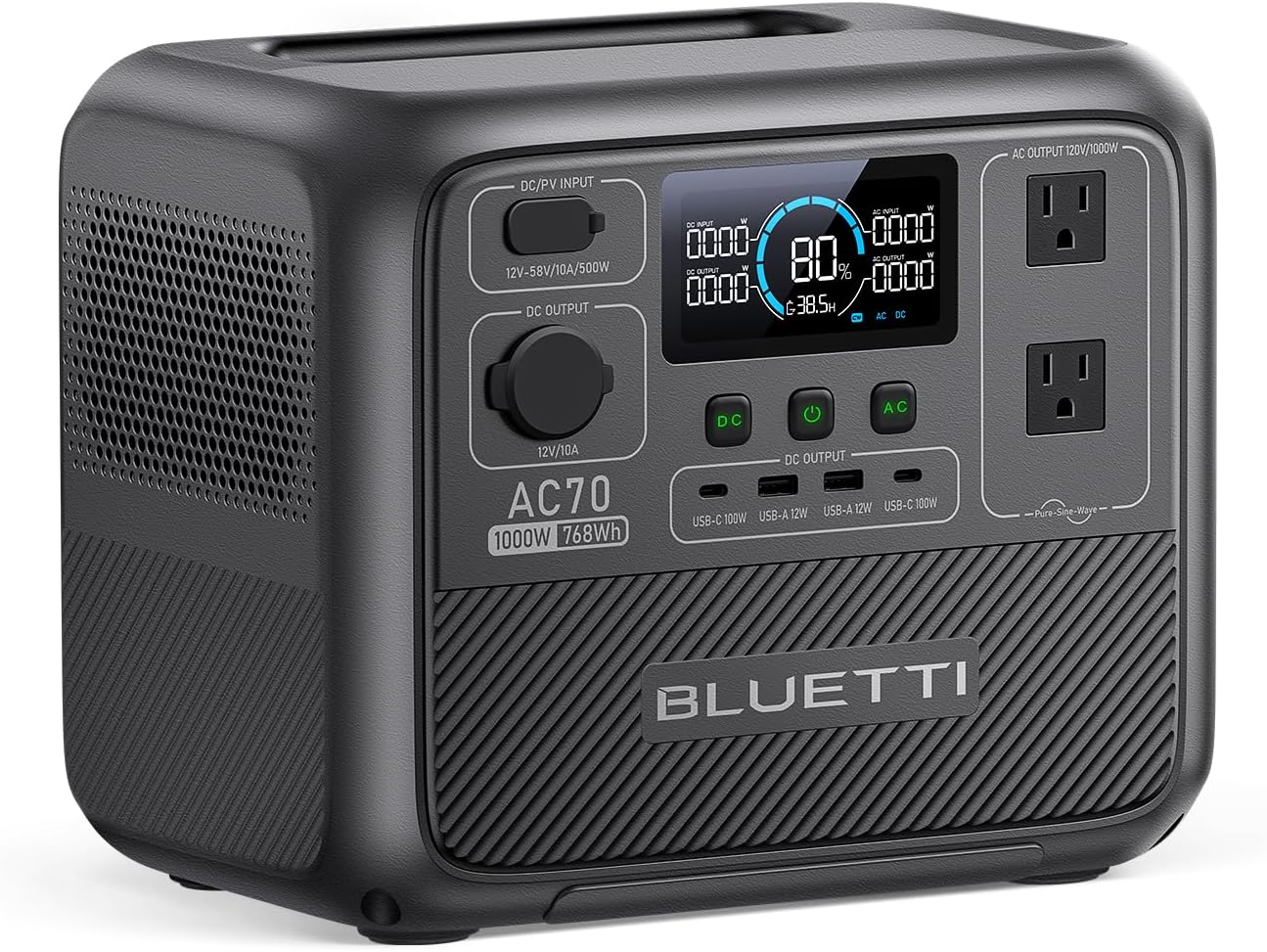
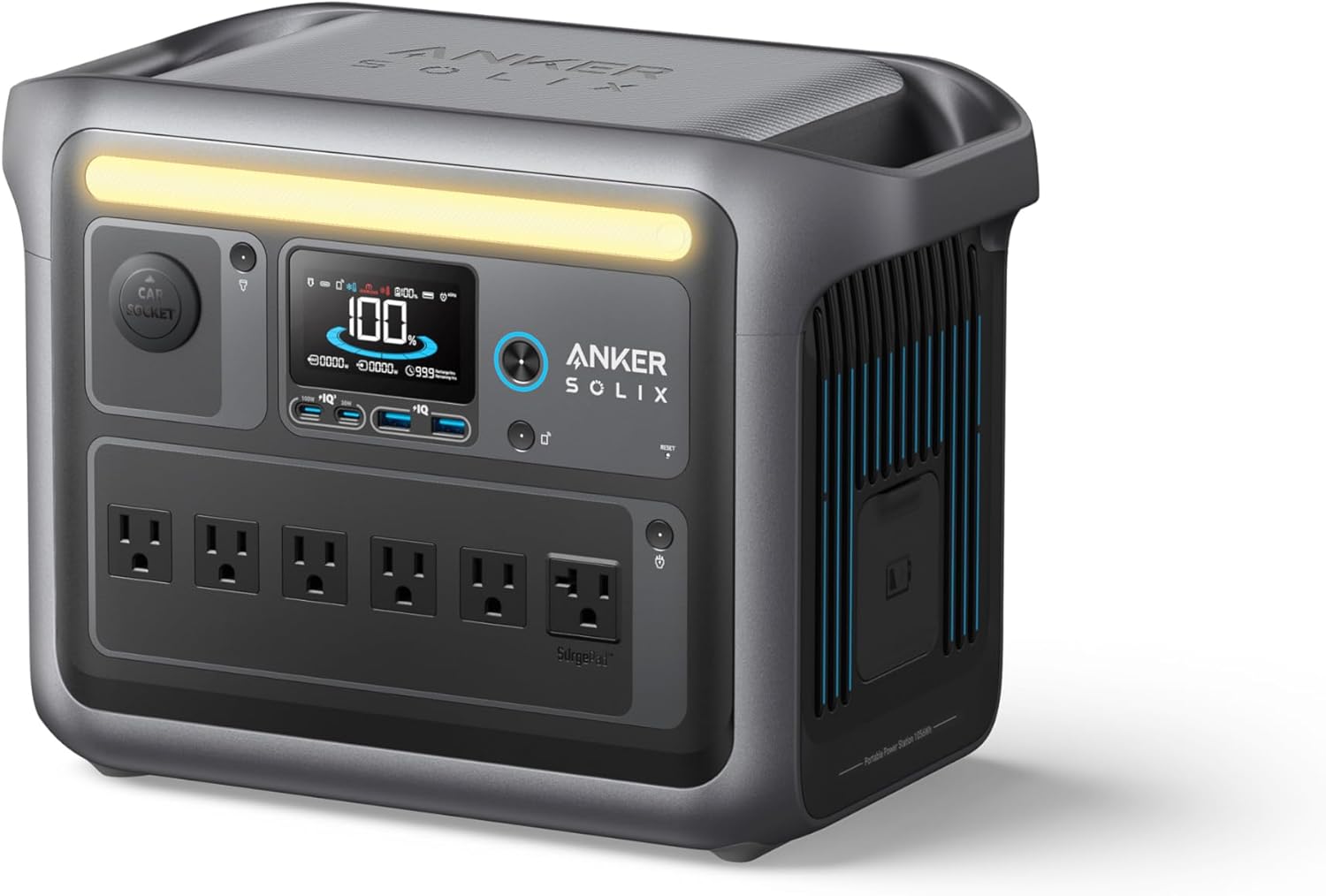
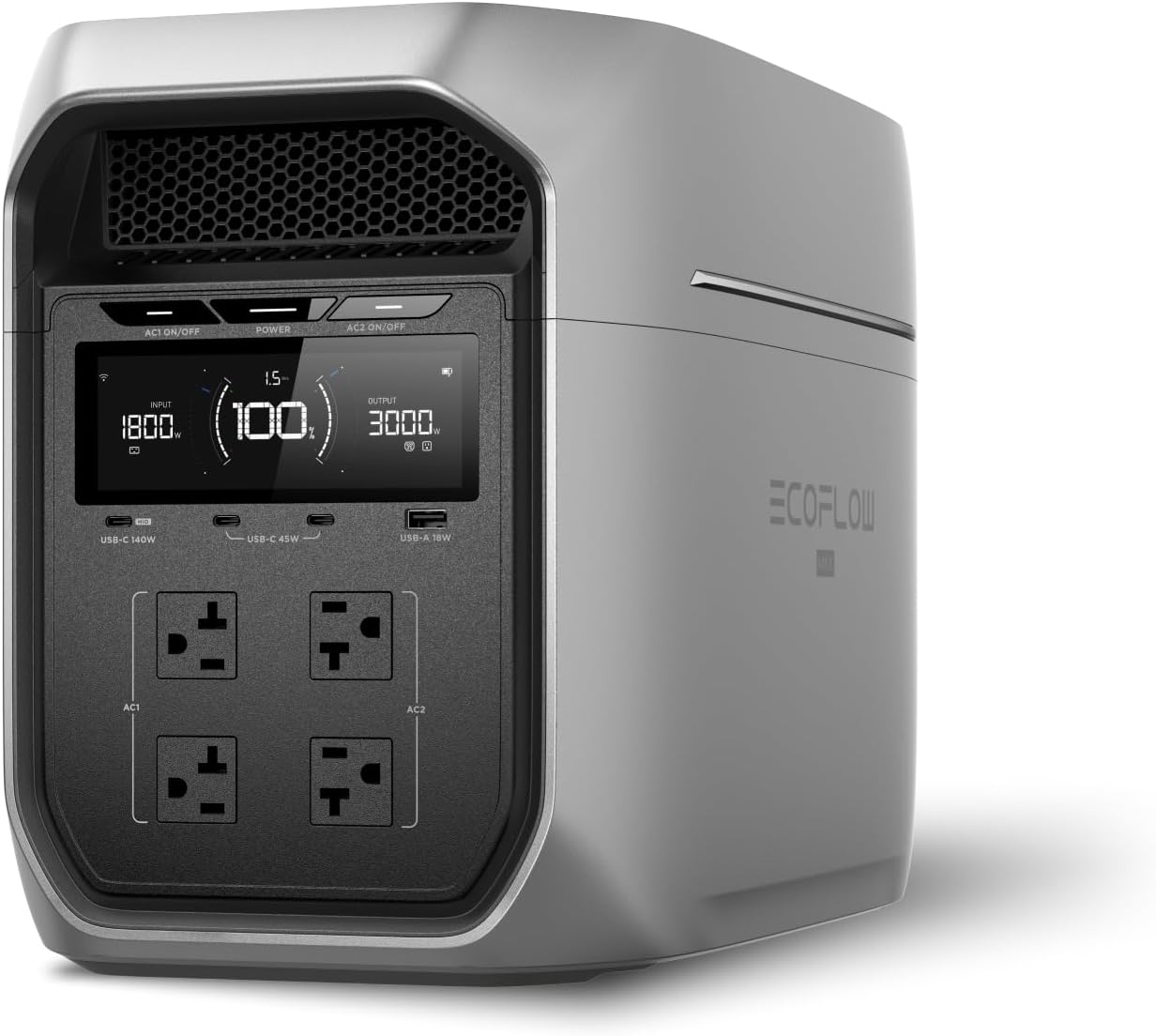
EcoFlow
EcoFlow DELTA 3 Plus
EcoFlow's newest mid-range flagship. The DELTA 3 Plus improves on the Delta 2 with faster charging, LiFePO4 chemistry, and UPS functionality — all at a lower price.
Frequently Asked Questions
How much battery capacity do I need for a hurricane?
For a basic setup (phones, lights, small devices), 500Wh is enough for 2-3 days. For moderate needs (phones, laptop, fan, mini-fridge), you need 1,000-2,000Wh. For full home backup (fridge, lights, medical devices, internet), plan for 2,000Wh+ with solar recharging or a generator. Most families should target 1,000Wh minimum.
Can a power station run my fridge during a hurricane?
Yes. A full-size fridge draws 50-80W on average. A 1,000Wh power station runs a fridge for 12-18 hours, and a 2,000Wh station lasts 24-48 hours. Pair with 200W+ of solar panels to recharge daily and you can run a fridge indefinitely through extended outages.
Should I get a generator or power station for hurricanes?
For most people, a power station with solar panels is the better choice. It works indoors, produces no fumes, requires no fuel (which sells out before storms), and solar keeps it charged. A gas generator makes sense if you need to run high-draw appliances like central AC or a well pump. Many families benefit from having both — a generator for heavy loads and a power station for quiet overnight use.
Ready to Buy? Here's What We Recommend
Based on our testing and this guide, these are the best options for most people: