Guide
Last-Minute Summer Prep: Everything You Forgot to Buy (Power Edition)

TL;DR
Trip's this weekend and your power gear is an afterthought? Here's the last-minute summer prep checklist for power stations, solar panels, chargers, and batteries you can still buy in time.
You booked the campsite three weeks ago. You bought the cooler, the new tent, the folding chairs, probably a hammock you’ll use once. And then, two days before you leave, it hits you: your phone is going to die in the woods, the kids’ tablets are going to die, and the air mattress pump runs on AC power you do not have.
I get a version of this message every single summer. The trip is locked in, the gear list is 90 percent done, and the last 10 percent is always power. It’s the thing people forget because it’s invisible until the moment it isn’t.
The good news is this is the most fixable category on your whole list. Power gear ships fast, the decisions are simple once you know what to look at, and you do not need to overspend to be covered. Here’s exactly what to buy in the next 48 hours, sorted by what most people actually forgot.
Start Here: What Are You Actually Powering?
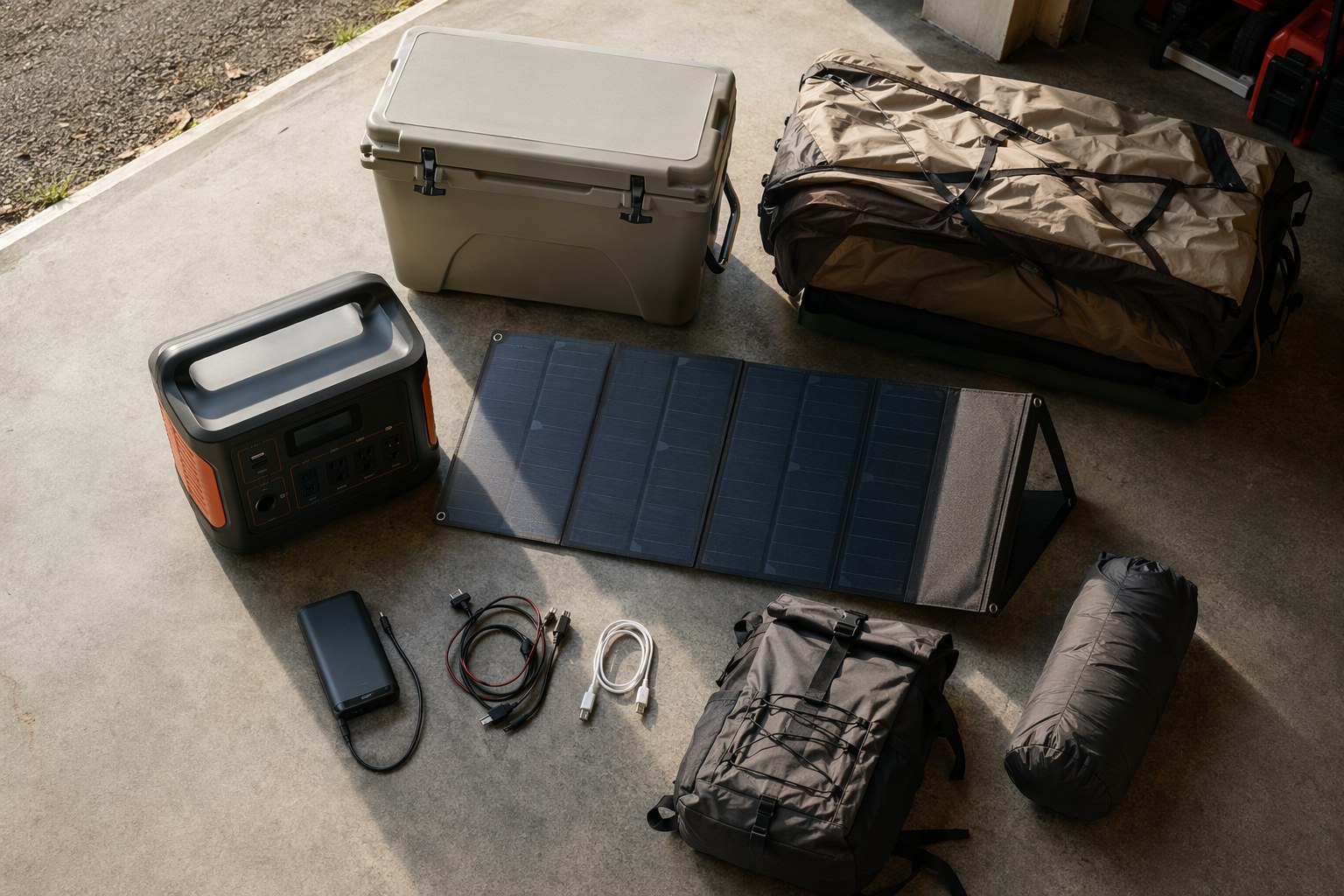
Before you buy anything, do the 60-second version of a power audit. You don’t need a spreadsheet. Just answer one question: what plugs in?
Walk through a normal day at the campsite or the cabin and count it out. Four phones. A couple of LED lanterns. A fan for the tent. A 12V cooler or mini-fridge. Maybe a CPAP machine at night, a camera battery, the air mattress pump, a Bluetooth speaker. That mental list is your whole spec sheet.
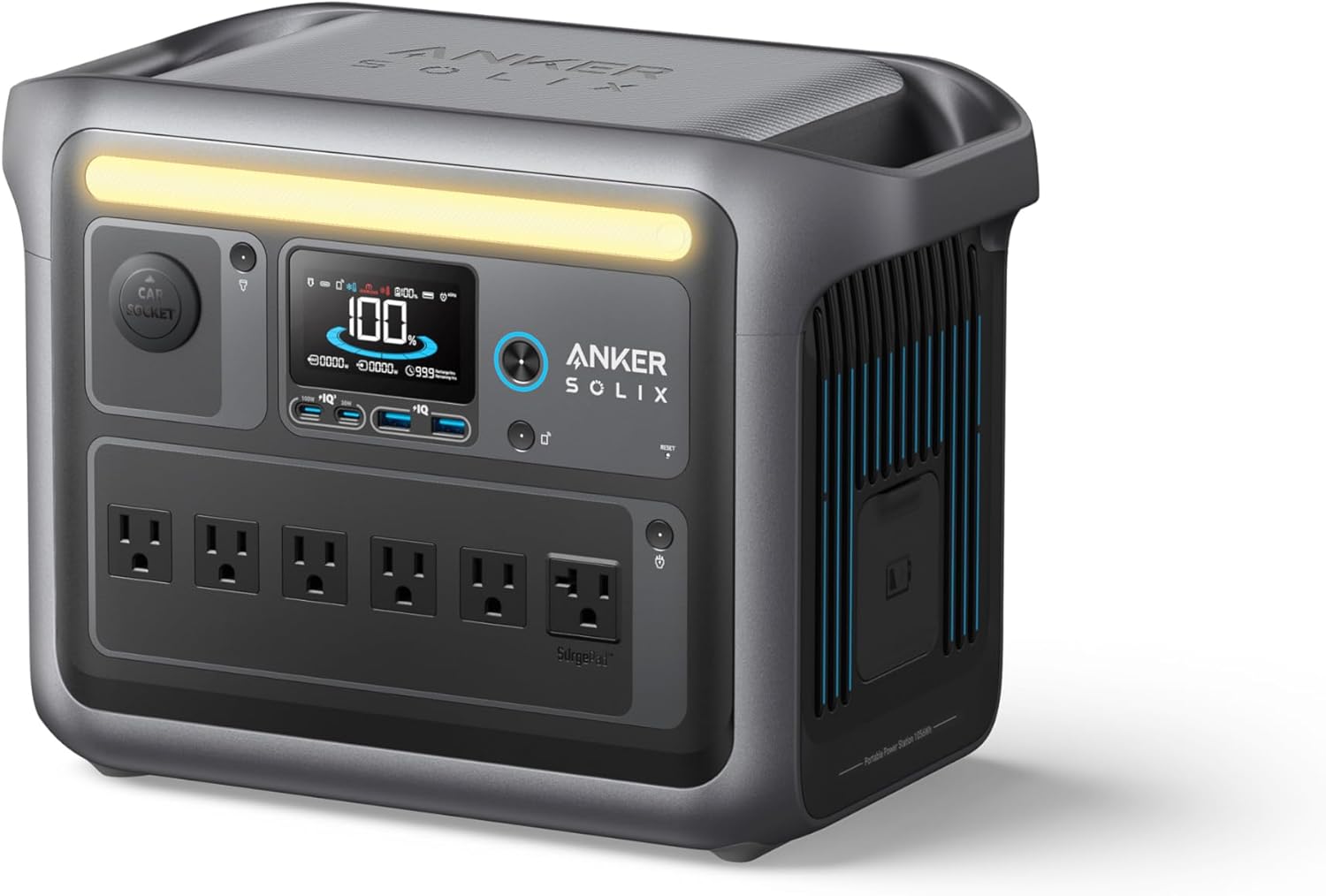
The mistake I see every June is people buying capacity instead of buying a plan. They panic, grab the biggest battery on the shelf, and lug 40 pounds of power station into the woods to charge two phones. Or they go the other way, grab a tiny power bank, and discover on night one that it can’t keep up. If you want the full method, our guide on how to size a power station walks through the watt-hour math, but for a weekend trip the rule of thumb is simple: phones-and-lights people need a power bank, while fan-cooler-CPAP people need a real power station in the 500 to 1,000Wh range.
The Power Station You Forgot to Buy
This is the big one, and it’s the item most likely to back-order during peak summer weeks, so order it first.
For a typical weekend trip, you want something in the 500 to 1,000Wh range with real AC outlets. That covers a string of lights, a fan running all night, a mini-fridge or 12V cooler, and a pile of device charging, with margin left over.
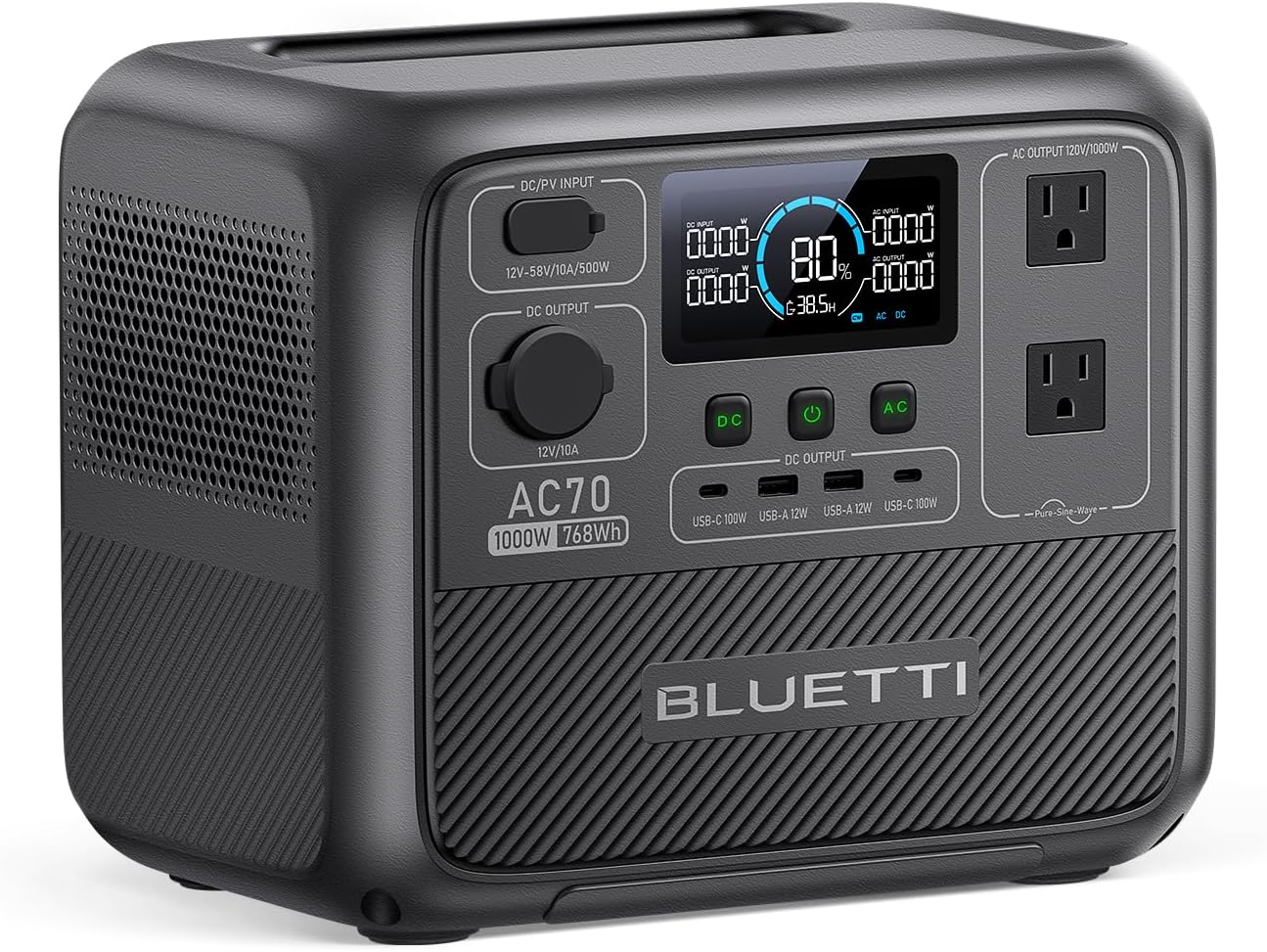
My go-to recommendation here is the Bluetti AC70. At 768Wh and around 22 pounds, it’s the value pick for last-minute buyers. It runs a small cooler and your camp lights all weekend, the Power Lifting mode lets it briefly handle a higher-draw item like a blender or a coffee maker without tripping, and it recharges to 80 percent in 45 minutes if you can find a wall outlet before you leave. For a weekend, it’s hard to beat on dollars per watt-hour.
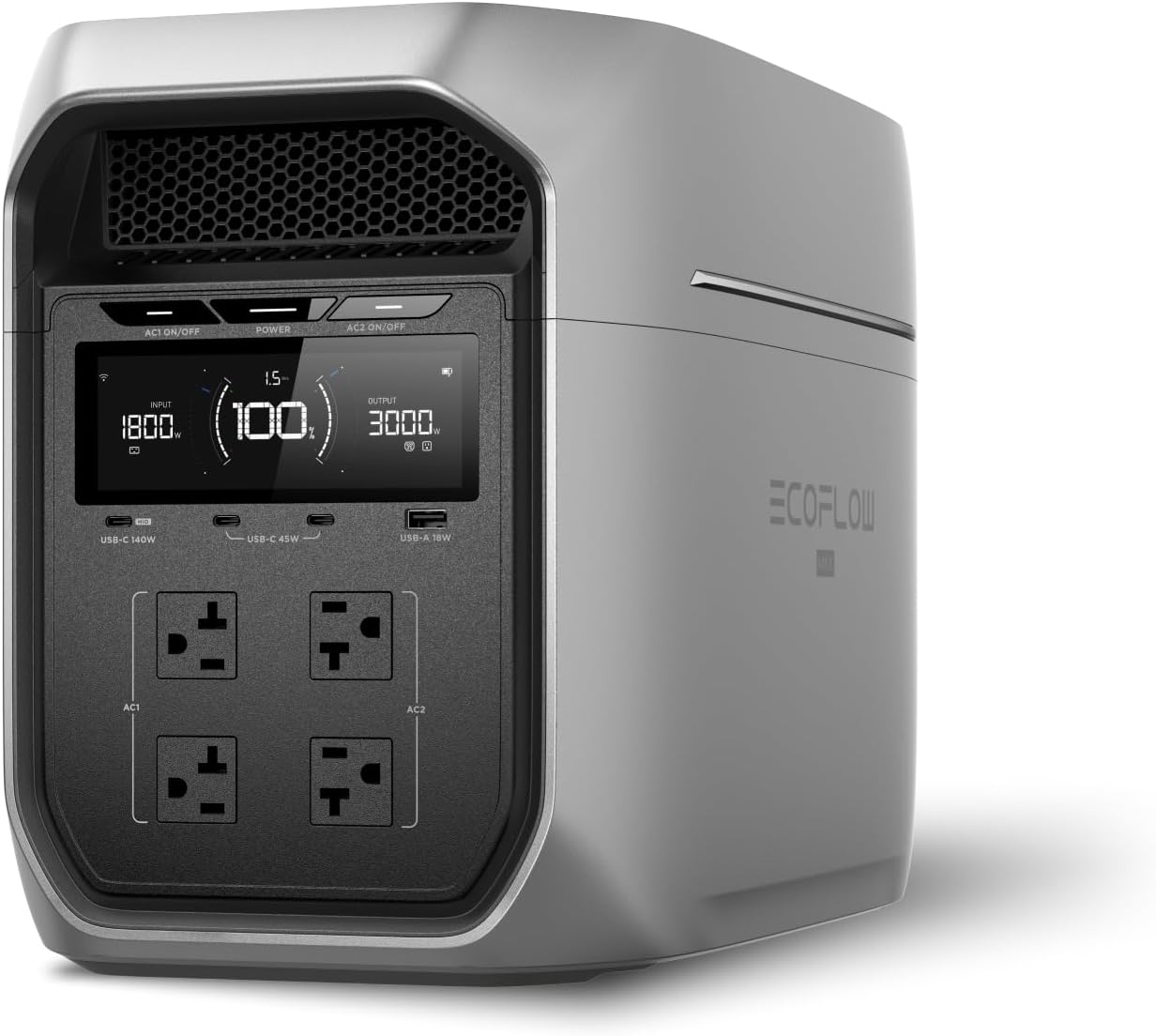
If you want zero range anxiety and a little more headroom, step up to the EcoFlow DELTA 3 Plus. It gives you 1,024Wh in a 23-pound package and charges fully in under an hour, which matters when you’re topping it off the morning you head out. It’ll run a mini-fridge, a fan, lights, and nonstop phone charging for a long weekend, and it expands later if your trips get more ambitious.
If your trip is shorter or your list is mostly small electronics, don’t overbuy. The EcoFlow RIVER 3 is a 245Wh, 7.8-pound unit that charges 15 to 20 phones, runs LED lights for 20-plus hours, and has an IP54 splash-and-dust rating that genuinely matters when it’s sitting on a picnic table during a surprise rain shower. It’s under $200 and it’s the one I’d grab for a one-nighter or a beach day where I just need to keep devices alive.
For the full field across every price tier, our roundup of the best portable power stations of 2026 breaks down the contenders, and if budget is the deciding factor, the best power stations under $500 narrows it to the value winners.
The Solar Panel Almost Nobody Remembers
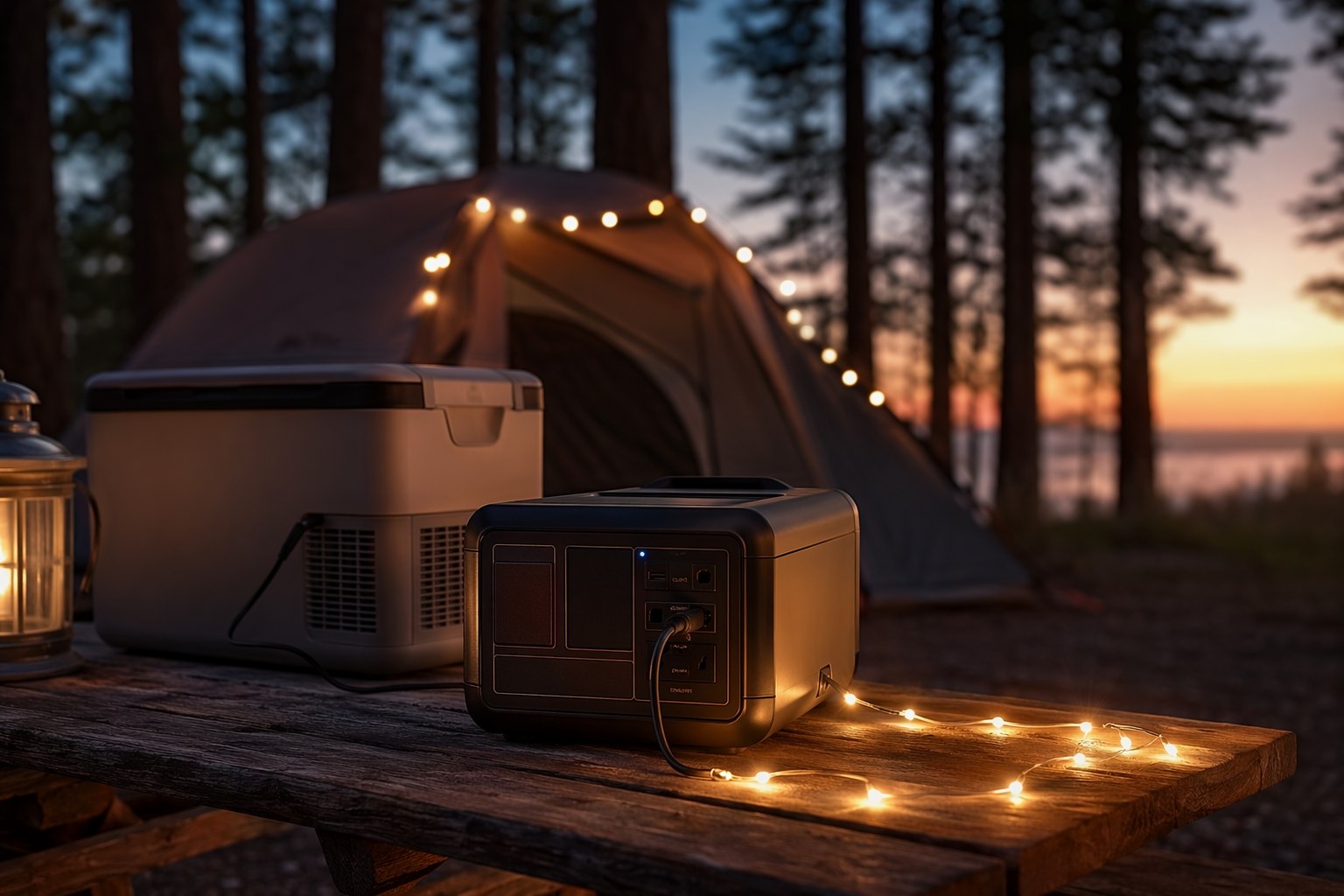
Here’s the item that separates people who have a good trip from people who spend the whole weekend rationing battery: a way to recharge.
A power station without a recharge plan is a countdown timer. You start at 100 percent, you watch it drain, and the math is always against you. Add a folding solar panel and the whole equation changes. Now every sunny afternoon refills the tank while you’re at the lake.
The Jackery SolarSaga 100W is the panel I point most people to for a weekend kit. It’s a 100W folding panel that, on a clear summer day, recovers roughly 300 to 500Wh — enough to keep a 768Wh station like the AC70 effectively topped off if you’re not hammering it. It folds flat, weighs about 9 pounds, and props up with built-in kickstands. You set it out at breakfast, point it at the sun, nudge it once or twice during the day, and you’ve basically got a self-sustaining campsite.
The honest caveat: 100W is a weekend panel, not an off-grid-living panel. If you’re running a fridge plus a fan plus a CPAP every night, you’ll want 200W or more to truly break even. But for the kind of trip where you forgot to buy power gear two days out, 100W is the right call. It plugs into virtually every major station brand, it’s cheap insurance, and it’s the single most-skipped item on the list. Don’t skip it.
The Power Bank for People Who Don’t Want a Power Station
Maybe you read the section above and thought, “I am not carrying a 22-pound box to charge my phone.” Fair. Plenty of summer trips don’t need a power station at all.
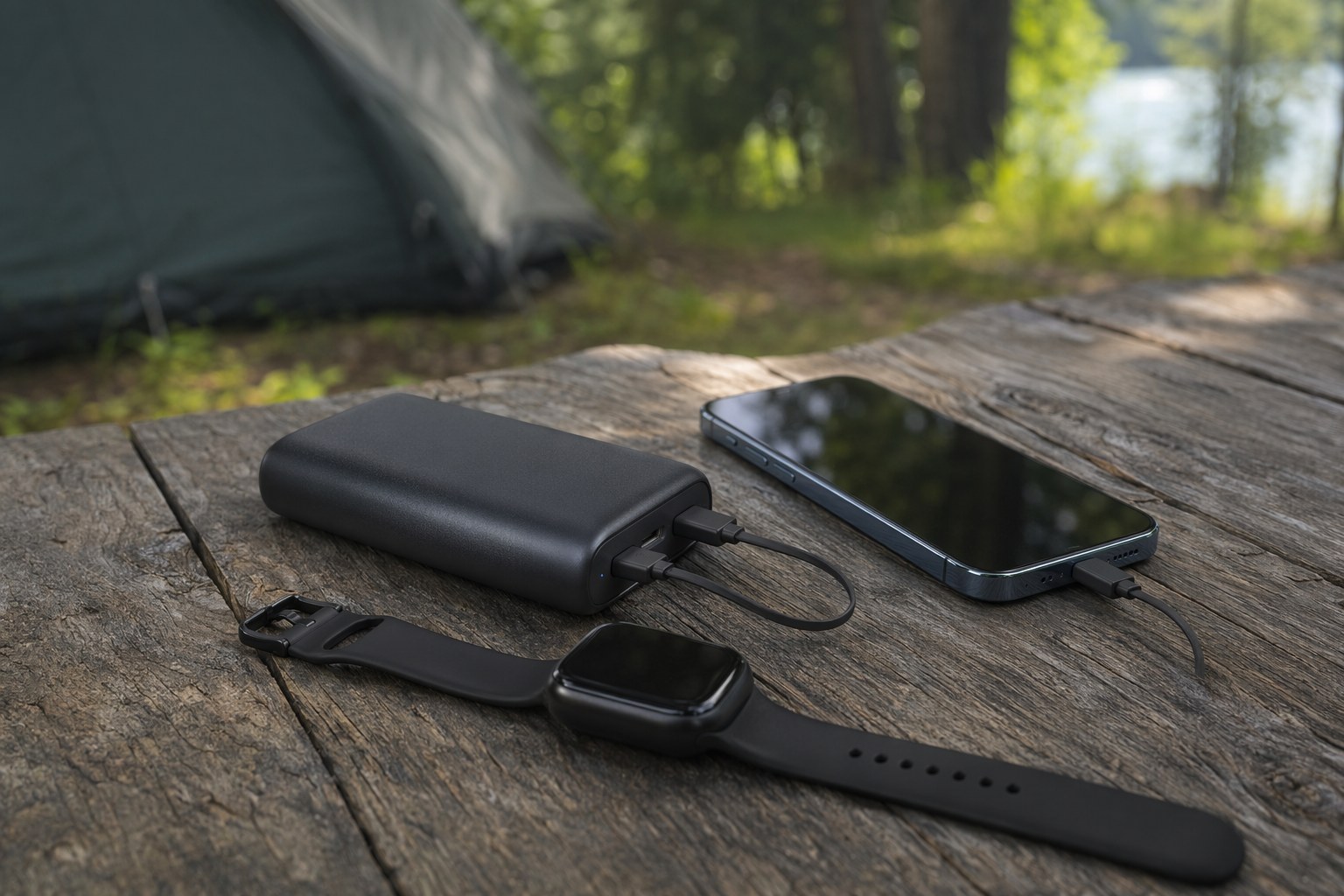
If your power needs are phones, a smartwatch, earbuds, a headlamp, and maybe a tablet for the kids on the drive, a high-capacity power bank does the whole job and fits in a daypack pocket.
The one I keep coming back to is the Anker Prime 27,650mAh. It’s a 99.54Wh bank — deliberately just under the 100Wh TSA limit, so it flies carry-on if your summer plans involve an airport. It pushes up to 250W across its ports, which means it fast-charges a phone in minutes and will even top off a laptop. Realistically you’re getting five or six full phone charges out of it, plus your watch and earbuds, which is a full weekend for most people. It recharges fast too, so a quick stop at a gas station or a friend’s outlet refills it.
For a deeper look at travel-friendly banks, our best power bank for travel guide compares the contenders, but for a last-minute summer trip the Anker Prime is the safe, one-and-done pick.
The Small Stuff That Wrecks Trips When It’s Missing
This is where the last 5 percent of your power kit lives, and it’s the stuff that quietly ruins a setup. A power station does you no good if you can’t connect to it.
Cables, and then more cables. Bring a charging cable for every device and every person. USB-C for the newer phones, Lightning for the older iPhones, micro-USB for that one weird lantern. Throw a couple of spares in a zip bag. Cables are the bobby pins of camping — they vanish.
A car charging cable for your station. Almost every power station ships with a 12V car adapter. Find it, test it, pack it. It’s slow, but it means a long drive to the campsite arrives with a fuller battery, and it’s a free backup recharge method if the sun doesn’t cooperate. Just don’t run it with the engine off or you’ll drain your car battery.
A short outdoor-rated extension cord and a power strip. One AC outlet on a station becomes four when you add a power strip, and a 25-foot cord lets you put the station in a dry, shaded spot while the cord reaches the tent. This $20 combo is the difference between a tidy setup and an octopus of adapters.
A 12V cigarette-lighter splitter if you’re running a 12V cooler plus a fan plus a tire inflator off the station’s DC ports.
None of this is exciting. All of it is the stuff you’ll be driving back to town for if you forget it.
Match the Kit to the Trip
Here’s the fast version, sorted by what you’re actually doing this weekend.
Beach day or single overnight, mostly phones and a speaker: Power bank only. The Anker Prime 27,650mAh covers it, or the EcoFlow RIVER 3 if you want AC outlets and a little fan time.
Two to three nights car camping, lights plus fan plus cooler: This is the main event. Bluetti AC70 or EcoFlow DELTA 3 Plus, paired with the SolarSaga 100W so you’re not racing the clock. Add the power bank as your grab-and-go for hikes.
CPAP user, any length of trip: A power station is non-negotiable, and you want the 768Wh-or-larger tier so it carries a full night with margin. The DELTA 3 Plus is the safer pick here. Bring solar so you can recharge during the day.
RV or long off-grid stretch: You’re past the scope of a last-minute checklist, but the short answer is 2,000Wh-plus and 200W or more of solar. Our power station sizing guide has the real math.
The pattern across all of these is the same: a battery sized to your list, a way to recharge it, and the cables to actually use it. Get those three things and you’re covered.
Do This Before You Pack the Car
Give yourself one 15-minute test the night before you leave. It’s the cheapest insurance there is.
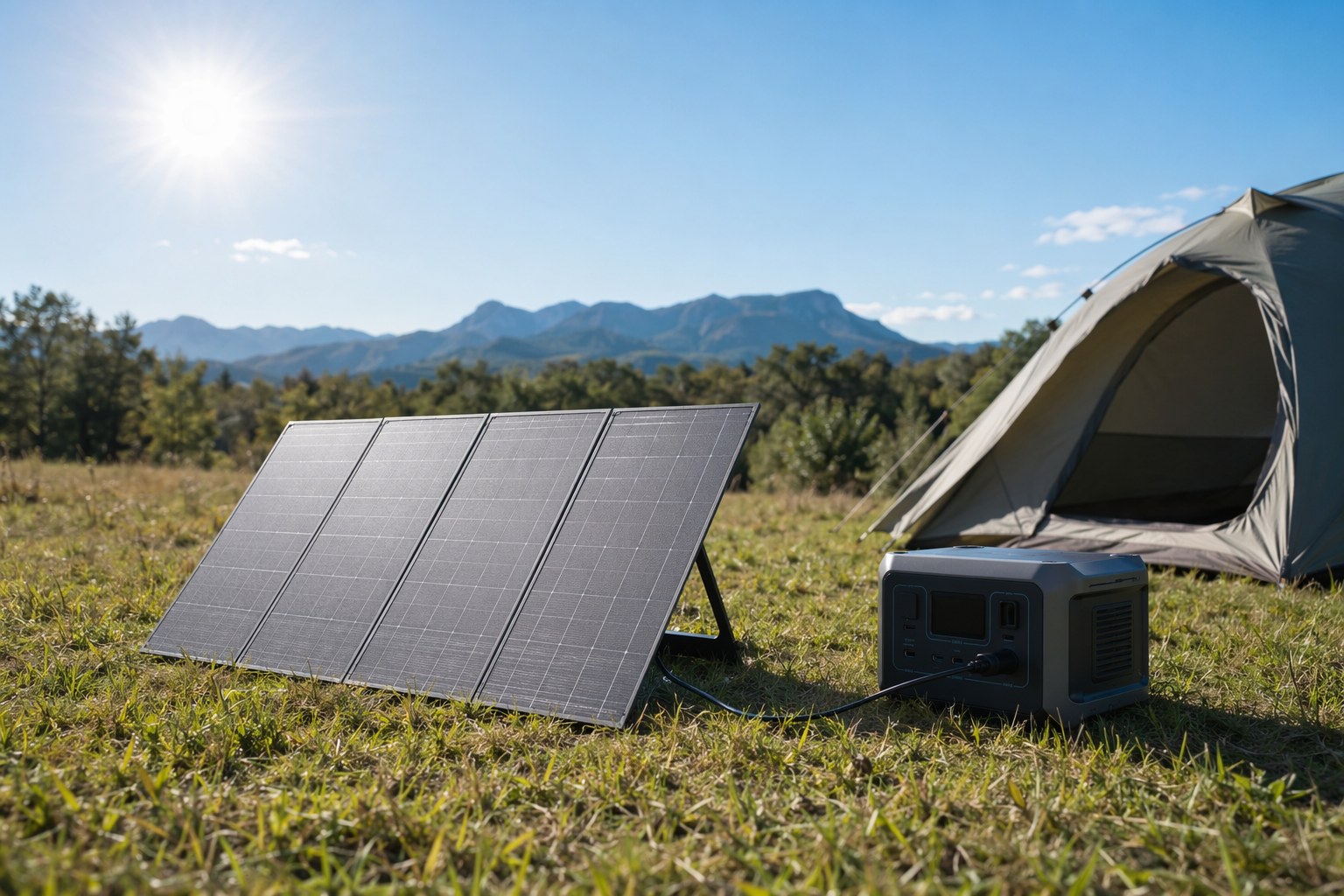
Charge the power station to 100 percent. Plug in your fan or your cooler and confirm it actually runs off the unit, not just lights up. Unfold the solar panel in the yard or driveway and check that it’s pushing watts into the battery — even late-day sun should register something. Top off the power bank. Lay out every cable and physically charge one device from each one. If something’s broken, missing, or confusing, you just found out at home with a hardware store still open, instead of at a dark campsite 90 minutes from the nearest town.
The people who have great summer trips aren’t the ones with the most expensive gear. They’re the ones who tested it once before they left.
The Bottom Line
Summer power prep comes down to three buys, in this order. Get the power station first because it’s the item most likely to sell out in peak season — the Bluetti AC70 for value or the EcoFlow DELTA 3 Plus for headroom. Add the Jackery SolarSaga 100W so it actually recharges. Then drop the Anker Prime 27,650mAh in your daypack for the grab-and-go stuff. If your needs are smaller, the EcoFlow RIVER 3 and a power bank cover most short trips on their own.
Order it today, test it tomorrow, and the only thing you’ll forget on the next trip is that you ever forgot the power.
Recommended Power Stations
EcoFlow
EcoFlow DELTA 3 Plus
EcoFlow's newest mid-range flagship. The DELTA 3 Plus improves on the Delta 2 with faster charging, LiFePO4 chemistry, and UPS functionality — all at a lower price.
Frequently Asked Questions
What's the one power item people forget most before a summer trip?
A way to recharge. People buy a power station or a big power bank, pack it at 100%, and assume that's enough for a long weekend. By day two it's dead and there's no plan to refill it. The fix is cheap and small: a 100W folding solar panel or a fast car charging cable. Either one turns a finite battery into something you can keep using for the whole trip instead of rationing it.
How big a power station do I actually need for a weekend?
For a 2-3 night car-camping or tailgating trip powering phones, lights, a fan, and a small cooler, 500-1,000Wh is the sweet spot. Below that you'll be charging a few phones and not much else. Above 2,000Wh is overkill unless you're running a full fridge, a CPAP every night, or a portable AC. If you only need to keep phones, a watch, and a camera alive, skip the station entirely and bring a 25,000mAh power bank.
Can I still get this stuff in time if my trip is this weekend?
Yes. Every product in this guide is a mainstream model that ships fast with Prime, and most of them are the kind of thing big-box stores stock in summer. Order the power station and solar panel first since those are the items most likely to back-order during peak season, then add the power bank and cables. If something is delayed, a power bank and a car charger alone will cover a short trip on their own.
Ready to Buy? Here's What We Recommend
Based on our testing and this guide, these are the best options for most people: