Guide
Van Life Summer Season: Hitting the Road with the Right Power System

TL;DR
May through August is van life peak season. Real-world advice from full-time vanlifers on building a power system, sizing solar, and managing extended summer trips off-grid.
May through August is peak season for a reason. The days are long, the high country is finally clear of snow, and the boondocking spots that were frozen mud in March are dry and gorgeous. I have spent four summers living out of a van full-time, and the single thing that separates a relaxing season on the road from a stressful one is not the route or the rig. It is the power system. Get it right and you stop thinking about your battery percentage entirely. Get it wrong and you spend every afternoon hunting for an outlet instead of a swimming hole.
This guide is the setup I actually recommend to people heading out for their first long summer, built from what works after thousands of nights off-grid. No spec-sheet fantasy, just real watt-hour math and the gear that holds up.
Start With Your Daily Energy Budget
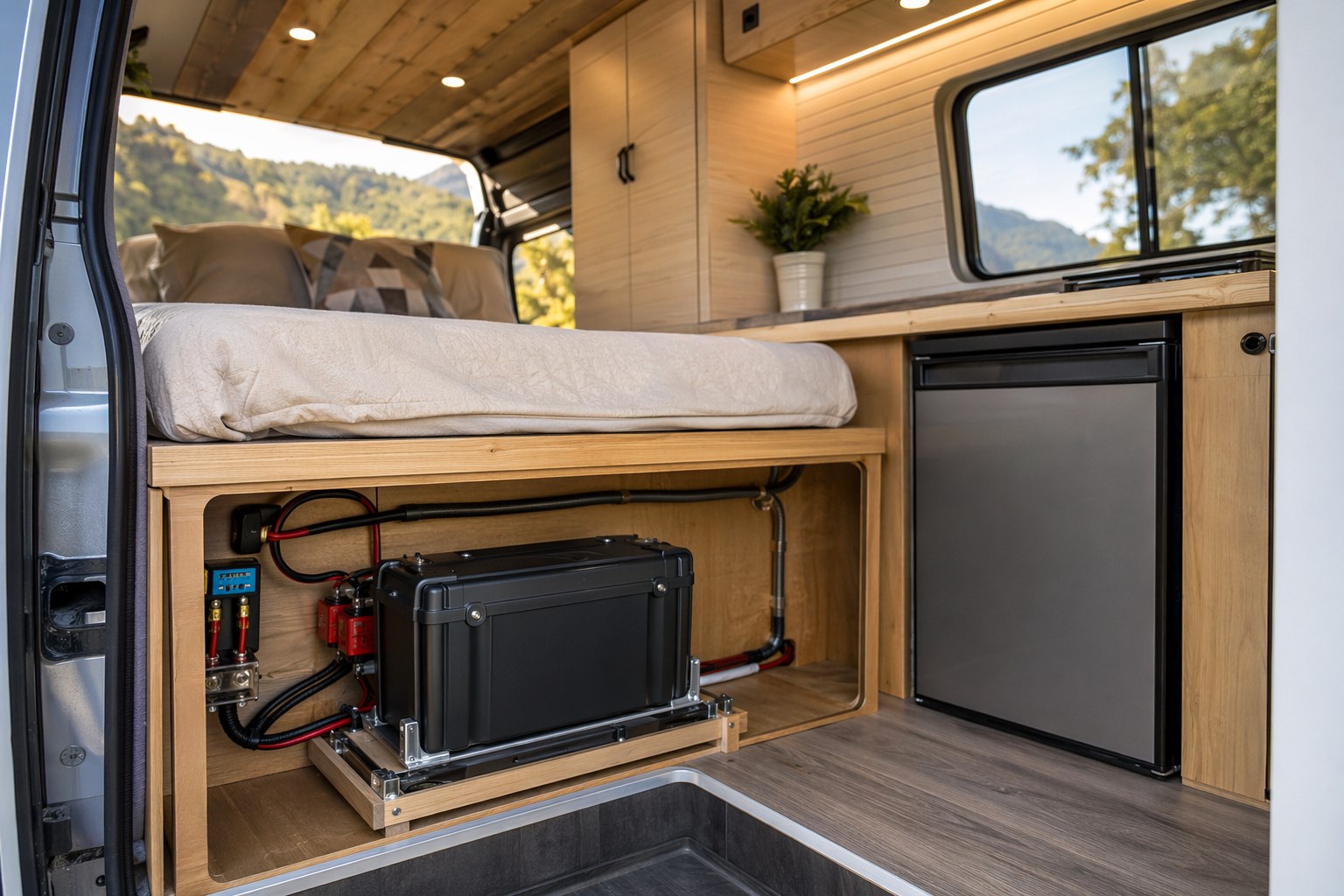
Before you spend a dollar, you need one number: how many watt-hours you burn in a typical day. A watt-hour is just watts multiplied by hours, and once you can add up your loads, every purchase decision gets simple. Here is a realistic budget for a couple living full-time in summer.
| Device | Watts | Daily hours | Daily Wh |
|---|---|---|---|
| 12V compressor fridge | 40-60W | 24h (cycles ~10h) | 320-480 |
| Roof vent fan(s) | 15-30W | 10h | 150-300 |
| LED lights | 15-25W | 4h | 60-100 |
| Two laptops | 60W each | 3h each | 360 |
| Phone + camera charging | 20W | 3h | 60 |
| Water pump | 60W | 0.25h | 15 |
| Starlink / router | 50W | 6h | 300 |
| Daily subtotal | ~1,265-1,615Wh |
That is before any cooling. The honest truth about summer van life is that air conditioning is the budget-breaker. A small 12V or portable AC pulls 300-700W and, run for even four hours, can add 1,500-2,800Wh to your day. That is why most full-timers chase elevation and shade instead of running AC off the battery. I aim my whole summer route at 5,000-8,000 feet specifically so I never have to.
If your number lands around 1,000-1,300Wh and you cook on propane, a single 1,000Wh-class station and a couple of solar panels will carry you. If you insist on real cooling or an induction kitchen, plan for 2,000Wh or more, or accept that you will need shore power some nights.
The Power Station: The Heart of the System
For a plug-and-play summer setup, a 1,000Wh LiFePO4 power station is the sweet spot. It is light enough to move, big enough to cover a frugal day, and recharges fast from both solar and shore power.
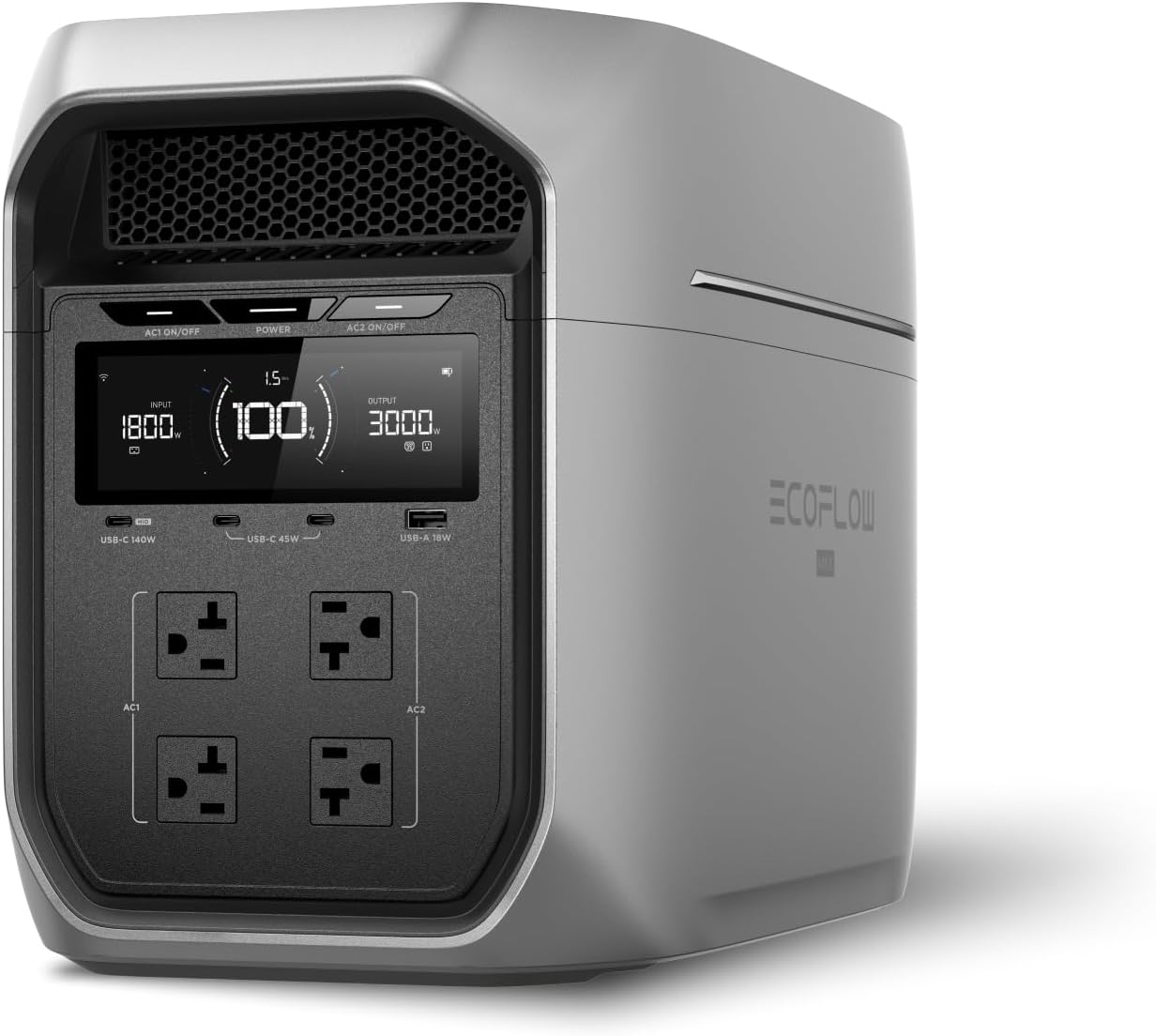
The EcoFlow DELTA 3 Plus is the unit I point most people toward. It is 1,024Wh, runs 1,800W continuous with X-Boost pushing to 2,200W, and accepts a huge solar input so you can refill it fast during a midday sun window. The LiFePO4 cells are rated for 4,000-plus cycles, which at one cycle a day is more than a decade of full-time use. Its app lets you cap the charge at 80 percent to baby the battery on shore power, and it pass-through charges cleanly while you drive, so a long highway day tops you off for free.
The Anker SOLIX C1000 is my pick when usable capacity per dollar matters most. It holds 1,056Wh, runs an 1,800W inverter, and recharges from a wall outlet to full in under an hour, which is the feature I lean on when I am stealing a quick charge at a laundromat or a friend’s driveway. Its 100W USB-C port runs a MacBook Pro at full speed, so you can skip the inverter losses entirely for laptop work.
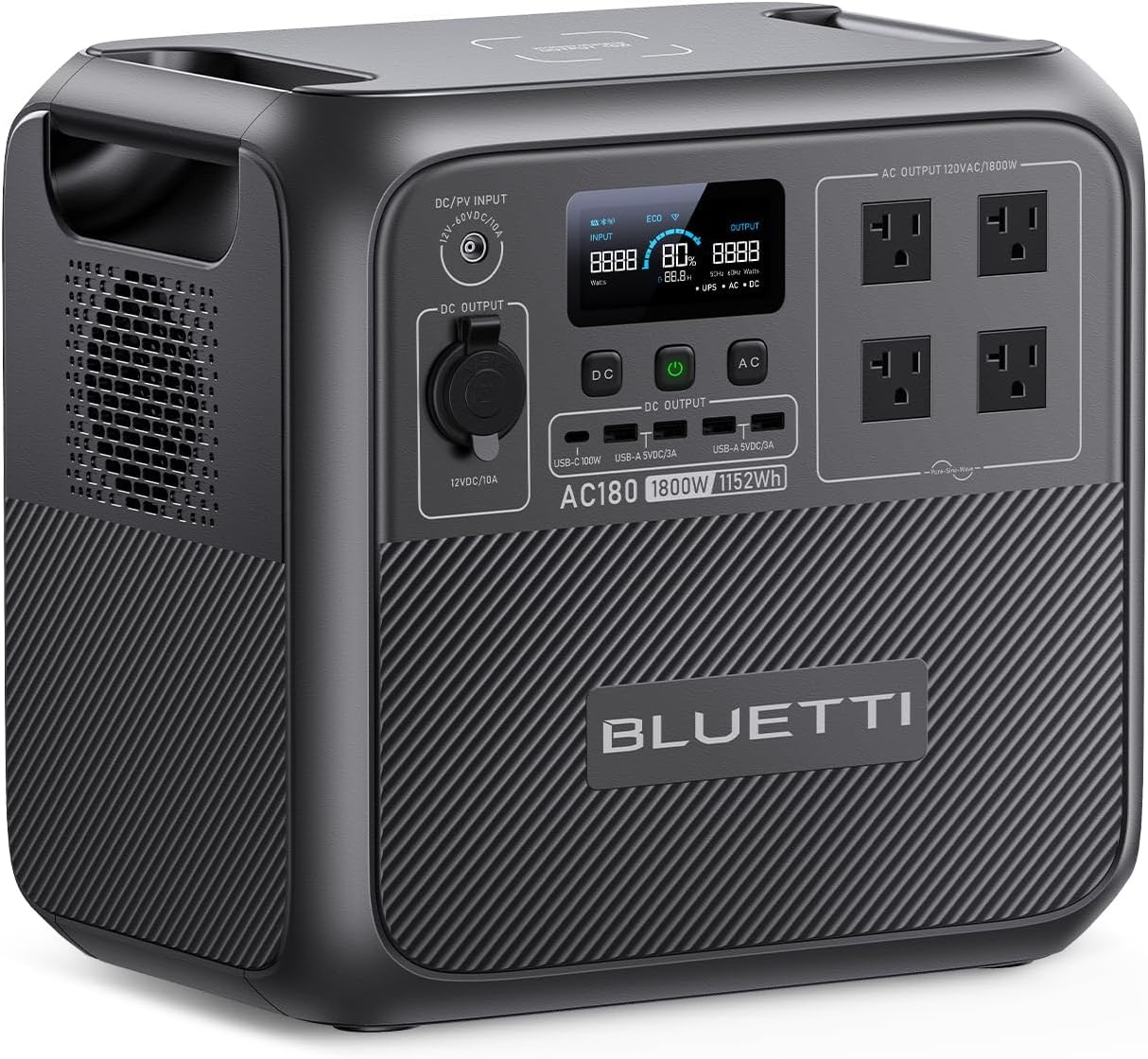
For a minimalist van or as a second battery dedicated to the fridge, the Bluetti AC70 is excellent value. At 768Wh and around 22 pounds, it is small enough to tuck under a seat, but its 1,000W inverter (2,000W surge) still starts a blender or a small induction burner for a quick task. I keep one in my van purely to run the fridge overnight so my main station stays free for everything else.
If you want a deeper comparison of the 1kWh class specifically tuned for daily living, our best power station for van life guide breaks down the trade-offs unit by unit.
Solar: Free Energy You Cannot Skip in Summer
Summer is when solar finally pays you back. You get 13-15 hours of daylight and, across most of the West, 5-7 peak sun hours. That means a panel that limps along in December can fully offset your daily use in July.
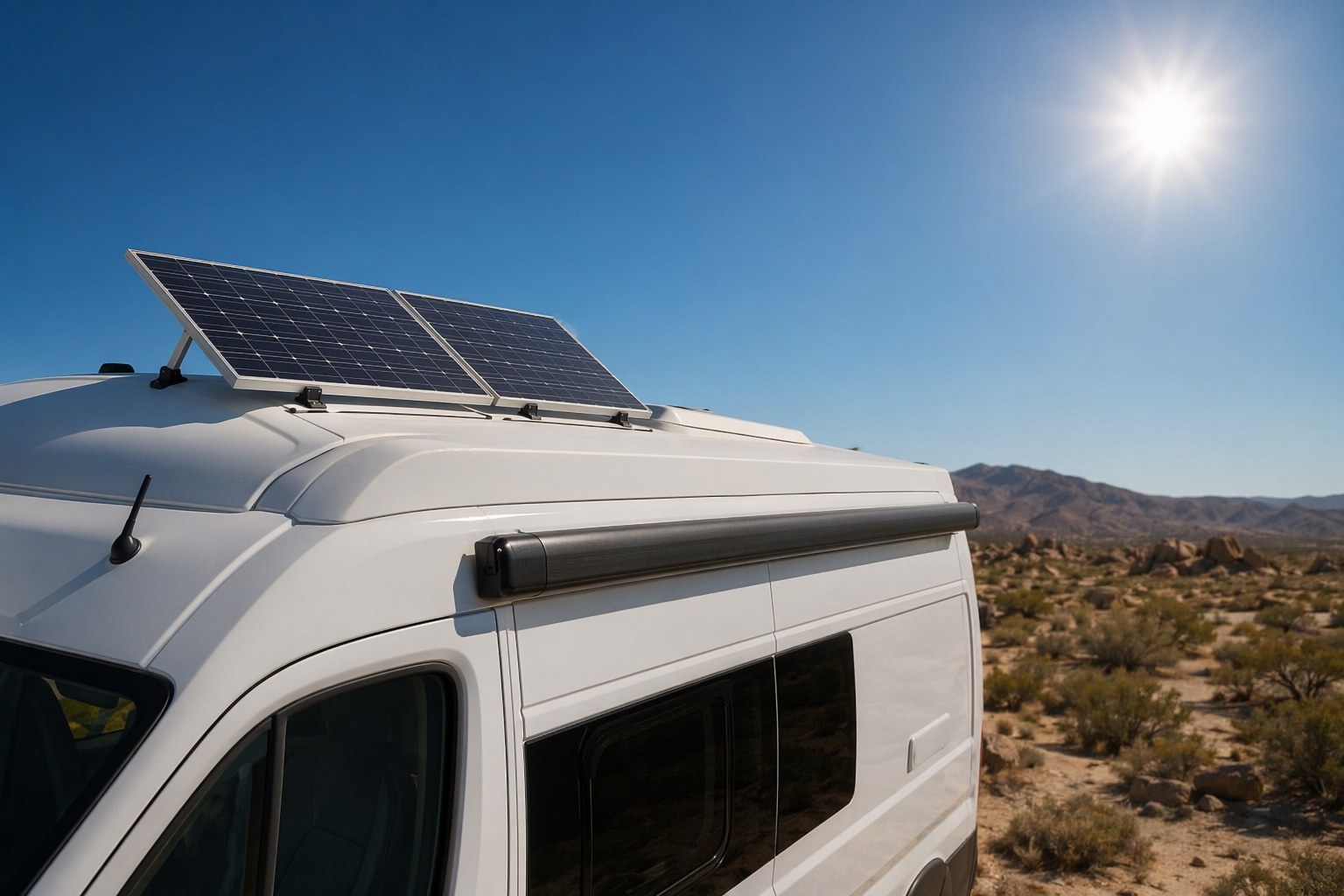
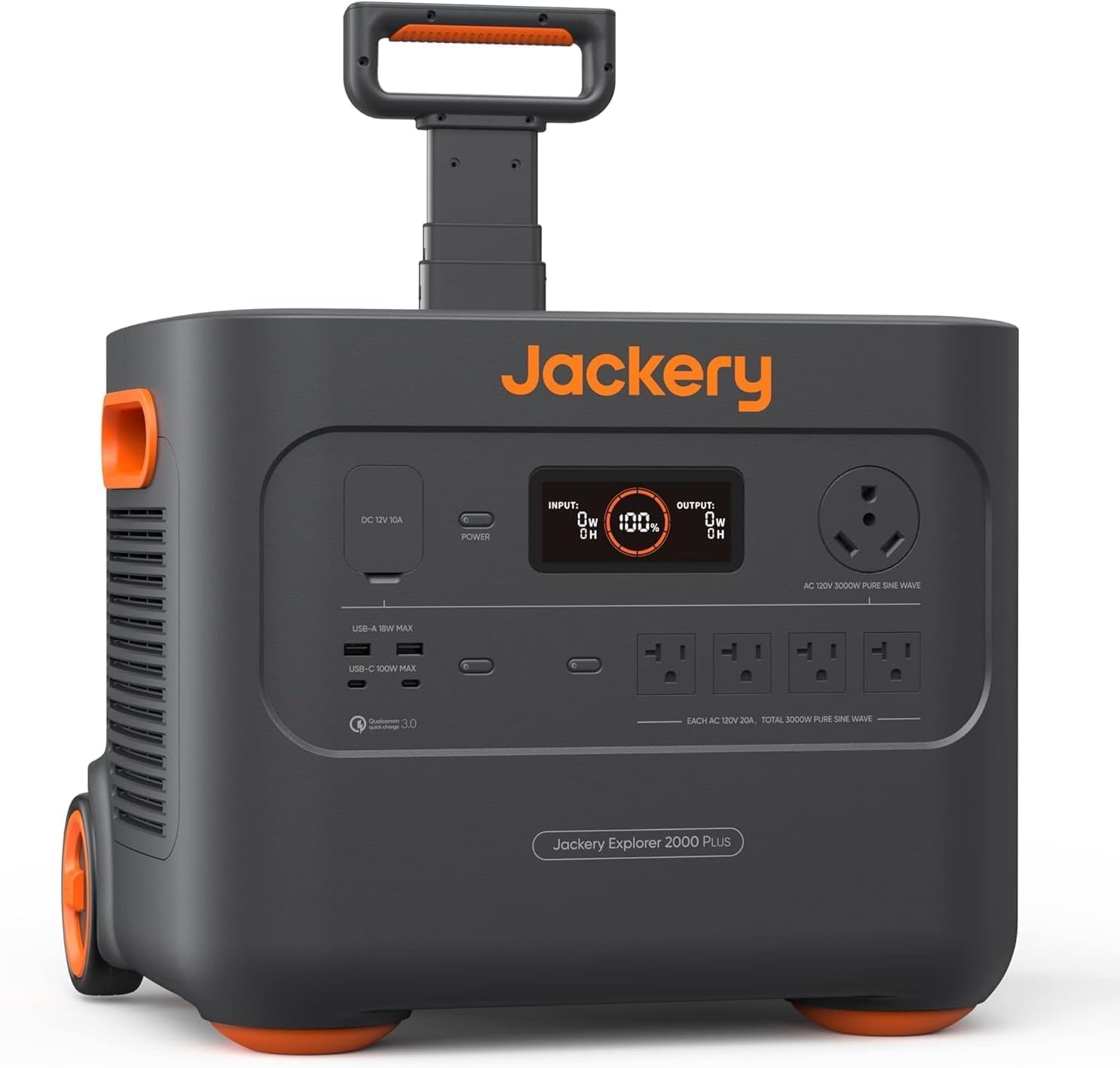
For portable, aimable panels, the EcoFlow 220W Bifacial Solar Panel is my favorite. The bifacial design collects reflected light off the back, which is a real bonus when you set it on light gravel or sand, and the kickstand case makes it quick to angle at the sun. On a clear summer day I pull 900Wh-plus out of a single one. The Jackery SolarSaga 200W is the more rugged, foldable alternative, easy to lay flat on the roof or prop up at camp, and it pairs cleanly with almost any station via standard connectors.
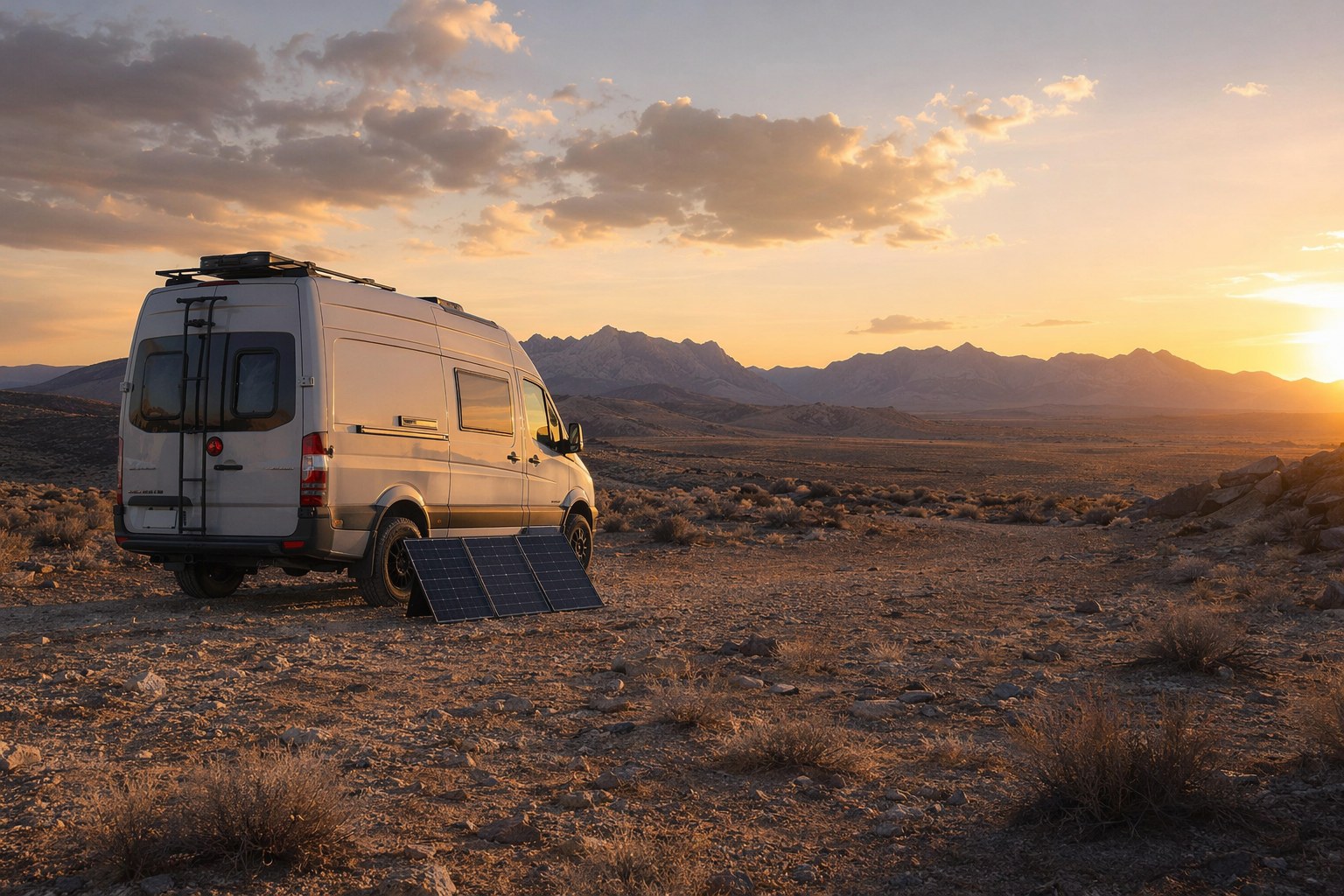
The honest sizing rule: daily watt-hours needed, divided by peak sun hours, divided by 0.7 for real-world losses, equals the panel wattage you want. For a 1,200Wh day at 6 sun hours, that is about 285W, so I run 400W and never worry. The difference between roof-mounted and ground-deployed panels matters more in summer than people expect. Roof panels are passive and zero-effort but cannot be aimed and lose 10-25 percent when they bake. A portable panel you set on the ground and angle at the sun will out-produce a hot, flat roof panel by a wide margin. I run both: a roof panel for baseline charging while I drive, and a portable one I aim from camp when the battery is low.
One thing nobody tells beginners: clean your panels. A film of road dust or pollen quietly steals 10-15 percent. Our solar panel maintenance guide covers the five-minute routine that keeps output where it should be.
Managing Power on an Extended Summer Trip
Hardware is only half of it. The full-timers who never run out are the ones with good daily habits.
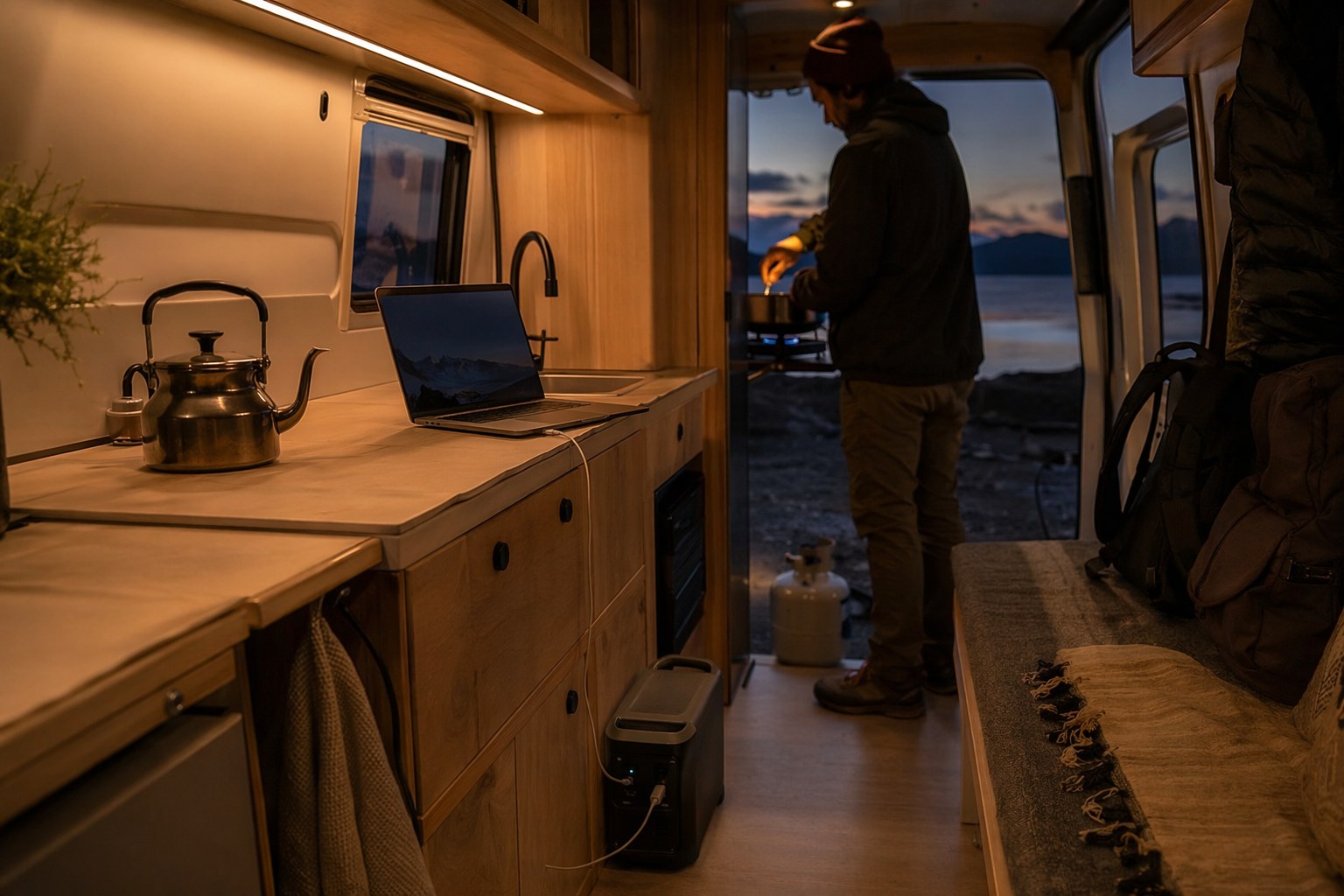
Consume energy as it arrives. Run your highest-draw chores, charging the laptops, topping the station, brewing coffee, during the midday solar peak. Energy you use straight from the panels never has to cycle through the battery, which saves both capacity and battery wear.
Keep the fridge on DC. Running a 12V compressor fridge through the AC inverter wastes 10-15 percent and forces the inverter to idle all day, burning another 15-30W for nothing. Use the 12V or DC output and turn the inverter off when you are not actively using an outlet.
Cook on propane. A two-burner propane stove keeps cooking entirely out of your electrical budget. I reserve the induction burner for the rare task where I want precise heat, and only ever during peak sun.
Cool the smart way. Roof vent fans pull 15-30W and move serious air; a roof AC pulls 50-100 times more. Park in shade, crack the right windows for cross-flow, and chase elevation. For the nights it is genuinely brutal, a swamp-style 12V cooler sips power compared to compressor AC.
Charge while you drive. A DC-to-DC charger or your station’s car-charge input refills the battery off the alternator on travel days. On a peak-season trip with frequent moves, this alone can cover a meaningful chunk of your needs.
If you want the full off-grid playbook, including hybrid setups that integrate a power station with your van’s house battery, our complete RV boondocking power guide goes deeper on system architecture.
My Recommended Summer Build
After four seasons, here is the setup I would buy again without hesitation for a couple going out for the summer.
- Main station: EcoFlow DELTA 3 Plus (1,024Wh) for AC loads and laptops
- Fridge battery: Bluetti AC70 (768Wh) dedicated to the 12V fridge overnight
- Solar: one EcoFlow 220W Bifacial panel on the roof plus one Jackery SolarSaga 200W to aim from camp
That is roughly 1,800Wh of storage and 420W of solar, which carries a propane-cooking, shade-chasing couple indefinitely through a summer of boondocking. Swap the DELTA 3 Plus for the Anker SOLIX C1000 if fast shore-power top-ups matter more to you than the bigger solar input.
The Bottom Line
Summer van life is the easy season for power if you set up for it. Long days mean solar does the heavy lifting, so the whole game becomes matching a right-sized LiFePO4 station to your real daily watt-hours and building a few sane habits around the sun. Do the math once, buy to your actual load instead of the spec-sheet headline, and your battery percentage stops being something you think about. Then you can get back to the part you came for: a swimming hole at 4 p.m. and a view nobody else has.
Recommended Power Stations
EcoFlow
EcoFlow DELTA 3 Plus
EcoFlow's newest mid-range flagship. The DELTA 3 Plus improves on the Delta 2 with faster charging, LiFePO4 chemistry, and UPS functionality — all at a lower price.
Frequently Asked Questions
How big a power system do I need for full-time van life in summer?
For a solo traveler or couple running a 12V fridge, lights, fans, laptops, and phone charging, plan on roughly 800-1,200Wh of daily consumption. A 1,000Wh power station paired with 200-400W of solar covers that comfortably in long summer days. If you want to run a portable AC unit, an induction burner, or a CPAP every night, step up to a 1,500-2,000Wh system or add a second battery, because cooling alone can double your daily budget.
Will solar actually keep my power station charged in summer?
In summer, yes, more easily than any other season. June and July give you 13-15 hours of daylight and 5-7 peak sun hours across most of the country. A 200W panel realistically returns 600-900Wh per day in good conditions, which fully offsets a modest vanlife setup. The catch is heat and shade: panels lose 10-25 percent of output when they get hot, and a single tree branch across a panel can cut production in half. Park for sun, not just for shade, when your battery is low.
Should I run my van fridge off the power station or the vehicle battery?
Most full-timers run a 12V compressor fridge off a dedicated house battery or a power station's 12V output rather than the AC outlets, because going through the inverter wastes 10-15 percent of your energy. A typical 12V fridge draws 40-60W and cycles, using around 320-480Wh per day. Keep it on 12V or DC output, reserve the AC outlets for things that genuinely need a wall plug, and you will stretch every charge noticeably further.
Ready to Buy? Here's What We Recommend
Based on our testing and this guide, these are the best options for most people: