Guide
Are Portable Power Stations Worth It? A Honest Cost Analysis

TL;DR
We break down the real cost per kWh, compare power stations to generators and the grid, and tell you exactly when they're worth it -- and when they're not.
Portable power stations cost $200 to $2,000. That’s real money. Before you buy one, you deserve a straight answer: is this thing actually worth it, or are you just buying an expensive battery you’ll use twice?
The honest answer is that power stations are absolutely worth it for specific use cases — and a waste of money for others. Let’s break down the math.
The Cost Per kWh: Power Stations vs. Grid vs. Generators
To figure out whether a power station makes financial sense, you need to know what you’re actually paying per kilowatt-hour of energy delivered.
Grid electricity: ~$0.12-0.18/kWh (US average). This is your baseline. It’s cheap, reliable, and always-on.
Gas generator: ~$0.20-0.50/kWh (factoring fuel cost at $3.50/gallon, typical fuel consumption, and maintenance). Generators also need oil changes, spark plugs, and fresh fuel. Over 5 years, maintenance adds 20-30% to fuel costs.
Portable power station (lifetime cost): Here’s where it gets interesting. Let’s calculate the real cost per kWh for two popular stations:
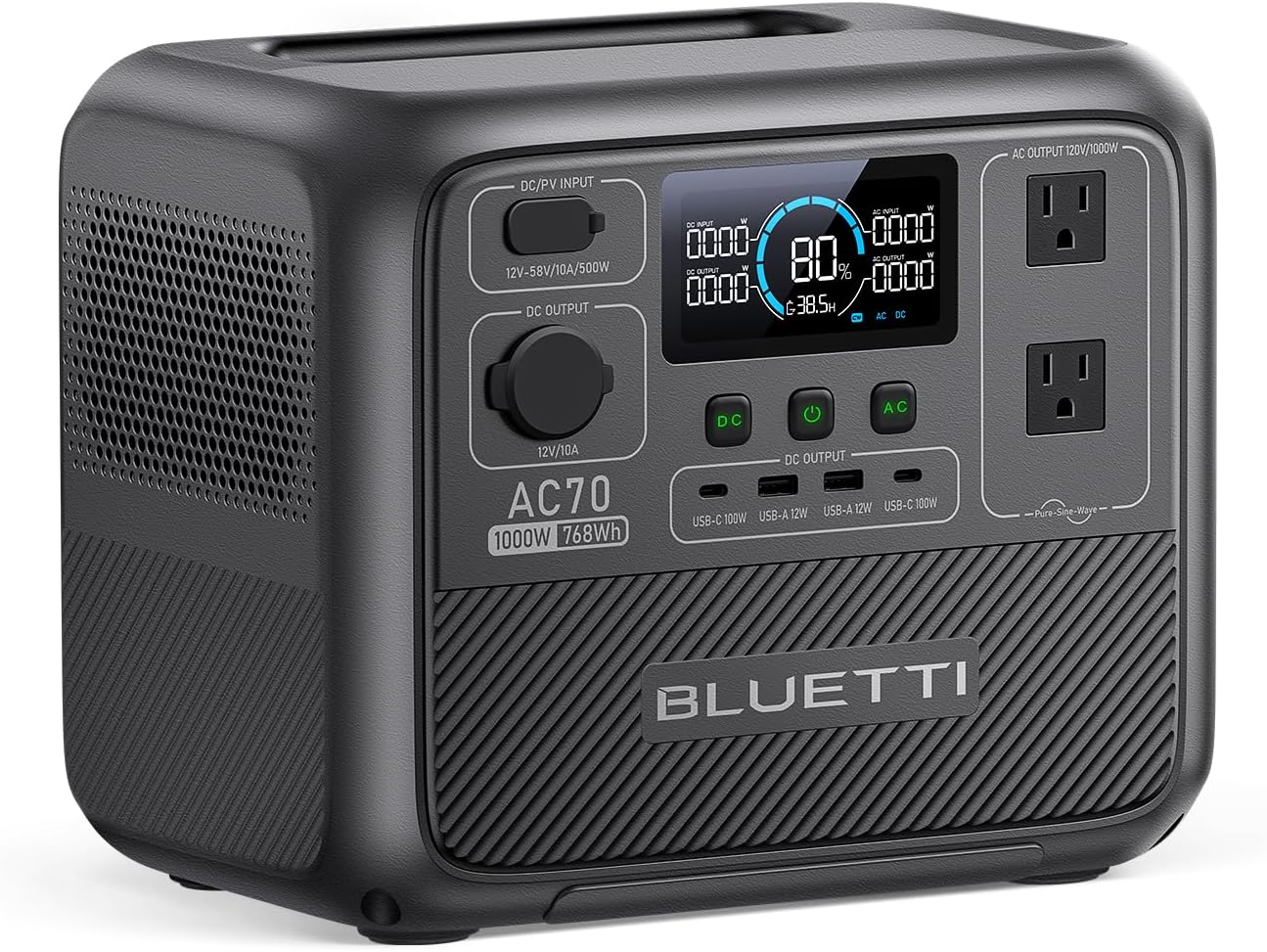
Budget example — Bluetti AC70: $499, 768Wh capacity, 3,000 cycle life.
- Total lifetime energy: 768Wh x 3,000 cycles = 2,304,000Wh = 2,304 kWh
- Cost per kWh (purchase only): $499 / 2,304 = $0.22/kWh
- Add electricity to charge (~$0.15/kWh): total $0.37/kWh
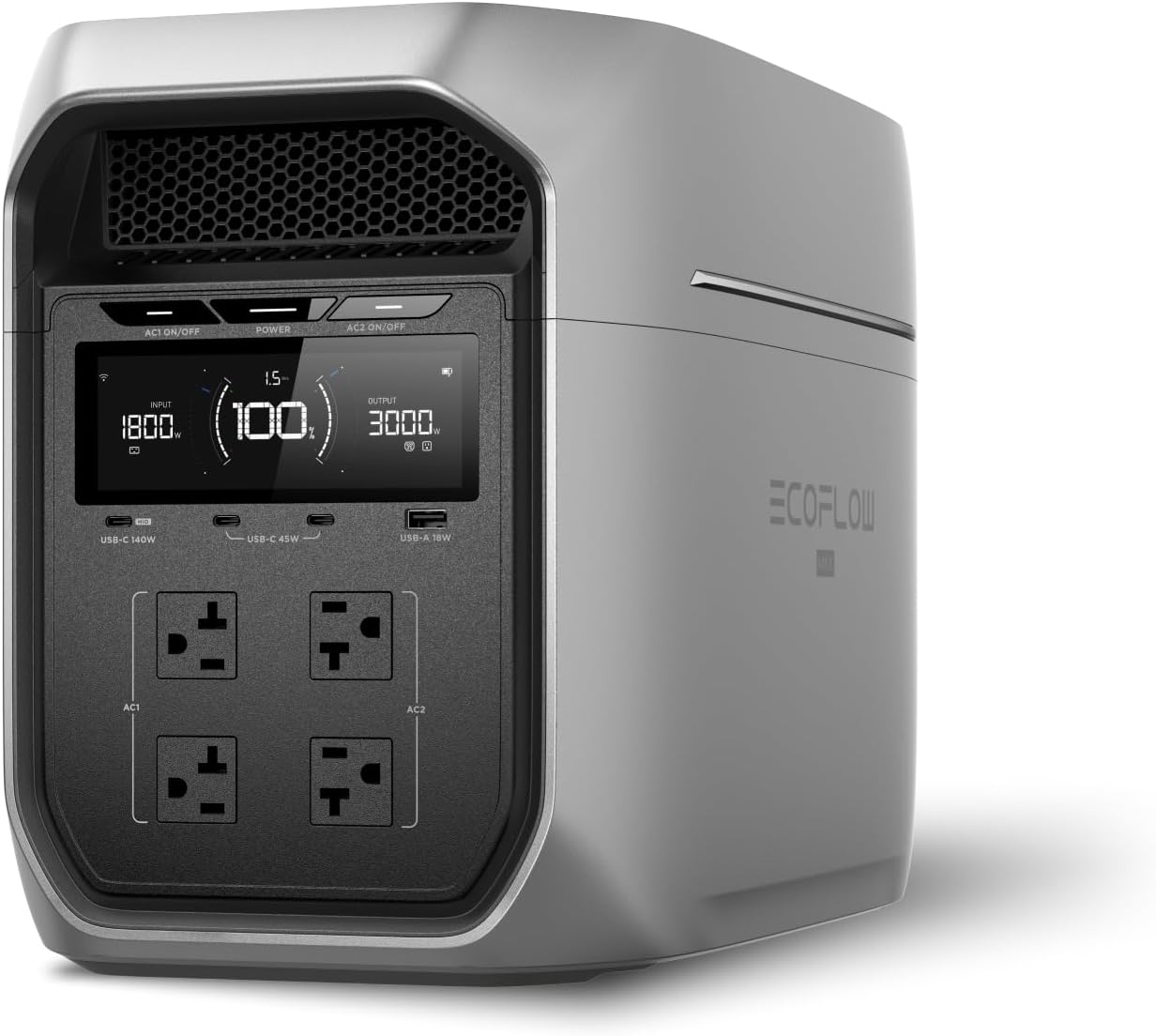
Mid-range example — EcoFlow DELTA 2: $849, 1024Wh capacity, 3,000 cycle life.
- Total lifetime energy: 1,024Wh x 3,000 = 3,072,000Wh = 3,072 kWh
- Cost per kWh (purchase only): $849 / 3,072 = $0.28/kWh
- Add electricity to charge: total $0.43/kWh
Those numbers look expensive compared to grid power. But you’re not buying a power station to replace your grid connection. You’re buying it for power where and when the grid doesn’t reach. For a deeper dive into the numbers, see our cost analysis of running devices on a power station vs. the grid.
When Power Stations ARE Worth It
Emergency Backup Power
If you lose power even once a year, a power station pays for itself in prevented losses. Consider what a 24-hour outage actually costs: a fridge full of spoiled food ($100-300), a hotel stay if your home is unlivable ($150+), inability to work from home ($200+ in lost productivity). One serious outage can justify half the cost of a mid-range power station.
Camping and Outdoor Recreation
This is where power stations shine brightest. They’re silent, emission-free, and work inside tents and vehicles. A generator’s noise and fumes make it useless in a campsite. You’re not comparing a power station’s cost to grid electricity — you’re comparing it to having no power at all.
Remote Work and Van Life
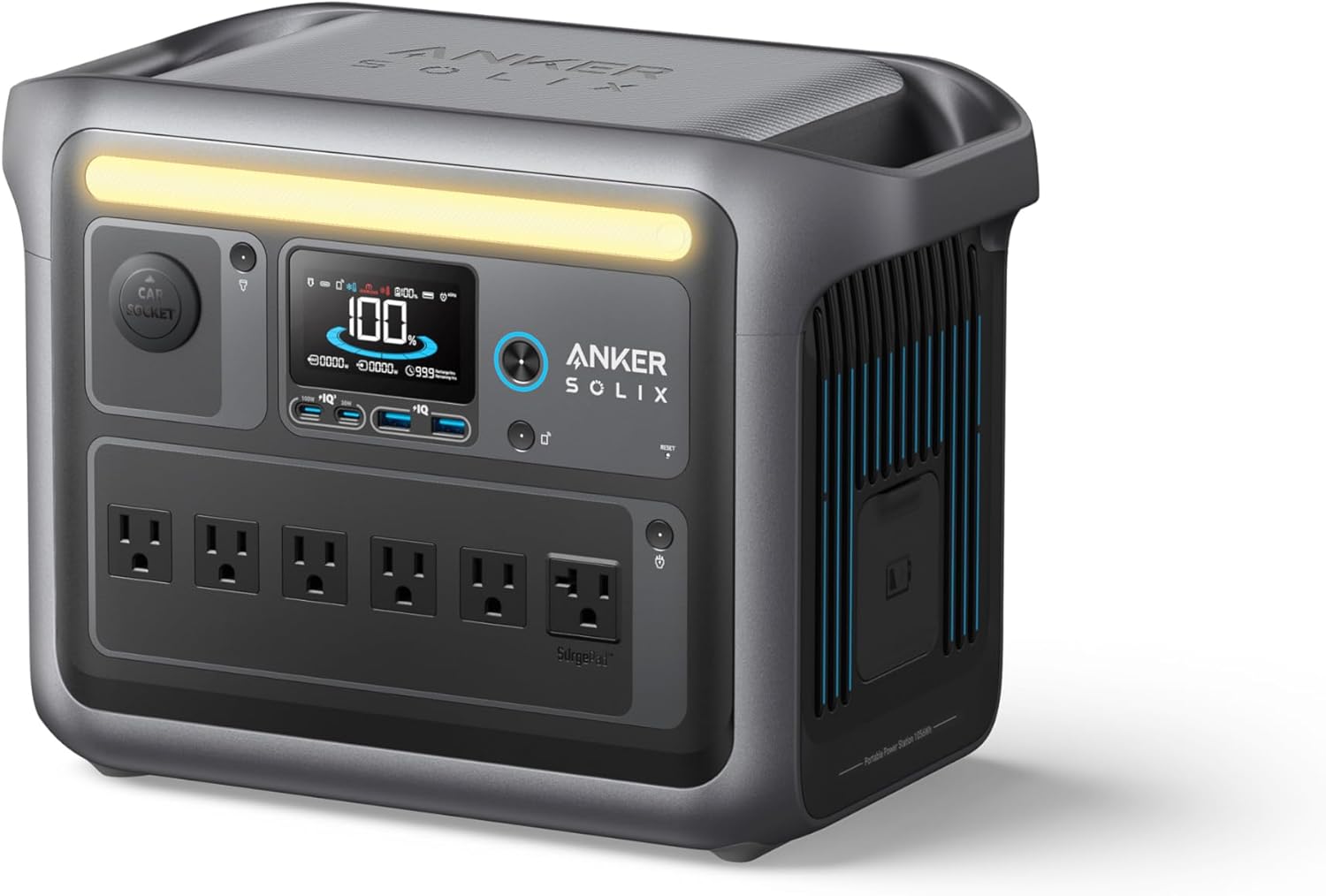
If you work remotely from a vehicle, campsite, or off-grid cabin, a power station is a business expense. Running a laptop (50-60W), phone, and hotspot for 8 hours costs about 500Wh. A single Anker SOLIX C1000 handles that with room to spare, and solar panels make the electricity free after the initial purchase.
Short Power Outages (4-12 Hours)
For keeping essentials running during a typical weather-related outage — fridge, phones, router, a few lights — a 1000Wh power station is ideal. It’s simpler, quieter, and safer than a generator for these common scenarios.
When Power Stations Are NOT Worth It
Whole-Home Backup During Extended Outages
If you need to run your AC, electric stove, water heater, and dryer for three days straight, a power station won’t cut it. Even the EcoFlow DELTA Pro 3 at 4096Wh will drain in hours under heavy whole-home loads. For multi-day, high-draw backup, you need a generator or a whole-home battery system. See our power station vs. generator guide for help deciding.
Continuous Heavy Loads
Running a space heater (1500W), window AC unit (1000-1500W), or power tools for extended periods burns through battery capacity fast. A 1000Wh station running a 1500W heater lasts about 35 minutes. Generators are built for sustained heavy loads. Power stations are not.
Saving Money on Your Electric Bill
Some people buy power stations thinking they’ll charge with solar and offset their grid usage. The math rarely works. A $500 station saving you $0.15/kWh on 768Wh per cycle would take 4,340 cycles to break even — well past the battery’s lifespan. Solar-charged power stations make energy free, but the hardware cost means you won’t recoup the investment through grid savings alone.
The ROI Equation: How Fast You Break Even
The value of a power station comes down to how often you use it and what you’re comparing it against.
Frequent camper (50+ trips/year): If you’d otherwise rent a generator ($30-50/weekend) or buy campground hookups ($10-20/night), a power station pays for itself within 1-2 years.
Emergency-only user (1-2 outages/year): Harder to justify on pure ROI. But if one outage saves your $300 fridge contents and avoids a $150 hotel night, a $500 station breaks even after 1-2 serious outages.
Off-grid worker (daily use): Fastest payback. Charging from solar eliminates ongoing electricity costs entirely. A $700 station with $400 in solar panels pays for itself within a year if it replaces generator fuel or campground fees.
The Lifespan Advantage: LiFePO4 Changes the Math
Modern LiFePO4 power stations have transformed the value proposition. With 3,000-6,000 cycle ratings, these batteries last 8-16 years of daily use. That’s dramatically different from the 500-1000 cycle Li-NMC stations of a few years ago.
The Bluetti AC70 at $499 with 3,000 cycles will still be working in 2034 with daily use. The Bluetti Elite 200 V2 at 6,000 cycles could theoretically last until the 2040s. When you spread the purchase price across a decade or more of use, the cost per kWh drops to very reasonable levels. For more on battery chemistry differences, see our LiFePO4 vs NMC guide.
The Bottom Line
A portable power station is worth it if you:
- Camp, tailgate, or travel regularly
- Need quiet, indoor-safe backup power for outages
- Work remotely from off-grid locations
- Want to pair with solar for renewable portable power
It’s NOT worth it if you:
- Need whole-home backup for multi-day outages (get a generator)
- Want to run high-draw appliances for hours continuously
- Are trying to save money on your electric bill
For most buyers, the sweet spot is a 1000Wh LiFePO4 station in the $500-800 range. Browse our full power station comparison to find the right model for your needs.
Related Reading
- Cost of Running Devices: Power Station vs. Grid — detailed per-device cost comparisons
- Do You Need a Power Station or a Generator? — the complete comparison
- Best Portable Power Stations 2026 — our top picks across all budgets
- LiFePO4 vs NMC Batteries — why battery chemistry matters for long-term value
Recommended Power Stations
EcoFlow
EcoFlow DELTA 3 Plus
EcoFlow's newest mid-range flagship. The DELTA 3 Plus improves on the Delta 2 with faster charging, LiFePO4 chemistry, and UPS functionality — all at a lower price.
Frequently Asked Questions
How much does it cost to run a portable power station per kWh?
The electricity to charge a power station costs about $0.12-0.18 per kWh from the grid. The true cost per kWh over its lifetime (factoring in purchase price) ranges from $0.15 to $0.50 depending on the model, how often you use it, and battery cycle life. A $500 LiFePO4 station used frequently can hit $0.20/kWh — competitive with generator fuel costs.
Is a portable power station better than a generator?
For indoor use, quiet operation, and loads under 2000W — yes. Power stations produce zero emissions, run silently, require no maintenance, and work indoors. Generators are better for sustained heavy loads (3000W+), multi-day outages, and situations where fuel resupply is easier than recharging. For a detailed comparison, see our generator vs. power station guide.
How long do portable power stations last before replacement?
LiFePO4 power stations last 3,000-6,000 charge cycles before degrading to 80% capacity. With daily use, that's 8-16 years. Li-NMC stations last 500-2,500 cycles (1.5-7 years). Even at 80% capacity, the station still works — it just holds less energy per charge.
Can a portable power station save money on electricity bills?
Only in niche scenarios. If you have solar panels and charge your station during peak sun, then use it during peak-rate evening hours, you can save on time-of-use electricity plans. But for most people, the savings are too small to justify the purchase on electricity arbitrage alone. Buy a power station for backup power, portability, and off-grid use — not to reduce your electric bill.
Ready to Buy? Here's What We Recommend
Based on our testing and this guide, these are the best options for most people: