Buying Guide
Budget & Value: Best Power Stations Under $300 (May Deals Roundup)

TL;DR
May sales bring the best budget power station deals of the year. Our updated roundup of the top portable power stations under $300 for 2026, with real specs, current pricing, and honest recommendations.
Spring is quietly the best time of year to buy a budget power station, and most people miss it. Everyone waits for Black Friday, but the May window — the two weeks of inventory clearance leading into Memorial Day — consistently delivers the steepest discounts I see on sub-$300 units all year. Brands are flushing out the previous season’s stock to make room for summer releases, and that means the same LiFePO4 batteries that cost a fortune three years ago are now landing under $200.
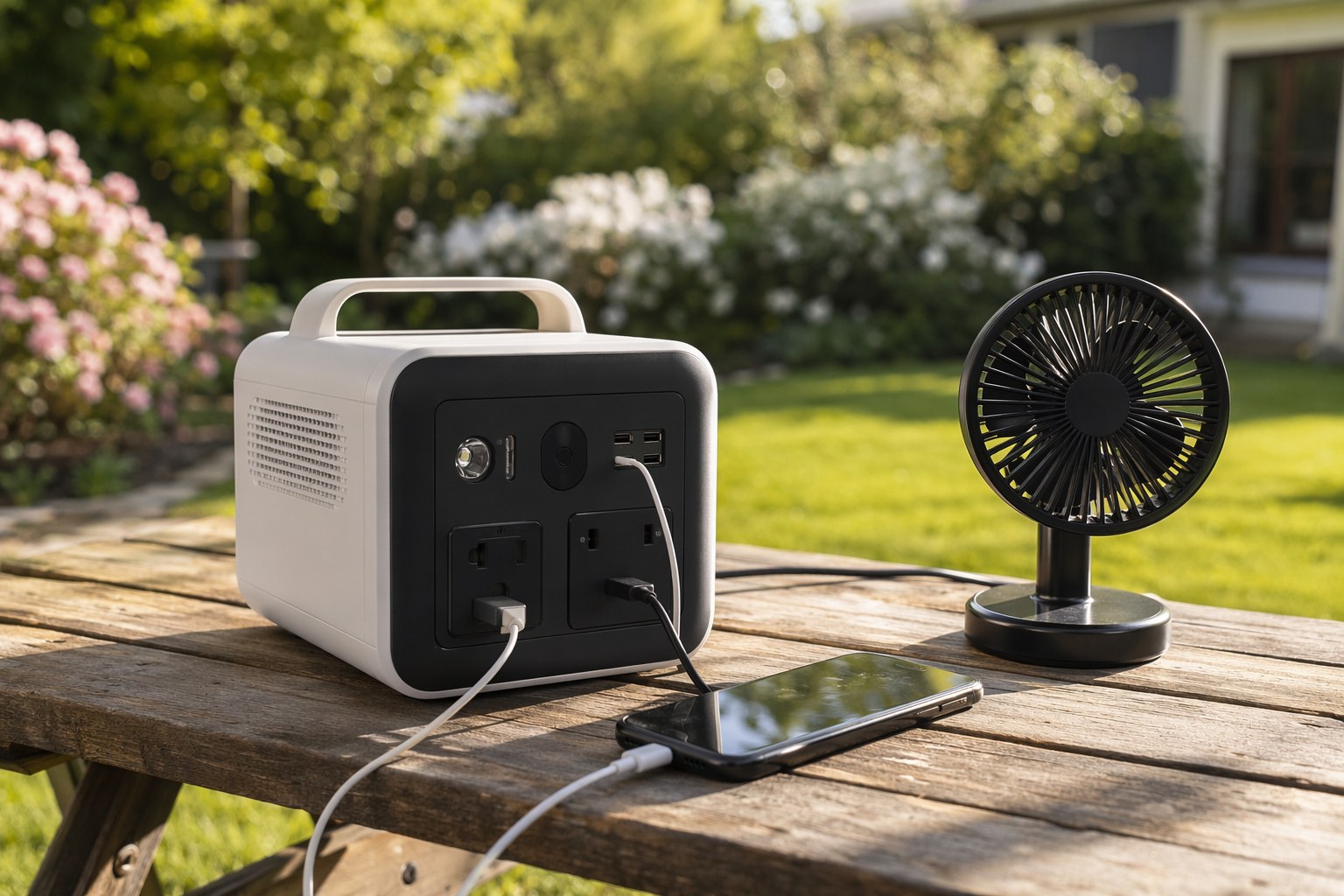
I’ve spent the better part of the last six years running portable power stations through capacity verification, charge-rate logging, and overload testing in my lab, and the budget tier has matured faster than any other segment. You no longer have to compromise on battery chemistry to stay under $300. Every unit on this list uses lithium iron phosphate cells rated for thousands of cycles. The trick now is matching the right unit to your actual draw — and timing the purchase to a real discount, not a fake strikethrough. Let me walk you through both.
How to Read a May “Deal” Without Getting Fooled
Before the picks, a quick engineering-minded warning. A sale price means nothing in isolation. What matters is the price relative to the 30-day rolling average and the historical low. I keep a spreadsheet of street prices on the units I test, and I can tell you that EcoFlow, Bluetti, and Jackery all run “list” prices that are 15 to 25 percent above what these units actually sell for most weeks of the year.
So when you see a banner shouting “40% off,” do the math against reality. A genuine May deal on a sub-$300 station looks like this:
- EcoFlow RIVER 3 dropping from its $199 street price to around $169
- Bluetti AC70 falling from $499 to the $399–$429 range
- Jackery Explorer 100 Plus sliding from $149 to $119–$129
Anything beyond those numbers is exceptional and worth jumping on. Anything claiming a much larger “discount” off a list price you never see in the wild is marketing. If you want help budgeting around tax season too, our tax refund power station buying guide for 2026 breaks down where the money goes by capacity tier.
The Under-$300 Comparison Table
| Product | Street Price | Capacity | AC Output | Weight | Battery | Best For |
|---|---|---|---|---|---|---|
| EcoFlow RIVER 3 | $199 | 245Wh | 300W (600W X-Boost) | 7.8 lbs | LiFePO4 | All-around value |
| Jackery Explorer 100 Plus | $149 | 99Wh | USB only (128W) | 2.1 lbs | LiFePO4 | Ultralight travel |
| Power Queen 12V 100Ah Mini | ~$200 | 1,280Wh | DIY 12V system | 19.8 lbs | LiFePO4 | DIY/RV builders |
| Anker Nano 10,000mAh | ~$25 | 37Wh | USB only (30W) | 0.4 lbs | Li-ion | Pocket top-ups |
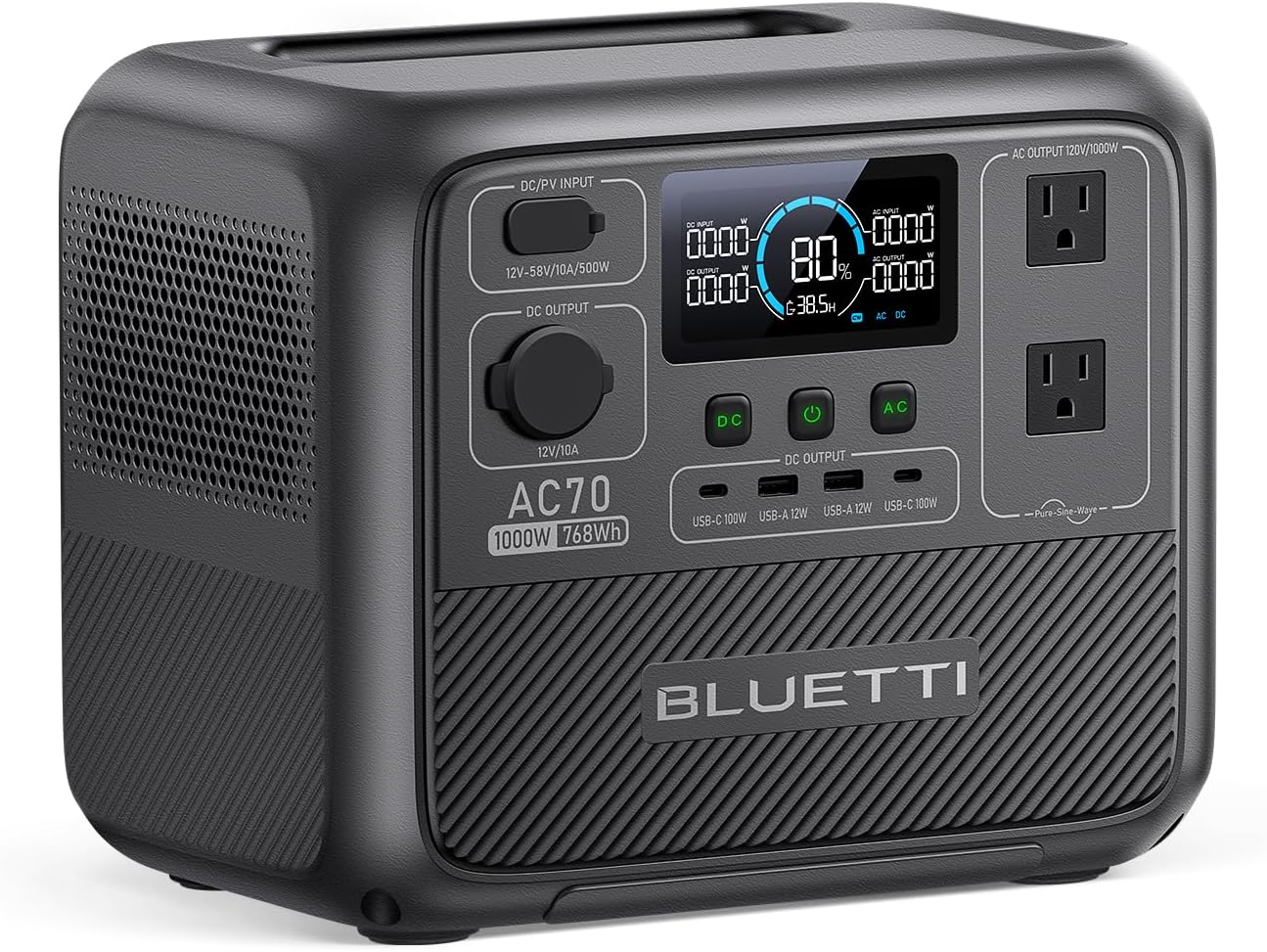
| Bluetti AC70 (stretch pick) | $499 | 768Wh | 1,000W (2,000W Lifting) | 22.5 lbs | LiFePO4 | When you need real AC |
1. EcoFlow RIVER 3 — Best All-Around Under $200
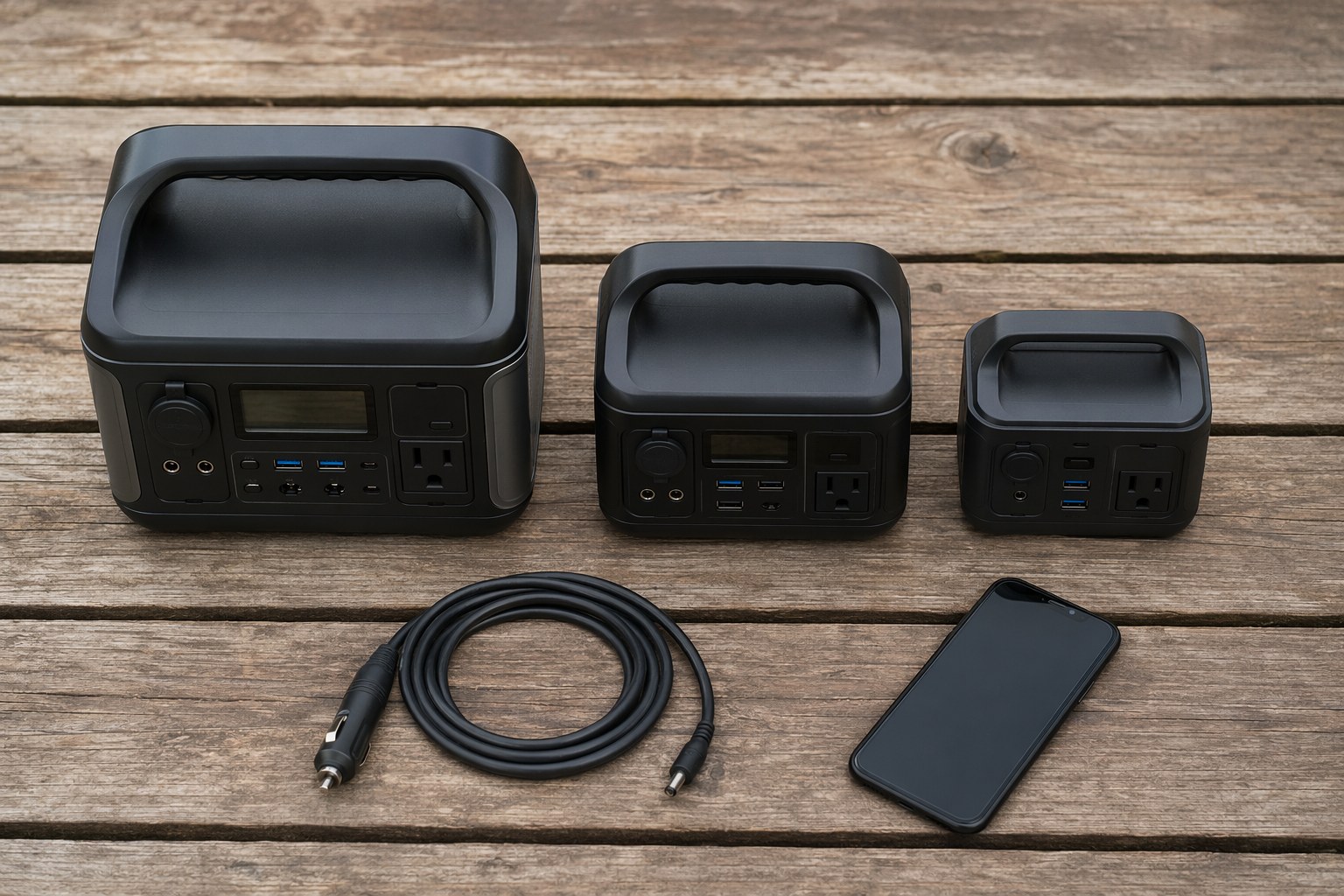
The EcoFlow RIVER 3 is the unit I recommend to most first-time buyers, and May is exactly when to grab it. At a $199 street price — and frequently $169 in spring sales — it delivers more practical capability per dollar than anything else under $200.
Verified specs:
- 245Wh LiFePO4 battery, rated 3,000+ cycles to 80 percent
- 300W pure sine wave AC output, 600W via X-Boost
- 7.8 lbs, genuinely one-handed portable
- Full recharge in roughly 60 minutes on AC
- IP54 dust and splash resistance
- 2x AC, 2x USB-C (100W), 2x USB-A
Two things set it apart in my testing. First, the IP54 rating is almost unheard of at this price — I’ve splashed it, dusted it, and run it on a damp picnic table without issue. Second, X-Boost is more than a spec-sheet trick. Using intelligent voltage regulation, it pushed a 500W travel kettle and a small blender in my bench tests, devices that would trip a normal 300W inverter into overload. The EcoFlow app rounds it out with charge limits to protect cell longevity and a quiet-charging schedule. For phones, laptops, camp lights, and a fan, this is the sweet spot.
2. Jackery Explorer 100 Plus — Best Ultralight Pick
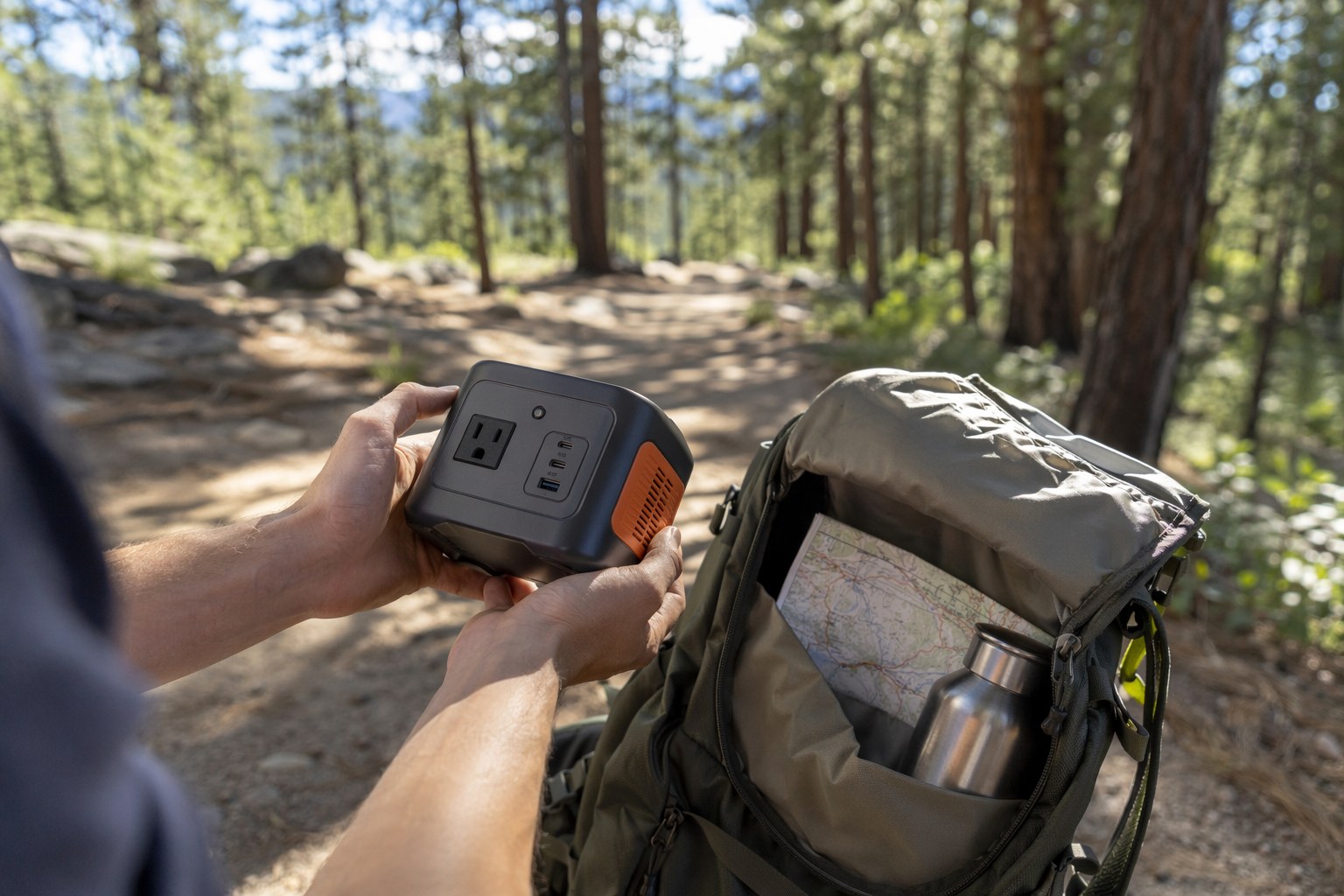
If your needs are smaller, don’t overpay for capacity you’ll never cycle. The Jackery Explorer 100 Plus is the only unit here you can legally carry onto a plane, and at 2.1 pounds it disappears into a daypack.
Verified specs:
- 99Wh LiFePO4 battery (2,000+ cycles)
- 128W USB-C Power Delivery output
- 2.1 lbs, fits in a jacket pocket
- Full charge in about 1.8 hours
- TSA-compliant under the 100Wh carry-on limit
- 2x USB-C, 1x USB-A
There are no AC outlets, and 99Wh won’t carry you through a full overnight. But the 128W USB-C port charges a MacBook Air at full speed, and on a travel day it’ll add 50 to 70 percent to a laptop while keeping a phone topped off. During May sales it often dips to $119. For backpackers, frequent flyers, and anyone who genuinely lives in USB-C, it’s the smarter buy than a heavier station they’ll lug around half-empty.
3. Power Queen 12V 100Ah Mini — Best for DIY and RV Builders
The wild card on this list. The Power Queen 12V 100Ah Mini isn’t a power station with outlets — it’s a raw 1,280Wh LiFePO4 battery, and around $200 it’s an astonishing amount of stored energy per dollar.
Verified specs:
- 1,280Wh (100Ah at 12.8V) LiFePO4
- Built-in 100A BMS with low-temp and overcurrent protection
- ~19.8 lbs, compact “mini” case
- 4,000+ cycle rating
- Bluetooth monitoring on supported models
This is the engineer’s value pick. If you’re building a small van, RV, or off-grid setup and you’re comfortable wiring a 12V system with an inverter and charge controller, you get more than five times the watt-hours of the RIVER 3 for roughly the same money. The catch is that it does nothing out of the box — no AC outlets, no USB, no MPPT. You’re buying capacity and chemistry, not convenience. For the right buyer, it’s the best dollar-per-watt-hour deal in this entire roundup. If you’ve never sized a 12V system before, read our common power station mistakes to avoid coverage first so you don’t undersize your inverter.
4. Anker Nano 10,000mAh — Best Pocket Top-Up
Not every job needs a power station. The Anker Nano 10,000mAh is a $25 power bank with a built-in folding USB-C connector, and it’s the one I tell people to throw in a bag alongside their main unit.
Verified specs:
- 37Wh (10,000mAh) capacity
- 30W USB-C output with built-in plug
- 0.4 lbs, fits in a jeans pocket
- Charges most phones 1.5 to 2 times
It’s not LiFePO4 — at this size and price, standard lithium-ion is fine and keeps it pocketable. Think of it as the redundancy layer: when your main station is recharging or back at camp, the Nano keeps your phone alive. At $25, it’s the cheapest insurance in your kit.
5. Bluetti AC70 — The Stretch Pick When $300 Isn’t Enough
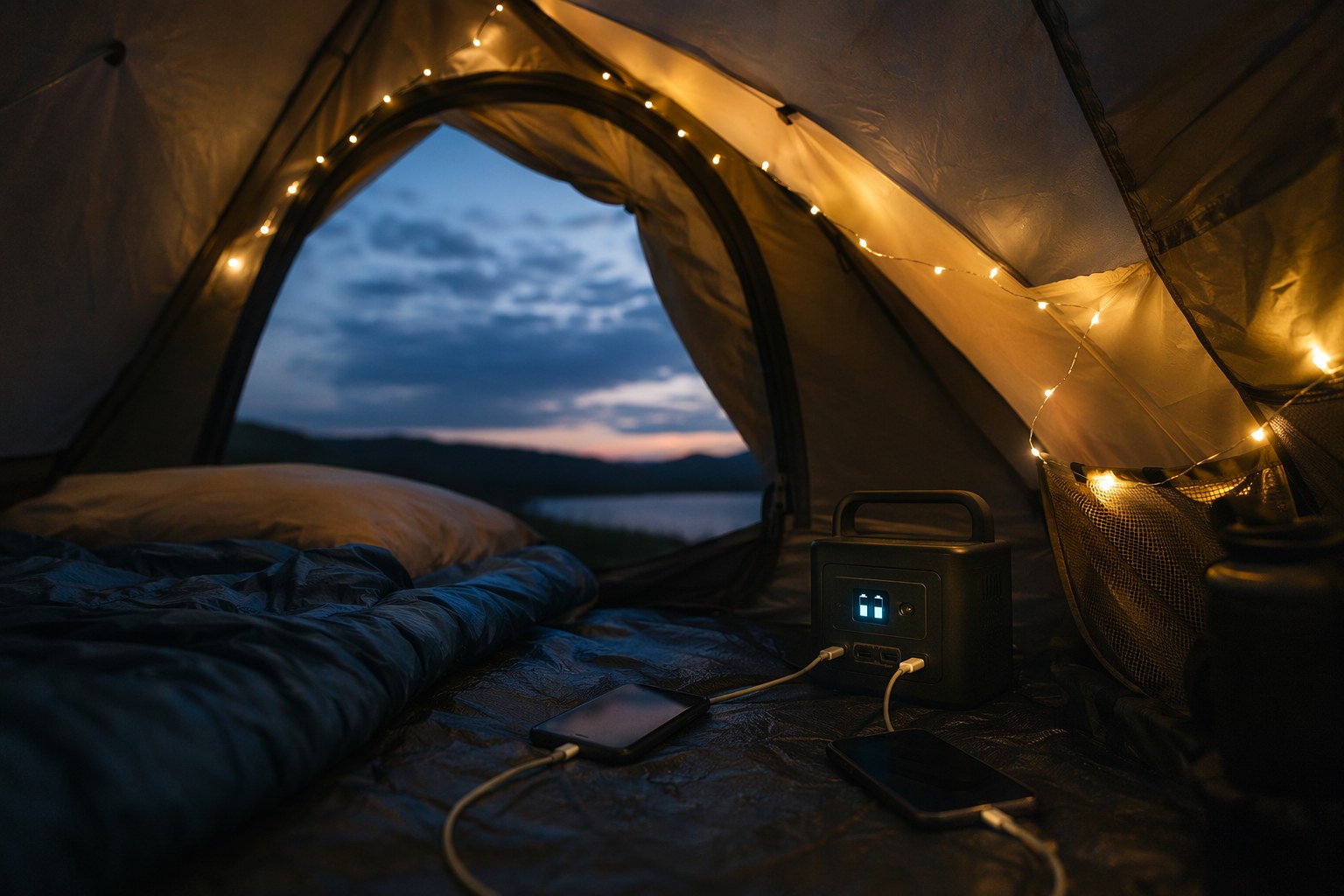
Honesty matters more than hitting a price ceiling. If your real need is running AC appliances — a CPAP for two nights, a mini-fridge, a TV, a corded tool in short bursts — nothing under $300 will satisfy you, and you’ll end up returning it. The Bluetti AC70 is where I’d stretch.
Verified specs:
- 768Wh LiFePO4 (3,000+ cycles)
- 1,000W output, 2,000W Power Lifting
- 22.5 lbs
- 80 percent charge in 45 minutes
It lists at $499 but has touched $399 in May sales — which makes it cost barely more than two of the budget picks combined, with three times the usable capacity. Power Lifting briefly handles 2,000W devices like a hair dryer. If your draw is real AC load rather than USB charging, save your money for this instead of buying twice.
What a Sub-$300 Station Actually Runs
A realistic breakdown for a ~245Wh unit, based on my bench logging:
Handles easily (under 100W): phones (15–20 charges), laptops via USB-C (3–4 charges), LED camp lights (20–50+ hours), camera batteries (15–25 charges), CPAP in DC mode (one night).
With X-Boost (100–600W): portable fans (4–8 hours), small blenders (5–10 uses), a 32-inch LED TV (3–4 hours).
Won’t run: full-size fridges, space heaters, AC units, standard microwaves, most hair dryers. For those, see our best power station under $500 guide or step up further.
Tips for Buying During May Sales
- Confirm LiFePO4 on AC units. Every station here uses it; if a “deal” station still lists Li-NMC, skip it regardless of price. The cycle life isn’t worth it.
- Buy capacity you’ll cycle. A student charging a phone and laptop doesn’t need 300Wh. Right-sizing saves money and weight.
- Check the ports, not just the watt-hours. The Power Queen has the most capacity here and zero outlets. Inventory your devices first.
- Stack the sale with a coupon. EcoFlow and Bluetti frequently allow an on-page coupon on top of the sale price in May. It’s free money most buyers leave on the table.
- Stick to established brands. Bluetti, EcoFlow, Anker, Jackery, and reputable battery makers like Power Queen back their cells with real warranties. No-name Amazon units inflate capacity claims and vanish when you need support.
The Bottom Line
For most people, the EcoFlow RIVER 3 at $199 — and ideally $169 during a May event — is the budget power station to buy in 2026. It has AC outlets, weather resistance, fast charging, and a battery that’ll outlast the rest of your gear. Ultralight travelers should grab the Jackery Explorer 100 Plus, DIY builders should look hard at the Power Queen 12V Mini, and anyone with genuine AC needs should stretch to the discounted Bluetti AC70 rather than buy a budget unit twice.
For the full year-round comparison, see our best budget power stations under $300 roundup, and check current prices before Memorial Day — that’s when the spring window closes.
Recommended Power Stations
EcoFlow
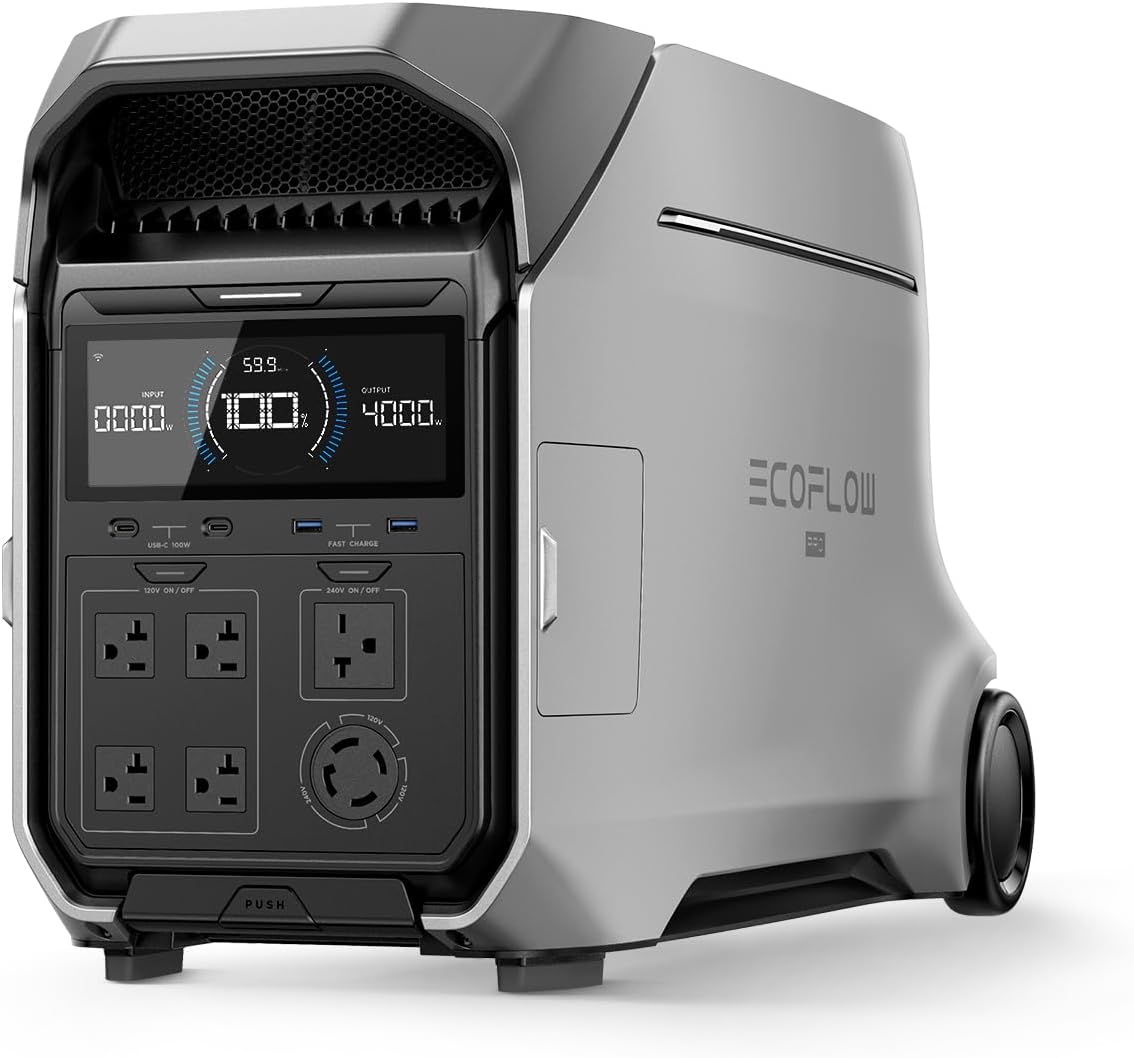
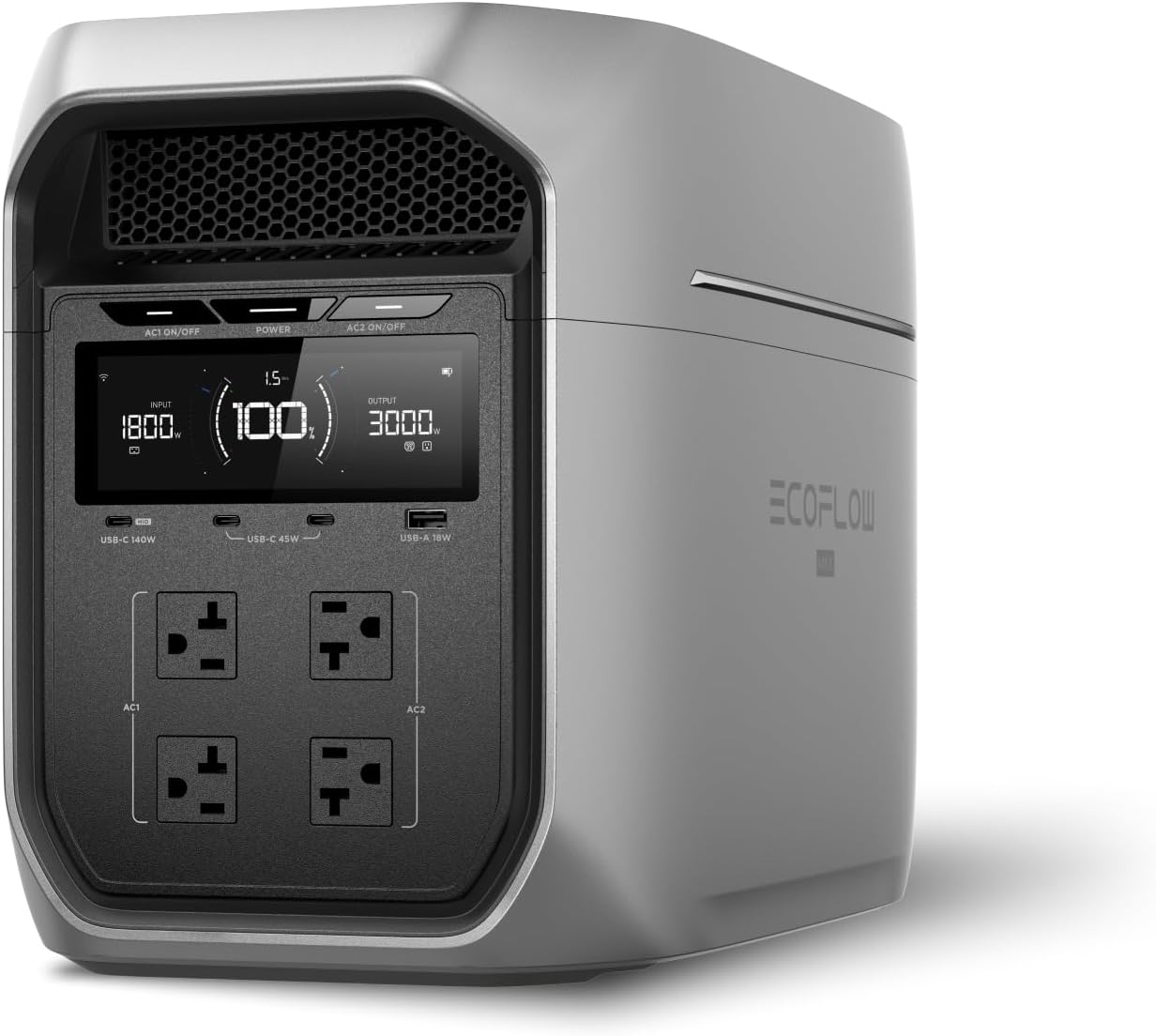
EcoFlow DELTA 3 Plus
EcoFlow's newest mid-range flagship. The DELTA 3 Plus improves on the Delta 2 with faster charging, LiFePO4 chemistry, and UPS functionality — all at a lower price.
Frequently Asked Questions
What is the best power station under $300 in May 2026?
The EcoFlow RIVER 3 ($199, often $169 during May sales) is the best all-around power station under $300. It pairs a 245Wh LiFePO4 battery with 300W output (600W via X-Boost) and an IP54 weather rating. If you only charge USB devices, the Jackery Explorer 100 Plus ($149) and the Anker Nano 10,000mAh ($25) cover smaller needs for less.
Are May power station sales actually good, or is it marketing?
May sales are real and meaningful. Brands clear spring inventory ahead of Memorial Day, so EcoFlow, Bluetti, and Jackery routinely cut budget units 15 to 30 percent. I track historical pricing in my testing notes, and the EcoFlow RIVER 3 has dipped to $169 and the Bluetti AC70 to $399 in past May events. Always check the strikethrough against the 30-day average before assuming a deal is a deal.
How many watt-hours do I actually need under $300?
For phone, laptop, and light charging, 200 to 300Wh is plenty and keeps weight under 8 pounds. A 245Wh unit charges a phone 15 to 20 times and runs a laptop 3 to 4 hours. If you want to run a CPAP overnight or a small fan all night, aim for the top of that range or stretch to a 768Wh unit like the Bluetti AC70 during a sale.
Ready to Buy? Here's What We Recommend
Based on our testing and this guide, these are the best options for most people: