Guide
How to Spend Your Tax Refund on Portable Power: 2026 Buying Guide

TL;DR
The average US tax refund is about $3,000. Here's how to turn yours into a portable power setup — with tiered recommendations from $200 to $2,000+.
Tax season is here, and if you’re among the roughly 100 million Americans expecting a refund, you’re sitting on an average of about $3,000. Some people blow it on something forgettable. Others invest in something that keeps working for them for the next decade.
A portable power station falls firmly in the second category. Whether you’re prepping for storm season, gearing up for camping, or just tired of feeling helpless during outages, your tax refund can buy a serious upgrade to your household resilience. Here’s exactly what to buy at every budget level.
Why Spring Is the Best Time to Buy
Before we get into recommendations, it’s worth noting that right now is genuinely the best time of year to buy portable power equipment. Here’s why:
- New models just launched. Brands announce new products at CES every January, which means last-generation models get discounted and new models are freshly available.
- Full inventory. Unlike summer (camping rush) or fall (hurricane season), shelves are fully stocked right now. Every model, every color, every bundle is available.
- Pre-season pricing. Come June, popular models routinely sell out or jump 10-20% in price. Buying now locks in the lowest prices of the year.
- Time to test. Buy now and you have months to learn your system, test solar charging, and work out any issues before you actually need it during a storm or camping trip.
Use our power calculator to figure out exactly how much capacity you need based on the devices you want to run. Then match that to a budget tier below.
Tier 1: $200-$500 — The Smart Starter ($200-500 Refund)
If your refund is modest or you’re just dipping your toes in, this tier gets you genuinely useful equipment.
Best Budget Pick: EcoFlow RIVER 3 ($199)
The EcoFlow RIVER 3 is the best entry point into portable power. At 245Wh with LiFePO4 chemistry, it charges phones dozens of times, runs a laptop for hours, and handles LED lights and small fans easily. It weighs under 8 pounds and charges fully in about an hour. The IP54 rating means you can use it outdoors without babying it.
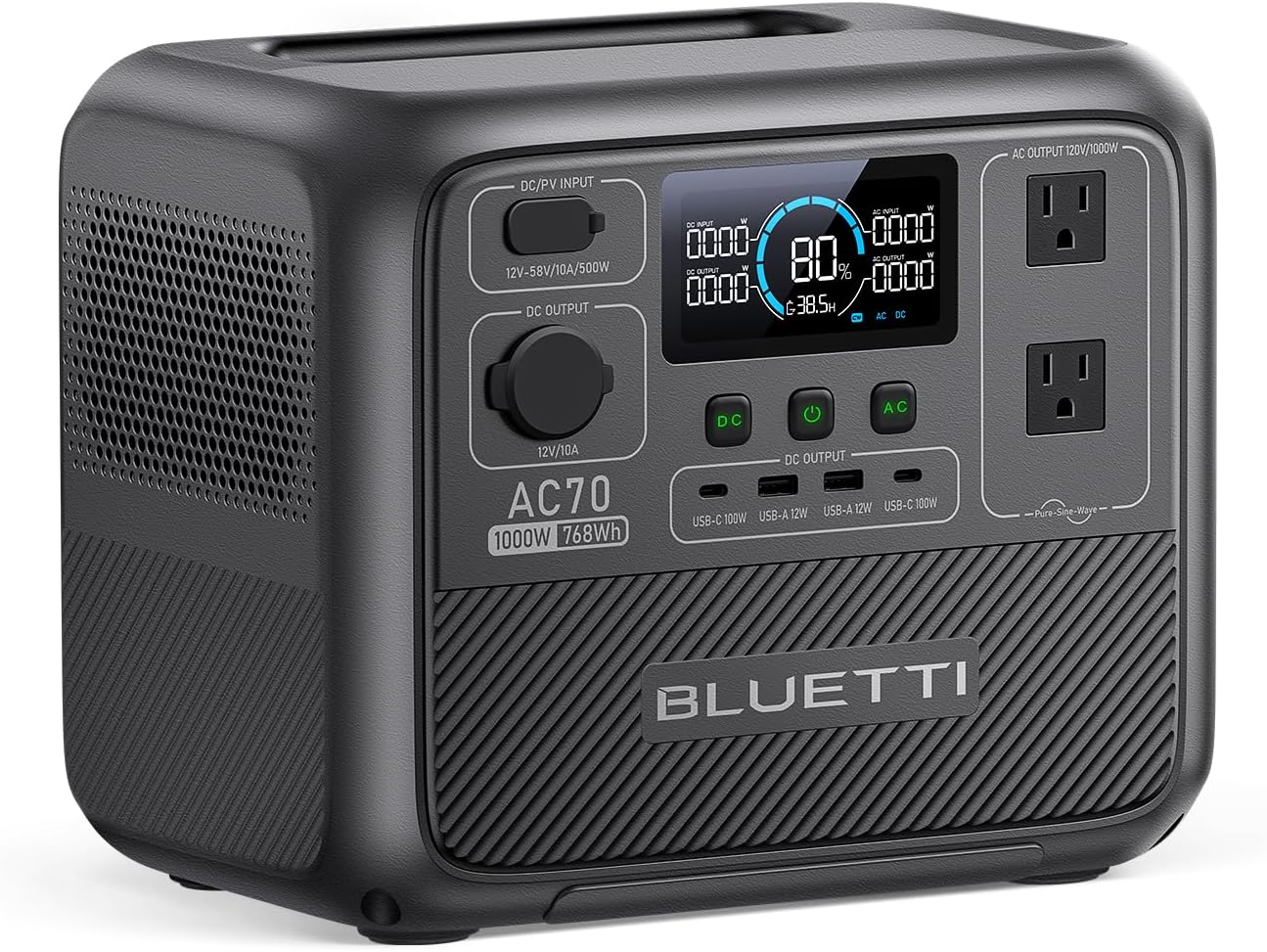
Best Under $500: Bluetti AC70 ($499)
The Bluetti AC70 is where things get serious. You get 768Wh of LiFePO4 capacity, 1,000W continuous output (2,000W with Power Lifting), and an 80% charge in 45 minutes. This unit handles weekend camping trips, overnight outages, and even runs small appliances that normally require much bigger stations. It’s our top pick in the best power station under $500 roundup for good reason.
Also Consider: A Good Power Bank
If you just want to keep phones and tablets alive, the Anker Nano 10,000mAh or INIU 25,000mAh cost well under $50 and cover the basics. Pocket one for travel and throw the savings toward a solar panel later.
Tier 2: $500-$1,000 — The Sweet Spot
This is where most people should land. A thousand dollars buys a power station that runs real appliances and a solar panel that makes it self-sustaining.
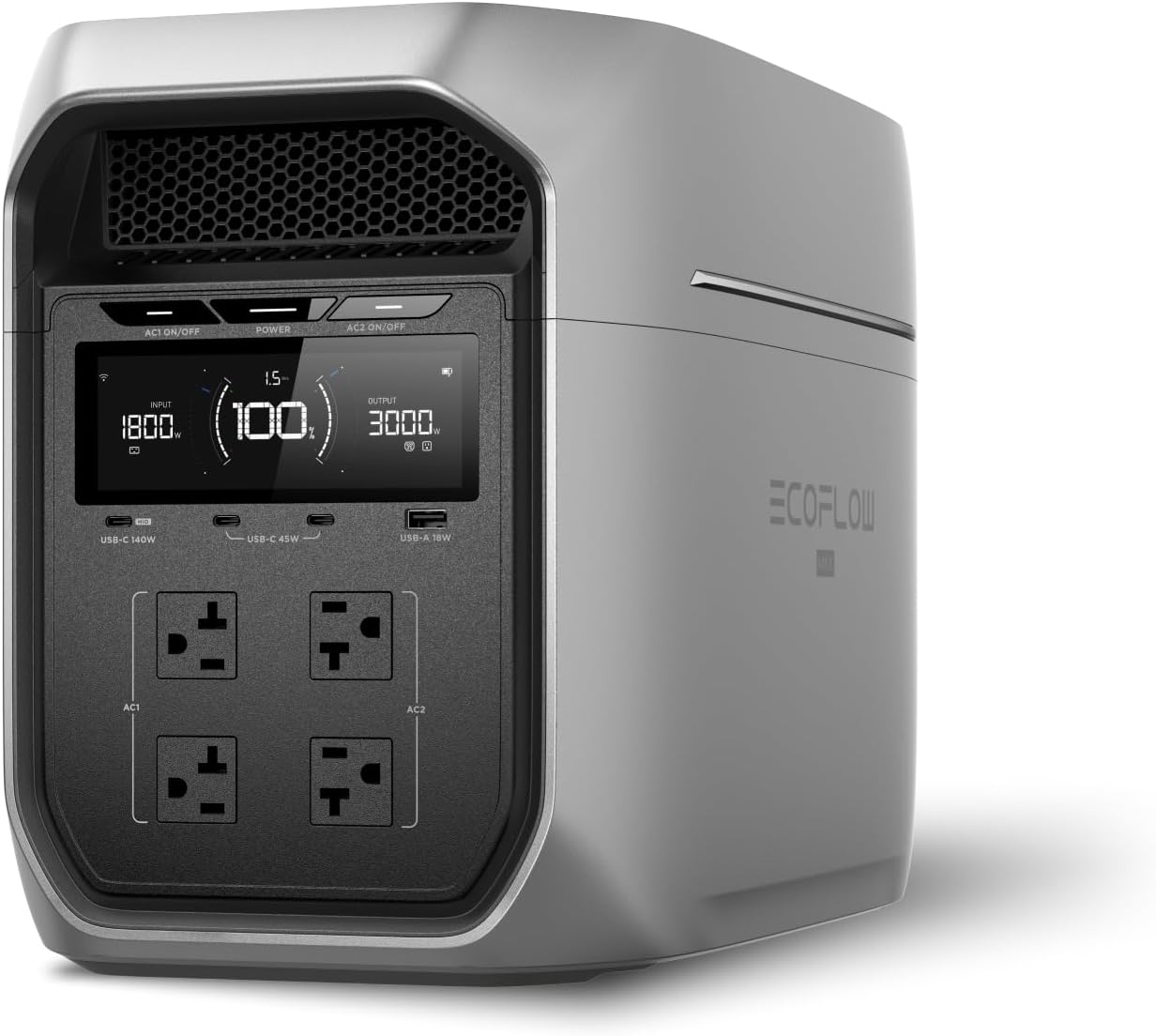
EcoFlow DELTA 3 Plus ($649)
The EcoFlow DELTA 3 Plus is our top pick for most households. With 1,024Wh of capacity, 1,800W output, and a 56-minute full charge, it runs a fridge for 12-18 hours, powers a CPAP machine for multiple nights, and handles everything from power tools to coffee makers. It’s also expandable up to 5kWh with extra batteries if you decide to scale up later.
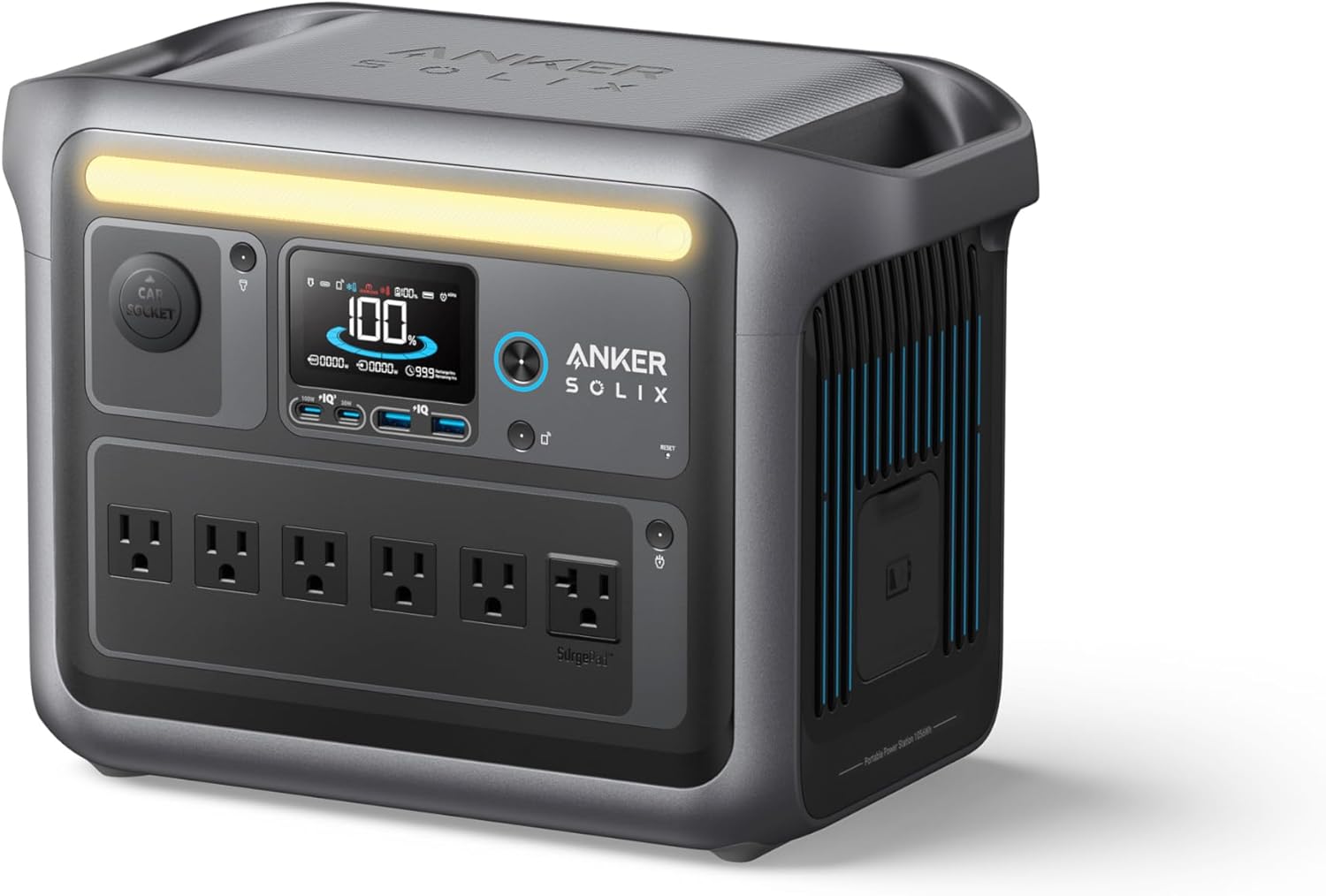
Anker SOLIX C1000 ($699)
The Anker SOLIX C1000 delivers 1,056Wh with a beefy 1,800W output and Anker’s rock-solid build quality. If you prefer a brand that’s been making reliable charging hardware for over a decade, this is your pick.
Add a Solar Panel
With either station, you have budget left for a solar panel. The Jackery SolarSaga 200W or Bluetti PV200 runs around $300-350 and recharges a 1,000Wh station in a single sunny day. Solar turns a countdown timer into a renewable power plant — especially valuable during multi-day outages. Check our solar panel compatibility guide before buying.
Tier 3: $1,000-$2,000 — The Serious Setup
Now we’re building a real power system. This tier keeps your household running through extended outages and powers serious camping setups.
Bluetti Elite 200 V2 ($1,099)
The Bluetti Elite 200 V2 packs 2,073Wh into a single unit with a 6,000+ cycle LiFePO4 battery — that’s potentially 15+ years of daily use. It runs a full-size fridge for 24-48 hours and handles multiple appliances simultaneously.
Jackery Explorer 2000 Plus ($1,999)
The Jackery Explorer 2000 Plus brings 2,042Wh of expandable capacity (up to 24kWh with add-on batteries) and 3,000W output. If you want room to grow into a whole-home system, this is a strong foundation.
Pair either with: 200-400W of solar panels and a few accessories (heavy-duty extension cords, a surge protector, LED lanterns). At this budget, you have a setup that handles camping trips, home backup, and everything in between.
Tier 4: $2,000+ — Whole-Home Backup
If your refund is large (or you’re combining it with savings), you can build a system that replaces a gas generator entirely.
EcoFlow DELTA Pro 3 ($1,999)
The EcoFlow DELTA Pro 3 is the flagship. At 4,096Wh with expansion up to 48kWh, it delivers 4,000W of output and 240V capability — meaning it can run virtually anything in your home, including well pumps and central heating blowers. Add an extra battery ($1,599) and a 400W solar panel ($399), and you have a silent, fume-free whole-home backup system that recharges itself daily.
This is the tier where you stop worrying about outages entirely. It’s also the setup we recommend for anyone with medical devices like CPAP machines who can’t afford downtime.
Use Our Tools to Decide
Not sure which tier is right for you? Start here:
- Power Calculator — Enter the devices you need to run and get an exact capacity recommendation.
- Compare Tool — Put any two (or more) power stations side by side to see specs, pricing, and ratings.
- Emergency Checklist — Make sure your entire household is prepped, not just the power station.
The Bottom Line
Your tax refund is a rare chance to make a big purchase without dipping into your budget. A portable power station is one of the few things you can buy that genuinely makes your life better year-round — at the campsite, during a blackout, on a road trip, or just in your backyard. The $500-$1,000 sweet spot (Tier 2) covers most people, but whatever your refund size, there’s a setup above that matches it perfectly. And buying now, in early spring, means you’ll have the best prices, full selection, and plenty of time to learn your gear before you need it.
Recommended Power Stations
EcoFlow
EcoFlow DELTA 3 Plus
EcoFlow's newest mid-range flagship. The DELTA 3 Plus improves on the Delta 2 with faster charging, LiFePO4 chemistry, and UPS functionality — all at a lower price.
Frequently Asked Questions
Is a power station a good investment?
Yes. A quality LiFePO4 power station lasts 3,000-6,000 charge cycles (10+ years of daily use), costs nothing to run on solar, and pays for itself during a single extended outage by saving hundreds in spoiled food, hotel stays, or generator fuel. It also serves double duty for camping, tailgating, and remote work — making it one of the most versatile purchases you can make.
When is the best time to buy a power station?
Late winter through early spring (February-April) is the best time. Brands launch new models at CES in January, pushing last-gen prices down. Inventory is fully stocked, and you're ahead of the summer demand surge when camping season and hurricane season drive prices up and sell out popular models.
How much should I spend on my first power station?
For most people, $500-$1,000 gets the best balance of capability and value. In that range, you get 1,000Wh of LiFePO4 capacity, fast charging, and enough output to run a fridge, CPAP, or power tools. If you only need phone and laptop charging, $200 gets a solid entry-level unit. Use our power calculator to figure out exactly what capacity you need.
Ready to Buy? Here's What We Recommend
Based on our testing and this guide, these are the best options for most people: