Guide
May Long Weekend: The Perfect Portable Power Setup for 3-Day Camping Trips

TL;DR
A van-dweller's real-world guide to sizing a power station and solar panels for a 3-day May long weekend camping trip. Includes family power budgets, exact runtime math, and the gear that actually holds up.
The May long weekend is the trip I plan my whole spring around. After three winters of full-time van life and 34 states behind me, I’ve learned that the first warm-weather trip of the year is exactly when people get their power setup wrong. They either overpack a 50-pound battery they can barely lift, or they bring a tiny unit, run the fridge dry by Saturday night, and spend Sunday hunting for an outlet.
This is the guide I wish someone had handed me before my first long weekend out. It’s not theory. It’s the exact setup, the real power budget, and the runtime math I use when I roll out for a three-day trip with friends or a family in tow.
First, Build a Real Power Budget (Not a Guess)
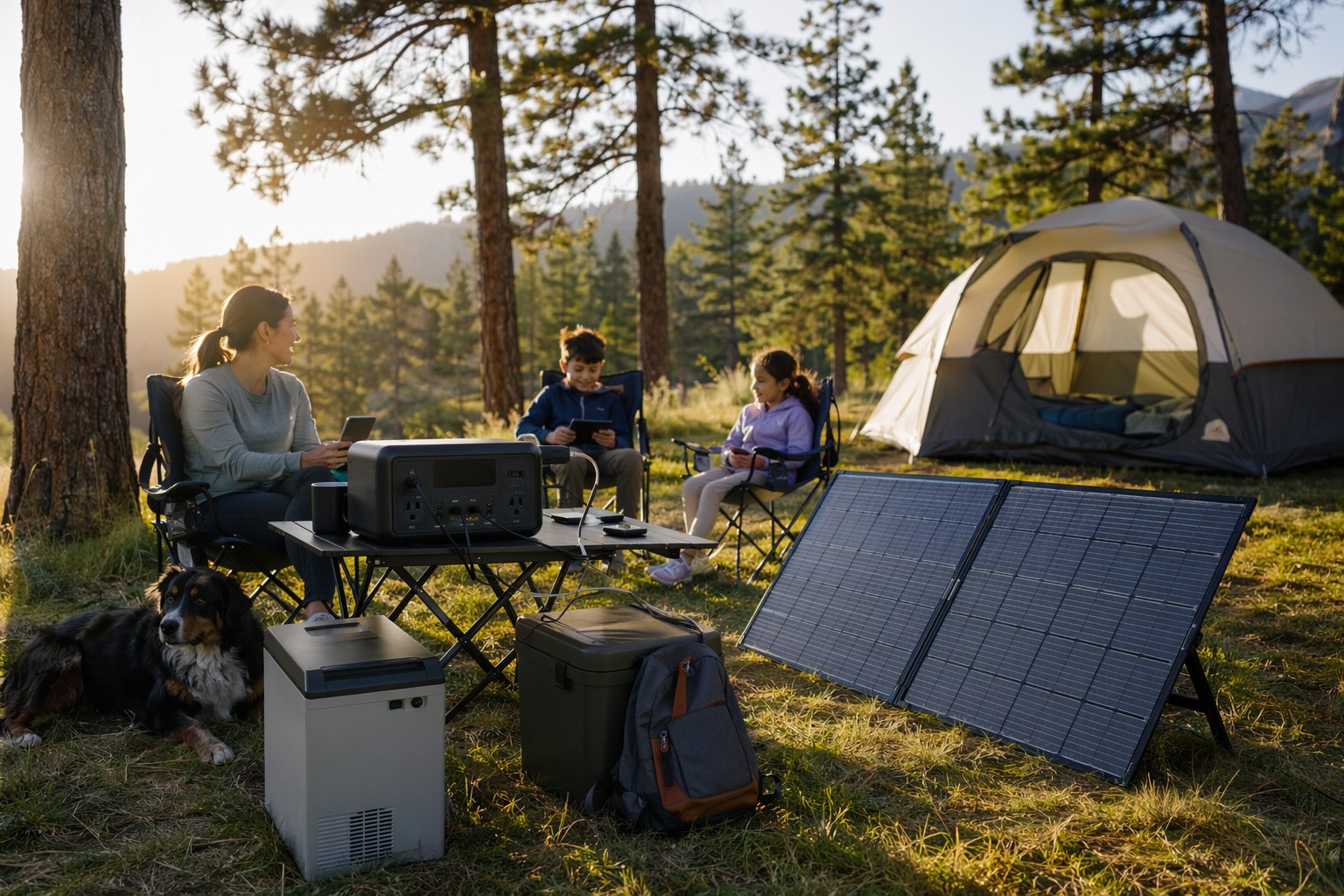
Every good setup starts with one honest question: what are you actually going to plug in? Three days is long enough that small daily draws add up fast. Here’s the budget I see most often on a typical family long weekend.
| Device | Watts | Daily Use | Daily Wh |
|---|---|---|---|
| 4x phone charging | 15W each | ~1.5h each | 90 Wh |
| 12V compressor fridge | 45W avg (cycles) | 24h | 400 Wh |
| LED lantern + string lights | 15W | 4h | 60 Wh |
| Portable fan (warm afternoons) | 15W | 6h | 90 Wh |
| Electric kettle (morning coffee) | 1,200W | 5 min | 100 Wh |
| Bluetooth speaker | 5W | 4h | 20 Wh |
| Daily total | ~760 Wh |
Add a 20 percent buffer for inverter losses and the inevitable “can I charge my drone too?” moment, and you’re looking at roughly 900Wh a day. Over three days, that’s about 2,700Wh of total demand.
That number scares people into buying enormous batteries. Don’t. The trick isn’t carrying three days of energy. It’s carrying one good day of capacity and refilling it with the sun. If you’ve never built a budget like this, walk through our guide to charging a power station with solar panels before your trip so the numbers click.
The Power Station: Why 1,000Wh Is the Long-Weekend Sweet Spot
A 1,000Wh class station hits the rare balance of “covers a full family day” and “one person can actually carry it.” That last part matters more than the spec sheet suggests when your campsite is 80 yards from the car.
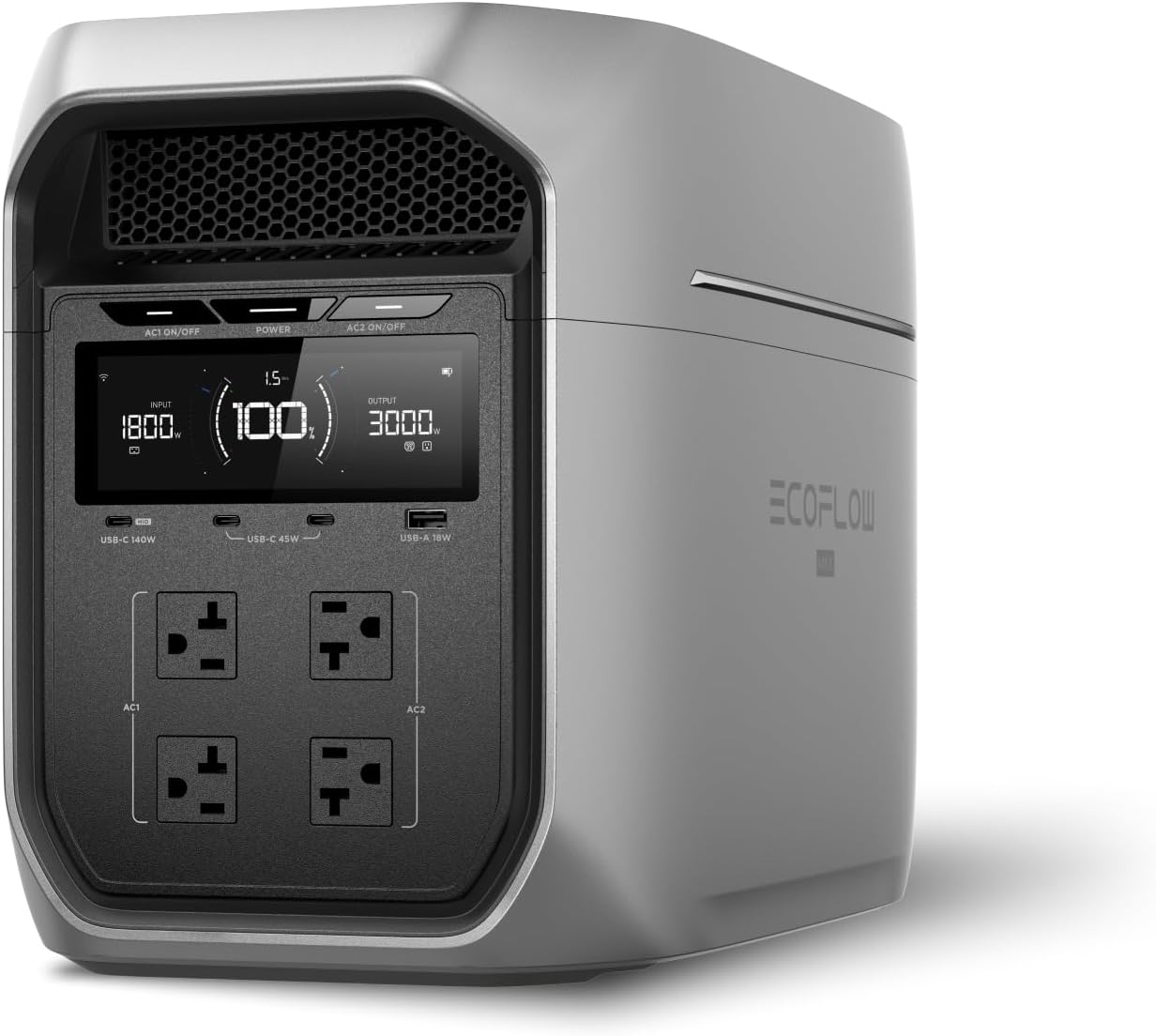
My daily driver, and the one I bring on long weekends, is the EcoFlow DELTA 3 Plus. At 1,024Wh, 1,800W output, and just 17.6 pounds, it’s lighter than units half its capacity and recharges from a panel at up to 500W. I’ve run it on a two-week loop through canyon country, and it handles a kettle, a fridge, and four phones without flinching.
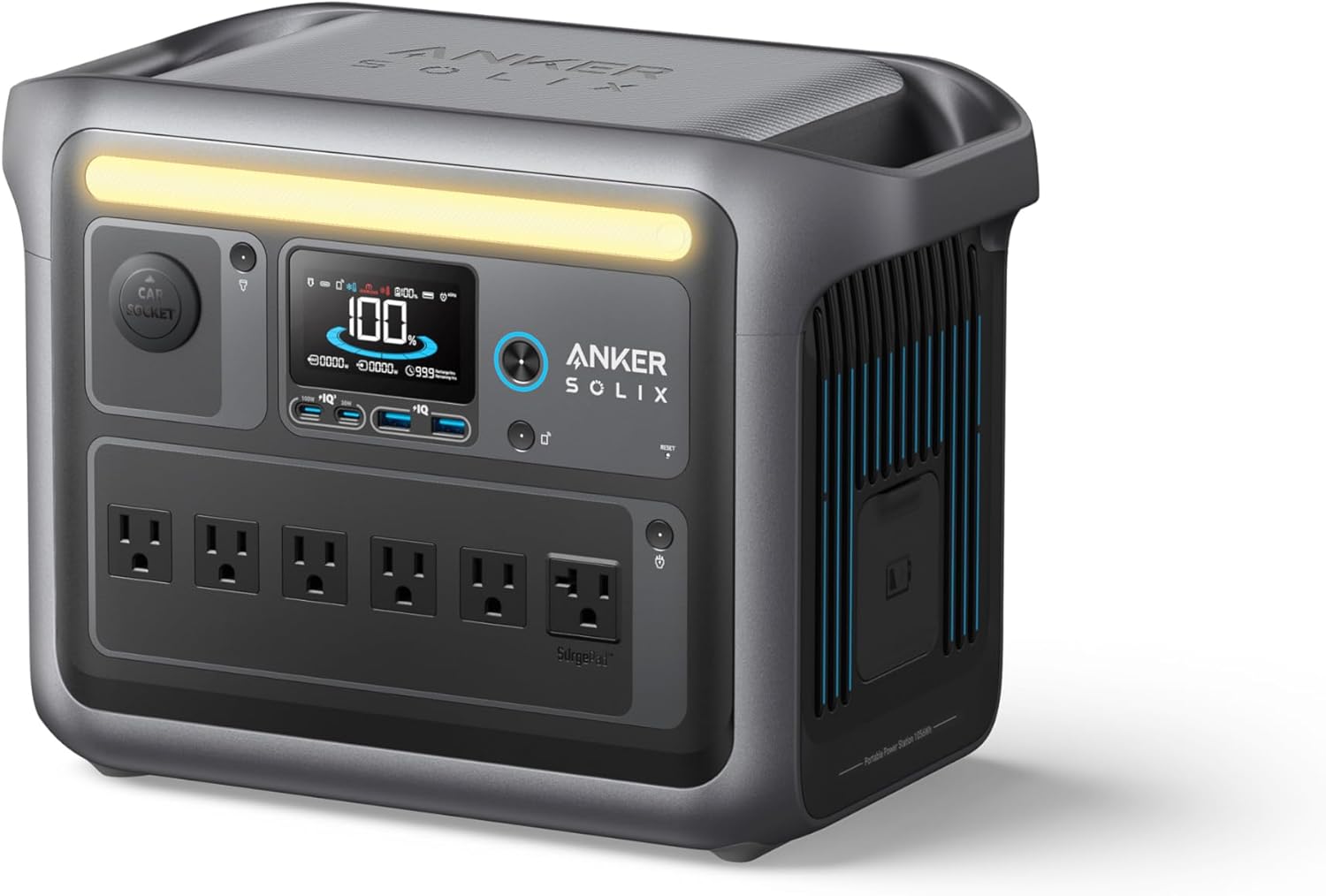
The other unit I’d happily hand a friend is the Anker SOLIX C1000. It’s 1,056Wh and has six AC outlets instead of five, which sounds minor until everyone at camp wants to top up at once. At around 27 pounds it’s heavier than the EcoFlow, but the extra ports earn their keep on a group trip.
Either one gets you through roughly a day and a half of family use on a single charge. The solar is what turns that into three comfortable days. For more model-by-model comparisons, my family camping power setup write-up covers a full year of testing across four different stations.
The Solar Panel: Your Daily Refill
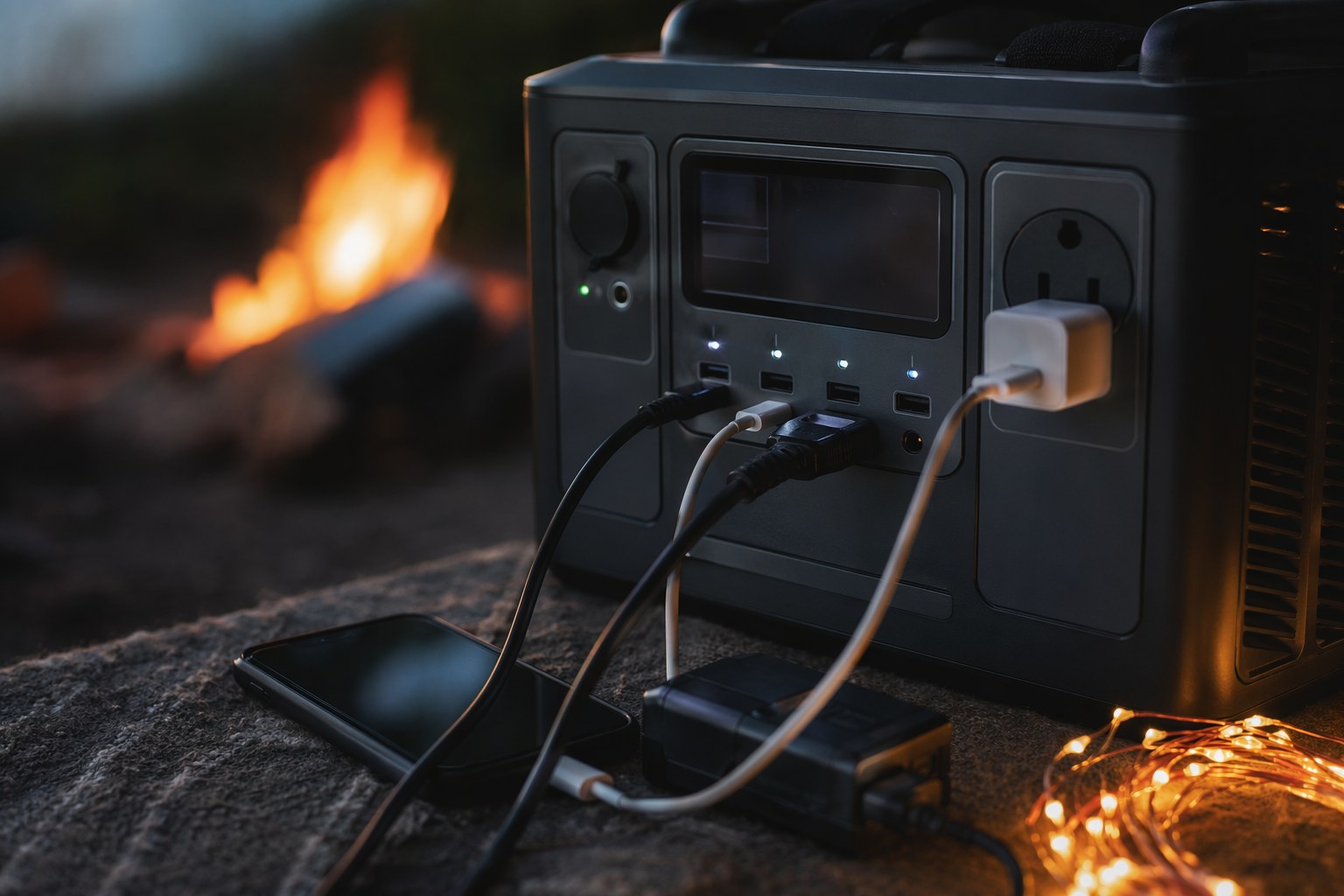
Here’s the mindset shift that makes long-weekend camping effortless. Without solar, your battery is a fuel tank that only empties. With one good panel, it becomes a checking account with daily income.
A 200W foldable panel is the right size for a 1,000Wh station. On a clear May day, with the panel repositioned toward the sun a couple of times, you’ll realistically capture 600 to 900Wh. That covers most or all of a modest daily draw, which is exactly why I never leave for a multi-night trip without one.
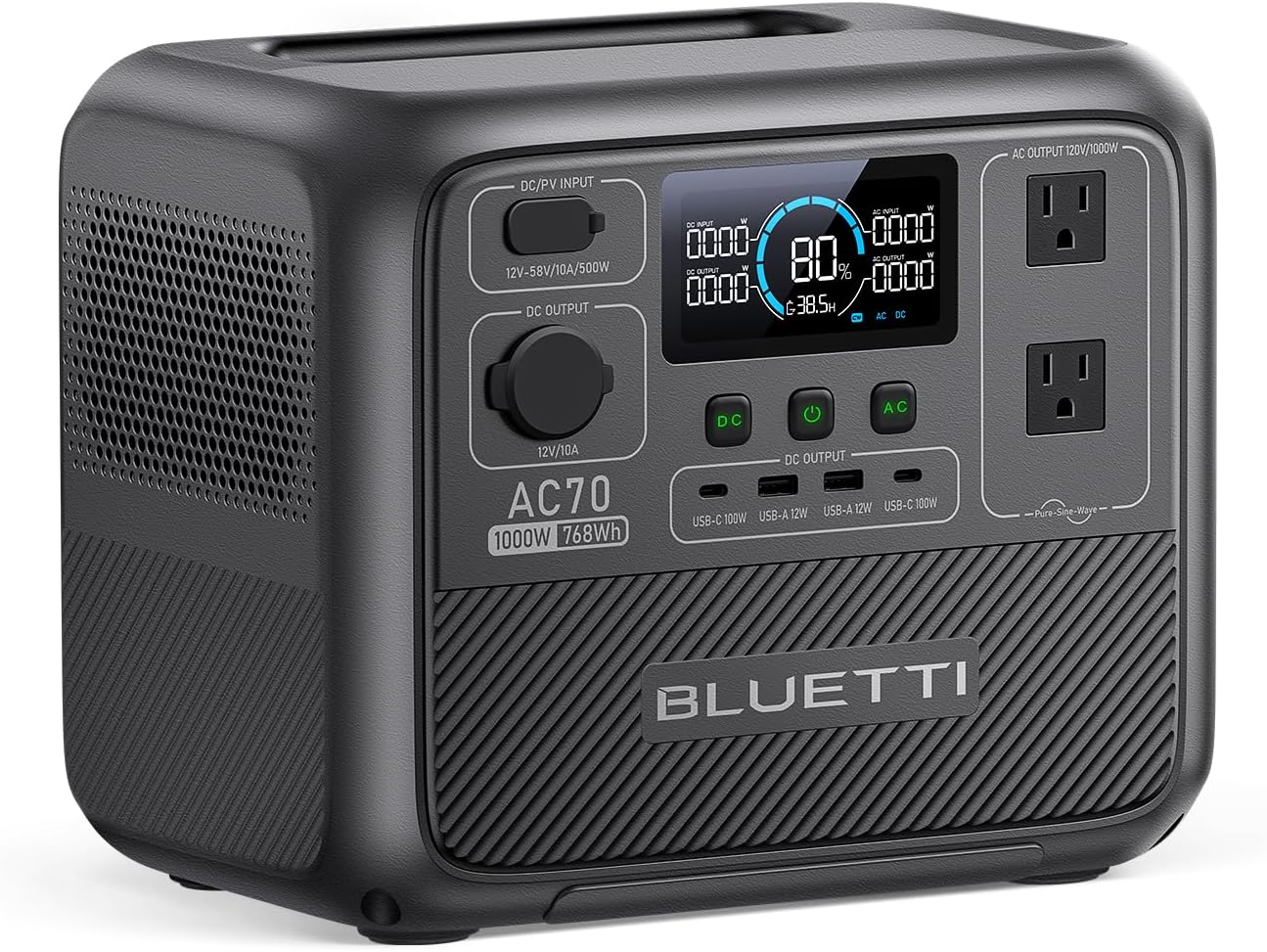
My go-to is the EcoFlow 220W Bifacial Solar Panel. The bifacial design grabs a little reflected light off the ground, and it pairs cleanly with the DELTA 3 Plus. If you’re in the Jackery ecosystem, the Jackery SolarSaga 200W is a proven performer that consistently puts out 140-160W in direct sun. And for Bluetti owners, the Bluetti PV200 is a rugged, well-built 200W folding panel that holds up to being staked out in spring wind.
May is genuinely a great month for solar. The sun is high, days are long, and the air hasn’t hit summer’s heat and haze yet. Spring panels often outperform summer ones simply because there’s less atmospheric junk between you and the sun.
My Exact 3-Day Loadout
After dozens of long weekends, this is what actually lives in my rig for a three-day trip:
- Power station: EcoFlow DELTA 3 Plus (1,024Wh) or Anker SOLIX C1000 (1,056Wh)
- Solar: One 200W foldable panel (EcoFlow 220W, SolarSaga 200W, or Bluetti PV200)
- 12V fridge: Alpicool C20 or similar, pre-cooled 24 hours before leaving
- Backup: One 24,000mAh USB-C power bank for the daypack
- Cables: 4x USB-C, 2x 10-foot MC4 extensions so I can park the panel in sun while the station sits in shade
- Lighting: LED lantern plus solar-charged string lights
- Vehicle charger: Car adapter cable in the glovebox as an emergency top-up
Total power system weight lands around 33 pounds, and the whole kit runs about $1,000 to $1,200. That’s a one-time cost that pays for itself in cold food and zero generator noise across years of trips.
The Three-Day Runtime Plan
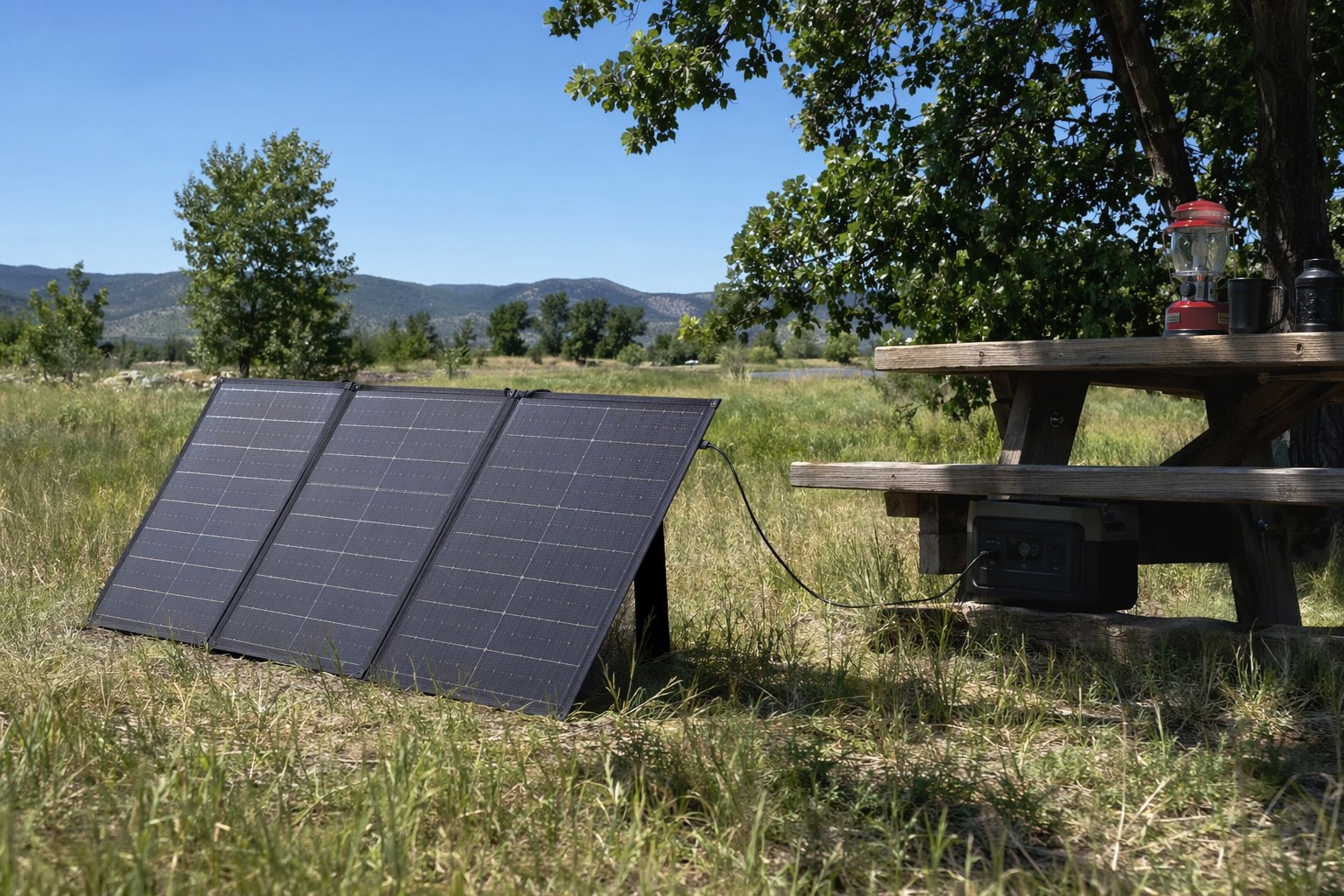
Here’s how a real long weekend actually plays out, hour by hour, energy-wise.
Day 1 (arrive afternoon, station at 100%): You set up camp, plug in the fridge, charge phones, run lights at night. You’ll use roughly 600-700Wh by morning since the fridge only ran a partial day. You wake up around 70-75 percent.
Day 2 (first full day): Deploy the panel at 8 AM. The fridge, lights, fan, and morning kettle pull about 900Wh over the day, but your panel feeds back 600-900Wh. You end the night within 10-15 percent of where you started. This is the magic, your battery barely moves.
Day 3 (pack-out day): You’re running light, the panel tops you off in the morning, and you drive home with a half-full station and no anxiety.
The failure mode I see constantly: people don’t deploy the panel until 10 or 11 AM, lose three of the best solar hours, and then wonder why they’re at 40 percent by dusk. Get the panel out at sunrise and reposition it after lunch. That alone is worth several hundred watt-hours.
Common Long-Weekend Mistakes to Skip
A few things I’ve learned the hard way so you don’t have to:
- Don’t run a space heater or AC off a 1,000Wh unit. A 1,500W heater drains it in 40 minutes. For cold May nights, use a good sleeping bag, not the battery.
- Turn off the inverter when nothing’s on AC. Idle inverters sip 10-30W continuously, which is 240-720Wh wasted over three days.
- Keep the kettle, lose the toaster. High-wattage cooking gear is fine for a 5-minute kettle but wasteful for anything longer. Use the camp stove.
- Cover the station from rain. None of these are waterproof. A simple dry bag saves a $650 unit during a surprise spring shower.
- Pre-cool the fridge at home. Cooling a warm fridge from scratch in the field can double its first-day draw.
For my full pre-departure list, the spring camping power checklist covers everything from cable checks to pollen on your panels.
Frequently Asked Questions
Can two people get away with just a power bank instead of a station? If you’re tent camping with no fridge and minimal needs, a single 24,000mAh power bank can cover two phones and a headlamp for a weekend. But the moment you want cold food or to charge more than a couple of devices, a 1,000Wh station is the right tool. The power bank is a complement, not a replacement.
What if it’s cloudy the whole weekend? Switch to conservation mode. Skip the kettle (use the camp stove), run the fridge on a slightly warmer setting, and unplug everything you’re not actively using. A fully charged 1,000Wh unit still gets you through three lean days even if the panel only trickles in 150-250Wh daily under clouds.
Is it safe to run the fridge and station inside the tent overnight? Yes. Unlike gas generators, these produce zero emissions and run silently, so they’re safe in an enclosed space. Just keep the unit off the bare ground, away from tent fabric for ventilation, and elevated in case of dew or rain runoff.
The Bottom Line
A perfect three-day setup isn’t about brute-force capacity. It’s a 1,000Wh station you can carry with one hand and a single 200W panel that quietly refills it every day the sun’s out. Get that combo dialed, deploy the panel early, and you’ll spend the May long weekend enjoying the trip instead of babysitting a battery. That’s the whole point of getting out there in the first place.
Recommended Power Stations
EcoFlow
EcoFlow DELTA 3 Plus
EcoFlow's newest mid-range flagship. The DELTA 3 Plus improves on the Delta 2 with faster charging, LiFePO4 chemistry, and UPS functionality — all at a lower price.
Frequently Asked Questions
What size power station do I need for a 3-day camping trip?
For two to four people camping three days with phones, lights, a 12V fridge, and device charging, a 1,000Wh power station paired with a 200W solar panel is the sweet spot. The EcoFlow DELTA 3 Plus (1,024Wh) or Anker SOLIX C1000 (1,056Wh) both cover a realistic 600-900Wh daily draw, and a single 200W panel replaces 500-900Wh of that on a sunny May day. Without solar, a 1,000Wh unit alone gets you roughly 1.5 days of family use before you're rationing.
Do I really need solar for a long weekend, or is a full charge enough?
If your daily draw stays under about 350Wh (a couple charging phones and running a few lights), a fully charged 1,000Wh unit can stretch three days without solar. But the moment you add a 12V fridge, which alone eats 350-500Wh a day, you'll drain that battery by the second evening. For any trip with a fridge or a family, bring a 200W panel. It turns a finite tank into a daily refill.
How long does it take to recharge a power station with a 200W solar panel?
On a clear May day, a quality 200W foldable panel realistically delivers 120-160W in direct sun, generating roughly 600-900Wh over a full day if you reposition it once or twice. That's enough to refill 60-90% of a 1,000Wh station. Cloud cover cuts that to 20-40% of normal, so plan a conservation day if a system rolls through. Repositioning the panel toward the sun two or three times daily is the single biggest free upgrade to your output.
Ready to Buy? Here's What We Recommend
Based on our testing and this guide, these are the best options for most people: