Guide
Memorial Day Weekend Extended: Power Your 4-Day Adventure Right

TL;DR
A 4-day Memorial Day weekend changes everything about your camping power needs. Here's the real-world power station and solar setup that kept our extended adventure running without a single dead battery.
A two-night camping trip and a four-day Memorial Day weekend are not the same activity. They look similar from the driveway, but the power math is completely different. On a two-nighter you can over-pack a single battery and coast. On a four-day trip, every watt-hour you bring has to either last the whole stay or get replaced by the sun. I learned this the hard way a couple of seasons ago when our “we’ll be fine” 1,000Wh station died on the morning of day three with the fridge full of food and 36 hours still to go.
This past Memorial Day I ran the setup I now trust for any extended weekend, and we made it four full days without a single nervous battery-percentage moment. Here’s exactly what I brought, what it powered, and the numbers behind why it worked.
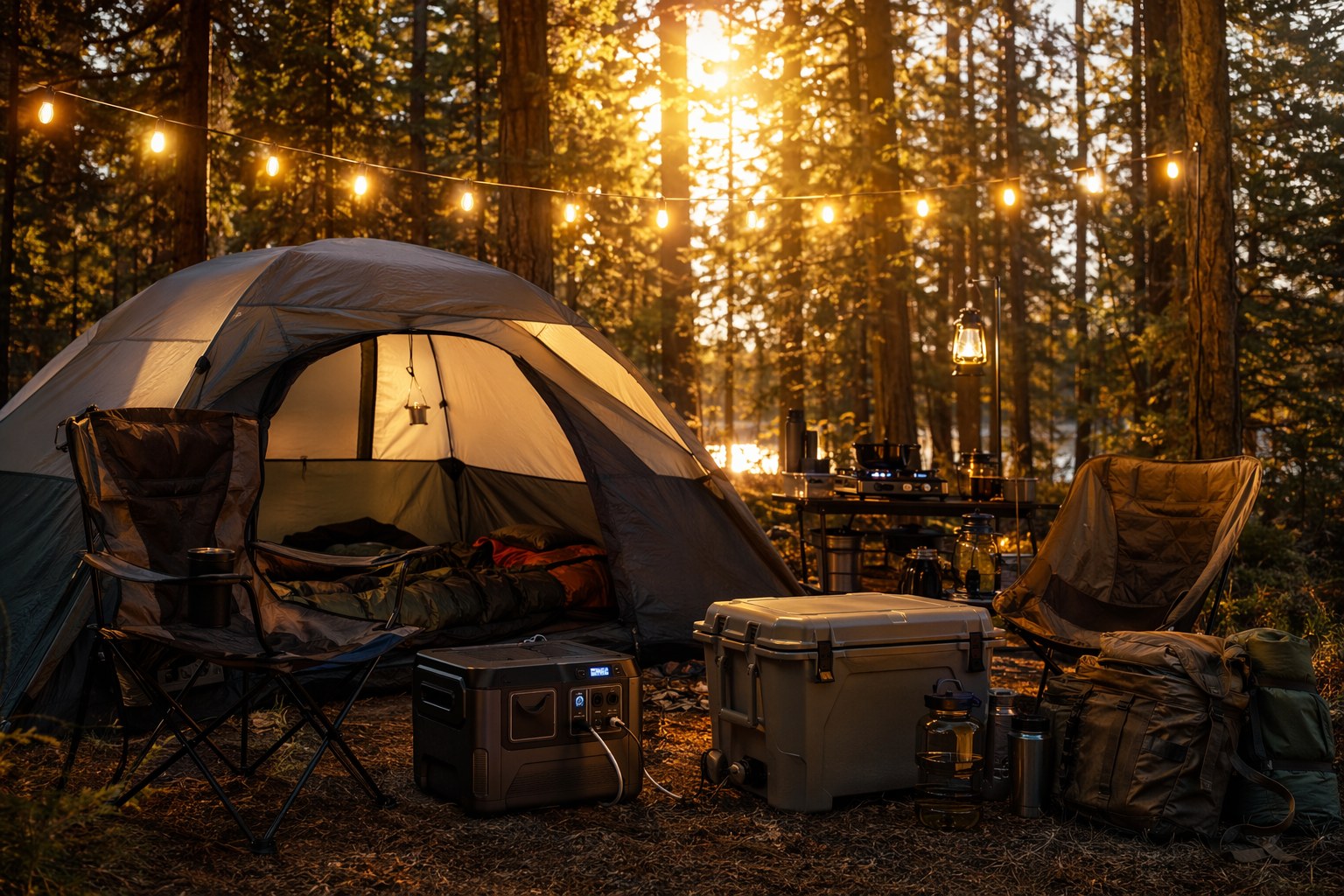
Why Four Days Breaks Most Power Setups
The problem with a long weekend is compounding. Each day you add another full cycle of fridge runtime, another evening of lights, another round of phone and headlamp charging. There’s no “off” day where the battery rests. By day three the slow leaks you ignored on a weekend trip have added up to a dead unit.
Here’s what my family of four actually pulled per day on this trip, measured off the station’s app rather than guessed:
| Device | Watts | Daily hours | Daily Wh |
|---|---|---|---|
| 12V fridge (Alpicool C20) | 45W avg | cycles 24h | 370 Wh |
| 4x phone charging | 15W each | 1.5h | 90 Wh |
| 2x headlamp / lantern charging | 5W each | 1h | 10 Wh |
| LED string lights | 10W | 4h | 40 Wh |
| Tent fan (warm nights) | 15W | 8h | 120 Wh |
| Electric kettle (coffee) | 1,200W | 0.06h | 72 Wh |
| Bluetooth speaker | 5W | 5h | 25 Wh |
| Daily total | ~727 Wh |
Add a 20% buffer and you’re at roughly 870Wh per day. Multiply by four and the full trip demands about 3,480Wh. No single mid-size power station holds that. You either haul a small refrigerator’s worth of battery or you generate power on site. I do the second.
The Setup That Got Us Through
My core rig is built around one capable 1,000Wh-class station and a panel big enough to cover the fridge’s entire daily draw on its own. That balance is the whole trick.
The Anchor: EcoFlow DELTA 3 Plus
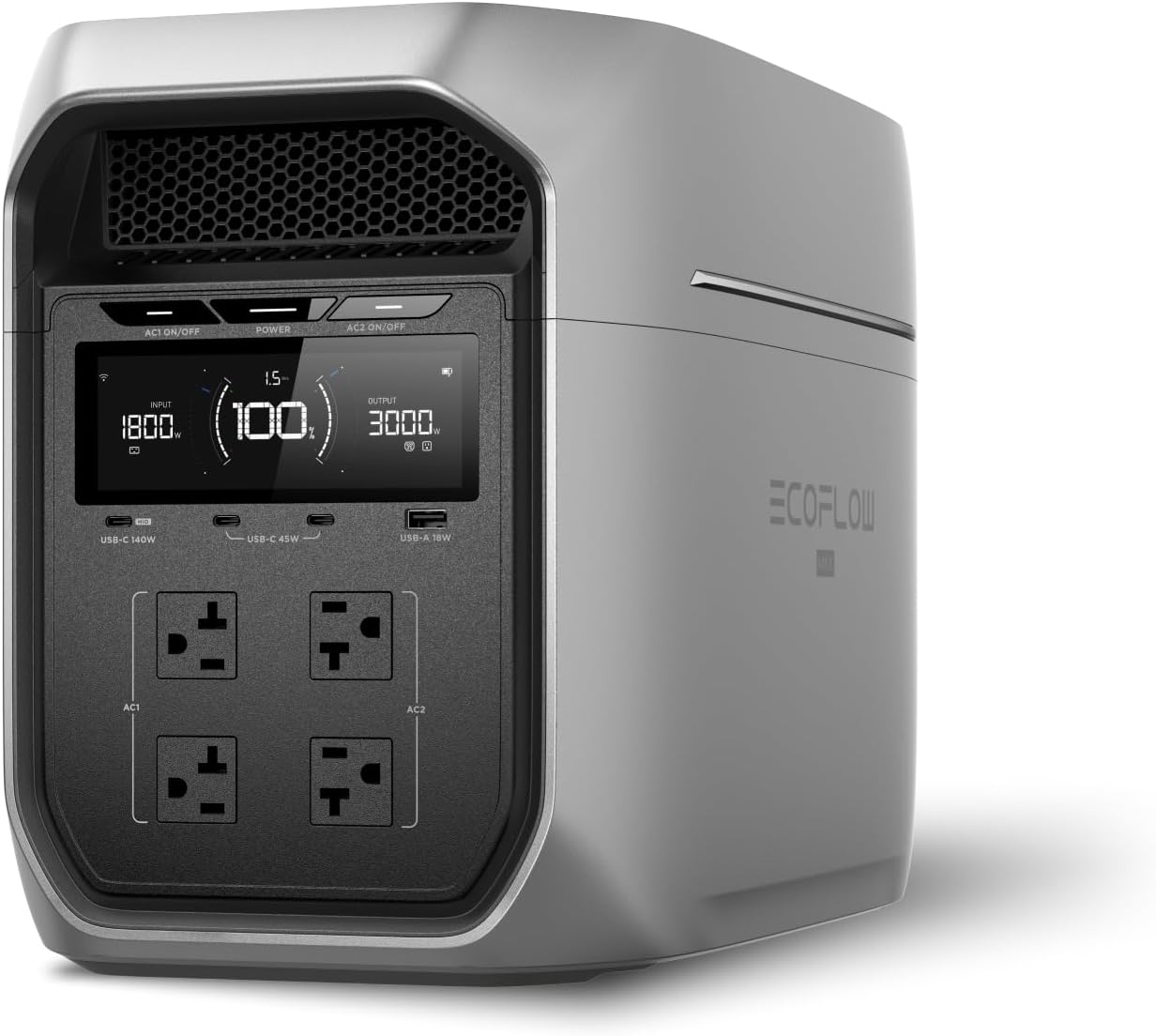
The EcoFlow DELTA 3 Plus is the unit that lives in my car for any trip longer than one night. It carries 1,024Wh, pushes 1,800W of continuous output, and weighs 17.6 pounds, which matters when the campsite is 80 yards from where you can park. The detail that makes it work for extended trips is its 500W solar input ceiling. A lot of 1,000Wh stations cap solar around 200-300W, which means even a big panel charges slowly. The DELTA 3 Plus can drink in everything a 220W panel produces and then some, so midday top-offs are fast.
On day two we hit a stretch where I ran the induction burner for 20 minutes, charged everyone’s phones, and still watched the battery climb because the panel was outpacing the load. That’s the feeling you want on a four-day trip.
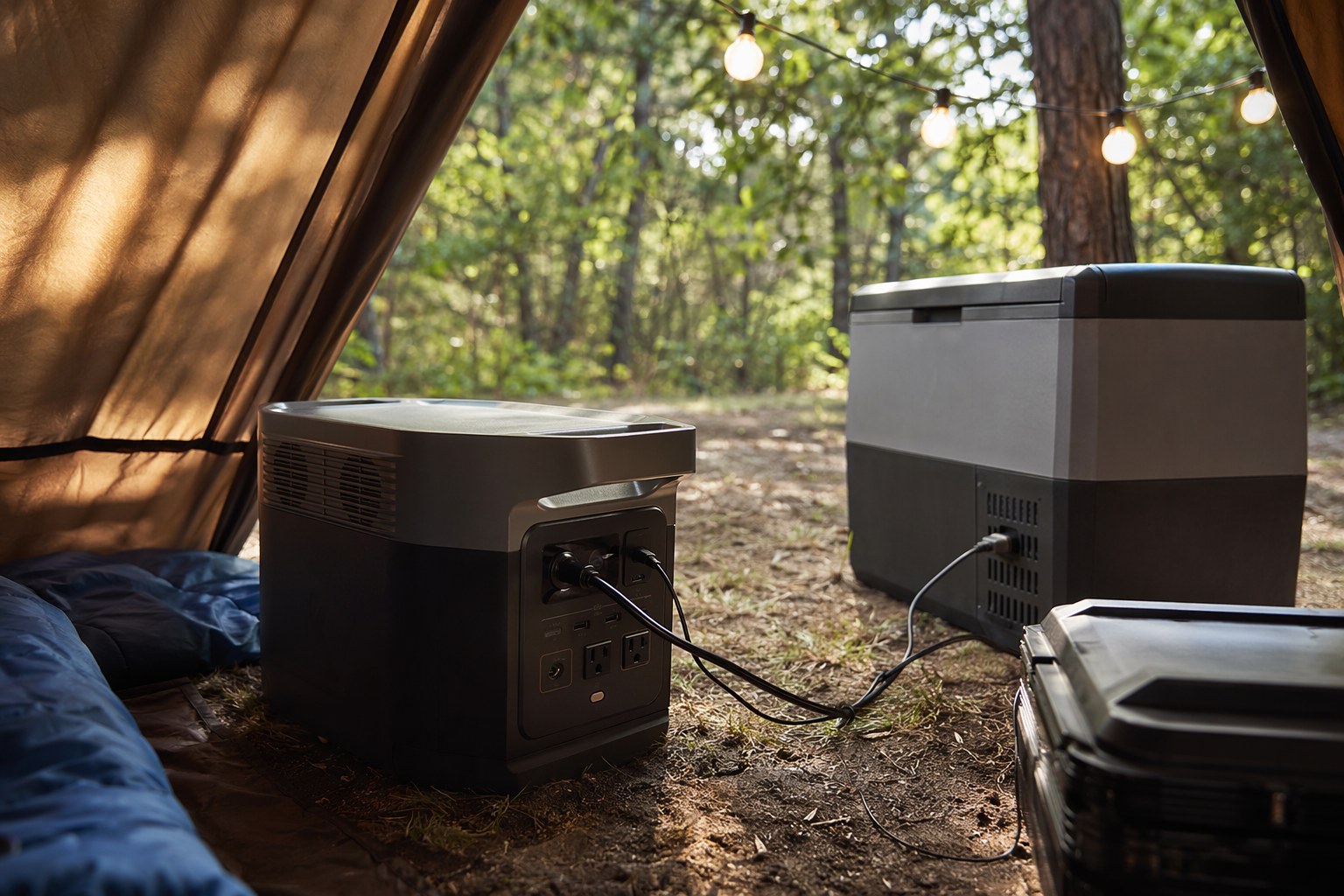
The Income: EcoFlow 220W Bifacial Panel
The EcoFlow 220W Bifacial Solar Panel is the piece that turns a weekend battery into an indefinite one. In direct Memorial Day sun it put out a steady 150-180W, and the bifacial back side scavenged a little extra reflected light off our light-colored ground tarp. Over a typical 6-hour solar window I logged 650-780Wh per day, which more than covered the fridge’s 370Wh and chipped away at everything else.
The way I think about it: the panel pays the fridge’s bill, and the battery handles the fun stuff. That mental split is why we never ran low. If you only remember one number from this article, make it this one. Roughly 200W of solar covers a 12V fridge’s daily appetite, and the fridge is what kills long trips.
For a deeper walk-through of wiring panels to a station, dialing in the angle, and avoiding the rookie shading mistakes, I lean on our guide to charging a power station with solar panels. It’s the reference I send every friend who buys their first panel.
A Lighter Alternative: Anker SOLIX C1000
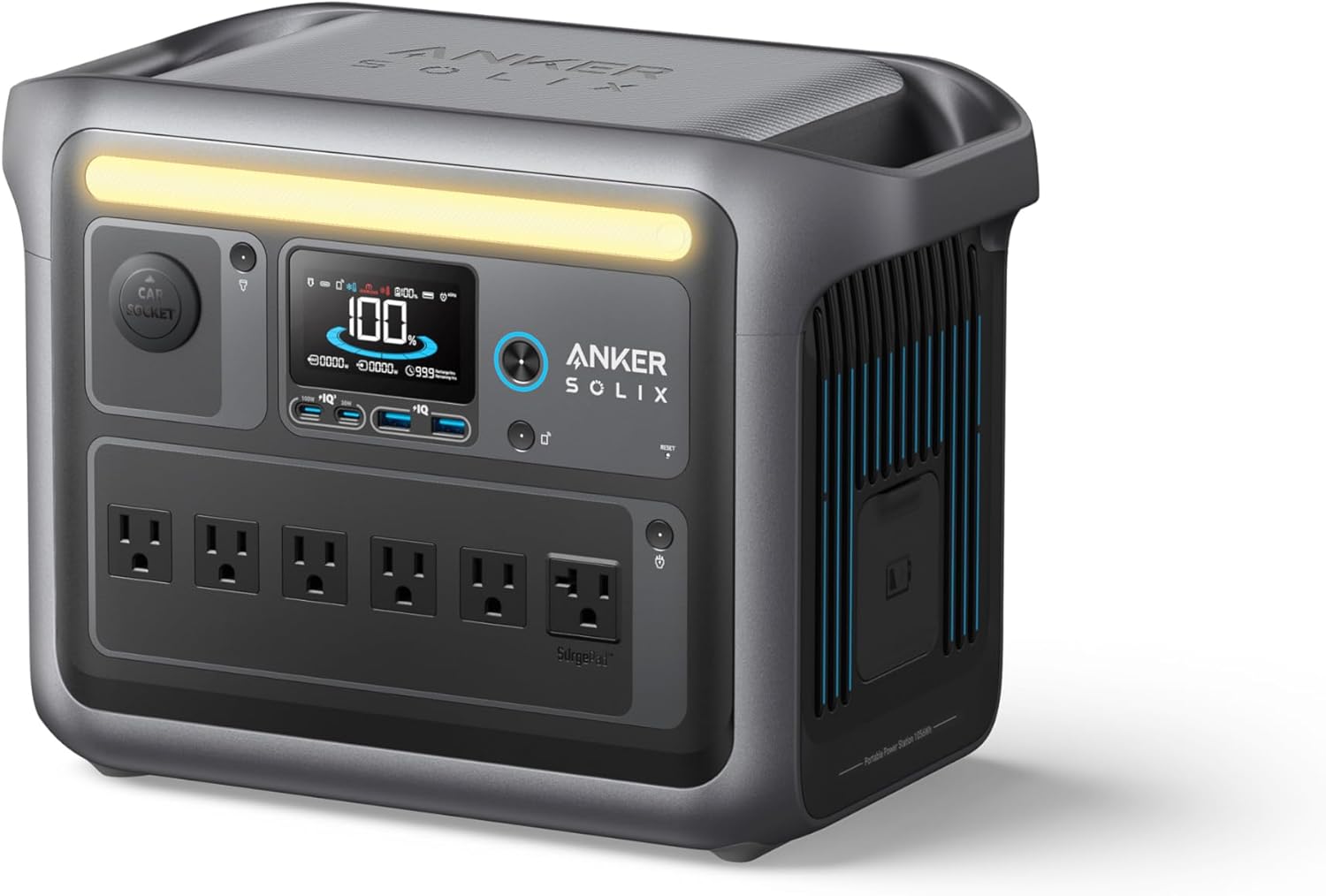
If the DELTA 3 Plus is sold out or you want a slightly different feature set, the Anker SOLIX C1000 is the station I’d grab instead. It’s also 1,056Wh with 1,800W output, and its 600W solar input is even more generous than the EcoFlow’s. It charges from a wall outlet to 80% in under 50 minutes, which is handy if you top off at a trailhead or a relative’s house on the drive out. The trade-off is it’s a touch heavier and the app is a little less polished, but for raw capability per dollar it’s right there with my pick.
Matching Solar to Your Station
Not every panel fits every station, and on a four-day trip you don’t want to discover a connector mismatch in the field. A few combinations I’ve personally run and trust:
- EcoFlow stations pair cleanly with the EcoFlow 220W panel above using the bundled XT60 cable. No adapter hunting.
- Jackery stations want a Jackery panel. The Jackery SolarSaga 200W is a strong performer that I clocked at 140-165W in full sun, and it folds flat enough to slide behind a car seat. If your anchor battery is a Jackery, this is the natural match.
- Bluetti stations use their own connector but most accept third-party panels with the included MC4 adapters.
The bigger point is to size the panel to the trip, not the brand. For a long weekend I want at least 200W of panel feeding a 1,000Wh battery. If you’re still deciding what capacity you actually need before you shop panels at all, run your numbers through our how to size a power station guide first. It’ll keep you from over-buying a 2,000Wh brick you have to drag across the campground.
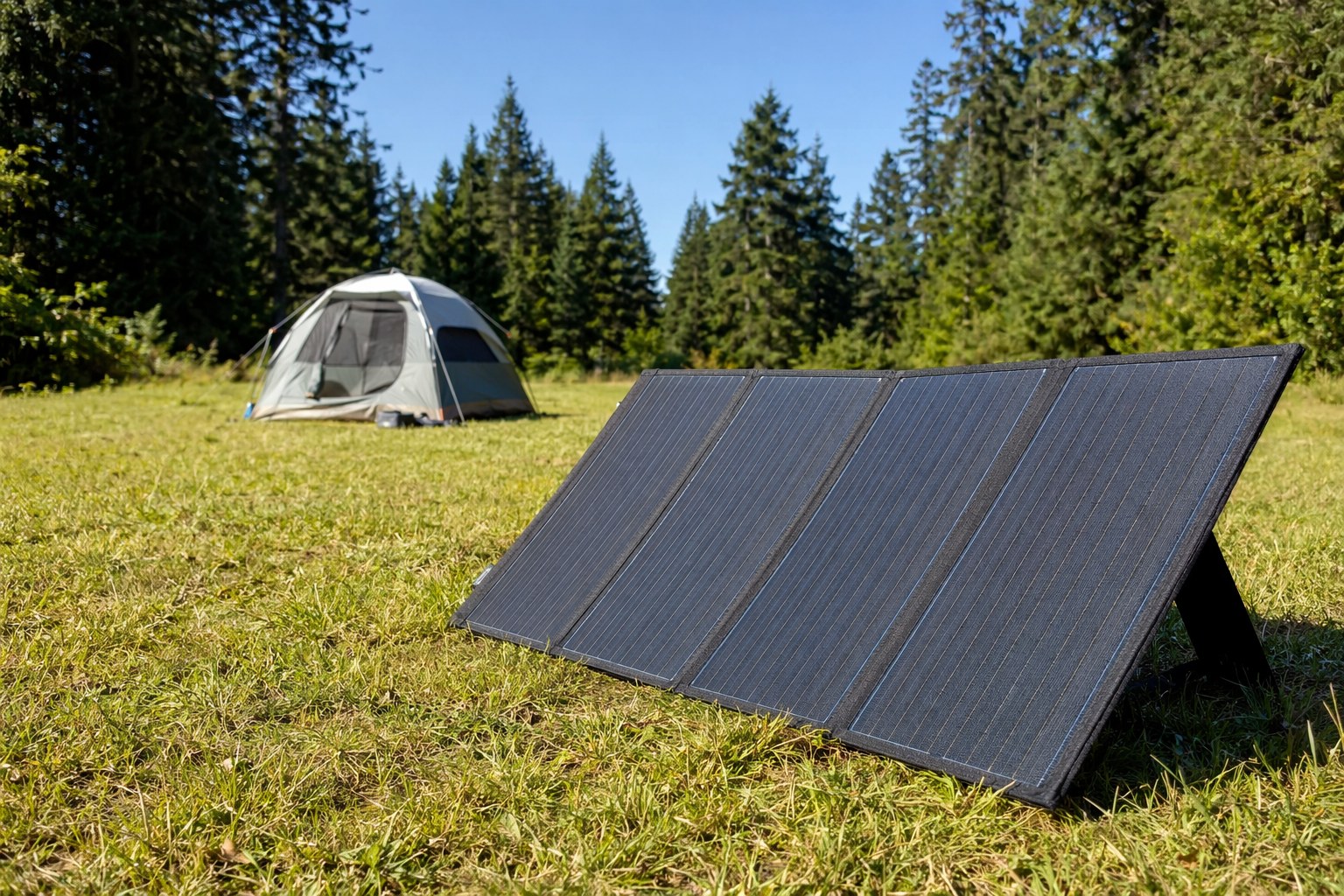
The Budget Path: One Smaller Station, Worked Smart
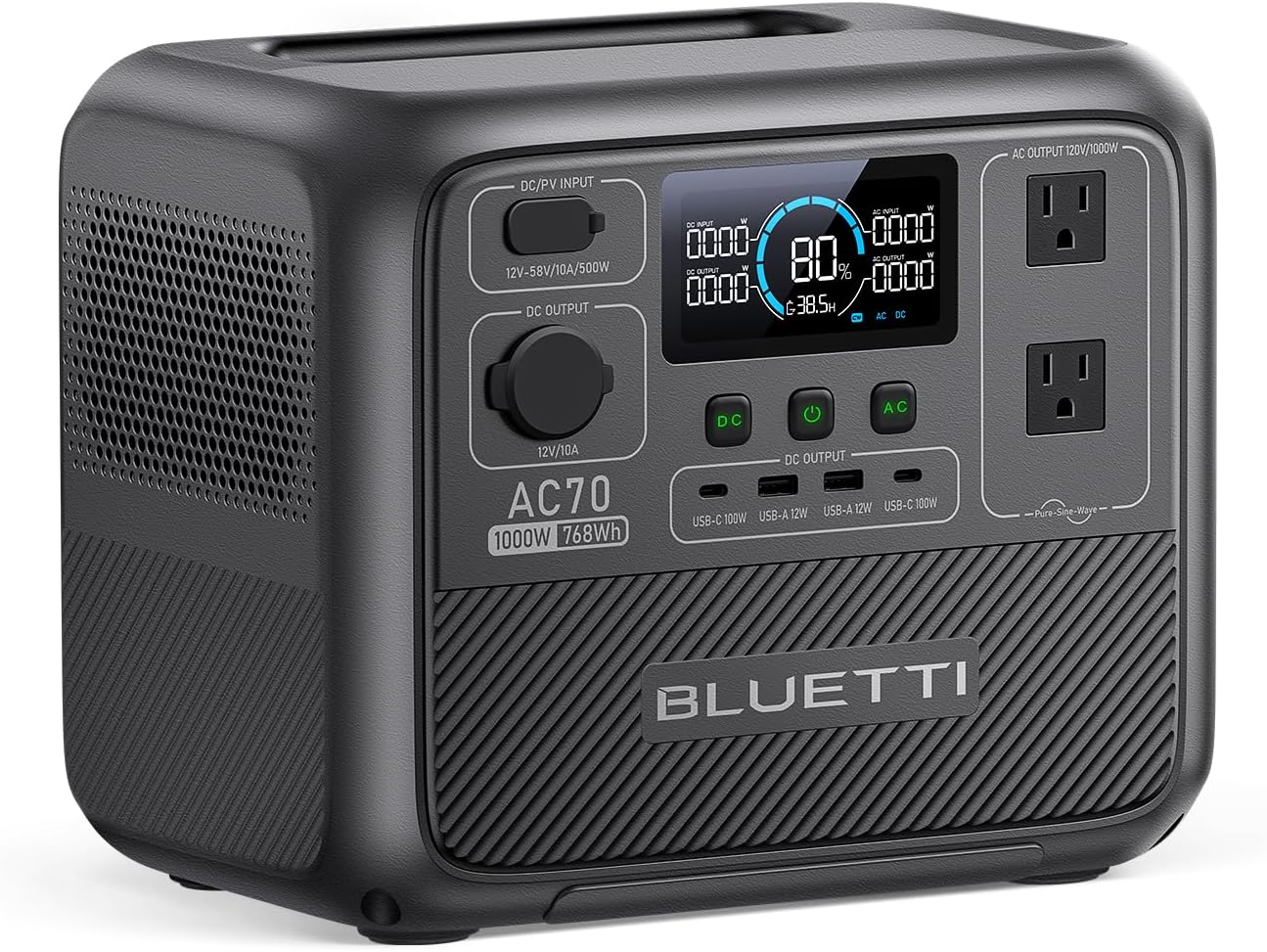
You can absolutely do a four-day trip for less. On a shoulder-season run earlier this spring I used the Bluetti AC70, a 768Wh station that costs around $499, paired with the SolarSaga 200W. The AC70’s 1,000W output handled our kettle and lights fine, and with the panel feeding it through the day we stretched its smaller battery across the whole long weekend.
The catch with the budget route is margin. A 768Wh battery has no slack, so a cloudy day genuinely matters. We had one overcast morning where solar dropped to about 55W, and that’s the day I cut the overnight fan and switched to a camp stove for coffee instead of the electric kettle. With the larger DELTA 3 Plus I never had to make those calls. So the AC70 plus a panel is a real, working setup for an extended weekend, just one that asks you to stay engaged with the weather and your battery percentage.
If you’re outfitting the whole family rather than just yourself, our real-world family camping power setup guide breaks down which of these stations actually survives kids, mud, and a packed cooler over a full season of trips.
My Day-by-Day Reality Check
To prove the setup rather than just describe it, here’s how the battery actually trended across the four days with the DELTA 3 Plus and 220W panel, starting at 100%:
| Day | Start % | Solar in | Used | End % |
|---|---|---|---|---|
| Day 1 (arrival, full sun) | 100% | 410 Wh | 740 Wh | 68% |
| Day 2 (full sun) | 68% | 760 Wh | 690 Wh | 75% |
| Day 3 (partly cloudy) | 75% | 540 Wh | 800 Wh | 50% |
| Day 4 (full sun, packing up) | 50% | 700 Wh | 520 Wh | 68% |
Notice day one ended lower because arrival is always heavy on power and short on solar hours. After that, the panel kept pace with or beat our consumption every single day. We drove home with the battery at 68% and a fridge that never warmed up. That’s the entire goal of an extended-weekend setup: end the trip with margin, not on fumes.
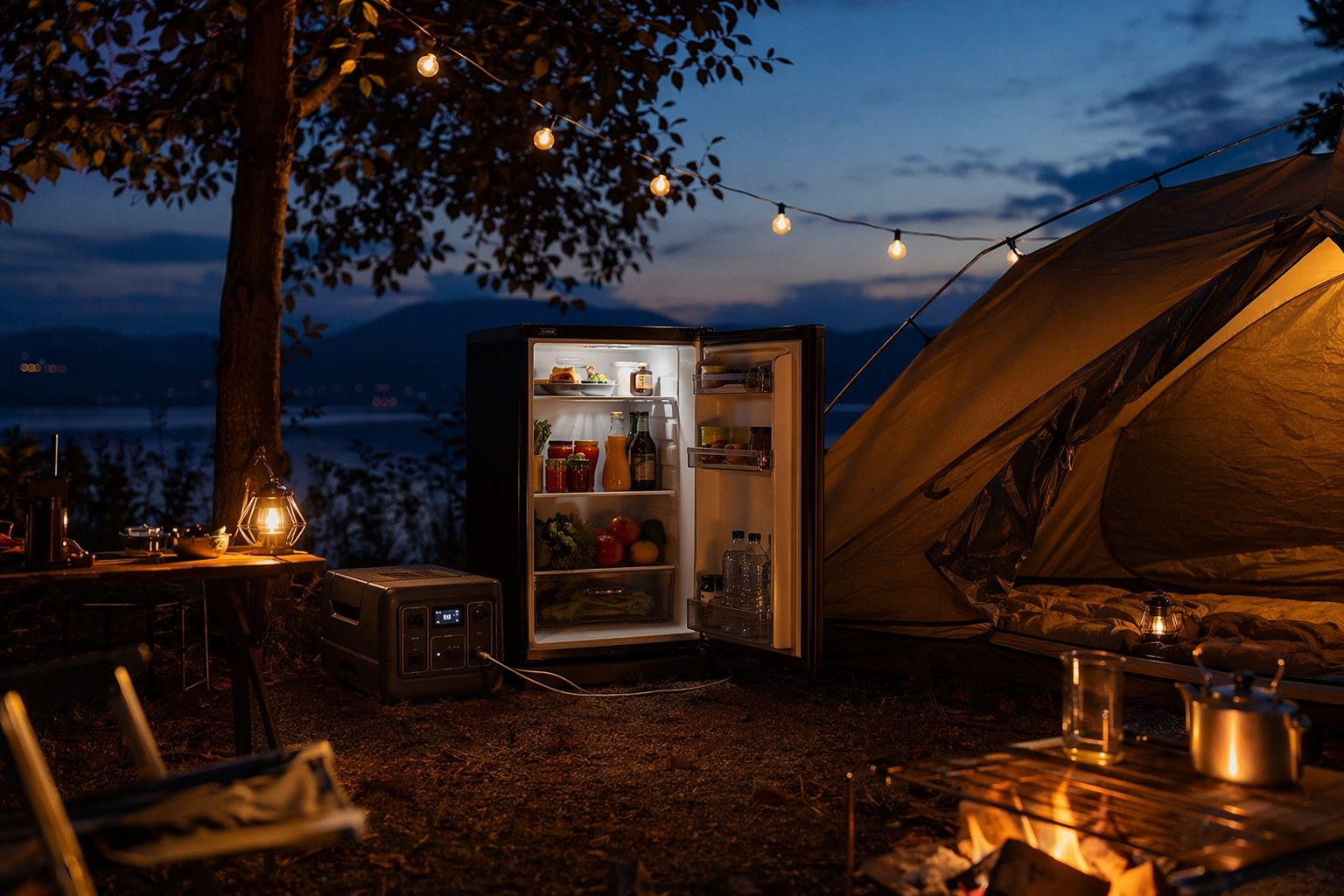
The Setup I’d Buy Again Tomorrow
After running both the generous and the budget versions of this rig, here’s my honest recommendation for a 4-day Memorial Day adventure:
- Best overall: EcoFlow DELTA 3 Plus plus the EcoFlow 220W Bifacial panel. Around $1,000 total, easy to carry, and it never made me think about power once it was set up.
- Strong alternative: Anker SOLIX C1000 with the Jackery SolarSaga 200W if you want faster solar input and quick wall recharging.
- Budget build: Bluetti AC70 plus a 200W panel, for campers willing to manage the weather actively.
The lesson from that day-three blackout years ago still holds: on a four-day trip, capacity alone is a trap. Bring solar, size the panel to your fridge, and the long weekend takes care of itself. Pack the car, set the panel facing south, and go enjoy the extra day off.
Recommended Power Stations
EcoFlow
EcoFlow DELTA 3 Plus
EcoFlow's newest mid-range flagship. The DELTA 3 Plus improves on the Delta 2 with faster charging, LiFePO4 chemistry, and UPS functionality — all at a lower price.
Frequently Asked Questions
What size power station do I need for a 4-day camping trip?
For a 4-day trip, plan for 1,000Wh of capacity paired with at least 200W of solar, or 2,000Wh if you go solar-free. A typical camper uses 400-900Wh per day once you add a 12V fridge, lights, fans, and device charging. Without solar, a single 1,000Wh station only covers one heavy day or two light days, so the math on a 4-day trip forces you toward either a bigger battery or daily solar income. I run a 1,024Wh station with a 220W panel and never drop below 40% by morning.
Is solar worth it for a long weekend, or should I just bring a bigger battery?
For anything past two nights, solar wins. A bigger battery is a finite tank you slowly drain; solar is daily income that can outpace your consumption on a sunny day. On our 4-day trip a 220W panel replenished 600-800Wh of what we used each day, which meant we effectively had unlimited runtime. A second station as backup is heavier, costs more, and still runs dry by day four if the weather turns. Solar plus a 1,000Wh station beats two batteries for both weight and peace of mind.
Can I run a 12V fridge for four days off a power station?
Yes, but the fridge is your single largest draw and the main reason 4-day trips need solar. A 12V cooler-style fridge pulls 300-400Wh per day. Over four days that's 1,200-1,600Wh just for the fridge, which exceeds most single-battery setups on its own. Pair the fridge with a 220W solar panel and a 1,000Wh station and the panel covers the fridge's entire daily appetite while the battery handles everything else.
Ready to Buy? Here's What We Recommend
Based on our testing and this guide, these are the best options for most people: