Guide
Outdoor Wedding & Event Planning: Powering Celebrations Without Generator Noise

TL;DR
Outdoor weddings and events need power for sound, lighting, and catering — without a generator roaring through the vows. Here's how to plan silent, battery-powered events with real wattage math and station picks.
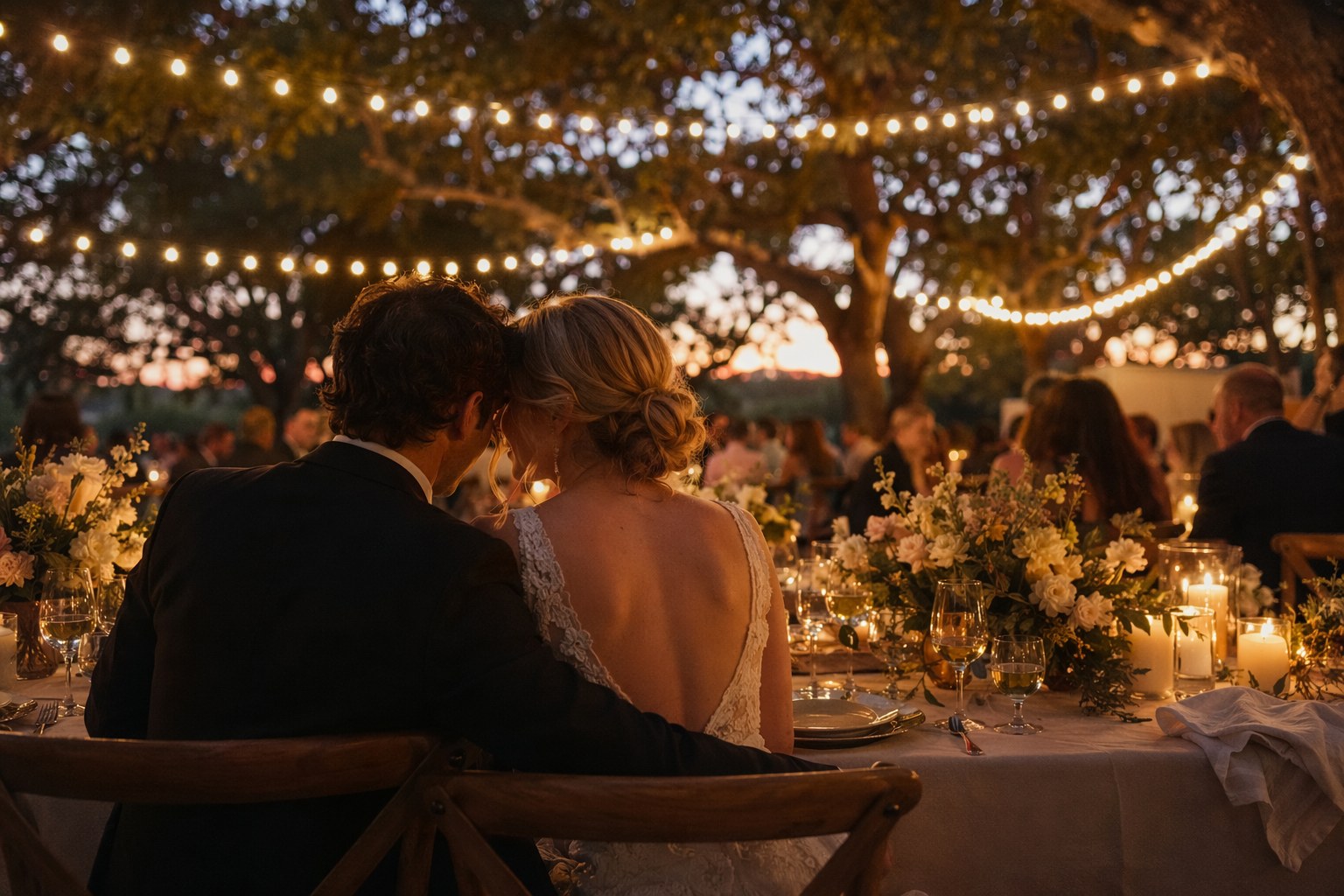
Two summers ago I helped my niece pull together her backyard wedding after the rental company canceled the generator three days before the ceremony. We had string lights strung through the oak trees, a DJ who needed clean power, two catering warmers, and absolutely no outlets within 200 feet. I spent a frantic afternoon borrowing power stations from everyone I knew, and what surprised me was not that it worked — it was how good it was. The vows happened in total silence. No engine droning behind the officiant. No fuel smell drifting across the cocktail tables. Guests had no idea where the power was coming from.
That experience changed how I think about event power entirely. Gas generators are loud, they smell, and at a wedding they are genuinely awful — there is nothing like a 60 dB engine kicking on during the first dance. Portable power stations have gotten big enough and cheap enough that for most outdoor celebrations under 150 guests, you can skip the generator completely. Here’s how I plan it.
Why Silence Actually Matters at an Event
We tend to think of generator noise as a minor annoyance. At an event it’s the difference between a celebration and a job site. An inverter generator runs around 52 to 60 dB at a distance of 23 feet — and most venues won’t let you place it that far from where the power is needed without long, trippable cable runs. Up close it’s louder, and it never stops. It runs through the ceremony, through the toasts, through the quiet moment when grandma gives a speech.
A power station is the opposite. The good ones sit between 30 and 50 dB, and most stay dead silent until a big load triggers the cooling fans. I’ve measured an EcoFlow DELTA Pro 3 running a full PA and lighting rig at conversation distance and couldn’t pick it out over a normal chat. Add zero fumes, no carbon monoxide risk near a crowd, and the ability to tuck the unit under a linen-draped table right beside the dance floor, and the appeal is obvious.
For a deeper comparison of the two approaches, our guide on how to power an outdoor event breaks down the noise and placement tradeoffs in detail.
Map Your Power Needs Before You Buy Anything
The single most useful thing you can do is sit down and list every powered item, its running wattage, and how long it runs. Lighting and audio are surprisingly cheap. Anything that makes heat is expensive. Here’s a realistic mid-size wedding (around 100 guests):
| Equipment | Running Watts | Hours | Energy (Wh) |
|---|---|---|---|
| LED string lights (300 ft) | 60-100W | 6 | 480 |
| DJ rig or powered PA (2 speakers + mixer) | 300-500W | 6 | 2,400 |
| Phone charging station | 80-120W | 6 | 600 |
| Photo booth (laptop, printer, lights) | 200-300W | 4 | 1,000 |
| Bistro/market lighting accents | 40-80W | 5 | 300 |
| Catering warmers (2-3 chafing trays) | 600-900W | 3 | 2,400 |
| Coffee urn (intermittent) | 800-1,200W | brief | ~400 |
Notice the split. Lighting, audio, charging, and the photo booth together run around 4,800Wh over the night — comfortably handled by one large station. But the catering warmers and coffee urn alone add another 2,800Wh of hungry, high-wattage load. This is exactly why I tell people to zone their power: don’t make one battery do everything.
If you want a sense of how far a single battery stretches, our breakdown of what a 1000Wh power station can run is a good reality check — a 1kWh unit is a great party station but nowhere near enough for a full wedding on its own.
The Two-Station (Plus Backup) Strategy
For weddings of 50 to 150 guests, here’s the setup I recommend over and over.
Station 1: Entertainment and Lighting
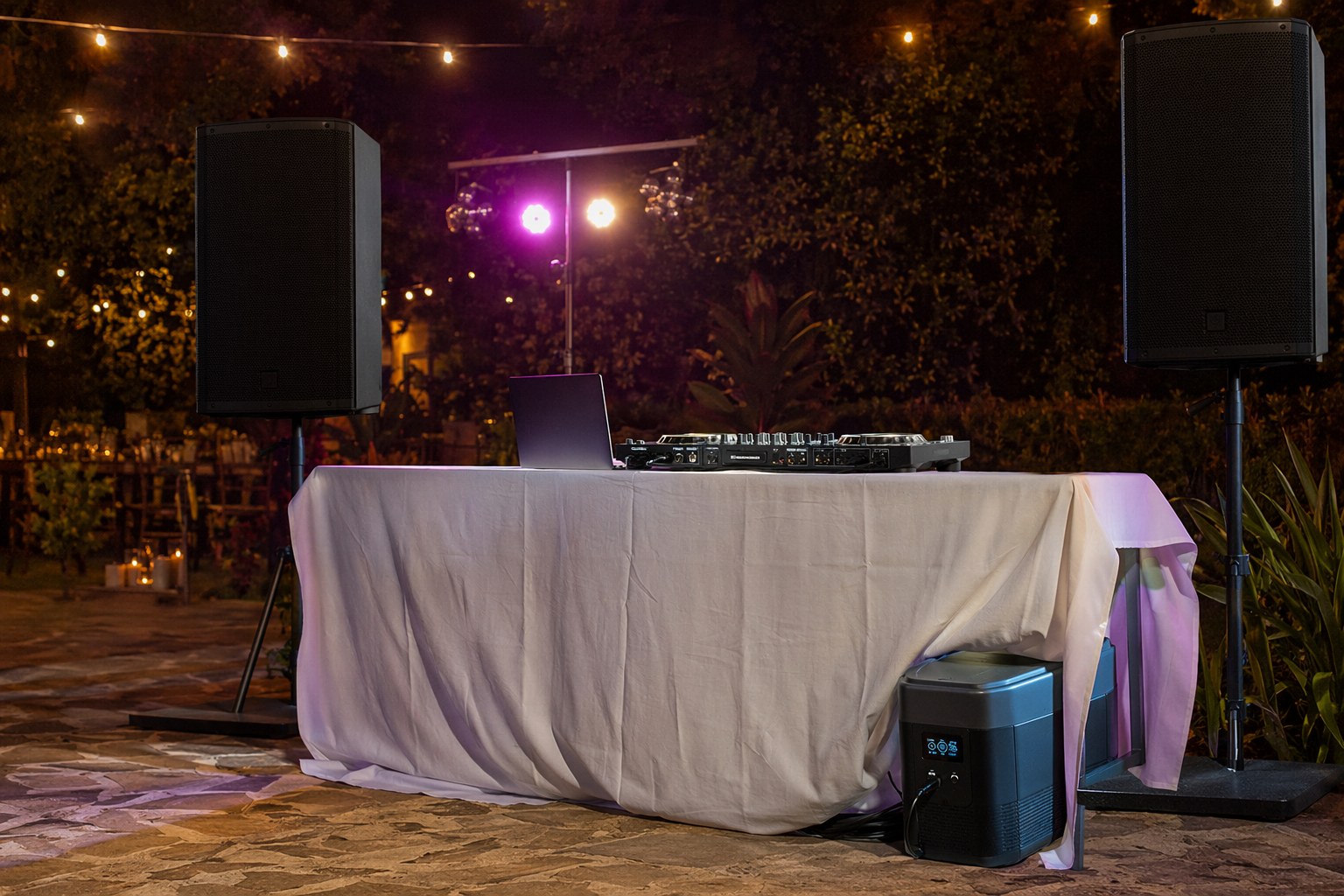
This is your hardest-working unit, and it needs both capacity and enough outlets. The EcoFlow DELTA Pro 3 at 4,096Wh and 4,000W continuous is my top pick here. It runs a DJ rig, all your string lighting, a phone charging table, and a photo booth for 6 to 8 hours without anyone touching it. Tuck it behind the DJ booth, run your cables, and forget about it. The 4kWh capacity gives real margin for the night running long, which weddings always do.
If your budget is tighter or your event is smaller, the Jackery Explorer 2000 Plus at 2,042Wh and 3,000W output covers entertainment for a 50-to-80-guest reception, and it’s expandable if you decide you need more later.
Station 2: Catering and Coffee
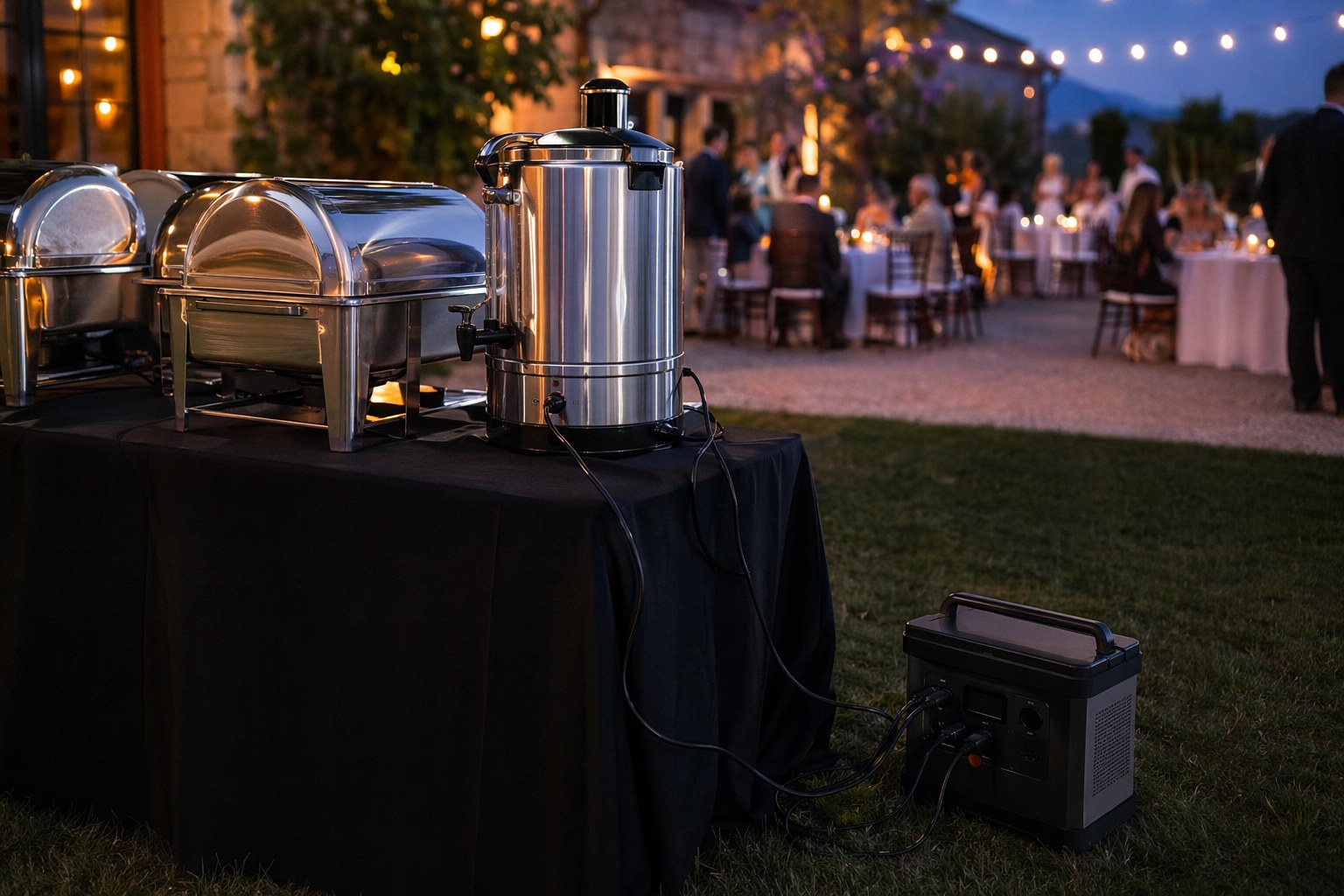
Keep your heat loads on a separate battery so a surge from a warming tray never interrupts the music. The Bluetti Elite 200 V2 at 2,073Wh with 2,600W continuous output is purpose-built for this. It runs two or three chafing warmers plus an intermittent coffee urn, and its LFP battery is rated for 6,000+ cycles, so if you’re a planner doing this every weekend it’ll last for years. At a one-off family wedding, the cost-per-event is trivial.
For longer catering windows or a smaller spread, the EcoFlow DELTA 2 Max at 2,048Wh and 2,400W output is a lighter, slightly cheaper alternative that still handles warming trays comfortably.
Station 3: Backup
This is the one people skip, and it’s the one I never skip. A wedding is not the day to discover your station read 30% lower capacity because it sat in 95-degree sun all afternoon. Keep any spare unit charged and standing by. Even a smaller station that can keep the music going for an emergency hour is worth it for the peace of mind.
When You Still Want a Generator
I’m not anti-generator — I’m anti-generator-next-to-the-guests. There’s one scenario where gas still wins: sustained, heavy cooking. If your caterer is running electric griddles, hot plates, or commercial induction for hours straight, batteries will drain faster than is practical. That’s when I bring in a Champion 4500W Dual Fuel inverter generator, place it 75 to 100 feet downwind behind a service tent, and run a heavy cord to the cooking station only. Everything near the celebration — vows, music, lighting, the dance floor — stays on silent batteries. The dual-fuel flexibility means you can run it on propane, which is cleaner and quieter than gasoline.
This hybrid approach gives you the best of both: silence where it counts, brute force where you need it. Most experienced caterers I’ve worked with are comfortable with this split once you explain it.
Setup Lessons I Learned the Hard Way
Do a full dress rehearsal. A week out, set up your entire power plan and run it for the planned duration. This is how you catch the breaker that trips when the coffee urn and a warmer kick on together — while you can still fix it.
Use LED for everything. A 100-foot strand of LED string lights pulls 20 to 50W. The same length of incandescent pulls 200 to 400W. Switching to LED can literally halve your lighting load. There is no reason to use anything else.
Keep stations cool and off the ground. Batteries lose capacity in direct sun and heat. Stash them in shade, under a table, or inside a canopy, and put them on a crate at least six inches up to survive spilled drinks and surprise rain.
Charge to 100% the night before. Every single unit. If the reception runs two hours past schedule — and it will — you’ll be grateful for the buffer.
Label and tape your cables. Gaffer tape, not duct tape, which leaves residue on venue floors. When something trips, you want to identify the culprit in seconds, not crawl around in the dark during the first dance.
For event-type specific picks beyond weddings — tailgates, markets, movie nights — our roundup of the best power station for outdoor events has the wattage math for each scenario.
The Bottom Line
The technology has finally caught up to what celebrations actually need. For an outdoor wedding or event under 150 guests, you can power the entire thing on batteries: one large station for entertainment and lighting, a second for catering, and a backup standing by. Reserve a quiet dual-fuel generator only for sustained heavy cooking, placed far from the crowd.
The payoff is the thing my niece still talks about: a ceremony where the only sounds were the vows, the breeze in the trees, and — eventually — the music. No engine. No fumes. Just the celebration, exactly as it should be.
Recommended Power Stations
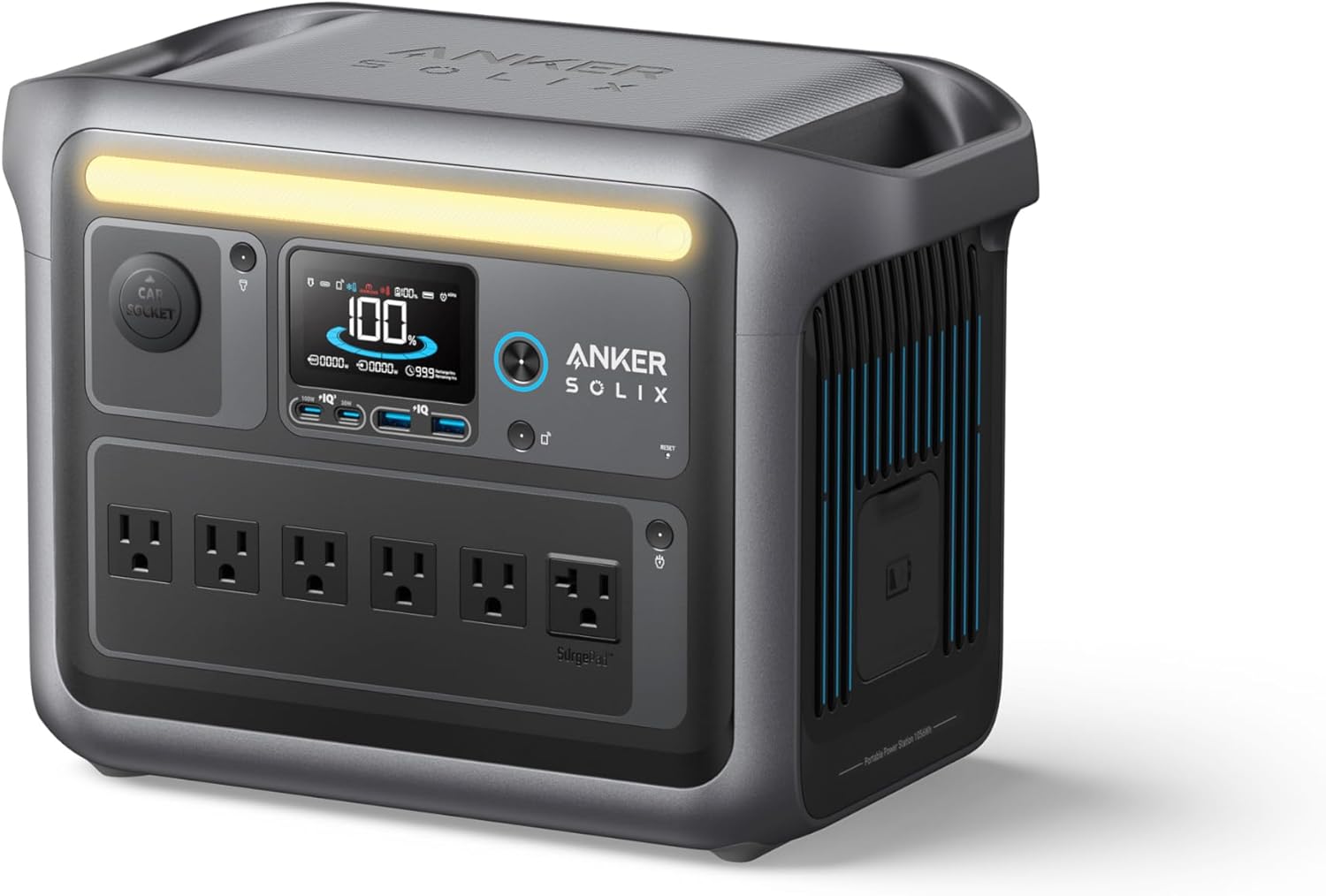
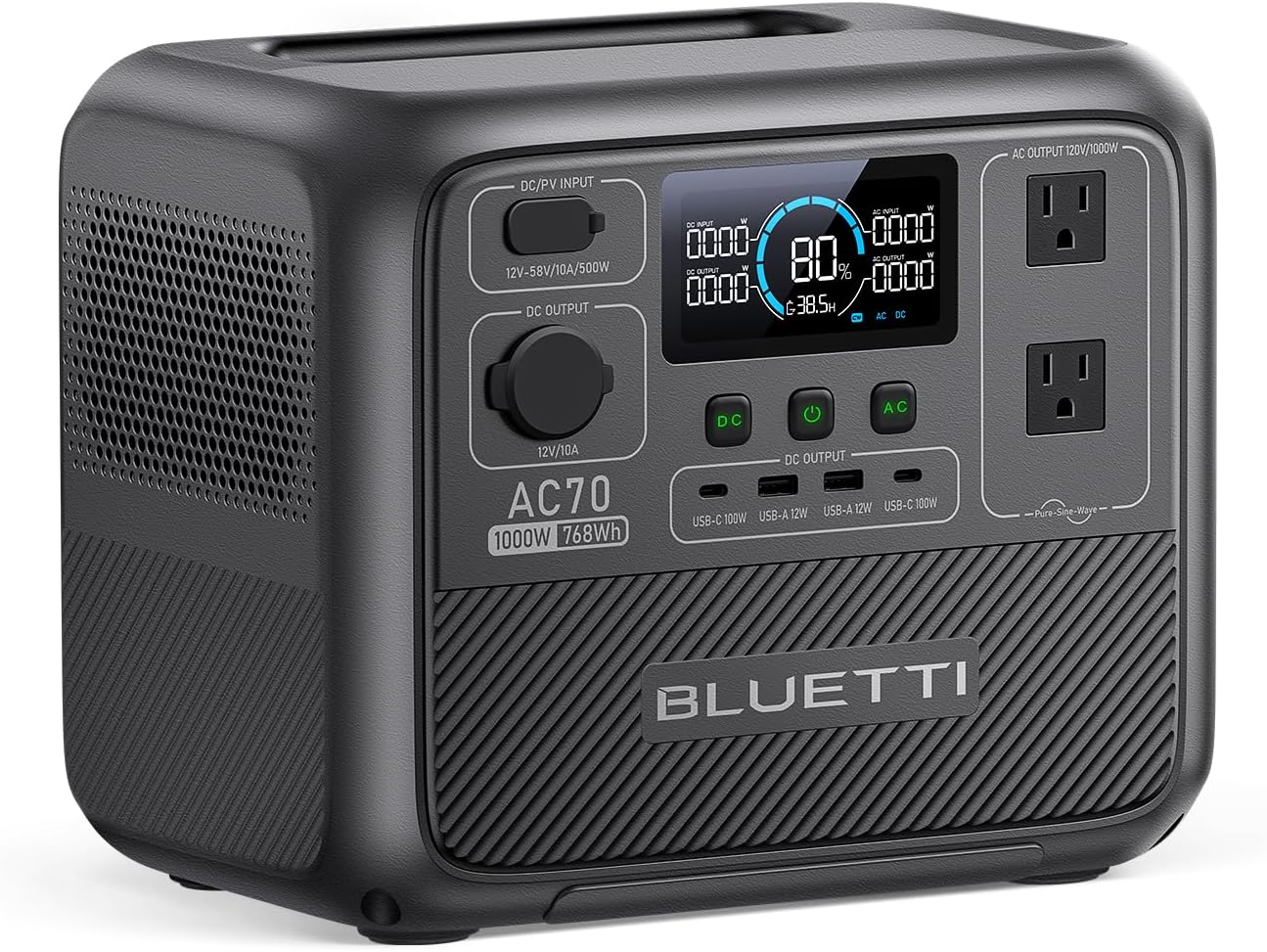
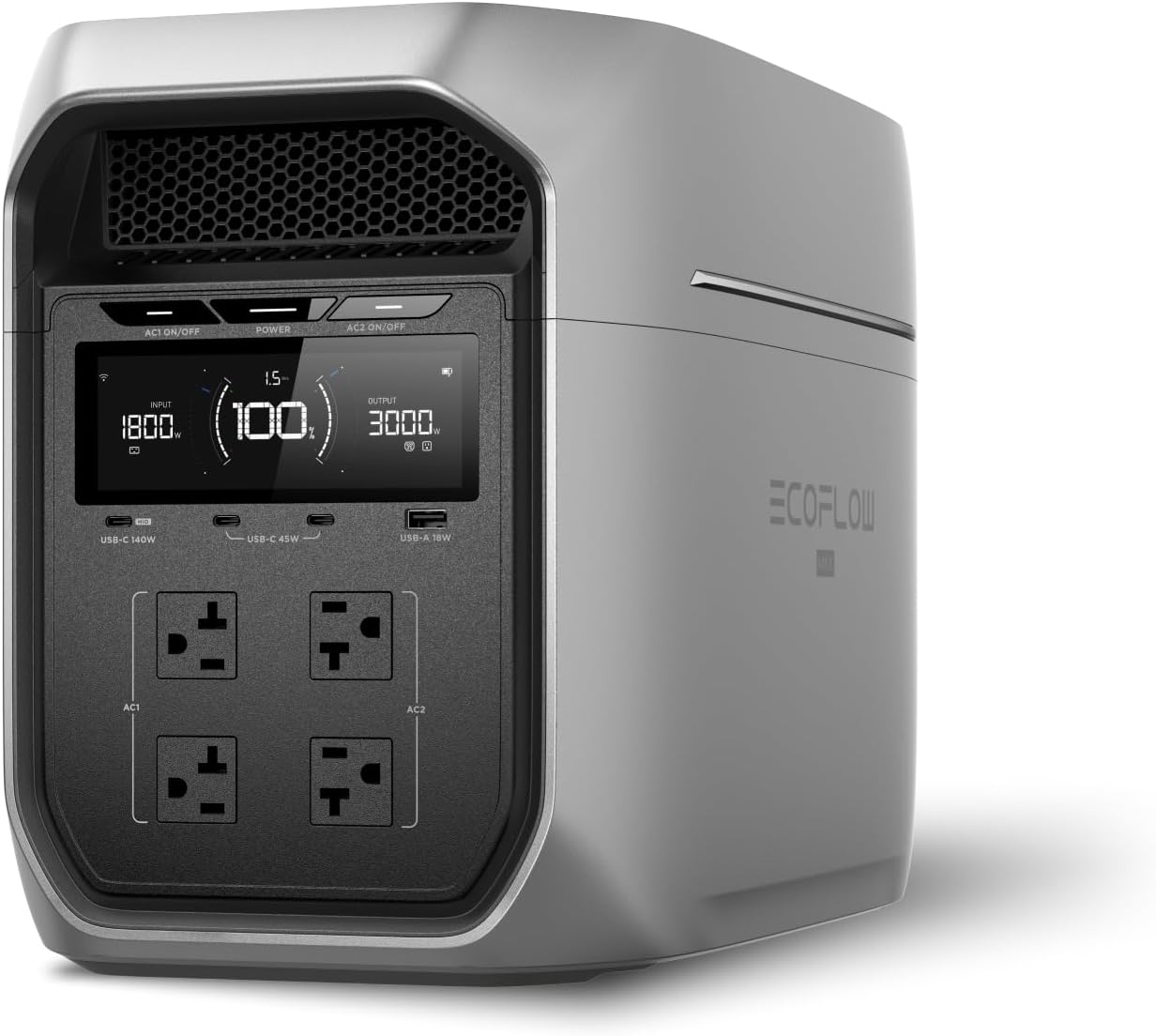
EcoFlow
EcoFlow DELTA 3 Plus
EcoFlow's newest mid-range flagship. The DELTA 3 Plus improves on the Delta 2 with faster charging, LiFePO4 chemistry, and UPS functionality — all at a lower price.
Frequently Asked Questions
Is a power station really quiet enough for a wedding ceremony?
Yes. Most large power stations run between 30 and 50 dB, and many stay completely silent until a heavy load kicks the cooling fans on. For comparison, a typical inverter generator runs 52 to 60 dB at 23 feet, and louder up close. I've stood three feet from an EcoFlow DELTA Pro 3 running a PA and string lights and could not hear it over normal conversation. The only time you'll hear a station is a faint fan during high catering loads — and you can place those units behind a draped table away from guests.
How many power stations do I need for a 100-guest outdoor wedding?
Plan for two to three large units. One 2,000-4,000Wh station handles entertainment (DJ or PA, lighting, phone charging) for the full reception. A second dedicated station covers catering warmers and a coffee station, since those loads are the hungriest. A third smaller unit as backup is cheap insurance. The biggest mistake is trying to run everything off one station — heating and cooking loads will drain it fast and leave nothing for the dance floor.
Can I run catering equipment on batteries, or do I still need a generator?
Light catering — chafing dish warmers, a coffee urn, a couple of warming trays — runs fine on a 2,000Wh+ station with at least 2,400W continuous output. Where you still want a generator is sustained high-wattage cooking: electric griddles, hot plates, or commercial induction running for hours. A dual-fuel inverter generator placed far from guests handles those loads, while batteries cover everything near the celebration. Most planners I talk to end up with a hybrid setup for exactly this reason.
Ready to Buy? Here's What We Recommend
Based on our testing and this guide, these are the best options for most people: