Guide
How to Power an Outdoor Event With a Portable Power Station

TL;DR
A complete guide to powering outdoor events — weddings, parties, markets, and festivals — with portable power stations. Includes wattage calculations, equipment recommendations, and setup tips.
Outdoor events have a power problem. Venues without outlets, parks without infrastructure, backyards that can’t handle the load — it’s the one detail that can make or break a celebration. Gas generators work but they’re loud, smelly, and need constant refueling.
Portable power stations solve this cleanly. They’re silent, fume-free, and powerful enough to run everything from string lights to sound systems. Here’s how to plan and power any outdoor event.
Common Outdoor Event Power Needs
Here’s what typical event equipment actually draws:
| Equipment | Power Draw | Notes |
|---|---|---|
| String lights (100 ft LED) | 20-50W | LED lights are extremely efficient |
| String lights (100 ft incandescent) | 200-400W | Use LED — it’s not even close |
| Bluetooth speaker | 20-50W | Small to medium |
| Powered PA speaker (each) | 100-400W | JBL, QSC, or similar |
| DJ mixer/controller | 30-80W | Plus laptop at 50-80W |
| Phone charging station (6-port) | 100-150W | USB hub or multi-charger |
| Projector | 150-350W | For outdoor movie nights |
| Blender | 300-600W | Frozen drinks |
| Electric griddle/hot plate | 800-1,500W | Catering |
| Portable fan (each) | 30-80W | For warm weather |
| Coffee maker | 600-1,200W | For morning events |
| Portable heater | 750-1,500W | For cool weather |
The key pattern: lighting and audio are low-power. Heating, cooling, and cooking are high-power. Plan accordingly.
Event Power Setups by Size
Backyard Party (20-50 guests)
Equipment: LED string lights, Bluetooth speaker or small PA, phone charging station, maybe a blender
Total draw: 200-500W Duration: 4-6 hours Capacity needed: 800-3,000Wh
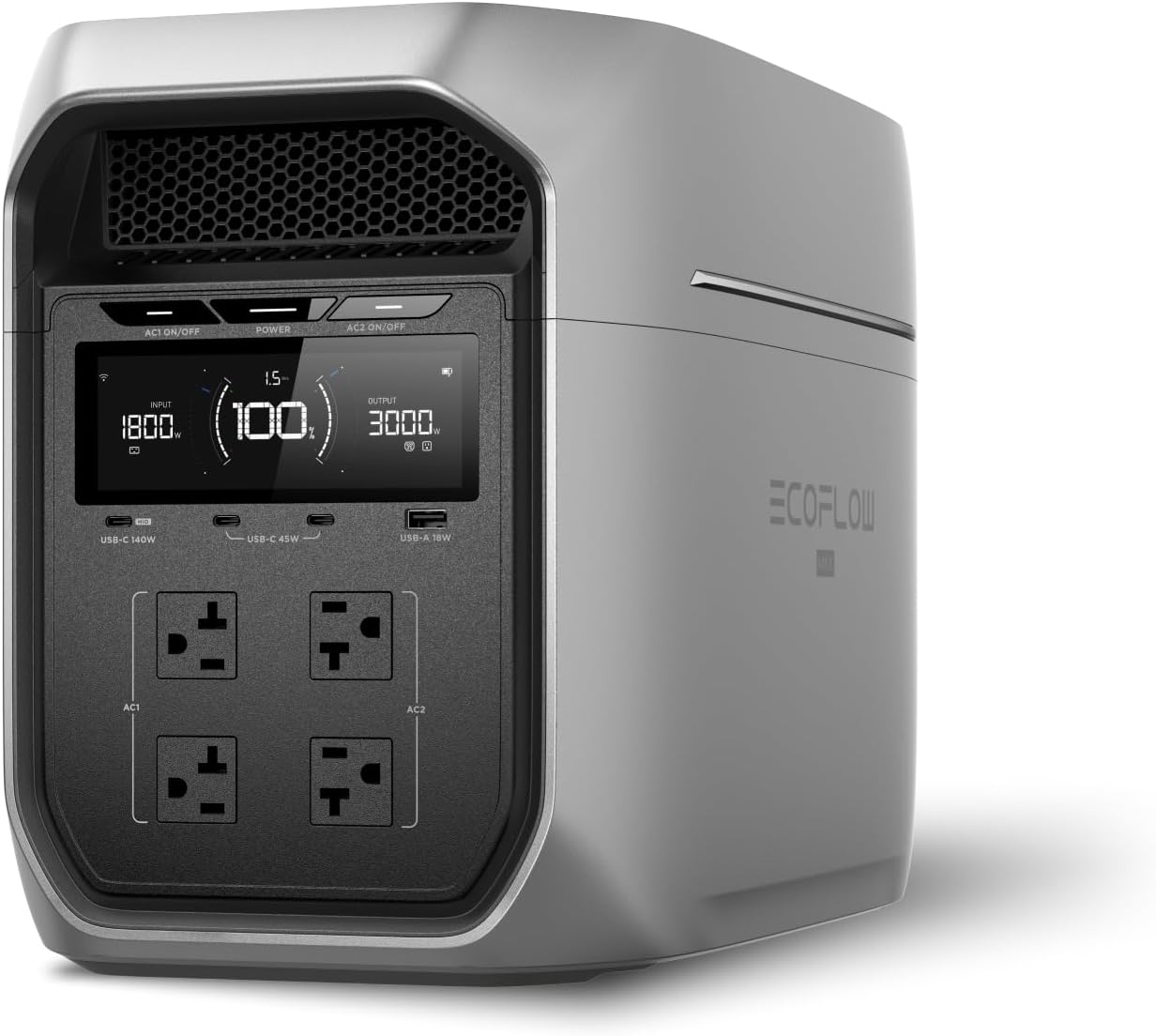
Recommended: EcoFlow DELTA 3 Plus ($649, 1,024Wh) or Anker SOLIX C1000 ($699, 1,056Wh)
A single 1kWh power station handles a backyard party with room to spare. Set it on a table near the DJ area, plug in your lights and speaker, and forget about it. These stations are whisper-quiet — guests won’t know it’s there.
Outdoor Wedding (50-150 guests)
Equipment: Extensive string lighting, PA system for ceremony and reception, DJ setup, phone charging, projector for slideshow, maybe a coffee station
Total draw: 500-1,500W Duration: 6-10 hours Capacity needed: 3,000-10,000Wh
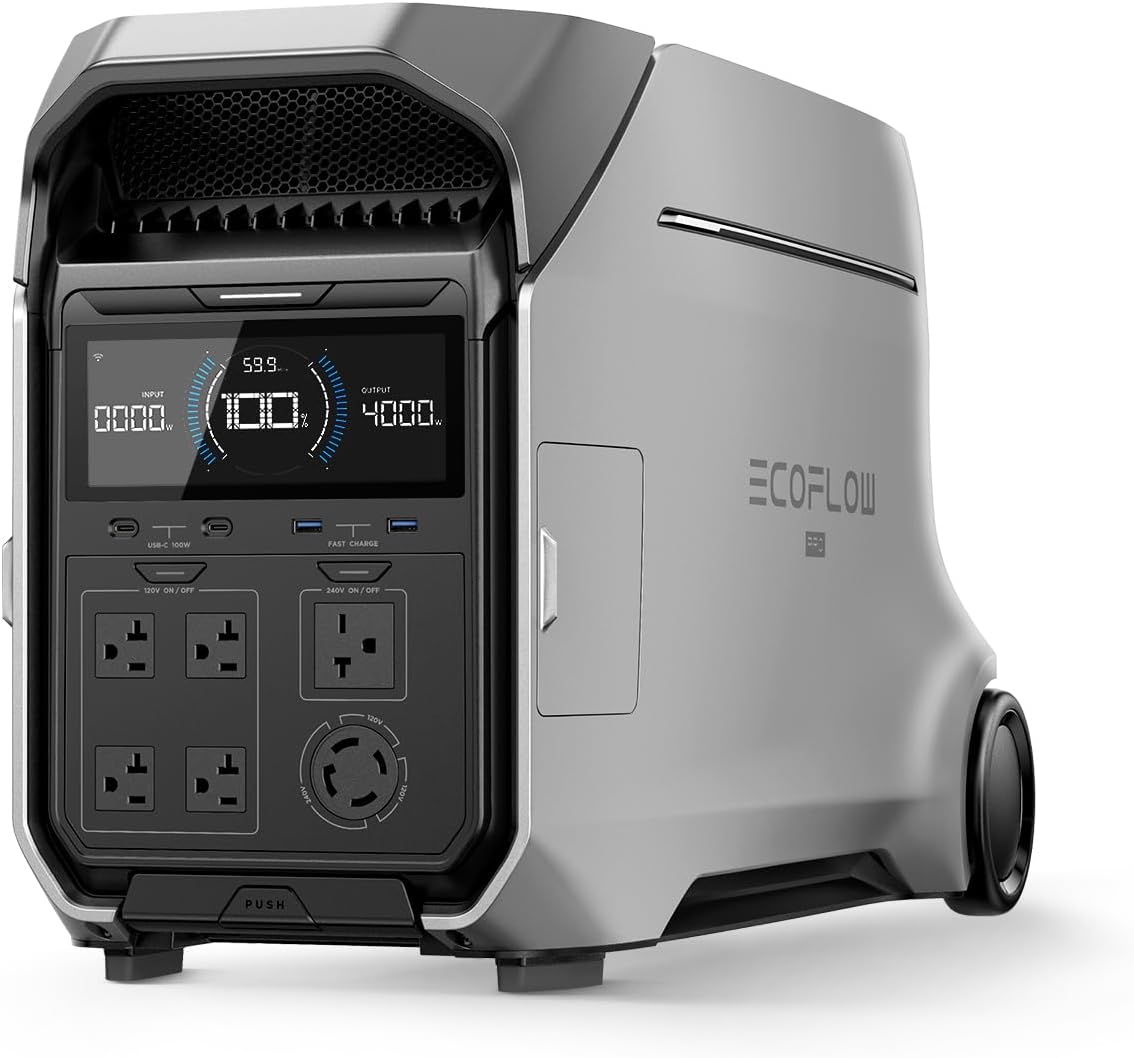
Recommended: EcoFlow DELTA Pro 3 ($1,999, 4,096Wh) or Jackery Explorer 2000 Plus ($1,999, 2,042Wh) with expansion battery
Weddings need reliable, silent power for the most important day of someone’s life. The DELTA Pro 3’s 4kWh capacity handles 8+ hours of lighting, audio, and charging without breaking a sweat. The silent operation is critical — no generator hum during vows. Place the station behind the DJ booth or underneath a draped table where it’s out of sight.
Pro tip: Bring a second smaller station as a backup. A Bluetti AC70 ($499) as a redundancy measure costs far less than what happens when the music stops at a wedding.
Farmers Market / Vendor Booth
Equipment: POS system/tablet, phone charging, small display lighting, possibly a mini-fridge or sample warmer
Total draw: 100-400W Duration: 6-8 hours Capacity needed: 600-3,200Wh
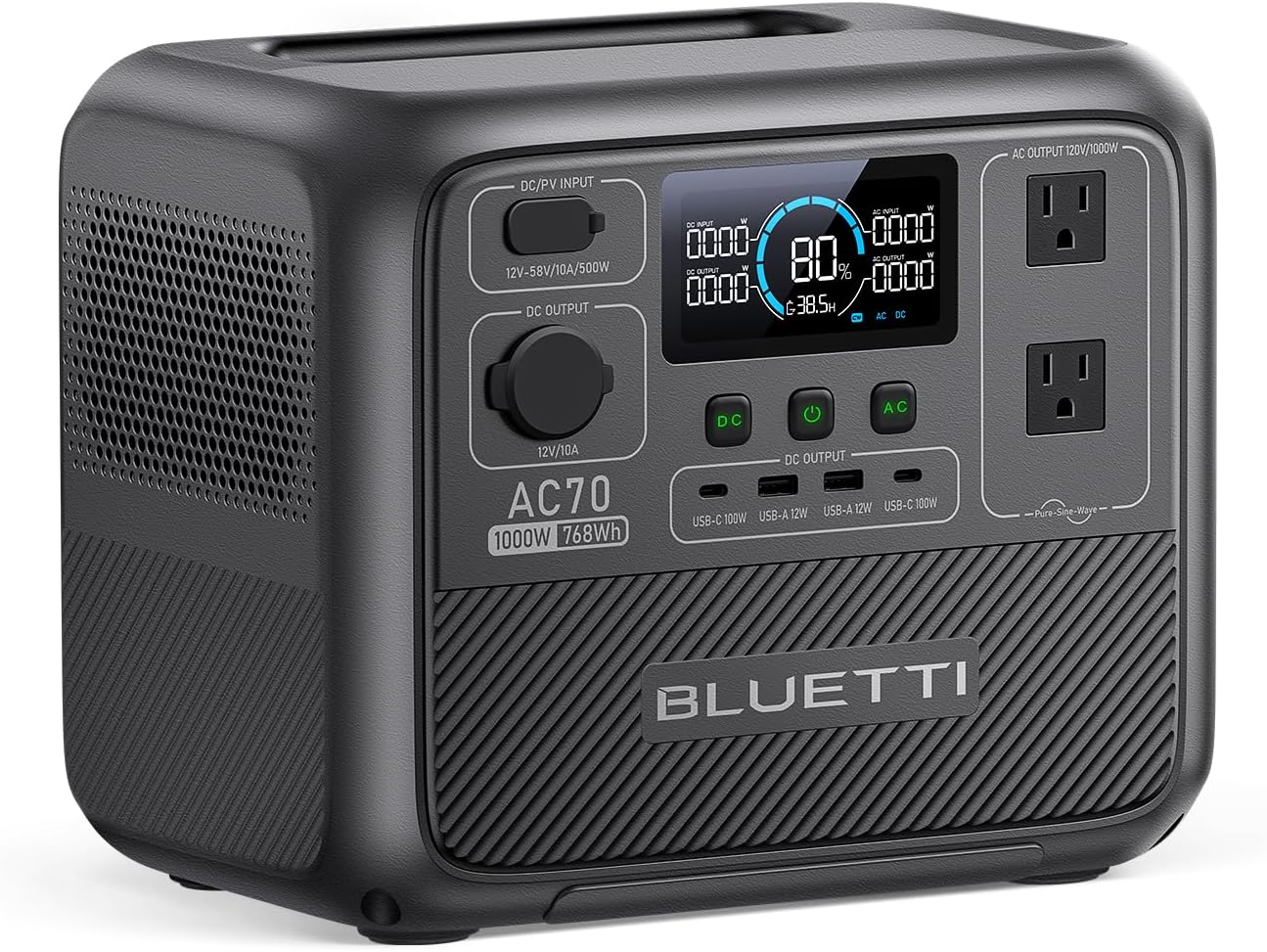
Recommended: Bluetti AC70 ($499, 768Wh) for basic setups or EcoFlow DELTA 3 Plus ($649, 1,024Wh) if running a small fridge
Market vendors need something compact that fits under a table and runs all day. The AC70 is the sweet spot — enough capacity for a full market day with low-wattage gear, and compact enough to transport easily. If you need to keep samples cold, step up to the DELTA 3 Plus.
Outdoor Movie Night
Equipment: Projector, powered speakers, string lights, snack station
Total draw: 300-600W Duration: 3-4 hours Capacity needed: 900-2,400Wh
Recommended: EcoFlow DELTA 3 Plus ($649, 1,024Wh) or Bluetti Elite 200 V2 ($1,099, 2,073Wh) for longer events
A projector is the biggest draw at 150-350W. Add audio and lights and you’re at 300-600W total. A 1kWh station runs a 3-hour movie comfortably. For a double feature or if you’re adding more equipment, the Bluetti Elite 200 V2 gives extra headroom.
Festival / Large Outdoor Event (150+ guests)
Equipment: Full PA system, extensive lighting, multiple charging stations, food service equipment, possibly climate control
Total draw: 1,500-4,000W+ Duration: 8-12+ hours Capacity needed: 12,000Wh+
Recommended: Multiple EcoFlow DELTA Pro 3 stations with expansion batteries, possibly supplemented by a quiet generator for peak loads
Large events typically exceed what a single power station can deliver. The strategy here is to zone your power: one station for audio, one for lighting, one for food/beverage, and a generator on standby for high-draw equipment. This approach provides redundancy — if one source goes down, the others keep running.
Setup Tips for Event Power
Do a test run. Set up your full power plan a week before the event. Run everything for the planned duration. This catches problems when you can still solve them — not on the day of.
Use LED lights exclusively. LED string lights use 80-90% less power than incandescent. A 100-foot strand of LED lights draws 20-50W. The same length of incandescent draws 200-400W. This single switch can halve your power needs.
Position power stations centrally. Place the station where cable runs to all equipment are shortest. Shorter cables mean less voltage drop and neater setup. Use gaffer tape to secure cables to the ground — not duct tape, which leaves residue.
Keep stations off the ground. Rain, spilled drinks, and foot traffic are all risks. Place power stations on a table, in a crate, or on a platform at least 6 inches off the ground. Cover with a canopy if rain is possible.
Bring extension cords and power strips. Most power stations have 3-6 outlets. A surge-protected power strip expands this to 10+ without adding load. Just don’t exceed the station’s total output rating.
Charge to 100% the night before. Start every event with full batteries. If the event runs longer than expected, you’ll thank yourself for that extra buffer.
Have a charging plan for multi-day events. For festivals and multi-day weddings, figure out where you’ll recharge overnight. Wall charging is fastest (56-90 minutes for most stations). Solar panels provide daytime top-ups if wall power isn’t available.
Power Station vs. Generator for Events
| Factor | Power Station | Gas Generator |
|---|---|---|
| Noise | 30-45 dB (whisper-quiet) | 65-80 dB (vacuum cleaner) |
| Fumes | Zero emissions | Carbon monoxide risk |
| Placement | Next to guests, under tables | Must be 20+ feet from people |
| Refueling | Charge overnight or solar | Gas cans, refueling interruptions |
| Runtime | Fixed by battery capacity | Unlimited with refueling |
| Cost | $500-$2,000 (reusable) | $300-$1,500 + fuel costs |
| Reliability | No moving parts | Engines need maintenance |
For most events under 150 guests, a power station is the better choice. It’s quieter, cleaner, and can be placed right where you need power. Generators make sense when you need sustained high-wattage output for 8+ hours (commercial food service, large climate control) or when capacity demands exceed what batteries can provide.
For an in-depth comparison, see our generator vs power station guide.
The Bottom Line
Powering an outdoor event doesn’t require a loud, smelly generator anymore. A well-chosen portable power station handles everything from string lights to sound systems, silently and reliably. For most backyard parties and small events, a $650 EcoFlow DELTA 3 Plus does the job. For weddings and larger gatherings, the $2,000 EcoFlow DELTA Pro 3 provides all-day power without a sound.
Plan your power needs, do a test run before the event, and use LED lights. That’s really all it takes to power a great outdoor event.
Recommended Power Stations
EcoFlow
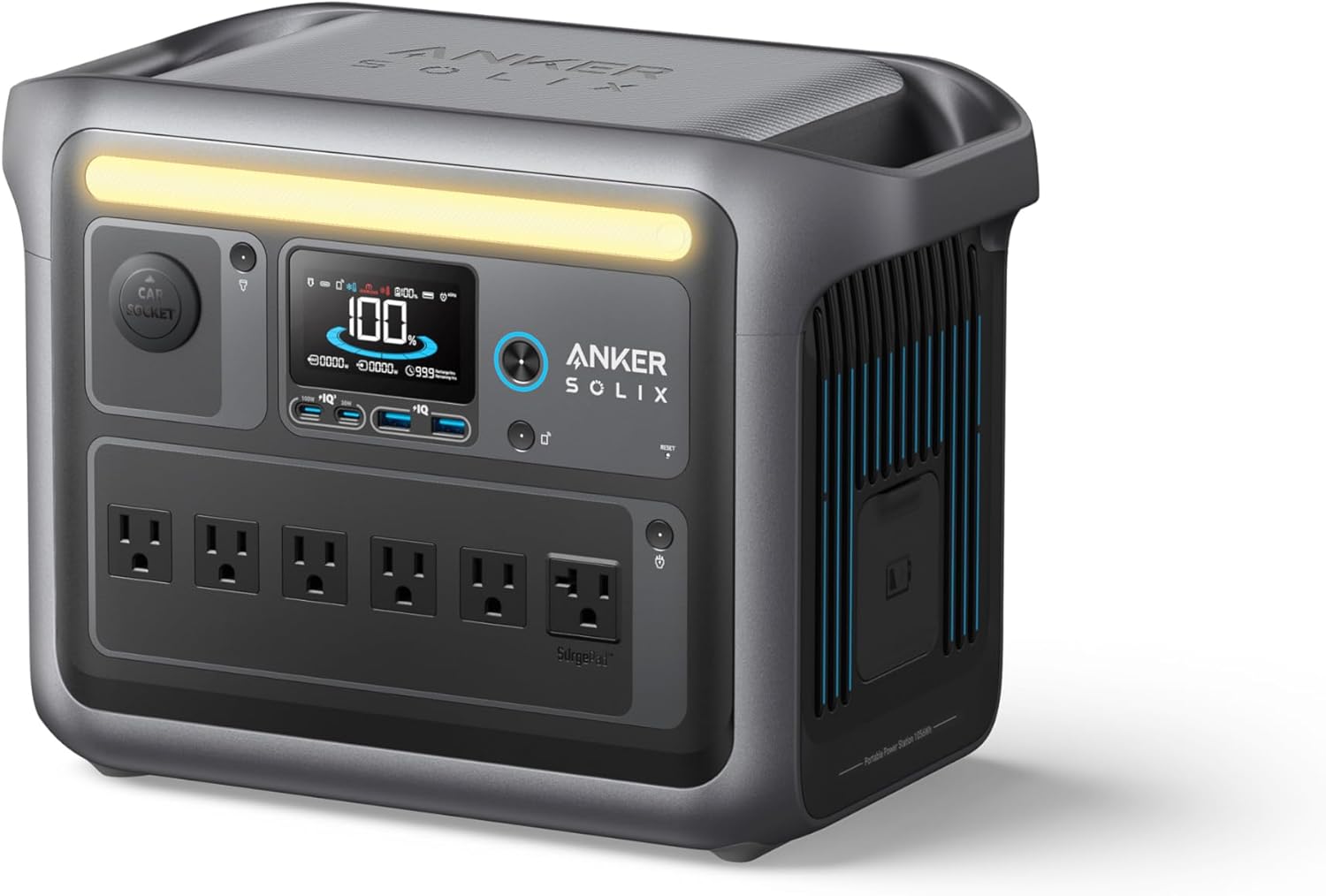
EcoFlow DELTA 3 Plus
EcoFlow's newest mid-range flagship. The DELTA 3 Plus improves on the Delta 2 with faster charging, LiFePO4 chemistry, and UPS functionality — all at a lower price.
Frequently Asked Questions
Can a portable power station power an outdoor wedding?
Yes. A 2,000-4,000Wh power station handles most outdoor wedding power needs: string lights (100-300W), a DJ setup or speaker system (200-500W), phone charging stations, and small catering equipment. The EcoFlow DELTA Pro 3 (4,096Wh, 4,000W output) powers all of this for 6-10 hours. For larger weddings with full catering and climate control, pair it with a quiet generator for heavy loads.
How many watts do you need for an outdoor party?
A typical backyard party needs 500-1,500W of power: string lights (100-300W), a Bluetooth speaker or PA system (50-300W), a phone charging station (100W), and maybe a blender or small appliance (300-600W). A 1,000Wh power station like the EcoFlow DELTA 3 Plus or Anker SOLIX C1000 handles a 4-6 hour party comfortably.
Are portable power stations quiet enough for events?
Yes. Most portable power stations operate at 30-45 dB, which is quieter than a whispered conversation. Compare this to gas generators at 65-80 dB (louder than a vacuum cleaner). Power stations produce zero fumes, no vibration, and can sit right next to guests without anyone noticing them — a major advantage for weddings, intimate gatherings, and events where noise matters.
Can you run a PA system off a portable power station?
Yes. Most portable PA systems and powered speakers draw 100-500W. A power station with 1,000W+ output handles any portable PA system easily. Even large powered speakers like JBL EON or QSC K-series (200-400W each) run for hours on a 1,000Wh station. Just avoid running massive concert-level sound systems — those need dedicated power.
Ready to Buy? Here's What We Recommend
Based on our testing and this guide, these are the best options for most people: