Guide
Patio & Backyard BBQ Season: Power Up Your Outdoor Kitchen & Entertainment

TL;DR
Memorial Day kicks off backyard season. Here is how to power an outdoor kitchen, speakers, and string lights off one silent battery, with real wattage math and picks.
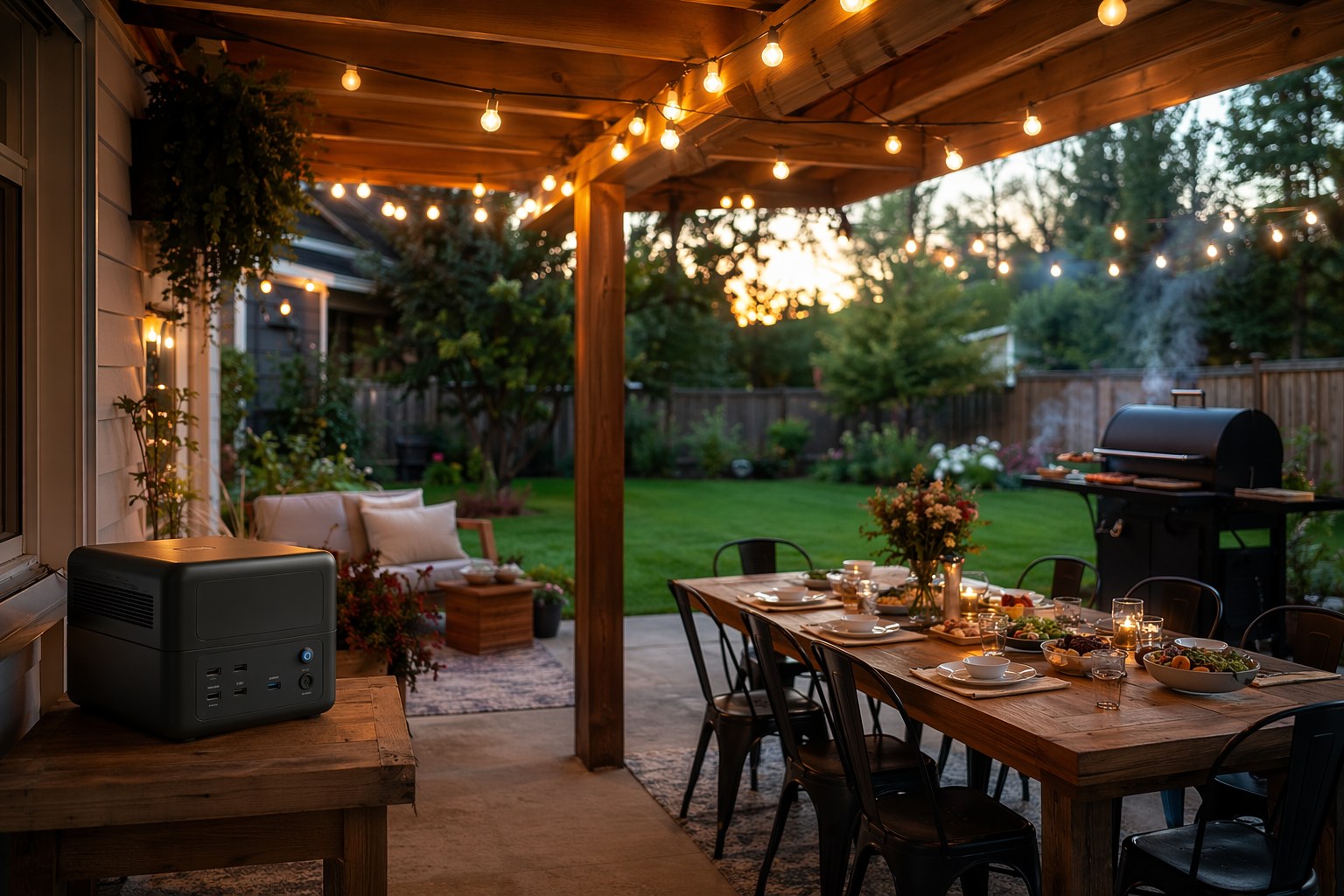
There is a specific Saturday every year, usually Memorial Day weekend, when my backyard officially reopens for the season. The grill comes off its cover, the string lights go back up across the pergola, and someone inevitably asks where to plug in the speaker. For years my answer was a sad orange extension cord run out through the kitchen window, pinched in the screen, with a power strip balanced on a planter. It worked, technically, and it tripped the indoor GFCI every time the blender and the griddle ran together.
After living through Hurricane Irma and spending the years since obsessing over backup power, I came to a happy realization: the same battery that keeps my refrigerator running through a four-day outage is the best backyard entertainment tool I own. It is silent, it has no fumes, and it sits right on the patio table next to the chips. This guide is how I power an entire outdoor kitchen and a long summer evening off a single station, with the real wattage numbers so you buy the right size once.
Think in Zones, Not in One Big Plug
The mistake I made for years was treating backyard power as a single problem: find an outlet, run a cord, plug in everything. The setups that never hiccup, the ones the experienced hosts I know use, break the yard into zones and assign each zone a power source. There are really only two kinds of devices at a BBQ, and they could not behave more differently.
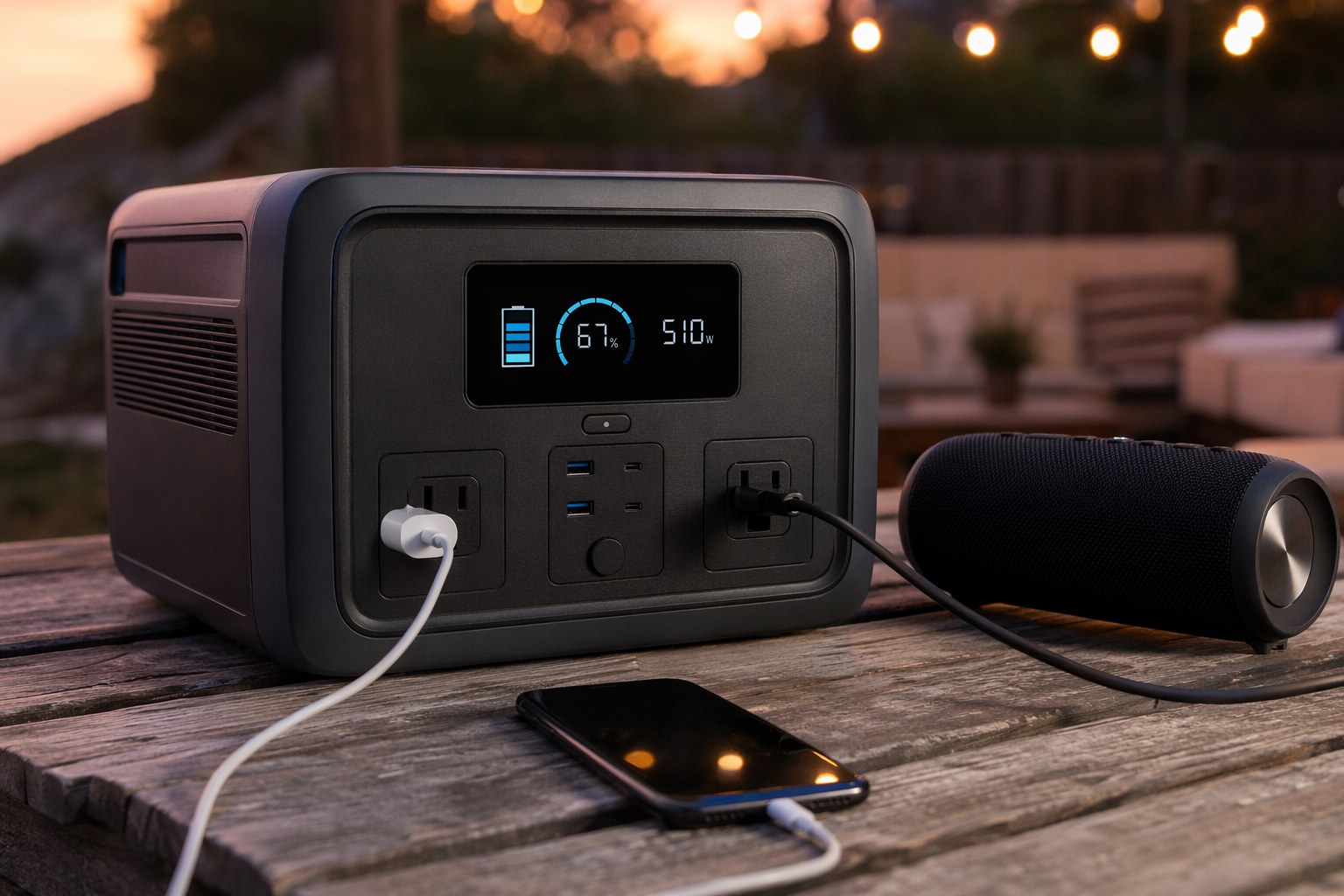
The first kind sips power. String lights, a Bluetooth speaker, phone chargers, a small drink cooler, a fan. Every one of these is under 100W, and most are under 50W. You can run all of them, all night, off a modest battery and never think about it.
The second kind is anything that makes heat. An electric griddle, an air fryer, an induction burner, an electric kettle. These pull 1,200 to 1,800W the instant they switch on. They do not care how big your battery is; they care whether the inverter can deliver the watts. This is the single distinction that decides what you buy and how you set up, so before anything else, sort your gear into those two piles.
Build a Watt-Hour Budget for the Light Stuff
Capacity is rated in watt-hours, which is just watts multiplied by the hours you run them. Here is what a realistic ambiance-and-music evening looks like for a typical backyard party.
| Device | Wattage | Hours | Watt-hours |
|---|---|---|---|
| LED string lights (200 ft) | 40W | 5 | 200 |
| Powered speaker / small PA | 60W | 5 | 300 |
| Phone & camera charging (4-6 devices) | 50W | 4 | 200 |
| Electric drink cooler | 60W | 5 | 300 |
| Blender (frozen drinks, intermittent) | 500W | 0.2 | 100 |
| Realistic total | ~220W avg | ~1,100Wh |
Notice the blender. It demands a frightening 500W, but you run it in 30-second bursts, so across the whole night it adds only about 100Wh, less than the string lights. That pattern, brief high-draw spikes against a low steady baseline, is the defining shape of party power, and it is exactly why a 1,000Wh battery stretches further than the spec sheet suggests. For a deeper runtime breakdown by device, our outdoor events power guide walks through the math for everything from projectors to warming trays.
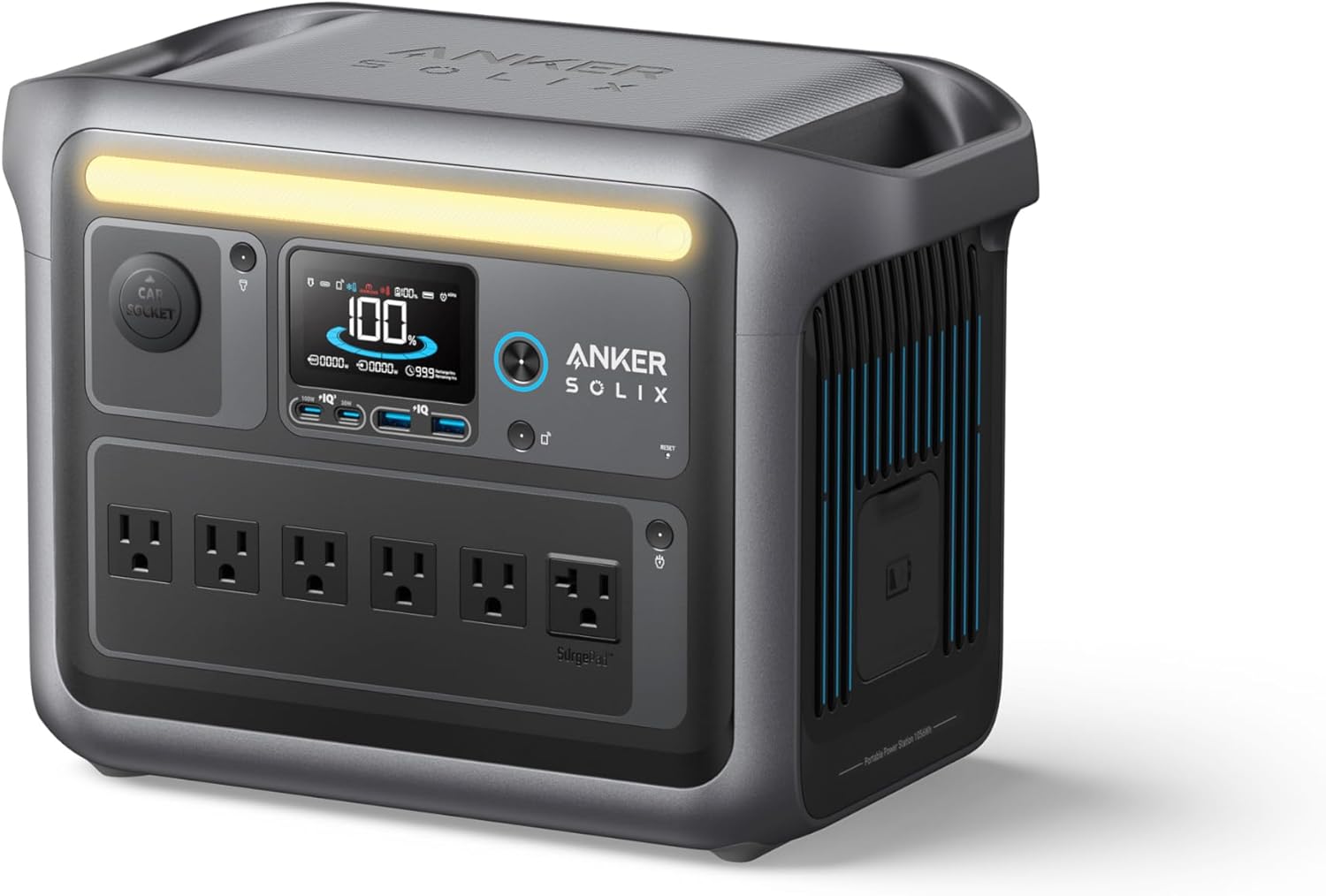
For this lights-and-music tier, my default recommendation is the Anker SOLIX C1000. At 1,056Wh with 1,800W of continuous output, it runs the entire ambiance package for the better part of a long evening and recharges fast when you plug it back in. At around 28 pounds it carries from the garage to the patio one-handed, and its front display shows live watts pulled and hours remaining, which is genuinely reassuring at 10 p.m. when you are wondering whether the music will outlast the guests.
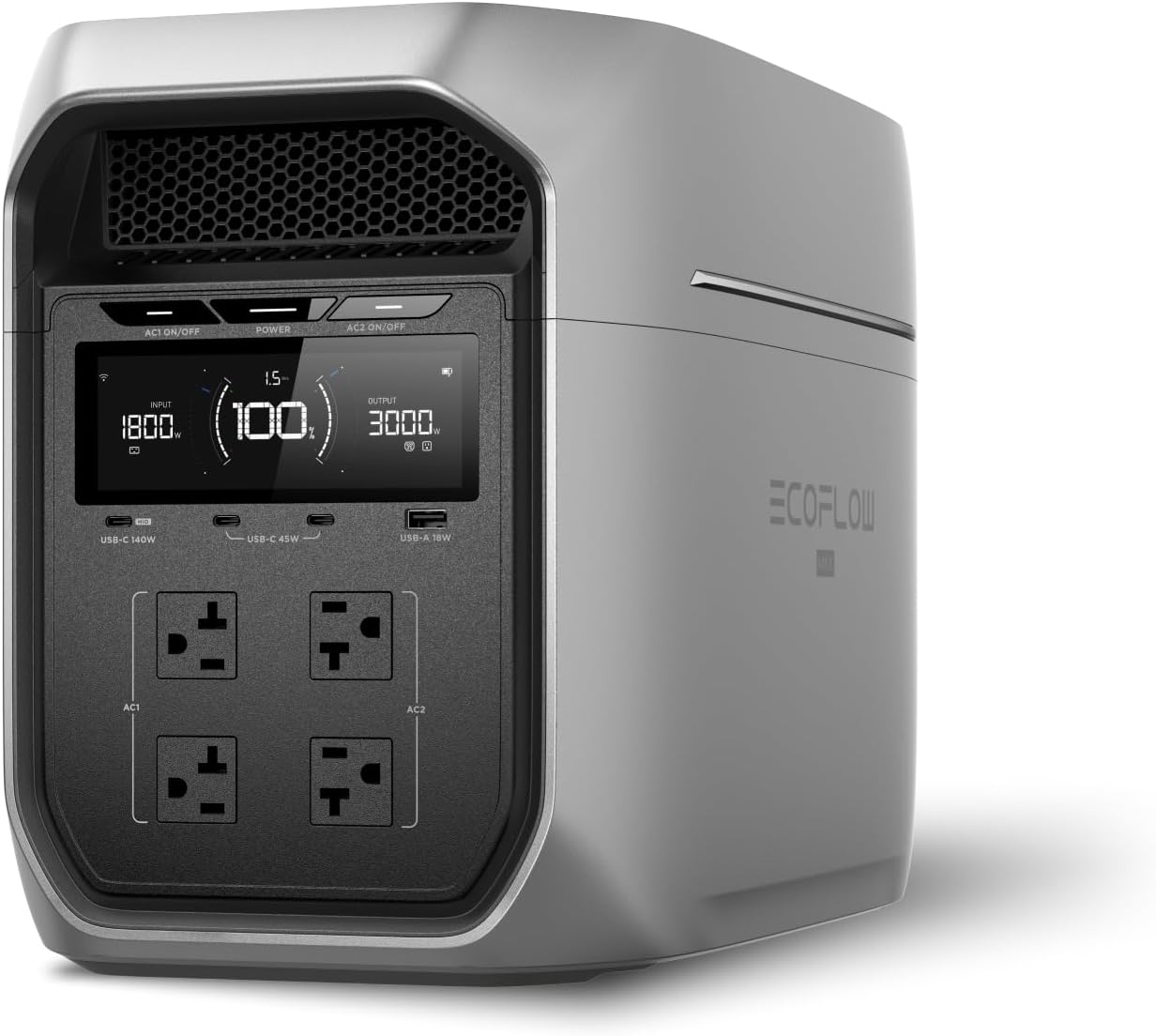
If you want one unit that doubles as your home backup battery the other eleven months of the year, the EcoFlow DELTA 3 Plus is the smarter buy. It is 1,024Wh, recharges to full in under an hour from a wall outlet, and uses an LFP battery rated for thousands of cycles, so weekly summer use barely registers against its lifespan. I always lean toward dual-purpose gear; the battery you bought for storm season should not hibernate in a closet.
The Outdoor Kitchen: Where Output Wattage Rules
Here is where I have watched hosts trip a breaker mid-burger. The instant you bring electric cooking into the picture, capacity stops mattering and output rating takes over. Sort your heat appliances by their draw.
| Appliance | Running watts | Surge |
|---|---|---|
| Electric griddle | 1,200-1,800W | up to 1,800W |
| Air fryer | 1,400-1,700W | 1,700W |
| Induction burner | 1,300-1,800W | 1,800W |
| Electric kettle | 1,200-1,500W | 1,500W |
| Slow cooker / warming tray | 200-300W | 300W |
| Mini fridge / drink cooler | 50-80W | 300W startup |
To run any single heating appliance you need a station rated for at least 1,800W continuous, and 2,000W or more gives you breathing room. My pick here is the EcoFlow DELTA 2 Max: 2,048Wh of capacity, 2,400W of continuous output, and an X-Boost mode for stubborn high-wattage devices. It runs a griddle plus the lights and speaker simultaneously without flinching. At roughly 50 pounds it is not park-portable, but in a backyard it never moves more than a few feet, so weight is irrelevant.
The honest warning, the same one I give for emergency cooking: do not try to run two heaters off one battery. A griddle plus an air fryer is over 3,000W, and that overloads everything short of the largest units. Stagger your cooking, or do what every seasoned outdoor cook I know does and keep heat on propane while the battery handles the cold stuff and the electronics. That division of labor prevents nearly every overload. And if you want to keep guests comfortable on a brutal afternoon, a 2,000Wh-class station can run a strong fan or a compact AC unit; our best portable AC for camping guide covers models that pair well with this size battery.
When the Crowd Grows: Big Batteries for Big Nights
A graduation open house, a block party, an all-afternoon-into-night affair, this changes the arithmetic. Now you might run a real PA or a DJ rig, dozens of feet of lighting, a drink cooler going since noon, charging for a crowd, and some electric cooking. That can sit at 800 to 1,500W average for six-plus hours, which is 5,000 to 9,000Wh of energy.
For that, reach for a 2,000Wh-class workhorse. The Jackery Explorer 2000 Plus delivers 2,042Wh and a stout 3,000W of continuous output, enough to run an entire entertainment setup from one box, and it expands if you outgrow it. The Bluetti Elite 200 V2 is the one I personally trust for repeated heavy use: 2,073Wh, 2,600W output, and a battery rated for 6,000-plus charge cycles, which means you could host every single weekend for years and barely scratch its lifespan.
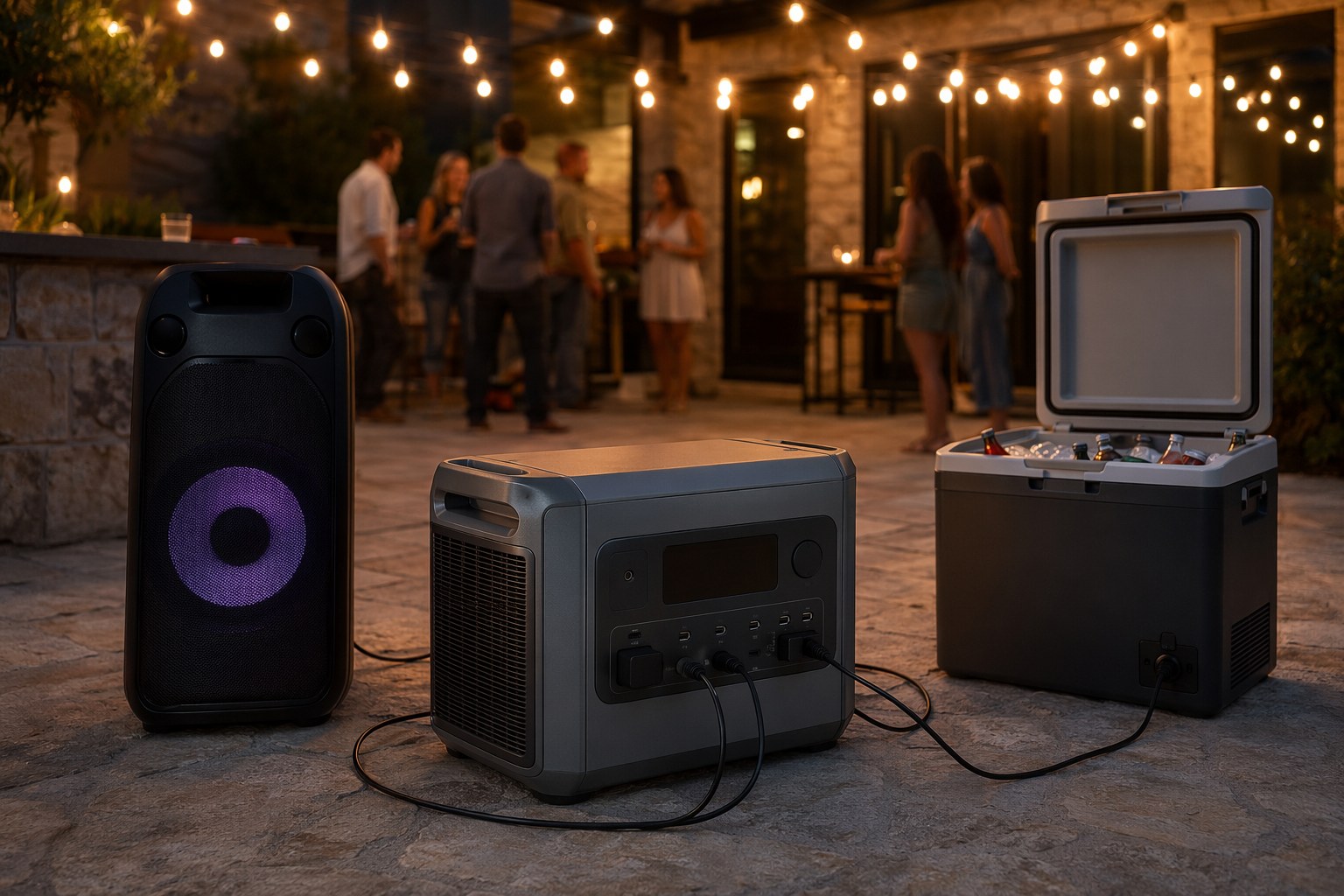
The comparison most buying guides skip: a 2,000Wh battery and a 2,000W inverter generator cost about the same and run about the same appliances. The generator gives you effectively unlimited runtime as long as you keep feeding it gas, which genuinely matters for an all-day vendor booth or a multi-day event. But it runs at 50 to 60 decibels nonstop, roughly the volume of constant conversation you have to talk over, it produces exhaust you cannot have near a patio, and federal fire guidance says keep it 20 feet from the house. For a backyard where the entire point is to hear each other and the playlist, the silent battery wins. I keep a generator for real emergencies and grab the battery for everything social. For a full step-by-step on layout and redundancy at bigger events, see our outdoor event power guide.
A Pre-Party Checklist From Someone Who Plans for Worst Cases
The habits I built doing emergency prep transfer perfectly to never having a power hiccup at a party. Run through this the day before.
Charge it fully the night before. Batteries do not top off instantly, and a half-charged station is a party that ends early. Set a phone reminder if you are the type to forget.
Size for your peak, not your average. The moment that matters is when the blender, the griddle, and the lights all run at once. Confirm your station’s continuous-watt rating covers that simultaneous spike, then add 20 percent.
Stage it in the shade. A station baking in 95-degree afternoon sun runs hotter, the cooling fan works harder, and you lose usable capacity. Tuck it under a side table or behind a planter.
Run real outdoor cord. Position the station centrally and run quality outdoor-rated extension cords to the lights and speaker. Plan the layout before guests arrive so cords are not a trip hazard at the buffet.
Keep heat off the battery when you can. Propane for cooking, battery for electronics and the cooler. This one rule prevents almost every overload I have ever seen.
My Actual Memorial Day Setup
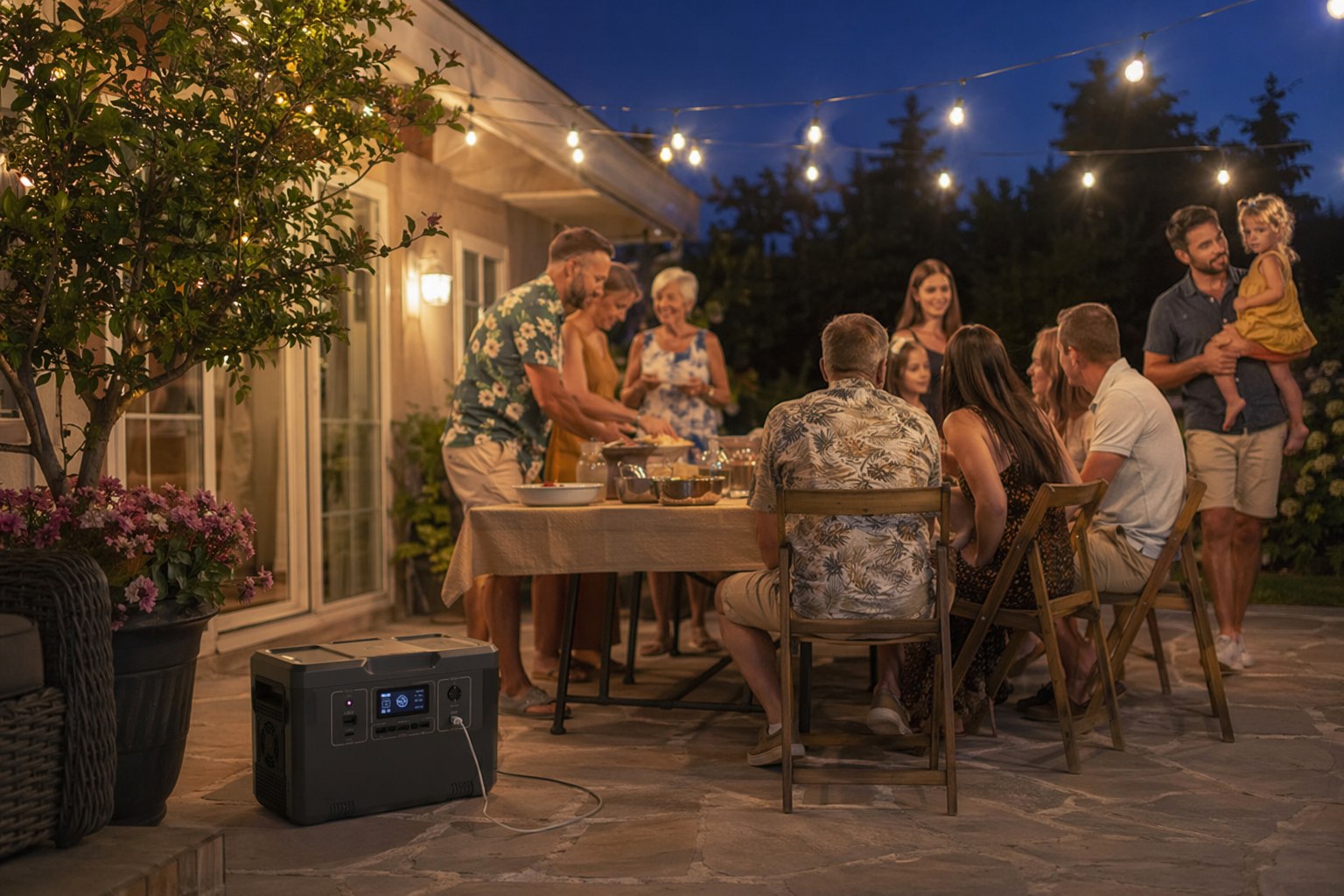
Here is what I run for my own season-opener, a 30-person evening on the patio.
- One Bluetti Elite 200 V2 (2,073Wh) as the main hub beside the table.
- 200 feet of LED string lights, about 40W, on from dusk.
- One powered speaker at roughly 70W average.
- A four-port charging station and a drink cooler running all evening.
- One electric griddle for smash burgers, run only during the dinner window, with the gas grill handling everything else.
The whole evening lands near 2,000Wh of energy, leaving the Elite 200 V2 with a comfortable buffer and zero anxiety about going dark during the toast. Plan it once, charge it the night before, and the same station carries you through every cookout, tailgate, and storm for years. That is the kind of preparedness that quietly pays you back.
Recommended Power Stations
EcoFlow
EcoFlow DELTA 3 Plus
EcoFlow's newest mid-range flagship. The DELTA 3 Plus improves on the Delta 2 with faster charging, LiFePO4 chemistry, and UPS functionality — all at a lower price.
Frequently Asked Questions
What size power station do I need to host a backyard BBQ?
For an ambiance-focused evening of string lights (40W), a powered speaker (60W), phone charging (40W), and a drink cooler (60W), your average draw lands near 200W. A 1,000Wh station covers four to five hours with margin. The moment you add electric cooking, an air fryer or griddle at 1,500W, you are no longer sizing for capacity but for output, and you need a unit rated for at least 1,800W continuous. For most hosts, a single 1,000 to 2,000Wh station handles the whole night.
Can a portable power station replace my outdoor outlet for cooking appliances?
For one heating appliance at a time, yes, if the station is rated for the load. An electric griddle, air fryer, or induction burner pulls 1,200 to 1,800W while heating, so you need a continuous output rating above that, not just a big battery. A 2,000Wh unit with 2,400W output runs a single griddle and your lights and speaker together. Running two heaters at once usually exceeds 3,000W and trips all but the largest stations, so stagger your cooking or keep heat on propane.
How much does a power station cost to run for a party compared to grid power?
Almost nothing either way. A full evening of lights, music, and charging draws well under one kilowatt-hour, roughly 15 to 20 cents of grid electricity. Even a session of electric cooking only adds a few cents. The value of a battery is not saving money on the meter; it is freedom from extension cords through the kitchen window and from engine noise, plus a unit you already own for storm season.
Ready to Buy? Here's What We Recommend
Based on our testing and this guide, these are the best options for most people: