Guide
Spring Tennis Tournament & Sports Events: Powering Event Gear & Communications

TL;DR
How to power scoreboards, sound systems, medical tents, and communications at spring tennis tournaments and outdoor sports events with quiet portable power stations.
Anyone who has run an outdoor tournament knows the moment: it’s 7:30 a.m., the courts are lined, the brackets are printed, and someone asks, “Where do we plug in the scoreboard?” The answer, at most parks and school complexes, is nowhere. There’s a water fountain and a restroom, and that’s the extent of the infrastructure.
I learned to plan around that gap the hard way, working community preparedness events after Hurricane Irma, where reliable power and reliable communication are the two things that fall apart first. A spring tennis tournament is a much friendlier setting than a disaster zone, but the principle is identical: if your scoring, your sound, your radios, and your medical tent all depend on power, you need to bring that power with you and you need it to be silent, fume-free, and dead reliable. A portable power station does exactly that. Here’s how I plan power for sports events of every size.
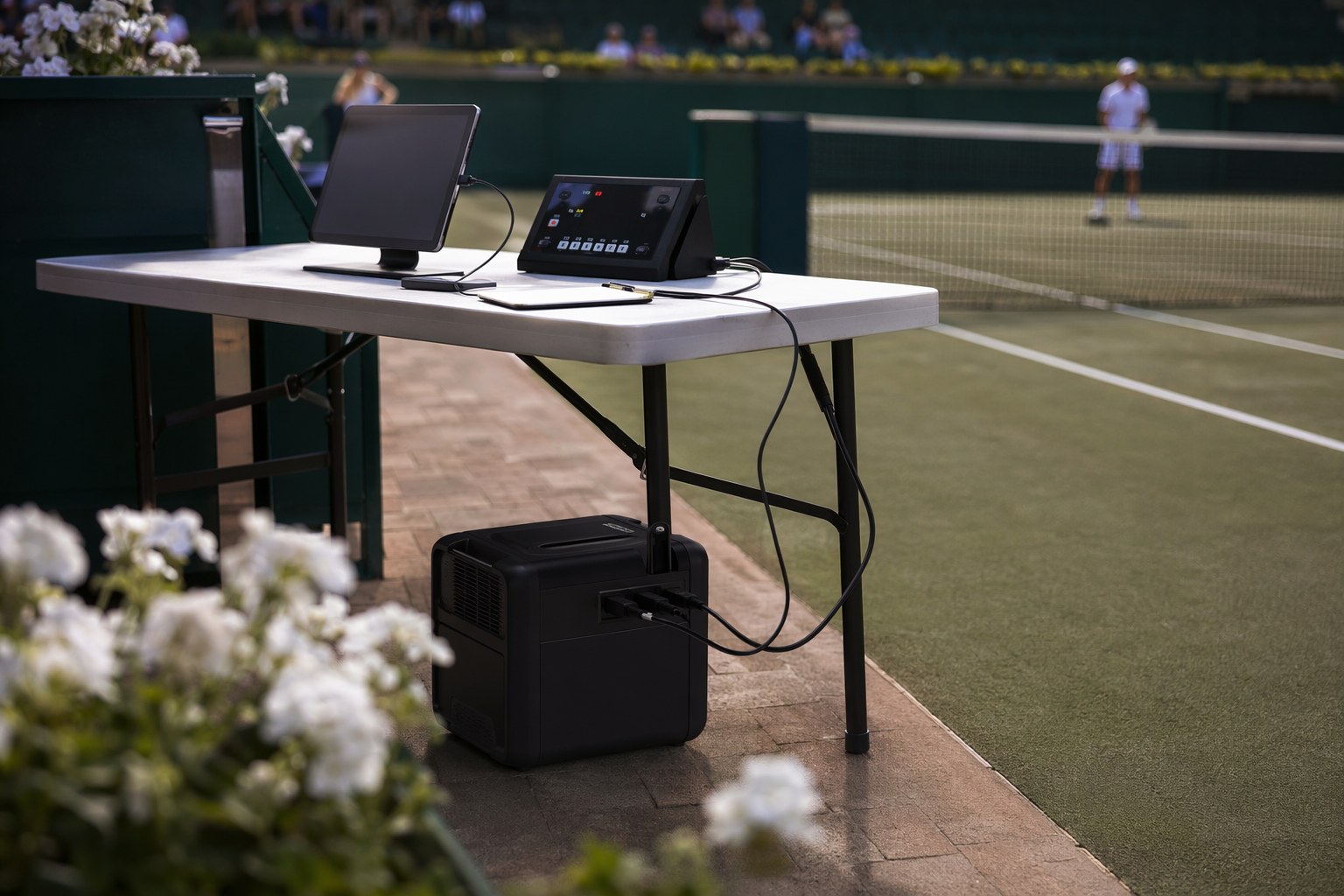
What a Sports Event Actually Needs Power For
Before you buy or rent anything, list every device that needs electricity over the course of the day. At a typical tennis tournament or youth sports event, it breaks down into five buckets, and most of them draw far less than people expect.
| Equipment | Power Draw | Notes |
|---|---|---|
| Scoring tablet / laptop | 30-65W | Plus a router or hotspot at 10-15W |
| Electronic scoreboard (LED) | 20-100W | Court-side models are very efficient |
| PA / announcement speaker | 50-300W | Powered speaker for calls and music |
| Two-way radio chargers (bank of 6) | 30-60W | Keeps officials connected all day |
| Phone / tablet charging station | 100-150W | Officials, staff, vendors |
| Box fan or misting fan | 50-120W | Heat management in spring sun |
| Medical tent fridge (medications, ice) | 50-80W | Runs intermittently |
| Coffee urn / hot water | 800-1,500W | High draw, short bursts |
| Printer (brackets, results) | 30-50W active | Spikes higher when printing |
The pattern is the one I stress at every preparedness talk: communications, scoring, and lighting are tiny loads. Heating and cooking are the monsters. A scoreboard, three radios, two tablets, and a fan together draw less than 400W. Add a coffee urn and you’ve tripled your peak demand in a single appliance. Knowing which devices are the heavy hitters tells you exactly how much capacity to bring. If you want to build the habit, our guide to what a 1,000Wh power station can run walks through the same math device by device.
Why a Power Station Beats a Generator at Sporting Events
I’m not anti-generator. For sustained heavy loads, gas wins. But racket sports and most amateur athletics have a noise problem that rules generators out near the field of play. Tennis officials call lets and faults on sound. A 70 dB generator humming behind the scorer’s table would generate more complaints than a rain delay.
A power station solves this. It runs at a whisper, produces zero carbon monoxide, and can sit on the scorer’s table or in the medical tent with no clearance requirements. There’s no fuel to store in a hot car trunk, no pull-starting at dawn, no refueling mid-match. For the silent, sit-anywhere convenience that an event needs, it’s the obvious tool. The one place a generator still earns a spot is as backup for an all-day, high-draw load like a large food-service operation, and I’ll cover that combo below. For the broader case, our power station for outdoor events guide lays out the full tradeoff.
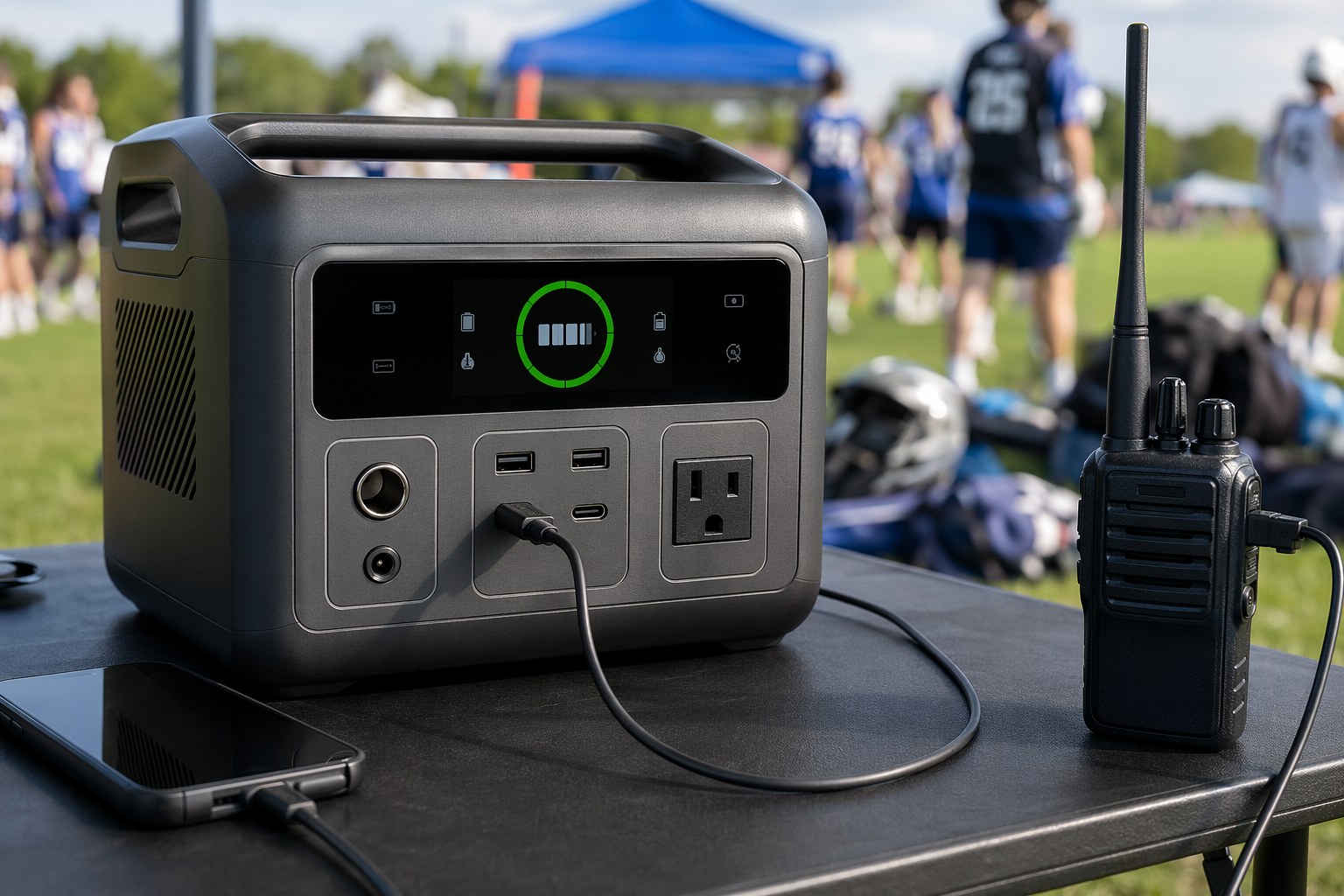
Sizing Your Power by Event Type
Single-Court or Small Tournament (one to four courts)
Equipment: Scoring tablets, a small LED scoreboard, a PA speaker for announcements, radio chargers, phone charging, one or two fans.
Total continuous draw: 200-500W Duration: 8-10 hours Capacity needed: 1,500-2,500Wh
This is the most common setup I help organizers plan, and a single 2,000Wh station covers it with margin to spare. The EcoFlow DELTA 2 Max delivers 2,048Wh and a 2,400W output, which means even a brief coffee-urn run won’t trip it. The Bluetti Elite 200 V2 is my pick when the event is annual and the station will see years of use: its LiFePO4 cells are rated for 6,000+ cycles, so it’ll outlast a decade of spring tournaments. Either one sits quietly under the scorer’s table all day.
Multi-Court or All-Day Tournament with a Vendor Row
Equipment: Everything above plus amplified music between matches, a results printer, a coffee/hot water station, and a small fridge in the medical tent.
Total continuous draw: 400-900W with spikes to 1,800W Duration: 10-12 hours Capacity needed: 3,000-4,000Wh
Once you add cooking-class loads and want headroom for a long day, step up to the EcoFlow DELTA Pro 3. Its 4,096Wh capacity and 4,000W output swallow a coffee urn, a fridge, sound, and scoring without flinching, and it’s expandable if your event grows. The Jackery Explorer 2000 Plus is the alternative I recommend when organizers want to start with one unit and chain expansion batteries season after season. Both roll on wheels, which matters when you’re moving 60-plus pounds from the parking lot to center court.
Large Multi-Day or Regional Event
For a regional tournament spanning a weekend with a full food operation, a beer garden, and stage-level sound, batteries alone get expensive. This is where I bring a generator back into the plan as a dedicated workhorse for the heavy food-service zone. A Champion 4500W dual-fuel inverter generator runs the catering tent on propane (cleaner and easier to store than gasoline), positioned well away from the courts, while power stations handle the silent, courtside loads. Zone your power: one source per function. If the generator hiccups, scoring and communications never blink because they’re on separate batteries.
Don’t Overlook Communications and Medical
In every after-action review I’ve sat through, the failures that hurt most weren’t the scoreboard going dark. They were a dead radio when a heat-illness call came in, or a phone at 3% when a parent needed to reach the tournament desk. Communications power is not optional infrastructure at a sporting event; it’s safety infrastructure.
Set up a dedicated charging bank on one outlet of your station: a six-port USB hub keeps every official’s radio and phone topped off in rotation. Assign one person to watch it. It’s the cheapest insurance you’ll buy all day.
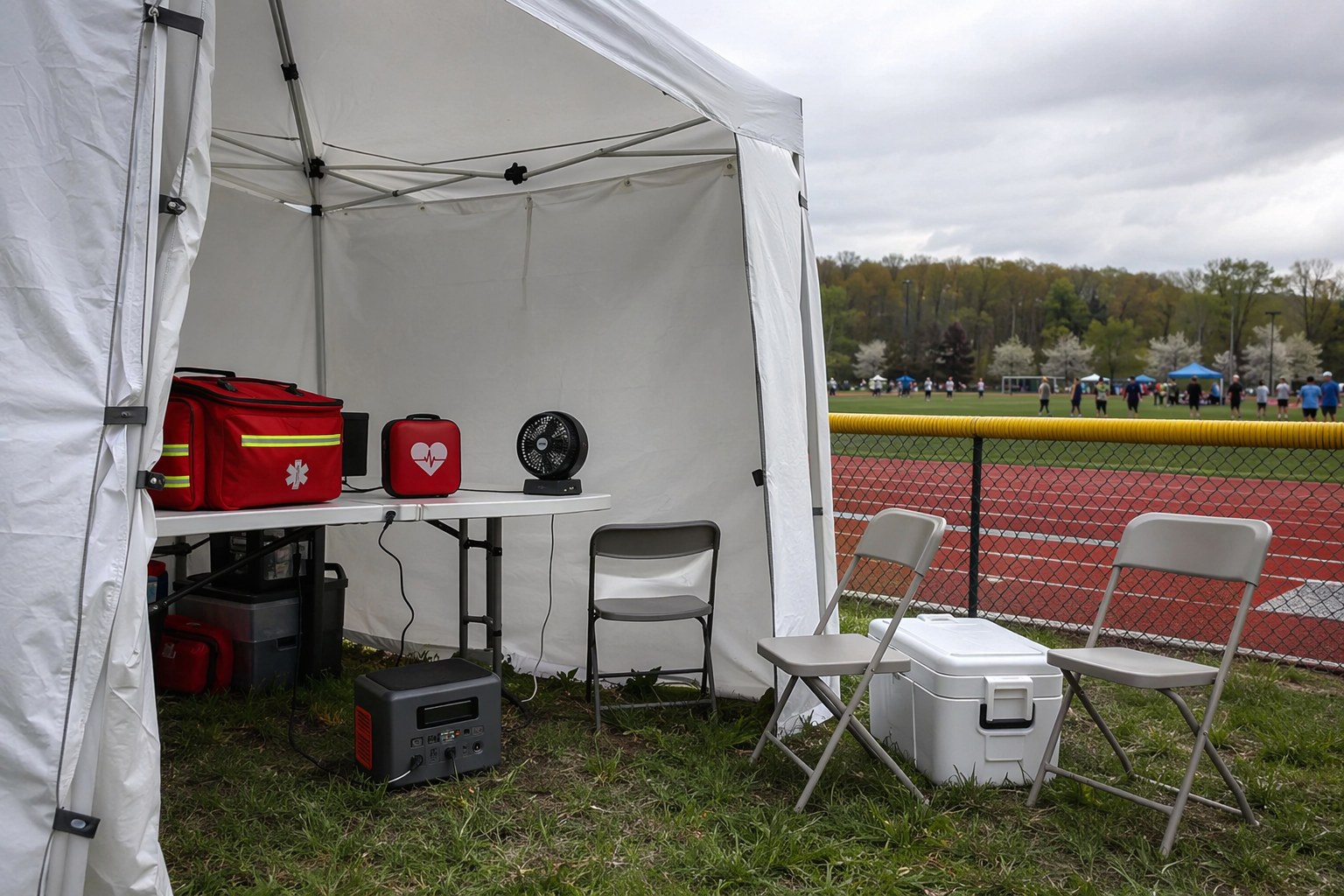
The medical or first-aid tent gets the same priority I’d give a home during an outage. A power station there keeps an AED’s charger ready, runs a fan to fight spring heat, powers a small fridge for ice and any temperature-sensitive medications, and charges the tablet your medical staff uses to log incidents. A reminder I make at every briefing: the station backs up the AED’s charger, but the AED’s own internal battery must always be independently charged and ready. Never let convenience power become a single point of failure for a life-safety device.
Setup Checklist for Event Day
After enough events, I run the same pre-flight list every time. It prevents the small failures that snowball.
- Charge to 100% the night before. Start full, every station. If the day runs long, you’ll be grateful for the buffer.
- Do a full dress rehearsal. A week out, set up your entire power plan and run it for the planned duration. Problems you find in your driveway are free to fix; problems you find at 7:30 a.m. on game day are not.
- Map your zones. One station for scoring and communications, one for the medical tent, one for sound and vendors. Separation means a single failure never takes down everything.
- Keep stations elevated and covered. Spring weather turns. Put units on a table or crate at least six inches off the ground and have a canopy ready. Most stations are weather-resistant, not waterproof.
- Use surge-protected power strips, not bare extension cords, to fan out outlets, and never exceed the station’s rated output.
- Tape down every cable run with gaffer tape across walkways. At a tournament with hundreds of people moving, a tripped cable is both a hazard and an instant power loss.
- Label everything. Mark which station feeds which function so a volunteer can troubleshoot without finding you mid-match.
For a deeper walkthrough of cable management, weather protection, and load planning, our complete guide on how to power an outdoor event covers the setup mechanics in detail.
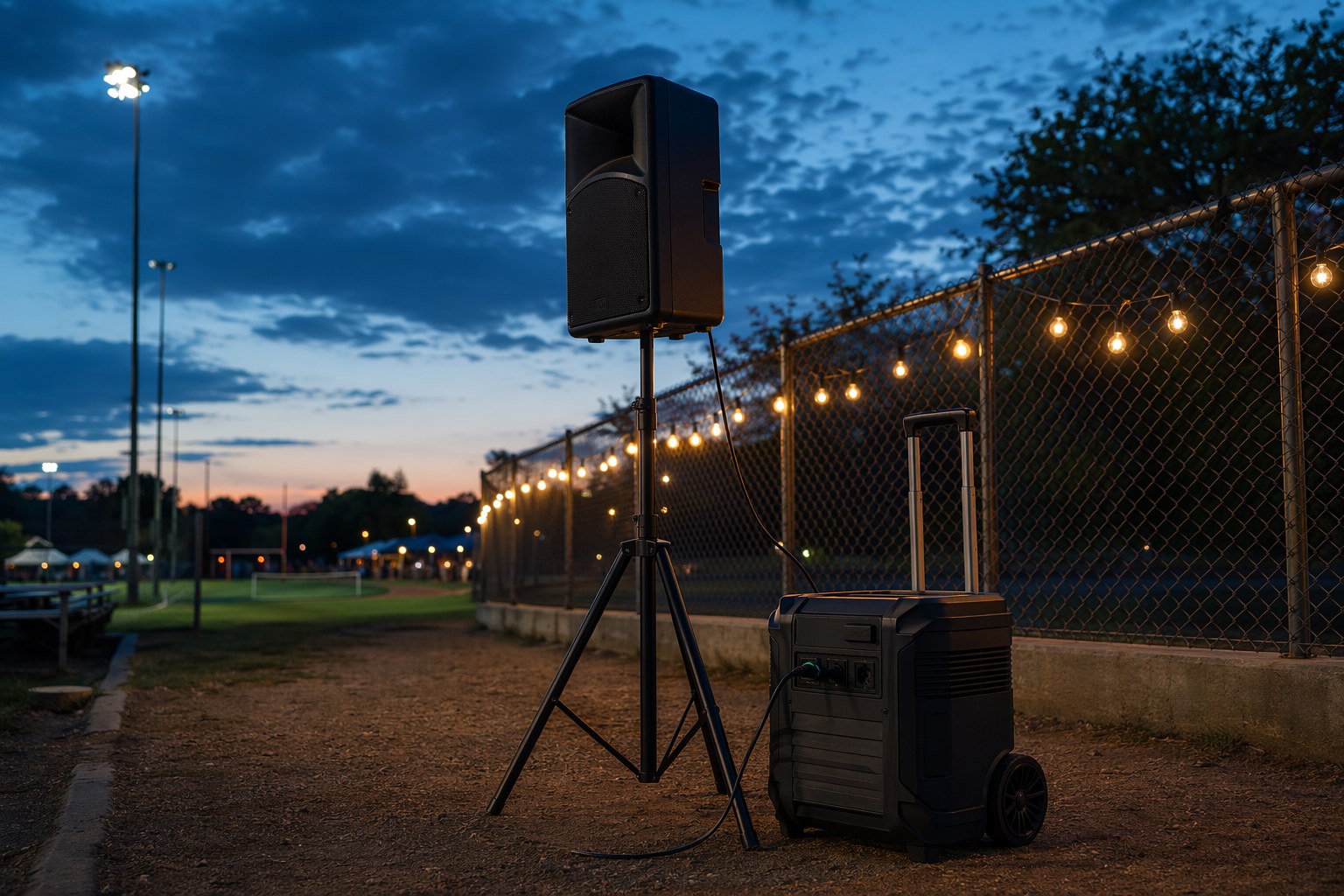
The Bottom Line
A spring tennis tournament doesn’t need a loud generator parked behind the scorer’s table, and your officials and players will thank you for not bringing one. For most one-to-four-court events, a single 2,000Wh station like the EcoFlow DELTA 2 Max or Bluetti Elite 200 V2 runs your scoring, sound, communications, and medical tent through a full day in total silence. Scale up to a DELTA Pro 3 when you add catering loads, and bring a dual-fuel generator into the plan only for a dedicated, high-draw food zone well away from the courts.
Plan your loads, zone your power, protect your communications and medical equipment first, and do a real dress rehearsal before the event. Do those four things and the only thing anyone will remember about your tournament is the tennis.
Recommended Power Stations
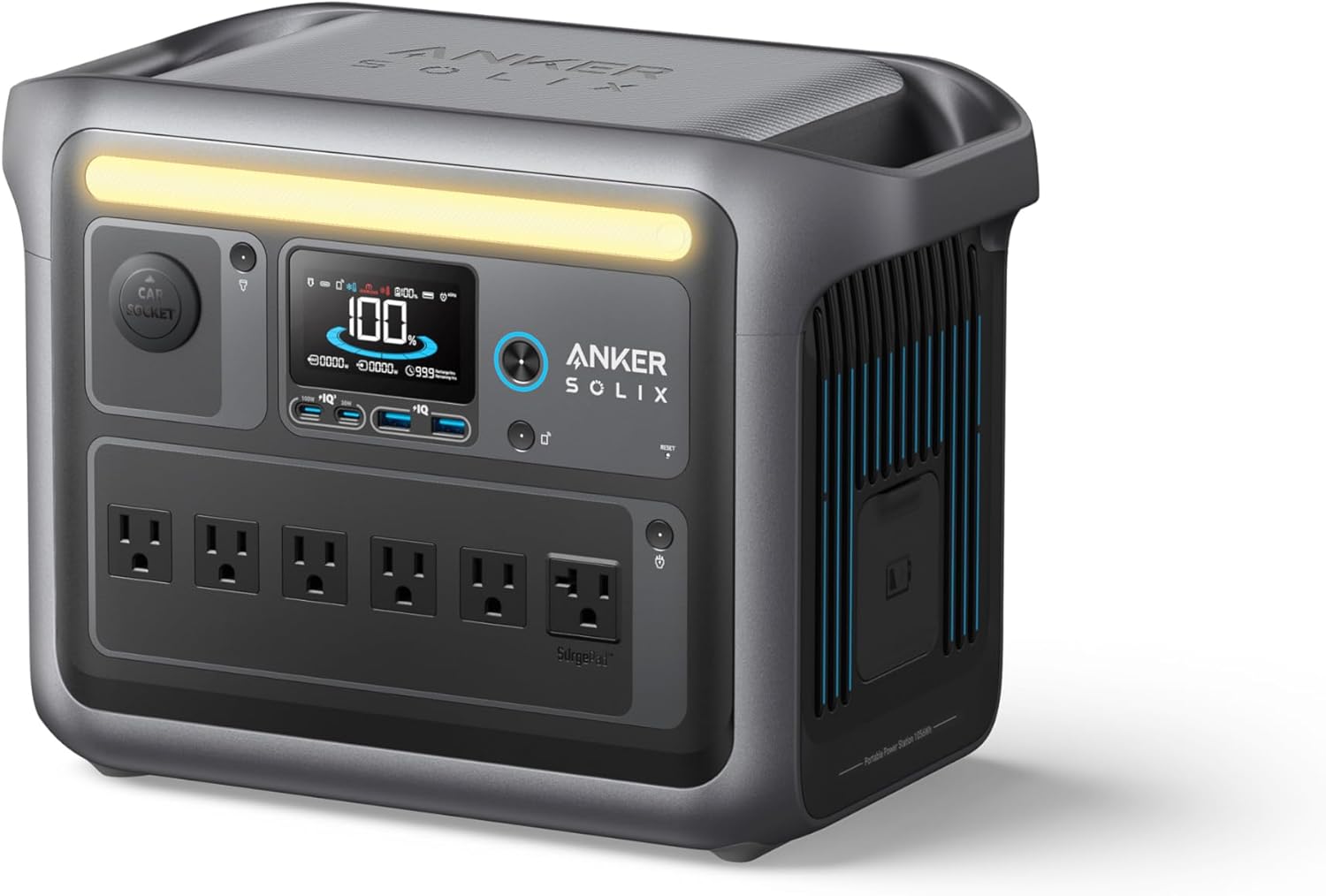
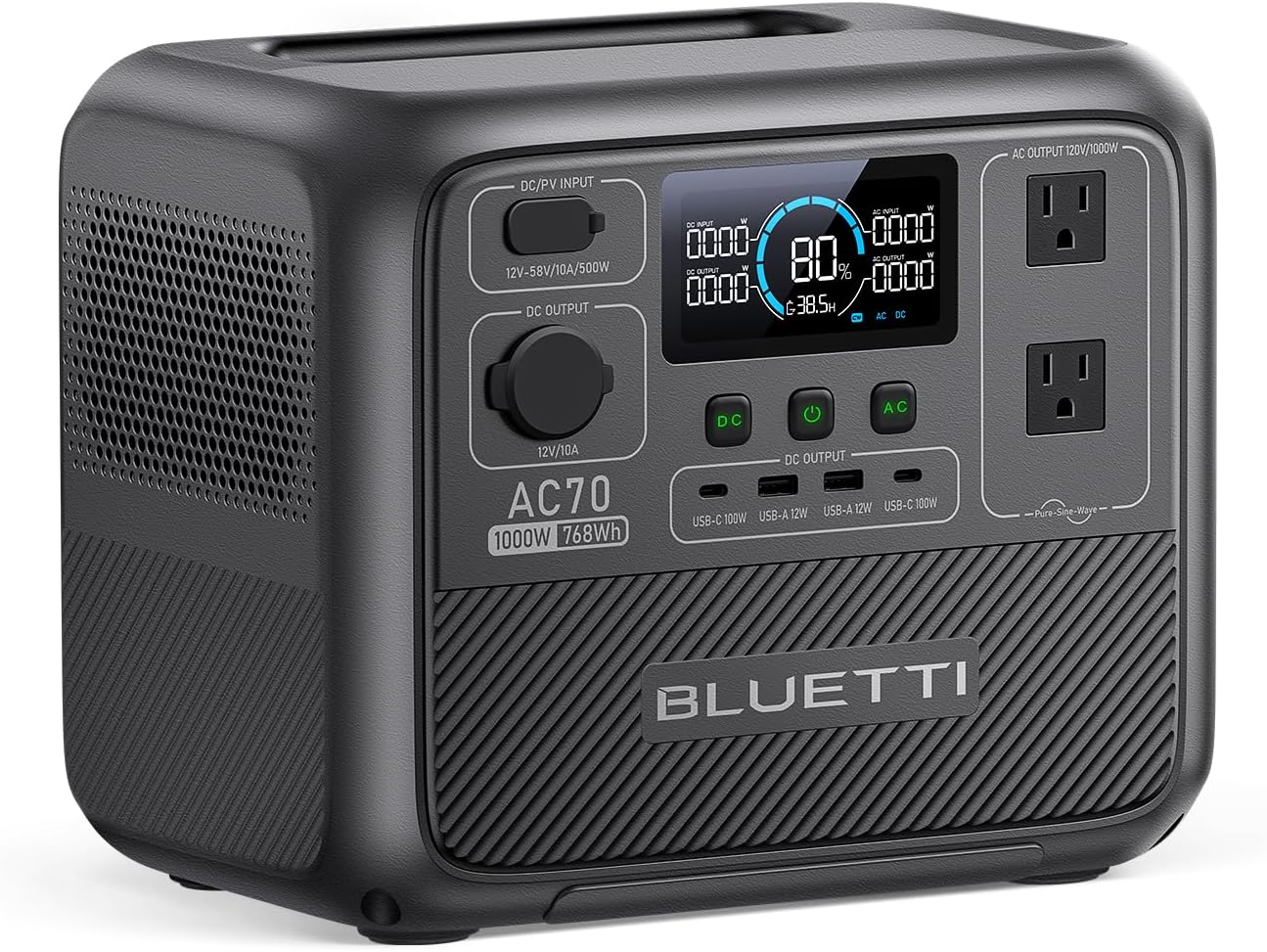
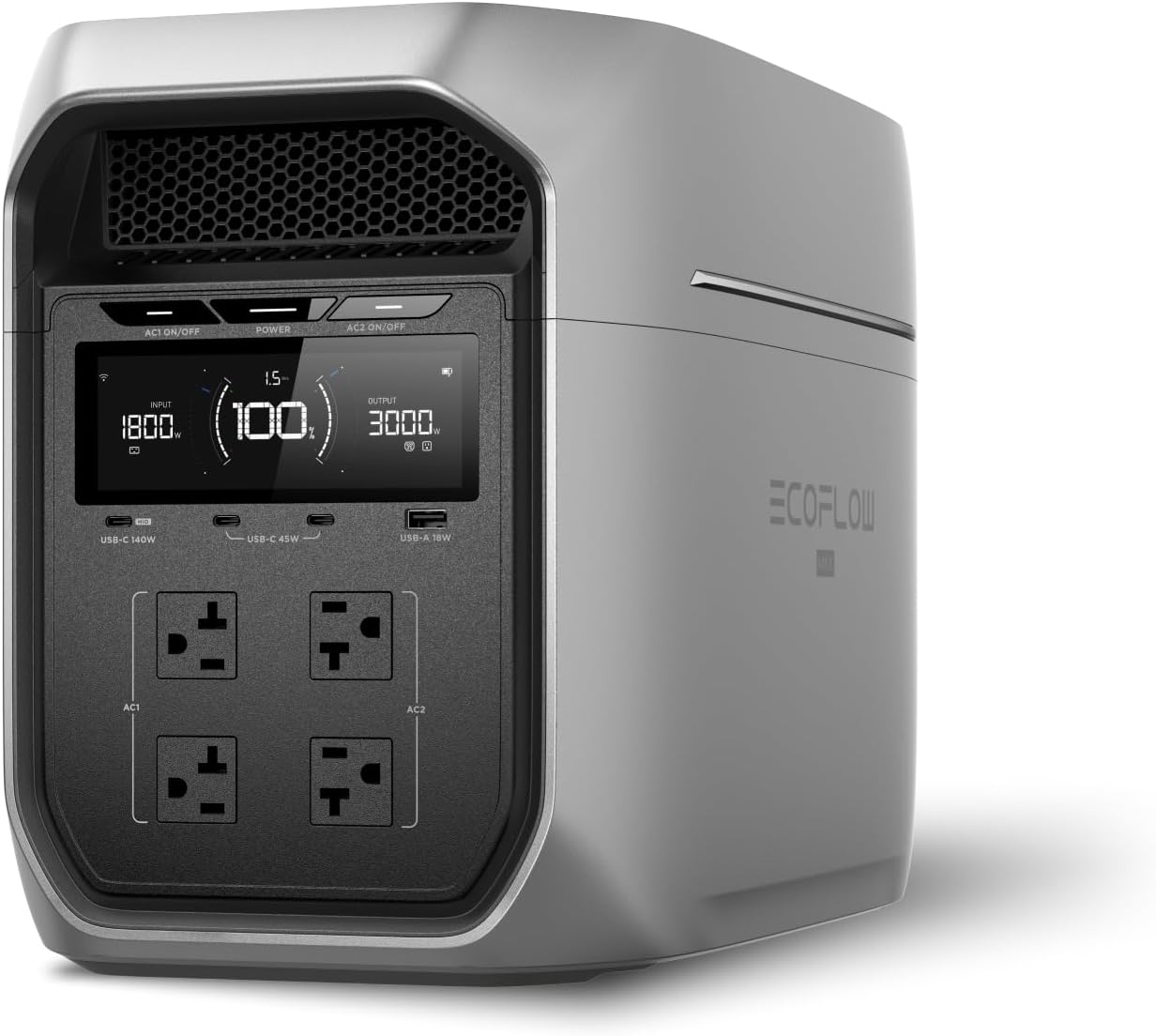
EcoFlow
EcoFlow DELTA 3 Plus
EcoFlow's newest mid-range flagship. The DELTA 3 Plus improves on the Delta 2 with faster charging, LiFePO4 chemistry, and UPS functionality — all at a lower price.
Frequently Asked Questions
How big a power station do I need for a one-day tennis tournament?
For a single-court or small multi-court event running scoring tablets, a PA announcement system, phone charging, and a fan or two, a 2,000Wh station handles a full 8-10 hour day comfortably. The EcoFlow DELTA 2 Max (2,048Wh) or Bluetti Elite 200 V2 (2,073Wh) is the sweet spot. Step up to a 4,000Wh DELTA Pro 3 if you're also running a coffee urn, a fridge for the medical tent, or amplified music between matches.
Are power stations quiet enough to use courtside during play?
Yes. Most portable power stations run silent at 30Wh-45 dB when they aren't fast-charging, which is quieter than the ambient noise of a tennis crowd. That matters in racket sports where officials call lets and faults. A gas generator runs at 65-80 dB and would be unusable next to a court. Set the station to its quiet or eco charging mode and it disappears into the background.
Can a power station run medical and first-aid equipment at an event?
It can run the support equipment around it, yes. A power station keeps an AED's charger topped off, runs a fan or small fridge for medications and ice, charges first-aid radios, and powers a phone or tablet for incident logging. It is not a substitute for the AED's own internal battery, which must always be charged and ready independently. Treat the station as backup and convenience power, not as the sole power source for any life-safety device.
Ready to Buy? Here's What We Recommend
Based on our testing and this guide, these are the best options for most people: