Guide
Mother's Day Recovery: Spring Home Refresh with Battery Backup for Tools

TL;DR
An engineer's guide to running cordless tool chargers, paint sprayers, and corded gear off a portable power station for your spring home refresh. Real power draws, runtime math, and which unit to buy.
Mother’s Day weekend has a way of turning into a project list. You finally hang the shelves, repaint the hallway, swap out the deck boards that went soft over winter, and tackle the closet system that has been a pile of parts in the garage since January. The problem isn’t motivation in May — it’s outlets. The far corner of the yard, the new bathroom with the breaker still off, the back of the garage where the only receptacle is behind a stack of storage bins. A portable power station turns every one of those dead zones into a worksite, and it does it without the noise, fumes, or extension-cord spaghetti of a gas generator.
I spent eight years as an automotive power electronics engineer before I started writing about portable power, so I look at these tools the same way I’d look at any DC-to-AC system: what’s the load profile, what’s the surge behavior, and where does the inverter actually fall over. This guide walks through the real numbers for spring home-refresh work, then matches them to specific units. No marketing watt figures — the draws below are measured ranges you can plan around.
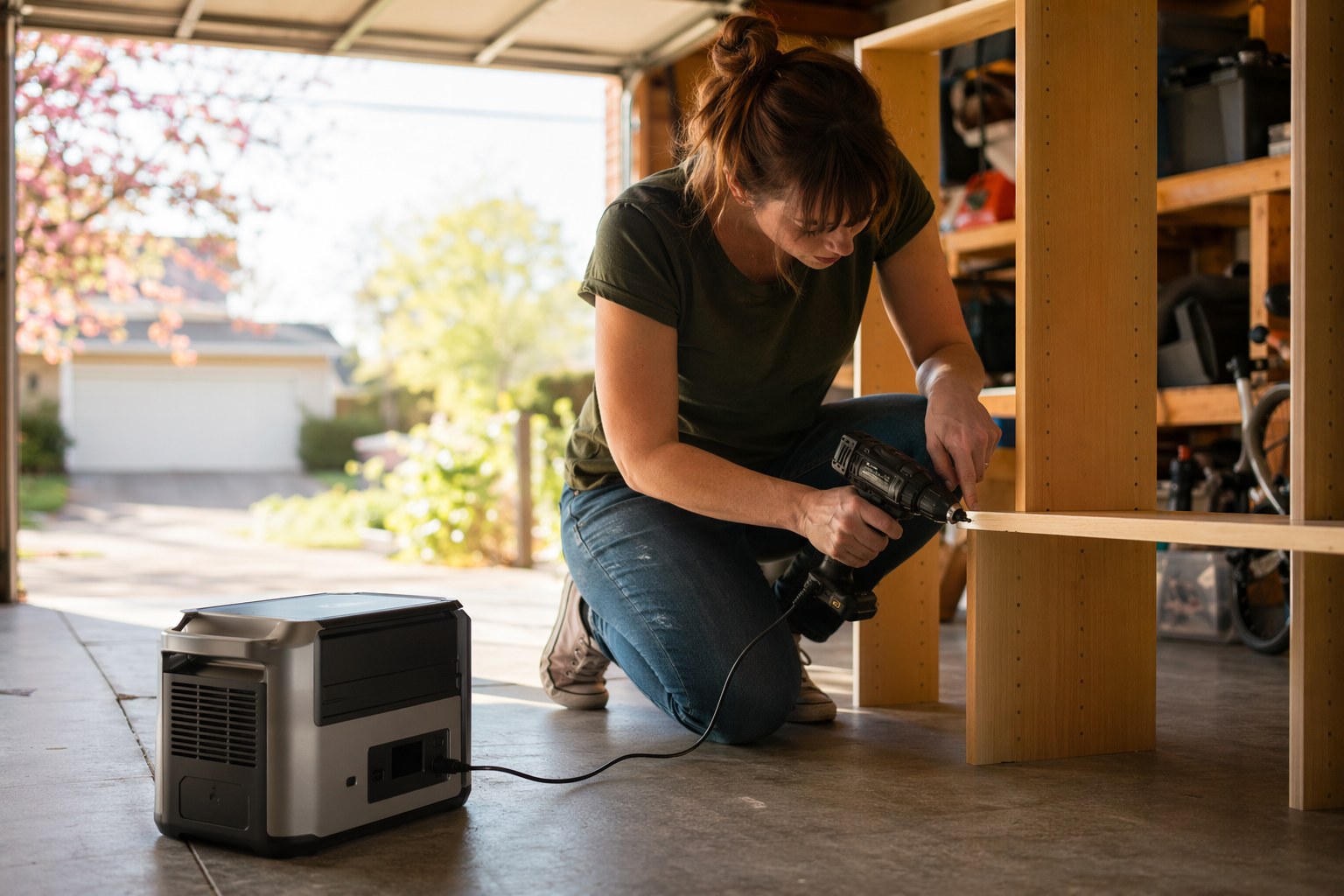
Two Very Different Loads: Chargers vs. Corded Tools
Before you size anything, separate your tools into two buckets, because they stress a power station in completely different ways.
Battery chargers (the easy load). Every cordless drill, impact driver, circular saw, and leaf blower in your garage runs off a pack you charge from the wall. The charger itself is a gentle, predictable load. A standard 20V charger draws 60-100W; a rapid or dual-port charger pulls 150-300W. There is essentially no startup surge, and the draw tapers as the pack fills. This is the kind of load a power station was born for.
Corded power tools (the demanding load). Plug-in saws, routers, sanders, shop vacs, and paint sprayers draw their power live, and many use universal motors that surge hard on startup. A corded circular saw idles at zero, jumps to 2,000W+ for a fraction of a second when you pull the trigger, settles to 1,200-1,400W mid-cut, then spikes again every time you bog it down in a thick board. This is where inverter ratings actually matter.
If your spring projects are mostly cordless — and for most homeowners they are — almost any modern unit works. If you own corded gear, keep reading the surge section closely.
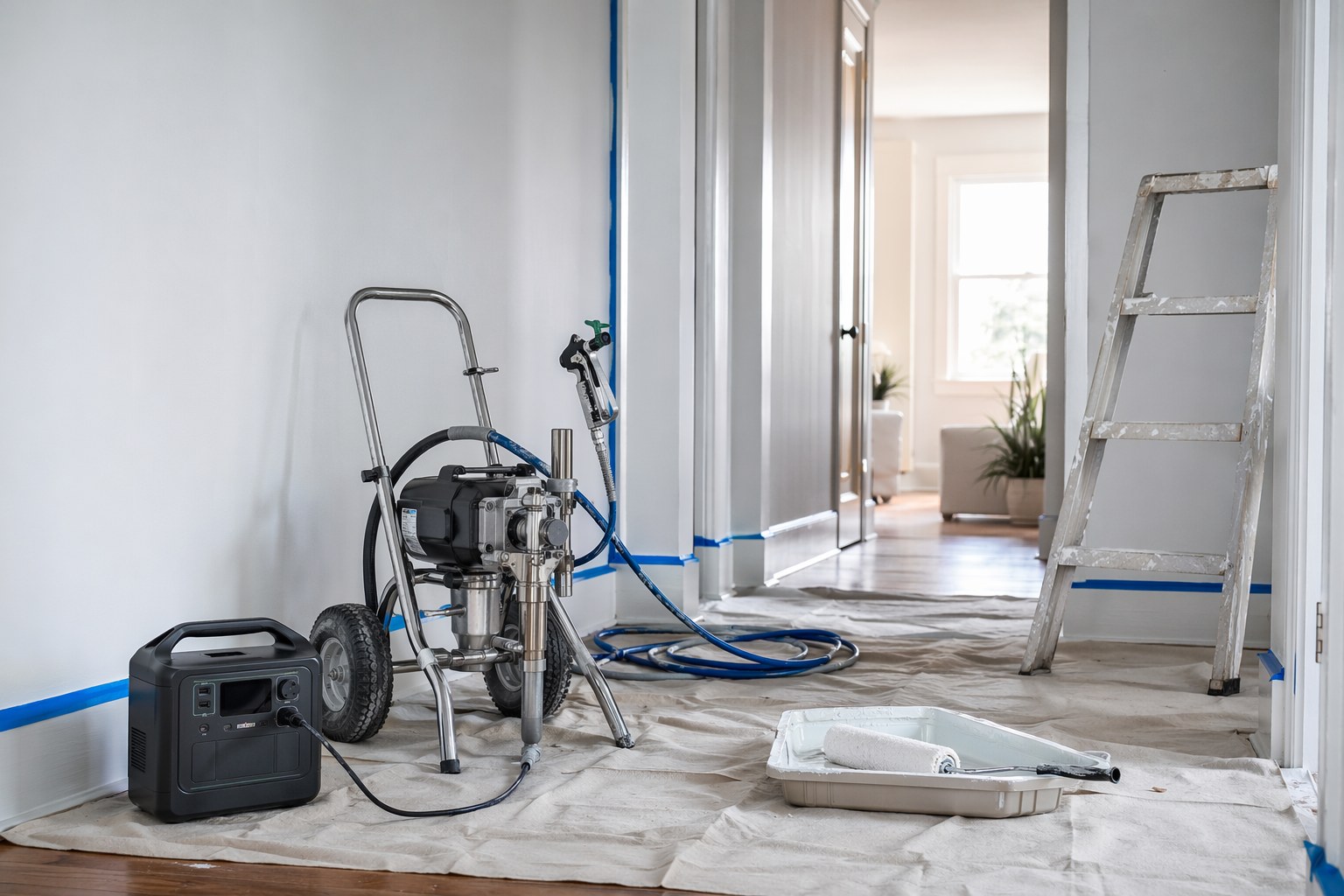
Real Power Draws for Spring Refresh Tools
Here are measured ranges for the gear that shows up on a typical home-refresh weekend. Surge figures are the brief startup inrush; running figures are the sustained draw.
| Tool | Surge (startup) | Running (sustained) | Energy for a session |
|---|---|---|---|
| 20V drill/driver charger | 100W | 60-90W | ~70Wh per full pack |
| 40V rapid charger (mower, blower) | 350W | 150-250W | ~200Wh per full pack |
| Corded circular saw | 2,000-2,400W | 1,200-1,400W | ~120Wh (10 min of cuts) |
| Corded jigsaw / oscillating tool | 600W | 300-450W | ~60Wh per 15 min |
| Random-orbital sander | 350W | 200-300W | ~120Wh (30 min) |
| Airless paint sprayer | 1,400W | 600-900W | ~450Wh per room |
| Shop vac (5 HP “peak” label) | 1,800W | 900-1,100W | ~180Wh (10 min cleanup) |
| LED work light | — | 20-50W | ~150Wh (4 hours) |
| Heat gun (paint stripping) | 1,500W | 1,200-1,500W | ~250Wh (10 min) |
Two things jump out. First, the cordless ecosystem sips energy — you can charge packs all weekend on a single 1,000Wh unit. Second, corded motor tools have surges roughly double their running draw, which is exactly why output rating beats capacity when choosing a unit for tool work. If you want the full background on why startup surge behaves this way, the what can a 1000Wh power station run breakdown has runtime tables for these same loads.
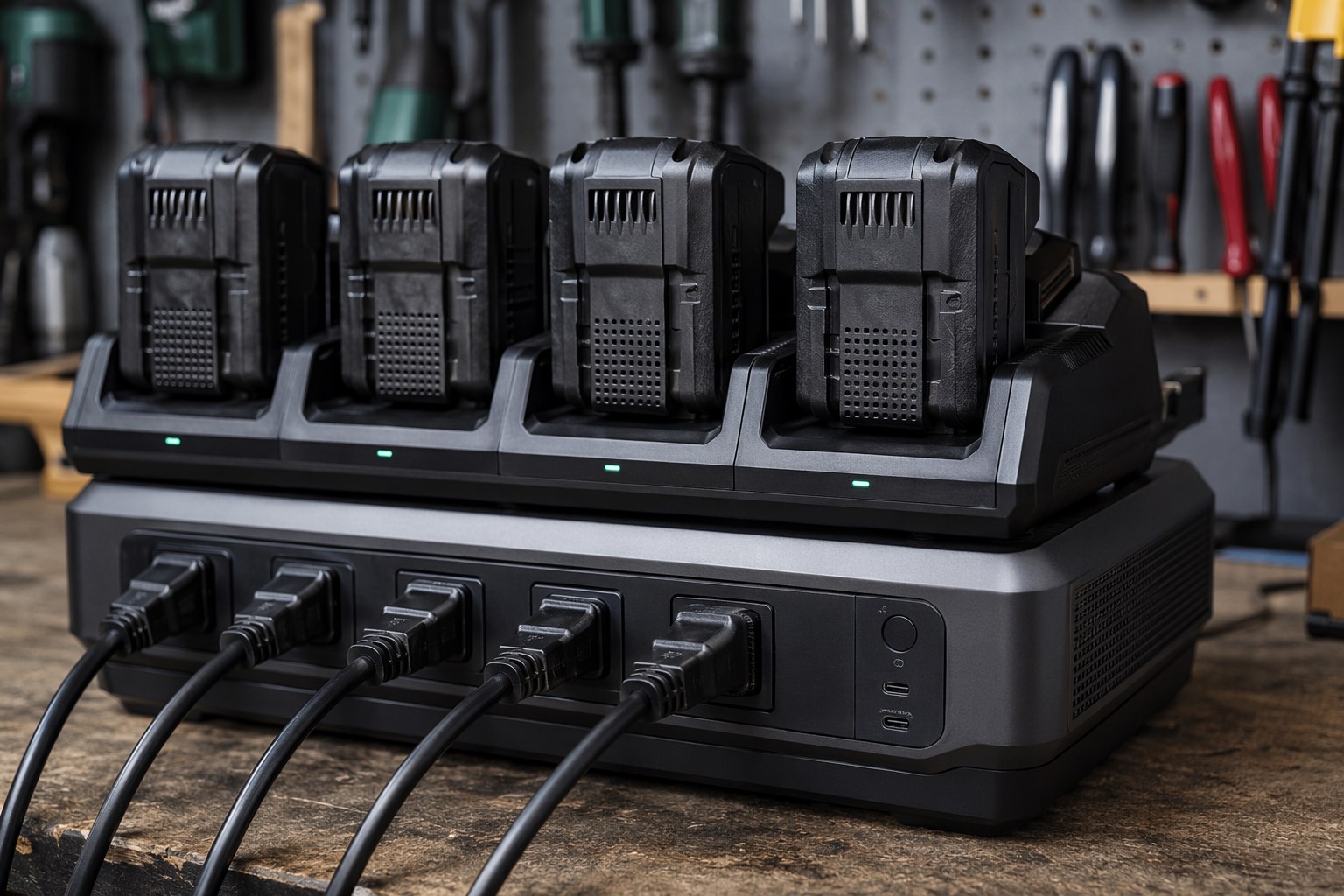
Why Output Wattage Matters More Than Capacity Here
For camping, capacity (watt-hours) is king — you’re running small loads for a long time. Home-refresh work flips that priority. Your tools are high-wattage but used in short bursts, so you rarely drain the battery. What you can actually do is gated by the inverter’s continuous and peak output.
Think of it like a power supply rail. The watt-hour rating is the size of the fuel tank; the continuous output is the size of the fuel line. A 600W unit with a giant 1,500Wh battery still can’t start a 1,200W saw, because the inverter trips on overcurrent long before the tank matters. Conversely, an 1,800W unit with a modest 1,024Wh battery will happily run that saw all afternoon — you’ll just recharge once.
When you read a spec sheet, look for three numbers in this order:
- Continuous AC output (W). Must exceed your most demanding tool’s running watts. For corded saws and sprayers, that means 1,800W minimum.
- Peak/surge output (W). Must cover startup inrush, typically 2x running. A unit rated 1,800W continuous / 3,600W peak is the sweet spot for general tool work.
- Pure sine wave inverter. Non-negotiable for motor tools and chargers with electronics. Every unit I recommend below is pure sine; cheap modified-sine units can overheat tool controllers.
A note on “surge-assist” features: EcoFlow’s X-Boost and similar tech can run a higher-wattage resistive load by trimming voltage, but they don’t reliably help with inductive motor startups. Don’t count on software to start a saw the inverter is too small to handle. If you want to avoid the classic mistakes here, the portable power station mistakes to avoid guide covers the under-sizing trap in detail.
Matching a Unit to Your Project Scale
Cordless-only weekend warrior (drills, blowers, lights)
If everything you own takes a battery, you don’t need much output — you need a tidy charging hub. A 600-1,000W unit is plenty.
The EcoFlow DELTA 2 (1,024Wh, 1,800W) is my default pick because it gives you headroom to add a corded tool later, and its LiFePO4 cells will outlive a decade of weekend use. If you want a slightly lighter option that still clears the corded threshold, the Bluetti AC180 (1,152Wh, 1,800W with 2,700W “Power Lifting” mode) is excellent and frequently discounted in spring sales.
Mixed projects with occasional corded tools (saws, sanders, sprayers)
This is where most home-refresh weekends land — mostly cordless, but you’ll break out a corded saw or a paint sprayer for the big jobs. You want a true 1,800W continuous unit with strong peak handling.
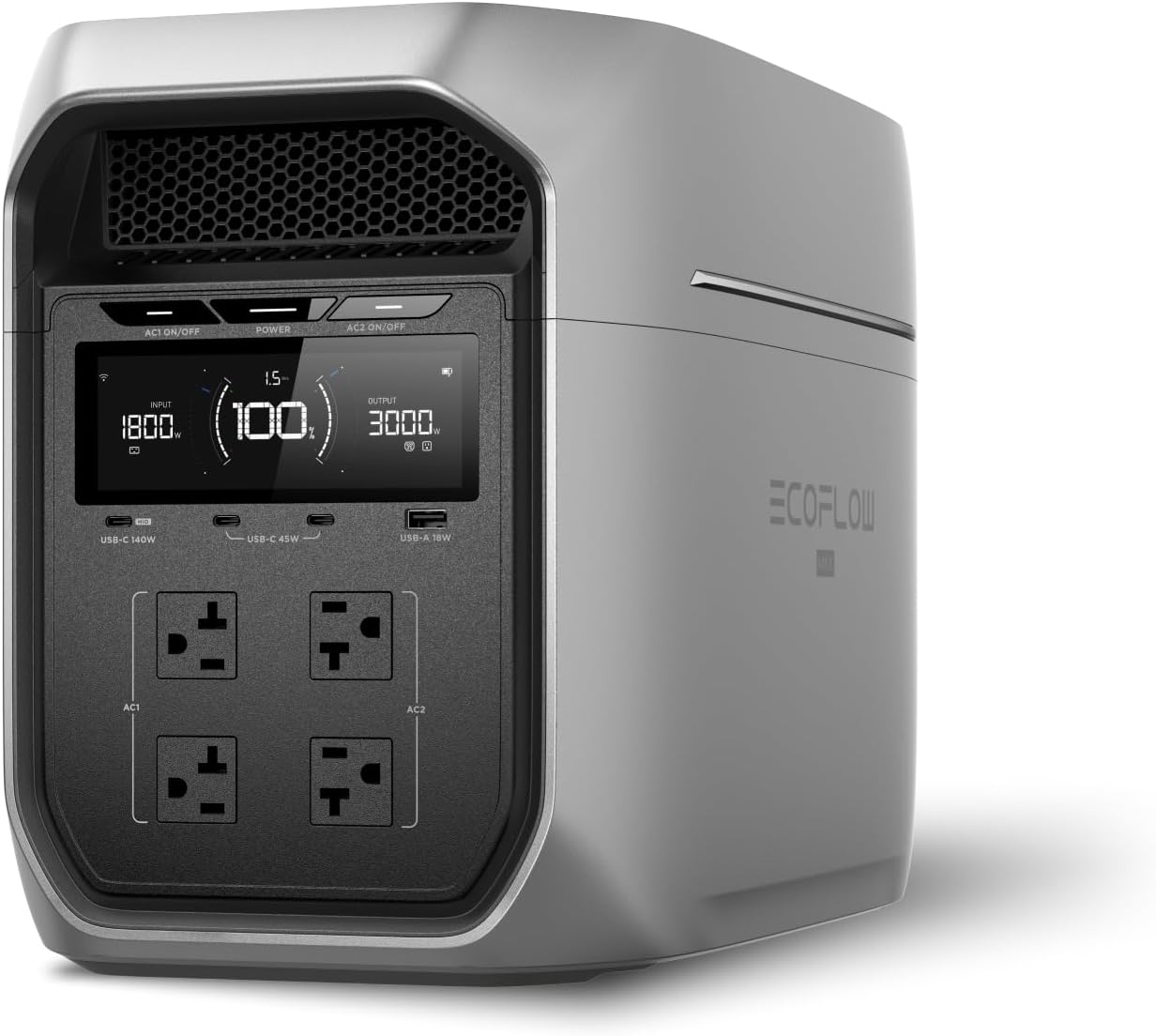
The Jackery Explorer 1000 v2 (1,070Wh, 1,500W with 3,000W surge) handles a circular saw’s inrush smoothly and recharges from a wall outlet in about an hour, so you can top it off over lunch. For the best all-rounder, the EcoFlow DELTA 3 Plus (1,024Wh, 1,800W / 3,600W peak) is the unit I’d hand a homeowner who isn’t sure what they’ll need — it starts every tool in the table above, recharges in roughly 50 minutes, and the LiFePO4 chemistry means you can leave it on the shelf between projects without babysitting it.
Big-room repaint or all-day power-tool work
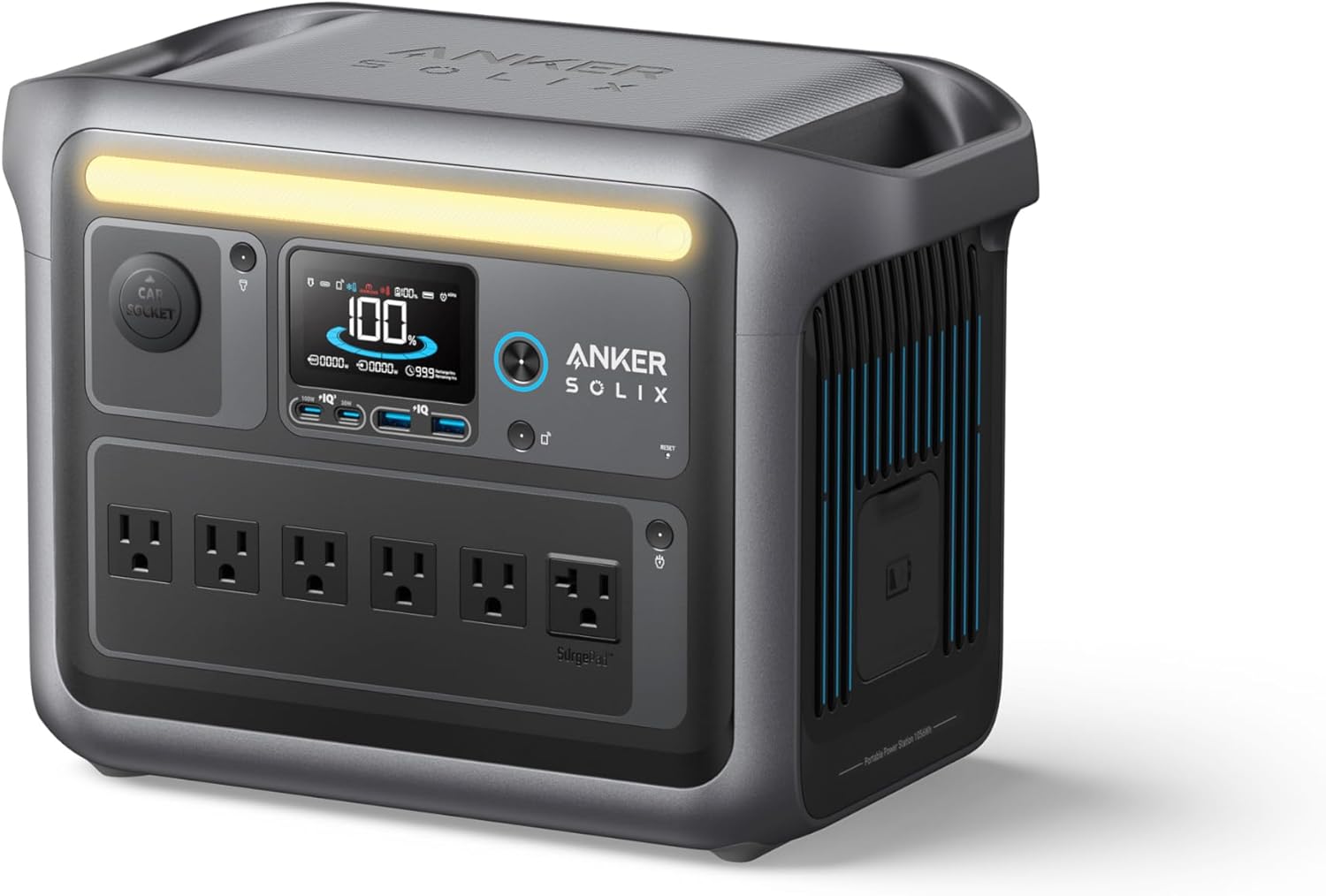
Running an airless sprayer through a whole house, or feeding a corded table saw plus a shop vac at the same time, pushes you toward more capacity so you’re not recharging every hour. The Anker SOLIX C1000 (1,056Wh, 1,800W / 2,400W surge) is the value champion here — it has the output to run a sprayer and the fast 58-minute recharge to keep pace with all-day use. If you regularly run two tools at once, this is also the moment to size up; the how to size a power station guide has a simple add-up-your-watts formula that takes five minutes.
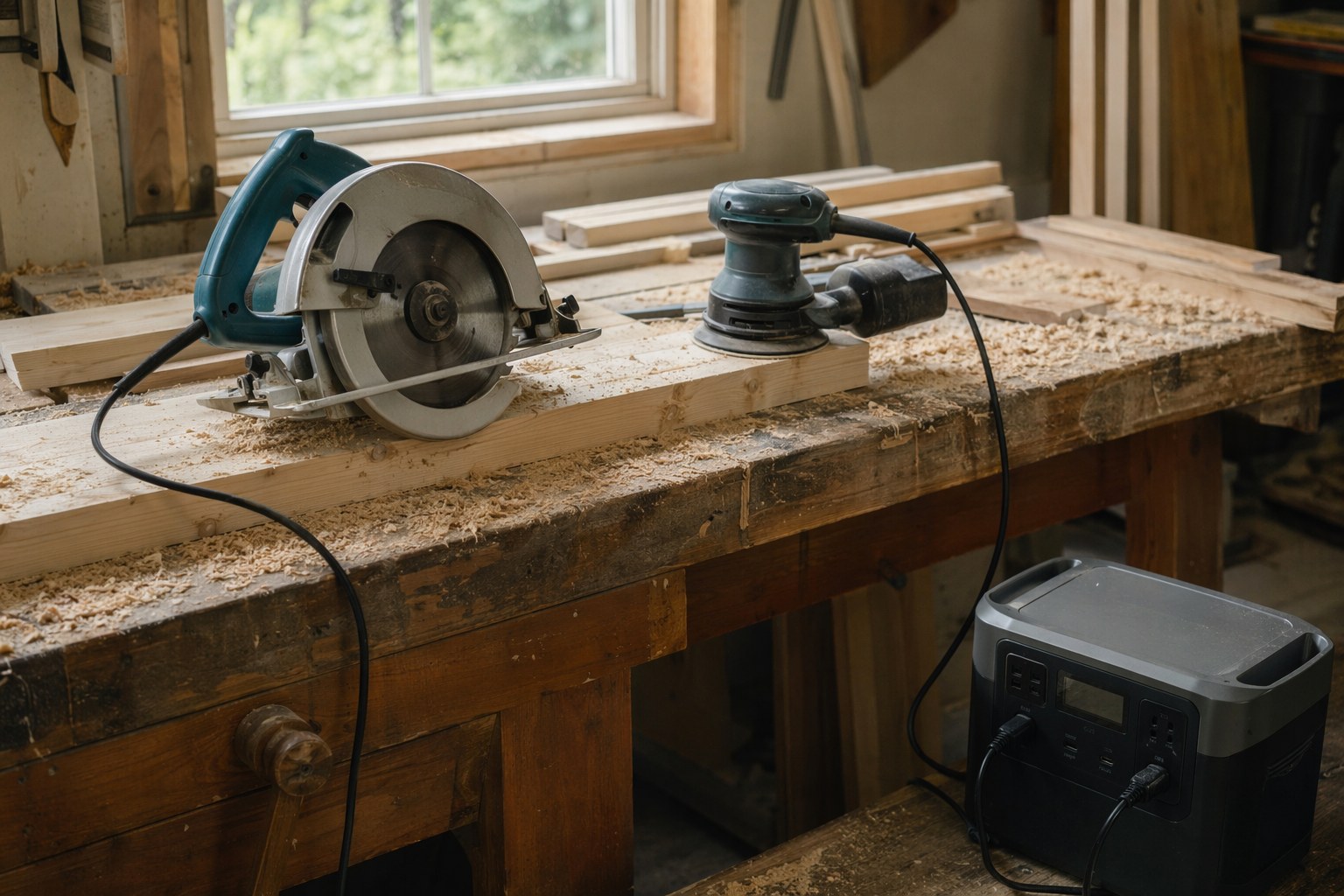
Practical Runtime Planning
The math is refreshingly simple once you separate the load types.
For cordless work: count your battery packs and their watt-hours, not your runtime. A 4Ah 20V pack holds about 72Wh. A 1,024Wh power station can recharge that pack roughly 12 times (accounting for ~85% real-world inverter efficiency). In practice, you will never drain the station charging packs in a single day.
For corded work: multiply running watts by actual trigger time, not clock time. You might be in the yard for four hours, but a circular saw is only cutting for maybe 12 minutes of that. At 1,300W running, 12 minutes is just 260Wh — a quarter of a 1,000Wh unit. Sanding and painting are the energy hogs because they run continuously; budget 400-500Wh per room for an airless sprayer.
The combined-day example: charge two 40V packs (400Wh), run a circular saw for 15 minutes of cuts (325Wh), sand for 45 minutes (200Wh), and run a work light for three hours (90Wh). Total: about 1,015Wh of demand. A 1,024Wh unit handles that with one recharge, or you plug in a solar panel or wall charger and effectively never run out.
A Few Engineer’s Cautions
- Watch shop-vac and “peak HP” labels. A vac labeled “5 HP” does not draw 3,700W — that’s a marketing peak. Measured running draw is usually 900-1,100W, which an 1,800W unit handles. But the startup surge is real, so don’t pair it with a sub-1,500W station.
- Don’t block the fans. Power stations dump inverter heat through side or rear fans. On a dusty job site, set the unit on a board off the ground and keep the vents clear; thermal throttling will cut your output if it overheats.
- Daisy-chain chargers, not saws. Running four tool chargers at once is fine (combined ~600W). Running two corded saws at once is how you trip the inverter — stagger high-surge tools.
- Top off before storage. LiFePO4 units like these are happiest stored at 50-80% charge. After your project weekend, leave it half-full rather than dead.
Frequently Asked Questions
Can a portable power station charge cordless tool batteries? Yes, and it’s the easiest load these units handle. A typical 20V or 40V fast charger pulls 100-300W with no real startup surge, so a 1,000Wh station can top off 15-30 packs on one charge. Even a 600W unit manages it without strain.
What size power station do I need to run a corded circular saw or table saw? Match continuous output to running watts and peak output to startup surge. A corded circular saw runs at 1,200-1,400W but surges past 2,400W, so you want at least 1,800W continuous and 3,000W+ peak — the EcoFlow DELTA 3 Plus or Jackery Explorer 1000 v2 both clear that bar.
Is it safe to run power tools off a power station indoors? Yes. Battery power stations produce zero combustion emissions, so they’re safe in a garage, basement, or closed room — unlike a gas generator. Just use a pure sine wave unit (all the picks here are), size the output above your tool’s draw, and keep the cooling fans unobstructed.
The Bottom Line
For a spring home refresh, the right power station depends on whether your tools take a battery or a plug. Cordless-only? Almost any pure sine unit becomes a charging hub. Corded tools in the mix? Prioritize 1,800W continuous and 3,000W+ peak over raw capacity, and you’ll start every saw, sander, and sprayer on the list. The EcoFlow DELTA 3 Plus is the unit I’d buy first for general-purpose home work — and unlike a gift card, it’ll still be earning its keep on next year’s project list.
Recommended Power Stations
EcoFlow
EcoFlow DELTA 3 Plus
EcoFlow's newest mid-range flagship. The DELTA 3 Plus improves on the Delta 2 with faster charging, LiFePO4 chemistry, and UPS functionality — all at a lower price.
Frequently Asked Questions
Can a portable power station charge cordless tool batteries?
Yes, and it's one of the easiest loads a power station handles. A typical 20V/40V cordless tool fast charger pulls 100-300W from the wall. A 1,000Wh power station can therefore top off 15-30 tool battery packs on a single charge, depending on pack size. Charging is a steady, low-surge load, so even a 600W unit handles it without strain. The only thing to watch is that some rapid chargers briefly spike to 350-400W when a hot battery first connects.
What size power station do I need to run a corded circular saw or table saw?
Match continuous output to the tool's running watts and check that peak/surge output covers startup. A corded circular saw draws roughly 1,200-1,500W while cutting but can surge to 2,400W+ on startup and bog-down. You want a unit rated at least 1,800W continuous with 3,000W+ peak, such as the EcoFlow DELTA 3 Plus or Jackery Explorer 1000 v2. Universal-motor tools (saws, routers, grinders) have brief but sharp inrush currents, so never size to running watts alone.
Is it safe to run power tools off a power station inside the house?
Yes. Unlike a gas generator, a battery power station produces zero combustion emissions, so it is safe to operate indoors, in a garage with the door closed, or in a basement workshop. The real safety considerations are the same as any tool work: a pure sine wave inverter (which all the units recommended here use) to protect motor electronics, adequate continuous wattage so you don't trip the inverter under load, and keeping the unit on a dry, ventilated surface so its cooling fans aren't blocked.
Ready to Buy? Here's What We Recommend
Based on our testing and this guide, these are the best options for most people: