Guide
Spring Storm Season 2026: Tornado & Severe Weather Power Prep Guide

TL;DR
Tornado season peaks March-June with little warning. Here's how to prepare your portable power setup for spring storms, derechos, and severe weather outages.
Tornado season doesn’t send you a calendar invite. It peaks from March through June across the central United States, but severe thunderstorms, derechos, and damaging winds can strike almost anywhere east of the Rockies with remarkably little warning. If you’ve been meaning to get your power backup situation figured out, the window to prepare is right now — before the first severe weather watch of the season scrolls across your phone.
Why Spring Storms Are Different from Hurricanes
If you’ve read our hurricane season power prep guide, you might think you’re already covered. But spring severe weather presents a fundamentally different challenge.
Warning time is measured in minutes, not days. A hurricane gives you 3-5 days of advance notice. A tornado warning gives you 10-15 minutes. Sometimes less. You don’t have time to charge your power station, run to the store, or figure out where you put the flashlights. Everything needs to be ready before the sirens go off.
The damage pattern is different. Hurricanes cause widespread, predictable flooding and wind damage. Tornadoes and derechos snap power poles, twist transmission towers, and shred above-ground infrastructure in narrow but devastating paths. This means your neighborhood might be without power while the town five miles away is completely fine — and utility crews have to rebuild, not just reconnect.
You may be sheltering in a basement or interior room. During a tornado, you’re not sitting comfortably in your living room monitoring the Weather Channel. You’re in a basement, a closet, or a bathroom with your family, possibly for extended periods during repeated warnings. Having a power station down there with you changes the experience dramatically.
Your Spring Storm Power Setup
Keep a Power Station in Your Safe Room
This is the single most important piece of advice in this guide. Whatever power equipment you own, keep it charged and physically located in or near your designated shelter area. A power station in the garage doesn’t help you when you’re huddled in the basement with a tornado warning active.
A charged station in your safe room means:
- Lights when the power drops (instant, no fumbling for candles)
- Phone charging for emergency calls and weather alerts
- NOAA weather radio running continuously on USB power
- Entertainment for kids during long shelter periods
- Medical device power if someone in your household needs it
NOAA Weather Radio: Your Non-Negotiable
A NOAA weather radio is the single most important storm safety device you can own. Unlike phone alerts, it activates automatically when a watch or warning is issued for your county — even at 3 AM. Most modern weather radios run on USB power, which means a power bank or power station keeps one running indefinitely. Put one in your shelter area and leave it on all spring.
Three Tiers of Spring Storm Prep
Tier 1: Basic — Stay Connected ($50-150)
Best for: Apartments, renters, minimal budget, short outages
What you need:
- USB power bank (20,000-25,000mAh)
- USB-rechargeable flashlights or headlamps
- NOAA weather radio (USB-powered)
- Phone charging cables
Our picks: The INIU 25,000mAh keeps phones charged for days and costs under $25. The Anker Nano 10,000mAh is pocketable and handles one phone for 2-3 full charges. Either one powers a USB weather radio for a week straight.
What it covers: Phones, lights, and weather alerts for 2-3 days. It won’t run appliances, but it keeps you informed and reachable — which is what matters most when a storm is active.
Tier 2: Moderate — Real Household Backup ($600-1,200)
Best for: Homeowners, families, areas with frequent severe weather, 3-5 day outages
What you need:
- 1,000Wh portable power station
- 100-200W portable solar panel for recharging
- USB weather radio and LED lanterns
- Surge protector and extension cords
Our picks:
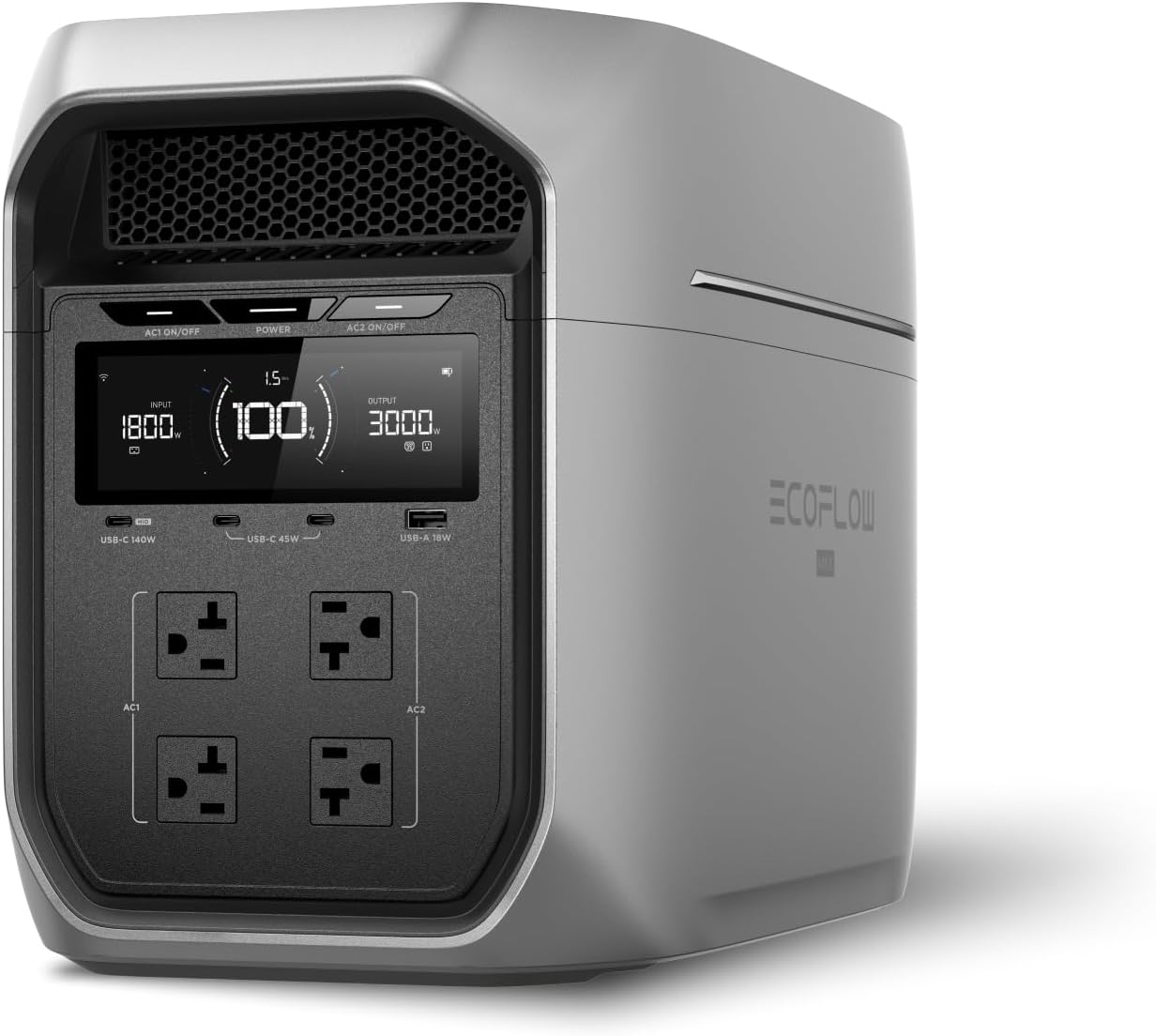
- EcoFlow DELTA 3 Plus ($649) — 1,024Wh, 1,800W output, charges in 56 minutes. Our top overall pick for emergency backup.
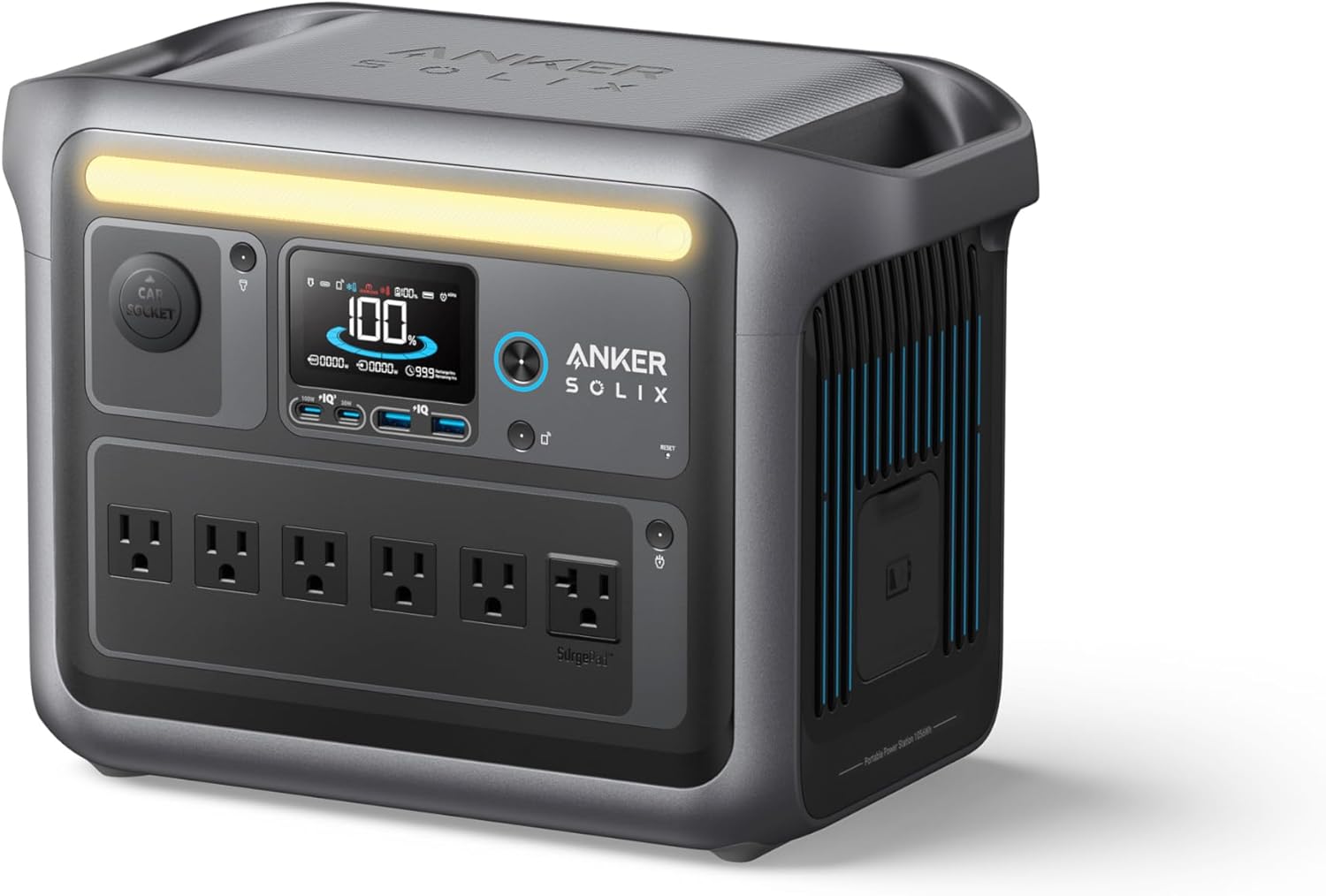
- Anker SOLIX C1000 ($699) — 1,056Wh, 1,800W output, excellent build quality and app control.
- Add a Jackery SolarSaga 200W or Bluetti PV200 solar panel for daily recharging.
What it covers: Fridge (12-18 hours per charge), phones, laptops, LED lights, fans, CPAP machines, and internet router. With solar recharging, this setup sustains you through a 5-7 day outage. Run our power calculator with your specific devices to see exact runtimes.
This is the tier we recommend for most families in tornado-prone areas. It covers all the critical needs and recharges itself when the sun comes back out — which, in spring, is usually the day after a storm system passes.
Tier 3: Full Preparedness — Extended Backup ($1,500-3,500+)
Best for: Rural areas with slow utility restoration, medical device dependence, large households
What you need:
- 2,000Wh+ power station (or expandable system)
- Portable generator as a secondary power source
- 200-400W solar panel array
- Full emergency kit (first aid, water, food supplies)
Our picks:
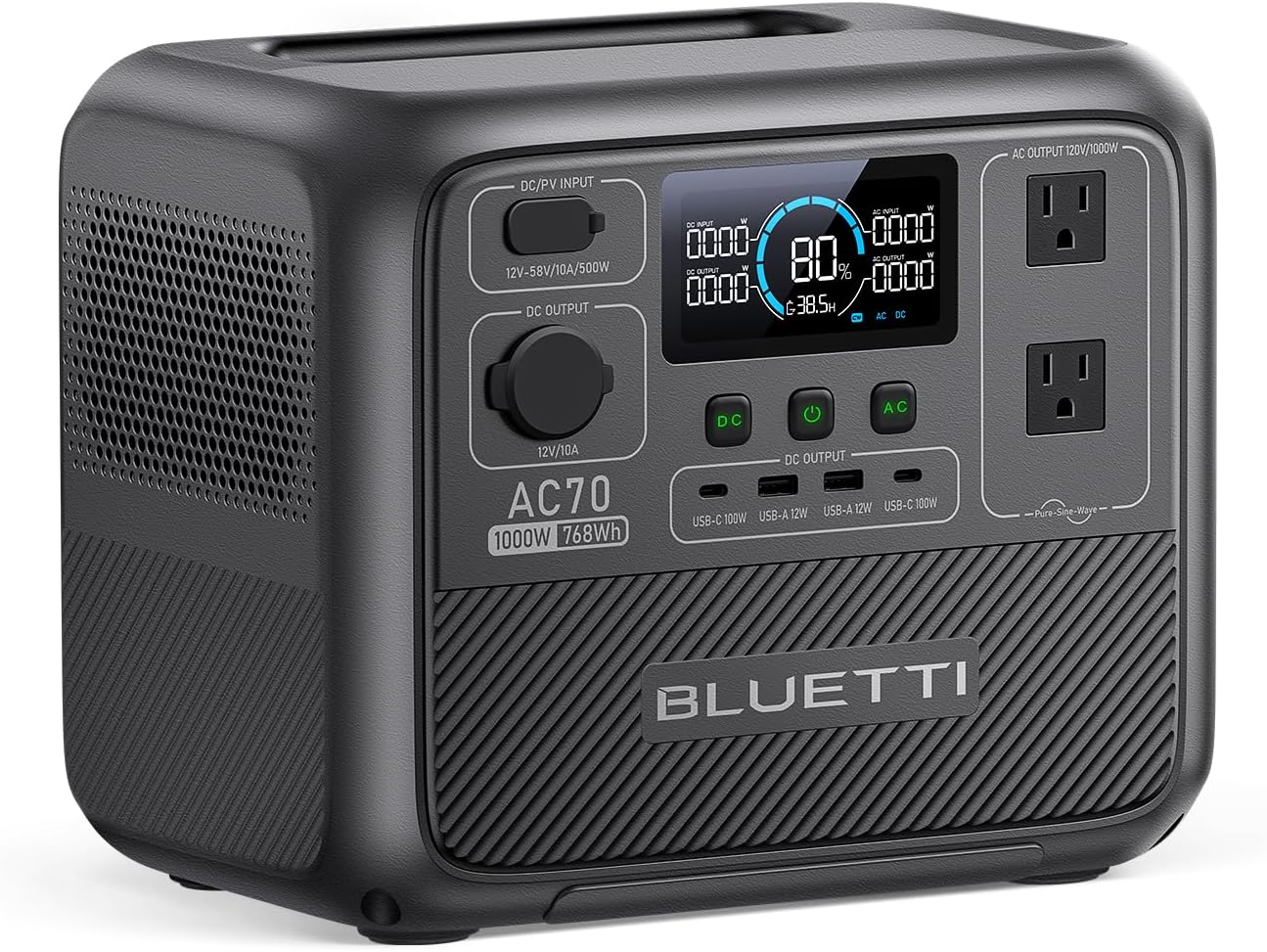
- Bluetti Elite 200 V2 ($1,099) — 2,073Wh with 6,000+ cycle LiFePO4, runs a fridge for 24-48 hours per charge
- EcoFlow DELTA Pro 3 ($1,999) — 4,096Wh expandable to 48kWh, 4,000W output, powers virtually anything
- Jackery Explorer 2000 Plus ($1,999) — 2,042Wh, expandable to 24kWh
- Backup generator: Honda EU2200i or Champion 3500W for heavy loads
What it covers: Everything in Tier 2 plus multiple refrigerators/freezers, window AC units, well pumps (generator), and extended multi-day operation. If you live in a rural area where it takes utility crews a week or more to restore service after a tornado takes out lines, this is the tier to target. Read our generator vs. power station comparison if you’re deciding between the two.
Post-Storm: What to Do When the Power Goes Out
The storm passed, the power is out, and you’re running on battery. Here’s how to make your power last:
1. Don’t open the fridge. A closed refrigerator holds safe temperatures for about 4 hours. A full freezer stays frozen for 24-48 hours. Every time you open the door, you’re burning through that buffer. Decide what you need before you open it, grab everything at once, and close it immediately.
2. Charge medical devices first. CPAP machines, oxygen concentrators, and medication that requires refrigeration take absolute priority. A CPAP draws only 30-60W — your power station handles it easily.
3. Keep phones charged to at least 50%. You need communication for weather updates, emergency calls, and checking on family. Don’t drain your phone watching videos — conserve it for essential use until you know how long the outage will last.
4. Check on your neighbors. Especially elderly neighbors, those with medical needs, or anyone who lives alone. A fully charged power station can share power with multiple households for phone charging and basic lighting.
5. Watch for secondary hazards. Downed power lines, gas leaks, structural damage, and standing water are all common after severe storms. Don’t go outside to set up solar panels until you’ve confirmed it’s safe. Never run a generator indoors — carbon monoxide is an invisible killer.
Complete Your Emergency Checklist Now
We built an interactive emergency power checklist that walks you through everything your household needs — tailored to your family size, climate, medical needs, and budget. Complete it now, in February, while stores are stocked and shipping is fast. By late March, the first severe weather outbreaks are already spinning up across the Plains and Southeast.
Use our power calculator to size your system, the compare tool to evaluate specific models side by side, and the checklist to make sure you haven’t overlooked anything.
The Bottom Line
Spring severe weather is fast, violent, and gives you almost no time to react. The entire point of preparation is doing the work now, while the skies are calm, so that when the sirens go off you grab your family and head to a shelter that already has a charged power station, a weather radio, flashlights, and everything else you need. For most families, a 1,000Wh power station with a solar panel (Tier 2) provides the right balance of protection and value. If you’re in Tornado Alley or a rural area with historically slow restoration, invest in Tier 3 for true peace of mind. Whatever you choose, the time to buy and prepare is right now.
Recommended Power Stations
EcoFlow
EcoFlow DELTA 3 Plus
EcoFlow's newest mid-range flagship. The DELTA 3 Plus improves on the Delta 2 with faster charging, LiFePO4 chemistry, and UPS functionality — all at a lower price.
Frequently Asked Questions
How do I prepare for tornado season power outages?
Keep a charged power station in or near your designated safe room (basement, interior closet, or bathroom). Complete an emergency power checklist before March. At minimum, have a power bank and flashlights ready. Ideally, keep a 1,000Wh+ power station charged to 80-100% at all times with a NOAA weather radio plugged into it. Unlike hurricanes, tornadoes give minutes of warning — your gear must be ready to go, not something you scramble to set up.
What should I charge first after a storm?
Medical devices first (CPAP, oxygen concentrator, medication refrigeration) — these are non-negotiable. Phones second, so you can call for help and receive emergency alerts. Then your refrigerator, to save hundreds of dollars in food. After that, prioritize lighting, a fan for comfort, and your internet router for weather updates. Use our power calculator to estimate how long your station will last across these devices.
How long do spring storm power outages typically last?
It varies widely. A single-cell thunderstorm might cause a 2-4 hour outage. A tornado that hits power infrastructure can knock out power for 3-7 days. A derecho — a fast-moving line of severe storms — can cause widespread outages lasting 1-2 weeks across multiple states, as happened in the 2020 Midwest derecho. Plan for at least 3 days of self-sufficiency.
Ready to Buy? Here's What We Recommend
Based on our testing and this guide, these are the best options for most people: