Guide
May First Responder Appreciation: Emergency Backup Power for Critical Infrastructure

TL;DR
How first responders and emergency personnel use portable power stations and battery backups to keep communications, medical gear, and command posts running during outages and disasters.
Every May, communities take a moment to thank the firefighters, paramedics, dispatchers, and emergency managers who show up on the worst day of someone’s life. I have spent years working alongside CERT teams and emergency operations centers, and I can tell you the part of the job nobody photographs: the scramble to keep equipment powered when the grid is down and the radios still have to work.
I learned this the hard way during Hurricane Irma. Our neighborhood command point ran on a borrowed gas generator that died at 3 a.m. because someone forgot to top off the fuel. For two hours we coordinated with flashlights and a dying phone. That night changed how I think about backup power for anyone doing critical work, paid or volunteer.
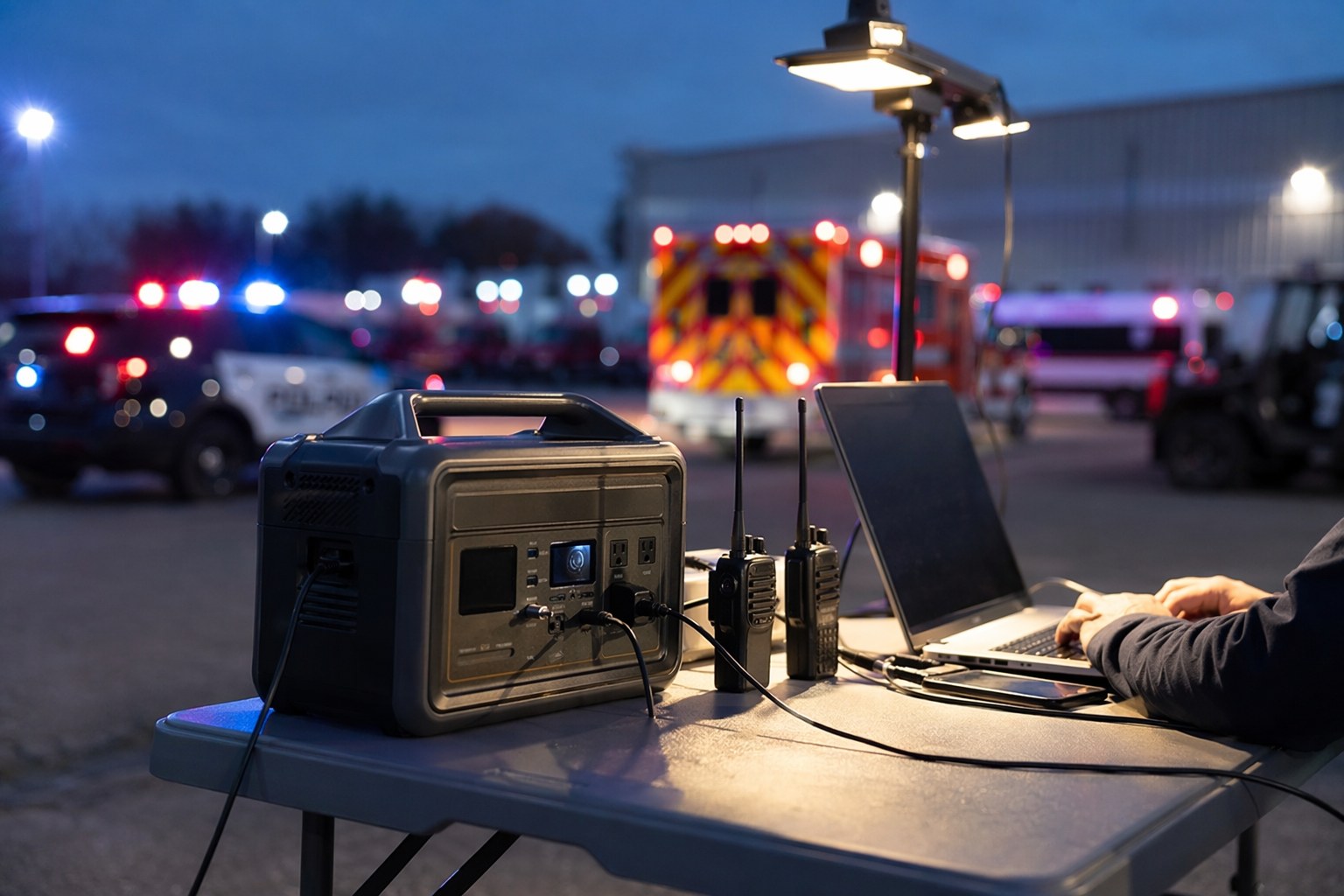
This guide is about the unglamorous backbone of emergency response: the batteries and power stations that keep communications, medical gear, and command operations alive when the lights go out. Whether you are a paid first responder, a volunteer, or a homeowner who wants to support a neighborhood team, here is what actually works.
Why Battery Power Beats Gas Generators for Critical Gear
For decades, the default answer to “how do we power the command post” was a gas generator. They are loud, they need fuel that sells out before every storm, and they cannot run indoors. During a deployment, those three problems compound fast.
Battery power stations solve all three. They run silent, which matters enormously when a dispatcher is straining to hear a unit calling for backup over radio static. They produce zero exhaust, so you can run one inside a command vehicle, a triage tent, or a windowless EOC without venting concerns. And they need no fuel logistics; you charge them from shore power, a vehicle, or solar, and they are ready.
That does not mean generators are obsolete. For sustained high loads, like a light tower running all night or a portable AC unit cooling a medical tent, a generator still earns its place. The smart play, and the one I recommend to every team I advise, is a hybrid: batteries for the sensitive, always-on electronics and a generator for the heavy, intermittent loads. Pair them and you cover the full spectrum without either weakness sinking you.
Tier 1: Keeping Communications Alive
Communication is the first thing that has to work and the last thing you can afford to lose. Radios, repeaters, a laptop running CAD or ICS forms, a printer for situation reports, and a stack of phones charging on rotation. The good news is that this load is modest. A handheld radio bank, a laptop, and phone charging rarely exceed 150 to 250 watts of average draw.
For a single operational period, a 2,000Wh class station is the workhorse. The Jackery Explorer 2000 Plus is one I keep coming back to. At 2,042Wh it runs a comms bench for roughly 8 to 11 hours of real-world use, it is expandable to 24kWh if your team grows the deployment, and the LiFePO4 cells are rated for thousands of cycles so it survives years of monthly testing without degrading.
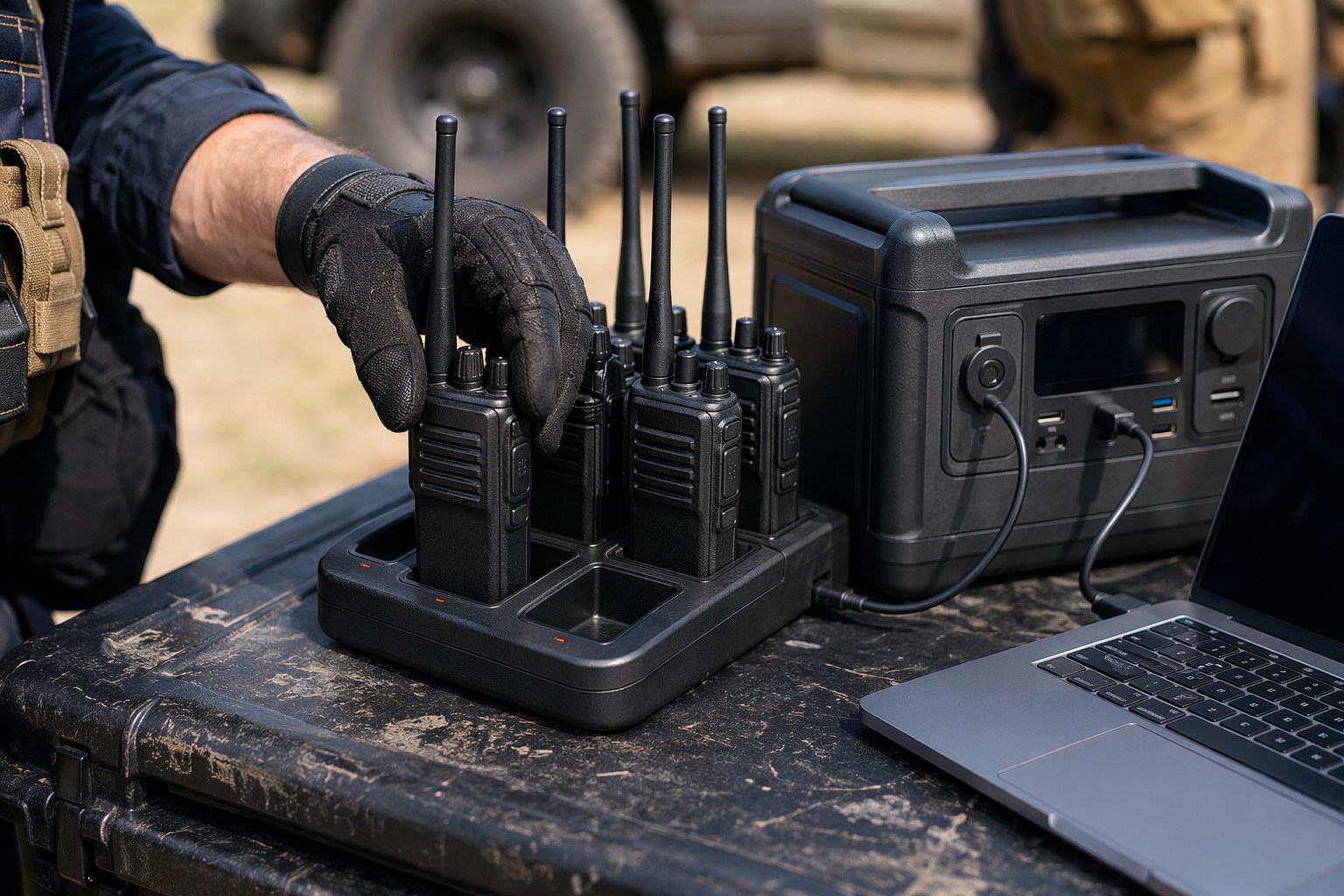
The rule I drill into every team: communications power is non-negotiable and gets charged first, always. Treat the comms battery like a controlled medication. It is labeled, it is dedicated to comms only, and nobody plugs a personal device into it without permission. If you want the full triage logic for what to power and in what order, our power outage survival guide on what to do first lays out the sequence we use.
Tier 2: Multi-Day Command Posts and Shelters
When an incident stretches past 24 hours, capacity becomes the bottleneck. A shelter or a fixed incident command center is no longer just radios. Now you are running a small office: multiple laptops, a network switch and router, charging stations for two dozen devices, medical refrigeration for insulin and other supplies, and lighting.
This is where the big expandable systems earn their keep. The EcoFlow DELTA Pro 3 starts at 4,096Wh, expands to 48kWh with extra batteries, and delivers true 240V output plus a 4,000W continuous inverter. That means it can carry a surprising amount of a shelter’s electrical load on its own. I have seen one of these run a small American Red Cross intake station for the better part of a day before it needed a recharge.
The Bluetti AC500 is its closest rival and my pick when a team wants modular scaling. The AC500 head unit is rated for a 5,000W inverter and pairs with B300K battery modules, so a unit can right-size capacity by adding or removing batteries between deployments. Both of these systems accept solar input, which is what turns a multi-day deployment from a countdown into a sustainable operation. Drape 600 to 800 watts of panels across a shelter roof and you recharge during daylight while running off the battery overnight.
Building out a full kit from scratch is its own project. We walk through cables, panels, storage, and the grab-and-go logistics in how to build an emergency power kit, and that framework scales directly from a household to a small command post.
Tier 3: Protecting Dispatch, 911, and Fixed Infrastructure
Field gear is one problem. The fixed electronics that never get to fail are another. Dispatch consoles, 911 call-handling servers, network switches, and the monitors in an emergency operations center cannot tolerate even a momentary power blip. A half-second sag corrupts a database write or drops a call.
That is the job of an uninterruptible power supply. A UPS does something a power station does not: it switches to battery in milliseconds, fast enough that the connected equipment never notices. A line-interactive model also corrects voltage sags and surges automatically, which protects sensitive electronics from the dirty power that often precedes a full outage.
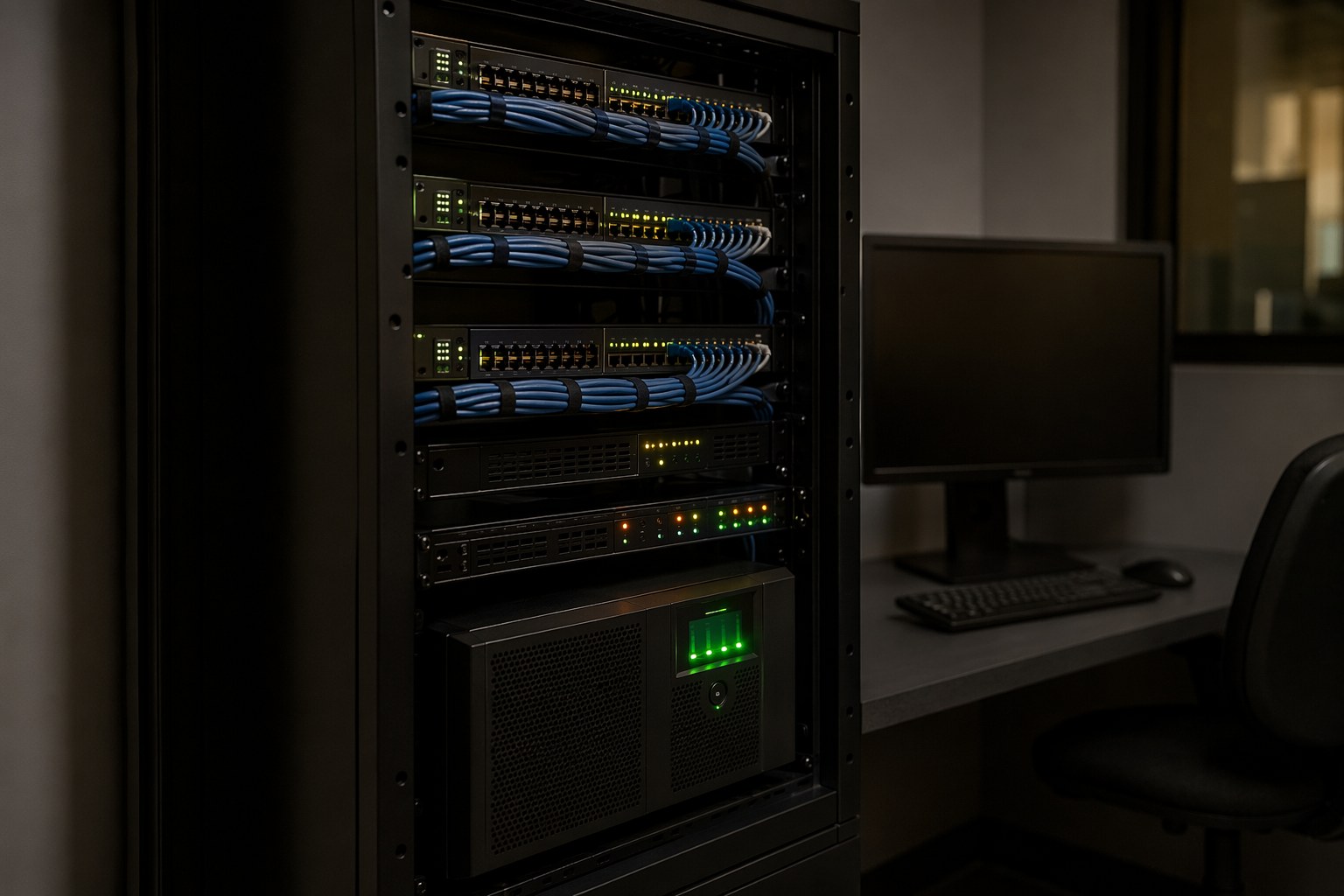
For a dispatch desk or a small EOC rack, the CyberPower CP1500AVRLCD is a proven choice. It delivers 1,500VA / 900W, has automatic voltage regulation, and a clear LCD that shows load and estimated runtime at a glance. The APC BR1500MS2 is its equal, offering 1,500VA / 900W with a sine-wave output that plays nicely with the active-PFC power supplies inside modern servers and PCs.
Here is the critical caveat I make sure every team understands: a UPS is a bridge, not a backup. At a realistic load, these units buy you 5 to 20 minutes. That window exists to ride out a flicker or to give a generator time to start and stabilize, or to give you time to gracefully shut equipment down. For an outage that lasts hours, the UPS hands off to a power station or generator. If you are speccing protection for an office-style setup, our roundup of the best UPS for a home office covers the sizing math in detail, and the same principles apply to a small dispatch room.
A Layered Power Architecture That Actually Holds
The mistake I see most often is treating backup power as a single purchase. One generator, or one big battery, and the assumption that it covers everything. Real resilience is layered, so the failure of any one component does not take down the operation.
Here is the architecture I recommend for a team or a serious neighborhood response group:
- UPS on every critical fixed device. Dispatch, servers, network gear. Instant transfer, surge protection, a few minutes of runtime to bridge or shut down safely.
- A 2,000Wh class power station for mobile communications. Silent, fume-free, dedicated to radios and the comms laptop. Charged first, guarded jealously.
- A large expandable battery (4,000Wh+) for the command post or shelter. Carries the office and refrigeration load, recharged by solar during daylight.
- A generator in reserve for heavy intermittent loads. Light towers, AC, pumps. Run it outdoors, keep fuel rotated, and never let it be your only line of defense.
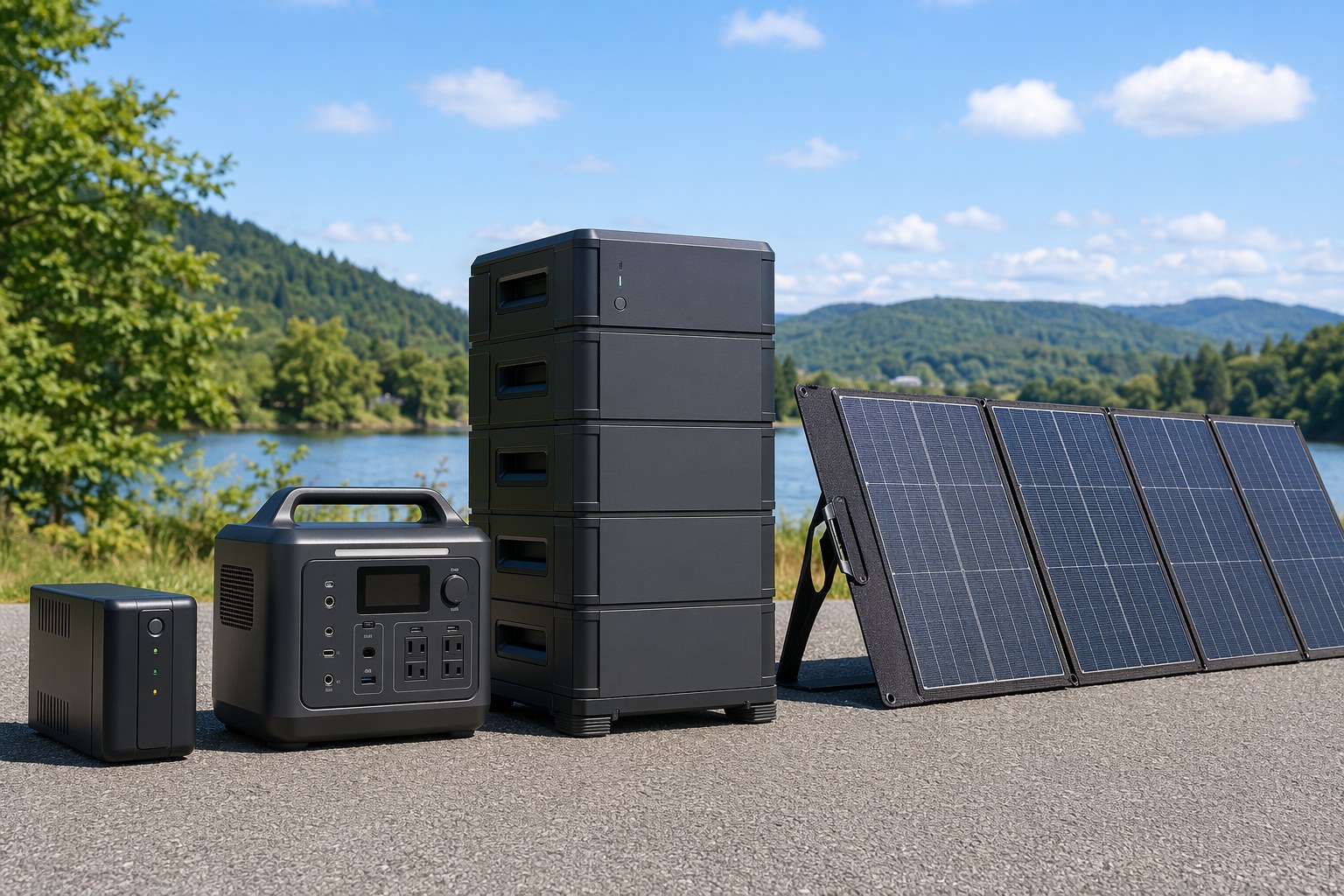
The beauty of layering is that each tier covers the others’ weaknesses. The UPS handles the millisecond problem the battery cannot. The battery handles the silent-indoor problem the generator cannot. The generator handles the high-sustained-load problem the batteries struggle with. Together they form a system that is genuinely hard to knock offline.
Testing and Maintenance: The Part That Actually Saves Lives
Equipment that has not been tested is equipment that might not work, and in this line of work that gap can be measured in lives. My Hurricane Irma generator died because of a maintenance failure, not a design flaw.
Build a schedule and treat it like training, because it is. Every quarter, top your power stations back to 60 to 80 percent; lithium cells self-discharge slowly and you never want to find a dead battery the night it matters. Twice a year, run a full load test: power up every device the kit is meant to support, time the runtime, and confirm it matches your plan. UPS batteries wear out faster than people expect, typically every 3 to 5 years, so log their install dates and replace them on a calendar, not after they fail. And label everything, clearly, so a crew member who has never touched the gear can deploy it correctly at 3 a.m. in the rain.
The Bottom Line
First responders do extraordinary work under impossible conditions, and the power systems behind them rarely get a thought until they fail. A layered approach, a UPS for the millisecond-critical fixed gear, a mid-size power station for mobile communications, a large expandable battery for the command post, and a generator held in reserve, is what keeps the operation running when the grid does not.
If you are equipping a team this May, or you simply want your neighborhood ready to support responders during the next disaster, start with the communications battery and build outward. Test it on a calm afternoon, not during the storm. The crews who get this right are the ones who never have to coordinate a rescue by flashlight at 3 a.m. I have done it the hard way, and I would not wish it on anyone.
Recommended Power Stations
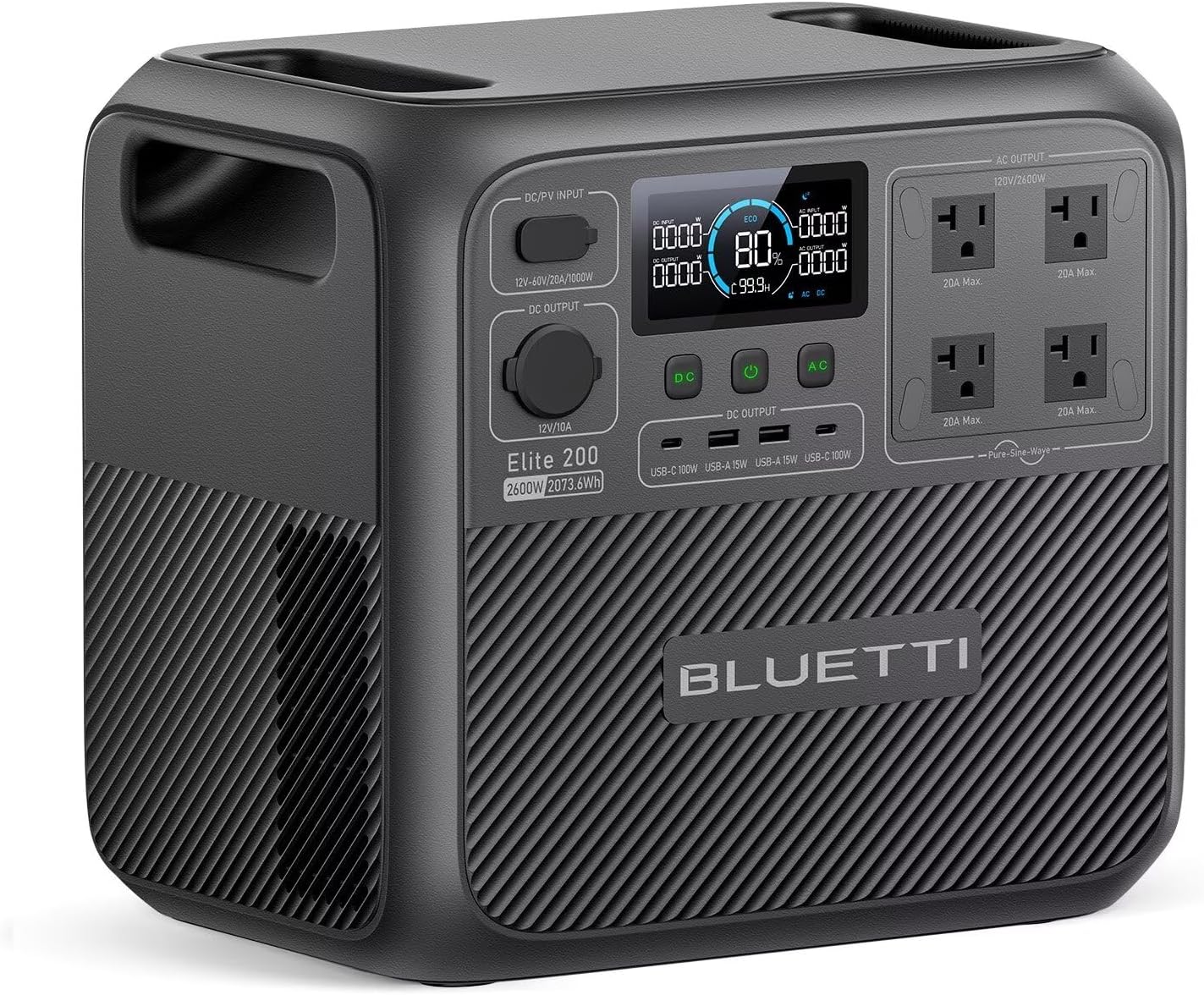
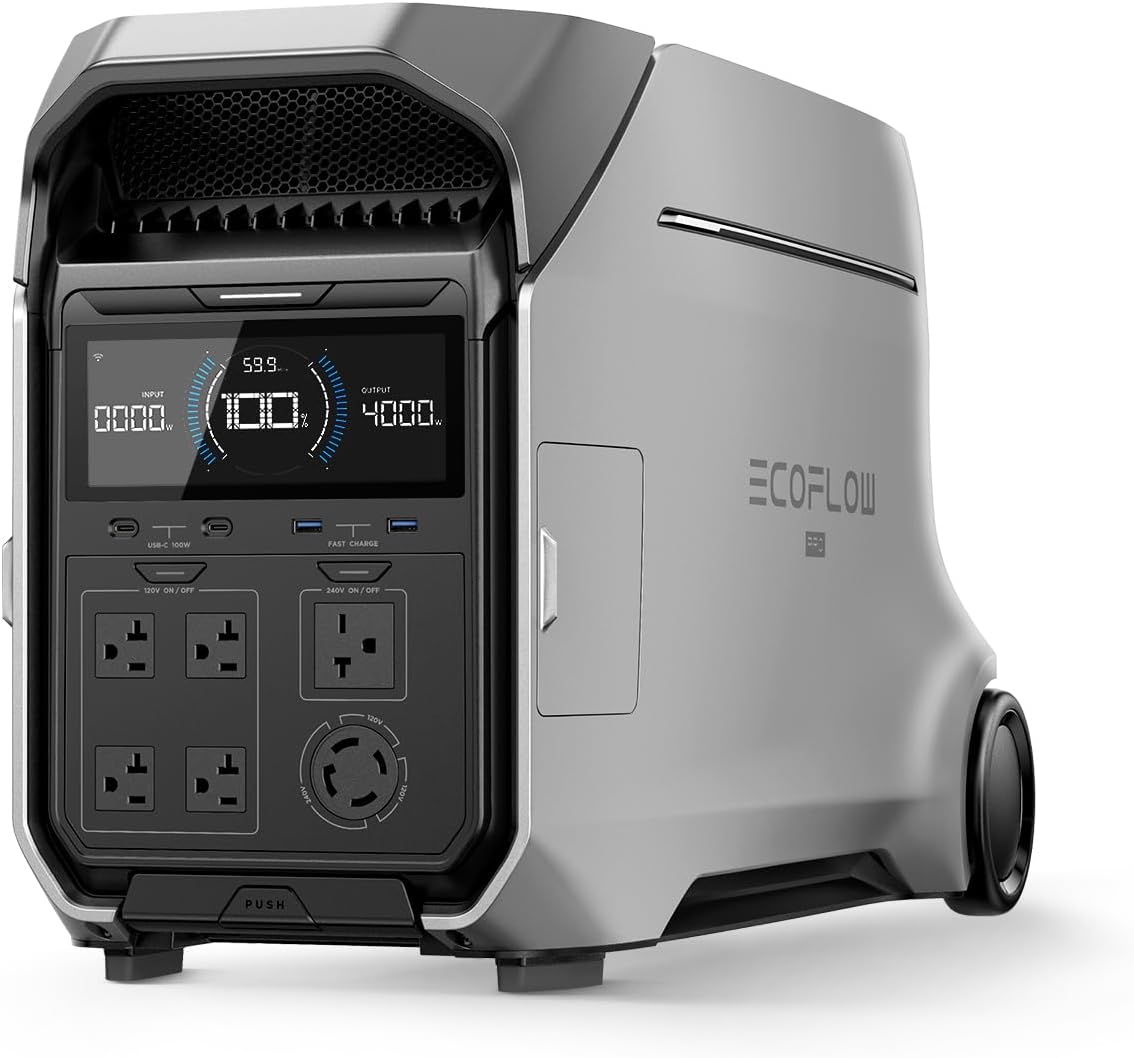
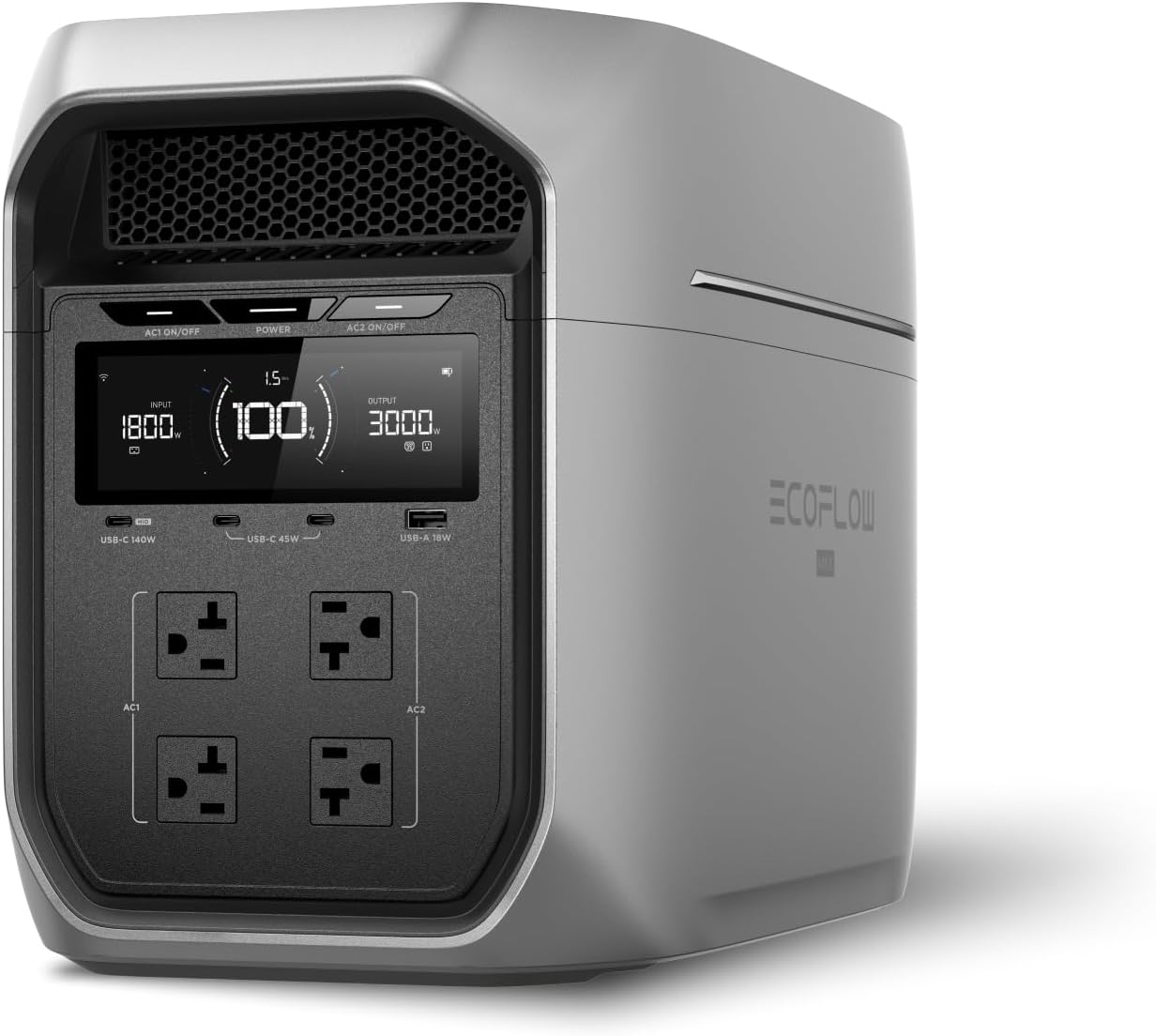
EcoFlow
EcoFlow DELTA 3 Plus
EcoFlow's newest mid-range flagship. The DELTA 3 Plus improves on the Delta 2 with faster charging, LiFePO4 chemistry, and UPS functionality — all at a lower price.
Frequently Asked Questions
What size power station do first responders need for field communications?
For a typical incident command post running radios, a laptop, a printer, and phone charging, plan for 2,000Wh minimum. That covers a 12-hour shift with margin. For multi-day deployments or a fixed command center, step up to a 5,000Wh expandable system like the Bluetti AC500 or EcoFlow DELTA Pro 3 and add solar panels so you can recharge between operational periods.
Can a UPS protect dispatch and 911 equipment during a power outage?
Yes, but only for the transition window. A line-interactive UPS like the CyberPower CP1500AVRLCD or APC BR1500MS2 carries servers, dispatch consoles, and network gear for 5 to 20 minutes at typical loads. That is enough to ride out brief flickers or to bridge the gap until a generator or larger battery comes online. It is a bridge, not a backup; pair it with a power station or generator for outages longer than a few minutes.
Are portable power stations safe to run inside a command vehicle or tent?
Yes. Battery power stations produce no exhaust, carbon monoxide, or fumes, so they are safe to operate inside vehicles, tents, and enclosed command posts where a gas generator would be dangerous. They also run near-silently, which matters when crews need to hear radio traffic. Just keep them out of standing water and give them airflow during fast charging.
Ready to Buy? Here's What We Recommend
Based on our testing and this guide, these are the best options for most people: