Guide
Power Outage Survival Guide: What to Do in the First 10 Minutes, 1 Hour, and 24 Hours

TL;DR
A practical, step-by-step guide for what to do when the power goes out. Covers immediate actions, food safety, communication, medical devices, and how to make your backup power last as long as possible.
The power just went out. Maybe it’s a thunderstorm, maybe a transformer blew, maybe the entire grid went down. Whatever the cause, the next few hours are critical. The decisions you make right now determine whether this is a minor inconvenience or a genuine emergency.
Here’s exactly what to do, organized by time — whether you have a power station, a generator, or nothing at all.
The First 10 Minutes: Assessment and Immediate Action
1. Determine the scope
Check if it’s just your house:
- Look outside — are your neighbors’ lights on?
- Check your circuit breaker panel for tripped breakers
- If it’s just you, reset the breaker. If it trips again, you have an electrical issue — call an electrician.
If it’s the neighborhood or wider:
- Check your utility company’s outage map on your phone
- Note the time — you’ll want to track how long you’ve been out
- Call or text a nearby friend or family member to confirm the scope
2. Protect your electronics
Immediately unplug or switch off:
- Desktop computers and monitors
- TVs and gaming consoles
- Sensitive medical equipment
- Any device without surge protection
Why: When power returns, the initial surge can damage electronics. Devices plugged into quality surge protectors are usually safe, but direct wall connections are vulnerable. Alternatively, if you have a UPS (uninterruptible power supply), your critical devices are already protected and running on battery.
3. Deploy your backup power
If you have a power station: This is the moment it was made for. Place it in a central location and prioritize connections:
- First: Medical devices (CPAP, oxygen concentrator, medication refrigerator). These are non-negotiable. See our medical devices power guide.
- Second: Refrigerator — plug it in now to keep the cold chain intact
- Third: Phone charger and WiFi router — you need communication and information
- Fourth: A few LED lights for safety
If you have a generator:
- Move it outside, at least 20 feet from the house
- NEVER run it indoors or in the garage — carbon monoxide kills silently
- Start it up and run extension cords to essential devices
- Keep fuel on hand but stored away from the running generator
If you have no backup power:
- Put your phone in Low Power Mode immediately
- Gather flashlights, candles, and batteries
- Fill bathtubs and containers with water (your water pump may run on electricity)
- This outage is your wake-up call: see our emergency power kit guide for next time
The First Hour: Food Safety and Communication
Food safety protocol
Your refrigerator is now a countdown timer. The USDA guidelines are clear:
Refrigerator (40°F/4°C):
- Keeps food safe for 4 hours if doors stay shut (full fridge) or 2 hours (half-full)
- Do not open the door to “check on things” — every opening costs minutes
- If you have a thermometer, the danger zone is above 40°F/4°C
Freezer:
- Full freezer: safe for 48 hours with doors closed
- Half-full freezer: safe for 24 hours
- Move food together and fill empty space with ice or frozen water bottles
- A frozen freezer is a huge thermal battery — don’t waste it
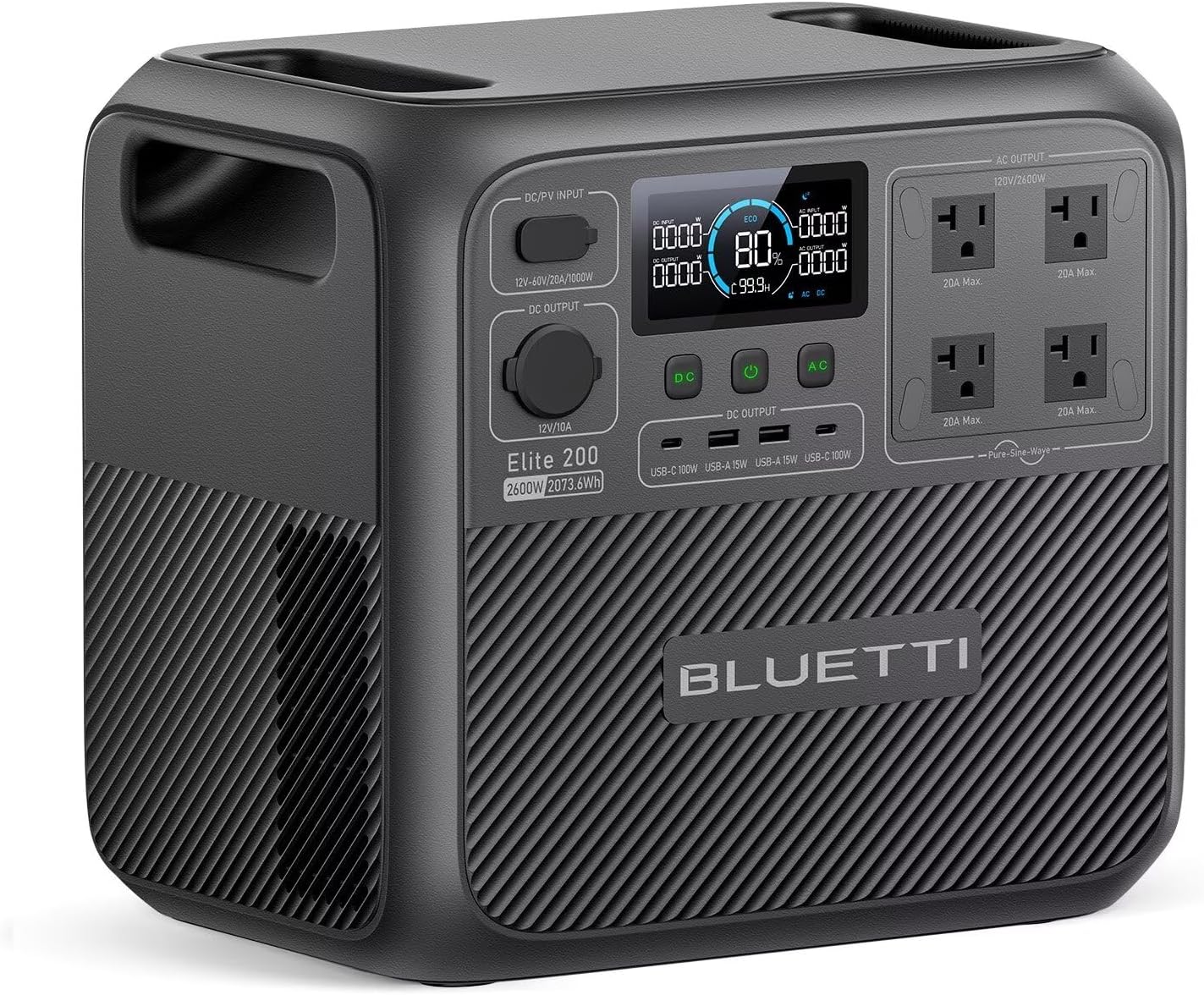
If you have a power station running the fridge: Your food is safe as long as the power station holds out. A 1,000Wh power station runs a typical refrigerator for 8-16 hours. The Bluetti Elite 200 V2 (2,073Wh) can keep a fridge cold for a full day. See our how long a power station runs a fridge guide for specific runtime calculations.
Communication plan
Check for updates:
- Your utility company’s website/app for restoration estimates
- Local emergency management social media accounts
- NOAA Weather Radio if the outage is weather-related
- Local news stations (many stream live on social media)
Conserve phone battery:
- Airplane mode saves the most power — enable it when not actively checking updates
- Reduce screen brightness to minimum usable level
- Close all background apps
- Disable location services, Bluetooth, and WiFi scanning
- Switch to SMS/text instead of data-heavy apps
- A fully charged phone at minimum brightness can last 24-48 hours in standby
If you have a power station: Charge phones immediately to 100% and then keep the phone charger connected. A phone charge uses only 15-20Wh — negligible compared to fridge and lighting loads. Having communication throughout the outage is worth the small energy cost.
Water considerations
If your home has an electric water pump (common in rural areas and well systems):
- Fill bathtubs, sinks, and containers with water immediately
- You’ll need water for drinking, cooking, flushing toilets, and hygiene
- City/municipal water usually continues working during power outages (gravity-fed or generator-backed pumping stations), but pressure may drop during extended outages
Hours 1-6: Energy Conservation and Comfort
Energy budgeting (if using backup power)
If you don’t know how long the outage will last, assume 24 hours and budget accordingly.
Power station energy budget for a 1,000Wh unit over 24 hours:
| Device | Watts | Hours | Wh Used |
|---|---|---|---|
| Refrigerator | 50W avg | 24h | 400 Wh |
| Phone charging (x2) | 15W | 3h | 45 Wh |
| WiFi router | 15W | 24h | 360 Wh |
| LED lights (3x) | 20W | 6h | 120 Wh |
| Total | 925 Wh |
That’s tight on a 1,000Wh station. You may need to sacrifice the WiFi router to make the fridge last. With a 2,000Wh station, you have comfortable margin. With solar panels, you can replenish during daylight hours. Our power station + generator combo guide covers strategies for extended outages.
Temperature management
In summer (no AC):
- Close blinds on sun-facing windows
- Open windows on opposite sides of the house for cross-ventilation
- Fans use very little power (30-80W) — they’re worth running from a power station
- Move to the lowest floor (heat rises)
- Wet towels on skin provide evaporative cooling
- Stay hydrated — dehydration risk increases without AC
In winter (no heat):
- Close off unused rooms and concentrate in one area
- Layer clothing before trying to heat the space
- Space heaters draw 750-1,500W — they’ll drain most power stations in under an hour
- Electric blankets (50-100W) are a far better investment of battery power
- If you have a fireplace or wood stove, now’s the time
- Our winter storm power outage guide covers cold-weather strategies in depth
Lighting
- LED lanterns use very little power (5-15W) and provide area lighting
- Flashlights for moving through the house
- Candles are free but pose fire risk — use with caution, never leave unattended, keep away from curtains
- If running lights from a power station, use USB-powered LED lights rather than plugging in AC lamps — more efficient and less drain on the inverter
Hours 6-24: Extended Outage Management
If the power still isn’t back after 6 hours, shift into conservation mode:
Food management timeline
Hour 4: If you haven’t been running the fridge on backup power, it’s now above 40°F. Start making decisions:
- Cook perishable meats and eat them
- Move dairy, eggs, and produce to a cooler with ice if available
- Condiments, hard cheeses, and most sealed sauces are fine at room temperature for a day
Hour 8-12: Without refrigeration, anything that’s been above 40°F for 2+ hours should be eaten soon or discarded (per USDA). This includes:
- Raw meat and poultry
- Milk and soft cheeses
- Cut fruits and vegetables
- Leftovers
Hour 24: Frozen items that have thawed and been above 40°F for 2+ hours should be discarded. Items still containing ice crystals can be safely refrozen.
If solar panels are available
Daytime is your recharge window. Set up your panels at first light and capture every watt-hour possible. Even on cloudy days, you’ll generate some power. Prioritize:
- Recharging the power station while continuing to run the fridge
- Topping off phone and device batteries
- Running any medical equipment
See our solar charging guide for setup tips.
Mental health and boredom
Extended outages are stressful, especially with kids. Prepare for morale:
- Board games, card games, books (physical, not on dying devices)
- If you have power station capacity to spare, a tablet or laptop loaded with downloaded movies uses only 15-40W
- Keep a routine — regular meals, bedtime, activities
- Check on elderly neighbors — they may need help
After Power Returns: The Recovery Checklist
When the power comes back on:
- Wait 5-10 minutes before turning major appliances back on. This prevents voltage surges and circuit overloads.
- Turn on breakers one at a time if you shut them off
- Check food safety — use the timeline above to determine what’s safe to keep
- Reset clocks and electronics — check that your HVAC system restarted properly
- Recharge your power station to 100% immediately while grid power is available
- Take inventory — what worked, what didn’t, what do you need for next time?
- File an insurance claim if you had food losses over $500 (many homeowner policies cover this)
Build Your Emergency Kit Before the Next Outage
If this outage caught you unprepared, fix that now. The essentials:
- Power station: A 1,000Wh LiFePO4 unit handles most 12-24 hour outages. The EcoFlow DELTA 3 Plus ($649) and Anker SOLIX C1000 ($699) are our top picks.
- Solar panels: 200-400W of panels ensure you can recharge even without grid power. Critical for multi-day outages.
- LED lanterns and flashlights: Battery-operated, always ready
- First aid kit and medications: A 72-hour supply of prescriptions
- Water and non-perishable food: 1 gallon per person per day for 3 days
- Battery-powered or hand-crank radio: For emergency broadcasts when cell towers fail
Our complete emergency power kit guide and emergency preparedness checklist cover everything you need. For a state-by-state look at outage frequency, see our power outage statistics guide.
Related Reading
- How to Build an Emergency Power Kit — complete supply list
- Best Power Station for Home Backup — our top emergency picks
- How Long Will a Power Station Run a Fridge? — specific runtime calculations
- Power Outage Statistics by State 2026 — know your risk
- Winter Storm Power Outage Guide — cold weather strategies
- Hurricane Season Power Prep Guide — storm preparation
Recommended Power Stations
EcoFlow
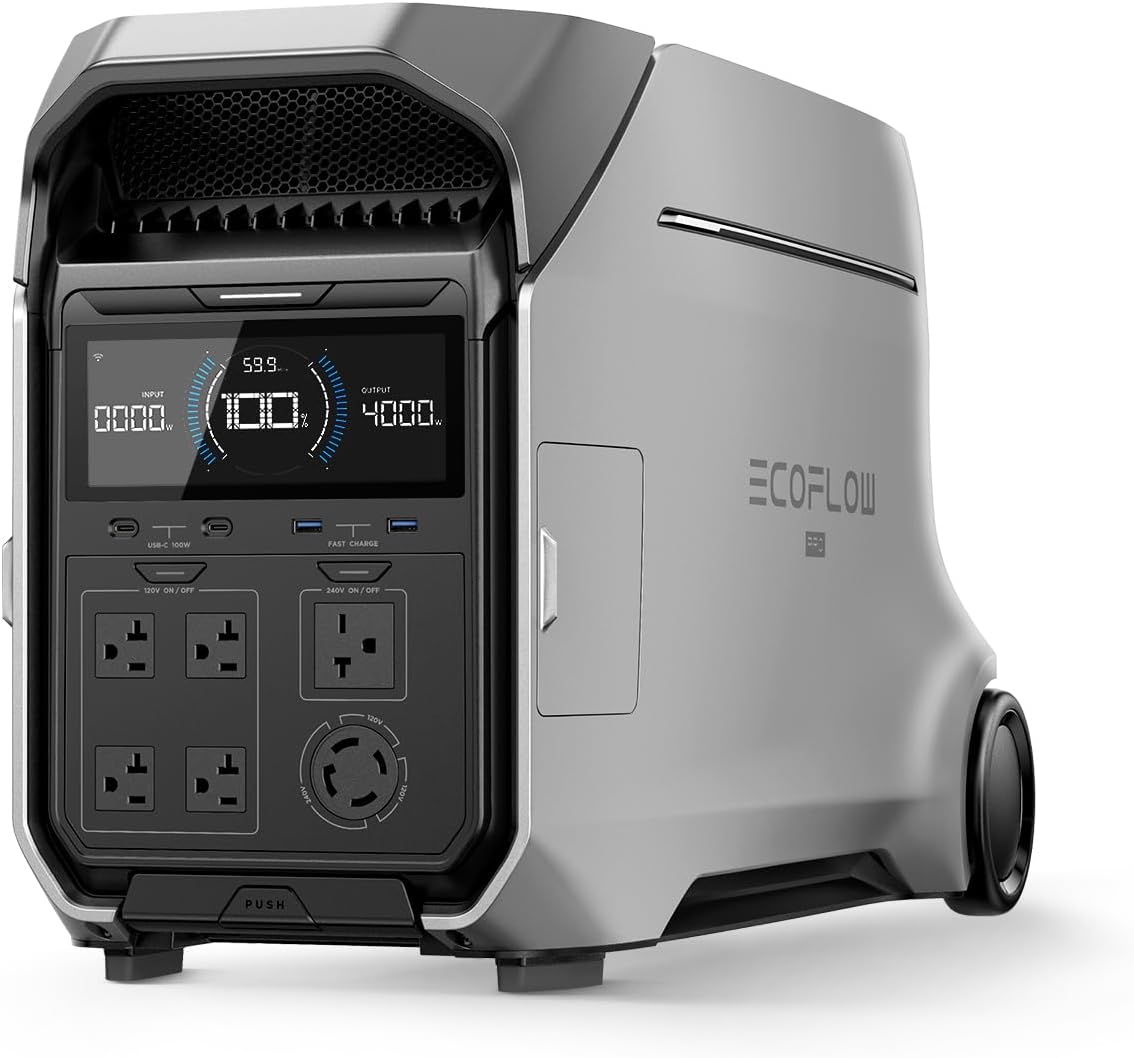
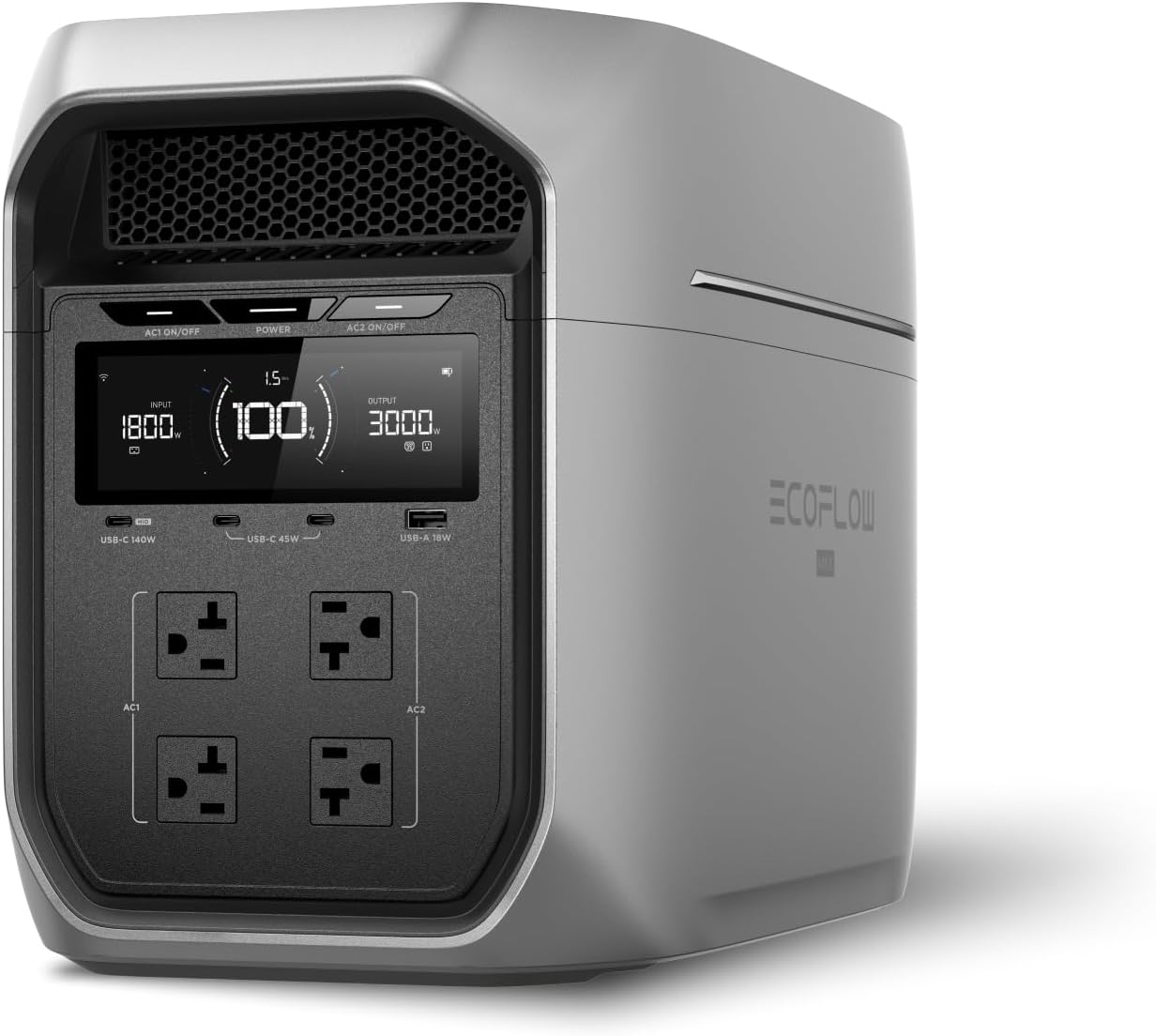
EcoFlow DELTA 3 Plus
EcoFlow's newest mid-range flagship. The DELTA 3 Plus improves on the Delta 2 with faster charging, LiFePO4 chemistry, and UPS functionality — all at a lower price.
Frequently Asked Questions
How long does food last in a refrigerator during a power outage?
A full refrigerator stays cold enough to keep food safe for about 4 hours if the door stays closed. A half-full fridge lasts about 2 hours. A full freezer maintains safe temperatures for 48 hours (24 hours if half full). Every time you open the door, you lose 3-5 minutes of safe time. Pack perishables tightly and avoid unnecessary door openings.
Should I turn off my circuit breakers during a power outage?
Turn off breakers for major appliances (HVAC, water heater, oven) and sensitive electronics. This prevents damage from power surges when electricity is restored. Leave one light switch on so you'll know when power returns. When power comes back, wait 5-10 minutes then turn breakers back on one at a time to avoid overloading the system.
How do I charge my phone during a power outage?
Best options in order: (1) portable power station or power bank, (2) car charger with your vehicle running, (3) hand-crank or solar charger, (4) a friend or neighbor with power. Extend your phone's battery by enabling airplane mode, reducing brightness, disabling Bluetooth and WiFi scanning, closing background apps, and switching to Low Power Mode. A typical phone at 50% brightness uses about 15Wh for a full charge.
Is it safe to run a generator indoors during a power outage?
NEVER run a gas generator indoors, in a garage, or near open windows. Carbon monoxide (CO) from generators kills over 80 Americans annually. Generators must be at least 20 feet from any building with exhaust pointed away from doors and windows. This is the single biggest advantage of power stations — they're completely safe to use indoors with zero emissions.
Ready to Buy? Here's What We Recommend
Based on our testing and this guide, these are the best options for most people: