Guide
How to Build an Emergency Power Kit (Complete Checklist)

TL;DR
Build a complete emergency power kit for 24-72 hour outages. Covers power stations, solar panels, lighting, cables, and a grab-and-go storage plan.
Most people buy a power station and call it a day. That’s like buying a fire extinguisher but no smoke detector — you’ve got part of the solution, but not the whole picture.
A real emergency power kit goes beyond the station itself. It’s a complete, organized system that lets you maintain power, communication, light, and basic safety for 24 to 72 hours without grid electricity. Here’s exactly what you need and how to put it together.
The Complete Emergency Power Kit Checklist
Every item on this list earns its spot. No filler, no “nice to haves” — just the essentials that actually matter when the lights go out.
Power
- Portable power station — the core of your kit. Size it based on your outage window (see sizing section below).
- Portable solar panel (100-200W) — your lifeline for multi-day outages. Without one, your station is a one-shot resource. With one, you can recharge daily and run indefinitely. See our solar panel compatibility guide for pairing help.
- 12V car charging cable — most stations include one. Verify yours works and keep it in the kit. If you can drive, you can recharge.
Lighting and Communication
- LED lantern (battery-powered) — at least two. One for the main living area, one for the bathroom or hallway. LED lanterns run for 50-100+ hours on a set of batteries and don’t drain your power station.
- Battery-powered or hand-crank weather radio — NOAA weather alerts are critical during storms. Don’t rely on your phone for this; cell towers go down too. A hand-crank model with a built-in flashlight is ideal.
- Flashlight with extra batteries — a headlamp is even better for hands-free use.
Cables and Adapters
- Phone charging cables — one for every person in the household. USB-C and Lightning if you have a mix.
- Extension cord (outdoor-rated, 25ft) — lets you position the power station safely while reaching devices in another room.
- Power strip — a compact one to multiply your station’s outlets.
- Laptop charger — if you work from home, this isn’t optional.
Essentials Beyond Power
- First aid kit — basic supplies: bandages, antiseptic, pain relievers, any prescription medications (rotated regularly).
- Manual can opener — electric ones don’t work without power, and canned food is what you’ll be eating.
- Printed emergency contacts — phone numbers for utility company, insurance, family. Your phone might die or lose signal.
- Cash — ATMs and card readers need electricity. Keep $100-200 in small bills.
For a printable version of this list, use our Emergency Checklist Tool.
Sizing Your Station for 24, 48, and 72 Hours
The right power station size depends entirely on how long you’re planning to go without grid power and what you need to keep running.
24-Hour Outage (500-800Wh)
This is the “overnight storm” scenario. You need to keep phones charged, lights on, and your router running so you can stay informed.
Typical load: phones + router + LED lights = ~40W average draw
Runtime on 768Wh: approximately 16 hours of real-world output
The Bluetti AC70 at 768Wh is perfectly sized for this. It’s compact, charges in 45 minutes to 80%, and costs under $500. For most single-night outages, it’s all you need.
48-Hour Outage (1000-1500Wh)
Now you’re keeping the fridge running part-time (door closed, cycling the station on for 2-3 hours, off for 2-3 hours) while maintaining communication and lighting.
Typical load: fridge (cycling) + phones + router + lights = ~80W average draw
Runtime on 1024Wh: approximately 11 hours. With solar recharging during the day, you can stretch this across a full 48-hour window.
The EcoFlow DELTA 2 hits the sweet spot here — 1024Wh with 1500W continuous output, expandable to 3kWh if you want extra capacity down the road. Pair it with a 200W solar panel for daytime recharging and you’re covered.
72-Hour Outage (2000Wh+ or Station + Solar)
Extended outages — think hurricane season or spring storm season — require either a large-capacity station or a mid-range station with reliable solar recharging.
Option A: A 2000Wh station that gives you a massive buffer. Draw 100W average and you get roughly 17 hours per full charge. Solar-recharge during the day and repeat.
Option B: A 1000Wh station paired with a 200W solar panel. You’ll get 5-6 hours of charging per day in decent sun, which replenishes roughly 800-1000Wh — enough to offset a full day’s conservative use.
Option B is lighter, cheaper, and more practical for most people.
Storage and the Grab-and-Go Concept
Your emergency kit is useless if you can’t find it at 2 AM when a transformer blows. Organization matters.
Designate One Spot
Pick a location: hall closet, garage shelf, basement landing. Everything goes there. No exceptions. Every family member should know where it is.
Use a Container
A large plastic tote or duffel bag works. The power station sits next to it (too heavy for most bags). Everything else — cables, lanterns, radio, first aid — goes inside the container, packed and ready.
The Grab-and-Go Bag
For evacuations, you won’t take the full kit. Pack a smaller backpack with:
- One phone charger and cable per person
- The weather radio
- Flashlight
- First aid kit
- Cash and printed contacts
- Car charging cable for the station
The power station has a handle. Grab the bag, grab the station, go.
Maintenance Schedule
Emergency gear that hasn’t been tested is gear that might not work. Follow this schedule:
Monthly: Quick visual check. Is the kit still where it should be? Has anything been borrowed and not returned?
Every 2-3 months: Check your power station’s charge level. Lithium batteries self-discharge slowly. Top it back up to 60-80% — never store at 100% or 0% long-term. See our maintenance tips guide for more on battery longevity.
Every 6 months: Full kit audit. Turn on every device. Test every cable. Replace any expired first aid items. Swap batteries in lanterns and the radio. Update your printed contact list if anything has changed.
Seasonally: Adjust for weather. Add hand warmers and an extra blanket before winter. Add electrolyte packets and a USB fan before summer.
What to Buy First (If You’re Starting from Scratch)
If budget is a concern, prioritize in this order:
- Power station — the Bluetti AC70 at $499 is the best entry point for emergency preparedness. It handles 24-hour outages solo.
- LED lanterns and batteries — $15-20 for a pair.
- Charging cables and extension cord — $20-30 total.
- Weather radio — $25-40 for a quality hand-crank model.
- Solar panel — add this when budget allows. It transforms your kit from “one-night backup” to “indefinite off-grid capability.”
Total cost for a solid starter kit: roughly $600-700. That’s less than most people spend on a single appliance repair call.
The Bottom Line
A power station alone is a battery. An emergency power kit is a system. The difference between the two is what separates people who ride out outages comfortably from people who sit in the dark wishing they’d prepared.
Build the kit once, maintain it quarterly, and when the next outage hits — whether it’s a spring thunderstorm or a hurricane — you’ll be ready.
Browse our emergency power station rankings to find the right station for your kit, or use the Emergency Checklist Tool to generate a personalized list based on your household size and outage risk.
Related Reading
- Hurricane Season Power Prep Guide 2026 — seasonal preparation specific to hurricane-prone areas
- Spring Storm Season Power Prep 2026 — preparing for tornado and thunderstorm season
- What Can a 1000Wh Power Station Actually Run? — real-world runtimes for common devices
- Solar Panel + Power Station Compatibility Guide — how to pair panels with stations correctly
Recommended Power Stations
EcoFlow
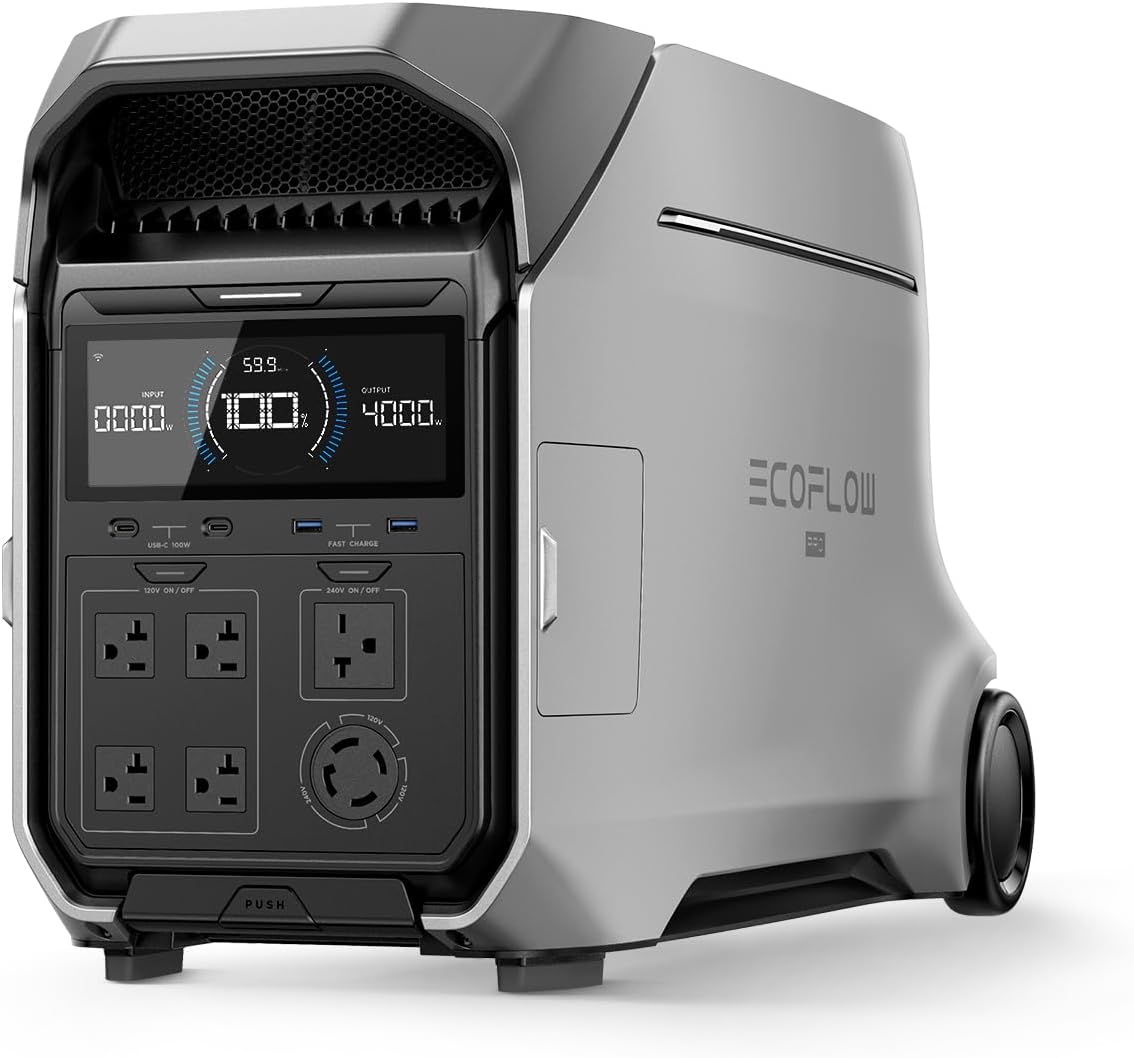
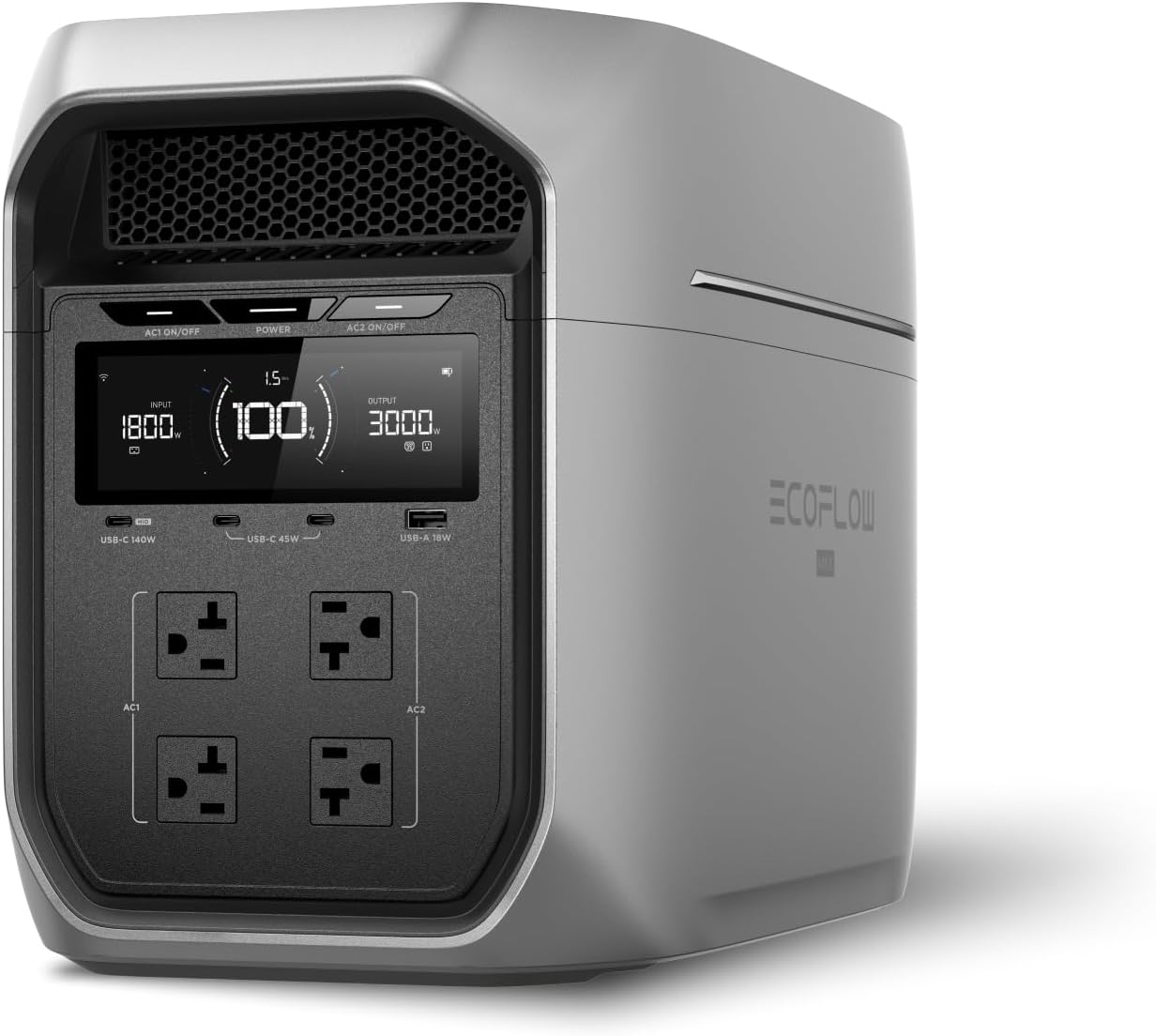
EcoFlow DELTA 3 Plus
EcoFlow's newest mid-range flagship. The DELTA 3 Plus improves on the Delta 2 with faster charging, LiFePO4 chemistry, and UPS functionality — all at a lower price.
Frequently Asked Questions
What should be in an emergency power kit?
A complete emergency power kit includes a portable power station (500-2000Wh depending on your needs), a portable solar panel for recharging, extension cords and adapters, LED lanterns, a battery-powered or hand-crank radio, charging cables for all your devices, a basic first aid kit, and a manual can opener. Store everything together in a designated spot so you can grab it quickly.
What size power station do I need for an emergency?
For a 24-hour outage, 500-800Wh covers phones, lights, and a router. For 48 hours, aim for 1000-1500Wh to also keep a fridge running part-time. For 72 hours or more, you'll want 2000Wh+ or a smaller station paired with a solar panel for daily recharging. A 1000Wh station with a 200W solar panel is the sweet spot for most households.
How often should I maintain my emergency power kit?
Check your power station's charge level every 2-3 months and top it back up to 60-80%. Test all cables, lanterns, and the radio at the same time. Replace batteries in your lanterns and radio annually. Update your checklist seasonally — swap out winter-specific items in spring and vice versa. Do a full kit audit every six months.
Can I recharge a power station during a power outage?
Yes, with a portable solar panel. A 200W panel can recharge a 1000Wh station in roughly 5-6 hours of good sunlight. This effectively gives you unlimited runtime during multi-day outages as long as you manage your loads during nighttime hours. You can also recharge from a car's 12V outlet while driving.
Ready to Buy? Here's What We Recommend
Based on our testing and this guide, these are the best options for most people: