Guide
EV Charging 101: Everything a New Electric Vehicle Owner Needs to Know

TL;DR
New to electric vehicles? This comprehensive guide explains Level 1, 2, and 3 charging, home installation costs, public charging networks, charging speed factors, and how to choose the right home charger.
Buying an electric vehicle is exciting — until you realize that “charging” replaces “fueling” and suddenly you have a whole new set of questions. How does home charging work? What do all the charging levels mean? How much does it actually cost? Can you road trip in an EV?
This guide answers every question a new EV owner has about charging, from the basics to the nuances that even dealerships don’t explain well.
The Three Levels of EV Charging
Level 1: Standard Wall Outlet (120V)
What it is: The charging cable that comes with your EV plugged into any regular 15-20 amp household outlet. No installation required.
Speed: 3-5 miles of range per hour of charging (about 1.4-1.9 kW)
Full charge time: 40-60 hours for a typical 60 kWh battery
Best for: Plug-in hybrids (smaller batteries), drivers who travel fewer than 30 miles daily, or as a backup when no Level 2 charger is available.
Cost: Free (uses existing outlet). Electricity cost is about $0.50-0.80 per overnight charge session.
The reality: Level 1 charging is painfully slow for all-electric vehicles. If you drive a fully electric car and commute more than 30 miles round trip, you need Level 2. For plug-in hybrids with 20-40 mile electric ranges, Level 1 works fine — you’ll fully recharge overnight.
Level 2: Dedicated Home Charger (240V)
What it is: A dedicated charging station connected to a 240V circuit (the same type of outlet used for electric dryers and ovens). Requires installation by an electrician.
Speed: 25-35 miles of range per hour (7.2-11.5 kW typical)
Full charge time: 6-12 hours for a typical 60 kWh battery
Best for: Every EV owner who can install one. This is the standard for daily home charging.
Cost:
- Charger unit: $300-700
- Installation: $400-1,500 (depends on electrical panel distance and capacity)
- Total: $700-2,200
- Many utility companies and states offer rebates of $200-500
- The federal EV charger tax credit (30C) covers 30% of costs up to $1,000
The reality: Level 2 is the “set it and forget it” solution. Plug in when you get home, wake up to a full charge. Most EV owners spend less than 30 seconds per day on charging — plug in, unplug in the morning. It’s more convenient than gas stations because you never make a special trip.
Our top Level 2 charger picks:
- ChargePoint Home Flex — 50A/12kW, WiFi connected, adjustable amperage, $699
- Tesla Wall Connector — 48A/11.5kW, sleek design, Tesla integration, $475
- Grizzl-E Classic — 40A/9.6kW, rugged outdoor build, $399
For detailed charger recommendations, see our best Level 2 EV charger guide and best EV charger for Tesla guide.
Level 3: DC Fast Charging (DCFC)
What it is: High-powered commercial charging stations found at highway rest stops, shopping centers, and charging networks. Uses direct current (DC) to bypass the car’s onboard charger.
Speed: 100-350+ miles of range in 30 minutes (50-350 kW)
Full charge time: 20-45 minutes for 10-80% (intentionally slower above 80%)
Best for: Road trips, emergencies, and people without home charging access.
Cost: $0.30-0.60 per kWh at most networks (roughly $15-30 for a significant charge). Tesla Superchargers are typically the cheapest; Electrify America and EVgo tend to be more expensive.
The reality: DC fast charging is convenient but expensive — about 2-3x the cost of home charging. The charging curve slows significantly above 80% to protect the battery, which is why the standard practice is to charge to 80% and continue driving. Frequent DC fast charging can accelerate battery degradation compared to Level 2 home charging.
Understanding Your Home Electrical Panel
Before installing a Level 2 charger, you need to know what your electrical panel can handle:
Panel capacity
Most US homes have 100-200 amp electrical panels. A Level 2 charger typically needs a 40-60 amp dedicated circuit.
100-amp panel: May be able to add a 40-amp (9.6kW) charger if your existing loads aren’t too high. An electrician can perform a load calculation.
200-amp panel: Almost always has room for a 48-60 amp charger circuit without upgrades.
If your panel is full: Options include a panel upgrade ($1,500-3,000), a smart circuit sharing device (like DCC-9 or Splitvolt, $200-400), or a charger with built-in load management.
Charger placement
The charger should be installed as close to your electrical panel as practical. Every foot of wire adds cost ($3-8 per foot for the heavy-gauge wiring required). If your panel is in the basement and you park in a detached garage 80 feet away, installation costs will be on the higher end.
The ChargePoint Home Flex advantage
The ChargePoint Home Flex is our top pick partly because it has adjustable amperage (16-50A), meaning it works with whatever circuit your electrician installs. If you start with a 40A circuit and later upgrade your panel, you can increase the charger’s amperage without buying new hardware.
Charging Speed: What Affects How Fast Your EV Charges
Battery state of charge
Charging is fastest between 10-80%. Below 10% and above 80%, the battery management system slows charging to protect battery health. This is why DC fast chargers quote “10 to 80%” times — the last 20% can take as long as the first 70%.
Temperature
Cold batteries charge slowly. In winter, EV charging can take 2-3x longer, especially for the first hour until the battery warms up. Many EVs have battery preconditioning — if you set your navigation to a fast charger, the car heats the battery en route to maximize charging speed.
Hot batteries also charge slower. On a scorching summer day after highway driving, the car may throttle charging speed to manage heat.
Onboard charger rating
Your car’s onboard charger determines the maximum Level 2 charging speed:
- 7.2 kW onboard charger: Max 30 amps at 240V. A 48A charger won’t charge faster than 30A.
- 11.5 kW onboard charger: Can use a full 48A charger at 240V for maximum Level 2 speed.
- 19.2 kW onboard charger: (Some higher-end EVs) Benefits from a 100A circuit — rare in residential.
Bottom line: Your charging speed is limited by the weakest link — the charger, the circuit, or the car’s onboard charger.
Voltage
- 208V (common in apartments/condos): Delivers about 15% less power than 240V
- 240V (standard residential): Maximum residential charging speed
- Both work fine; 208V is just slightly slower
Charging Costs: The Real Numbers
Home charging (Level 2)
| Scenario | Electricity Rate | Monthly Miles | Monthly Cost |
|---|---|---|---|
| Average US | $0.16/kWh | 1,000 | $48 |
| Cheap electricity (ID, WA) | $0.10/kWh | 1,000 | $30 |
| Expensive electricity (CA, MA) | $0.30/kWh | 1,000 | $90 |
| Time-of-use (off-peak) | $0.08/kWh | 1,000 | $24 |
Time-of-use (TOU) rates can cut your charging cost in half. Many utilities offer TOU plans where electricity is cheapest overnight (exactly when you charge). Smart chargers like the ChargePoint Home Flex let you schedule charging for off-peak hours automatically.
Compared to gas: A gas car getting 30 MPG at $3.50/gallon costs about $117/month for 1,000 miles. An EV at the US average rate costs $48/month — a savings of $69/month or $828/year.
Public charging
| Network | Typical Rate | Cost per 100 miles |
|---|---|---|
| Tesla Supercharger | $0.25-0.40/kWh | $7.50-12 |
| Electrify America | $0.43-0.60/kWh | $13-18 |
| ChargePoint DCFC | $0.35-0.55/kWh | $10.50-16.50 |
| ChargePoint Level 2 | $0.15-0.35/kWh | $4.50-10.50 |
| Free destination charging | $0/kWh | $0 |
Road Tripping in an EV
Long-distance EV travel is entirely practical in 2026, but it requires a mindset shift from gas cars:
Planning your route
Use your car’s built-in navigation or apps like A Better Route Planner (ABRP) to plan charging stops. Modern EVs with 250+ miles of range typically stop every 150-200 miles for 20-30 minutes of DC fast charging.
The rhythm of an EV road trip
Drive 2-2.5 hours → stop for 20-30 minutes → use the bathroom, grab food, stretch → continue. Many EV drivers find this rhythm actually makes road trips more enjoyable (and safer) than pushing through 4-5 hour gas-car stints.
Arrive with a charge plan
- Arrive at fast chargers between 10-20% for the fastest charging curve
- Charge to 60-80% — going above 80% gets progressively slower
- The car’s navigation system calculates optimal charge stops and levels
EV road trip pro tips
- Precondition the battery before arrival at a fast charger (set navigation to the charger)
- Check charger availability on PlugShare or the network’s app before arriving
- Have a backup charger location in mind (chargers can be occupied or out of order)
- Slow down slightly on highways — aerodynamic drag increases with the square of speed, so 70 mph uses significantly more energy than 65 mph
Choosing Your Home EV Charger
Must-have features
- 240V operation — Level 2 speed is non-negotiable for daily EV use
- At least 32A output (7.7kW) — handles overnight charging for any EV
- UL Listed — safety certification required for code compliance
- Outdoor rating (if installing outside) — NEMA 4 enclosure for weather resistance
Nice-to-have features
- WiFi connectivity — usage tracking, energy monitoring, scheduled charging
- Adjustable amperage — flexibility for different circuits and future upgrades
- Cable management — built-in cord holder keeps the cable organized
- ENERGY STAR certified — ensures standby energy consumption is minimal
Hardwired vs. Plug-in
- Hardwired: Permanently connected to your electrical panel. Slightly cleaner installation, required for 60A circuits.
- Plug-in (NEMA 14-50): Plugs into a 240V outlet. Portable — you can take it if you move. Limited to 40A circuits (50A outlet × 80% continuous load rule = 40A).
For most homeowners, a plug-in charger on a NEMA 14-50 outlet offers the best combination of performance and flexibility.
Browse our complete EV charger category page for all reviewed models, or see our best Level 2 EV charger guide for our top picks.
Portable EV Charging: Power Stations and Level 1
Can you charge an EV with a portable power station? Technically yes, but practically it’s limited:
- A 1,000Wh power station delivers about 1 kWh of energy — roughly 3-4 miles of range
- The EcoFlow DELTA Pro 3 at 4,096Wh provides about 12-15 miles — enough for an emergency “get to a charger” situation, but not practical for regular use
Portable power stations are valuable for EV owners as home backup power (keeping the house running during outages) rather than directly charging the vehicle. If you’re interested in emergency EV charging, see our portable power for emergencies guide.
The Bottom Line
Home EV charging is simpler than it seems: install a Level 2 charger, plug in every night, and wake up to a full charge. The cost savings over gasoline are substantial ($800+/year for average drivers), and the convenience of never visiting a gas station is genuinely life-changing.
Start with our best Level 2 EV charger guide to find the right charger for your vehicle and situation.
Related Reading
- Best Level 2 EV Charger — our top picks for every budget
- Best EV Charger for Tesla — Tesla-specific recommendations
- Beginner’s Guide to Home EV Charging — installation walkthrough
- Tesla Wall Connector vs ChargePoint Home Flex — head-to-head comparison
- EV Charger category — all reviewed chargers
Recommended Power Stations
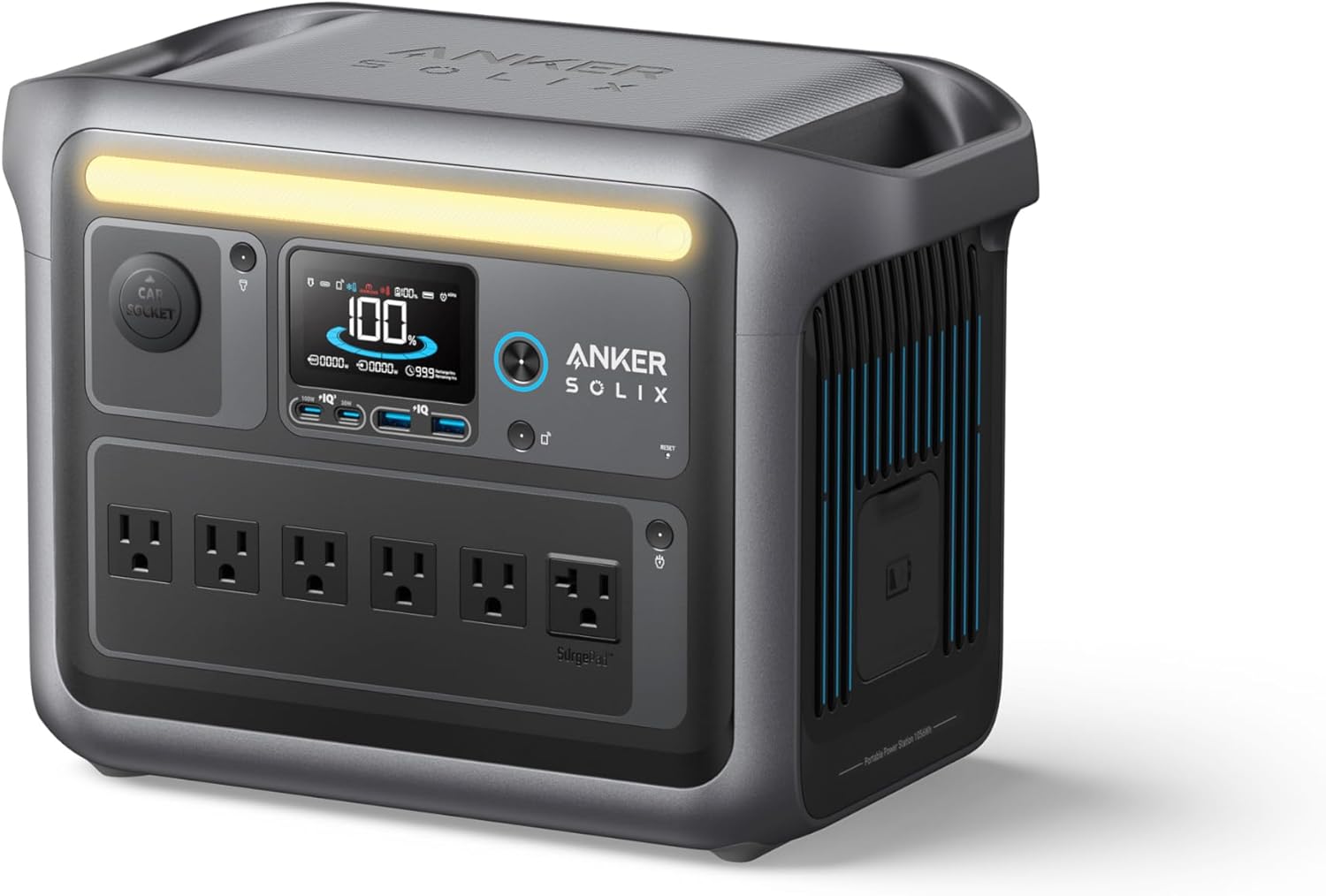
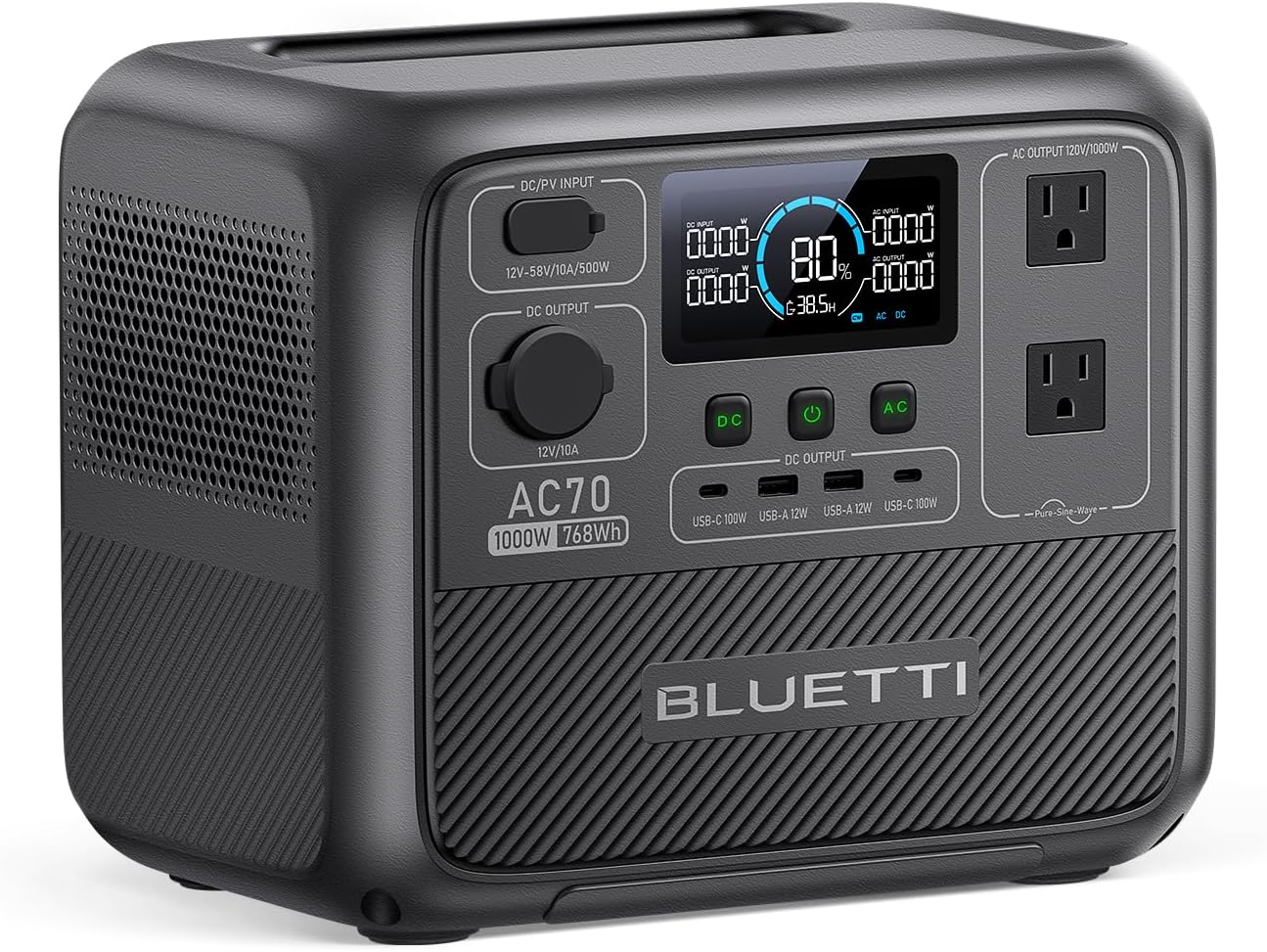
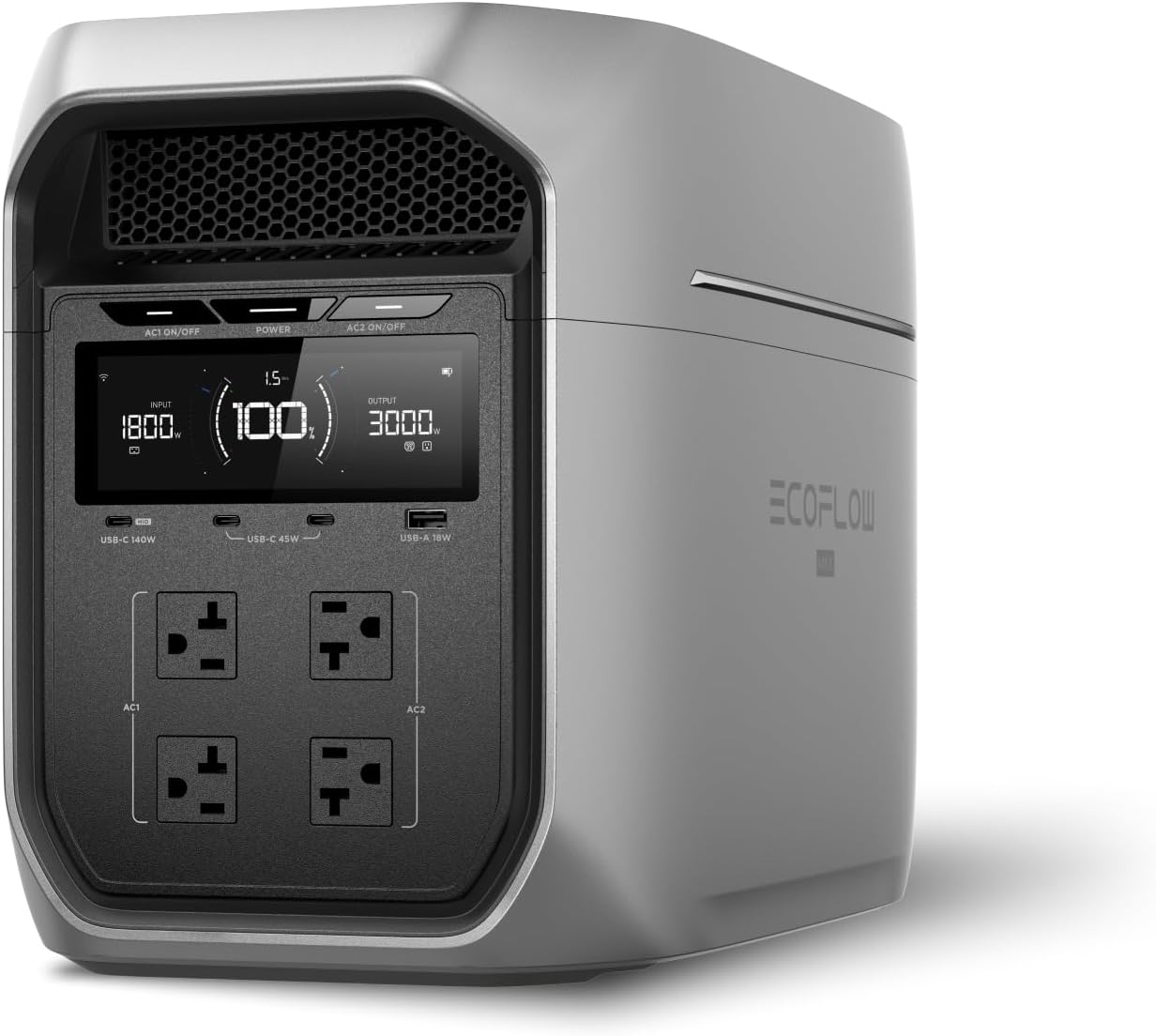
EcoFlow
EcoFlow DELTA 3 Plus
EcoFlow's newest mid-range flagship. The DELTA 3 Plus improves on the Delta 2 with faster charging, LiFePO4 chemistry, and UPS functionality — all at a lower price.
Frequently Asked Questions
How much does it cost to charge an electric car at home?
At the US average electricity rate of $0.16/kWh, charging a typical EV with a 60 kWh battery from empty to full costs about $9.60. For a car with 250 miles of range, that's roughly $0.04 per mile — compared to $0.12-0.16 per mile for a gas car getting 30 MPG at $3.50/gallon. Monthly charging costs average $30-60 for the typical driver (1,000 miles/month), compared to $120-170 for gasoline.
How long does it take to charge an electric car?
It depends on the charging level. Level 1 (standard 120V outlet): 40-60 hours for a full charge. Level 2 (240V home charger): 6-12 hours for a full charge. DC Fast Charging (Level 3): 20-45 minutes for 10-80%. Most EV owners charge overnight on Level 2 and never think about charging time — you wake up to a full battery every morning, similar to charging your phone.
Can I charge my EV with a regular outlet?
Yes — every EV comes with a Level 1 charging cable that plugs into a standard 120V household outlet. It's slow (3-5 miles of range per hour of charging), but works for plug-in hybrids or drivers who drive less than 30 miles per day. For daily commuters or all-electric vehicles, a Level 2 (240V) home charger is strongly recommended.
Do I need to charge my EV to 100% every time?
No — and you shouldn't for daily driving. Most manufacturers recommend charging to 80% for daily use and only charging to 100% before long trips. Lithium batteries degrade faster when held at very high or very low charge states. Modern EVs let you set a charge limit in the vehicle's settings. Charging to 80% daily and 100% occasionally is the best practice for battery longevity.
Ready to Buy? Here's What We Recommend
Based on our testing and this guide, these are the best options for most people: