Tesla Wall Connector vs ChargePoint Home Flex: Which EV Charger Is Better?

TL;DR
Comparing the Tesla Wall Connector and ChargePoint Home Flex Level 2 EV chargers. We evaluate price, compatibility, installation, and smart features to determine which is the better home charger.
Specs Comparison
| Spec | Tesla Wall Connector | ChargePoint Home Flex |
|---|---|---|
| Rating | 4.7 | 4.6 |
| Max Power | 11.5kW | 12kW ✓ |
| Amps | 48A | 50A ✓ |
| Cord | 24ft ✓ | 23ft |
| Price | $475 ✓ | $700 |
| Check Price on Amazon | Check Price on Amazon |
Tesla Wall Connector vs ChargePoint Home Flex: Which EV Charger Is Better?
The Tesla Wall Connector is the charger Tesla owners gravitate toward first. It is made by Tesla, it integrates seamlessly with the Tesla app, and at $475, it costs significantly less than most competitors. The ChargePoint Home Flex takes the opposite approach: universal compatibility with every EV on the market, a plug-in installation option, and adjustable amperage that adapts to almost any home’s electrical setup. One charger is built for a single brand. The other is built for flexibility. Which philosophy wins depends entirely on your garage.
Head-to-Head Spec Comparison
| Spec | Tesla Wall Connector | ChargePoint Home Flex |
|---|---|---|
| Max Amperage | 48A | 50A |
| Max Charging Power | 11.5kW (240V) | 12kW (240V) |
| Cable Length | 24 ft | 23 ft |
| Installation | Hardwired only | NEMA 14-50 plug-in or hardwired |
| Amperage Adjustable | Via Tesla app (limited) | Yes (16A-50A via app) |
| EV Compatibility | Tesla (NACS), J1772 with adapter | All EVs (J1772 + NACS with adapter) |
| Smart Features | Tesla app integration, scheduling | App, scheduling, energy tracking |
| Wi-Fi | Yes | Yes |
| Price (MSRP) | ~$475 | ~$700 |
Price
The Tesla Wall Connector’s most obvious advantage is its $475 price tag, which is $225 less than the ChargePoint Home Flex. That is a substantial savings, and it makes the Tesla Wall Connector one of the most affordable smart Level 2 chargers available from any brand. When you factor in installation costs, which can easily run $300-$800 for either unit, that $225 savings on the charger itself becomes even more significant as a percentage of your total project cost.
Both chargers may qualify for federal and state EV charger tax credits, so the relative savings stays consistent regardless of incentives. For Tesla owners on a budget, the Wall Connector’s lower price is hard to ignore.
Compatibility
This is where the decision often gets made. The Tesla Wall Connector uses a NACS (Tesla) connector natively. It charges any Tesla vehicle with zero adapters, and the experience is as seamless as you would expect from a first-party accessory. For non-Tesla EVs that use J1772, you would need a NACS-to-J1772 adapter, which adds cost and inconvenience.
The ChargePoint Home Flex uses a J1772 connector, which is the standard for non-Tesla EVs. It charges Chevrolet, Ford, Hyundai, Kia, BMW, and every other J1772-equipped vehicle natively. For Tesla owners, you would use the J1772-to-NACS adapter that Tesla includes with most vehicles. With the industry gradually moving toward NACS adoption, this landscape may shift over time, but for now, J1772 remains the most universally compatible option.
If you own one Tesla and expect to own only Teslas in the future, the Wall Connector is the natural choice. If there is any chance your household will add a non-Tesla EV, or if you plan to sell your home to a buyer who might not drive a Tesla, the ChargePoint’s universal compatibility is worth the premium. For a deeper dive into Tesla-specific charging setups, check out our guide to the best EV charger for Tesla.
Installation Flexibility
The ChargePoint Home Flex offers a critical advantage: it can be installed as a plug-in unit using a standard NEMA 14-50 outlet. This means a simpler, often cheaper installation. It also means you can unplug the charger and take it with you if you move, or swap it out for a different model without calling an electrician.
The Tesla Wall Connector requires hardwired installation only. Once your electrician connects it to your panel, it is there for good unless you want to pay for another service call to remove or relocate it. For homeowners who are settled in their house, this is a minor inconvenience. For renters or people who move frequently, the ChargePoint’s plug-in option is a significant practical advantage.
The ChargePoint also offers full amperage adjustment from 16A to 50A through the app, which is helpful if your electrical panel is near capacity. You can install the charger and dial back the amperage to fit your available circuits, then increase it later if you upgrade your panel. The Tesla Wall Connector allows some amperage adjustment through the Tesla app, but the ChargePoint offers finer-grained control at a wider range.
Charging Speed
Both chargers deliver nearly identical real-world charging speeds. The ChargePoint’s 50A maximum produces 12kW at 240V, while the Tesla’s 48A maximum produces 11.5kW. The difference translates to perhaps one additional mile of range per hour in the ChargePoint’s favor. In practice, since most people charge overnight and wake up to a full battery regardless, this gap is irrelevant for daily use.
Cable length is also a near wash: the Tesla offers 24 ft versus the ChargePoint’s 23 ft. Neither will leave you struggling to reach your charging port in a standard garage setup.
Smart Features
The Tesla Wall Connector integrates directly into the Tesla app, which means your home charging data, Supercharger history, and vehicle diagnostics all live in one place. You can schedule charging times, track energy usage, and manage multiple Tesla vehicles from the same interface. For an all-Tesla household, this is the most cohesive experience available.
The ChargePoint Home Flex has its own dedicated app with scheduling, energy usage tracking, and charging session history. If you use ChargePoint’s extensive public charging network, your home and public charging data merge into a single dashboard. The app is well-designed, though it does not integrate with your vehicle’s native app the way the Tesla Wall Connector does.
Verdict
This comparison comes down to a simple question: are you a Tesla-only household, or do you want to keep your options open? For a broader look at the Level 2 charger market, see our roundup of the best Level 2 EV chargers.
Choose the Tesla Wall Connector if you own one or more Teslas and don’t plan to add a non-Tesla vehicle. At $475, it is the most affordable smart Level 2 charger from a major brand, and the integration with the Tesla app creates the cleanest, simplest charging experience. It is the obvious choice for committed Tesla households.
Choose the ChargePoint Home Flex if you want a charger that works with any EV you might own now or in the future. The plug-in installation option, adjustable amperage, and universal J1772 connector make it the safer long-term investment. It costs $225 more, but that premium buys flexibility that can pay for itself if your next car is not a Tesla.
Frequently Asked Questions
Can the Tesla Wall Connector charge non-Tesla EVs?
Yes, but it requires a NACS-to-J1772 adapter since the Wall Connector uses a Tesla (NACS) connector natively. The ChargePoint Home Flex uses J1772, which works with all EVs natively, including Teslas via the included J1772-to-NACS adapter.
Is the Tesla Wall Connector worth it over the ChargePoint Home Flex for Tesla owners?
For Tesla-only households, yes. The Wall Connector costs $225 less, integrates directly with the Tesla app, and charges your Tesla without any adapters. If you might own a non-Tesla EV in the future, the ChargePoint's universal compatibility is the safer investment.
Can the ChargePoint Home Flex be plugged in or does it need to be hardwired?
The ChargePoint Home Flex supports both plug-in installation via a NEMA 14-50 outlet and hardwired installation. The Tesla Wall Connector requires hardwiring only, which makes the ChargePoint easier and often cheaper to install, and portable if you move.
Read the Full Reviews
Tesla
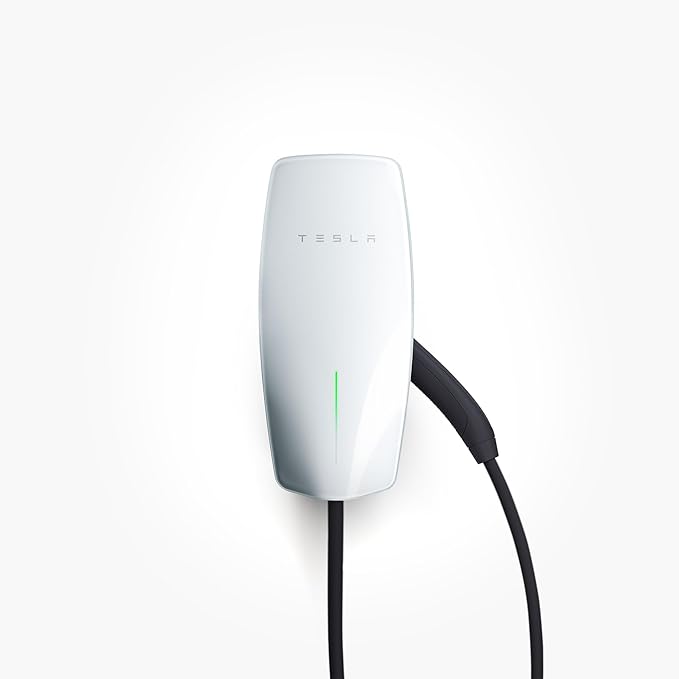
Tesla Wall Connector
The ideal charger for Tesla owners. The Wall Connector offers seamless vehicle integration, a clean design, and power sharing — all at a competitive $475 price point.
Max Power
11.5kW
Amps
48A
Cord
24ft

ChargePoint
ChargePoint Home Flex
The most versatile Level 2 home EV charger. Adjustable 16-50A output, a 23-foot cable, and the best companion app in the business make it the top pick for any EV owner.
Max Power
12kW
Amps
50A
Cord
23ft
More Comparisons
Anker SOLIX C1000 Gen 2 vs EcoFlow DELTA 3 Plus: The Ultimate 1kWh Showdown (2026)
Read comparison →
Anker SOLIX C800 Plus vs Bluetti AC70: Best Mid-Range Power Station Under $650?
Read comparison →
Battle Born 100Ah vs LiTime 100Ah: Which RV Battery Is Better?
Read comparison →
Best 1000Wh Power Station 2026: 4-Way Comparison
Read comparison →
Best 2,000Wh Power Station for Home Backup: Jackery vs EcoFlow vs Bluetti
Read comparison →
Best Portable Power Stations for Camping in 2026
Read comparison →
Best Power Station for RV and Van Life: EcoFlow vs Jackery vs Bluetti
Read comparison →
Bluetti AC180 vs EcoFlow Delta 2: Best Mid-Range Power Station?
Read comparison →
Bluetti AC200P vs Elite 200 V2: Is the Upgrade Worth It?
Read comparison →
Bluetti AC70 vs Anker SOLIX C1000: Best Budget Power Station for Camping
Read comparison →
ChargePoint Home Flex vs Wallbox Pulsar Plus: Which EV Charger Is Better?
Read comparison →
EcoFlow 220W Bifacial vs Jackery SolarSaga 200W: Which Solar Panel Is Better?
Read comparison →
EcoFlow Delta 2 vs Delta 2 Max: Which EcoFlow Should You Buy?
Read comparison →
EcoFlow DELTA 3 Plus vs Anker SOLIX C1000: Which 1kWh Station Wins?
Read comparison →
EcoFlow DELTA 3 Plus vs Anker SOLIX C1000: Which 1,000Wh Power Station Is Better?
Read comparison →
EcoFlow DELTA 3 vs DELTA 3 Plus: Is the Plus Worth $130 More?
Read comparison →
EcoFlow DELTA Pro 3 vs Jackery Explorer 2000 Plus: Best Large Power Station?
Read comparison →
EcoFlow RIVER 3 Plus vs Jackery Explorer 600 Plus: Compact Power Compared
Read comparison →
EcoFlow RIVER 3 vs Jackery Explorer 100 Plus: Best Compact Power Station?
Read comparison →
EcoFlow vs Jackery 2026: Which Brand Is Better?
Read comparison →
EcoFlow Wave 2 vs Zero Breeze Mark 2: Best Portable AC for Camping in 2026
Read comparison →
Emporia Energy Level 2 vs Lectron V-BOX 48A: Best Budget EV Charger 2026
Read comparison →
Goal Zero Yeti 1000X vs Jackery Explorer 1000 v2: Premium vs Value
Read comparison →
Honda EU2200i vs EcoFlow DELTA Pro 3: Generator vs Power Station
Read comparison →
Jackery Explorer 1000 v2 vs Anker SOLIX C1000: Best Mid-Range Power Station
Read comparison →
Jackery Explorer 2000 v2 vs 2000 Plus: Which Jackery 2kWh Station Should You Buy?
Read comparison →
Jackery SolarSaga 200W vs Bluetti PV200: Which Solar Panel Is Better?
Read comparison →
Jackery vs Bluetti 2026: Which Brand Makes the Better Power Station?
Read comparison →
Renogy 200Ah Smart vs Redodo 200Ah: Which RV Battery Is Better?
Read comparison →
Segway Cube 2000 vs Jackery Explorer 2000 v2: Value vs Refinement
Read comparison →
VTOMAN FlashSpeed 1500 vs Bluetti AC180: Mid-Range Showdown
Read comparison →
VTOMAN FlashSpeed 1500 vs EcoFlow DELTA 3 Plus: Value Challenger vs Proven Champion
Read comparison →
Yoshino B2000 SST vs Bluetti Elite 200 V2: Next-Gen 2kWh Battle
Read comparison →