Guide
How Long Will a Power Station Run a Fridge? (With Calculator)

TL;DR
Learn exactly how long a portable power station will keep your fridge running. We break down the math, explain compressor cycling, and show runtimes for stations from 245Wh to 4096Wh.
You just bought a portable power station and you want to know: will it actually keep my fridge running during an outage? And for how long?
The short answer is that a 1000Wh power station will run a standard fridge for about 10-12 hours. But the real answer depends on your specific fridge and how you calculate it. Let me show you the exact math so you can figure it out for your setup.
Why Fridge Wattage Is Misleading
Here’s where most people get confused. Your fridge might have a label that says “150W” — but that’s the running wattage when the compressor is actively on. The compressor doesn’t run constantly. It cycles on and off throughout the day to maintain temperature.
A typical fridge compressor runs about 30-50% of the time. So that 150W fridge is actually averaging somewhere around 50-80W per hour over a full cycle.
On top of that, there’s the startup surge. Every time the compressor kicks on, it draws 2-4x its running wattage for a brief moment — usually 400-800W for a standard household fridge. Your power station needs to handle that surge, but it doesn’t meaningfully affect total energy consumption since it only lasts a fraction of a second.
The Runtime Math
Here’s the formula:
Runtime (hours) = Power Station Capacity (Wh) × 0.85 / Average Fridge Draw (W)
That 0.85 factor accounts for inverter efficiency losses. Every power station loses about 10-20% of its stored energy converting from DC battery power to AC output. We use 15% as a reasonable middle ground.
Let’s work through an example:
- Power station capacity: 1000Wh
- Average fridge draw: 80W (a typical mid-size fridge)
- Calculation: 1000 × 0.85 / 80 = 10.6 hours
That’s a solid result — enough to get you through an overnight outage or even a full workday.
Want to skip the math? Use our Power Calculator to plug in your specific fridge wattage and battery capacity for an instant answer.
Runtime Table: Power Station Size vs. Fridge Runtime
Here’s what you can expect at different power station capacities, assuming an average fridge draw of 80W and 85% inverter efficiency:
| Power Station Capacity | Usable Energy (85%) | Estimated Fridge Runtime |
|---|---|---|
| 245Wh | 208Wh | ~2.5 hours |
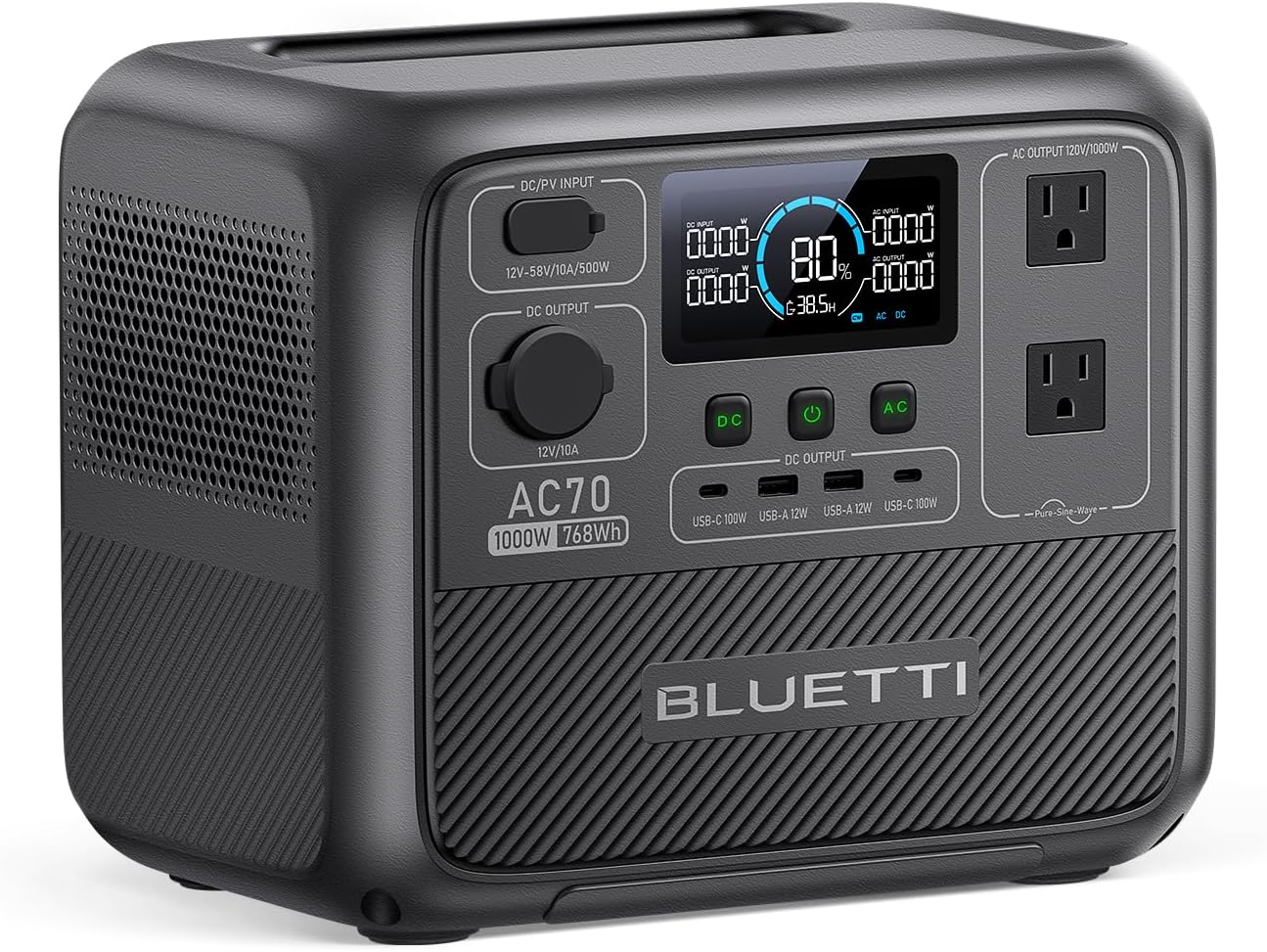
| 768Wh | 653Wh | ~8 hours |
| 1024Wh | 870Wh | ~11 hours |
| 2048Wh | 1,741Wh | ~22 hours |
| 4096Wh | 3,482Wh | ~43 hours |
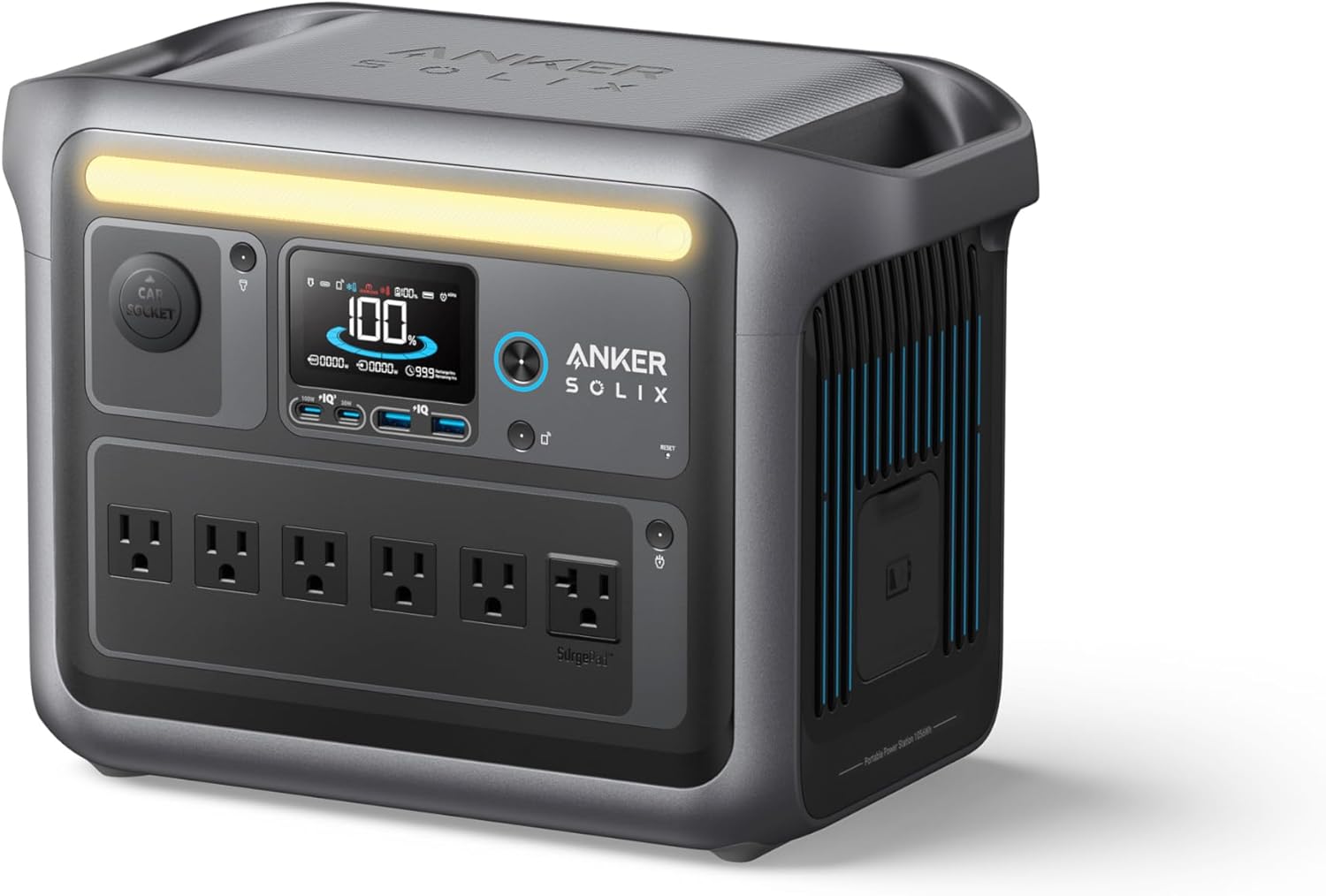
A few things jump out from this table. Smaller stations under 500Wh are really only useful for keeping a fridge cold for a couple of hours — enough for a brief outage but not much more. Once you hit the 1000Wh range, you’re looking at real overnight coverage. The EcoFlow DELTA 3 Plus (1024Wh) and Anker SOLIX C1000 (1056Wh) are both excellent choices at this tier. And at 2000Wh+, you can genuinely ride out a full day or more.
How to Measure Your Fridge’s Actual Draw
The numbers above use averages, but your fridge might be different. The best way to get an accurate runtime estimate is to measure it yourself.
Option 1: Use a Kill-A-Watt meter. Plug one in between your fridge and the wall outlet. Let it run for 24 hours and check the total kWh consumed. Divide that number by 24 to get your average hourly draw. These meters cost about $20-30 and are endlessly useful for sizing a power station.
Option 2: Check your fridge’s energy guide. That yellow EnergyGuide sticker lists estimated annual kWh. Divide by 365 to get daily consumption, then by 24 for the hourly average. For example: 400 kWh/year ÷ 365 ÷ 24 = about 46W average.
Option 3: Use our estimates. If you just need a ballpark, here’s what different fridges typically average:
- Mini fridge: 30-50W average
- Standard top-freezer fridge: 50-70W average
- Large side-by-side fridge: 60-80W average
- Chest freezer: 30-50W average
- Older fridge (15+ years): 80-120W average
Tips to Maximize Fridge Runtime on Battery Power
If you’re running your fridge on a power station during an outage, a few simple tricks can stretch your runtime significantly:
Keep the doors closed. Every time you open the fridge door, warm air rushes in and the compressor has to work harder. A closed fridge can maintain safe temperatures for 4+ hours even without power. When running on battery, minimize door openings.
Lower the thermostat beforehand. If you know a storm is coming, crank your fridge down to its coldest setting while you still have grid power. The colder it starts, the less the compressor has to run on battery.
Fill empty space with water bottles. A full fridge retains cold better than an empty one. Water bottles act as thermal mass and help the fridge recover faster after door openings.
Use eco mode if your power station has it. Some power stations have an eco or power-saving mode that reduces idle inverter draw. This can save 5-10W of passive consumption, which adds up over a long outage. For more tips on getting the most out of your battery, see our power station maintenance guide.
Don’t forget the startup surge. Make sure your power station’s surge rating can handle your fridge. Most stations rated 600W continuous or higher will manage just fine, but check your fridge’s startup wattage to be sure.
What Size Power Station Do You Actually Need?
For most people, I’d recommend at least a 1000Wh power station for fridge backup. That gives you roughly 10-12 hours of coverage — enough to get through a typical outage.
If you live in an area prone to extended outages (hurricanes, ice storms, wildfire-related shutoffs), step up to a 2000Wh+ station or pair your station with solar panels for recharging during the day. Our solar panel compatibility guide explains how to match the right panel to your station. You can also review our emergency preparedness checklist to make sure you’re fully prepared.
For a deeper dive into full fridge backup strategies including solar pairing and what else you can run simultaneously, check out our guide on powering your fridge during an outage.
You can also plug your exact numbers into our Power Calculator to see exactly how long your specific setup will last.
Related Reading
- What Can a 1000Wh Power Station Actually Run? — full runtime breakdowns for phones, laptops, CPAP machines, and more
- Best Power Station for Home Backup — top picks for keeping your fridge and essentials running during outages
- Power Your Fridge During an Outage — extended strategies including solar pairing and load management
- Best 1000Wh Power Stations 2026 — comparing the top stations in the most popular capacity class
Recommended Power Stations
EcoFlow
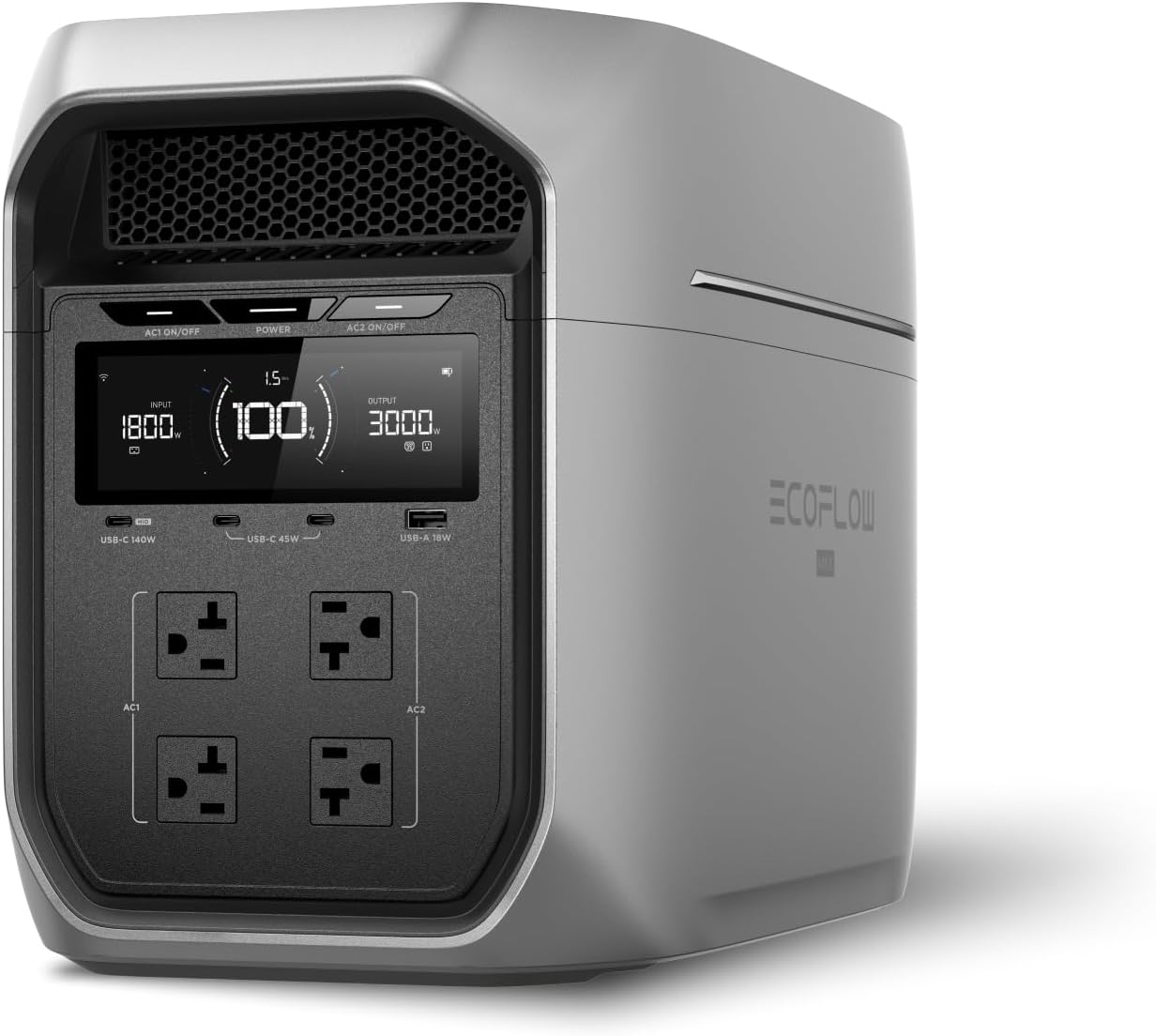
EcoFlow DELTA 3 Plus
EcoFlow's newest mid-range flagship. The DELTA 3 Plus improves on the Delta 2 with faster charging, LiFePO4 chemistry, and UPS functionality — all at a lower price.
Frequently Asked Questions
How long will a 1000Wh power station run a fridge?
A 1000Wh power station will run a standard fridge for approximately 10-12 hours. The math: fridges average 50-80W per hour due to compressor cycling. At 80W average draw, 1000Wh / 80W = 12.5 hours, minus about 15% for inverter losses, giving you roughly 10.5 hours of real-world runtime.
How many watts does a fridge actually use?
A typical household fridge uses 100-200W while the compressor is running and 400-800W during startup surges. However, because the compressor cycles on and off, the average draw over time is only 50-80W per hour. You can measure your fridge's actual consumption with a kill-a-watt meter.
Can a portable power station handle a fridge's startup surge?
Most power stations rated 600W or higher can handle a fridge's startup surge. Fridges typically surge to 400-800W for a fraction of a second when the compressor kicks on. Look for a power station with a surge rating at least 2x its continuous output to be safe.
Does the fridge size affect power station runtime?
Yes, significantly. A mini fridge averages 30-50W per hour and will run much longer than a full-size fridge averaging 60-80W. Chest freezers are also more efficient than upright models. Older fridges can draw considerably more power than newer Energy Star models.
Ready to Buy? Here's What We Recommend
Based on our testing and this guide, these are the best options for most people: