Guide
What 'IP65' Actually Means for Your Power Station and Solar Panels

TL;DR
IP54, IP65, IP67 — the ingress protection ratings on portable power gear are easy to misread. Here's exactly what each rating means, what it doesn't promise, and which one you actually need.
If you’ve shopped for a portable power station or solar panel, you’ve seen specs like “IP54” or “IP67” and probably nodded along assuming higher numbers mean better protection. That’s roughly true, but the IP rating system is more specific — and more limited — than most marketing copy suggests. Misreading these specs leads to ruined gear.
Here’s what each part of an IP rating actually means, what it doesn’t promise, and how to choose the right protection level for your use case.
Decoding the IP Code
“IP” stands for Ingress Protection — the international standard (IEC 60529) for rating how well an enclosure resists solid objects (dust, dirt) and liquids (water, mostly).
The format is IP followed by two digits:
- First digit (0-6): Solid particle protection
- Second digit (0-9): Liquid ingress protection
So IP65 means level 6 solid protection + level 5 liquid protection. IP54 means level 5 solid + level 4 liquid. The two digits are independent — a high first digit doesn’t imply a high second digit.
First digit: dust and solid object protection
| Level | Protection |
|---|---|
| 0 | No protection |
| 1 | Protected against objects ≥50mm (a hand) |
| 2 | Protected against objects ≥12.5mm (fingers) |
| 3 | Protected against objects ≥2.5mm (tools, thick wires) |
| 4 | Protected against objects ≥1mm (most wires, screws) |
| 5 | Dust-protected (some ingress allowed but not enough to interfere) |
| 6 | Dust-tight (no ingress at all) |
For consumer power gear, IP5x and IP6x are the only levels that matter. IP4x or lower means dust will accumulate inside, which is a problem for electronics over time.
Second digit: water/liquid protection
| Level | Protection |
|---|---|
| 0 | No protection |
| 1 | Vertical drips |
| 2 | Drips at 15° tilt |
| 3 | Spraying water (60° from vertical) |
| 4 | Splashing water (any direction) |
| 5 | Water jets (6.3mm nozzle) |
| 6 | Powerful water jets (12.5mm nozzle) |
| 7 | Brief immersion (up to 1m for 30 minutes) |
| 8 | Continuous immersion (per manufacturer specification) |
| 9 | High-pressure, high-temperature water jets |
Crucially, levels are not strictly cumulative. A device rated IP67 (immersion-resistant) is not automatically certified against high-pressure jets (IP66) — those are different test conditions. Some products carry dual ratings like “IP66/IP67” to indicate both have been verified.
What This Means in Practice
IP54 — “Splash-resistant”
Common on indoor-leaning power stations and budget gear. Handles brief rain splashes or kitchen mishaps, but not sustained wet conditions. You can use it on a covered patio. You should not leave it outside in a rainstorm.
IP65 — “Dust-tight, jet-resistant”
The practical minimum for outdoor portable solar panels and many outdoor-oriented power stations. Survives wind-driven rain, dust storms, and getting hosed off briefly. Still not for submersion or extended outdoor exposure to standing water.
This is what you want for camping gear that might face overnight rain, dusty desert use, or coastal salt spray.
IP67 — “Submersible (briefly)”
You can drop it in a puddle without immediately destroying it. This rating covers fully sealed flashlights, ruggedized phones, some marine-grade gear, and high-end solar panel connectors. It does not mean you can take the device swimming, leave it in a stream, or use it as an underwater camera mount.
IP68 — “Submersible per manufacturer spec”
The “8” is open-ended — manufacturers define their own depth and duration. Always read the actual spec (“IP68: 1.5m for 30 min” vs “IP68: 5m for 1 hour”). Generally only seen on dive watches, some phones, and a few specialty waterproof tools.
Why Most Power Stations Cap at IP54-IP65
A power station has to dissipate heat. The lithium cells get warm during charging and discharging, and the inverter generates significant heat under load. Active cooling — fans pulling air across heatsinks — is the standard solution.
Active cooling requires airflow, which requires vents. Vents are paths for water and dust ingress. So the engineering trade-off is:
- Higher IP rating → fully sealed → less efficient cooling → either reduced output or expensive thermal management → higher cost
- Lower IP rating → vents allow easy cooling → cheaper to build → less protection from elements
Most consumer power stations land at IP54 or IP65 as the practical sweet spot. A few specialty “rugged” models reach IP67 with sealed enclosures and conduction cooling, but they’re heavier, more expensive, and have lower continuous output ratings.
Why Solar Panels Can Achieve Higher Ratings
Solar panels don’t generate enough heat to require active cooling — the cells are designed to operate at elevated temperatures, and what little heat exists radiates passively from the surface. This means solar panels can be fully sealed without thermal compromises.
Quality portable solar panels are typically rated IP65 or IP67, and the MC4 connectors that link them to your power station are usually rated IP67 independently. The weak point is rarely the panel itself — it’s the connector if you don’t keep it clean and dry, or the cable jacket after years of UV exposure.
For panel selection, see our best solar panels for power stations guide — every panel we recommend is IP65 or better.
The Limits of IP Ratings
A few things the rating does not tell you:
1. Long-term durability
IP testing is a snapshot — typically a few minutes of exposure under controlled conditions. It doesn’t predict how the seal will hold up after 5 years of UV exposure, freeze-thaw cycles, or repeated handling. A new IP65 panel and a 4-year-old IP65 panel have very different real-world weather resistance.
2. Saltwater performance
IP testing uses fresh water. Saltwater is corrosive in ways that fresh water isn’t. Coastal or marine use accelerates degradation of seals, connectors, and exposed metal regardless of IP rating. If you’re a marine user, look specifically for products marketed for marine environments — they use stainless or corrosion-resistant components, not just sealed enclosures.
3. Operating during exposure
IP ratings are typically tested with the device off. A power station sitting in light rain rated IP54 might survive that exposure but malfunction the moment you try to plug something in (because the AC outlet face isn’t part of the seal). Always cover or shelter active devices, even when their static IP rating suggests they could handle the exposure.
4. Impact resistance
IP ratings have nothing to do with drop protection or shock resistance. A separate standard called IK ratings (IK00-IK10) covers mechanical impact, but it’s rarely listed on consumer power gear. If you’ll be tossing the device into a truck bed, look for “rugged” branding and read drop-test specs explicitly.
What I Look For When Buying
When evaluating a new power station or solar panel for The Power Pick, I look for:
- Power stations: IP54 minimum for any outdoor use. IP65 if it’ll see deployment in light rain. Always covered or sheltered, regardless of rating.
- Solar panels: IP65 minimum, IP67 for permanent outdoor mounts. MC4 connectors rated IP67 independently.
- Cables: UV-resistant jacket (the spec is usually written into the product description, not as an IP code).
- Manufacturer transparency: A reliable spec sheet that distinguishes between IP rating of the case versus the AC outlets versus the connectors. Vague “weatherproof” claims without specific IP digits are a red flag.
For the actual best-rated current models, see our best portable power stations 2026 guide, which lists IP rating alongside other specs.
Related Reading
- Portable Power Glossary: 60+ Terms Explained — IP and other technical terms
- Best Solar Panels for Power Stations — panels with verified IP ratings
- Solar Panel Maintenance Guide — keeping your panels’ seals intact
- Portable Power Station Safety Guide — beyond just IP ratings
- Power Station Maintenance Tips — extending equipment life
Recommended Power Stations
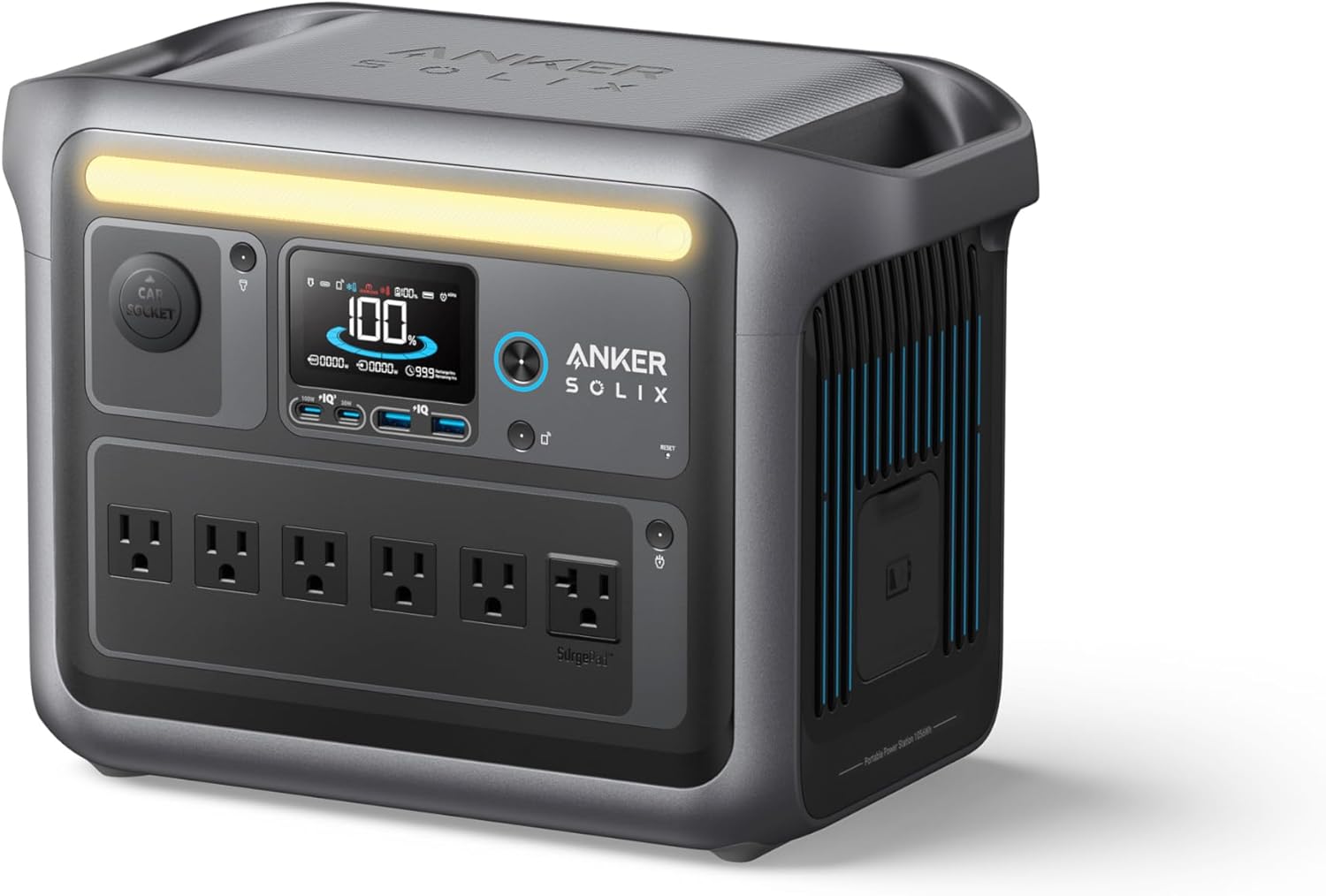
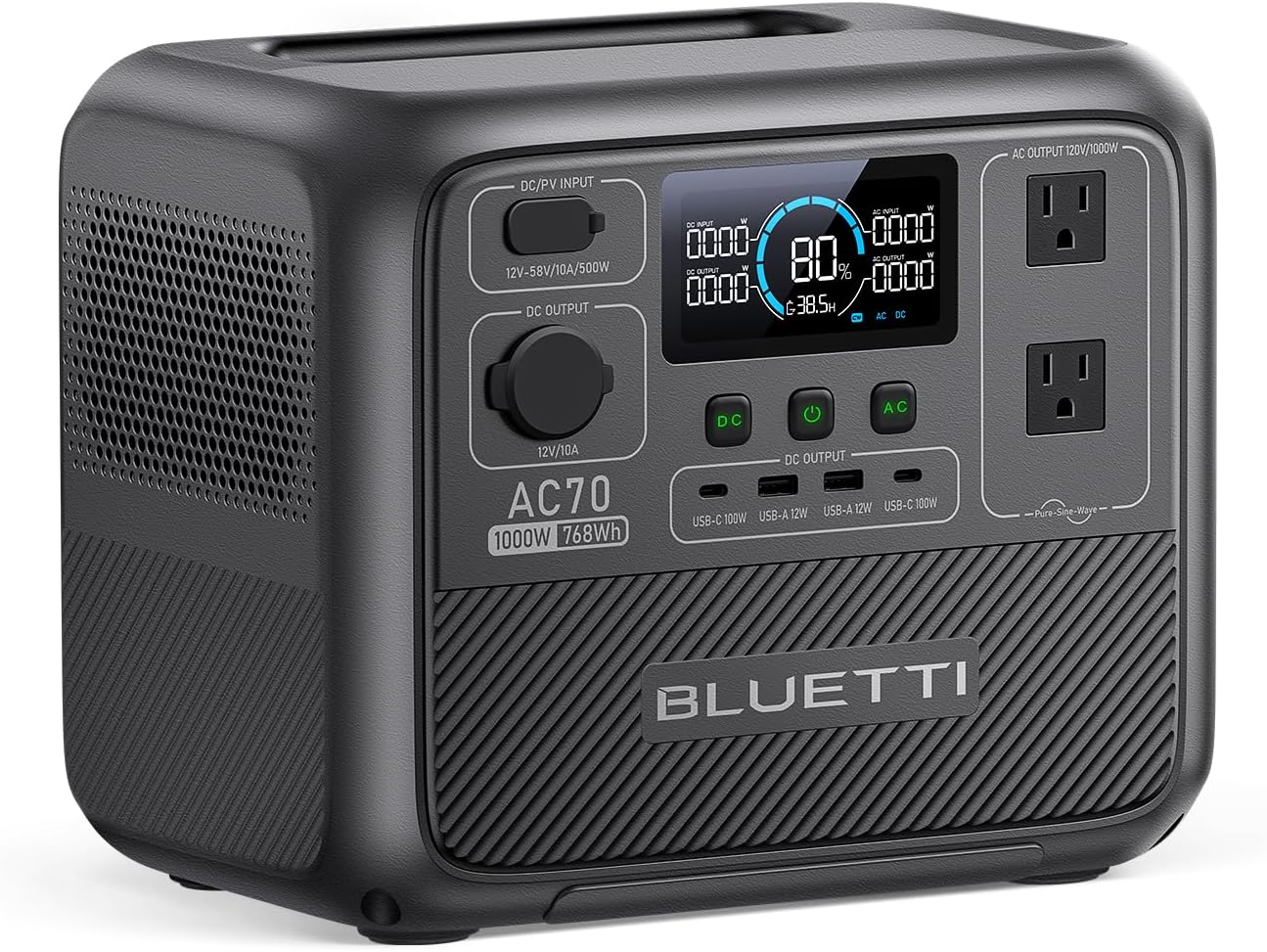
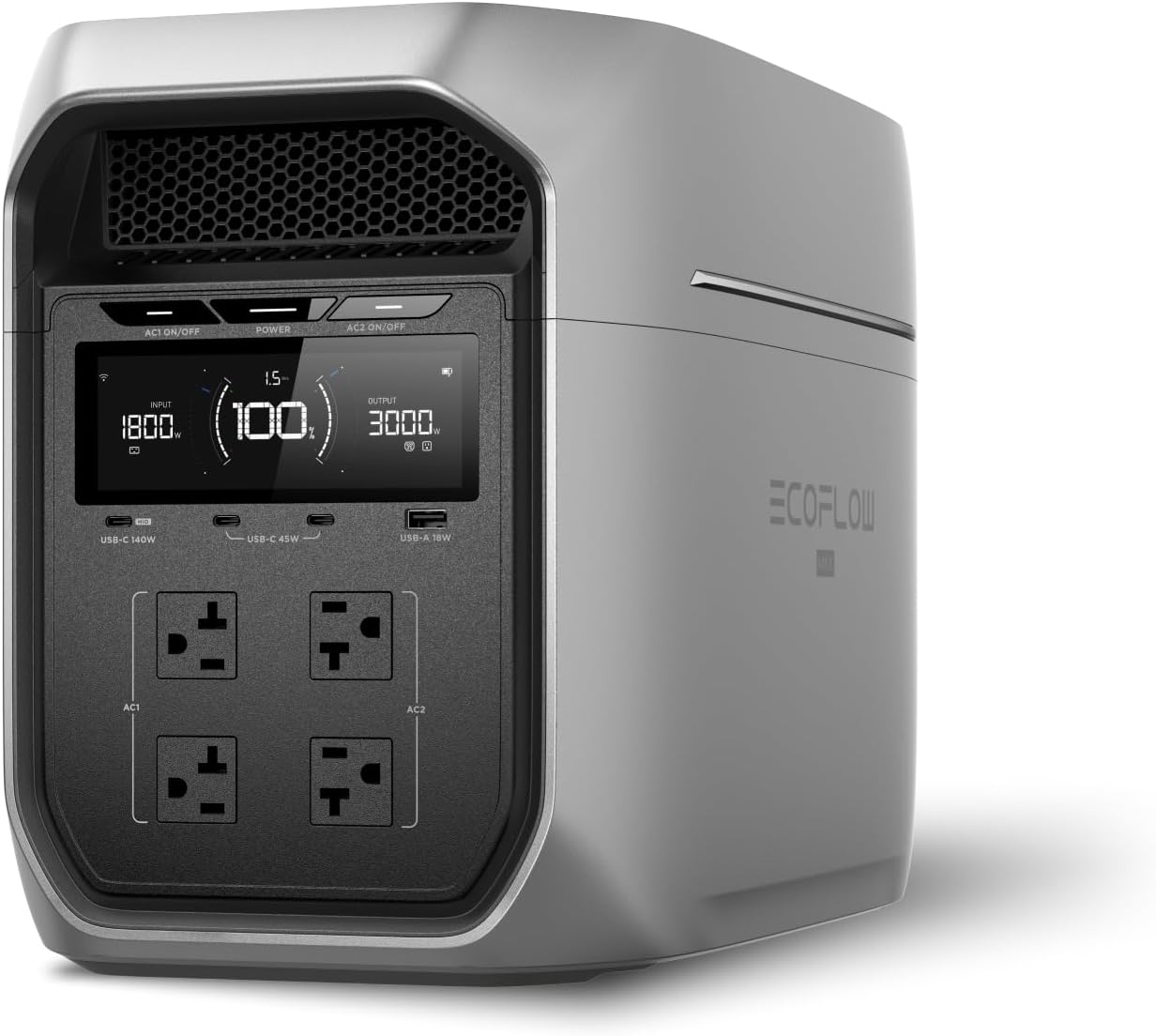
EcoFlow
EcoFlow DELTA 3 Plus
EcoFlow's newest mid-range flagship. The DELTA 3 Plus improves on the Delta 2 with faster charging, LiFePO4 chemistry, and UPS functionality — all at a lower price.
Frequently Asked Questions
Is an IP65-rated power station waterproof?
No. IP65 means a device is dust-tight and protected against water jets — it can handle being sprayed with water briefly, but it cannot be submerged. No portable power station is waterproof in the sense of surviving submersion. Even IP67 and IP68-rated devices are tested under specific limited conditions, not real-world flooding. Always treat your power station as an indoor or covered-outdoor device, not weatherproof equipment.
What is the difference between IP54 and IP65?
Both are dust-protected and water-resistant, but at different levels. IP54 means 'dust-protected' (some dust may enter but won't affect operation) and protected against water splashes from any direction. IP65 means 'dust-tight' (no dust ingress at all) and protected against water jets. IP65 is meaningfully better for outdoor use — particularly for solar panels exposed to wind-driven rain or dusty environments.
Why aren't power stations rated higher than IP54 or IP65?
Because they have ventilation holes for cooling fans. To meet higher IP ratings (IP66+), an enclosure must be fully sealed against water ingress, which conflicts with the airflow needed to keep batteries and inverters cool during operation. Some specialty 'rugged' power stations achieve IP67 by using sealed cooling designs, but they trade off thermal performance and price. Solar panels often achieve IP67 because they don't need active cooling.
What IP rating should solar panels have for outdoor use?
For permanent outdoor installation: IP67 or higher. For portable panels deployed during camping or outages: IP65 is the practical minimum. The connectors (typically MC4) should also be IP67-rated independently — they often are, but check the spec. Avoid panels rated below IP65 for any outdoor application; they're really designed for sheltered or temporary use.
Ready to Buy? Here's What We Recommend
Based on our testing and this guide, these are the best options for most people: