Guide
Photographer & Content Creator Power Setup: Portable Batteries for All-Day Shooting

TL;DR
A field-tested guide to building an all-day power kit for photographers and content creators. Real power budgets, the right station and power bank sizes, and charging strategies that keep cameras, lights, and laptops alive.
A dead battery during golden hour is not an inconvenience. It is a missed shot you do not get back, and on a paid job it is money walking out the door. I have spent enough time on location, and enough time on the bench measuring what camera gear actually pulls, to say with confidence that power anxiety is a solved problem. You just need to size the kit correctly and charge in the right order. This is the setup I build for photographers and content creators who shoot all day, often far from a wall outlet.
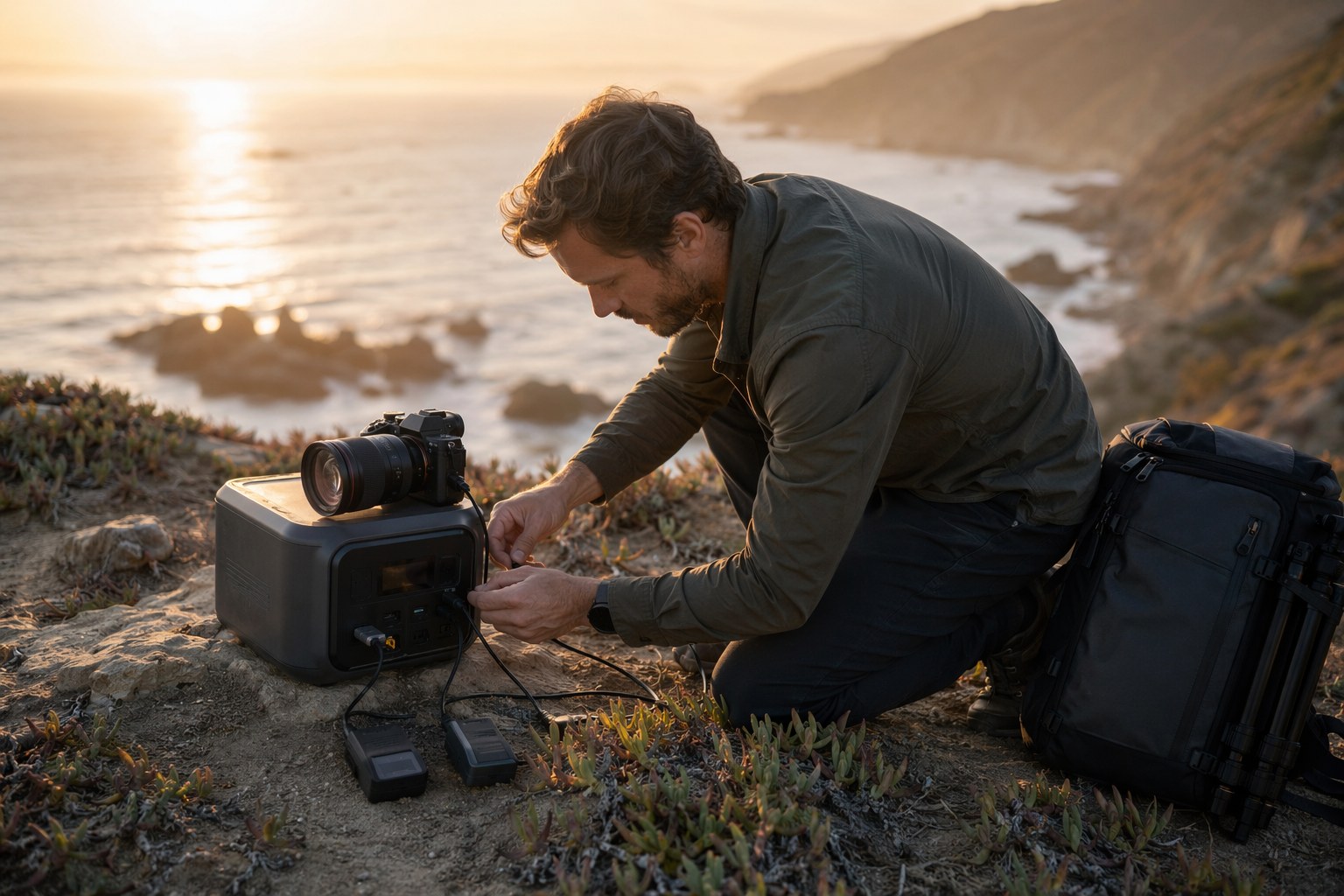
Start by measuring your real power draw, not the spec sheet
The single biggest mistake I see is buying a power station based on nameplate wattage instead of measured consumption. Your gear almost never pulls its rated maximum. A 65W laptop charger averages closer to 35-45W during real editing. A 60W LED panel at 70 percent brightness draws around 42W. The numbers that matter are watt-hours over the length of your shoot, not peak watts.
Here is a realistic budget for a full day of stills work, the kind of consumption I see when I clamp a meter on each device:
| Device | Real draw | Time | Energy |
|---|---|---|---|
| Mirrorless body, 4 batteries | ~15Wh each via USB-C | rotating | 60Wh |
| Laptop (culling + light edits) | 40W average | 4 hrs | 160Wh |
| Drone, 3 flights | 60Wh per battery | 3 batteries | 180Wh |
| Phone (scouting, BTS clips) | 15Wh | 2 charges | 30Wh |
| Single LED panel | 45W | 3 hrs | 135Wh |
| Total | ~565Wh |
Video pushes that figure up fast. Add a second LED panel, a wireless transmitter, an external monitor, and a cinema body that eats 40-50Wh per battery, and you are realistically looking at 1,200-1,800Wh for a ten-hour day. The lighting is what breaks the budget, not the cameras. Two 60W panels running six hours is 720Wh on their own.
If you want to build your own numbers from scratch, our breakdown of the best power banks for laptops in 2026 lays out how to read watt-hour ratings and PD profiles so you are not guessing.
The two-tier system that actually works on location
After enough shoots, I stopped trying to cover everything with one device. The reliable approach is two tiers: a USB-C power bank that lives in the camera bag, and a power station that stays at base camp, in the trunk, or on a cart near set.
The power bank handles the things that are easy to charge and easy to run dry: camera batteries, phone, drone controller, a GoPro. The station handles the energy-hungry, AC-dependent gear: laptops, proprietary chargers, LED lights, and anything with a wall plug. The split means you are never hiking a 25-pound box to a ridgeline just to top off a phone, and you are never short on capacity at the vehicle.
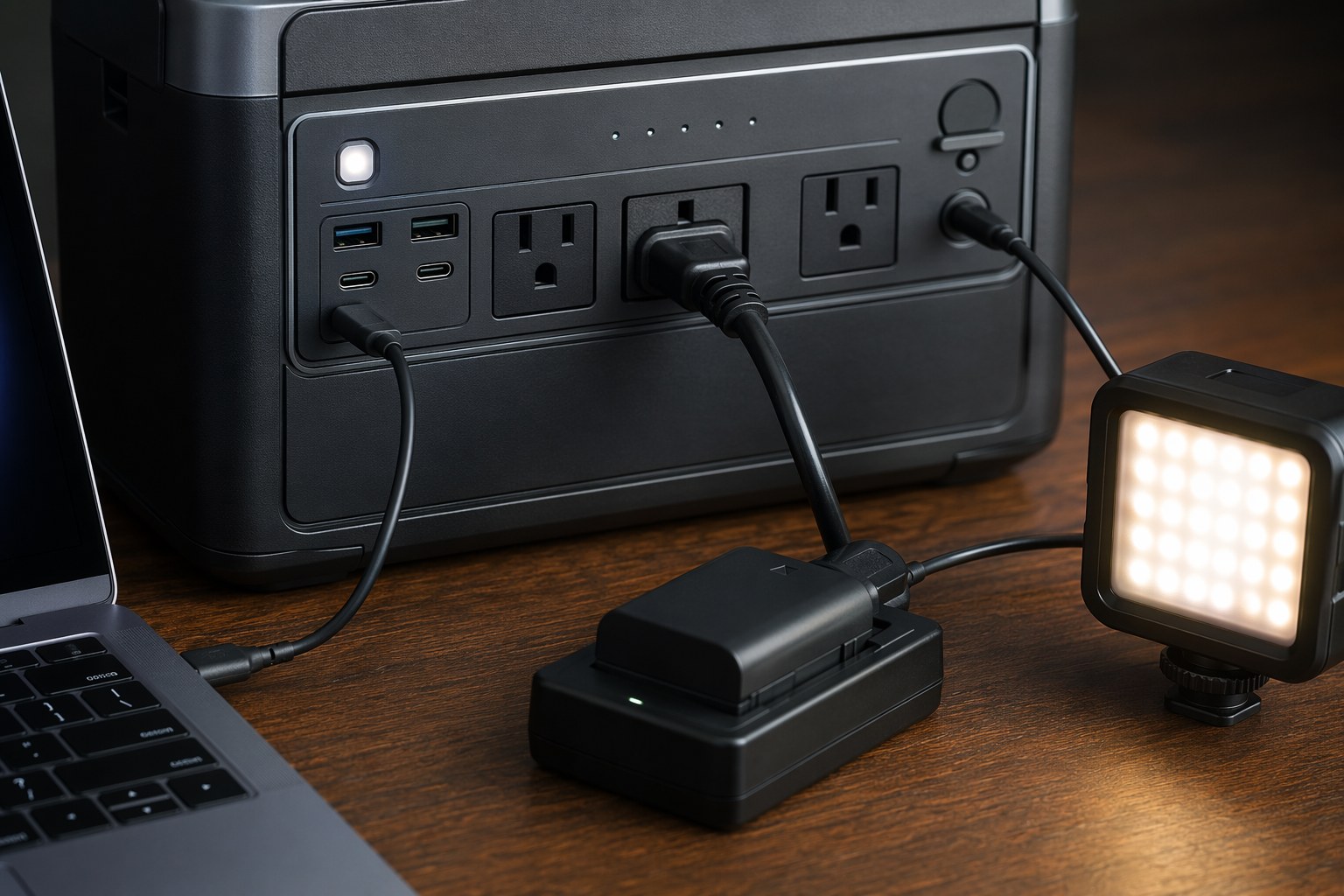
Tier one: the power bank in your bag
A 100Wh-class USB-C bank is the workhorse here. My pick is the Anker Prime 27,650mAh. At 99.5Wh it sits just under the TSA carry-on limit, pushes 250W across its ports, and the 140W+ USB-C output refills a camera battery in about an hour while still leaving headroom to charge a phone. It weighs around 1.5 pounds, which is nothing in a camera bag, and it is the one piece of kit I tell hikers and travel shooters to never leave home without.
If your camera supports USB-C charging, and almost every body from the last four years does, plug the battery straight into the bank with a single cable. No proprietary brick, no AC inversion losses, just DC to the cell at the most efficient ratio you will get.
Tier two: the power station at base
This is where capacity lives. For most photographers, a 1,000Wh-class station is the sweet spot, and there are three I trust enough to recommend without caveats.
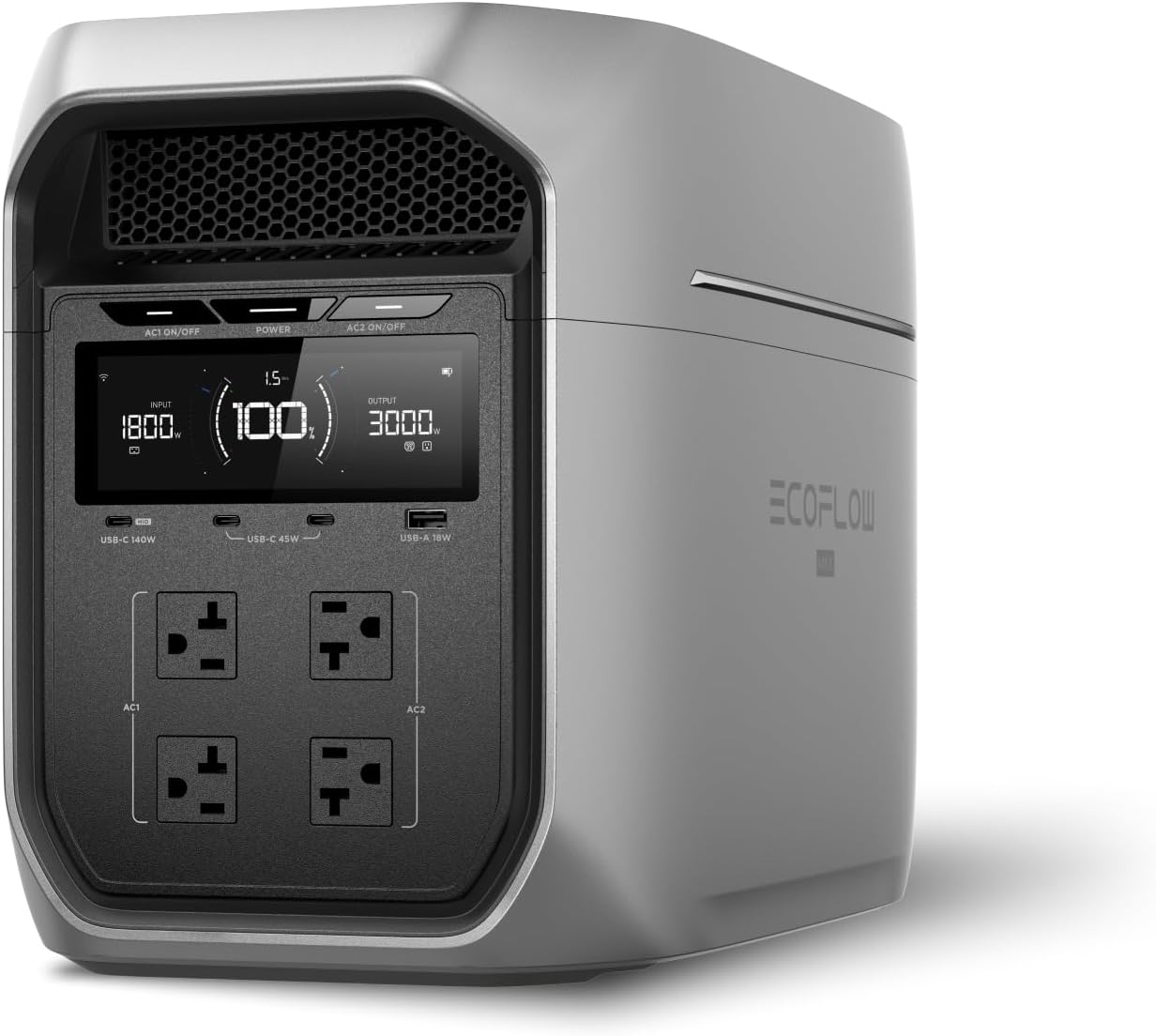
The EcoFlow DELTA 3 Plus is my default for mixed photo and video work. It carries 1,024Wh, delivers 1,800W continuous, and weighs about 17.6 pounds, which is genuinely one-person portable from car to set. The 1,800W output runs two LED panels, a laptop, and a drone charger at the same time without flinching. Its recharge speed is the standout: roughly an hour to full from a wall outlet, so a lunch break at a coffee shop can refill it before the afternoon block.
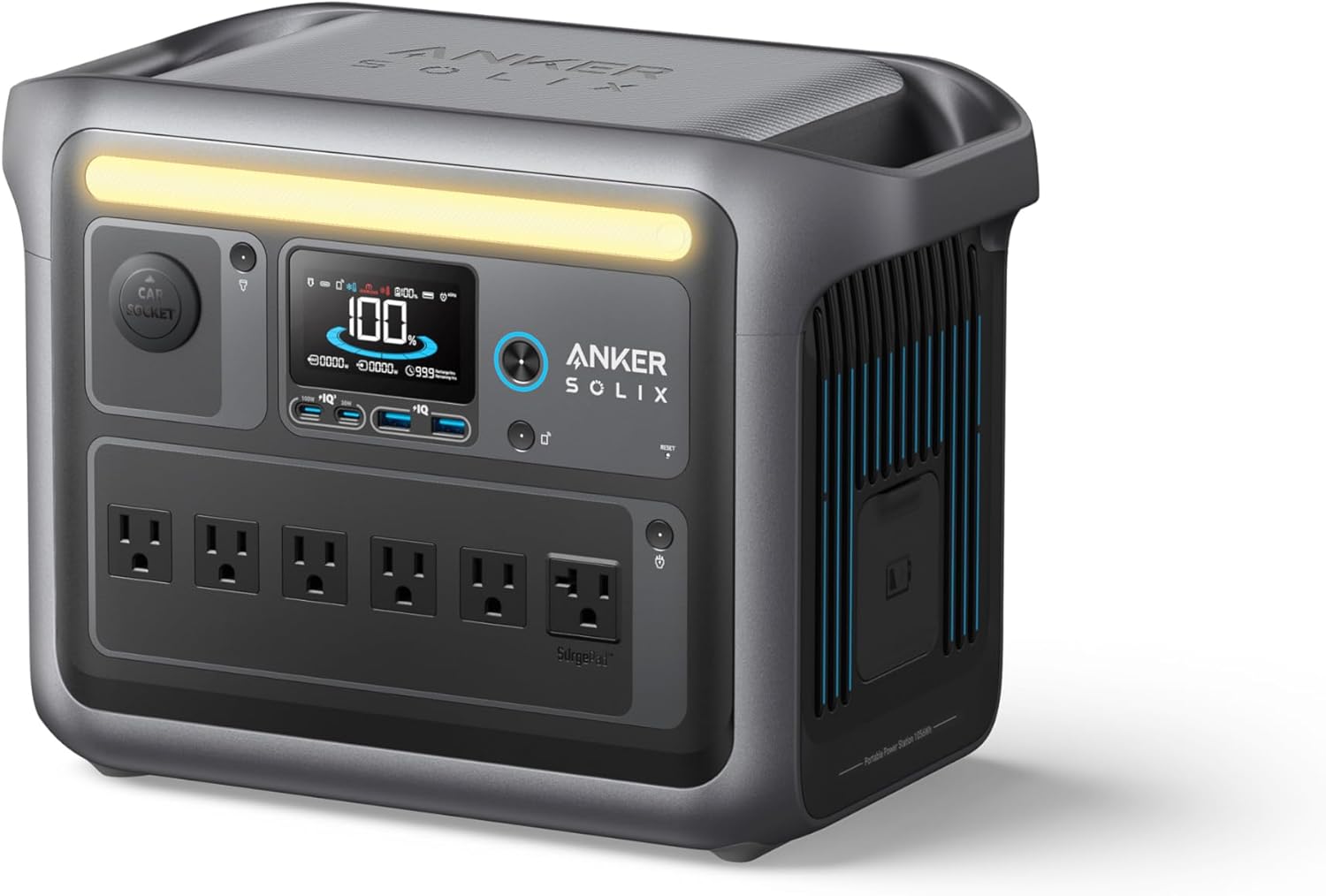
The Anker SOLIX C1000 is the alternative I reach for when I want the longest warranty support and a slightly cheaper entry. Same 1,056Wh ballpark, 1,800W output, a true 100W USB-C port that charges a 16-inch laptop at full speed, and Anker’s 5-year coverage. It is a touch heavier but the build quality is excellent and the multiple AC outlets make it easy to run several chargers off one unit.
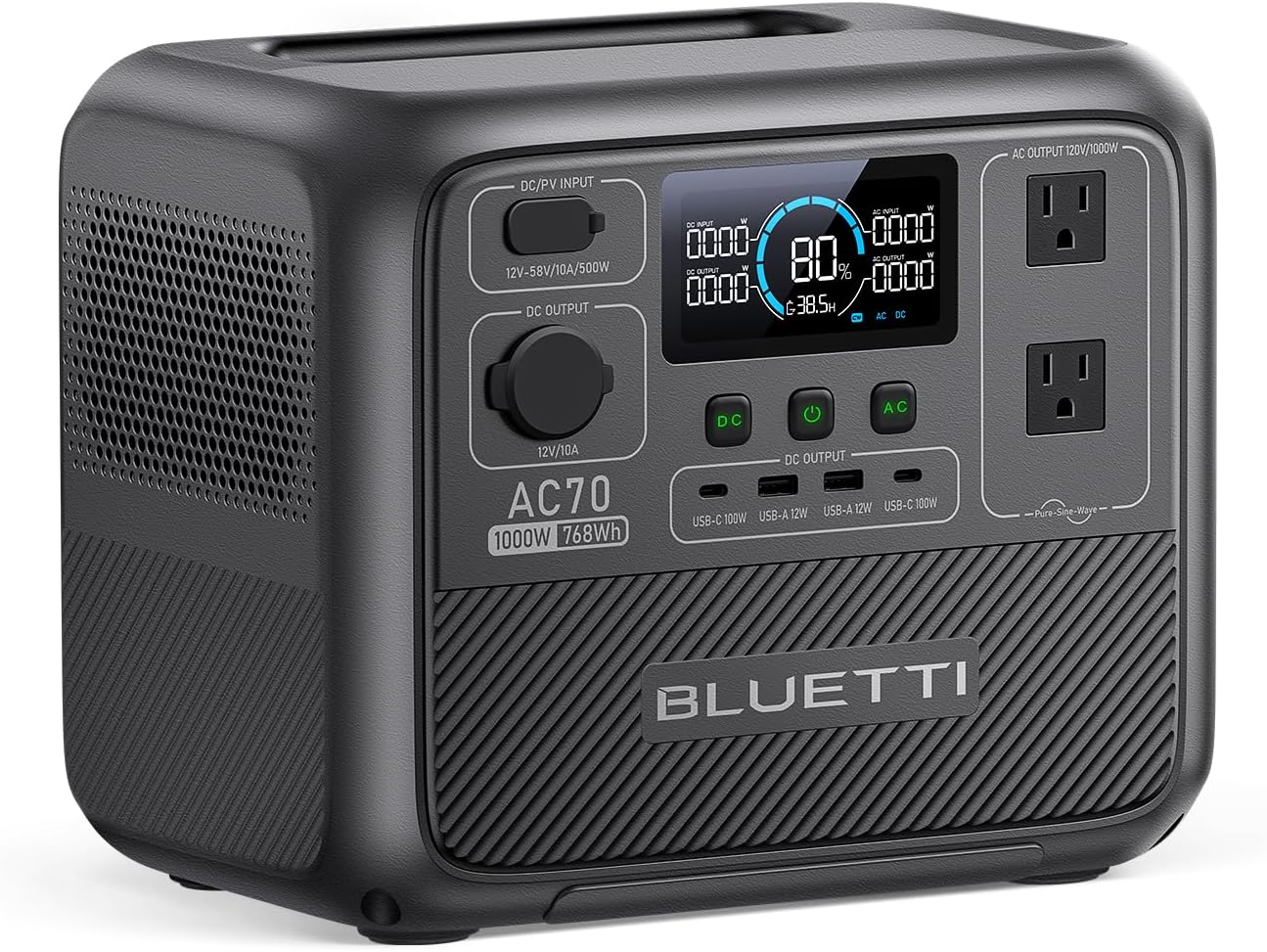
For a lighter, lower-cost option that still covers a solo half-day to full day, the Bluetti AC180 packs 1,152Wh into a unit with 1,800W output and a strong 1,440W fast wall charge. It is a great value if you are not running heavy lighting and want maximum stored energy per dollar.
And if you want a slightly smaller, slightly cheaper station that still runs a real AC load, the EcoFlow DELTA 2 at 1,024Wh and 1,800W remains one of the best-value mid-size stations on the market, especially when it goes on sale.
For a deeper rundown of station-by-station recommendations aimed specifically at creative pros, our guide to portable power for content creators and the companion piece on power setups for photographers and videographers go further into specific gear pairings.
Powering lights without killing your runtime
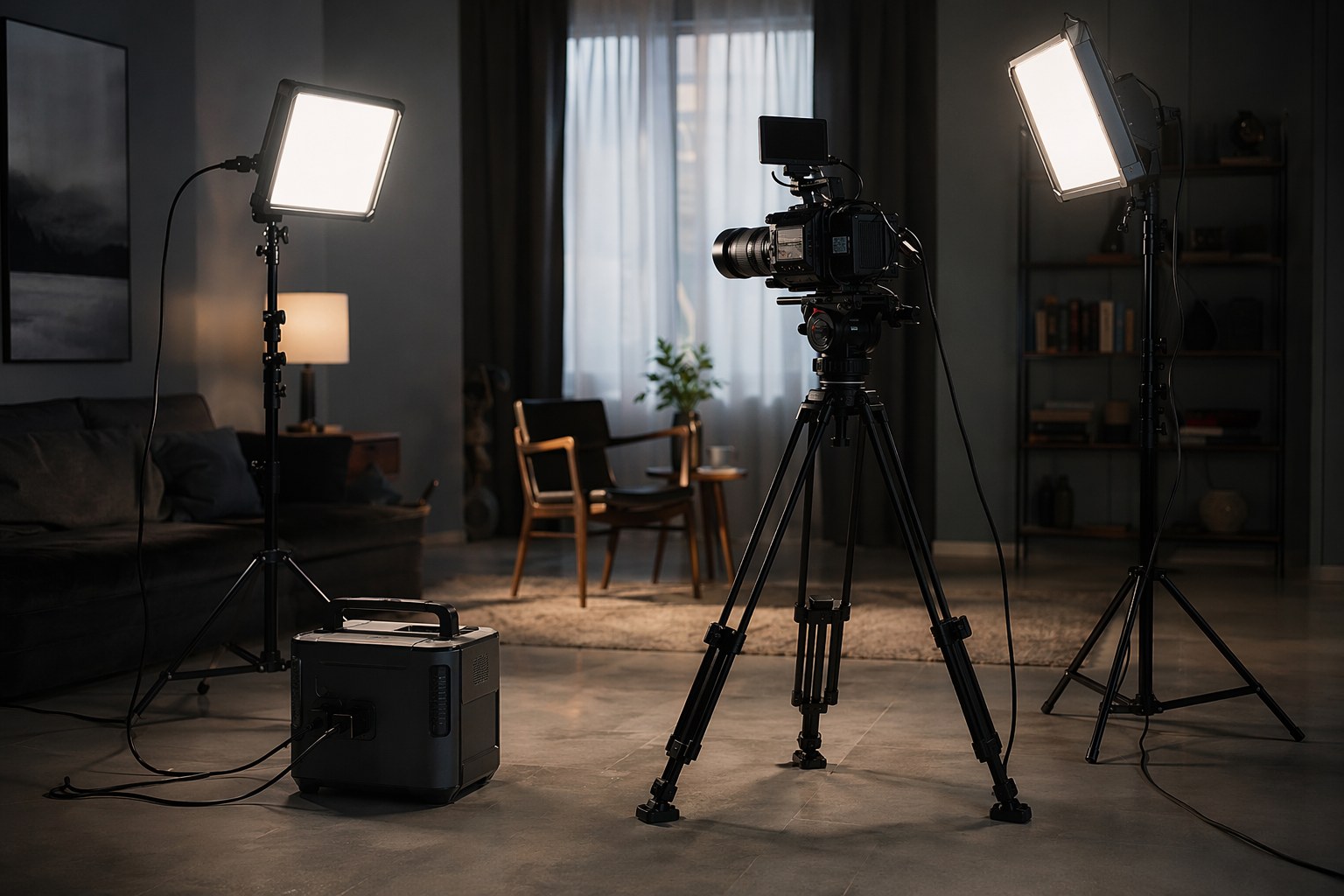
Lighting is where shoots either succeed or run out of juice. The rule I follow is simple: LED only, off the power station, and skip anything that draws like a heater.
Bi-color and RGB LED panels are remarkably efficient. A 60W panel at full output for four hours is 240Wh. Run it at the 60-70 percent you usually need and that drops below 170Wh. Two of those still fit inside a 1,000Wh station with room for a laptop. What you must avoid is tungsten and HMI fixtures. A single 1,000W tungsten unit will flatten a DELTA 3 Plus in roughly 50 minutes, and the inrush will likely trip the inverter on smaller stations. If a job genuinely needs that kind of output, that is the one scenario where a quiet inverter generator earns its place. For 90 percent of location work, LED panels are all you need.
One more measured detail: pure sine wave output matters for sensitive gear. Every station I named above produces clean pure sine wave AC, which is what you want for camera battery chargers and laptop bricks. Cheap modified sine wave units can cause chargers to run hot or refuse to engage.
Charge in rotation, and other field habits that save shoots
The gear is only half of it. The habits are what keep you from running dry.
Rotate batteries immediately. Do not wait for everything to die. The moment a camera battery comes out, it goes on the charger. A battery takes one to two hours to refill via USB-C, so start the clock the second it is depleted, not at the end of the day.
Carry more batteries than you think you need. Cells are cheap now. For a paid job I would rather carry six camera batteries and charge in downtime than depend on mid-shoot charging during a critical window. Charging is your backup, not your plan.
Keep the station cool and shaded. On a hot outdoor shoot, direct sun heats the unit and triggers thermal throttling that cuts output. Park it in vehicle shade, under a table, or beneath a panel. The cells and the inverter both perform better cool, and you protect long-term battery health.
Add a folding solar panel for multi-day outdoor work. A 100-220W foldable panel turns a finite battery into an effectively unlimited one on sunny days. Set it near your location and it replaces 300-600Wh over a day, which offsets most of a stills shoot. This is the difference between a weekend landscape trip and a two-week expedition.
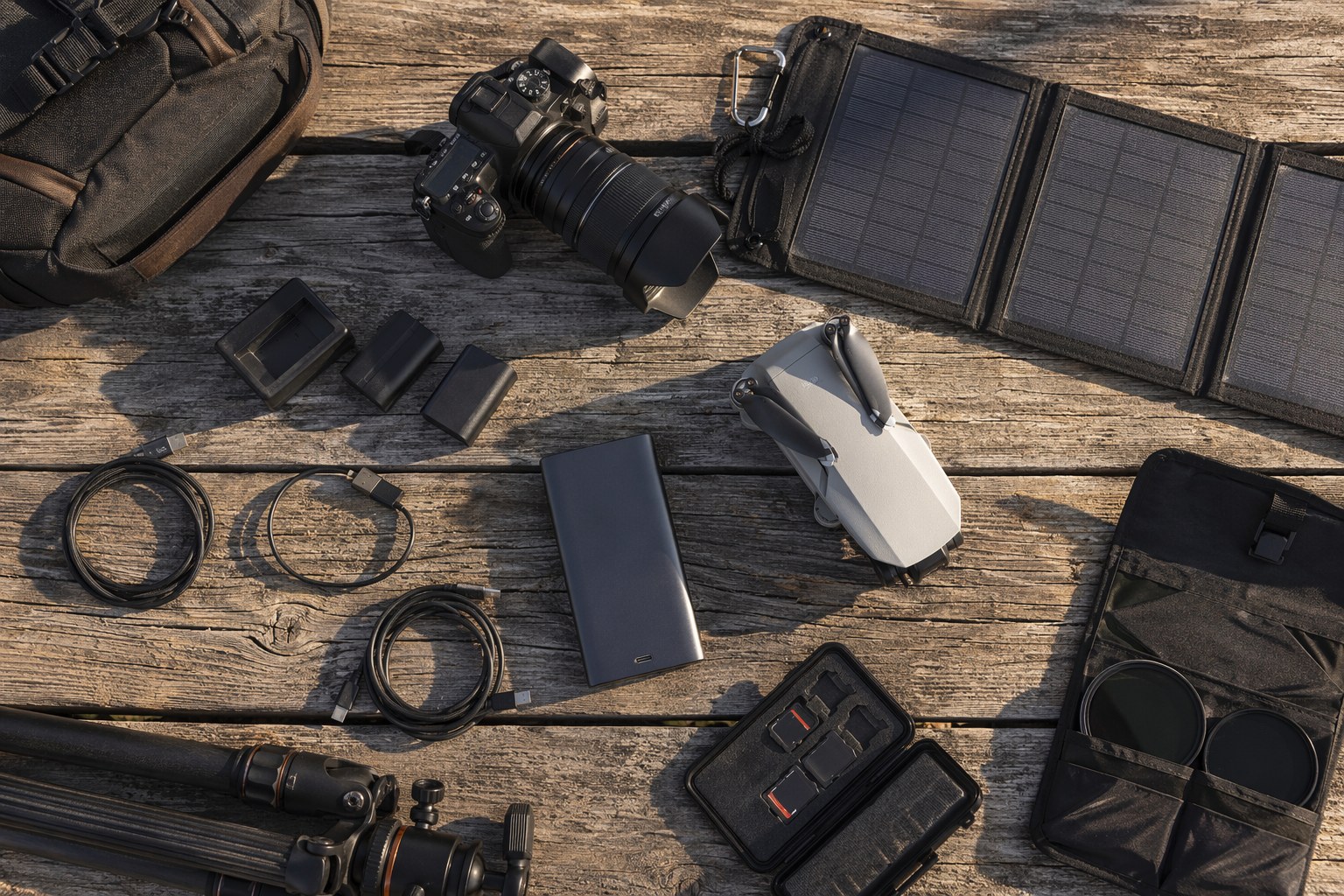
These are not theoretical tips. They are the routine that separates a smooth shoot from a panicked scramble for a wall outlet.
Matching the kit to how you actually shoot
Not every creator needs the same setup, so here is how I would spec it by shooting style.
Hiking and landscape shooters: Skip the station entirely. The Anker Prime 27,650mAh charges your camera three to four times and your phone twice, weighs a pound and a half, and clears airline limits. That is a full day of stills for most nature work.
Wedding and event photographers: A 1,000Wh station in the vehicle, like the EcoFlow DELTA 3 Plus, plus a power bank in the bag. You will charge batteries, a laptop for the sneak-peek edit, and maybe a video light, all between coverage blocks.
Solo video creators and YouTubers: The Anker SOLIX C1000 or Bluetti AC180 runs your key light, fill light, camera, and editing laptop for a full day of indoor or backyard production.
Multi-light commercial video: Budget 1,500-2,000Wh, or pair a station with solar, and keep lighting to LED. If the brief truly demands tungsten or HMI, bring a generator for the lights and run the cameras and monitors off the station.
The bottom line
Build it in two tiers. Put a sub-100Wh USB-C bank in your bag for cameras and phones, and keep a 1,000Wh-class station at base for laptops, lights, and AC chargers. Measure your real watt-hours rather than trusting peak specs, charge batteries in rotation instead of in bulk, keep the station shaded, and add a folding panel for anything longer than a day. Do that and the only thing you will be thinking about during golden hour is the light, not the battery.
If you want help dialing in the exact capacity for your gear, start with our content creator power guide, then compare power banks in our best power banks for laptops roundup before you buy.
Recommended Power Stations
EcoFlow
EcoFlow DELTA 3 Plus
EcoFlow's newest mid-range flagship. The DELTA 3 Plus improves on the Delta 2 with faster charging, LiFePO4 chemistry, and UPS functionality — all at a lower price.
Frequently Asked Questions
How big a power station do I need for a full day of shooting?
For a typical all-day photo shoot, budget 500-1,000Wh. That covers charging 4-6 mirrorless camera batteries (about 60-90Wh), a laptop for culling and editing (250-400Wh), two or three drone batteries (120-240Wh), and a single LED panel for a few hours (120-200Wh). A 1,024Wh station like the EcoFlow DELTA 3 Plus or Anker SOLIX C1000 handles a full day with margin. Once you add a second or third LED light for video, step up to 1,500-2,000Wh or plan to recharge on the fly with solar.
Can I charge a camera battery directly from a power station's USB-C port?
Yes, if your camera supports USB-C charging, which most recent Sony, Canon, Nikon, Fujifilm, and Panasonic mirrorless bodies do. A USB-C PD port at 30-65W refills most camera batteries in roughly 1-2 hours and skips the proprietary charger entirely, which is the most energy-efficient path. Older bodies need their wall charger plugged into an AC outlet, which works fine but wastes a few percent to the inverter.
What size power bank is safe to fly with?
The FAA caps spare lithium batteries at 100Wh in carry-on without airline approval, 100-160Wh with approval, and bans anything over 160Wh on passenger aircraft. The Anker Prime 27,650mAh comes in at 99.5Wh, right under the limit, and most 20,000-25,000mAh banks sit comfortably below it. Pack power banks in your carry-on, never checked luggage, and tape over or cap exposed terminals.
Ready to Buy? Here's What We Recommend
Based on our testing and this guide, these are the best options for most people: