Buying Guide
The Best Portable Power Setup for Photographers and Videographers in 2026
TL;DR
Professional photographers and videographers need reliable power on location. We cover the best power stations, power banks, and charging strategies for cameras, drones, laptops, and lighting gear.
Location shoots present a unique power challenge: you need to charge multiple types of batteries (camera, drone, laptop, lighting), often in remote locations with no grid access, and gear failure means a ruined shoot. After years of powering professional shoots on location, here’s the complete guide to keeping your gear running.
What Photographers and Videographers Actually Need to Power
The power demands of a photo/video setup are different from typical camping or home backup use. You’re dealing with:
- Multiple battery types — Camera batteries, drone batteries, laptop, phone, and lighting batteries all use different chargers and voltages
- High-value time pressure — A dead battery during golden hour isn’t just inconvenient, it’s money lost
- Weight sensitivity — If you’re hiking to a location, every ounce matters
- Surge loads — Laptop chargers and strobe power supplies can draw 100-300W on startup
Typical Power Budget for a Full Shoot Day
Photography (8-hour day):
| Equipment | Power Need | Method |
|---|---|---|
| Camera body (mirrorless) | 10-15Wh per battery, 3-4 batteries/day | USB-C direct or battery charger |
| Laptop (culling/editing) | 45-65W × 3 hours = 135-195Wh | AC or USB-C PD |
| Drone (3 flights) | 40-80Wh per battery × 3 = 120-240Wh | Proprietary charger via AC |
| Phone | 15Wh × 2 charges = 30Wh | USB-C |
| LED panel (1 light) | 30W × 4 hours = 120Wh | AC or V-mount battery |
| Strobe battery pack | 30-50Wh per pack × 2 = 60-100Wh | Wall charger via AC |
| Total | 500-800Wh |
Videography (10-hour day):
| Equipment | Power Need | Method |
|---|---|---|
| Cinema camera | 30-50Wh per battery, 4-6 batteries/day | V-mount or charger via AC |
| External monitor | 15-25W × 8 hours = 120-200Wh | AC or battery plate |
| Wireless video TX/RX | 20W × 8 hours = 160Wh | AC or battery |
| Laptop (monitoring/DIT) | 65W × 6 hours = 390Wh | AC or USB-C PD |
| Drone (2 flights) | 80Wh × 2 = 160Wh | Proprietary charger via AC |
| LED panels (2 lights) | 60W × 6 hours = 360Wh | AC |
| Audio recorder + wireless | 5W × 8 hours = 40Wh | AA batteries or USB |
| Phone (behind-the-scenes) | 30Wh | USB-C |
| Total | 1,200-1,800Wh |
Best Power Stations for Photo/Video Work
For Solo Photographers and Hikers
EcoFlow RIVER 3 — $199, 245Wh, 5.4 lbs
The RIVER 3 is remarkably light for what it delivers. It won’t power a full video production, but for a solo photographer who needs to charge camera batteries, a drone, and a laptop on location, 245Wh covers a half-day shoot. The 600W output handles any charger you’ll throw at it.
Best for: Hiking photographers, travel photographers, lightweight wedding second shooters.
See current price and full review →
For Full-Day Photo Shoots
Anker SOLIX C1000 — $699, 1,056Wh, 27.6 lbs
1,056Wh handles a full professional photo shoot day — all your camera batteries, drone, laptop, and a LED panel — with capacity to spare. The 1,800W output means you can run a laptop, charge drones, and power strobes simultaneously. The 100W USB-C port charges a MacBook Pro at maximum speed. Multiple AC outlets let you run several chargers at once.
Best for: Commercial photography, event photography, multi-day location work.
See current price and full review →
For Video Production and Multi-Light Setups
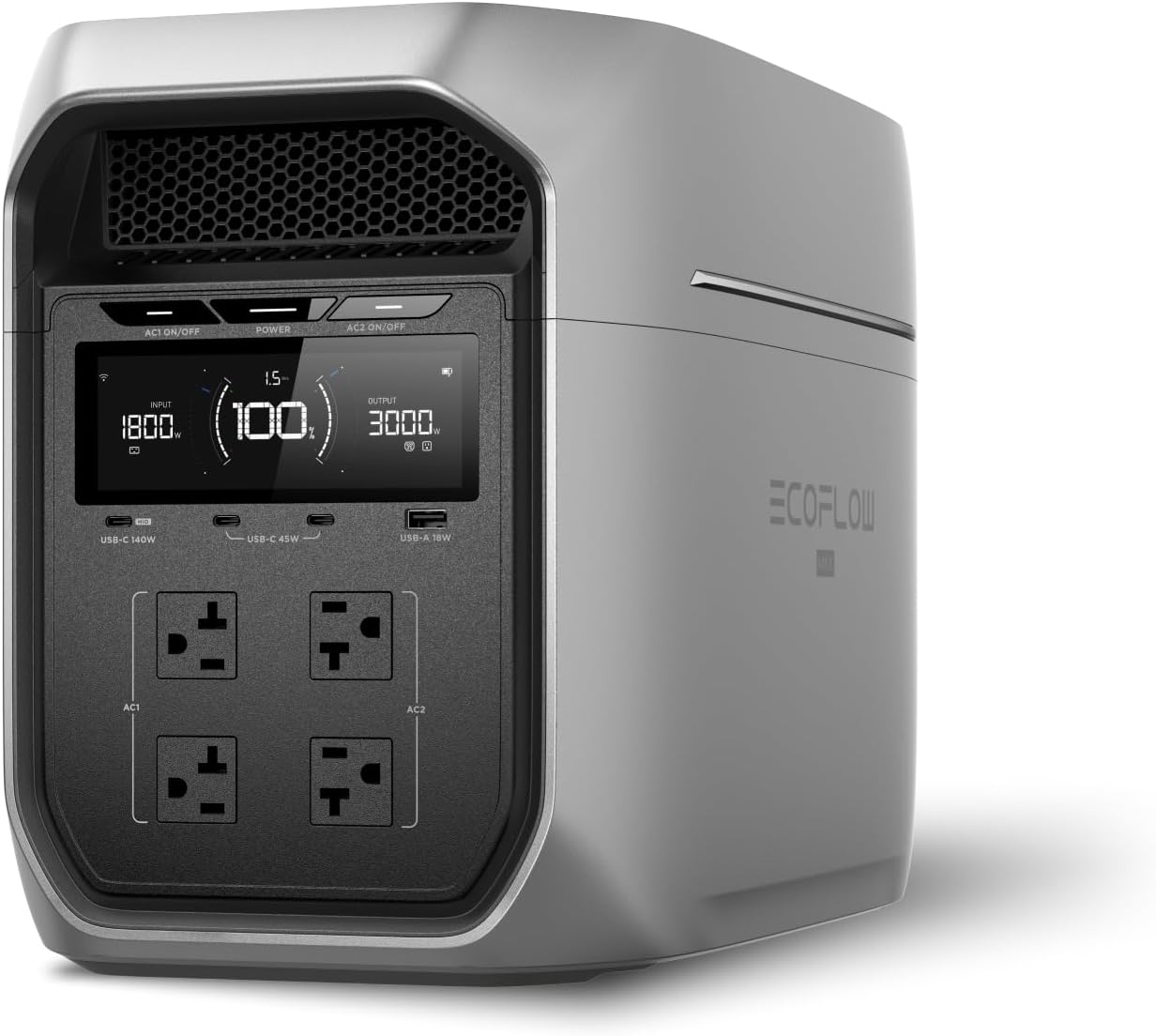
EcoFlow DELTA 3 Plus — $649, 1,024Wh, 17.6 lbs
The best balance of capacity, output, and portability for professional video work. 1,800W continuous output means you can power two 60W LED panels, charge a cinema camera, run a laptop for DIT, and charge drone batteries — all at the same time. At 17.6 lbs, it’s light enough for one person to carry from a vehicle to the set.
Best for: Indie filmmakers, commercial video production, YouTube content creators.
See current price and full review →
For Large Productions and All-Day Video
EcoFlow DELTA Pro 3 — $1,999, 4,096Wh, 51.8 lbs
When you’re running a multi-camera, multi-light production all day, you need serious capacity. The DELTA Pro 3’s 4,096Wh powers a full video production for 10+ hours without solar. The 4,000W output can even run small HMI lights. It’s heavy — keep it on a cart near the set.
Best for: Production companies, multi-day shoots, large lighting setups.
See current price and full review →
Power Bank Recommendations for Photographers
When a full power station is overkill or too heavy, a quality USB-C PD power bank covers camera and phone charging:
| Power Bank | Capacity | Output | Weight | Best For |
|---|---|---|---|---|
| Anker 737 PowerCore | 24,000mAh (86Wh) | 140W USB-C | 1.4 lbs | MacBook + camera charging |
| Baseus Blade | 20,000mAh (74Wh) | 100W USB-C | 1.1 lbs | Ultralight travel/hiking |
| Anker Prime 27,650mAh | 27,650mAh (99.5Wh) | 250W USB-C | 1.5 lbs | Max capacity under TSA limit |
TSA tip: The FAA allows power banks up to 100Wh in carry-on luggage without special approval. 100-160Wh requires airline approval. Over 160Wh is prohibited on passenger aircraft. Most 20,000-27,000mAh power banks are under 100Wh and fly without issues.
Pro Tips for On-Location Power Management
1. Charge batteries in rotation, not in bulk
Don’t wait until all your camera batteries are dead to charge them. Plug in depleted batteries immediately so they’re ready when needed. A camera battery takes 1-2 hours to charge via USB-C — start the clock early.
2. Use USB-C direct charging when possible
Modern mirrorless cameras from Sony, Canon, Nikon, and Fujifilm support USB-C charging and even USB-C power delivery while shooting. This eliminates the need for a separate battery charger and is more energy-efficient. A USB-C cable directly to the power station’s PD port is the most efficient charging path.
3. Pack more batteries, depend less on charging
Battery prices have dropped significantly. For cameras, carrying 4-6 batteries and charging them in downtime is more reliable than depending on mid-shoot charging. For drones, the DJI charging hub charges batteries sequentially — factor in 60-90 minutes per battery when planning your timeline.
4. Keep your power station in the shade
On hot outdoor shoots, direct sunlight can heat up a power station and trigger thermal throttling (reduced output). Keep it under a shade cloth, in a vehicle’s shade, or under a table. The electronics and battery both perform better cool.
5. For long-distance hiking, prioritize power banks
If you’re trekking more than a mile to your location, a 20,000mAh power bank (1 lb) is dramatically more practical than even the lightest power station. It charges a camera 3-4 times and a phone twice. For most landscape and nature photography, that’s a full day’s worth.
6. Add a 100W foldable solar panel for multi-day outdoor shoots
A lightweight 100W solar panel ($150-250) extends your range indefinitely for outdoor work. Set it up near your shooting location and it’ll replenish 300-500Wh during a sunny day — enough to offset most of a photo shoot’s consumption. See our best solar panels guide.
The Bottom Line
Power is a solvable problem for location photographers and videographers. A well-chosen power station eliminates the anxiety of dying batteries during critical moments and lets you focus on the creative work. For most photographers, a 1,000Wh station covers a full day with margin. Videographers with lighting should budget 1,500-2,000Wh or add solar panels for all-day shoots.
Explore our full power station comparison tool to compare specs for your specific needs, or browse our best portable power stations 2026 guide for our overall top picks.
Related Reading
- Portable Power for Content Creators — YouTube, streaming, and social media workflows
- Best Power Station for Remote Work — laptop and connectivity
- Best Power Banks for Laptops — top portable chargers
- Best Power Bank for Travel — TSA-compliant options
- How to Size a Power Station — calculator for your gear
Recommended Power Stations
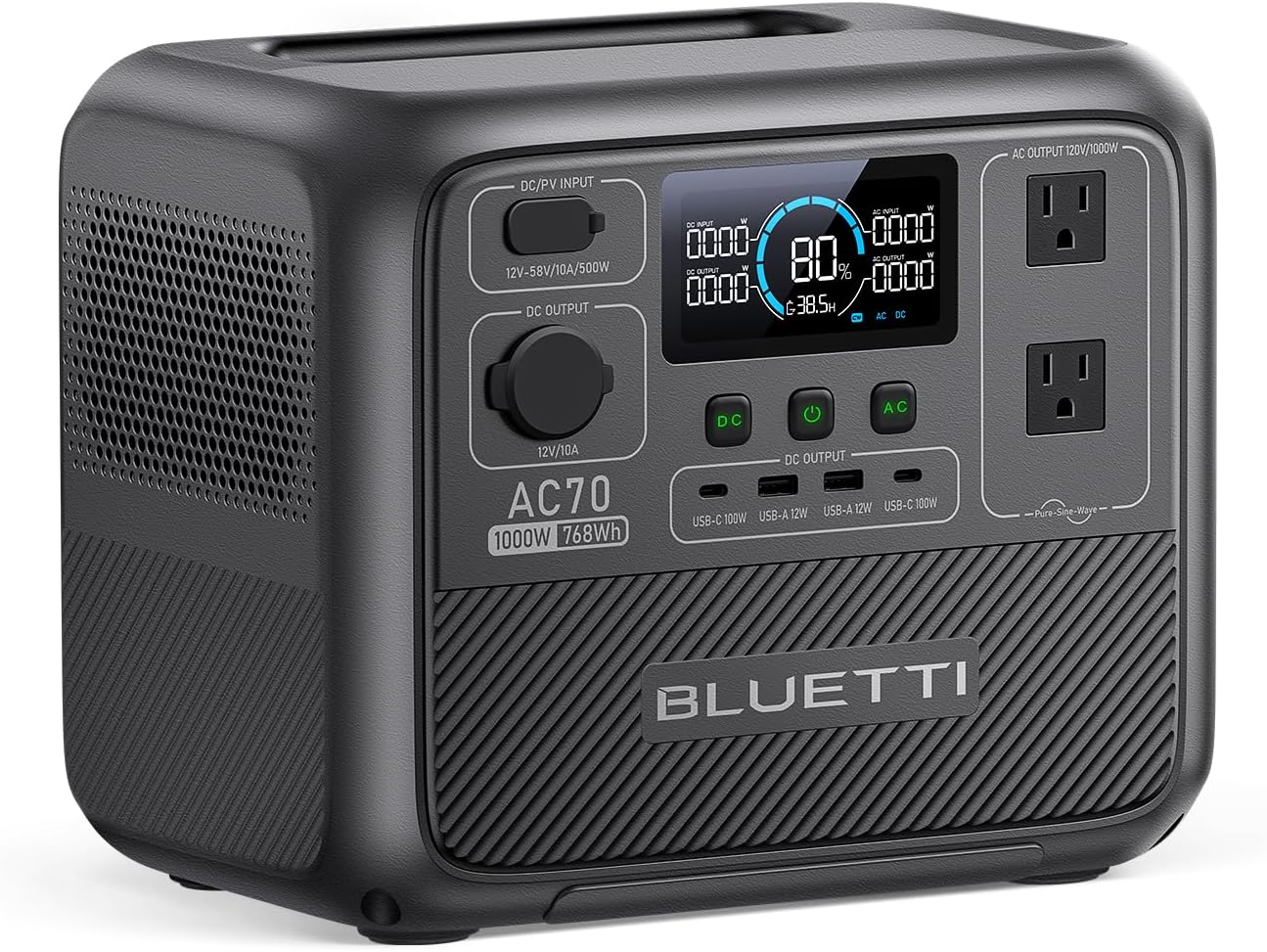
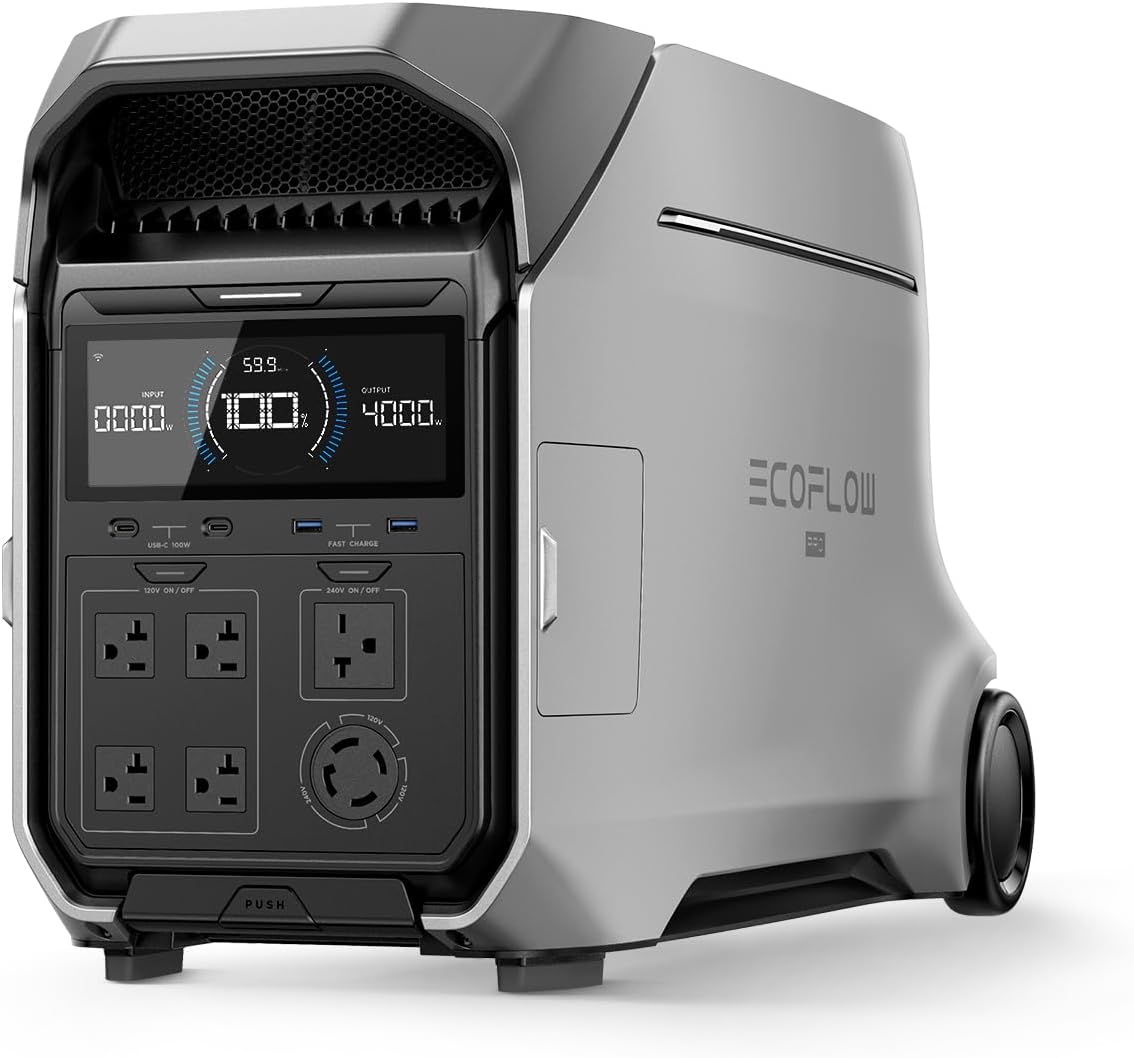
EcoFlow
EcoFlow DELTA 3 Plus
EcoFlow's newest mid-range flagship. The DELTA 3 Plus improves on the Delta 2 with faster charging, LiFePO4 chemistry, and UPS functionality — all at a lower price.
Frequently Asked Questions
What size power station do I need for a full day of shooting?
For a typical full-day photo/video shoot, plan on 500-1,000Wh. This covers charging 4-6 camera batteries (60-100Wh total), a laptop for on-location editing (300-500Wh), drone batteries (120-200Wh for 2-3 flights), and LED panel lighting (100-300Wh for 4-6 hours). A 1,000Wh power station like the EcoFlow DELTA 3 Plus handles a full professional shoot day with margin.
Can I charge my camera battery with a power station's USB-C port?
Many modern cameras support USB-C charging directly (Sony A7 series, Canon R series, Nikon Z series). This is the most efficient method — no separate charger needed, and USB-C PD at 30-65W charges most camera batteries in 1-2 hours. Older cameras require their proprietary wall charger plugged into the power station's AC outlet, which is less efficient but works fine.
What power bank should a photographer carry for a long hike?
A 100Wh USB-C PD power bank is the sweet spot for hiking photographers. It weighs 1-2 lbs, fits in a camera bag, charges 3-4 camera batteries via USB-C, and powers a drone for an extra flight. The Anker 737 (24,000mAh/86Wh, 140W) and Baseus Blade (20,000mAh/74Wh, 100W) are both excellent. For airline travel, the TSA limit is 100Wh — most 20,000-27,000mAh power banks fit under this.
How do I power continuous lighting for video on location?
LED panels are the most power-efficient lighting for location shoots. A 60W bi-color LED panel running for 4 hours uses 240Wh. For a two-light setup, plan on 480Wh for lighting alone. A 500-1,000Wh power station handles this easily. Avoid tungsten and HMI lights — they draw 300-2,000W and will drain a power station in minutes. If you need high-output lighting, a generator is more practical, but LED panels cover 90% of professional location work.
Ready to Buy? Here's What We Recommend
Based on our testing and this guide, these are the best options for most people: