Guide
Portable Power Stations for Apartment Living: A Complete Guide

TL;DR
Apartment dwellers can't install generators or home batteries — but portable power stations are the perfect alternative. Here's how to pick the right one for your space, budget, and backup power needs.
If you live in an apartment, your backup power options are frustratingly limited. You can’t install a whole-home generator. You can’t mount a Tesla Powerwall. You definitely can’t run a gas generator on your balcony without getting evicted (and possibly arrested).
But you can keep a portable power station in your closet. And honestly, for most apartment dwellers, that’s all you need.
Here’s the practical guide to choosing and using a power station when you’re renting, short on space, and need reliable backup power.
Why Apartment Dwellers Should Care About Backup Power
Power outages happen everywhere, but apartment living makes them uniquely annoying. When the grid goes down:
- Your fridge starts warming up. You’ve got roughly 4 hours before food safety becomes a concern.
- Your internet dies. Even if your ISP stays up, your router and modem need power.
- Your phone drains fast. Especially if you’re using cellular data as a hotspot for your laptop.
- Elevators stop working. If you’re on the 15th floor, you’re stuck or taking the stairs.
A portable power station solves the first three problems immediately. It won’t help with the elevator, but at least you’ll have Netflix while you wait. And unlike a gas generator, there are zero emissions or noise issues to worry about in a shared building.
What Can a Power Station Actually Run in an Apartment?
This is the first question everyone asks, and the answer depends on the station’s capacity (measured in watt-hours) and output (measured in watts). Here’s what a typical mid-range station (1,000-1,500Wh) can handle:
| Appliance | Wattage | Runtime on 1,000Wh |
|---|---|---|
| Apartment fridge | 100-200W (cycling) | 8-12 hours |
| Wi-Fi router + modem | 15-25W | 40+ hours |
| Laptop | 50-65W | 15-20 hours |
| Phone charging (x2) | 20-40W | Multiple full charges |
| LED lamp | 10W | 80+ hours |
| CPAP machine | 30-60W | 15-30 hours |
| Window AC unit | 500-1,500W | 1-3 hours |
The takeaway: you can keep essentials running for a full day on a single charge. Air conditioning is the exception — it eats through batteries fast. For summer outages, focus on fans (50-75W) instead.
Use our power calculator to figure out exactly how long a station will last with your specific setup.
What to Look for in an Apartment-Friendly Power Station
Not every power station makes sense for apartment living. Here’s what matters most:
Size and Storage
You’re not loading this into a truck bed. It needs to fit in a closet, under a desk, or on a shelf. Stations under 50 pounds with built-in handles are ideal. Anything over 60 pounds becomes furniture you have to plan around.
Noise Level
Most power stations are near-silent at idle — under 30 dB, which is quieter than a whisper. But some units ramp up fans under heavy load or fast charging. Look for stations that stay under 45 dB even at max output. Your neighbors will thank you.
Zero Emissions
This is the whole reason power stations work for apartments. There are no fumes, no carbon monoxide, no combustion. You can run one in a sealed room with zero ventilation concerns. That said, don’t block the cooling vents — the unit needs airflow to manage heat.
Charging Speed
Wall charging is your primary method in an apartment. The best modern stations charge from 0-80% in under an hour using standard wall outlets. That matters during rolling blackouts when you might only have power for a few hours between outages.
Expandability
If you want more runtime without buying a bigger station, look for units that support add-on batteries. You can start with a base unit and add capacity later as your budget allows.
Our Top Picks for Apartment Living
After testing dozens of portable power stations, these three stand out for apartment use:
Best Overall: EcoFlow DELTA 3 Plus
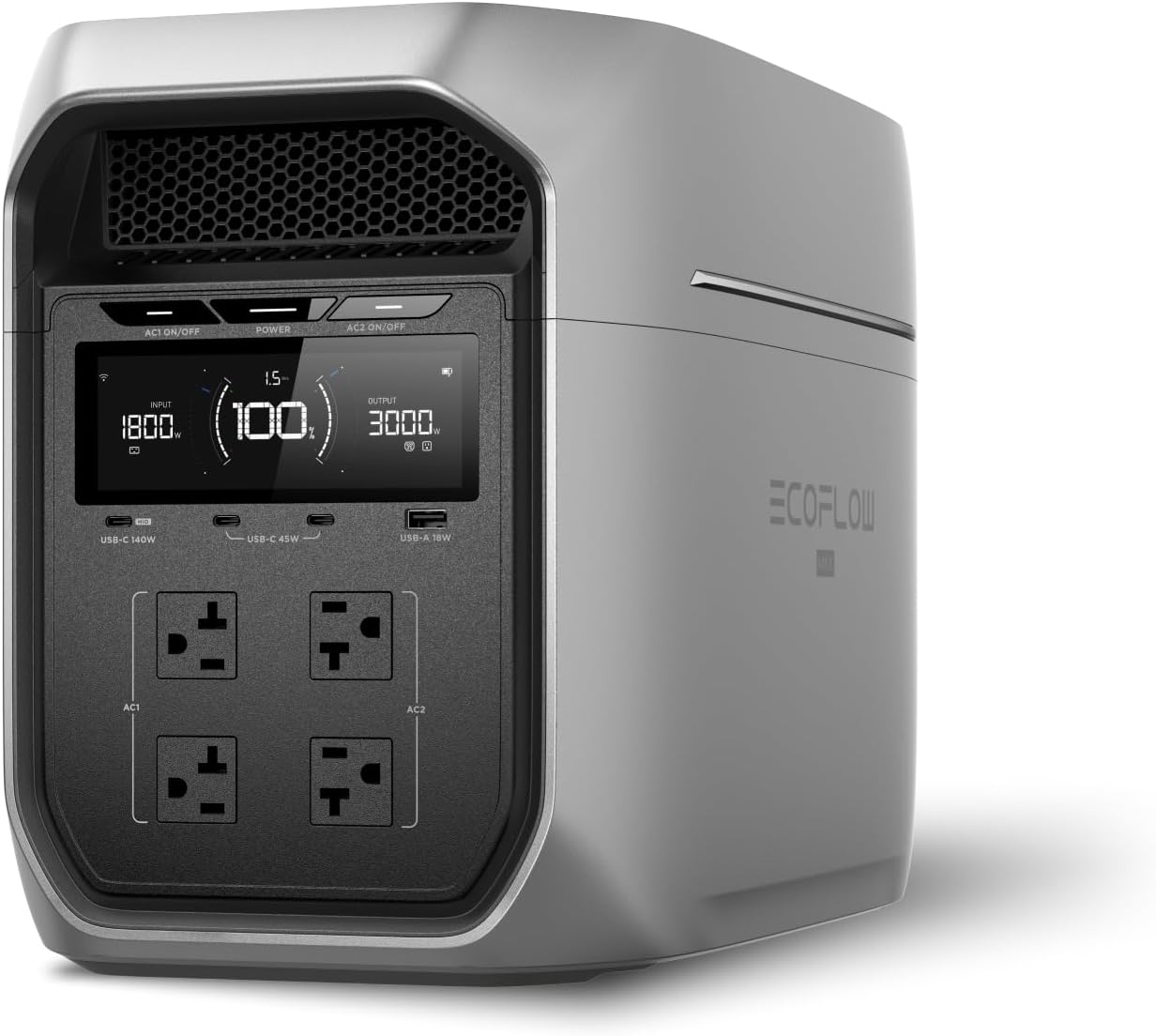
The EcoFlow DELTA 3 Plus hits the sweet spot for apartment dwellers. At 1,500Wh (expandable to 6,144Wh with add-on batteries), it can run a fridge, router, and devices through an overnight outage with room to spare. It charges from a wall outlet to 80% in about 50 minutes — fast enough to top off during rolling blackouts. The weight (around 51 lbs) is manageable, and it runs quietly enough to use in a bedroom. If you’re serious about apartment backup power, this is the one to get.
Best Compact Option: Bluetti AC70
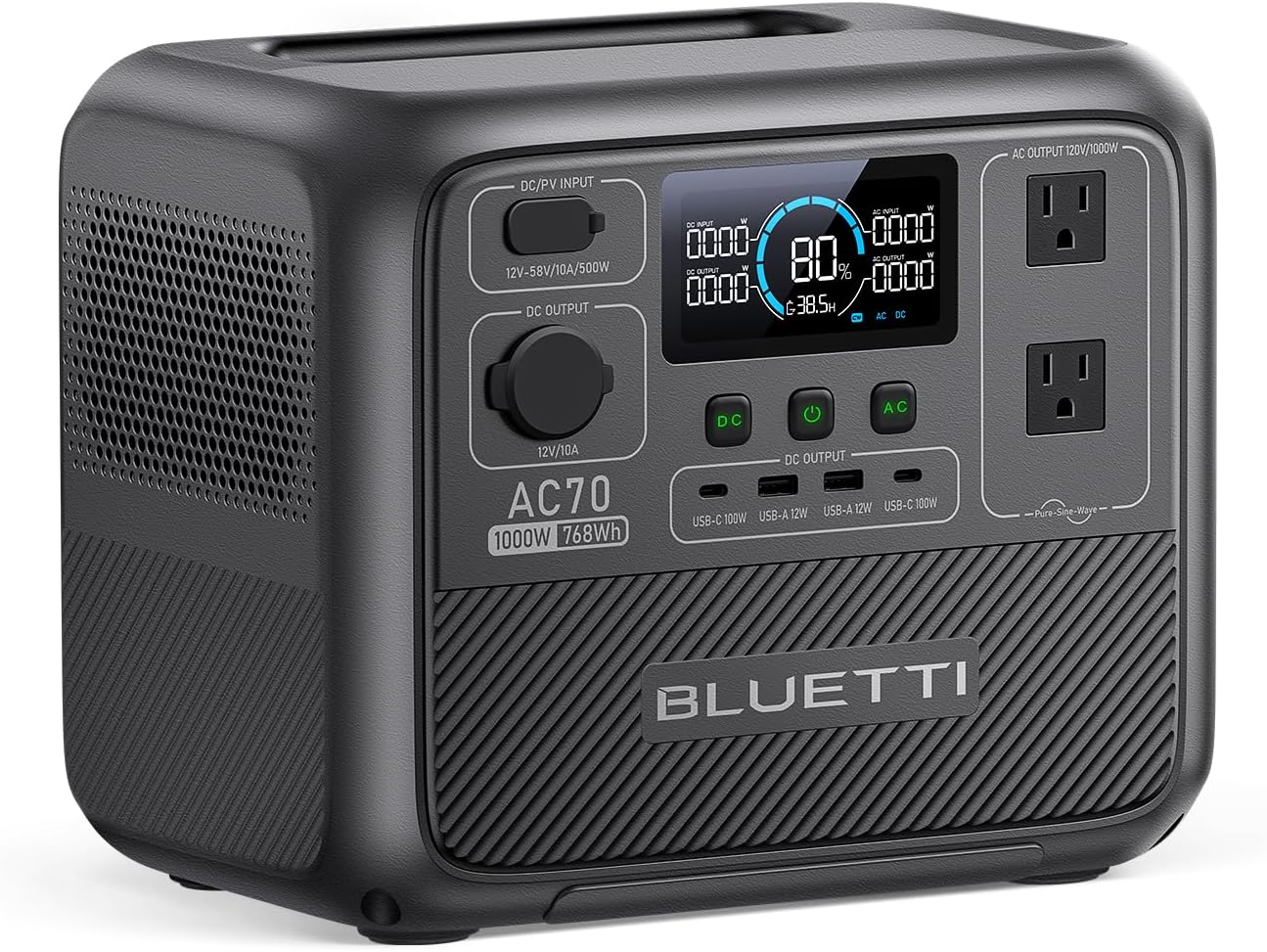
The Bluetti AC70 is ideal if space is tight. At 768Wh, it won’t run your fridge for a full day, but it’ll keep your internet, phone, laptop, and lights going for 10-15 hours easily. It weighs about 22 pounds and is roughly the size of a small microwave. Perfect for studio apartments or as a secondary backup alongside a larger unit.
Best for Minimal Storage: EcoFlow RIVER 3
If you literally have no storage space, the EcoFlow RIVER 3 is the smallest practical option. It’s light enough to toss in a bag and small enough to sit on a bookshelf. The capacity is limited (around 245Wh), so think of it as a device charger and router backup rather than a fridge saver. But for keeping connected during short outages, it’s hard to beat.
Tips for Using a Power Station in Your Apartment
Keep it charged. A dead power station during an outage is just an expensive paperweight. Most modern units hold their charge for 6-12 months, but check on it monthly. Some stations have an app that sends battery level notifications. For detailed storage and maintenance advice, see our power station maintenance tips.
Know your priorities. When the power goes out, you probably can’t run everything at once. Decide in advance: fridge first, then internet, then devices. Use our emergency preparedness checklist and Power Sizing Calculator to plan ahead.
Don’t forget the extension cord. Your power station might be in the bedroom closet, but your fridge is in the kitchen. A heavy-duty extension cord (12 AWG for appliances) bridges that gap.
Consider a small solar panel for your balcony. If you have a south-facing balcony, a foldable 100-200W solar panel can supplement your charging during extended outages. It won’t fully replace wall charging, but it extends your runtime significantly. Check our solar panel compatibility guide to make sure your panel and station work together.
Store it properly. Keep the station between 32-86°F, out of direct sunlight, and with the battery between 60-80% for long-term storage. A bedroom closet is perfect.
The Bottom Line
For apartment dwellers, a portable power station is the most practical backup power solution available. No installation, no landlord approval, no fumes, no noise complaints. Just reliable electricity when the grid lets you down.
Start with the EcoFlow DELTA 3 Plus if you want full-apartment coverage, or the Bluetti AC70 if you need something more compact. Either way, browse our full power station rankings to compare specs and pricing before you buy.
Related Reading
- Can You Use a Power Station While Charging? — how pass-through and UPS mode keep your devices running during outages
- What Can a 1000Wh Power Station Actually Run? — real-world runtimes for every common apartment appliance
- Best Power Station Under $500 — budget-friendly options for apartment dwellers
- Portable Power Station Safety Guide — everything you need to know about indoor safety and storage
Recommended Power Stations
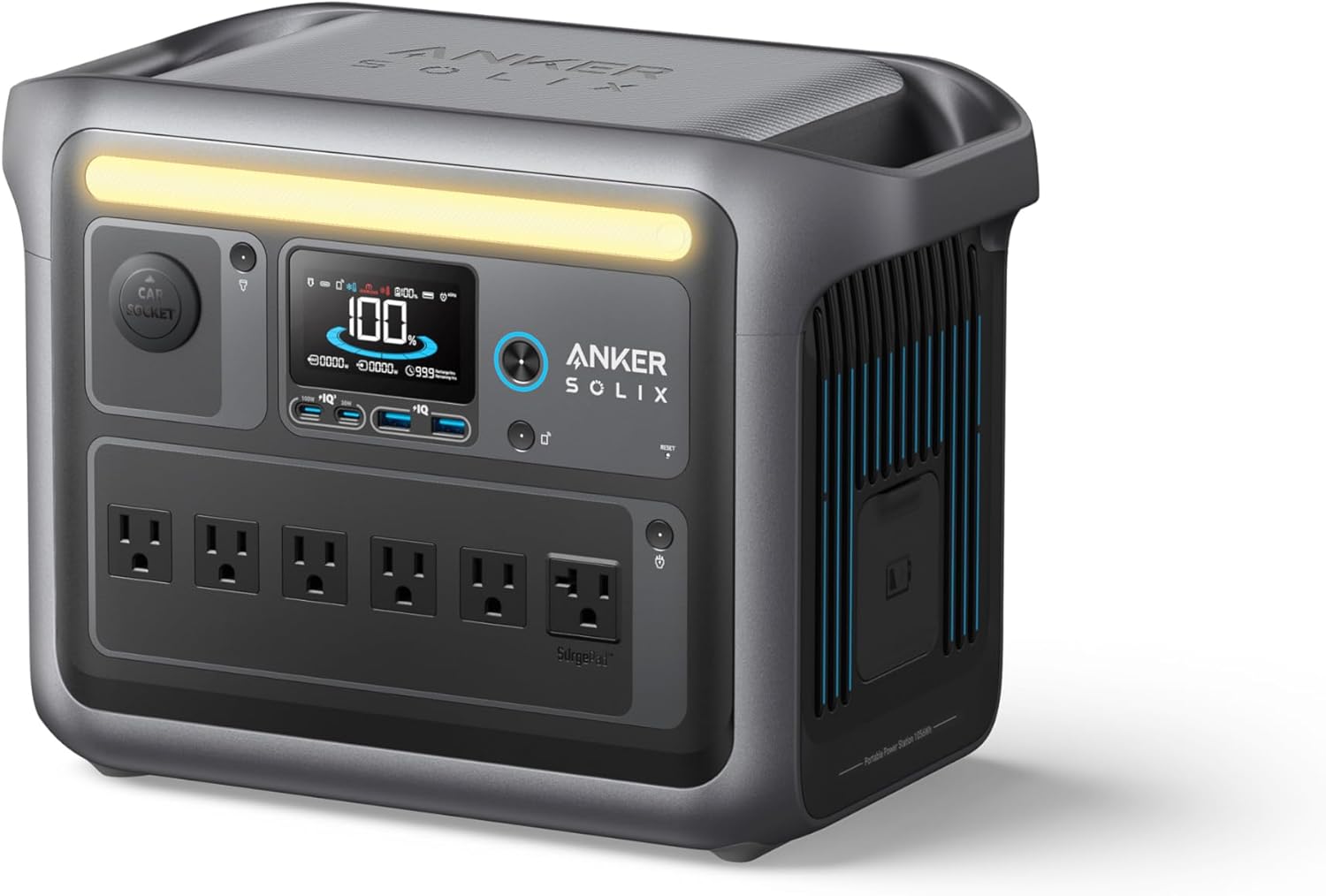
EcoFlow
EcoFlow DELTA 3 Plus
EcoFlow's newest mid-range flagship. The DELTA 3 Plus improves on the Delta 2 with faster charging, LiFePO4 chemistry, and UPS functionality — all at a lower price.
Frequently Asked Questions
Can I use a portable power station inside my apartment?
Yes. Unlike gas generators, portable power stations produce zero exhaust fumes and operate quietly (usually under 30 dB at idle). They're designed for indoor use and are perfectly safe in a living room, closet, or bedroom.
How long will a power station keep my fridge running during an outage?
A standard apartment fridge draws about 100-200W when the compressor cycles on. A 1,000Wh power station will keep most fridges running for 8-12 hours. A 1,500Wh+ unit can stretch that to 15-20 hours depending on how often the compressor kicks in.
Can I charge a portable power station with solar panels in my apartment?
You can, but it's limited. A single 100-200W panel on a south-facing balcony can recharge a mid-size station in 8-15 hours of direct sunlight. It works best as a supplemental charging method rather than a primary one — wall charging is faster and more reliable for apartment setups.
Will my landlord allow a portable power station?
Portable power stations require no installation, produce no emissions, and don't modify the property. They're essentially large batteries — no different from a laptop or phone charger. There's nothing for a landlord to object to, and no lease clauses that would typically prohibit them.
Ready to Buy? Here's What We Recommend
Based on our testing and this guide, these are the best options for most people: