Guide
Wildfire Season Prep: Building Your Emergency Power & Water System (Early)

TL;DR
Build a wildfire-ready power and water system before fire season starts. Sizing for water pumps, medical devices, and multi-day Public Safety Power Shutoffs.
If you live in fire country, you already know the drill. The grass goes gold, the humidity drops into the teens, and your utility starts sending text alerts about “elevated fire weather.” Then comes the part nobody warns you about until it happens: the power gets shut off on purpose, sometimes for days, right when the heat is at its worst.
I went through Hurricane Irma with no power for nine days, and the lesson I took away applies just as much to wildfire season. The people who do well are the ones who built their system in the calm, boring weeks before anything happened. Early May is that window. Fire season hasn’t ramped up, the gear is in stock at normal prices, and you have time to actually test everything. Let me walk you through building a power and water system that holds up when a Public Safety Power Shutoff lands on your street.
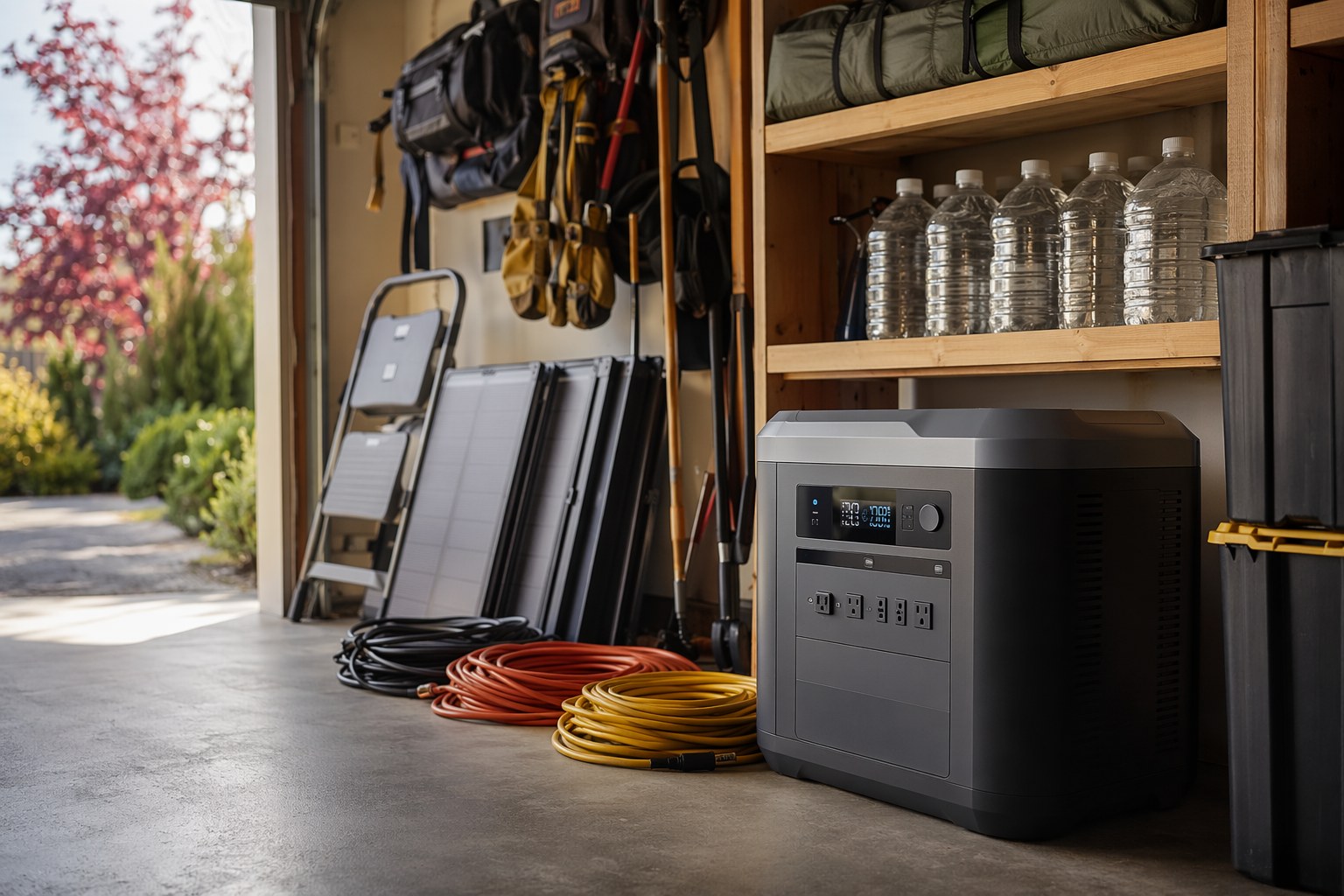
Why Wildfire Outages Are Different
A thunderstorm knocks out power for a few hours and then the crews show up. A wildfire-season outage is a different animal, and you need to plan for it differently.
First, the duration. Utilities now use Public Safety Power Shutoffs (PSPS) to de-energize lines before they spark a fire. These are deliberate, and they can stretch from a few hours to more than five days. You don’t get a restoration estimate the way you do after a storm, because nobody turns the lines back on until the wind dies down and crews inspect every mile.
Second, the heat. Fire weather means triple-digit afternoons. Losing power in that environment isn’t just inconvenient, it’s a genuine health risk for older adults, infants, and anyone with a medical condition.
Third, the smoke. This is the one people forget. Heavy wildfire smoke can knock solar output down by 30 to 60 percent. A solar setup that fully recharges your battery on a clear day might only claw back half of that under an orange sky. Your plan has to survive a few cloudy-with-smoke days, not just sunny ones.
And fourth, water. If you’re on a well, no power means no water, full stop. Even on municipal water, pressure can drop during a regional emergency. Power and water are the same problem in fire country, and your system has to address both.
Step One: Build Your Power Budget
Before you buy anything, write down what you actually need to keep running. I do this with every family I help, and it always changes their shopping list.
Make three columns: critical, comfort, and convenience.
Critical loads are non-negotiable. Medical devices like a CPAP (40-60W) or an oxygen concentrator (300-600W). A medication refrigerator. Phones and a way to charge them. One light per occupied room. For most households this adds up to a surprisingly modest 80-150W of average draw.
Comfort loads keep you healthy and sane: the kitchen refrigerator (50-80W average, but a 1,200W startup surge), a box fan or two (50-75W each), and your internet router and modem (10-25W combined) so you can get evacuation alerts.
Convenience loads are everything else: coffee maker, microwave, laptop, a window AC unit. These are nice but they’re the first things you cut when capacity gets tight.
Add up the critical and comfort columns and multiply by 24 to get a rough daily watt-hour need. A typical fire-country household lands somewhere between 1,500 and 3,000Wh per day. If that math feels fuzzy, our power outage survival guide walks through how to prioritize loads in the first hour of an outage so you don’t burn capacity on the wrong things.
Step Two: Size the Battery (and Plan to Recharge It)
Once you know your daily number, sizing the battery is straightforward: you want roughly one full day of capacity, plus a reliable way to refill it.
For a household running critical and comfort loads through a multi-day PSPS, I steer people toward a 2,000Wh-and-up lithium iron phosphate (LiFePO4) station. LiFePO4 is the right chemistry for this job because it tolerates heat better and lasts thousands of cycles, which matters when you’re cycling it hard every fire season.
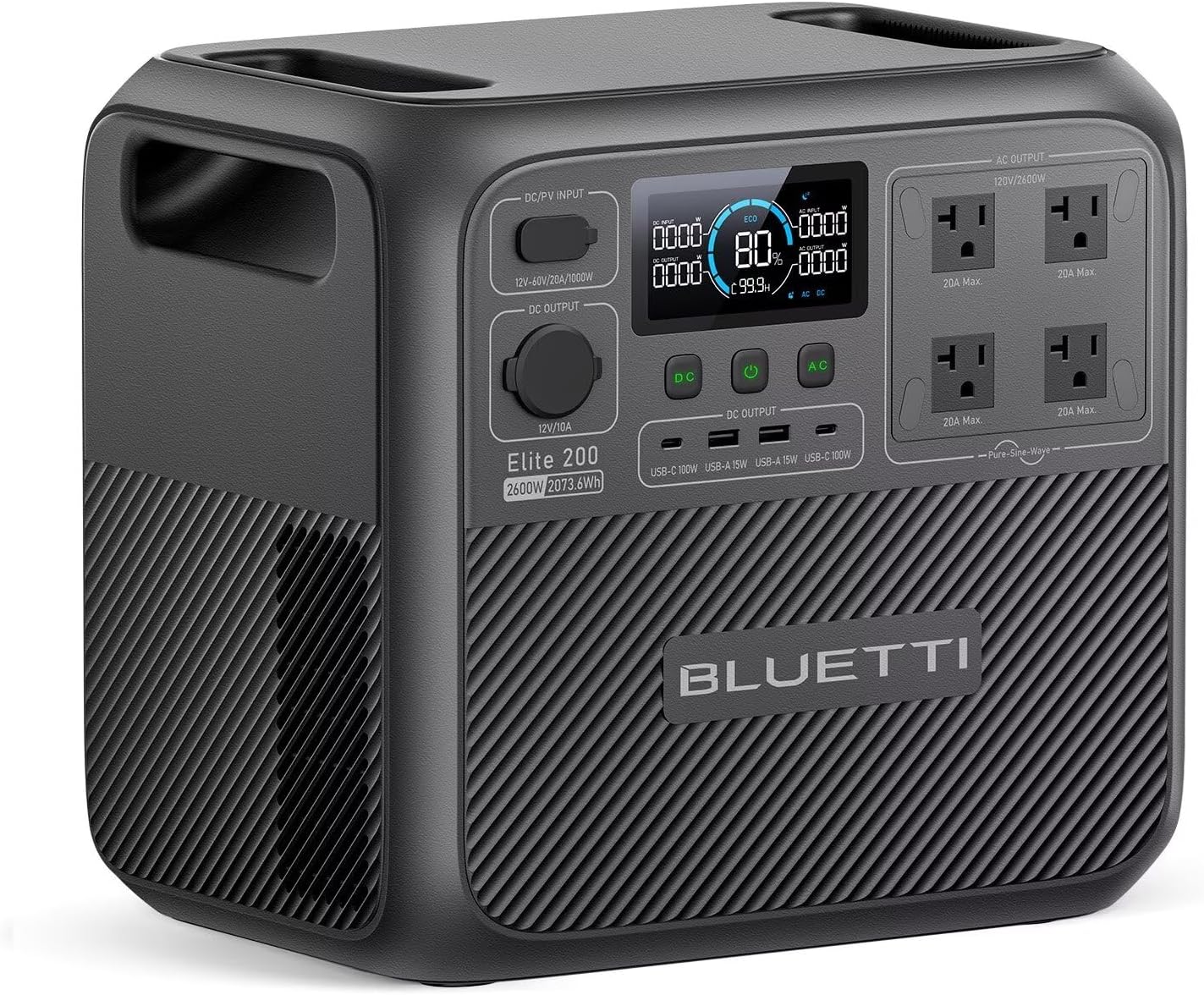
The Bluetti Elite 200 V2 is my baseline recommendation here. At 2,073Wh with a 6,000+ cycle battery and 2,600W output, it runs a fridge, fans, medical devices, and lights all day, and it does it silently and indoors. The Jackery Explorer 2000 Plus is a strong alternative at the same capacity tier, and it expands to 24kWh if you decide later that you want whole-week coverage.
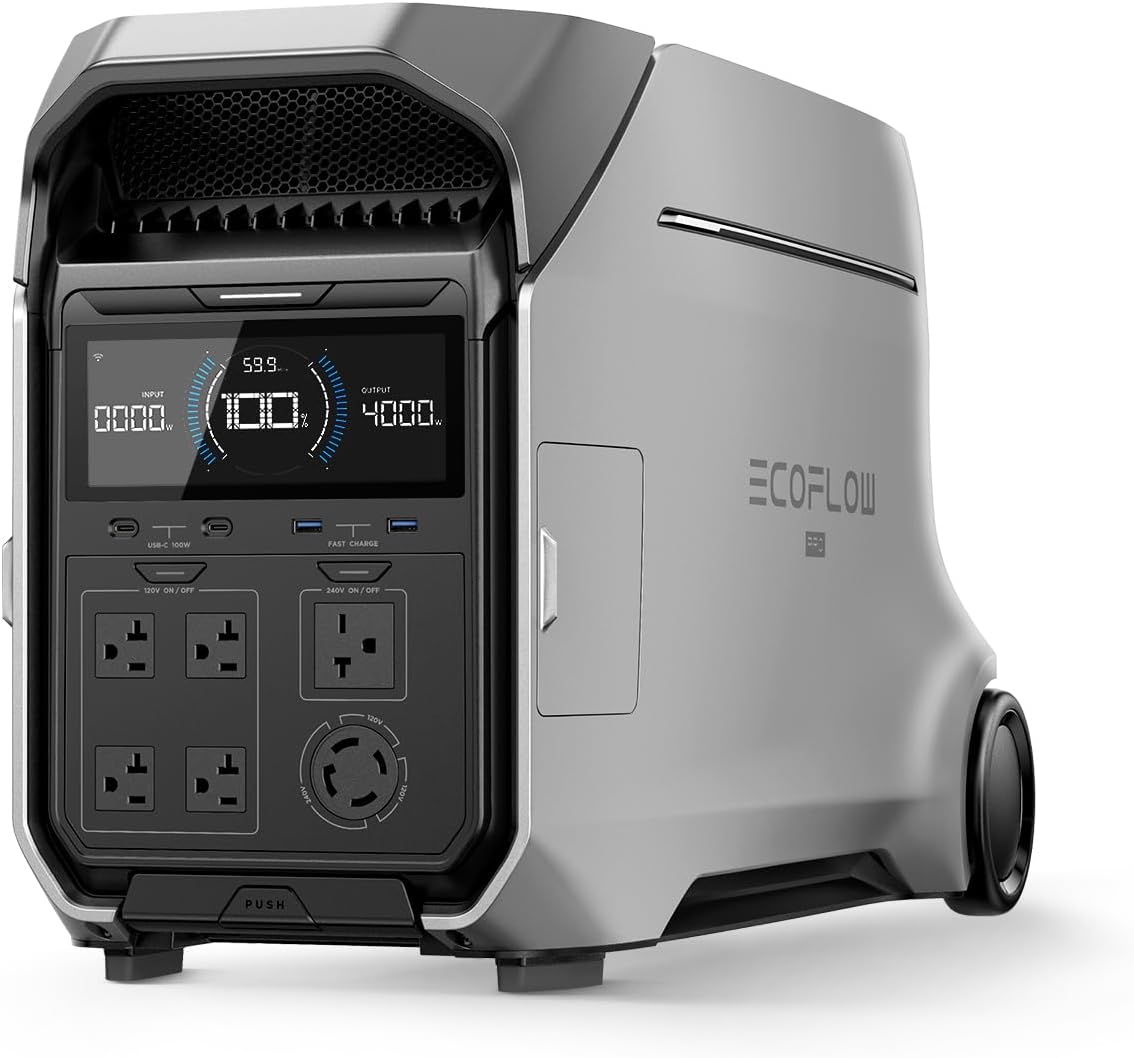
If you want a single unit that can carry an entire fire-country home, step up to the EcoFlow DELTA Pro 3. It’s 4,096Wh out of the box, expandable to 48kWh, and it puts out 120V/240V at up to 4,000W. That 240V capability is the key detail: it’s enough to run a well pump or a 240V window AC unit, which most portable stations simply cannot do.
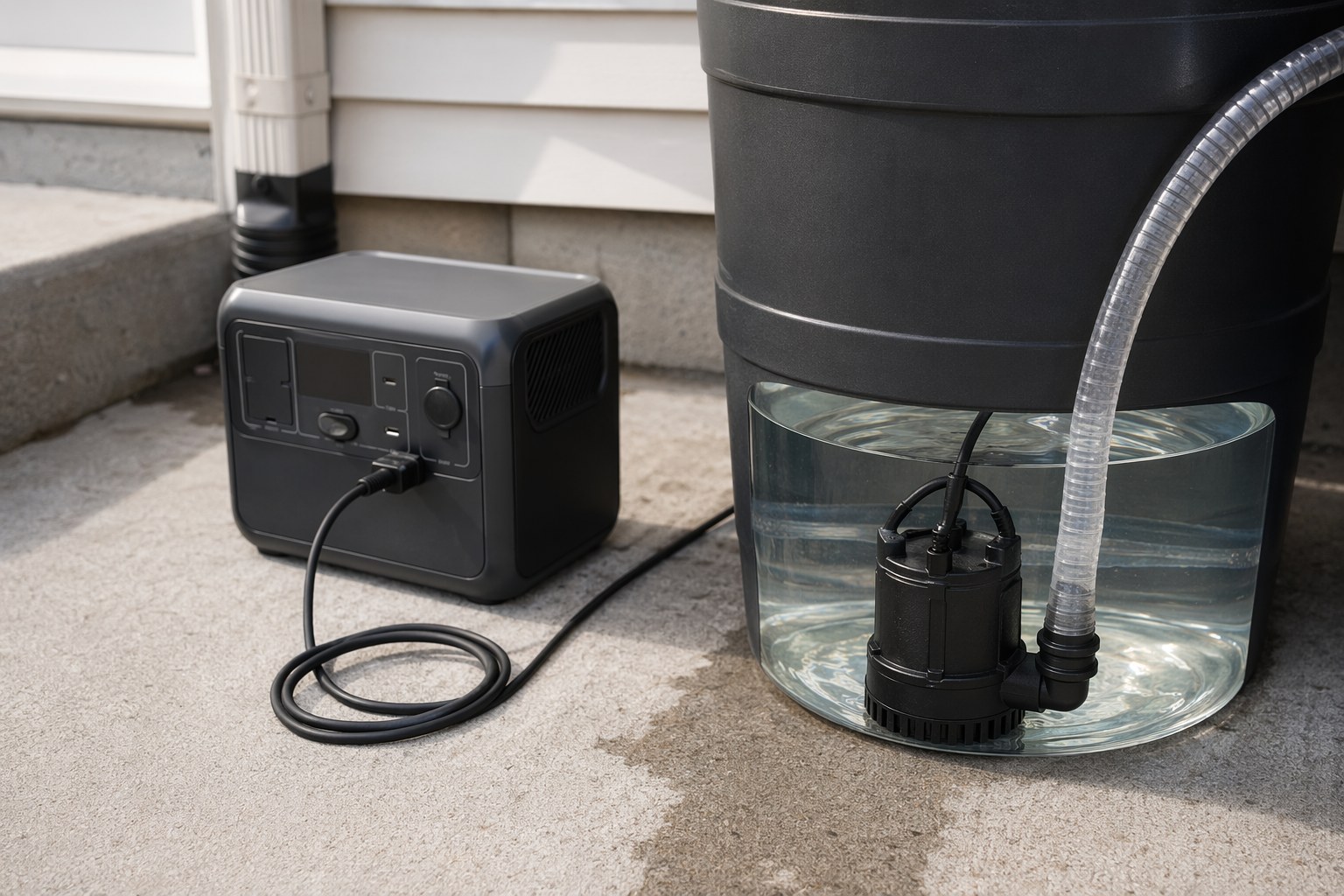
Whatever battery you choose, pair it with solar. A 400W panel array recharges a 2,000Wh station in roughly 5-7 hours of clean sun. Under smoke, assume that doubles, and size accordingly. The combination of a big LiFePO4 battery and solar is what turns a one-shot backup into something that lasts the entire shutoff. For the deeper sizing logic, our hurricane season power prep guide uses the same tiered framework that applies cleanly to wildfire PSPS events.
Step Three: Solve the Water Problem
This is where fire prep diverges from hurricane prep, and it’s the piece most people skip.
If you’re on a well: your pump is the highest-priority load you have. Pull the nameplate off your pump (it’s usually on the motor housing or the pressure tank controller) and note the running watts and HP. A common 1/2 HP submersible pump draws around 1,000W running with a 2,500-3,500W startup surge. That surge is what kills undersized systems, so match it carefully. A 240V-capable station like the DELTA Pro 3 can handle many residential well pumps directly; for the rest, you’ll want a generator (more on that below).
If you’re on municipal water: store it now. Keep at least one gallon per person per day for two weeks, and a larger reserve for sanitation. A 55-gallon food-grade barrel plus a low-draw 120V utility transfer pump (200-500W) lets you move stored water on demand and runs all day on any 2,000Wh station.
For everyone: a small 12V or 120V transfer pump is one of the cheapest, highest-value items in a fire kit. It lets you refill toilet tanks, fill buckets for defensible-space wetting, and pull water from a pool or rain barrel without hauling it by hand. It draws so little that it barely registers on your battery.
Step Four: Add a Generator for the Heavy Lifting
Solar is your renewable backbone, but smoke is its enemy. When the sky goes orange for three days straight, you need a fuel-based way to keep your battery topped off and to run the loads no battery handles gracefully, like a well pump or a window AC compressor.
For most homes, a compact inverter generator is plenty. The Honda EU2200i is the gold standard: it’s quiet enough not to wake the neighborhood, sips fuel, produces clean inverter power safe for electronics, and reliably recharges a power station in a couple of hours. It won’t start a big well pump on its own, but it’s perfect for keeping batteries full and running comfort loads.
If you need real muscle, the Champion 4500W Dual Fuel is my pick for fire country specifically because of the dual-fuel design. Gasoline goes stale and stations sell out before evacuations; propane stores for years and you probably already have a few tanks. With 3,500 running watts on propane and 4,500W surge on gasoline, it starts most residential well pumps and runs a window AC. Use it during the day for heavy loads, recharge your quiet battery, then shut it off and run silent overnight. Whatever generator you choose, never run it indoors or in an attached garage, and keep it at least 20 feet from windows.
Step Five: Prioritize Medical Devices First
If anyone in your home depends on powered medical equipment, this is the part of the plan that has to be bulletproof.
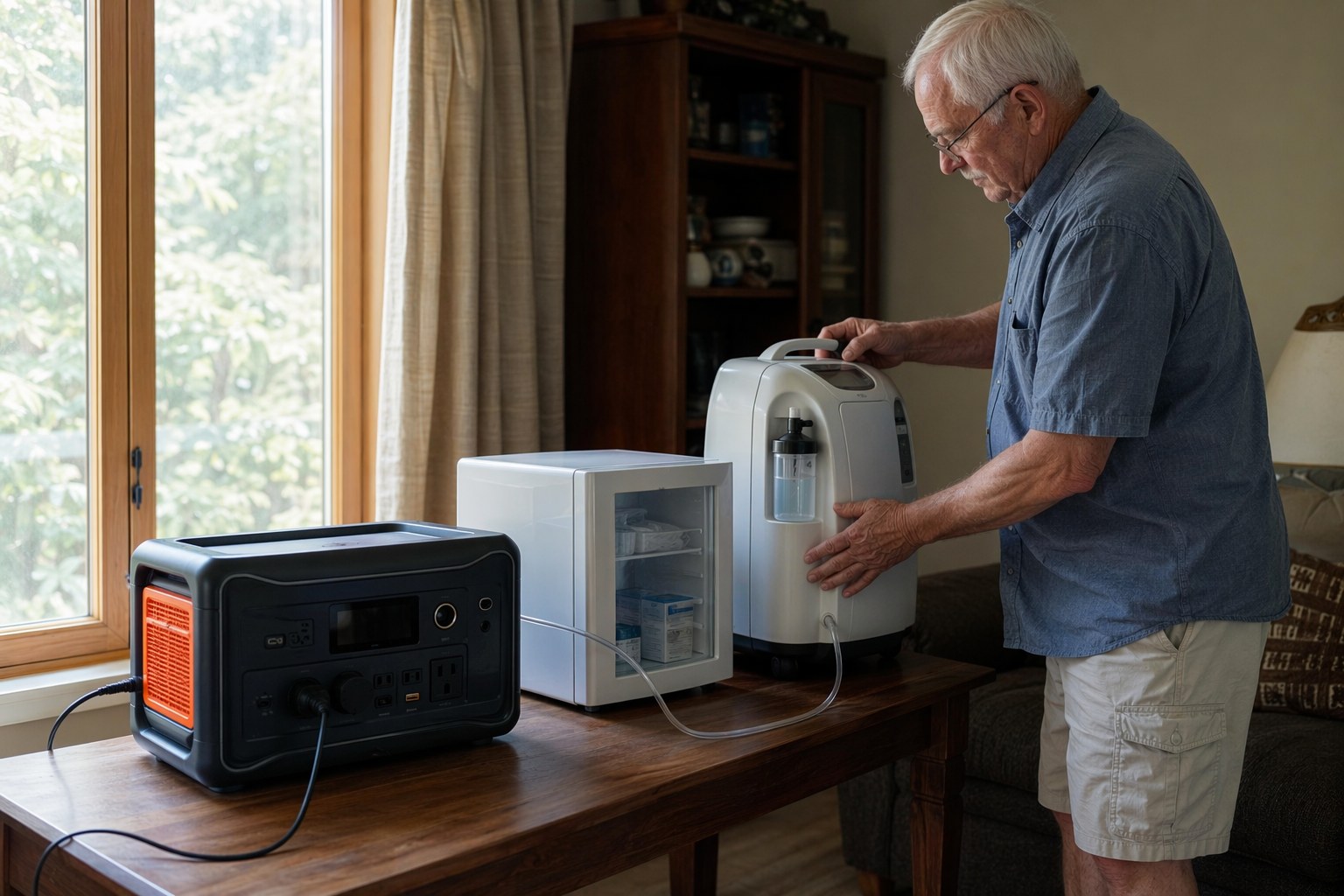
Call your utility today and ask to be added to their Medical Baseline program. It gives you advance notice of PSPS events and, in some areas, priority restoration. Then build redundancy: your battery is plan A, your generator is plan B, and a car-charging adapter that lets you recharge from the 12V outlet is plan C.
A CPAP runs all night on as little as 200Wh, so even a modest battery covers it. An oxygen concentrator is the demanding one at 300-600W continuous, which can eat 7,000-14,000Wh over 24 hours. That’s a case for the DELTA Pro 3 plus solar plus a generator, not a single small unit. Map out the math before fire season, not during it.
Putting It All Together
Here’s the system I’d build for a typical fire-country home this month:
- A 2,000-4,000Wh LiFePO4 station as the silent core
- 400W or more of portable solar for daily recharge
- A dual-fuel inverter generator for smoke days and heavy loads
- A 120V transfer pump and at least 55 gallons of stored water
- A grab-and-go kit with cables, lanterns, a NOAA weather radio, and printed evacuation routes
Build it now, then test it on a quiet Saturday. Run your fridge off the battery for a full day. Start your generator and recharge the station. Prime your transfer pump. Find the problems while a hardware store is still open and a calm afternoon is the only thing on the line. For the full kit-assembly checklist, our emergency power kit guide lays out every item and a quarterly maintenance schedule.
The Bottom Line
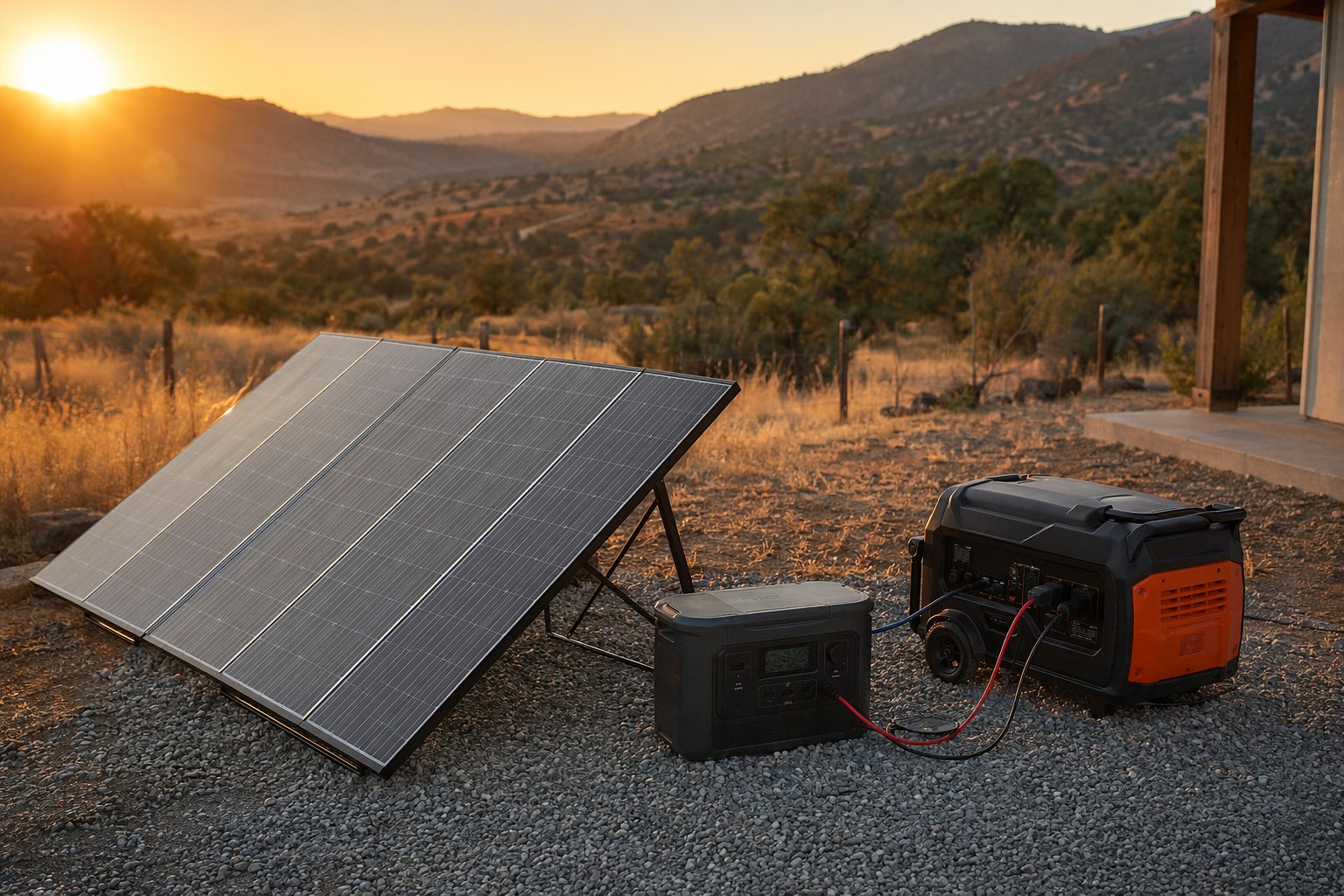
Wildfire outages are longer, hotter, smokier, and more likely to take your water with them than any storm outage. That sounds intimidating, but the fix is genuinely within reach for most households: a big LiFePO4 battery, solar to refill it, a dual-fuel generator for the days solar can’t keep up, and a simple water-pumping plan.
The single most important thing I can tell you is the same lesson Irma taught me. Don’t wait. The gear is in stock and reasonably priced in early May, and you have the calm hours you need to test it. By July, when the alerts start, you want to be the household that’s already ready, not the one refreshing an out-of-stock listing while the wind picks up.
Recommended Power Stations
EcoFlow
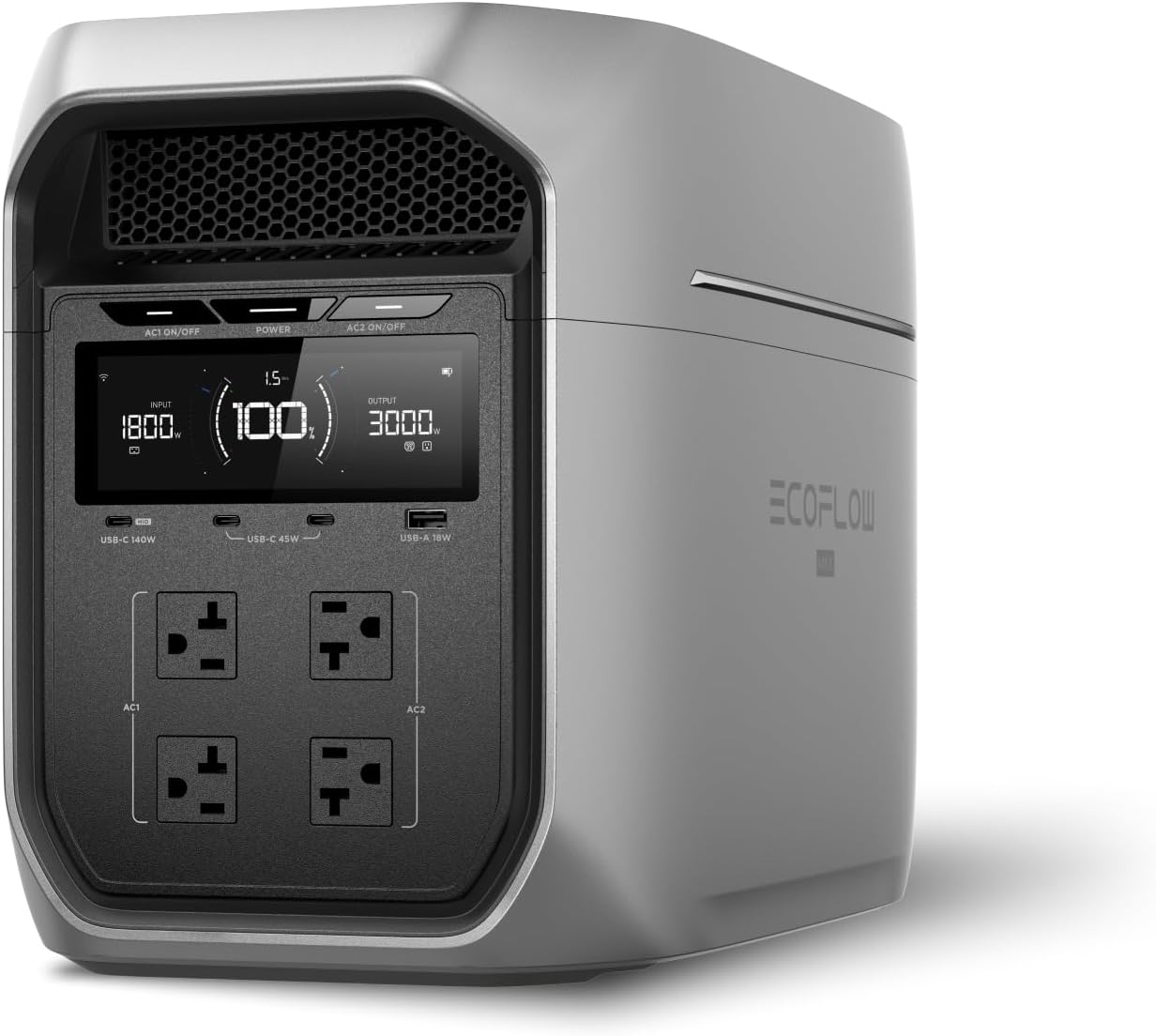
EcoFlow DELTA 3 Plus
EcoFlow's newest mid-range flagship. The DELTA 3 Plus improves on the Delta 2 with faster charging, LiFePO4 chemistry, and UPS functionality — all at a lower price.
Frequently Asked Questions
How much power do I need to run a water pump during a wildfire outage?
Most residential well pumps and pressure pumps draw 700-1,200W while running, with a surge of 2,000-3,500W at startup. That means you need a power station or generator rated for at least 3,000W surge and 1,800W continuous to start and run a typical 1/2 HP pump. A 120V utility transfer pump for moving water from a storage tank draws far less, usually 200-500W, and runs comfortably on a 2,000Wh station. Always check your pump's nameplate before buying.
Will a Public Safety Power Shutoff (PSPS) last long enough to matter?
Yes. California utilities have run PSPS events lasting from a few hours to more than five days, and they often hit during the hottest, driest stretch of the year when you most need fans, refrigeration, and medical devices. Plan for at least 72 hours of self-sufficiency, and pair a 2,000Wh+ battery with solar so you can recharge daily and effectively run indefinitely if the shutoff drags on.
Is a power station or a generator better for wildfire season?
For most homes, both. A large lithium power station with solar handles quiet, indoor-safe overnight power for the fridge, medical devices, and phones with zero fumes. A dual-fuel inverter generator handles daytime heavy loads like a well pump or window AC and recharges your battery when the sun is blocked by smoke. Smoke can cut solar output by 30-60 percent, which is exactly why a fuel-based backup belongs in a serious fire-country kit.
Ready to Buy? Here's What We Recommend
Based on our testing and this guide, these are the best options for most people: