Guide
Wildflower & Flower Festival Season: Portable Power for Photography & Events

TL;DR
Wildflower season means long days shooting in remote fields with no outlets. Here's how to size the right power station and power bank to keep cameras, drones, and laptops running from sunrise super blooms to golden hour.
Wildflower season is one of the best and most frustrating times of year to be a photographer. The best super blooms are almost always an hour or more from the nearest gas station, the light windows are short and intense, and you end up shooting from before sunrise through golden hour with nowhere to plug anything in. I spent eight years designing automotive power electronics before I started writing about portable power, and the same question I used to answer for vehicle systems applies perfectly here: how much energy do you actually consume, and how do you deliver it efficiently? Get that math right and you never miss a frame to a dead battery again.
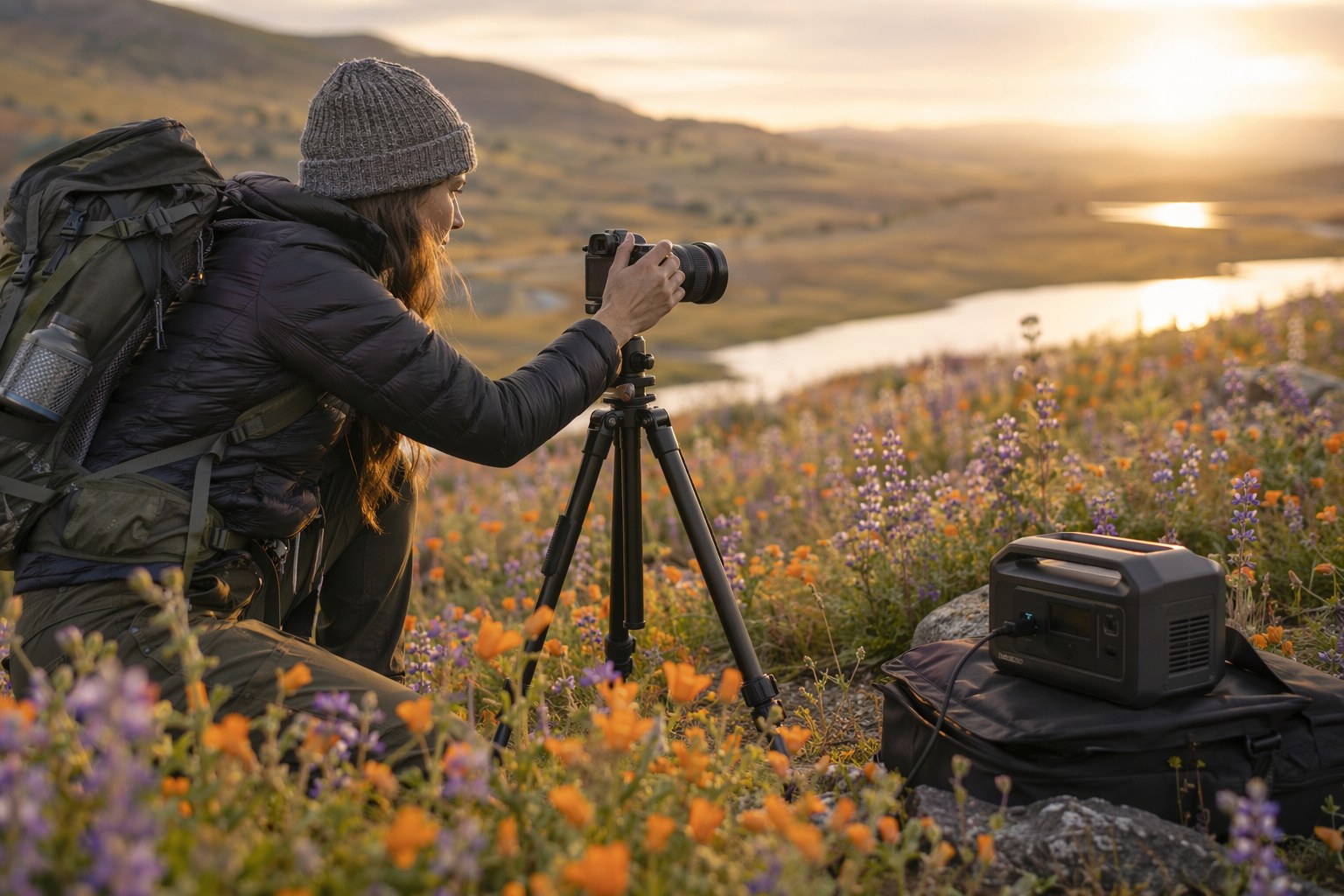
This guide walks through the real power budget of a wildflower shoot, how to size a station or power bank without overbuying, and the efficiency tricks that let a small unit do the work of a big one. If you want the deeper gear breakdown beyond flower season, our complete guide to portable power for photographers and videographers covers studio lighting and multi-day productions in more detail.
What You Actually Consume in a Day of Flower Shooting
The mistake almost everyone makes is over-estimating. People see a 2,000Wh station and assume they need it because cameras feel power-hungry. They are not. Here is what a realistic field day draws.
| Device | Energy per session | Notes |
|---|---|---|
| Mirrorless camera battery | 10-16Wh each | 4-6 batteries/day = 60-100Wh |
| Drone batteries (3 flights) | 40-90Wh each | The single biggest camera-side load |
| Laptop (culling on location) | 45-90W while charging | 2 hours = ~120-180Wh |
| Phone | 12-18Wh per charge | Maps, light meter app, social |
| LED fill panel (small) | 10-30W | Macro fill, mostly daytime, low total |
Add it up and a solo stills shooter with a couple of spare batteries rarely exceeds 150Wh in a full day. Throw in a drone and a laptop and you climb to 400-600Wh. Bring a second body, a partner’s gear, and on-location editing and you are looking at 800-1,200Wh. That tiered reality is the whole sizing strategy: match the unit to the kit, not to the fear.
Why efficiency matters more than raw capacity
Here is the engineering detail that saves you money. Every time you run a device through a station’s AC outlet, the inverter converts the battery’s DC into AC, and then your camera or laptop charger converts it right back to DC. That round trip costs you energy as heat. On most portable inverters you lose 8-15% in that conversion, plus a fixed idle draw of 5-15W just to keep the inverter awake.
So if you charge a USB-C camera body directly off the station’s DC USB-C port, you skip the AC stage entirely and keep more of your stored watt-hours. Charging four camera batteries via USB-C instead of their AC wall chargers can stretch a 300Wh unit by a meaningful margin over a long weekend. If you want the underlying theory on how DC becomes AC and where the losses hide, it is worth understanding before you buy anything.
Sizing It Right: Three Realistic Kits
The ultralight stills kit: a power bank only
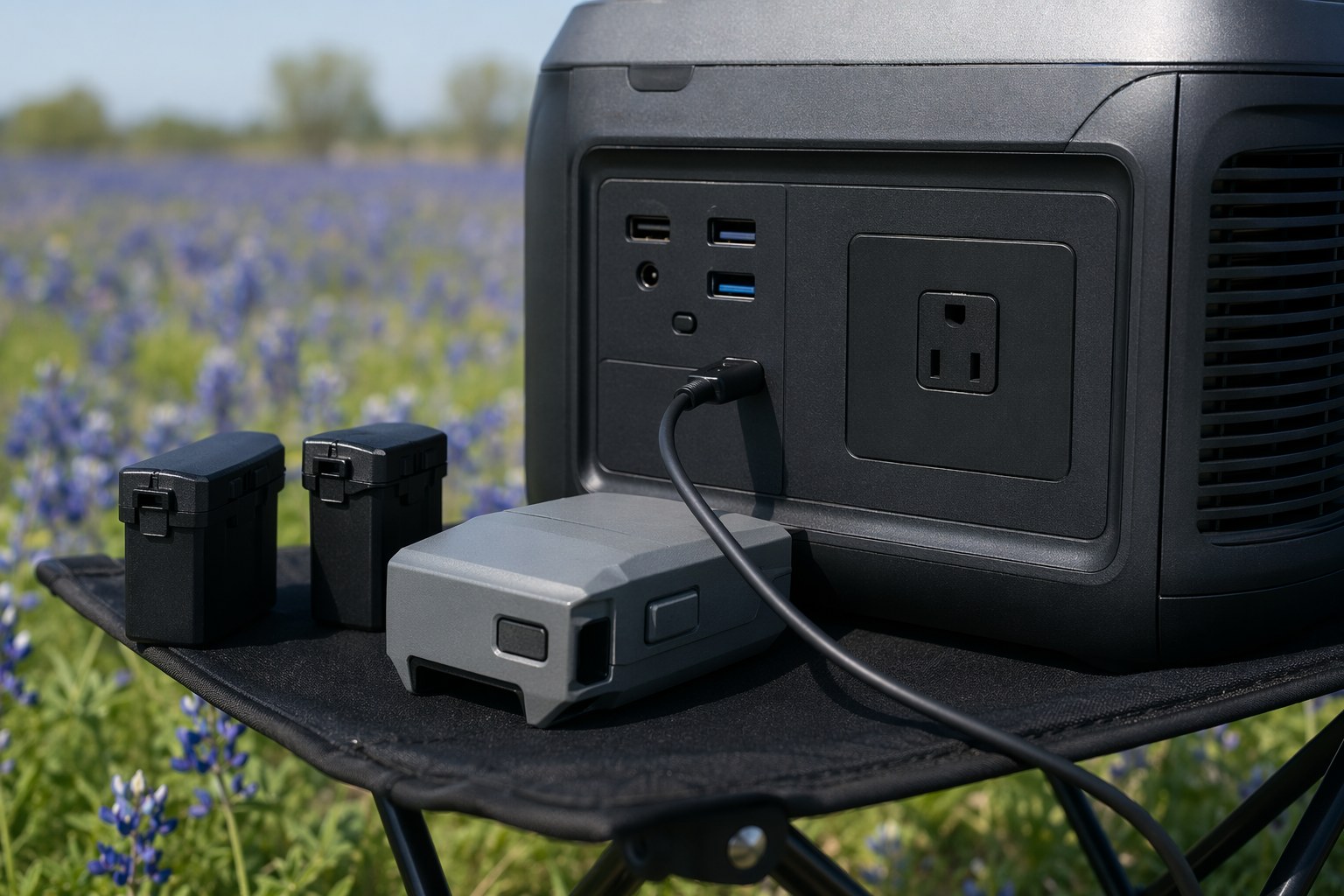
If you hike to your spot and shoot one body plus a phone, you do not need a power station at all. You need a high-capacity USB-C PD power bank that stays under the 100Wh airline limit and charges your camera directly.
The Anker Prime 27,650mAh Power Bank is my pick here. At 99.5Wh it is right at the TSA ceiling, it pushes up to 250W across its ports, and it has a small display that shows remaining capacity and live wattage, which is genuinely useful when you are rationing power in the field. It will top up a mirrorless body three or four times and still have room for your phone.
For a flatter, lighter option that slides into a camera bag’s laptop sleeve, the Baseus Blade 2 Power Bank is excellent. At 20,000mAh with 140W USB-C PD output, it charges cameras directly and can give a MacBook Air a full charge or a MacBook Pro a strong top-up. Its laptop-shaped body is the most pocketable way to carry serious watt-hours. If you want to compare more options in this class, our roundup of the best power banks for laptops in 2026 breaks down output and weight side by side.
The standard hybrid kit: a mid-size station
Once you add a drone and on-location editing, a power bank stops being enough and you want a true station with AC outlets and a meaningful battery. The sweet spot for flower-season day trips is the 500-1,000Wh class.
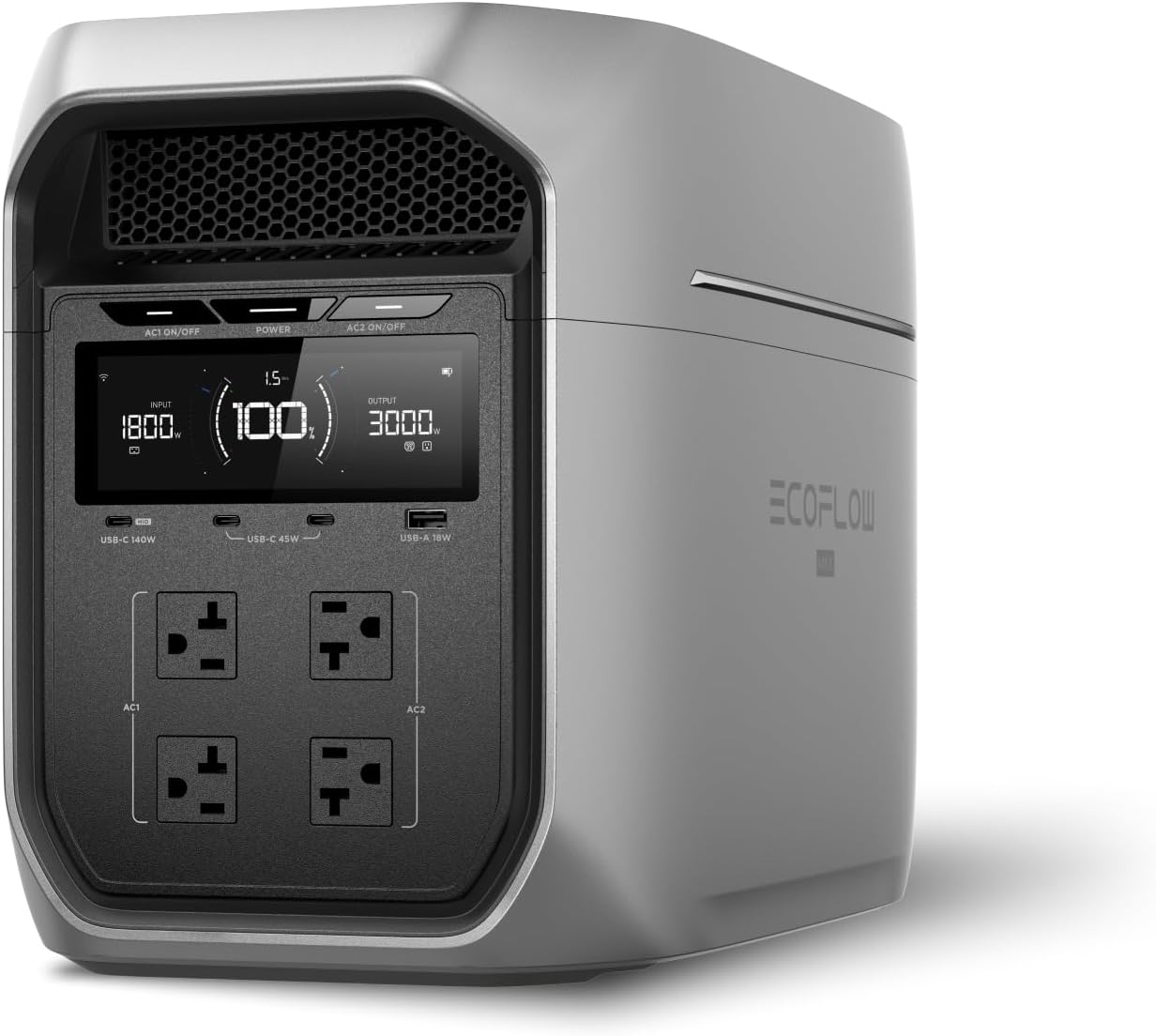
The EcoFlow DELTA 2 at 1,024Wh and 1,800W output is the workhorse here. It charges drone batteries through its AC outlets, runs a laptop charger all day, and tops camera batteries via its USB-C ports simultaneously. It is LiFePO4, so it tolerates the heat-and-cold cycling of field use far better than older NMC stations and is rated for thousands of cycles before meaningful degradation.
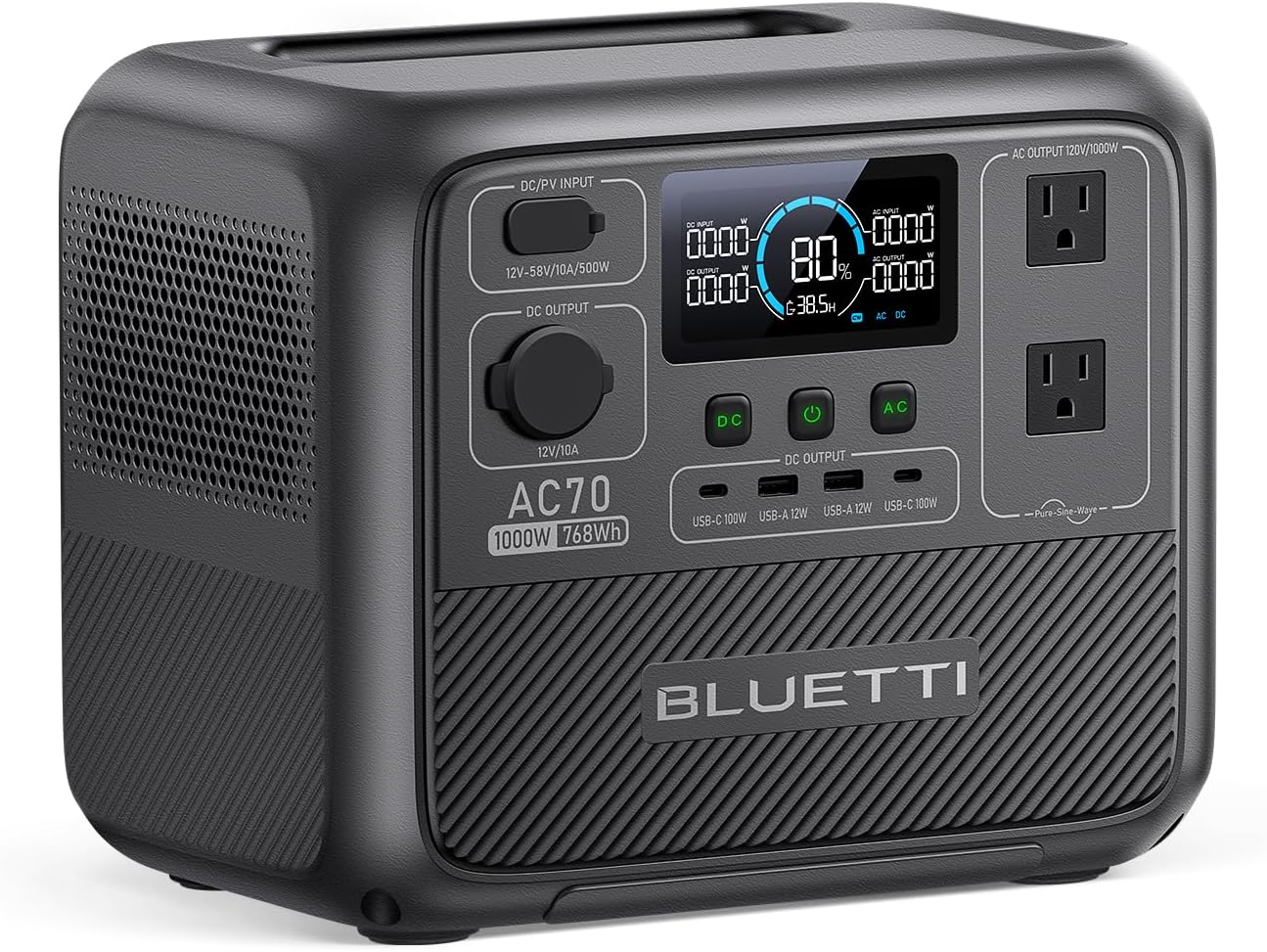
The Bluetti AC180 is the close alternative I reach for when I want a higher surge ceiling. Its 1,800W rated output peaks to 2,700W in power-lifting mode, which matters if you ever plug in a small inflator, a kettle for a sunrise coffee, or anything with a startup spike. At 1,152Wh it carries a touch more capacity than the DELTA 2 in a similar footprint.
The full-day team kit: 1,000Wh and beyond
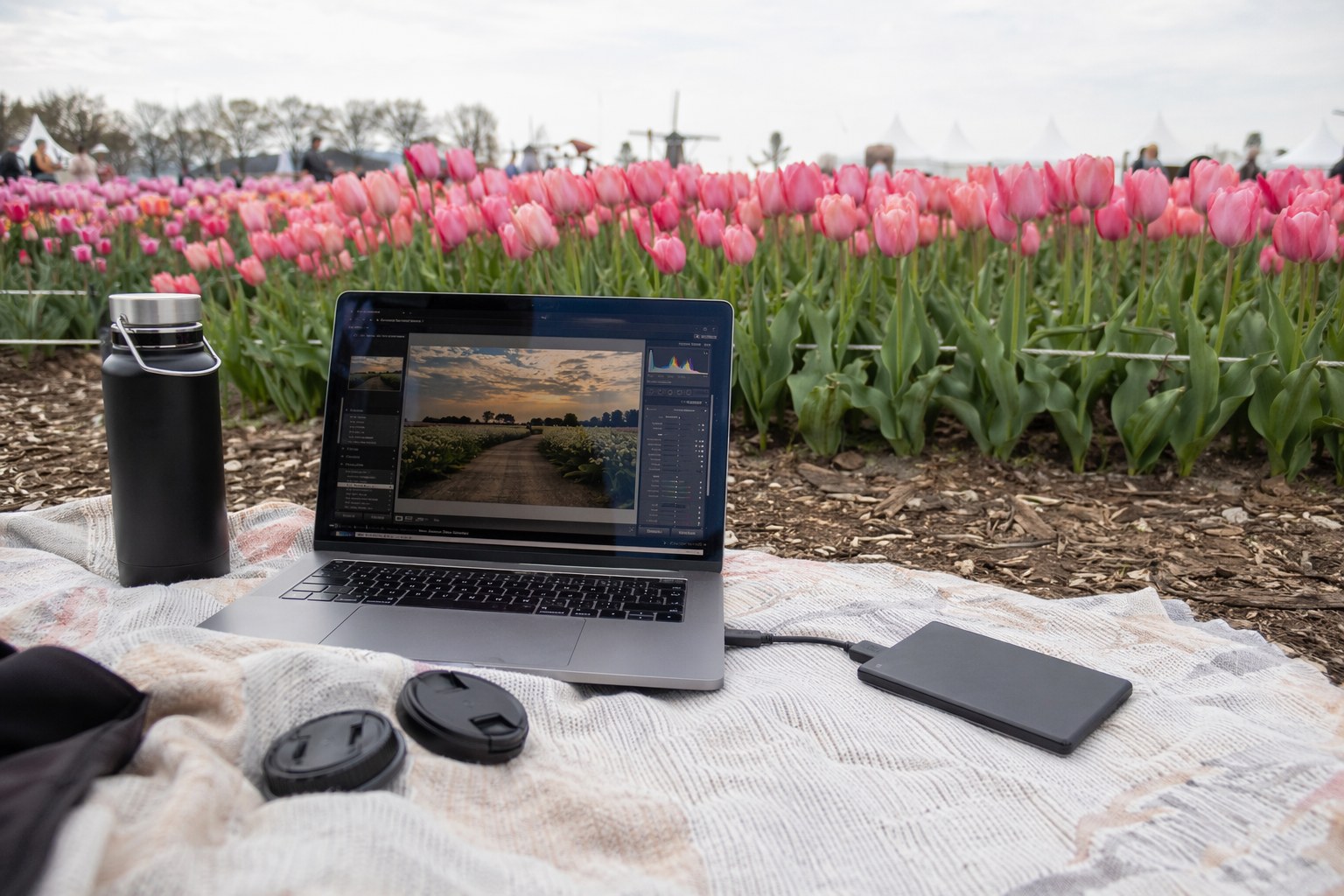
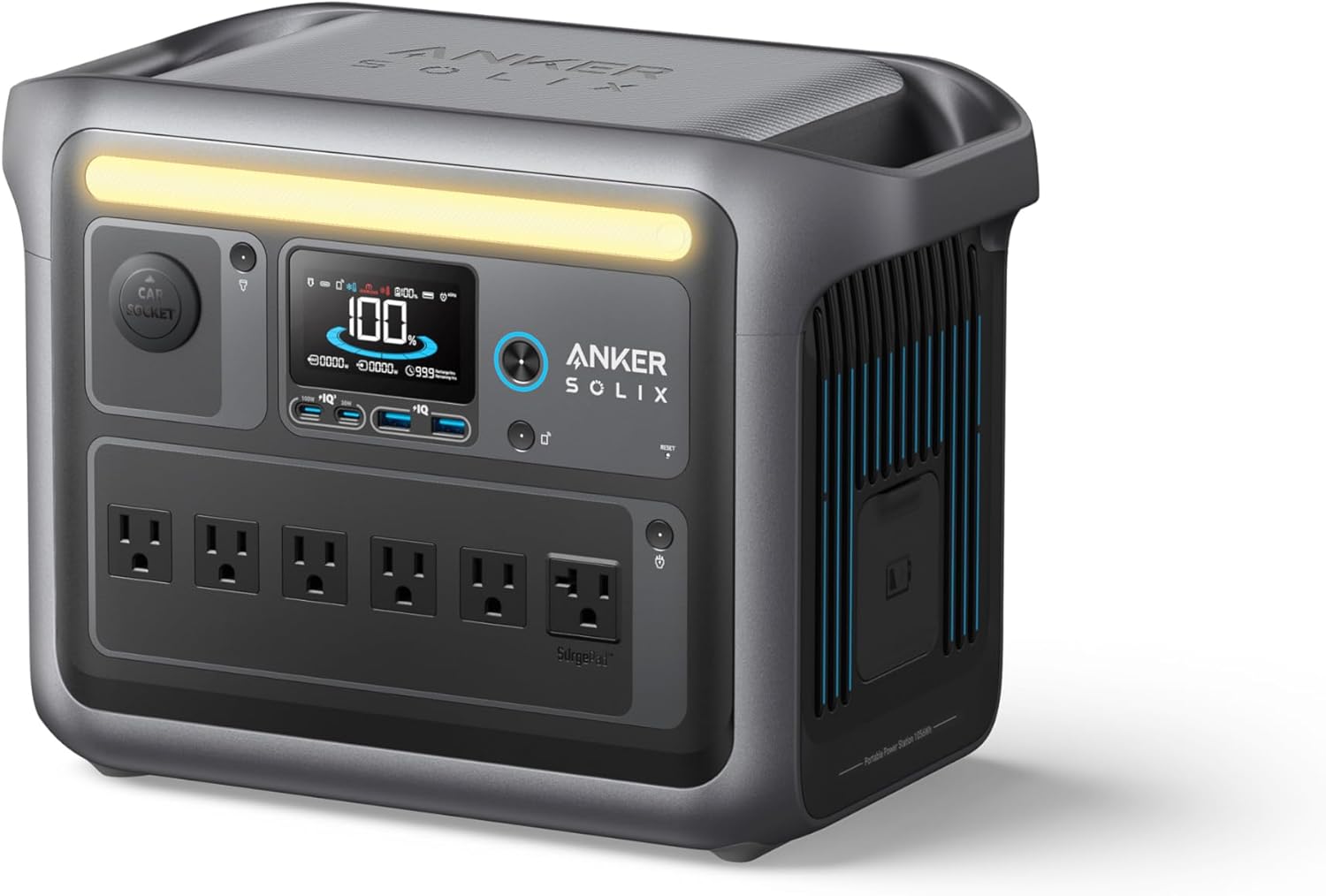
For workshops, two-shooter teams, or anyone running a laptop and a second body all day, step up to a unit you can lean on hard. The Anker SOLIX C1000 is my recommendation. It packs 1,056Wh, a 1,800W inverter that surges to 2,400W, and a genuinely fast recharge if you have any vehicle or shore power between locations. The 100W USB-C port charges a MacBook Pro at full speed, and you can run several chargers off the AC outlets without the inverter breaking a sweat.
The real advantage at this tier is not just capacity, it is headroom. When you are not living on the edge of empty, you stop babysitting the battery percentage and start paying attention to the light, which is the entire point of being out there.
Field Technique: Getting More From Less
The hardware is only half of it. How you manage power in a field full of pollen and shifting light decides whether your numbers hold up.
Charge in rotation, not in bulk. The moment a camera battery dies, put it on the charger. Do not wait until three are flat. A USB-C body refills in 60-120 minutes, so starting early keeps a fresh battery always queued without ever needing a fast, heat-generating charge.
Top up at the car, shoot off the bank. Leave the station in the vehicle to charge drone packs and the laptop, and carry only a power bank to the actual bloom. Stations are heavy, and a mile of walking through a poppy field with 27 pounds of battery is a quick way to hate your hobby.
Keep the unit cool and ventilated. As I noted above, lithium cells throttle and age faster when hot. In an open field the easiest shade is your own gear: tuck the station under a camera bag or hat, in the trunk, or behind a cooler. Never block the fan vents, because the inverter dumps its waste heat there.
Mind the inverter idle draw. If you only need to charge USB devices, do not turn on the AC inverter at all. That 5-15W idle draw adds up over an eight-hour day and is pure waste when nothing is plugged into the AC outlets.
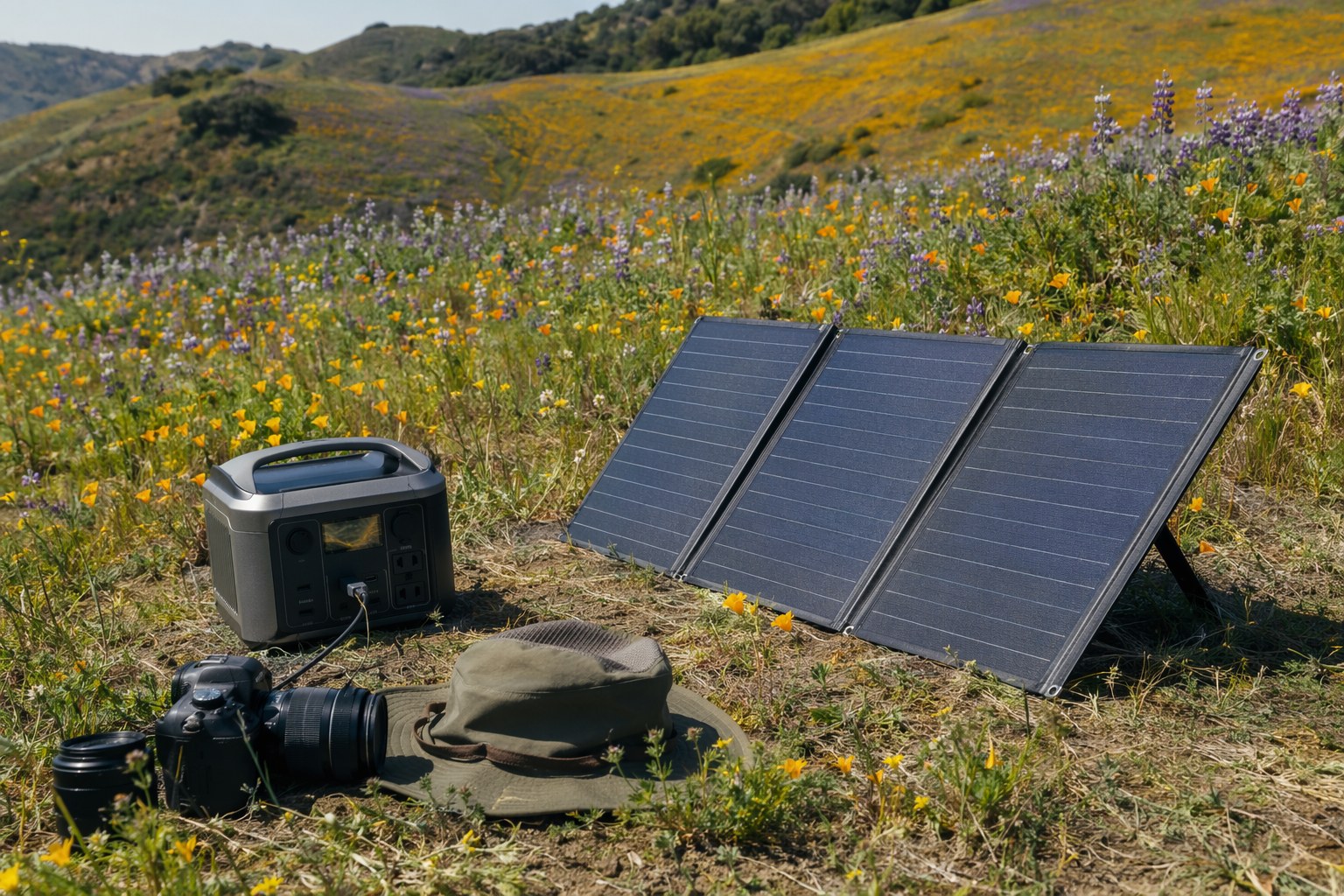
Extend with solar on long days. A foldable 100-200W panel angled at the sun can replenish 300-500Wh across a bright afternoon, which often covers a full day’s consumption for a stills-plus-drone kit. For multi-day flower-festival road trips, this turns a finite battery into an effectively unlimited one.
Festivals and Events: A Slightly Different Problem
Shooting a staffed flower festival or a vendor booth is a different load profile than a quiet super bloom. Now you might be running a small printer for instant prints, a card-reader terminal, a fan, or a string of LED display lights at a booth. These are continuous low-wattage loads rather than short charging bursts.
For booth duty, capacity per hour matters more than peak output. A 1,000Wh station running a 40W laptop, a 20W card terminal, and intermittent phone charging will comfortably cover a six-to-eight-hour event with the inverter on the whole time. If you are also a content creator capturing the event for social, the same gear logic applies, and our guide to portable power for content creators covers the streaming and multi-camera side in depth.
The one trap to avoid: do not plug a resistive heat load like a coffee maker or space heater into a 1,000Wh station and expect it to last. A 1,000W kettle empties a 1,000Wh battery in about an hour, minus inverter losses. Heat-producing appliances are the enemy of small batteries, full stop.
Frequently Asked Questions
Do I really need a station, or is a power bank enough? For a single-body stills kit, a 100Wh power bank that charges your camera over USB-C is genuinely enough for most full days. The moment you add a laptop or a drone, the math tips toward a 500-1,000Wh station.
Will cold mornings hurt my battery? LiFePO4 packs lose usable capacity below freezing and most refuse to charge below 32F (0C) to protect the cells, though they will still discharge. For early super-bloom mornings, keep the unit insulated and let it warm before charging.
How do I keep pollen out of the ports? Pollen is fine dust and it loves charging ports and fan intakes. Carry a small blower bulb, blow the ports clear at the end of each day, and store the unit in a closed bag rather than open in the truck bed.
The Bottom Line
Wildflower photography rewards patience and punishes dead batteries, and the fix is not the biggest battery you can carry, it is the right one used efficiently. Run a USB-C power bank for a lightweight stills kit, step up to a 1,000Wh LiFePO4 station like the Anker SOLIX C1000 or EcoFlow DELTA 2 when you add a drone and a laptop, charge directly over DC whenever your gear allows, and keep the unit shaded. Do that and the only thing limiting your day will be the light, which is exactly how it should be.
Recommended Power Stations
EcoFlow
EcoFlow DELTA 3 Plus
EcoFlow's newest mid-range flagship. The DELTA 3 Plus improves on the Delta 2 with faster charging, LiFePO4 chemistry, and UPS functionality — all at a lower price.
Frequently Asked Questions
How much power do I need for a full day of wildflower photography?
Plan for 300-600Wh for a solo shooter and 800-1,200Wh if you add a laptop and a drone. A typical mirrorless camera battery holds 10-16Wh, so charging four to six of them over a day is only 60-100Wh. The big consumers are the laptop (45-90W while charging) and drone batteries (40-90Wh each). A 1,024Wh station like the Anker SOLIX C1000 covers a full day with margin; a 300Wh power bank covers a lightweight camera-and-phone kit.
Can I charge my mirrorless camera directly from a power bank without the wall charger?
Usually yes. Most current Sony A7, Canon R, Nikon Z, and Fujifilm X bodies accept USB-C Power Delivery and will charge the in-body battery from any 18W+ PD port. This is more efficient than running the AC wall charger through a station's inverter, because you skip the DC-to-AC-to-DC conversion losses, which typically cost 8-15%. Older cameras with proprietary chargers need an AC outlet, which any power station provides.
Is it safe to leave a power station in a hot field in direct sun?
It works, but it is not ideal. LiFePO4 and NMC cells both lose efficiency and trigger thermal throttling above roughly 95-104F (35-40C), and prolonged heat accelerates calendar aging. Keep the unit in shade under your camera bag, a hat, or the open trunk, and leave the ventilation fans unobstructed. Charging generates the most heat, so charge in the morning cool rather than at midday.
Ready to Buy? Here's What We Recommend
Based on our testing and this guide, these are the best options for most people: