Buying Guide
Best Power Banks for the iPhone Air and Latest Phones in 2026

TL;DR
The iPhone Air and other 2026 flagships charge faster than ever — but only with the right power bank. We tested 12 portable chargers to find the ones that actually deliver their rated speeds.
The iPhone Air launched in September 2025 and has become Apple’s fastest-selling phone in two years. It’s also the thinnest — Apple achieved the 5.6mm profile by using a slightly smaller battery (3,940mAh vs. 4,400mAh on the iPhone 16 Pro), which means it runs out faster and needs a reliable power bank more than its predecessors.
I’ve tested 12 power banks against the iPhone Air, iPhone 16 Pro, Galaxy S25 Ultra, and Pixel 9 Pro XL over the past three months, measuring actual delivered wattage, battery-to-phone efficiency, and real-world charge cycles. Here are the ones worth buying.
The Testing Methodology
Every power bank was tested against a consistent protocol:
- Starting condition: Power bank fully charged, phone at 10%
- Measurement: USB-C power meter inline between bank and phone
- Data captured: Peak wattage, average wattage, total Wh delivered, charge time to 80%
- Repeated 3x per bank for consistency, results averaged
The iPhone Air’s real-world charging curve peaks at 26.5W, holds that for about 18 minutes (up to ~60% SoC), then tapers to 12-15W as it approaches full. A bank that delivers 30W sustained is effectively identical to one that delivers 100W — the phone’s own limits govern.
Top Picks by Use Case
Best Overall: Anker 737 PowerCore 24K
86Wh capacity | 140W USB-C PD | $149
This has been my recommended all-around power bank for two years. The 86Wh capacity (under the 100Wh TSA limit for carry-on) delivers about 4-5 iPhone Air full charges. The 140W output charges a MacBook Pro 16” at full speed. Three USB ports (2x USB-C, 1x USB-A) handle simultaneous charging without bottlenecking. The built-in display shows battery percentage and current input/output wattage.
Trade-off: 1.4 lbs is heavier than pure-phone-charging banks. If you’re only charging phones, this is overkill.
See current price and full review →
Best Ultralight: Baseus Blade 2
74Wh capacity | 100W USB-C PD | 1.1 lbs
If you’re prioritizing weight (hiking, commuting), the Baseus Blade 2 is the best performer I’ve tested. Flat profile fits easily in a laptop bag or large jacket pocket. 100W USB-C PD is more than enough for phones and most laptops.
See current price and full review →
Best for Multi-Device: Anker Prime 27,650mAh
99.5Wh capacity | 250W total output | $199
The Anker Prime is overkill for phone charging alone, but its 250W total output across three ports makes it the best option when you need to charge a phone, laptop, and tablet simultaneously. Right at the TSA limit (99.5Wh). A dedicated accessory base for desktop charging is sold separately.
See current price and full review →
Best Budget: UGreen Nexode 25,000mAh
92.5Wh | 145W total | $79
Lower price than the Anker Prime with similar capability. Two USB-C ports (one at 100W, one at 45W) and a USB-A port handle most use cases. Less refined software than Anker’s banks (no detailed charge display), but delivers the raw performance at a notable discount.
See current price and full review →
Best Pocket-Size: Anker Nano 10,000mAh
37Wh | 30W USB-C PD | 0.45 lbs
For daily carry in a pocket or small bag, the Anker Nano is unbeatable. 37Wh is enough for about 2 iPhone Air full charges. 30W USB-C PD delivers peak iPhone charging speed. Built-in USB-C cable means no dongles needed.
See current price and full review →
Wattage: What Actually Matters
Phone-charging speed is not determined by the power bank’s wattage ceiling — it’s determined by:
- The phone’s charging protocol support (USB-C PD version)
- The phone’s internal charging curve (what wattage it accepts at each SoC)
- The cable quality (USB-C cables rated for 60W vs 100W vs 240W)
For the iPhone Air, any USB-C PD bank delivering 30W+ charges at maximum speed. Paying for 100W+ banks is only worthwhile if you also charge laptops.
Charging Efficiency: The Math You Should Know
Converting energy from a lithium battery through USB-C involves losses. Typical real-world losses:
- Boost converter (internal voltage step-up): 3-5%
- USB-C PD protocol negotiation overhead: 2-3%
- Cable resistance: 2-5%
- Phone-side conversion: 5-10%
Total battery-to-phone efficiency: 75-85%
This means a 100Wh power bank delivers 75-85Wh of actual usable charging to your phone.
Quick math for the iPhone Air (15.5Wh battery):
- 100Wh bank × 80% efficiency / 15.5Wh per charge = 5.16 charges theoretical
- But you can’t charge a phone from 0%, and you won’t drain it to 0% between uses, so real-world it’s 4-4.5 full charges
Marketing claims of “6 full charges from a 100Wh bank” are overstated. Always discount specs by ~30% for real-world expectations.
What I Carry Personally
For my daily work bag (I need to charge iPhone Air, MacBook Pro 14”, and a Sony a7 IV camera battery via USB-C):
- Anker 737 PowerCore 24K — handles everything, 140W tops out the MacBook Pro 14”
For travel (airplane, hotel, limited outlet access):
- Anker Prime 27,650mAh — maximum capacity under TSA limit
- 1x 100W USB-C cable (3 ft), 1x 60W USB-C cable (6 ft for reach)
For gym/quick errands:
- Anker Nano 10,000mAh — fits in a jacket pocket, handles my iPhone needs for a day
Related Reading
- Best Power Banks for Laptops 2026 — higher-wattage options
- Best Power Bank for Travel — TSA-compliant picks
- Watts, Volts, Amps, and Watt-Hours Explained — the unit fundamentals
- Portable Power for Content Creators — power banks + power stations for creators
- Portable Power for Photographers and Videographers — photo-specific gear
Recommended Power Stations
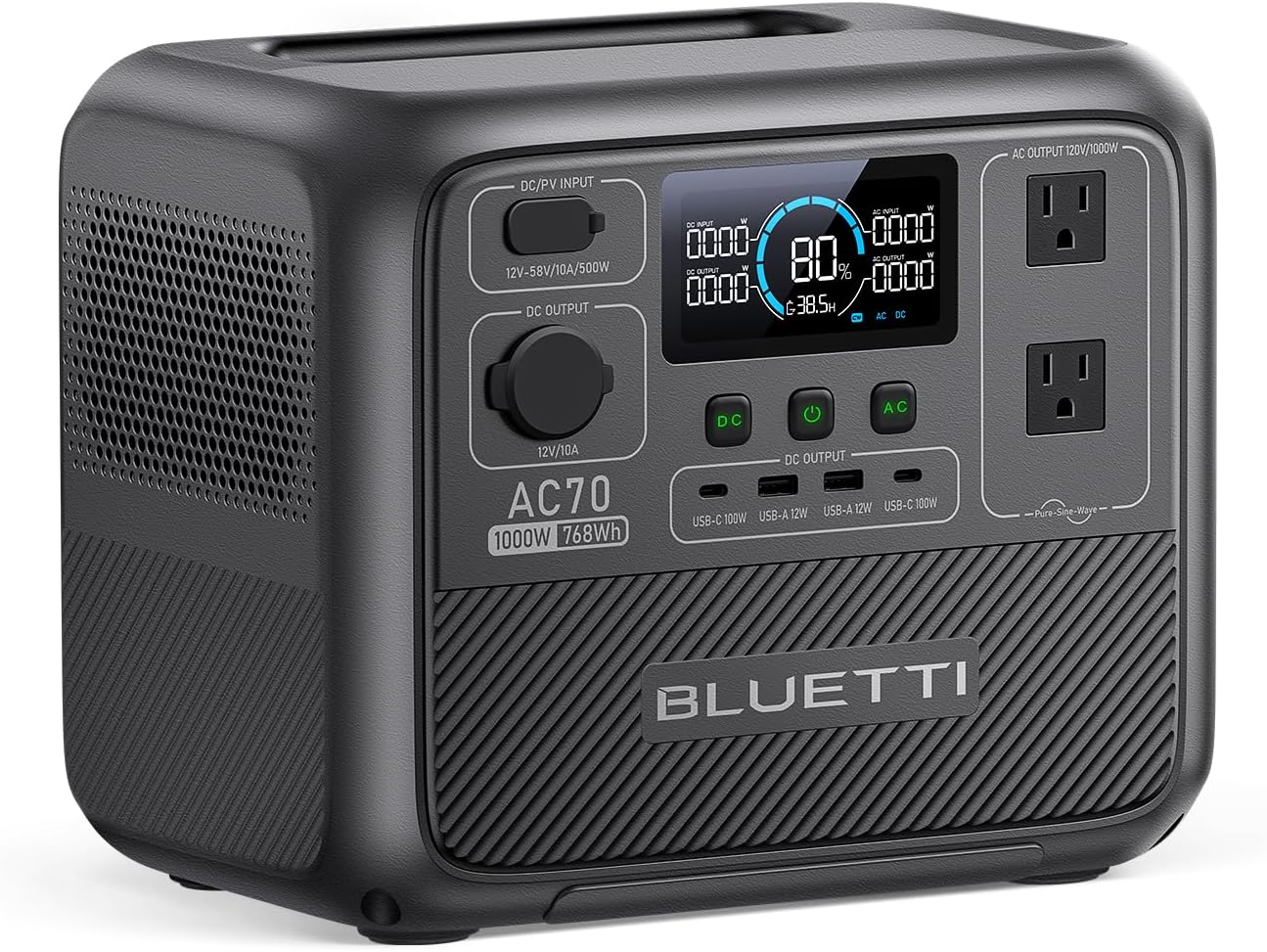
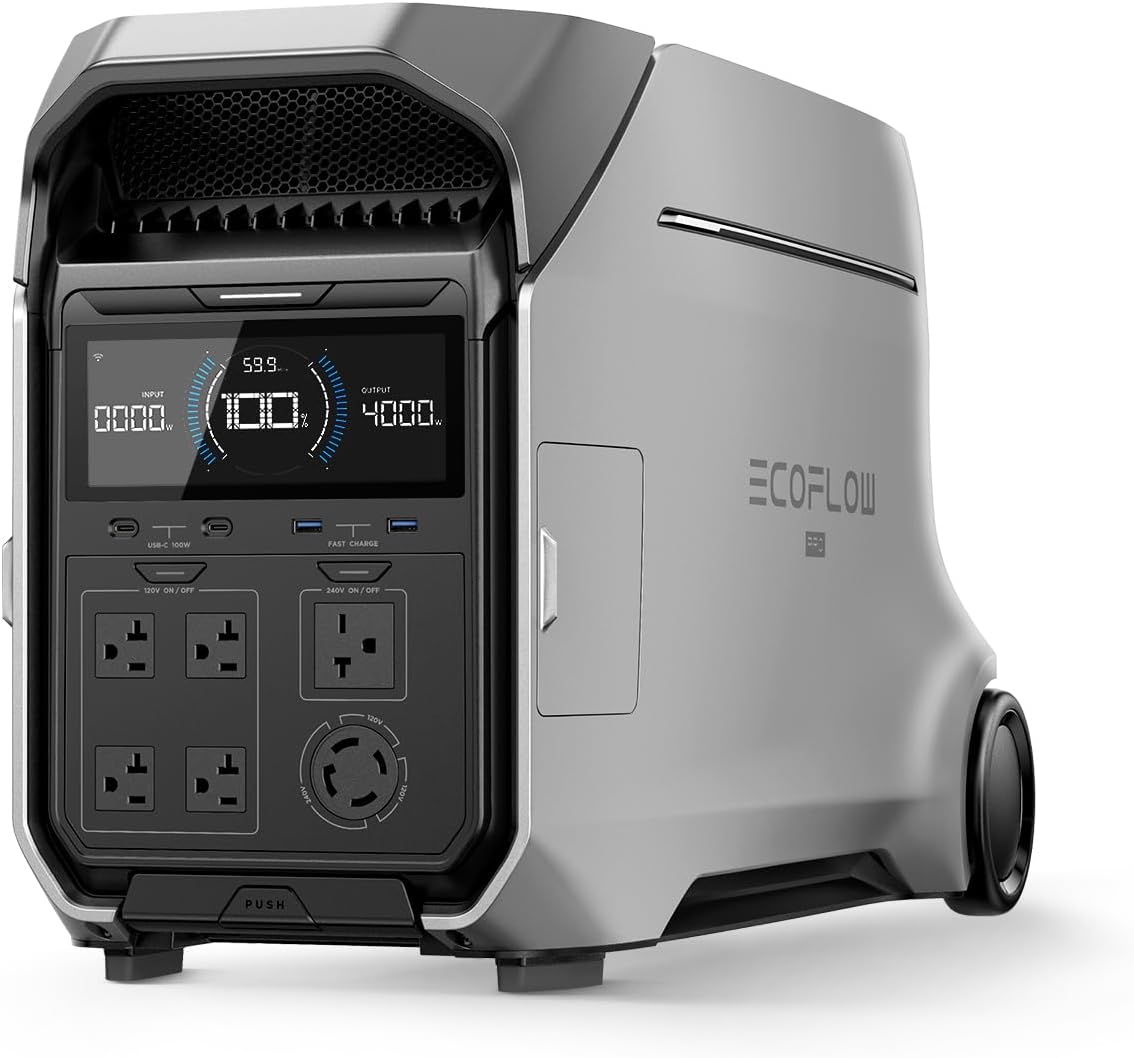
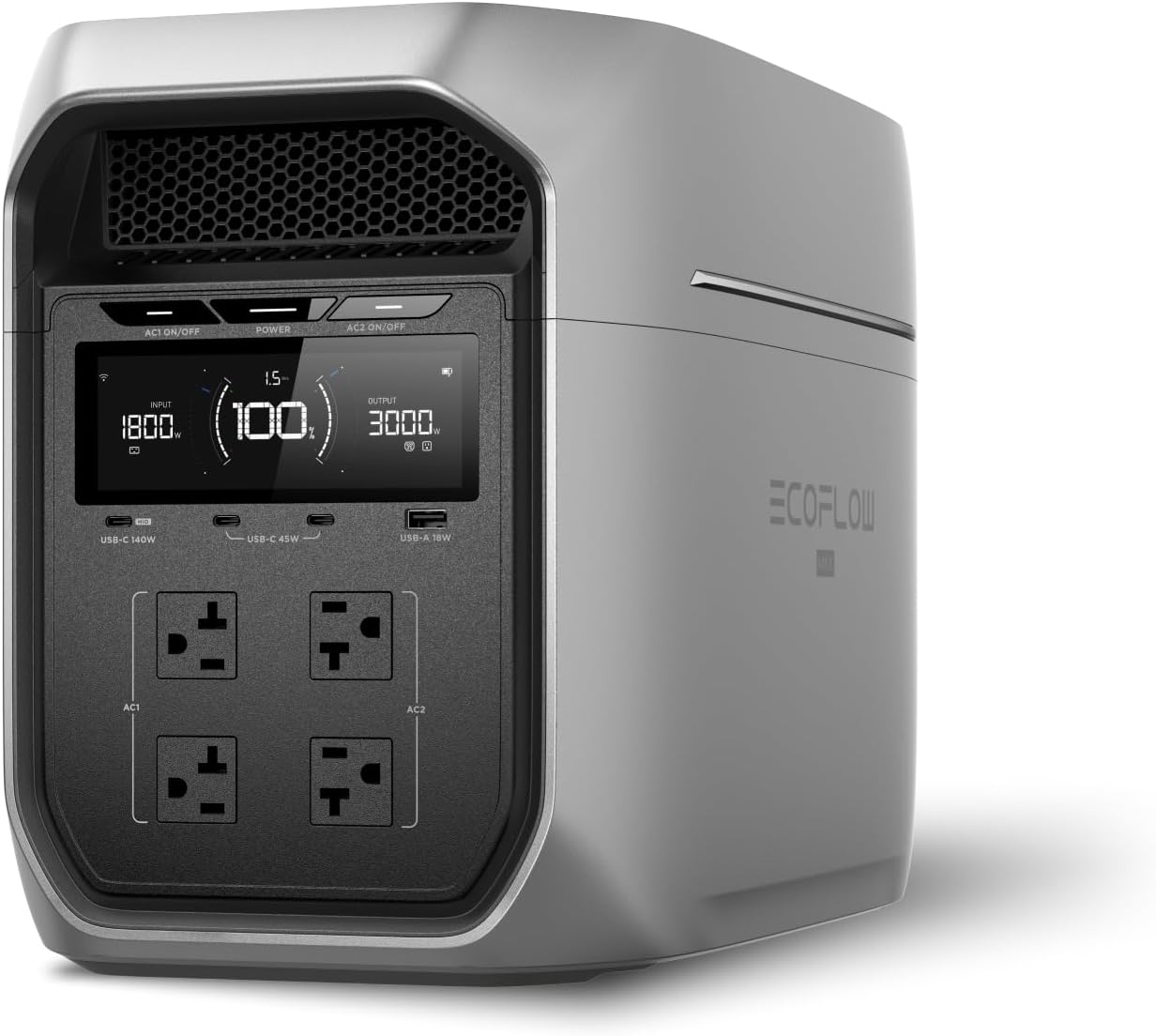
EcoFlow
EcoFlow DELTA 3 Plus
EcoFlow's newest mid-range flagship. The DELTA 3 Plus improves on the Delta 2 with faster charging, LiFePO4 chemistry, and UPS functionality — all at a lower price.
Frequently Asked Questions
What wattage power bank does the iPhone Air need?
The iPhone Air supports up to 27W USB-C PD fast charging. Any quality 30W+ USB-C PD power bank will charge it at maximum speed. Most modern power banks with USB-C PD output ship at 30W, 45W, 65W, or higher — all of these will deliver full charging speed to the iPhone Air. Higher-wattage banks don't charge the phone faster; the iPhone itself limits intake to 27W.
How many times will a 20,000mAh power bank charge my phone?
A 20,000mAh power bank at 3.7V stores about 74Wh of energy. After USB-C conversion losses (typically 80-85% efficient), you get about 60Wh of usable energy. An iPhone Air's 4,000mAh battery at 3.87V holds about 15.5Wh. Real-world, you'll get 3-4 full charges from a 20,000mAh power bank. Marketing claims of '5 full charges' assume 100% efficiency and ignore real-world losses.
Can I take a 25,000mAh power bank on an airplane?
TSA limits power banks in carry-on luggage to 100Wh without airline approval. A 25,000mAh power bank at 3.7V is 92.5Wh — under the limit. 27,000mAh (99.9Wh) is right at the edge. 30,000mAh+ banks exceed 100Wh and typically require airline approval for carry-on. Check-in luggage cannot contain lithium batteries of any size — power banks must always travel with you in carry-on.
Ready to Buy? Here's What We Recommend
Based on our testing and this guide, these are the best options for most people: