Guide
How Lithium Batteries Work: The Science Behind Your Power Station

TL;DR
Understand the chemistry inside your portable power station. We explain how lithium-ion and LiFePO4 batteries store and release energy, why they degrade, and what affects their lifespan — in plain English.
You plug in your phone and it charges. You press a button on your power station and it runs your fridge. But what’s actually happening inside that metal box? Understanding the basics of lithium battery chemistry will help you make smarter purchasing decisions, maintain your power station properly, and know why some batteries last years longer than others.
The Basic Principle: Shuttling Ions
Every lithium battery works on the same fundamental concept: lithium ions move back and forth between two electrodes through a liquid electrolyte.
When you charge the battery: Electrical energy forces lithium ions from the cathode (positive side) through the electrolyte to the anode (negative side). The ions are stored in the anode’s molecular structure, like guests checking into a hotel.
When you discharge the battery: Those lithium ions naturally want to flow back to the cathode. As they do, they release the stored energy as electrical current that powers your devices.
This back-and-forth movement is why it’s called a “rocking chair” battery — ions rock between two sides, storing and releasing energy with each cycle.
The Two Chemistries: NMC vs. LiFePO4
Not all lithium batteries are created equal. The two types you’ll encounter in power stations differ in one critical component: the cathode material.
Li-NMC (Lithium Nickel Manganese Cobalt Oxide)
Cathode formula: LiNiMnCoO₂
NMC was the dominant chemistry in power stations until recently. It packs more energy into less space and weight — which is why your smartphone and laptop use it.
Strengths:
- Higher energy density (more Wh per pound)
- Lighter and more compact
- Well-suited for devices where weight matters most
Weaknesses:
- Shorter cycle life (500–2,500 cycles to 80% capacity)
- More sensitive to heat
- Higher risk of thermal runaway
- Contains cobalt (ethical mining concerns)
Found in: Older Jackery models, some budget power stations, most consumer electronics
LiFePO4 (Lithium Iron Phosphate)
Cathode formula: LiFePO₄
LiFePO4 has become the gold standard for power stations. The iron phosphate cathode has a stable olivine crystal structure that resists the physical degradation that kills NMC batteries.
Strengths:
- 3,000–6,000+ cycle life (3-10x longer than NMC)
- Extremely stable — resistant to thermal runaway up to 270°C
- Flat discharge curve (consistent voltage until nearly empty)
- No cobalt — more ethical and cheaper to produce
- Better performance in high temperatures
Weaknesses:
- Lower energy density (heavier for the same capacity)
- Slightly lower voltage per cell (3.2V vs 3.7V)
- Reduced performance in extreme cold (below freezing)
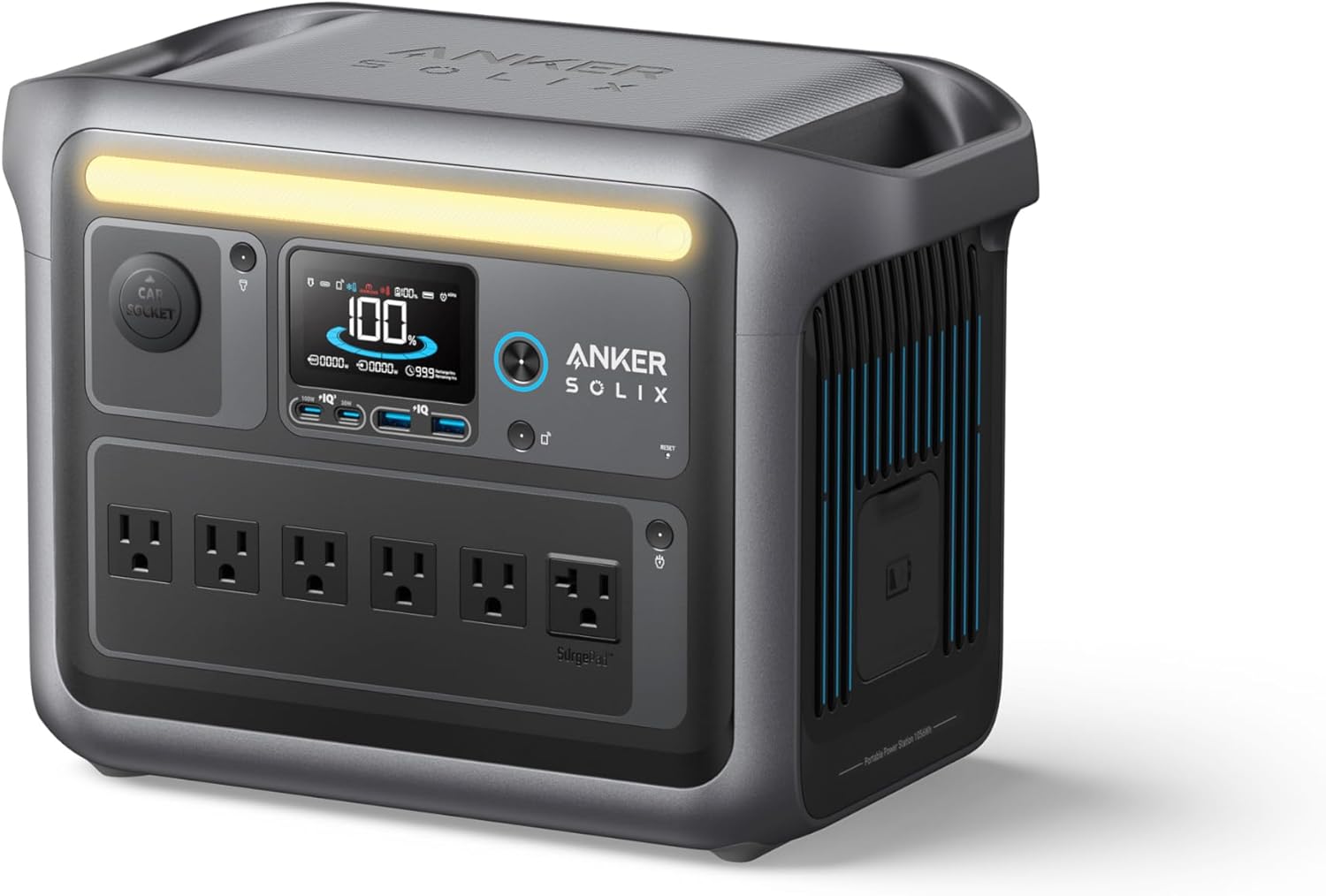
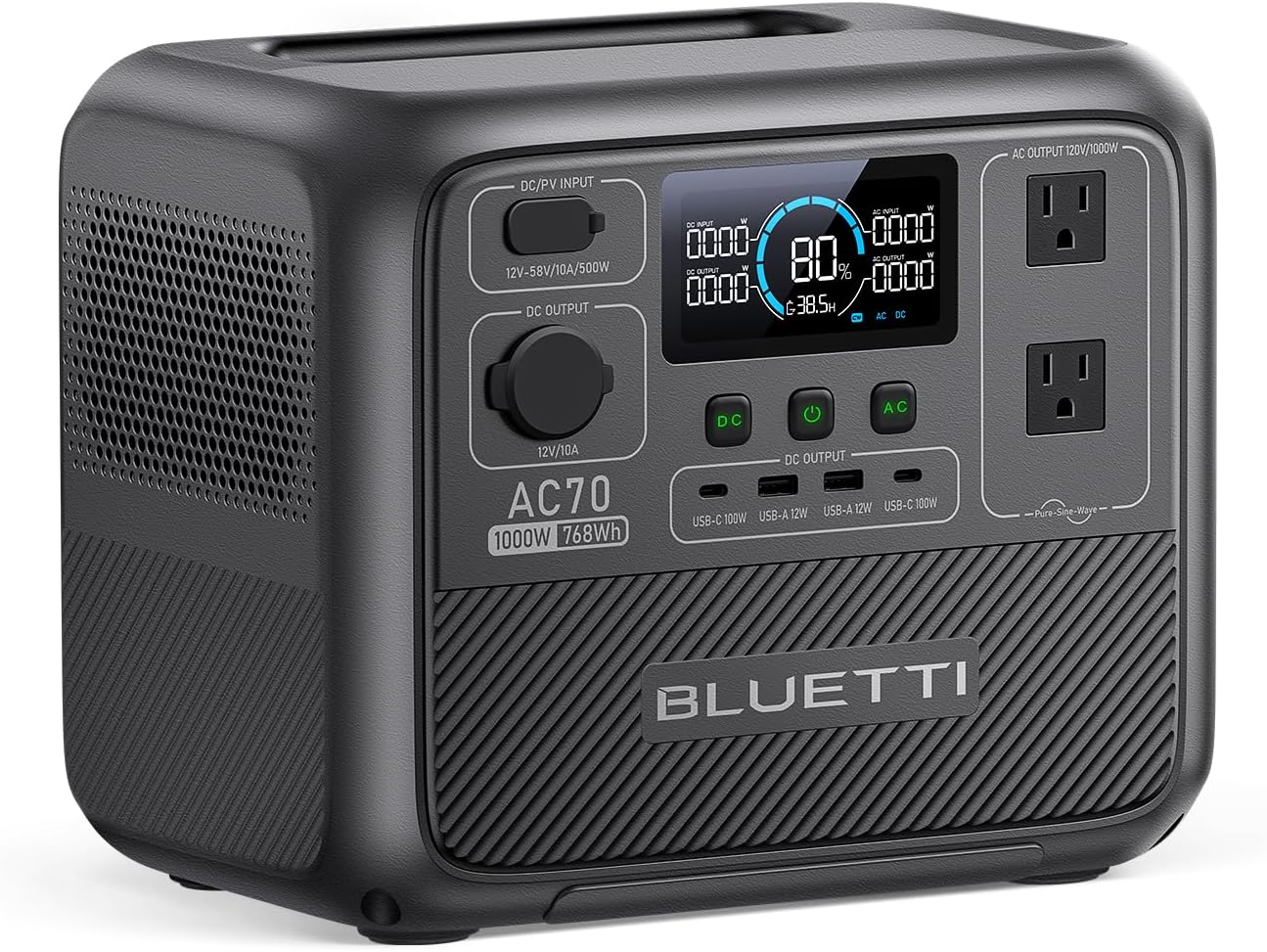
Found in: EcoFlow DELTA 3 Plus, Bluetti AC70, Anker SOLIX C1000, and virtually every new power station released in 2025-2026.
For a detailed comparison of how these two chemistries affect your buying decision, see our LiFePO4 vs NMC batteries guide.
The Battery Management System (BMS): Your Battery’s Brain
Raw lithium cells are dangerous. They can overcharge, over-discharge, overheat, and fail catastrophically without protection. That’s where the Battery Management System comes in.
Every quality power station contains a BMS circuit board that continuously monitors and manages:
- Cell voltage balancing — Ensures all cells charge and discharge evenly. Without balancing, one weak cell can drag down the entire pack or become a safety hazard.
- Overcharge protection — Cuts off charging current when cells reach maximum safe voltage (typically 3.65V per cell for LiFePO4).
- Over-discharge protection — Shuts down output before cells drop below minimum safe voltage (typically 2.5V per cell), preventing permanent damage.
- Temperature monitoring — Reduces or stops operation if cells get too hot or too cold.
- Short circuit protection — Instantly cuts power if a short circuit is detected.
- Current limiting — Prevents excessive current draw that could damage cells or cause overheating.
The quality of the BMS is one of the biggest differences between budget and premium power stations. A cheap BMS might protect against basic faults but lack sophisticated cell balancing, which means the battery pack degrades unevenly and loses capacity faster. Premium brands like EcoFlow, Bluetti, and Anker invest heavily in their BMS designs — it’s part of what you’re paying for.
Why Batteries Degrade: The Chemistry of Aging
No battery lasts forever. Here’s what’s actually happening inside as your power station ages:
SEI Layer Growth
The first time a lithium battery is charged, a thin film called the Solid Electrolyte Interface (SEI) forms on the anode surface. This layer is actually beneficial — it allows lithium ions through while blocking electrons, preventing unwanted chemical reactions.
But the SEI layer keeps growing with each charge cycle, gradually getting thicker. A thicker SEI means:
- More lithium ions get permanently trapped in the layer
- Internal resistance increases (less efficient charging/discharging)
- Available capacity decreases
This is the primary aging mechanism in lithium batteries and happens regardless of how carefully you treat them.
Mechanical Stress
As lithium ions insert and extract from electrode particles, those particles expand and contract — by up to 10% in graphite anodes. Over thousands of cycles, this repeated swelling creates microscopic cracks in the electrode material.
These cracks:
- Expose fresh electrode surface to the electrolyte (creating more SEI)
- Can electrically isolate portions of the electrode
- Reduce the amount of active material available for energy storage
LiFePO4 cathodes experience minimal volume change during cycling (~2% vs. ~8% for NMC), which is the primary reason they last so much longer.
Lithium Plating
If you charge a lithium battery too fast in cold temperatures, lithium ions can’t insert into the anode quickly enough and instead deposit as metallic lithium on the surface. This “plating” permanently removes lithium from circulation and, in severe cases, can form dendrites (needle-like structures) that short-circuit the cell.
This is why most power stations reduce or disable charging below freezing temperatures.
Practical Takeaways: How to Make Your Battery Last
Understanding the chemistry leads to clear best practices:
1. Avoid Extreme Temperatures
Heat accelerates SEI growth exponentially. Storing your power station in a hot car or garage during summer can age the battery faster than actual use. Ideal storage temperature is 50-77°F (10-25°C). Our power station maintenance guide covers seasonal storage in detail.
2. Don’t Store at 100% or 0% Charge
High state-of-charge accelerates degradation. If you’re not using your power station for more than a few weeks, store it between 50-80% charge. Most modern units like the EcoFlow DELTA 3 Plus and Bluetti Elite 200 V2 have storage mode settings that handle this automatically.
3. Shallow Cycles Are Gentler
Using 50% of the battery and recharging causes less wear per cycle than draining to 0% every time. You’ll get more total energy throughput over the battery’s lifetime with shallower cycles.
4. Charge at Moderate Speeds When Possible
Fast charging generates more heat and creates more mechanical stress. When you’re not in a hurry, using a slower charge rate (wall outlet vs. fast-charge mode) extends battery life. Save the turbo/fast charging for when you actually need it.
5. Choose LiFePO4 for Longevity
If maximizing battery lifespan is a priority, LiFePO4 is the clear winner. A LiFePO4 station rated for 3,000 cycles will still hold 80% capacity after 8+ years of daily use. Our best portable power stations guide focuses exclusively on LiFePO4 models for this reason.
The Future: What’s Coming Next
Battery technology is advancing rapidly. Here’s what’s on the horizon:
Solid-state batteries replace the liquid electrolyte with a solid material, eliminating the risk of leaks and thermal runaway while potentially doubling energy density. Several manufacturers have announced solid-state power stations for 2027-2028. We cover the latest developments in our solid-state vs LiFePO4 guide.
Sodium-ion batteries use abundant sodium instead of lithium, promising lower costs and better cold-weather performance. They’re already appearing in some Chinese power stations and could reach US markets within 1-2 years.
Silicon anodes replace graphite with silicon, which can hold 10x more lithium ions per unit weight. The challenge is managing silicon’s massive volume change during cycling (300%+), but several companies have developed silicon composite anodes that are beginning to appear in production cells.
The Bottom Line
Your power station is a marvel of electrochemistry — thousands of carefully manufactured cells, managed by sophisticated electronics, converting chemical energy to electrical energy and back again with over 90% efficiency. Understanding how it works won’t just satisfy your curiosity; it’ll help you choose the right battery chemistry, maintain your investment properly, and set realistic expectations for how long it will last.
Related Reading
- LiFePO4 vs NMC Batteries — which chemistry is right for your needs
- How Long Do Power Stations Last? — real-world lifespan data
- Power Station Maintenance Tips — maximize your battery’s life
- Solid-State vs LiFePO4 Batteries — the next generation of battery tech
- Are Portable Power Stations Worth It? — cost analysis and ROI breakdown
Recommended Power Stations
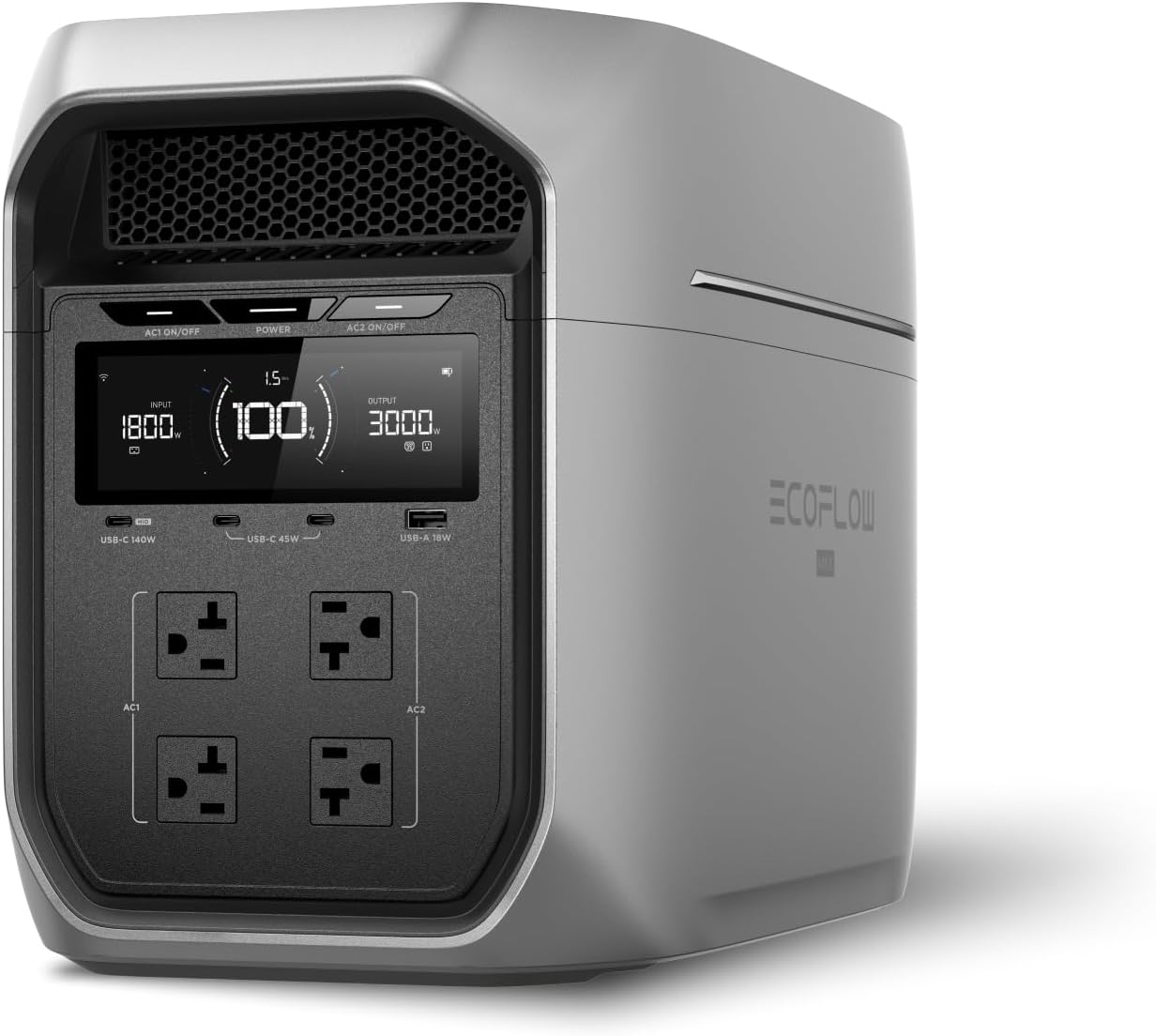
EcoFlow
EcoFlow DELTA 3 Plus
EcoFlow's newest mid-range flagship. The DELTA 3 Plus improves on the Delta 2 with faster charging, LiFePO4 chemistry, and UPS functionality — all at a lower price.
Frequently Asked Questions
Why do lithium batteries lose capacity over time?
Every charge cycle causes tiny physical changes inside the battery. Lithium ions get trapped in the electrode material, the solid electrolyte interface (SEI) layer thickens, and microscopic cracks form in electrode particles. These changes gradually reduce the amount of lithium available to shuttle back and forth, which means less stored energy. LiFePO4 batteries resist this degradation better than Li-NMC because their crystal structure (olivine) is more mechanically stable.
Can you overcharge a lithium battery?
Modern power stations have a Battery Management System (BMS) that prevents overcharging by cutting off current when the battery reaches full voltage. However, keeping a lithium battery at 100% charge for extended periods does accelerate degradation. If you won't use your power station for weeks, store it at 50-80% charge for maximum longevity.
What is thermal runaway in lithium batteries?
Thermal runaway occurs when a battery cell overheats and triggers a self-sustaining chemical reaction that produces more heat, potentially causing fire or explosion. LiFePO4 batteries are significantly more resistant to thermal runaway than Li-NMC — they remain stable up to 270°C (518°F) compared to 150°C (302°F) for NMC. This is why LiFePO4 is considered the safer chemistry for consumer power stations.
What does depth of discharge mean for battery life?
Depth of discharge (DoD) is how much of the battery's capacity you use before recharging. Using 100% of the capacity (deep cycling) stresses the battery more than shallow cycling. For example, discharging to 80% and recharging (20% DoD) causes far less wear than draining to 0% (100% DoD). Most cycle life ratings assume 80-100% DoD, so real-world lifespan is often longer than specs suggest if you don't fully drain it every time.
Ready to Buy? Here's What We Recommend
Based on our testing and this guide, these are the best options for most people: