Guide
How Solar Panels Work: A Beginner's Guide to Portable Solar Power

TL;DR
Learn how solar panels convert sunlight to electricity, what affects their efficiency, how to pair them with power stations, and how to maximize solar charging in real-world conditions.
Solar panels seem almost magical — point them at the sun and electricity comes out. But understanding how they actually work helps you set realistic expectations, optimize your setup, and avoid common mistakes that waste money and sunlight. Here’s everything you need to know about portable solar power for power stations.
The Photovoltaic Effect: Sunlight to Electricity
Solar panels convert light into electricity through the photovoltaic effect, discovered in 1839 by French physicist Edmond Becquerel. Here’s how it works in modern silicon solar cells:
Step 1: Light Hits the Silicon
Solar cells are made from thin wafers of crystalline silicon, the same element used in computer chips. Silicon is a semiconductor — it doesn’t conduct electricity naturally, but it can be engineered to.
Each solar cell contains two layers of silicon with different electrical properties:
- N-type layer (top): Silicon doped with phosphorus, giving it extra electrons
- P-type layer (bottom): Silicon doped with boron, creating “holes” (electron vacancies)
Where these two layers meet is the P-N junction — this is where the magic happens.
Step 2: Photons Knock Electrons Loose
When photons (particles of light) strike the silicon, they transfer their energy to electrons in the crystal lattice. If a photon has enough energy, it knocks an electron free from its atomic bond, creating a free electron and a hole.
Not all light works equally well. Infrared photons don’t have enough energy to free electrons. Ultraviolet photons have too much — the excess converts to waste heat. Visible light is the sweet spot, which is why solar panel efficiency has a theoretical maximum (the Shockley-Queisser limit of ~33% for single-junction silicon cells).
Step 3: The Electric Field Pushes Electrons
The P-N junction creates a built-in electric field. When electrons are knocked loose near this junction, the electric field pushes them toward the N-type layer and pushes holes toward the P-type layer. This separation of charges creates a voltage — about 0.5-0.6 volts per cell.
Step 4: Metal Contacts Collect the Current
Thin metal conductors printed on the cell’s surface collect the flowing electrons and channel them into an external circuit — where they do useful work (charging your power station) before returning to the cell to complete the cycle.
A typical portable solar panel contains 36-72 individual cells wired in series to boost the voltage to a useful level (typically 18-40V open circuit voltage for portable panels).
Types of Portable Solar Panels
Monocrystalline (Most Common for Power Stations)
Cut from a single continuous crystal of silicon, these cells have a uniform dark appearance and offer the highest efficiency (20-24%). Nearly every quality portable solar panel — from EcoFlow, Jackery, and Bluetti — uses monocrystalline cells.
Why monocrystalline dominates portable solar: When you’re limited on space (a campsite, rooftop, or balcony), higher efficiency means more power from a smaller panel. The cost premium over polycrystalline is minimal at portable panel sizes.
PERC and HJT: Advanced Monocrystalline
Many 2025-2026 portable panels use advanced cell architectures:
- PERC (Passivated Emitter and Rear Cell): Adds a reflective layer behind the cell to capture photons that pass through, boosting efficiency by 1-2%.
- HJT (Heterojunction): Combines crystalline and amorphous silicon layers for better low-light performance and lower temperature coefficient. These panels lose less output in hot conditions.
Thin-Film (CIGS/Amorphous)
Flexible, lightweight panels that can roll up or conform to curved surfaces. Lower efficiency (10-15%) but useful for backpacking or mounting on curved RV roofs. Less common for power station charging due to lower output per square foot.
Real-World Solar Performance: What to Actually Expect
Solar panel ratings are measured under Standard Test Conditions (STC): 1,000 W/m² irradiance, 25°C cell temperature, air mass 1.5. In the real world, you’ll rarely hit these perfect conditions. Here’s what to realistically expect:
The 50-80% Rule
A 200W-rated panel will typically produce 100-160W in real-world conditions. Plan your system using 60-70% of rated wattage as your baseline expectation.
Factors that reduce output:
- Angle of incidence — Panels produce maximum power when aimed directly at the sun. A panel lying flat in the morning or evening receives light at an angle, reducing output by 20-50%.
- Temperature — Solar cells lose efficiency as they heat up. Most panels have a temperature coefficient of -0.3% to -0.5% per °C above 25°C. On a hot summer day with cell temperatures of 65°C, a panel loses 12-20% of its rated output.
- Atmospheric conditions — Humidity, haze, altitude, and air pollution all reduce the intensity of sunlight reaching the panel.
- Partial shading — Even a small shadow across one cell can dramatically reduce output for the entire panel. Many panels have bypass diodes to mitigate this, but shading remains a major performance killer.
Peak Sun Hours by Region
“Peak sun hours” (PSH) represent the equivalent number of hours at 1,000 W/m² of irradiance per day. This is the most useful metric for estimating daily solar energy production.
| Region | Annual Avg PSH | Summer PSH | Winter PSH |
|---|---|---|---|
| Southwest US (AZ, NV, NM) | 6.0-7.0 | 7.5-8.5 | 4.5-5.5 |
| Southeast US (FL, TX, GA) | 4.5-5.5 | 6.0-7.0 | 3.5-4.5 |
| Midwest US (IL, OH, MN) | 3.5-4.5 | 5.5-6.5 | 2.0-3.0 |
| Northeast US (NY, MA, PA) | 3.5-4.5 | 5.0-6.0 | 2.0-3.0 |
| Pacific NW (WA, OR) | 3.0-4.0 | 5.5-6.5 | 1.5-2.5 |
Example calculation: A 200W panel producing 140W real-world output in the Southeast US (5 PSH average):
- Daily energy: 140W × 5 hours = 700Wh per day
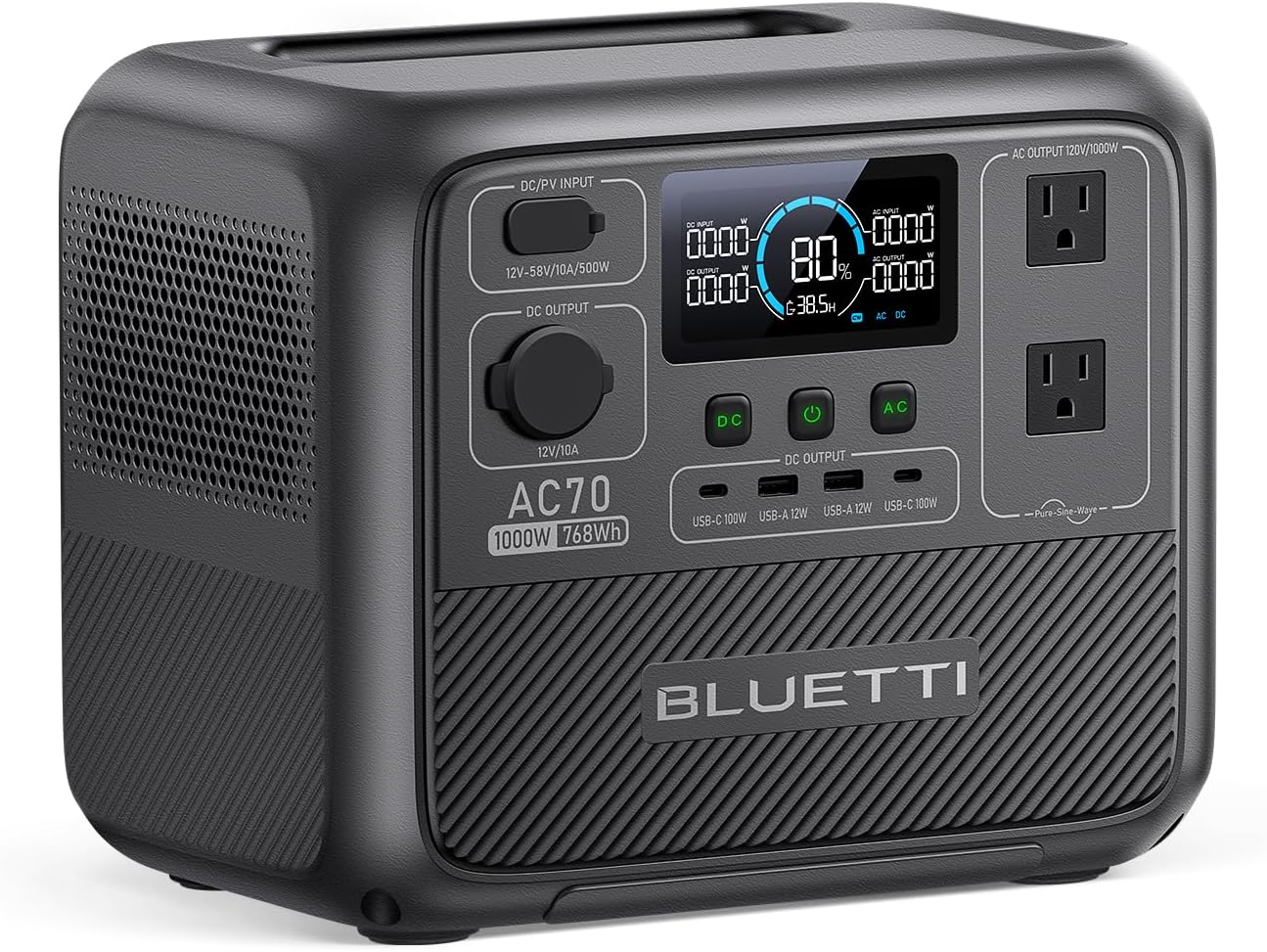
- That’s enough to recharge a Bluetti AC70 (768Wh) in just over one day, or a Jackery Explorer 1000 v2 (1,070Wh) in about 1.5 days.
Pairing Solar Panels with Power Stations
Understanding Solar Input Specs
Every power station has a maximum solar input rating. This is the upper limit — adding more panel wattage beyond this won’t charge faster.
| Power Station | Max Solar Input | Recommended Panel Setup |
|---|---|---|
| EcoFlow RIVER 3 | 110W | 1x 110W panel |
| Bluetti AC70 | 200W | 1x 200W panel |
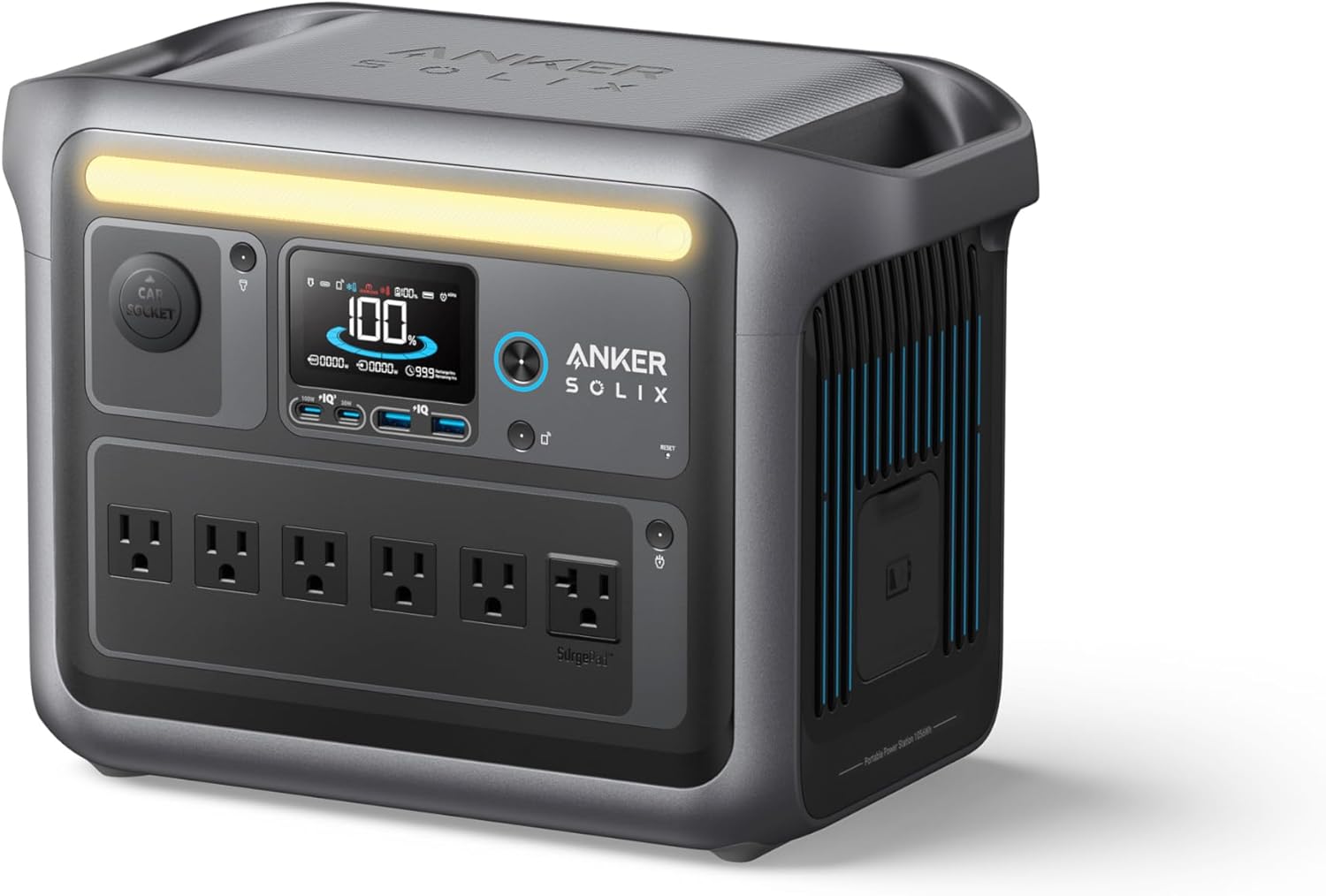
| Anker SOLIX C1000 | 300W | 1-2x 200W panels |
| EcoFlow DELTA 3 Plus | 500W | 2x 220W panels |
| Jackery Explorer 2000 Plus | 600W | 3x 200W panels |
| EcoFlow DELTA Pro 3 | 1,600W | 4-8x 220W panels |
MPPT vs. PWM Charge Controllers
Your power station’s built-in charge controller determines how efficiently it converts solar panel output to stored battery energy.
MPPT (Maximum Power Point Tracking): The standard in quality power stations. MPPT controllers continuously adjust the electrical load to find the voltage/current combination that extracts maximum power from the panel. Efficiency: 95-99%. All EcoFlow, Bluetti, Jackery, and Anker power stations use MPPT.
PWM (Pulse Width Modulation): Simpler and cheaper, but less efficient (70-85%). Found in some budget charge controllers. Not used in any power station we recommend.
Series vs. Parallel Panel Connections
When connecting multiple panels:
Series (daisy chain): Voltages add, current stays the same. Use series when your power station has a high maximum input voltage. Most manufacturer panel-to-panel connections are series.
Parallel (Y-connector): Currents add, voltage stays the same. Use parallel when you need to stay under a voltage limit, or when panels might be partially shaded at different times (parallel prevents one shaded panel from dragging down the others).
Check your power station’s voltage range before connecting panels. Exceeding the maximum input voltage can damage the charge controller. Our solar panel compatibility guide covers specific brand pairings in detail.
Tips for Maximizing Solar Charging
1. Aim Directly at the Sun
The single biggest factor in solar output is panel angle. Adjust your panel throughout the day to face the sun as directly as possible. Many portable panels include adjustable kickstands for this purpose. Even a rough adjustment every 2-3 hours can boost daily output by 20-30% compared to leaving a panel flat on the ground.
2. Avoid Partial Shading
Keep the entire panel in full sun. A shadow covering just one cell in a string can cut that string’s output by 50% or more. Watch for tree branches, tent poles, and your own shadow. Our complete campsite power guide has specific panel placement tips.
3. Keep Panels Cool
Hot panels produce less power. Leave an air gap behind the panel (don’t lay it flat against a dark surface). On very hot days, panels angled upright catch more breeze and run cooler. Some campers drape a wet cloth across the back of their panels on extremely hot days, though this is rarely necessary.
4. Clean the Surface
Dust, pollen, bird droppings, and dew residue reduce output. A quick wipe with a soft cloth before peak sun hours can recover 5-10% of lost output, especially in dusty desert environments.
5. Start Early
Set up your panels early in the morning. Even though early-morning output is lower, every watt-hour counts when you’re trying to fully charge a power station by evening. In summer, you can capture useful energy from 7am to 7pm — that’s 12 hours of charging vs. 6 if you only set up at noon.
Solar Panel Buying Guide: What to Look For
When choosing portable solar panels for your power station:
- Wattage: Match or approach your power station’s maximum solar input. There’s no benefit to exceeding it, but going under means slower charging.
- Connector compatibility: Most power stations use MC4 or proprietary connectors. Check that your panels include the right cable or that adapters are available.
- Weight and portability: Bifold panels are compact but heavier. Trifold or quad-fold panels pack smaller. For backpacking, consider lightweight thin-film options.
- Durability: Look for IP65 or higher water resistance rating if you’ll use panels in variable weather. ETFE-coated panels resist scratches better than PET-laminated ones.
- Warranty: Most quality panels carry 12-24 month warranties. Solar panels have no moving parts and typically outlast the power stations they charge.
Browse our complete best solar panels for power stations guide for specific product recommendations, or see our top solar panel + power station combos for matched sets.
The Bottom Line
Solar panels are a straightforward technology with well-understood performance characteristics. The key to a good solar setup is realistic expectations (plan for 60-70% of rated output), proper panel sizing (match your power station’s solar input), and good field practices (aim at the sun, avoid shade, keep panels clean). With the right setup, solar extends your power station from a finite battery into a renewable energy system that can keep you powered indefinitely.
Related Reading
- Best Solar Panels for Power Stations — our top picks for every budget
- Solar Panel + Power Station Combos 2026 — pre-matched kits
- How to Charge a Power Station with Solar Panels — step-by-step setup
- Solar Panel & Power Station Compatibility Guide — what works with what
- Solar Generator vs. Gas Generator — full comparison
Recommended Power Stations
EcoFlow
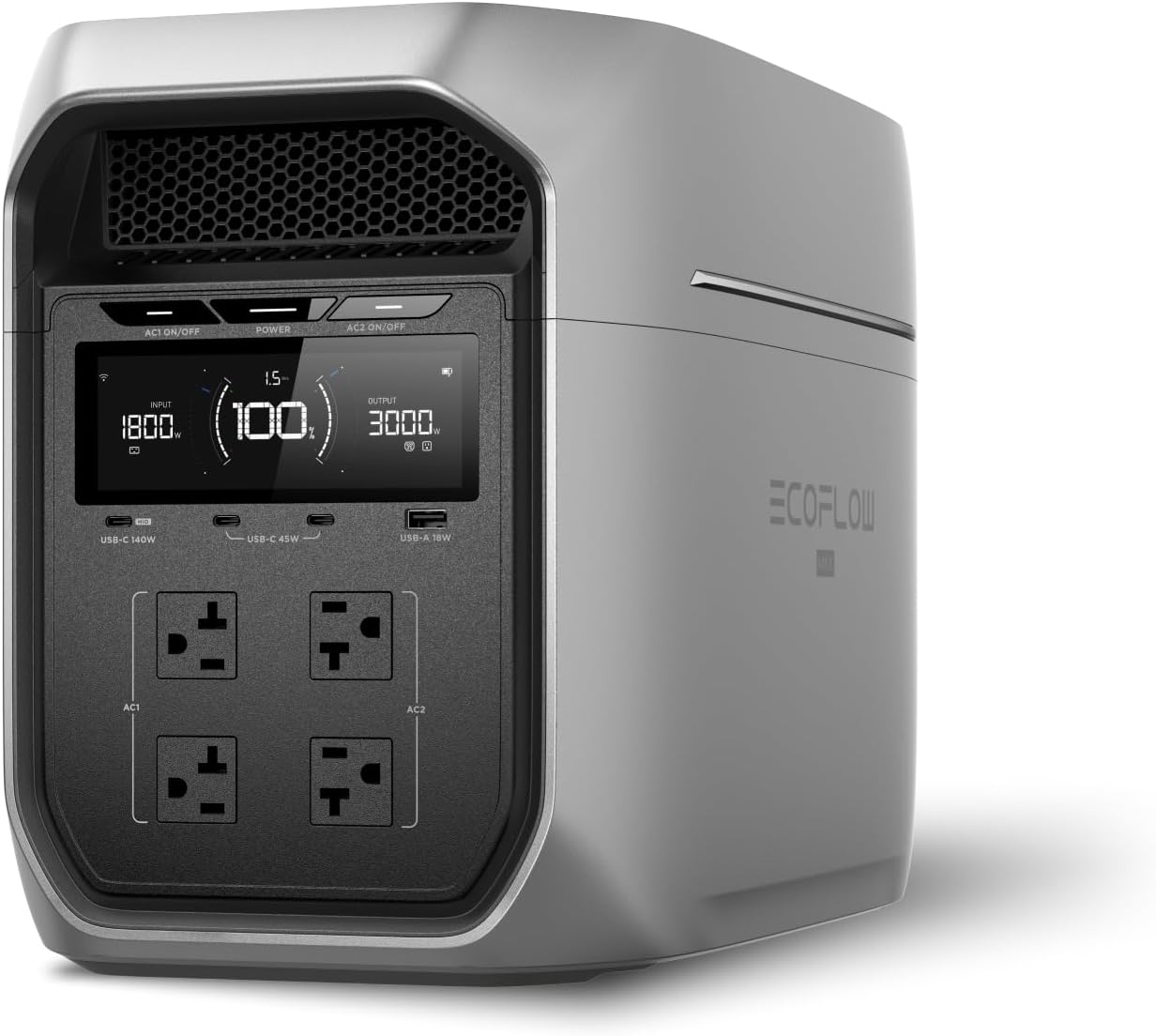
EcoFlow DELTA 3 Plus
EcoFlow's newest mid-range flagship. The DELTA 3 Plus improves on the Delta 2 with faster charging, LiFePO4 chemistry, and UPS functionality — all at a lower price.
Frequently Asked Questions
How many solar panels do I need to charge a power station?
It depends on the power station's capacity and the solar panel's wattage. A 200W solar panel generates roughly 100-160W in real conditions (50-80% of rated power). To charge a 1,000Wh power station in one sunny day (6 peak sun hours), you'd need about 200W of panels. For a 2,000Wh station, plan on 400W of panels. Always check your power station's maximum solar input — exceeding it won't charge faster.
Do solar panels work on cloudy days?
Yes, but at significantly reduced output. Thin clouds reduce output to about 25-50% of rated power. Heavy overcast drops output to 10-25%. Rain or dense fog can reduce it to under 10%. Solar panels work with any visible light, not just direct sunlight, but output scales directly with light intensity.
What is the difference between monocrystalline and polycrystalline solar panels?
Monocrystalline panels use single-crystal silicon cells, which are more efficient (20-24%) and perform better in low light and heat. Polycrystalline panels use multi-crystal cells, are less efficient (15-18%), but cost less. Nearly all portable solar panels sold today for power stations are monocrystalline because the efficiency advantage matters more when space is limited.
Can I leave a solar panel connected to my power station overnight?
Yes. When there's no sunlight, the panel produces zero current and the power station's charge controller prevents any reverse flow. There's no risk of discharging the battery through the panel. However, bringing panels inside or covering them during storms protects them from wind and hail damage.
Ready to Buy? Here's What We Recommend
Based on our testing and this guide, these are the best options for most people: