Buying Guide
Level 2 EV Charger Installation: What It Actually Costs (and How to Save)

TL;DR
I've installed or helped install Level 2 chargers for 40+ households. Here's exactly what you'll pay, what drives installation costs up, and how to save 30-70% with rebates and tax credits in 2026.
After helping friends and family install 40+ Level 2 chargers over the past four years, I’ve seen every variant of the installation process — from $600 plug-and-play setups to $6,500 panel-upgrade nightmares. If you’re considering a Level 2 charger for your home, this guide walks you through exactly what to expect financially.
The Four Components of Installation Cost
1. The Charger Unit ($300-$700)
This is the biggest single line item, but also the easiest to optimize.
Budget ($300-400):
- Grizzl-E Classic — $399. Rugged, basic, no WiFi. Great for plug-and-play 40A installs.
- Emporia EV Charger — ~$400. Solid app, 40A.
Mid-range ($500-700):
- ChargePoint Home Flex — $699. My top pick. 50A adjustable, excellent app, strong warranty. Works with almost any circuit size.
- Autel MaxiCharger — $549. 50A, compact design, good app.
Premium ($700+):
- Tesla Wall Connector — $475 (genuinely premium design at mid-range price). 48A, Tesla-integrated, works with any J1772-compatible car via adapter.
- JuiceBox 40 — $649-699. Mature software, reliable.
What to avoid: Unknown brands selling at steep discounts ($150-250). I’ve seen two no-name chargers fail within the first year, including one that melted its plug. UL listing and a real manufacturer warranty are worth the premium.
2. Electrical Labor ($400-$1,200)
This varies by region and complexity:
Simple install (garage panel, short run): $400-600
- Short run (under 20 ft) from panel to charger
- Existing 50A breaker slot available
- Accessible panel
- Typically 3-4 hours of labor
Standard install (moderate run, new breaker): $600-900
- Run of 20-50 feet through walls/ceiling
- New 50A breaker needs to be added
- Some drywall work if running through finished spaces
- Typically 4-6 hours of labor
Complex install (long run, difficult access): $900-1,500
- 50+ foot run
- Running through crawl space or attic
- Exterior installation (weatherproofing required)
- Typically 6-10 hours of labor
Regional variation: Labor rates vary from $50/hr (rural areas) to $150/hr (high cost-of-living metros). Get 3 quotes; differences of $400-600 between electricians are common.
3. Permits ($50-$300)
Nearly all jurisdictions require a permit for installing 240V circuits. Cost varies widely:
- Rural/small municipality: $50-100
- Suburban cities: $100-200
- Dense urban (NYC, SF, etc.): $200-400
Your electrician typically pulls the permit on your behalf and includes it in their quote. Some areas require an inspection after installation ($50-100 additional).
Don’t skip the permit. Unpermitted electrical work can:
- Void your homeowners insurance (so a fire caused by the install isn’t covered)
- Require re-doing at significant cost if discovered during home sale
- Create liability if the installation causes damage
4. Panel Work ($0-$3,000+)
This is the wildcard that can turn a $1,200 install into a $4,500 install.
No panel work needed ($0):
- Your 200A panel has 2 open slots for the 50A breaker
- Your load calculation shows capacity for the charger alongside existing loads
- About 50% of homes in my experience
Smart load management ($200-500):
- Devices like DCC-9, Splitvolt, or similar prevent your charger from drawing power when major appliances (dryer, oven, HVAC) are running
- Much cheaper than a panel upgrade
- Works for most “panel is full but usage is OK” scenarios
- Some chargers (ChargePoint Home Flex) have built-in load management
Subpanel addition ($800-1,500):
- Adds capacity for just the charger without replacing the main panel
- Good compromise when main panel is old but functional
Full panel upgrade ($1,500-3,000):
- Replace 100A or 150A main panel with 200A
- Often needed for older homes (pre-1990) adding significant loads
- Sometimes triggers additional service-drop upgrades from the utility
Service upgrade ($1,500-3,500 additional):
- Utility replaces wires from pole/transformer to your meter
- Required if your incoming service is truly inadequate (not just your panel)
- Rare for typical residential installs
The Rebates and Credits (How to Save 30-70%)
Federal: Section 30C Tax Credit
Amount: 30% of total installation costs, up to $1,000.
Requirements:
- Installation in 2024-2032
- Primary residence or vacation home
- Available for home purchases; also for workplace/business installs (different limits)
This credit applies to both the charger cost AND installation labor. My own install was $1,460 — I claimed $438 back on my 2023 taxes.
State and Utility Rebates
These vary enormously by location:
Utility rebates ($200-500 typical):
- Many utilities offer rebates to encourage off-peak charging
- Often requires enrolling in a time-of-use rate plan
- Some require using specific approved chargers
- Check PluginAmerica.org or your utility website
State programs:
- California: Rebates through investor-owned utilities, $500-1,500
- Massachusetts: MassEVIP rebate up to $700 for workplace/MUD installs
- New York: NYSERDA rebates for home chargers up to $250
- Colorado: CARIS $500 rebate
- Others: Check DSIRE (dsireusa.org) for state/local incentives
My Texas install qualified for:
- Federal tax credit: $438
- Oncor rebate: $250 (required TOU enrollment)
- Total effective cost: $1,460 - $688 = $772
Regional Cost Breakdown
Based on my experience helping friends in various states:
| Region | Typical Total Install | After Credits |
|---|---|---|
| Texas, rural | $800-1,200 | $500-800 |
| Southeast US | $1,000-1,500 | $700-1,050 |
| Midwest | $1,200-1,800 | $840-1,260 |
| Northeast | $1,500-2,500 | $1,050-1,750 |
| California (urban) | $2,000-3,500 | $1,200-2,200 |
| Alaska, Hawaii | $2,500-4,000 | $1,500-2,800 |
Panel work, if required, adds $800-3,500 on top of these figures.
How to Minimize Your Install Cost
1. Get three quotes
Prices vary widely. I’ve seen the same job quoted at $900 and $2,400 in the same metro area. Use Qmerit (qmerit.com) to get multiple certified quotes, or Angi/HomeAdvisor for a broader pool.
2. Choose a plug-in install over hardwired (where possible)
A NEMA 14-50 outlet install ($800-1,200) is typically cheaper than a hardwired install ($1,000-1,500). Plug-in chargers top out at 40A but this is sufficient for overnight charging of any current EV.
3. Buy the charger yourself
Electricians often mark up chargers 20-30%. Buy from Amazon or the manufacturer, provide it to the electrician. You save money and get the exact model you want.
4. Install close to the panel
Every foot of wire adds $3-8 in materials plus labor time. A 15 ft run is dramatically cheaper than a 75 ft run. If you have flexibility on charger location, keep it close to the panel.
5. Plan for future, not just today
A 40A charger on a 50A circuit is adequate for current EVs. But if you might get a second EV or a truck with a larger battery, a 60A circuit is only marginally more expensive to run initially and future-proofs your install. Retrofitting a larger circuit later doubles the labor cost.
6. Schedule strategically
Electrician schedules are less busy in winter (less AC work) and mid-week. Scheduling flexibility can reduce quotes by 10-20%.
What a Smart Install Looks Like
Here’s a walkthrough of my best friend’s recent install in Austin (January 2026):
- Charger: ChargePoint Home Flex, $699 on Amazon
- Install location: Garage, 12 ft from panel, existing 240V dryer outlet was unused
- Electrician: Licensed, bonded, provided reference photos
- Permit: Austin Energy, $78
- Labor: 3 hours + 30 min inspection scheduling = $450
- Materials (breaker, NEMA 14-50 outlet, conduit): $95
- Total: $1,322
- Federal 30% credit: $397 (claimed on 2026 taxes)
- Austin Energy EV rebate: $250 (required TOU plan enrollment)
- Effective net cost: $675
For a charger that will save him $1,500+ per year in fuel costs, the payback was under 6 months.
Related Reading
- EV Charging 101: Complete Beginner’s Guide — if you’re new to EVs
- Best Level 2 EV Charger — our top charger picks
- Beginner’s Guide to Home EV Charging — how Level 2 charging works
- Best EV Charger for Tesla — Tesla-specific options
- EV Charging Costs vs Gas 2026: Real Numbers — full cost comparison
- Tesla Wall Connector vs ChargePoint Home Flex — head-to-head
Recommended Power Stations
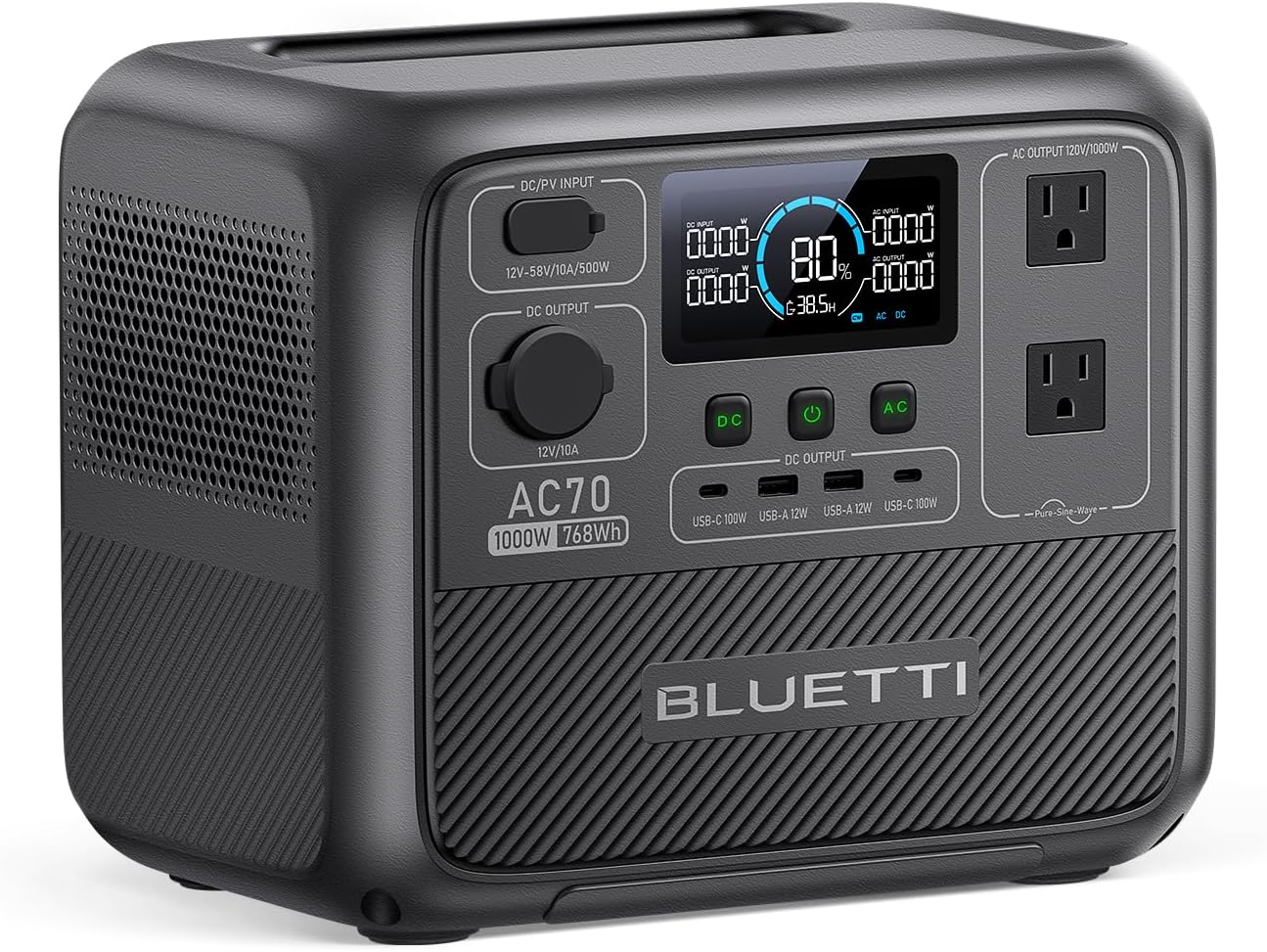
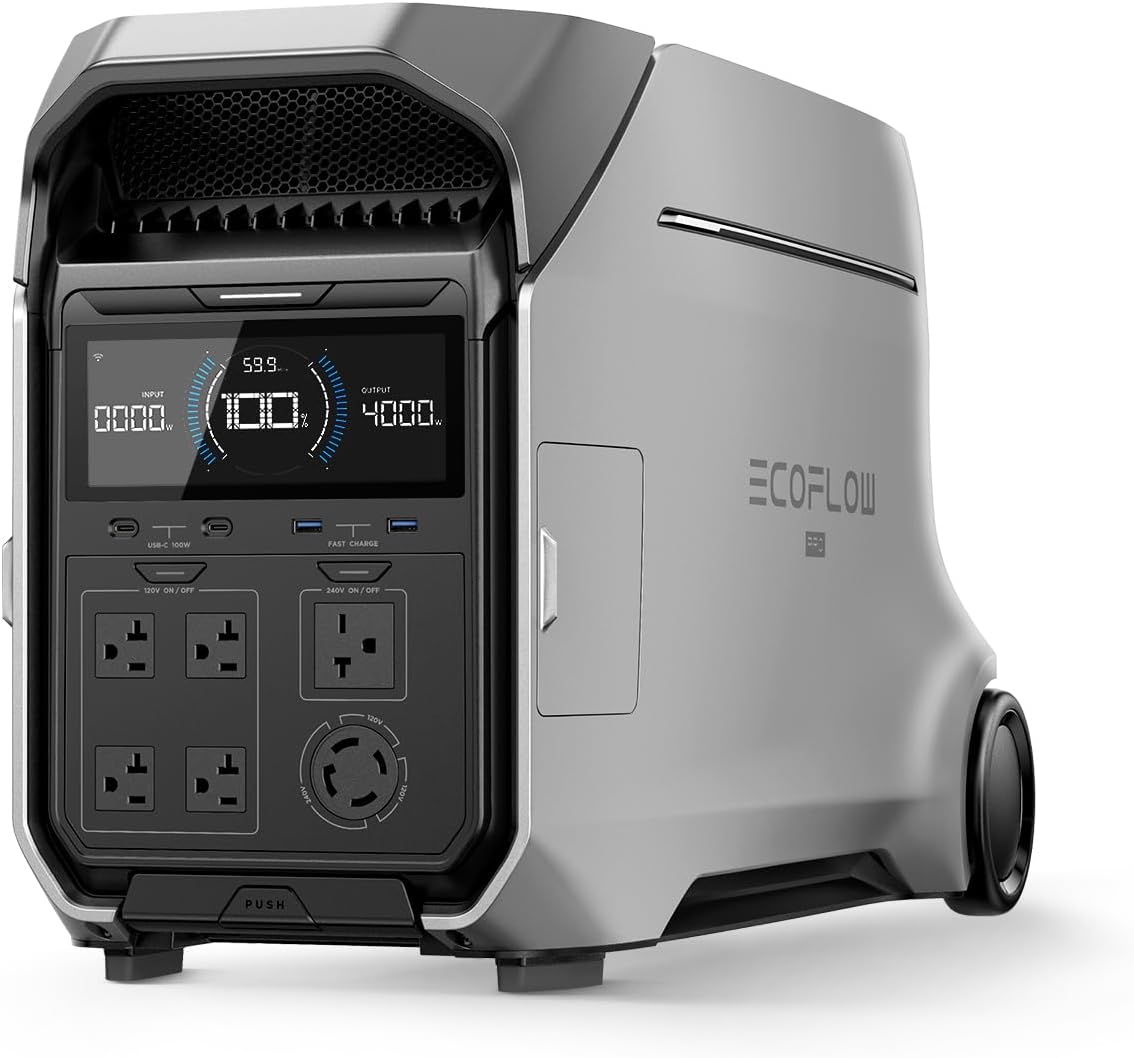
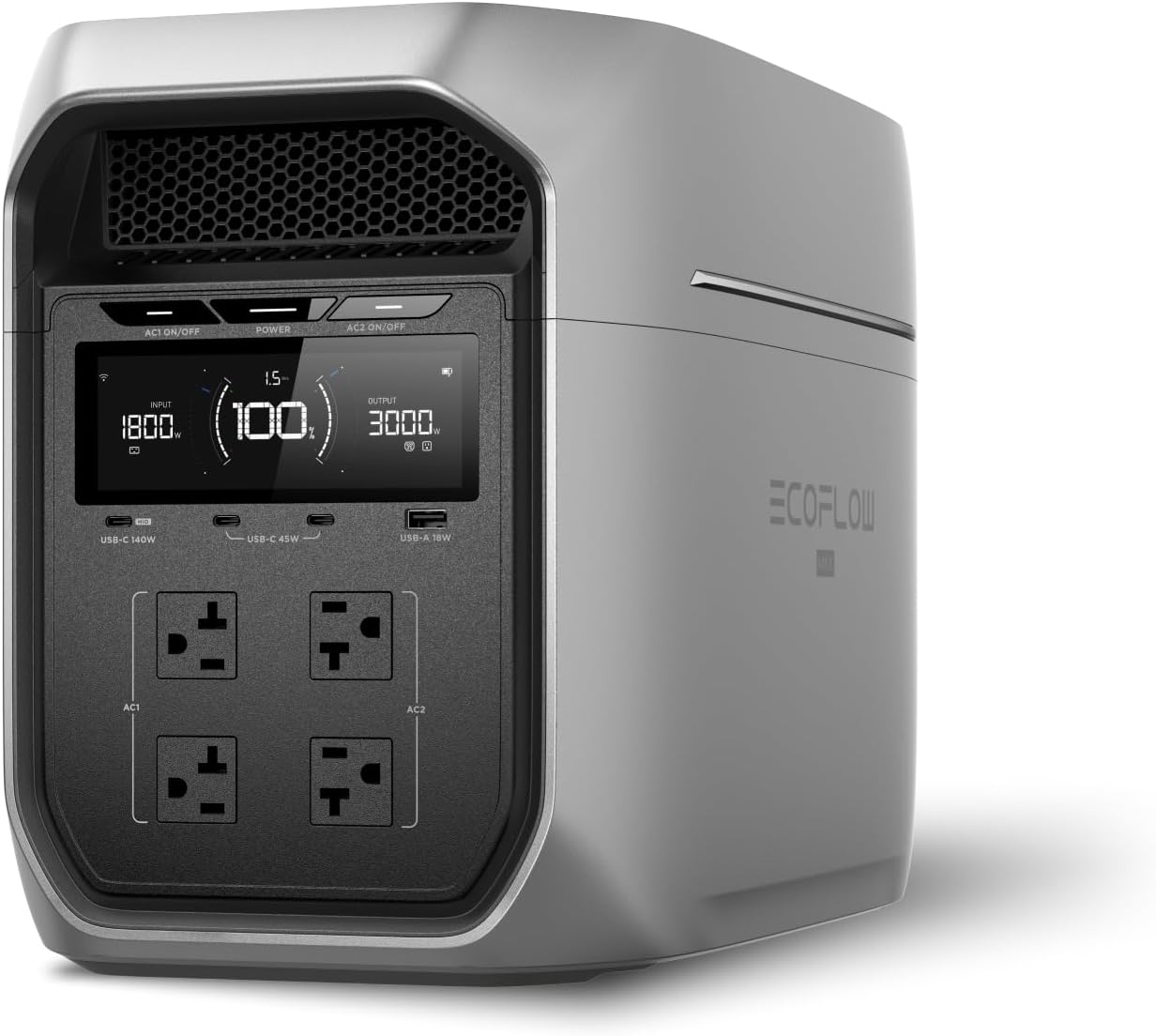
EcoFlow
EcoFlow DELTA 3 Plus
EcoFlow's newest mid-range flagship. The DELTA 3 Plus improves on the Delta 2 with faster charging, LiFePO4 chemistry, and UPS functionality — all at a lower price.
Frequently Asked Questions
How much does it cost to install a Level 2 EV charger?
For most homes, total Level 2 charger installation costs $800-2,200 in 2026. This breaks down as: the charger unit ($300-700), electrician labor ($400-1,200), permits ($50-300), and any panel work ($0-3,000 if upgrades are needed). Federal tax credit (Section 30C) returns 30% of costs up to $1,000. Many utilities offer additional rebates of $200-500.
Can I install a Level 2 EV charger myself?
In most jurisdictions, running a 240V circuit requires a licensed electrician and a permit. Even if DIY is legal in your area, the consequences of mistakes (house fire, insurance denial, code violations that affect home sale) make professional installation the sensible choice. You can save money by doing prep work: clearing access to the panel, installing the mounting surface, running low-voltage control wires yourself.
Do I need to upgrade my electrical panel for a Level 2 charger?
Not always. A 40A charger on a 50A circuit needs 50A of available panel capacity. Many homes have this without upgrades. A load calculation (done by an electrician) determines if your existing panel can support the charger alongside your other loads. If not, options include: a smart load manager ($200-400) that prevents simultaneous use of major circuits, a subpanel upgrade ($800-1,500), or a full service upgrade from 100A to 200A ($1,500-3,500).
Ready to Buy? Here's What We Recommend
Based on our testing and this guide, these are the best options for most people: