Guide
Sailboats & Boating Season: Marine Batteries & Portable Power for Vessels

TL;DR
A liveaboard's real-world guide to marine lithium batteries and portable power for sailboats, powerboats, and yacht auxiliaries. House bank sizing, the start-battery rule, salt-air realities, and the LiFePO4 batteries I trust on the water.
Three summers ago a friend single-handed his 34-foot sloop up the Chesapeake and called me from an anchorage off the Wye River, half panicked, because his two group-31 AGM batteries had sagged to 11.9 volts by the second evening and his fridge had quit. I had just spent that same summer ripping flooded lead-acid out of my van and living on LiFePO4, so the conversation went exactly where you would expect. He switched that fall. Boating season and RV season run on the same calendar and, it turns out, the same battery problems, just with more salt and more motion.
I spend most of my year in the van, but I have logged enough nights aboard friends’ boats and helped wire enough house banks at the dock to know where marine power is genuinely different from rig power, and where the boat-specific markup is just a sticker. This is the guide I give people who are staring at a corroded battery box in May and wondering whether the lithium hype applies on the water too. It does. You just have to respect a few rules that do not exist on land.
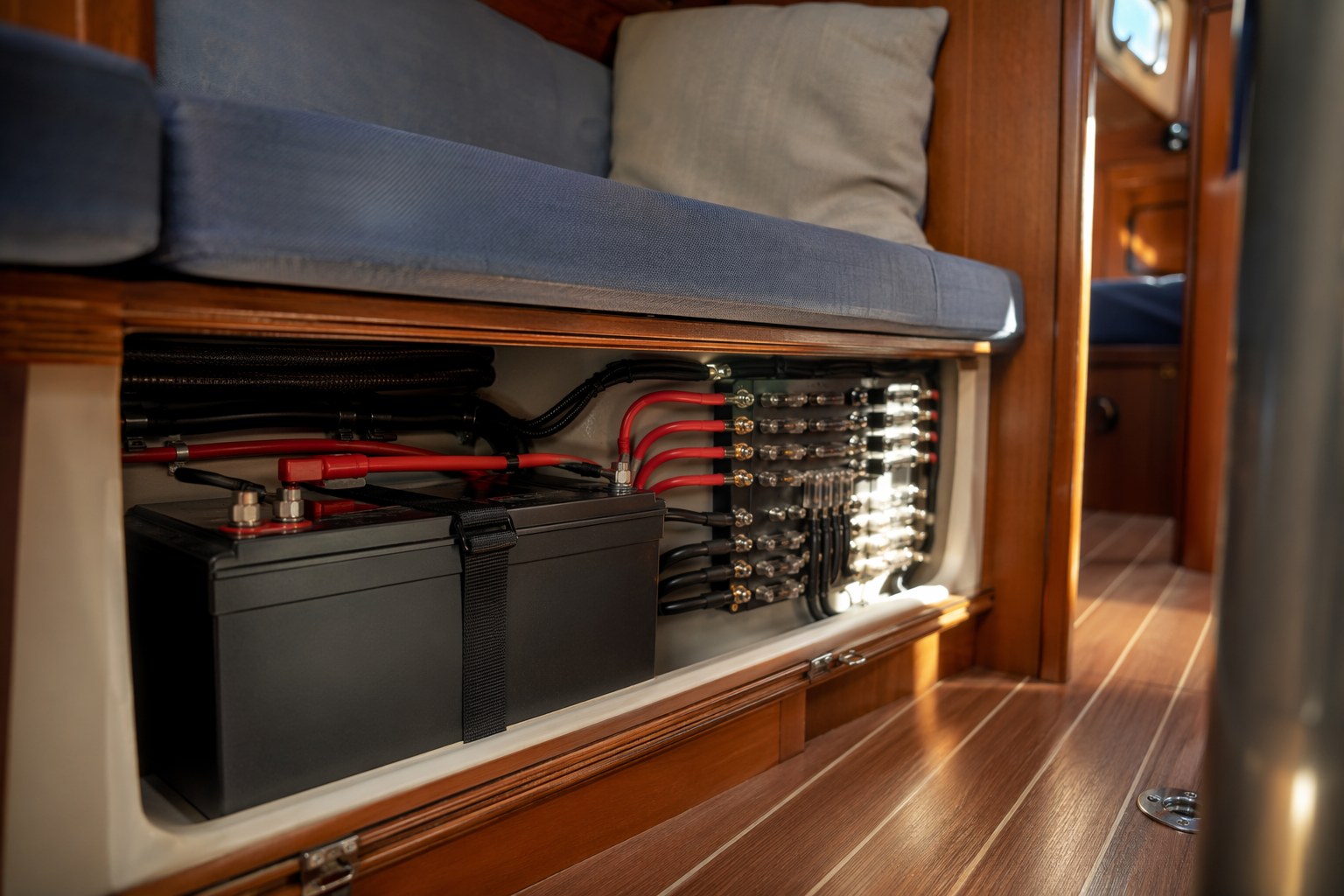
Why Lithium Wins on the Water, and Where It Is Different
The core case for LiFePO4 is the same one I make for RVs: twice the usable capacity at a third of the weight, and it does not punish you for using it. On a boat, two of those advantages get even more valuable.
Weight matters more afloat than almost anywhere. A pair of group-31 AGM batteries runs 130-plus pounds for maybe 100Ah of truly usable power. A single 100Ah LiFePO4 weighs around 24 to 31 pounds and gives you the full 100Ah. Pulling 100 pounds out of the bilge and getting double the real capacity changes how the boat sits and how it sails.
The usable-capacity math is the whole ballgame at anchor. Lead-acid wants you to stop at 50 percent state of charge or you cook the plates. So a “200Ah” AGM bank is really 100Ah you can spend before the fridge starts dying at 2 a.m. A 200Ah LiFePO4 bank gives you the whole 200Ah, flat voltage almost the entire way down, which is why my friend’s fridge quit on AGM and mine never has on lithium.
Where boats differ from RVs comes down to three things, and they are non-negotiable:
- Starting batteries stay separate. Never crank an engine off your lithium house bank. The surge and the alternator behavior do not play nice with most house BMS units. Keep a dedicated start battery, isolated.
- Salt and humidity attack everything but the cells. The chemistry is sealed and safe. The terminals, lugs, and BMS connectors are what corrode.
- Motion is constant. Vibration and pounding loosen connections that would sit still forever in an RV bay.
If you are still weighing chemistry in the abstract, the lead-acid versus lithium cost-per-cycle math in my best RV lithium batteries roundup applies almost word for word to a marine house bank.
Sizing the House Bank: Build a Real Power Budget
Do not guess. Write down every load and what it actually pulls. Here is a realistic summer budget for a couple cruising a 36-foot sailboat at anchor, close to numbers I have logged aboard friends’ boats:
| Load | Avg Draw | Hours/Day | Daily Wh |
|---|---|---|---|
| 12V compressor fridge/freezer | 55W avg | 24 (cycling) | ~900 Wh |
| LED cabin + nav lights | 20W | 6 | 120 Wh |
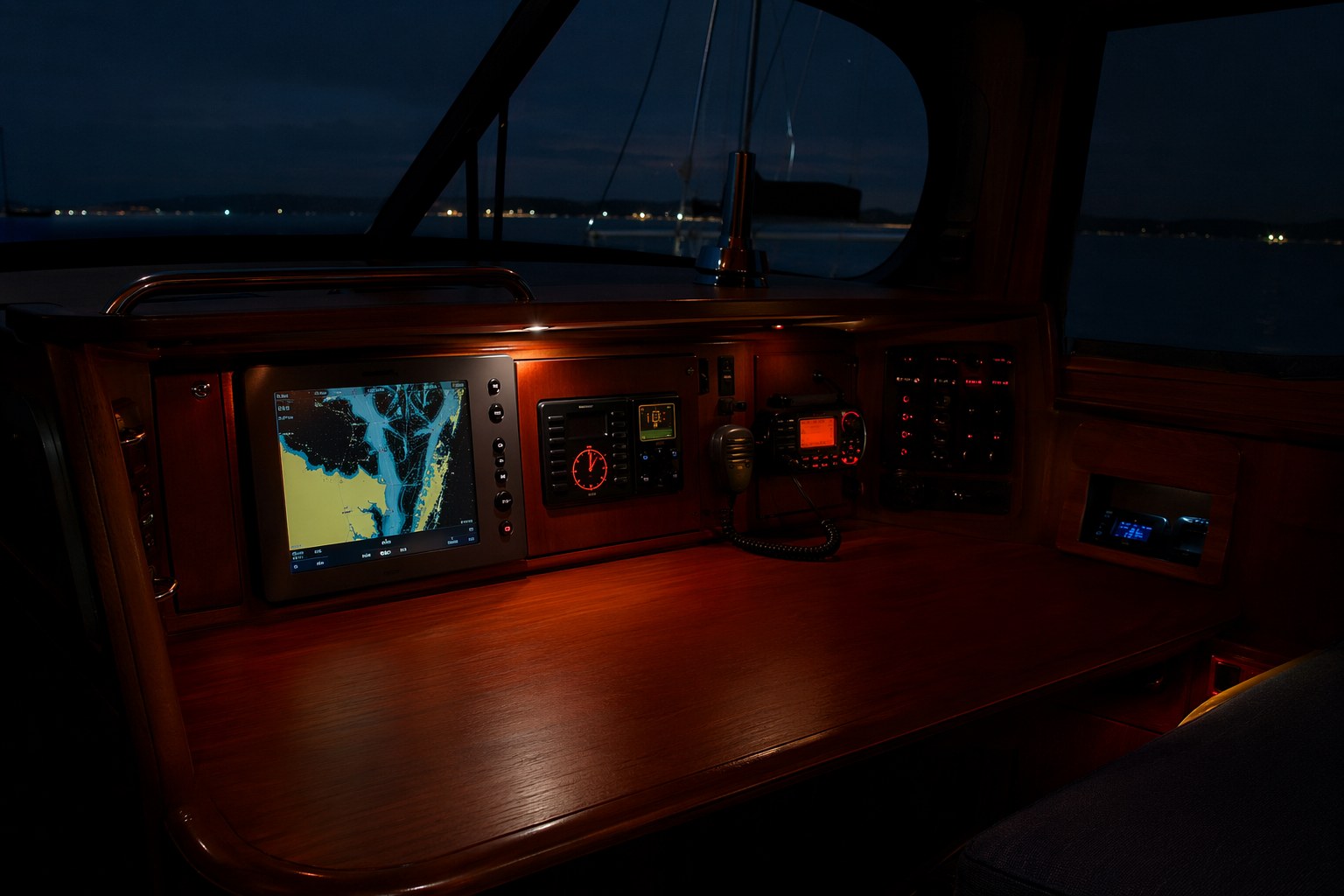
| Instruments + chartplotter | 30W | 5 | 150 Wh |
| Anchor light | 5W | 10 | 50 Wh |
| Phones, tablet, handheld VHF | 50W | 4 | 200 Wh |
| Water pressure pump | 60W | 0.5 | 30 Wh |
| Daily total | ~1,450 Wh |
That roughly 1,450Wh-per-day budget is exactly why I steer most weekend and coastal cruisers to 200Ah (2,560Wh). It gives you the better part of two days of autonomy if the wind dies and the solar goes quiet behind clouds. Notice the fridge: it is nearly two-thirds of the total. On a boat the refrigeration is almost always the load that decides your bank size, so if yours is an older, poorly insulated box, budget high.
If watt-hours and amp-hours still feel slippery, the conversions in my RV boondocking power guide translate directly to a hull.
The Batteries I Actually Trust Afloat
Prices move constantly, so treat these as ballpark. Every one of these is a 12V LiFePO4 I have either run, watched a friend run hard, or wired up at the dock.
Best premium for full-time and offshore: The Battle Born 100Ah 12V LiFePO4 is the battery I see in more serious cruising builds than any other. The 10-year warranty and US phone support matter a lot more when you are three days from a marina. Run two in parallel for a 200Ah bank.
Best budget pair: The LiTime 100Ah 12V has become the default value pick in the cruising forums for the same reason it took over the boondocking forums. Two of them get you to 200Ah for a fraction of the premium cost, and real-world reliability has held up across the boats I know running them.
Best high-capacity single battery: The Redodo 200Ah 12V packs the full 200Ah into one case, which means one set of lugs and one BMS to inspect for corrosion instead of two. On a boat, fewer connections in a salt environment is a genuine reliability win.
Best for cold storage and shoulder-season cruisers: The Dakota Lithium 12V 100Ah carries an 11-year warranty and a reputation for surviving abuse. If you sail in cold water or store the boat through a hard winter, its track record is reassuring.
Best for big rigs, watermakers, and inverter loads: If you want to run an inverter coffee maker, a watermaker, or coast through gray days, the Vatrer 12V 300Ah delivers 3,840Wh in one case with a 200A BMS that can feed a 2,000W-plus inverter without tripping.
My honest take: most boaters overspend on capacity and underspend on charging and corrosion protection. A 200Ah bank with 400W of solar and clean, tinned connections will outperform a 400Ah bank with bad terminals every single weekend.
Wiring and the Salt-Air Rules That Actually Matter
You do not need to be a marine electrician, but the water demands more discipline than a driveway does.
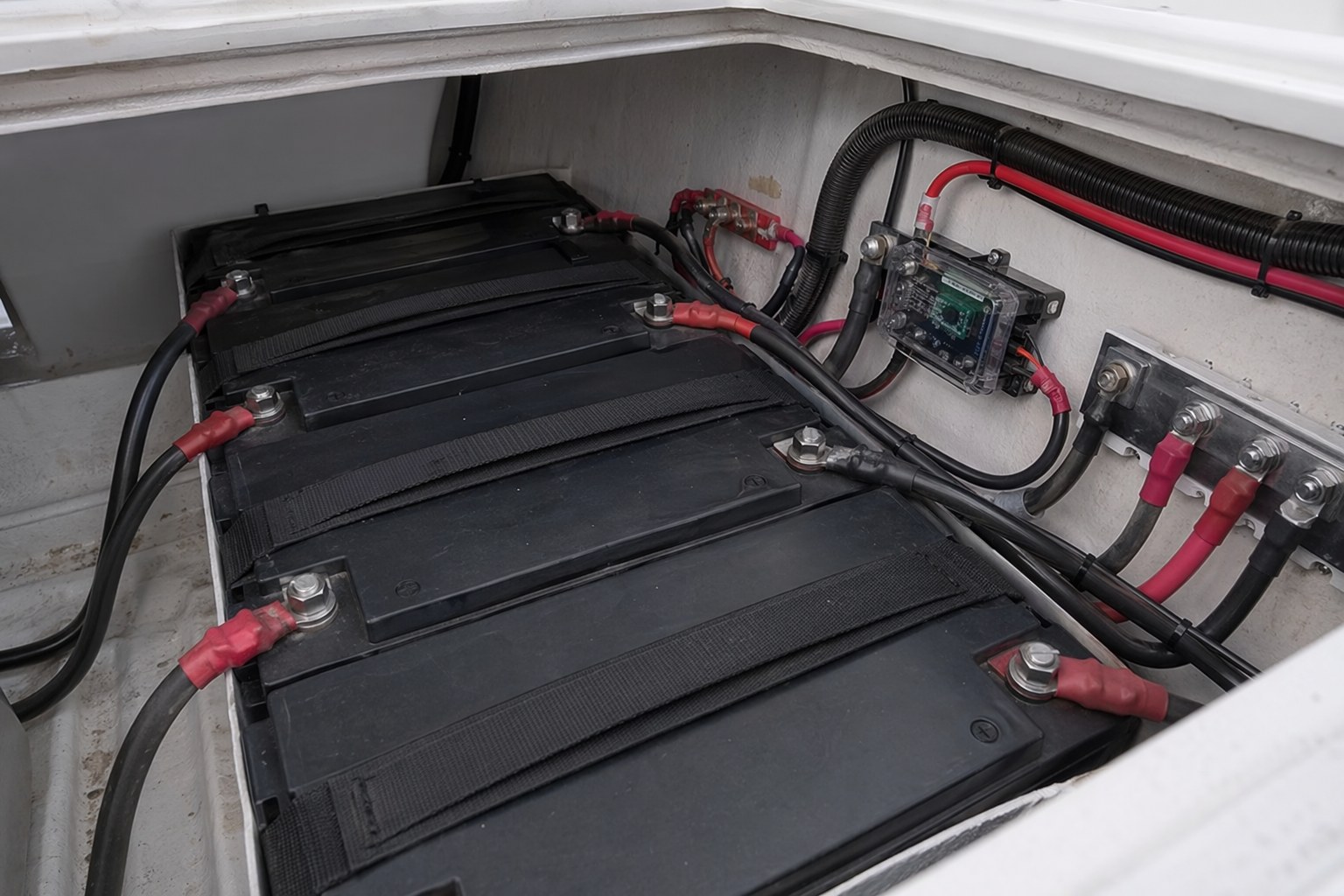
Parallel for capacity, keep voltage at 12V. Two 100Ah 12V batteries wired positive-to-positive and negative-to-negative give you 200Ah at 12V. Use equal-length cables so they share load evenly. Most boats stay 12V; do not jump to series unless you have a specific 24V system.
Respect the BMS rating. A 100A BMS delivers roughly 1,200W through an inverter. A windlass or a 2,000W inverter wants a 200A BMS or multiple batteries sharing the load. Undersizing the BMS is the most common mistake I see, and it is the same trap covered in our portable power station mistakes to avoid breakdown.
Then the marine-specific layer:
- Tinned wire only. Bare copper corrodes green in a season near salt. Use marine-grade tinned cable and heat-shrink lugs.
- Fuse close to the battery on the main positive, sized to your wire and BMS. This is an ABYC fundamental, not an option.
- A battery box that breathes and drains, secured so it cannot move in a knockdown. Lithium does not off-gas like flooded lead-acid, but it still needs to stay dry and restrained.
- Dielectric grease on every terminal and a habit of checking them at the start of each season.

Charging Sources: Solar, Alternator, and Shore
The bank is only half the system. How you refill it decides whether you actually enjoy the anchorage.
Solar is the boater’s best friend. A 200 to 400W array on an arch or rail feeds the house bank silently all day. LiFePO4 accepts high charge current, so it banks those midday watts that lead-acid would taper and waste. Run it through a quality MPPT controller.
The alternator needs a DC-DC charger. Same rule as the RV: a LiFePO4 bank will pull every amp the alternator can make, which overheats it on a long motor. A DC-DC charger (roughly 180 to 250 dollars) caps current and applies the correct lithium profile. It also keeps your start battery isolated, which solves the never-crank-off-the-house-bank rule cleanly.
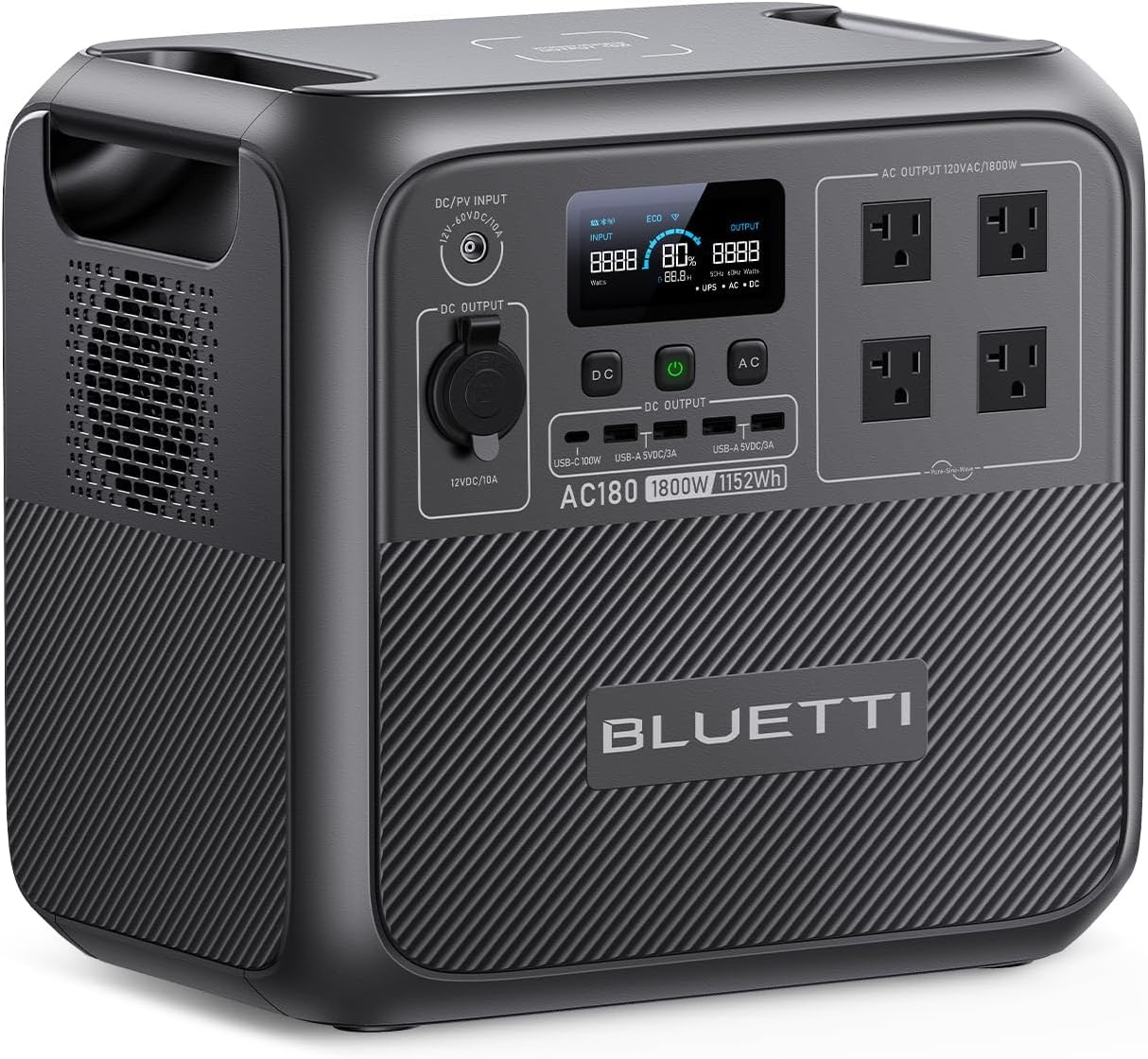
A portable power station as the dinghy and cockpit solution. This is where boating overlaps with my usual world. A 1,000Wh-class portable station lives in the cockpit to run a blender, charge camera gear, or power a fan in a stuffy V-berth, then comes ashore in the dinghy to run a campsite or charge from a marina outlet. It is also your backup if the house bank ever goes down. For how long those units actually last across years of cycling, see my piece on how long power stations last.
A Portable Power Station for Vessel Auxiliaries
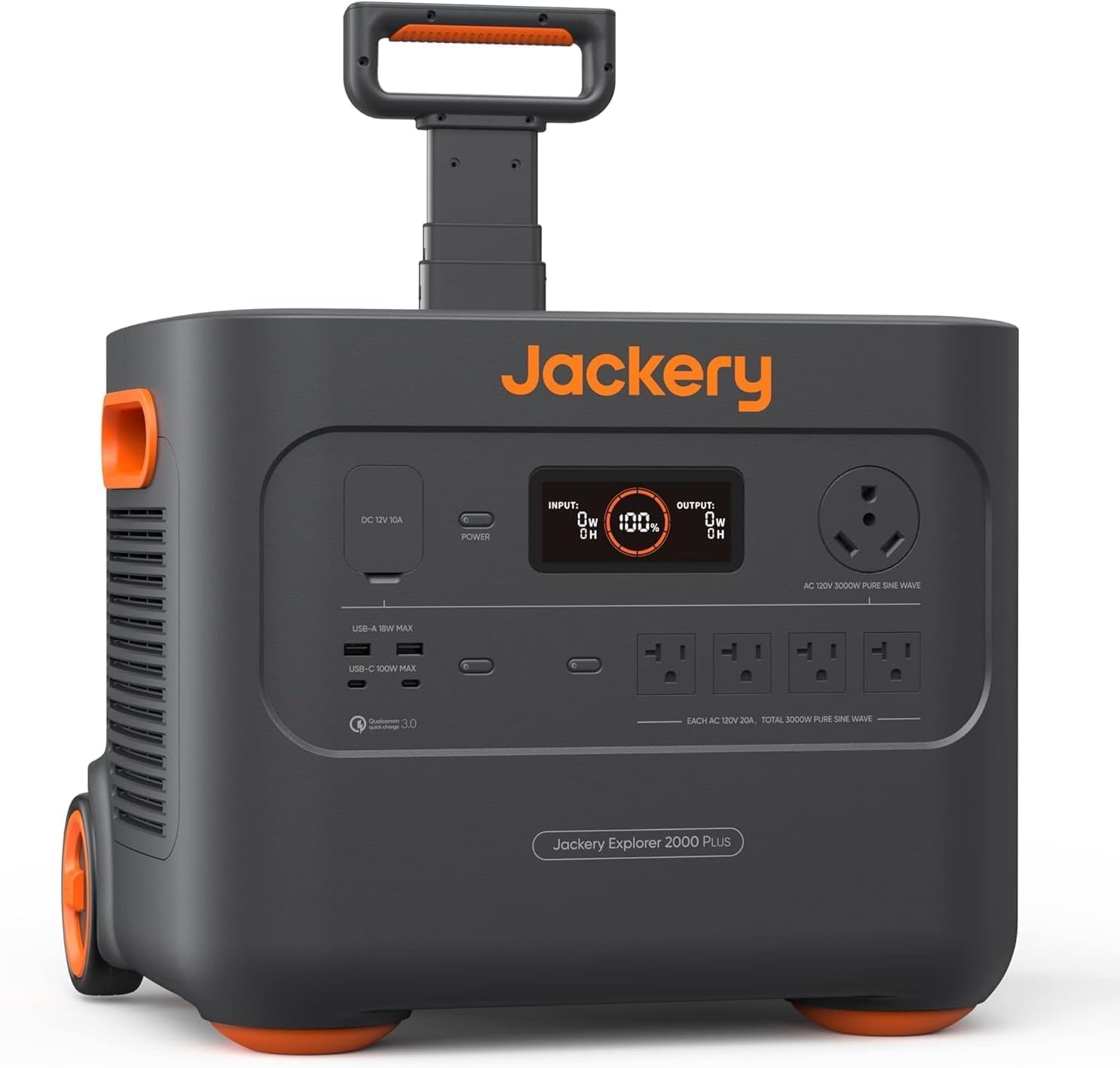
I am a firm believer in keeping one self-contained power station aboard even with a good house bank. It decouples your fun loads from the boat’s electrical system, so running a margarita blender or charging a drone never touches the amps you need for the fridge and the anchor light overnight. It is also genuinely portable: pull it for a beach day, recharge it at the dock, or hand it to a buddy whose boat just lost power. Pick one with USB-C PD for devices, a pure sine wave inverter for anything with a motor, and an IP-rated build if it will live in the cockpit.
My Recommended Cruising Setup
If I were wiring a fresh house system for a typical 35-foot cruiser today, here is exactly what I would do:
- 200Ah of LiFePO4 as the house bank, either two LiTime 100Ah in parallel or a single Redodo 200Ah for simpler wiring.
- A separate, isolated start battery so the engine never touches the house bank.
- 300 to 400W of solar through an MPPT controller, the source that actually decides whether you wake up full.
- A DC-DC charger from the alternator for free top-ups under motor.
- Tinned wire, a fused main, and a portable power station in the cockpit for auxiliaries and backup.
Get those right and your evenings at anchor become about where to watch the sunset, not whether the fridge will make it to morning.
The Bottom Line
Lithium is the same upgrade on the water that it is on land: it disappears into the background and lets you stay out longer. The two things that separate a marine bank from an RV bank are keeping your start battery isolated and treating salt air like the corrosive enemy it is. Start with a battery you trust, like the bulletproof Battle Born 100Ah or the value-leading LiTime 100Ah, feed it with solar, fuse it properly, and grease every terminal. Do that, and boating season stops being a battery-anxiety season and goes back to being the best part of the year.
Recommended Power Stations
EcoFlow
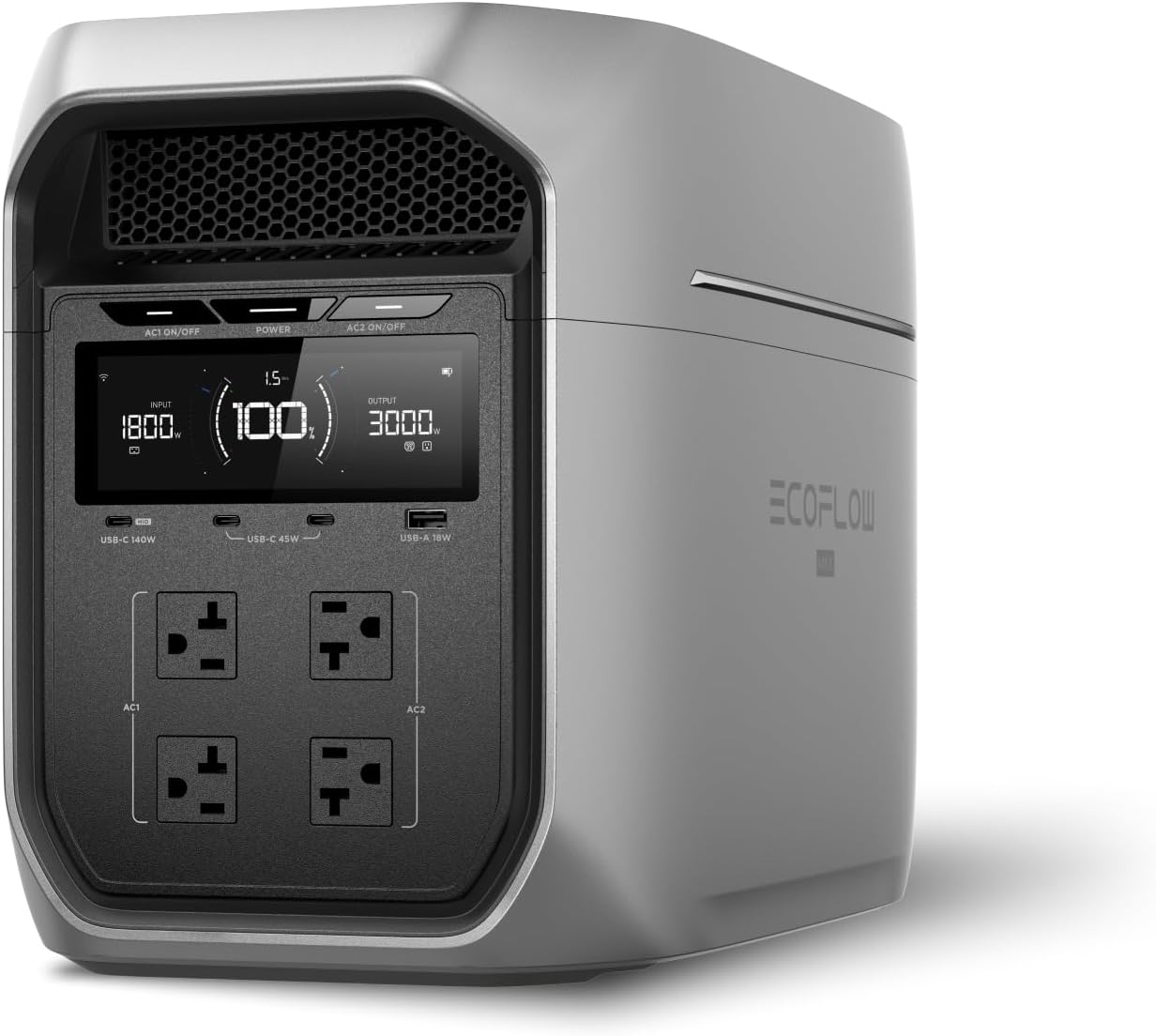
EcoFlow DELTA 3 Plus
EcoFlow's newest mid-range flagship. The DELTA 3 Plus improves on the Delta 2 with faster charging, LiFePO4 chemistry, and UPS functionality — all at a lower price.
Frequently Asked Questions
Can I use an RV lithium battery on a boat?
Yes, with two caveats. The chemistry is identical, so a 12V LiFePO4 RV battery works fine as a marine house bank, and most of the budget brands sell the same case under both labels. The two things to check are an IP-rated, vibration-tolerant case and a BMS rated for the surge your inverter and windlass will pull. What you should never do is use a standard lithium house battery as an engine starting battery. The high cranking surge and the alternator's charge profile can trip the BMS or damage cells. Keep a dedicated AGM or lithium start battery isolated from the house bank.
How many amp-hours do I need for a weekend on a sailboat at anchor?
For a typical 30 to 40 foot cruising sailboat running a 12V fridge, LED cabin lights, instruments, an anchor light, and phone and tablet charging, 200Ah (about 2,560Wh) covers a comfortable weekend at anchor with margin. The fridge is almost always your biggest single load, often half your daily draw. If you add a watermaker, an inverter-driven coffee maker, or you want autonomy through a cloudy stretch, step up to 300 to 400Ah and add solar.
Will salt air and humidity destroy a lithium marine battery?
Not the cells themselves, which are sealed, but the terminals, BMS connectors, and any exposed wiring are absolutely at risk. Salt-laden humid air corrodes copper and steel fast. The fix is the same discipline boatbuilders have always used: marine-tinned wire, sealed and dielectric-greased terminals, a battery box that drains and breathes, and keeping the bank as high and dry as your layout allows. Treat a lithium bank like any other marine electrical component and it will outlast the boat's wiring around it.
Ready to Buy? Here's What We Recommend
Based on our testing and this guide, these are the best options for most people: