Guide
Bidirectional EV Charging (V2H) in 2026: Which Cars Can Power Your Home?

TL;DR
Vehicle-to-home charging turns your EV into a giant battery for outages. Here's the real-world status of V2H in 2026 — which cars support it, what equipment you need, and whether it actually replaces a Powerwall.
The promise of bidirectional EV charging has been “coming next year” for about a decade. Finally, in 2025-2026, it’s here in production form. If you have a recent F-150 Lightning, GM EV, or Kia EV9, you can actually buy the equipment and use your truck’s 100+ kWh battery to power your home during outages.
I’ve followed the V2H rollout closely as it relates to backup power, and I’ve helped two clients install Ford Charge Station Pro setups in the past 18 months. Here’s the practical state of V2H in 2026.
What V2H Actually Does
A bidirectional charger replaces (or supplements) your standard Level 2 home EV charger. Instead of just charging your car, it can also pull power from your car and route it to your home’s electrical panel.
When the grid goes down:
- Your home’s electrical panel disconnects from the grid (anti-islanding, just like with a Powerwall)
- The bidirectional charger takes over as the power source
- Energy flows from your EV battery, through the charger, into your home
- You can power your home for hours to days depending on EV battery size and load
When grid is up:
- The charger functions as a normal Level 2 charger, refilling the EV
- Some systems also support V2G (selling power back to the grid during peak rates)
The math is impressive: a Ford F-150 Lightning Extended Range has 131 kWh of usable capacity. The average US home uses 30 kWh/day. A full F-150 Lightning can power a typical home for 4+ days. That’s 7-10 Tesla Powerwalls worth of backup capacity, sitting in your driveway.
EVs That Currently Support V2H
Ford F-150 Lightning (best mature support)
- Capacity: 98 kWh (standard) or 131 kWh (extended range)
- Required equipment: Ford Charge Station Pro (
$1,800) + Home Integration System ($3,800-5,500) - Total install: $5,500-8,000
- Available since 2022; mature, well-documented system
The F-150 Lightning is the V2H standard-bearer. The system has been refined over multiple model years, and Ford’s installation process is the most established.
GM Energy (Silverado EV, Hummer EV, Equinox EV, Blazer EV)
- Capacity: 85-205 kWh depending on model
- Required equipment: GM Energy V2H Bundle (~$7,500-10,000 installed)
- Available since late 2024 with growing adoption in 2025-2026
- Most polished mobile app integration
GM’s system is technically the most capable in 2026 — supports more circuits, faster switchover, better app monitoring. Slightly higher cost than Ford.
Kia EV9 (and via OTA, EV6)
- Capacity: 99.8 kWh (EV9 standard)
- Required equipment: Kia/Hyundai V2H bundle (~$5,500-7,500 installed)
- US support arriving in waves through 2025-2026
- Strong international (Europe/Korea) deployment; US slower
Kia’s V2H integration is well-engineered but US availability lags Ford and GM. By end of 2026, expected to be widely available.
Hyundai Ioniq 5 / Ioniq 6
- Capacity: 77.4 kWh (Ioniq 5 standard)
- Required equipment: Hyundai-branded version of the Kia system
- US availability: Limited rollout through 2026
- Vehicle has the hardware; ecosystem is being built
Lucid Gravity
- Capacity: 120 kWh
- V2H announced for production but not yet shipping equipment to consumers as of April 2026
- Premium pricing expected when launched
Volvo EX90
- Capacity: 111 kWh
- V2H hardware in vehicle, ecosystem partner (typically Wallbox) launching in 2026
Tesla (Cybertruck, newer Model Y/3)
- Capacity: 122 kWh (Cybertruck), 75-82 kWh (newer Model 3/Y)
- Tesla announced “Powershare” V2H for select vehicles
- Tesla Wall Connector V3 supports bidirectional in Cybertruck; broader Tesla rollout slower than competitors
- Available now for Cybertruck, expanding through 2026
For Tesla owners specifically, our Tesla Wall Connector vs ChargePoint Home Flex comparison covers the current home charging options. The bidirectional version is a separate, more expensive product.
What V2H Equipment Costs
Sample real-world costs from installations I’ve helped with or quoted in 2025-2026:
Ford F-150 Lightning + Ford Charge Station Pro
- Charge Station Pro hardware: $1,799
- Home Integration System (Sunrun): $3,895
- Electrician installation: $2,200-3,500
- Permits and inspection: $200-400
- Total installed: $8,094 - $9,594
GM Silverado EV + GM Energy V2H Bundle
- V2H Hub + PowerShift charger: $5,400
- Installation: $2,800-4,200
- Permits: $300-500
- Total installed: $8,500 - $10,100
Newer entrants (Kia, Hyundai, Lucid, Volvo)
- Hardware: $4,500-7,500
- Installation: $2,000-3,800
- Total installed: $6,500 - $11,300
V2H vs. Powerwall: The Comparison
Both deliver whole-home backup capability. The key differences:
| Factor | V2H (with eligible EV) | Tesla Powerwall 3 |
|---|---|---|
| Hardware cost installed | $7,000-11,000 | $13,000-18,000 |
| Energy capacity | 60-200 kWh (your EV battery) | 13.5 kWh per unit |
| Equivalent Powerwalls | 4.5-15 | 1 |
| When charging the storage | Plug in EV nightly | Solar / grid charging |
| Backup duration | Days (with full EV battery) | ~12-36 hours |
| EV must be home for backup | Yes | No (Powerwall is fixed) |
| Solar self-consumption | Yes (with hybrid system) | Yes (mature) |
| Time-of-use arbitrage | Yes (with full system) | Yes (mature) |
V2H wins on energy capacity per dollar — substantially. Powerwall wins on “always available” backup (your car might be away when an outage starts).
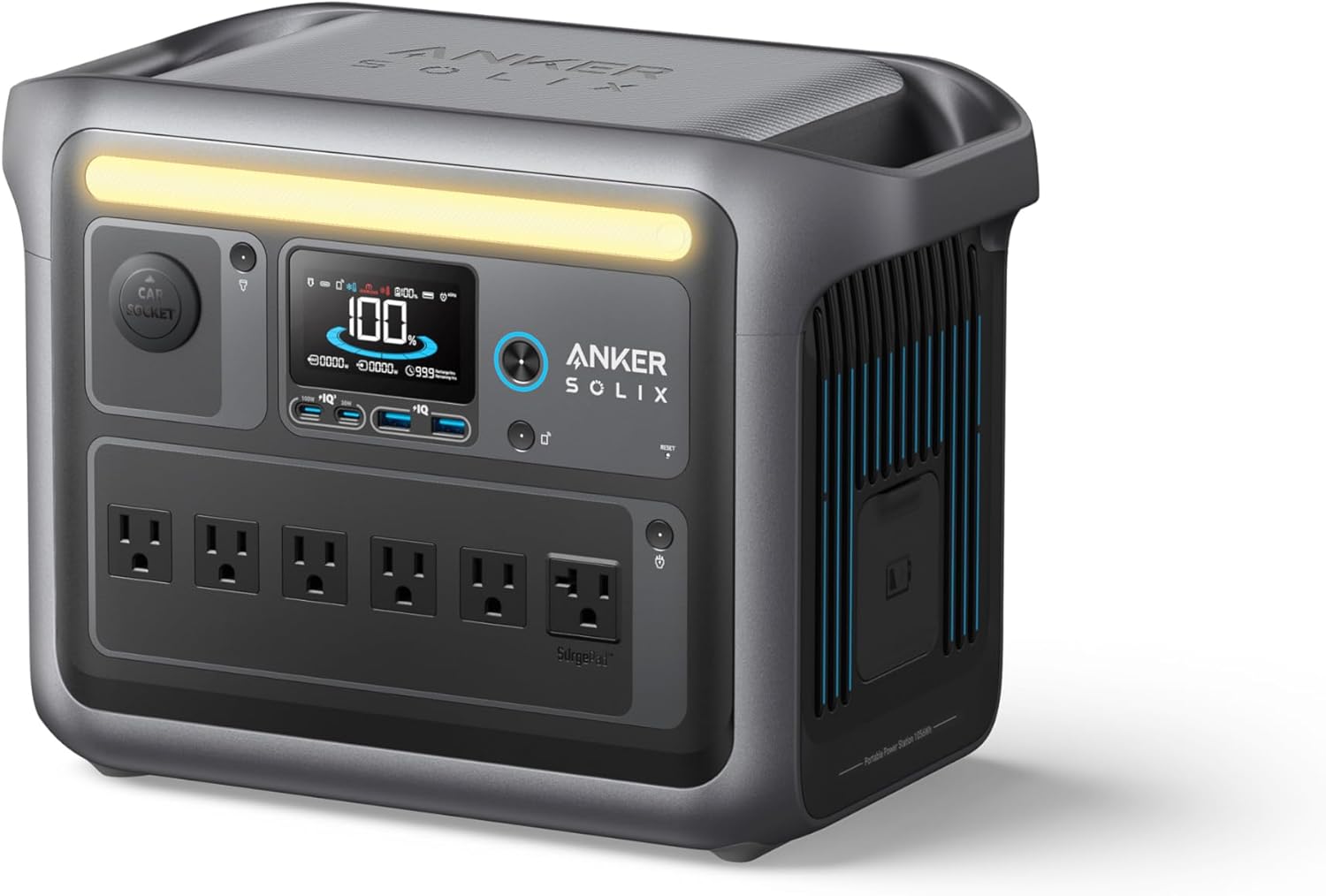
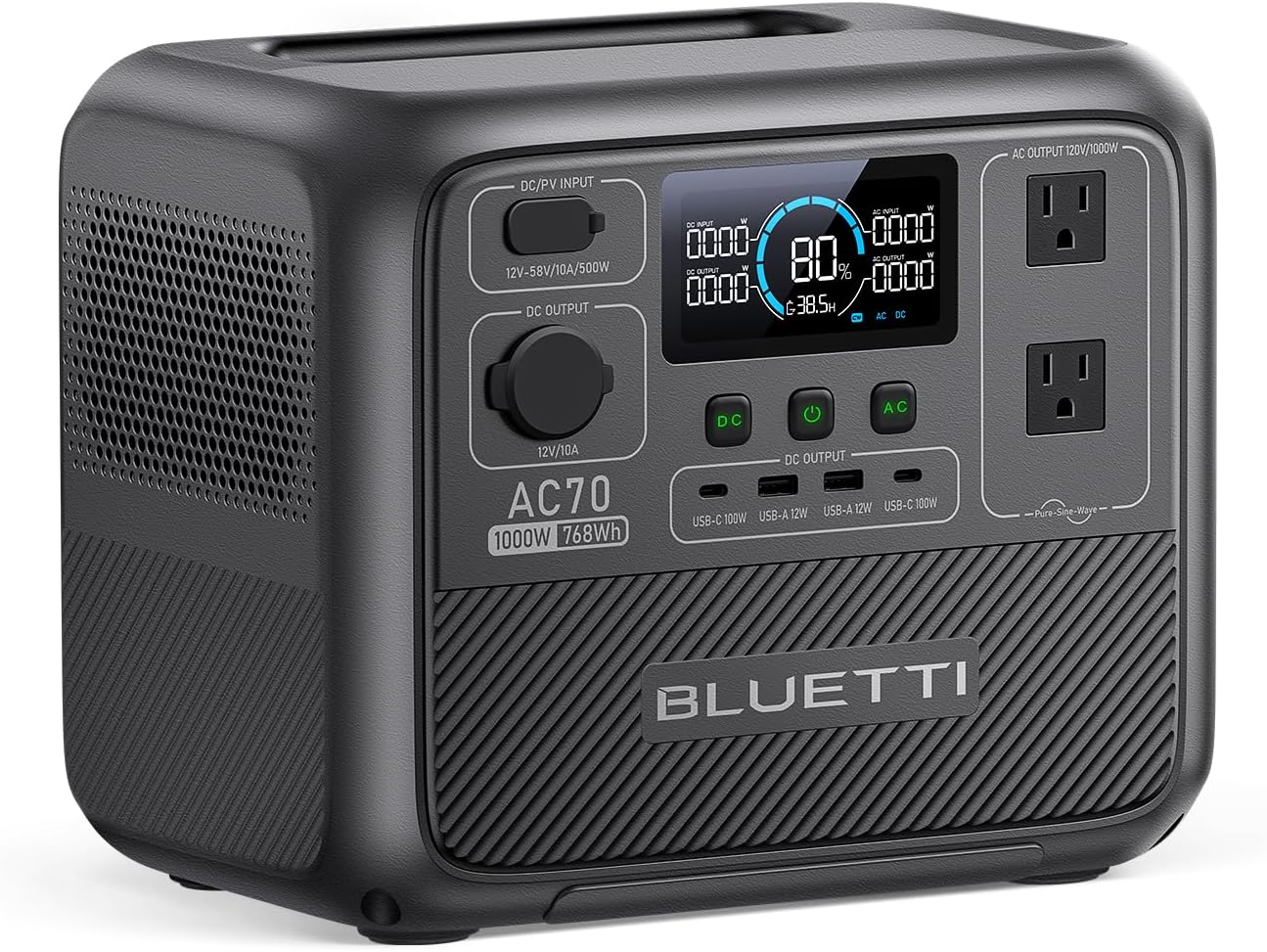
For households with one EV, the practical answer is often: install V2H + a small portable power station for situations when the EV is away. That delivers Powerwall-class capability at lower cost.
What I’d Actually Recommend for Different Situations
You already have an eligible EV and own your home: V2H wins
If you bought an F-150 Lightning, Silverado EV, EV9, or similar in the past 1-2 years, V2H is the obvious upgrade. You’re spending $7,000-10,000 to get 100+ kWh of backup capability plus rate arbitrage. Compared to spending $15,000+ on a Powerwall, V2H is a clear win.
You have a Tesla Model 3/Y from before 2024: Wait or skip
Older Teslas don’t have the bidirectional hardware needed. You’re stuck with non-V2H solutions. A Powerwall or a portable power station system is your path.
You don’t have an EV or have a non-eligible EV: Portable power station
Without a V2H-eligible EV, you’re paying full price for the equipment AND don’t get the EV battery as your storage source. This makes V2H significantly less attractive than the cheaper portable power station + solar option.
You’re shopping for a new EV in 2026: Make V2H a buying criterion
If you’re planning to buy a new EV anyway, the V2H capability adds significant value beyond just the car’s transportation utility. Choosing the F-150 Lightning over a non-V2H truck adds maybe $3,000 effective value (in avoided Powerwall cost) over the truck’s life.
What’s Holding Back Wider V2H Adoption
Three things slow rollout in 2026:
1. Utility interconnection hurdles
Your utility has to approve a V2H system since it could feed power back to the grid. Some utilities have streamlined this; others still treat it like a complex solar interconnection (3-6 months of permits and reviews).
2. Equipment availability
Demand outpaces supply for most V2H equipment. Lead times for Ford Charge Station Pro and GM Energy bundles run 3-6 months as of April 2026.
3. Standardization
CCS is the dominant connector for non-Tesla EVs in 2026, and CCS supports bidirectional power flow. But the protocols, communications, and certifications are still being standardized. Today’s V2H hardware is largely manufacturer-specific (Ford’s only works with Fords, GM’s only works with GMs).
The pending NACS (formerly Tesla connector) standardization should help. By 2027-2028, expect more universal V2H equipment that works across brands.
What V2G Looks Like (Coming Next)
V2G (vehicle-to-grid) is the next step beyond V2H — selling power from your EV to the utility grid during peak demand hours. In 2026, V2G is in pilot programs only (a few utilities in California, Massachusetts, and Texas).
When V2G goes mainstream (2027-2030 expected), the financial case for V2H gets even stronger: in addition to backup power, you can earn $300-1,500/year selling peak power to the grid. Combined with EV ownership being net-cheaper than gas already (see our EV vs. gas cost analysis), the total transportation + energy story becomes very compelling.
The Bottom Line
V2H in 2026 is real, working, and a genuinely good deal for owners of eligible EVs. The technology has matured past the “demo” stage and is now a legitimate alternative to dedicated home batteries — at substantially lower cost.
For non-EV owners or owners of pre-V2H EVs, the technology is interesting but not yet relevant. Stick with a portable power station setup until you next replace your vehicle.
For EV-curious shoppers in 2026, V2H capability is now a real factor in choosing your next vehicle. The right truck or SUV becomes a 100+ kWh home battery on wheels — at a price that beats dedicated home batteries on capacity per dollar by 3-5x.
Related Reading
- EV Charging 101: Beginner’s Guide — fundamentals
- Best Level 2 EV Charger — current home charger picks
- EV Charging Costs vs Gas 2026 — economics
- Power Station vs Whole-Home Battery — alternative backup strategies
- Can a Power Station Charge an EV? — reverse direction
- Best Home Battery Backup Systems — Powerwall and alternatives
Recommended Power Stations
EcoFlow
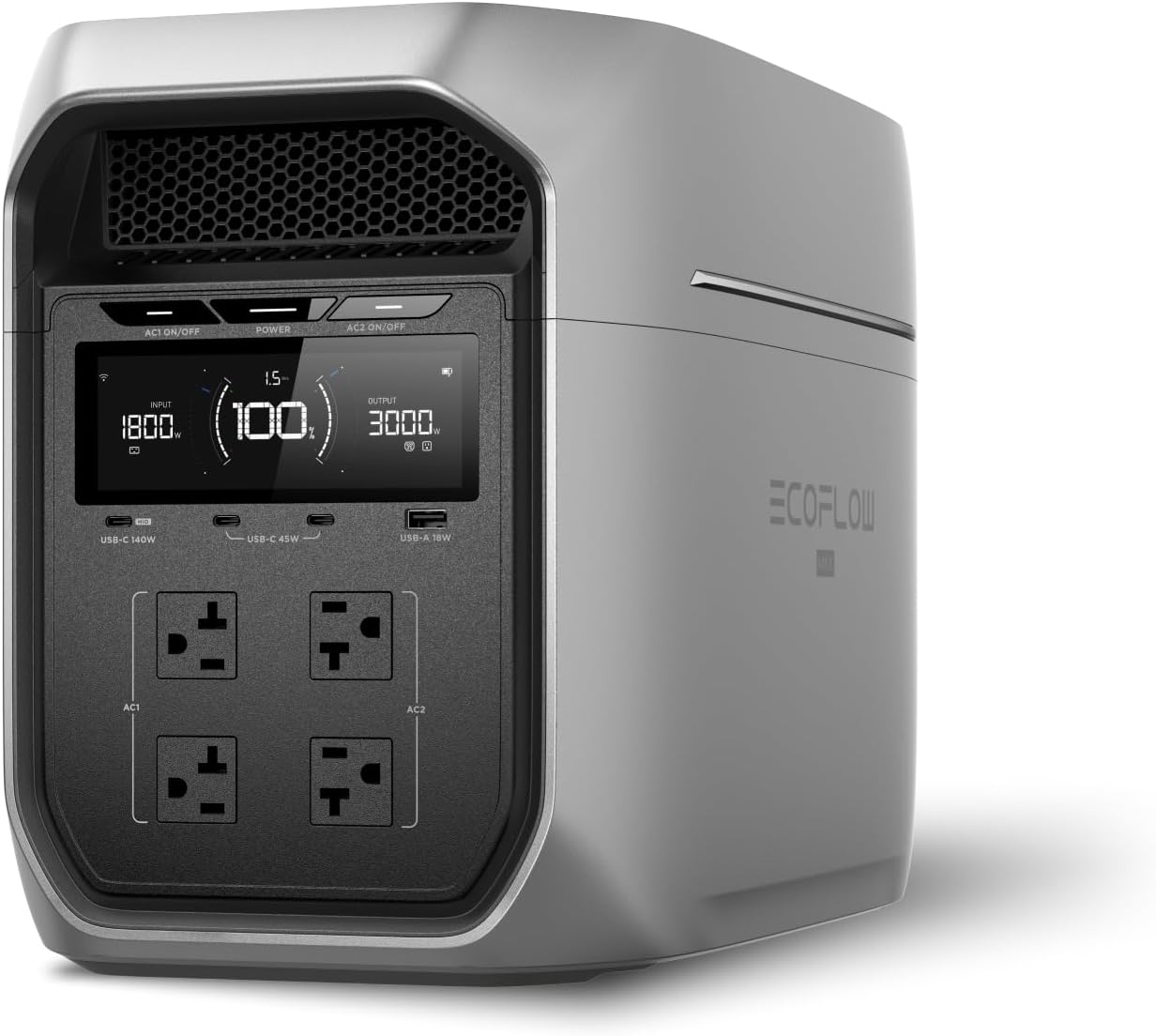
EcoFlow DELTA 3 Plus
EcoFlow's newest mid-range flagship. The DELTA 3 Plus improves on the Delta 2 with faster charging, LiFePO4 chemistry, and UPS functionality — all at a lower price.
Frequently Asked Questions
What is bidirectional EV charging?
Bidirectional charging — also called V2X (vehicle-to-anything), V2H (vehicle-to-home), or V2G (vehicle-to-grid) — lets your EV's battery flow power back out, not just receive it. Your EV becomes a portable battery that can power your home, charge other devices, or feed the grid. A typical EV has 60-100 kWh of battery, equivalent to 5-10 Tesla Powerwalls, making it the largest battery in most households.
Which EVs support V2H in 2026?
As of April 2026, the production EVs with V2H support are: Ford F-150 Lightning (with Ford Charge Station Pro), GM Silverado EV/Hummer EV/Equinox EV (with the GM Energy system), Kia EV9, Hyundai Ioniq 5/6 (limited markets), Lucid Gravity, and Volvo EX90. Tesla announced V2H support for Cybertruck and Powershare-equipped Model Y/3, with broader rollout in 2026. Most new EVs released after mid-2025 include V2H hardware; older models can't be retrofitted.
How much does V2H equipment cost?
The bidirectional charger and home integration hardware ranges from $4,500-8,500 for the equipment alone, plus $1,500-3,500 for installation. Ford's Charge Station Pro setup runs ~$5,000-7,500 installed total. GM Energy's V2H Bundle is $7,500-10,000 installed. Compared to a Tesla Powerwall 3 ($13,000-18,000 installed), V2H is meaningfully cheaper if you already have an eligible EV.
Will V2H wear out my EV battery faster?
Yes, marginally — but the impact is smaller than most people fear. Each V2H discharge cycle counts the same as a normal driving cycle. If you use V2H for 10-20 outage events per year (typical), you're adding 10-20 effective driving cycles to your battery's annual wear — about 5-10% extra. EVs with 1,500-2,000 cycle ratings still have 200,000+ miles of equivalent battery life, so V2H use through normal outages is a non-issue. Heavy daily V2G arbitrage (which doesn't yet exist at scale in the US) would have larger impact.
Ready to Buy? Here's What We Recommend
Based on our testing and this guide, these are the best options for most people: