Buying Guide
Home Battery vs. Generator vs. Power Station: Total Cost of Ownership (2026)

TL;DR
Whole-home batteries, gas and inverter generators, and portable power stations all promise to keep your lights on. But sticker price is a lie. Here's the real 5-year total cost of ownership for each, with fuel, maintenance, lifespan, and tier-by-tier product picks.
Every backup power pitch starts with one number: the sticker price. That number is almost always the least important figure in the decision.
I’ve spent the last several years modeling the real cost of keeping the lights on for my own home, for neighbors who went the Powerwall route, and for clients who asked me to run the math before they spent the money. The pattern is remarkably consistent: the option that looks cheapest on day one is frequently the most expensive by year five, and the option that scares people with its price tag sometimes pays for itself in ways the cheaper options never can.
This is the comprehensive total cost of ownership (TCO) breakdown for the three real choices in 2026: whole-home batteries, gas and inverter generators, and portable power stations. We’ll go category by category, run a true 5-year cost model for each, and finish with specific product picks at every budget tier so you can act on the analysis instead of just admiring it.
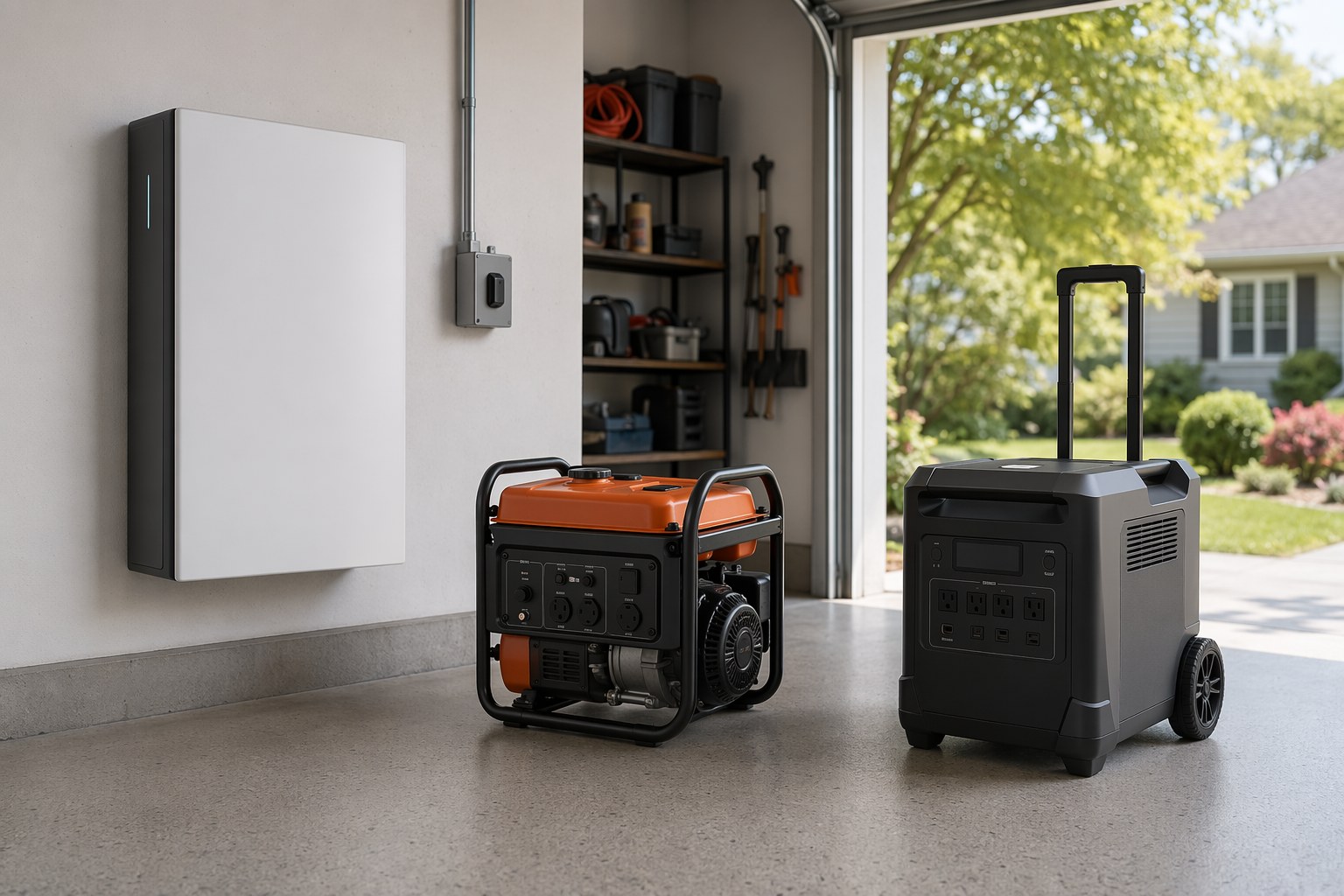
The Three Architectures in One Paragraph Each
Before we touch money, understand what you’re actually comparing. These aren’t three flavors of the same thing — they’re three fundamentally different machines.
A whole-home battery (Tesla Powerwall, Enphase IQ, FranklinWH, or a stacked Bluetti AC500 system) is a permanent, wall-mounted lithium battery hard-wired into your electrical panel. It switches over automatically in under 100 milliseconds, integrates with rooftop solar, and can arbitrage time-of-use electricity rates. It is the most capable and by far the most expensive option.
A generator burns fuel — gasoline, propane, or both — to produce electricity on demand. As long as you feed it, it runs forever. It’s loud, it emits carbon monoxide so it can never run indoors, and it requires real ongoing maintenance. But its runtime is effectively unlimited, which is something no battery can claim.
A portable power station is a self-contained box holding a battery, an inverter, and a charge controller. You charge it from the wall, your car, or solar panels; it powers your gear silently and emission-free; and when it’s empty you recharge it. It’s the most flexible option and, as we’ll see, often the cheapest to actually own. If you’re new to the category, our first-time power station buyer quick start covers the fundamentals before you spend.
How to Actually Calculate Total Cost of Ownership
TCO is just the sum of every dollar a device costs you across its useful life, divided by the value you get from it. For backup power, four buckets matter.
- Upfront cost — purchase price plus any installation (transfer switch, electrician, mounting, permits).
- Operating cost — fuel for generators, electricity for recharging batteries. This is where the surprises live.
- Maintenance cost — oil, filters, spark plugs, stabilizer, and battery replacements over time.
- Lifespan — how many years the asset serves before you replace it. A device that costs twice as much but lasts three times as long is cheaper per year.
The mistake almost everyone makes is comparing only the first bucket. A $600 generator and a $1,000 power station look like the generator wins by $400. Run all four buckets across five years and the ranking frequently flips.

Category 1: Portable Power Stations
Upfront cost
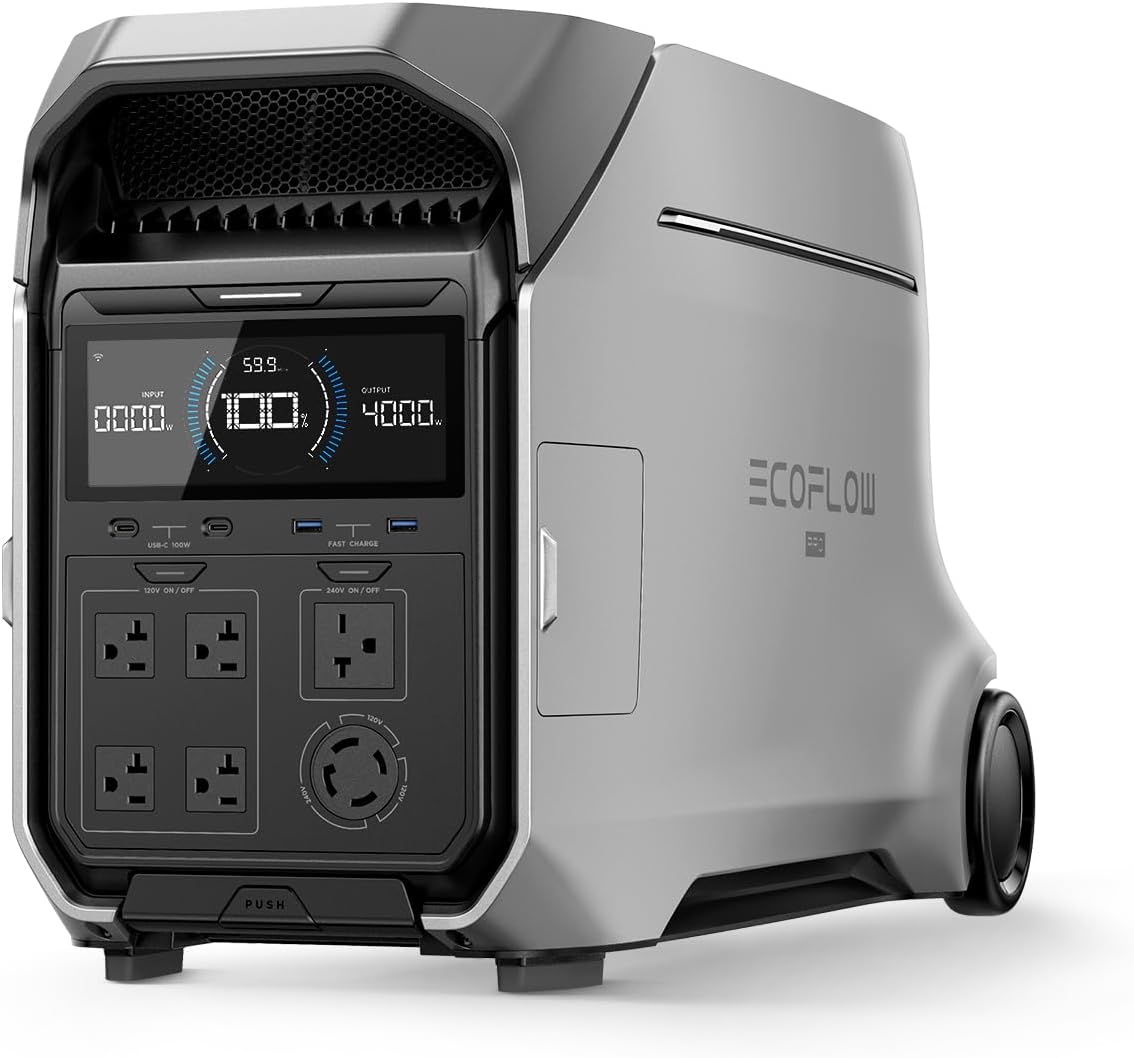
A capable home-backup-grade power station runs $700-2,500. A 1,000Wh unit like the Anker SOLIX C1000 sits around $700-900. Step up to a 2,000Wh unit such as the Jackery Explorer 2000 v2 and you’re at $1,200-1,500. The expandable flagship EcoFlow DELTA Pro 3 (4,096Wh, expandable to ~48kWh) anchors the top at ~$2,000 before expansion batteries.
Installation cost is usually zero — you plug into the wall and run extension cords. If you want partial-home automation, add a manual transfer switch (~$300 in hardware plus $800-1,200 for an electrician), but that’s optional. See our manual transfer switch installation guide if you go that route.
Operating cost
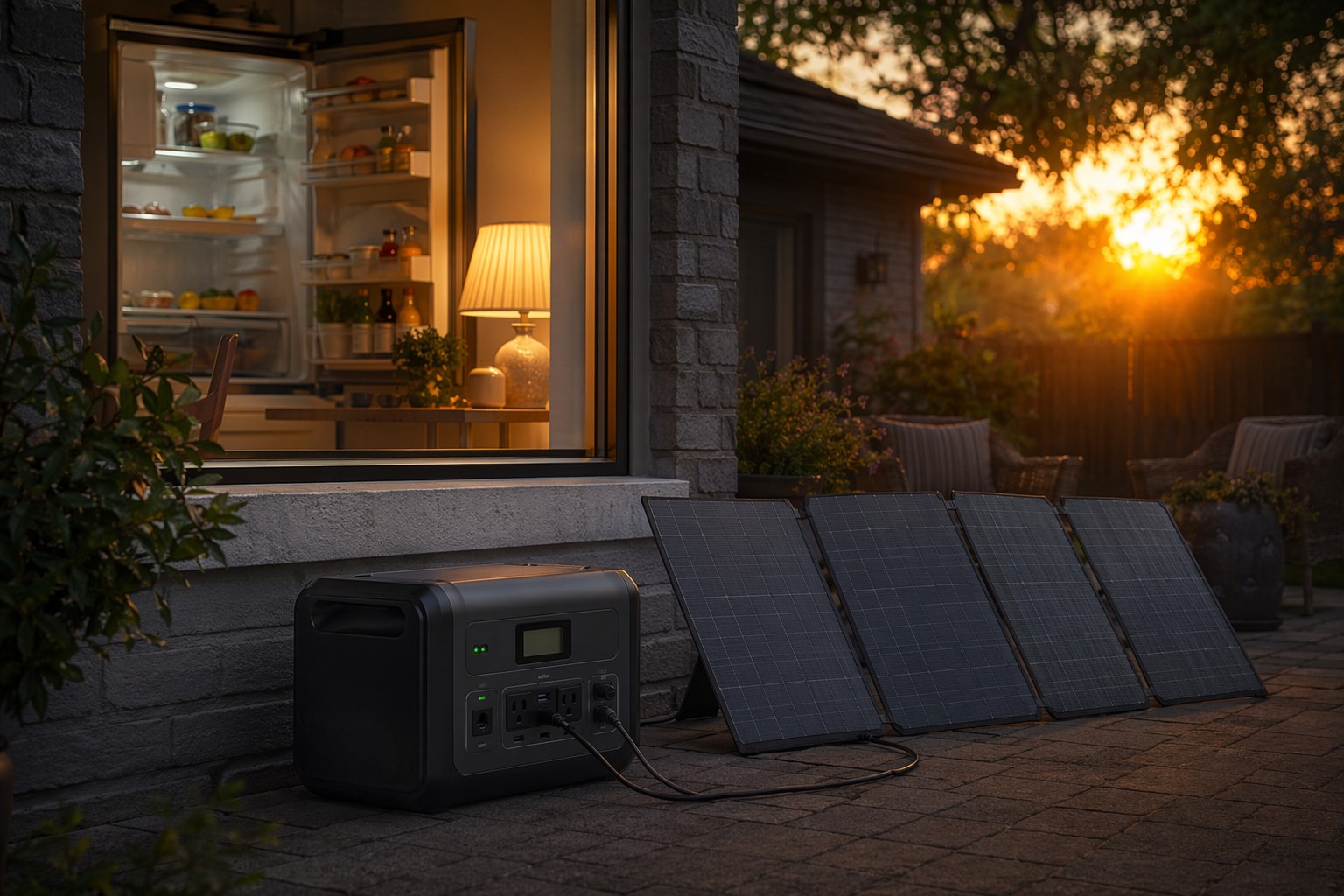
This is the power station’s quiet superpower. Recharging a 1,000Wh unit from the wall costs roughly $0.15-0.25 in electricity. Even if you cycle it fully once a week for backup drills and outdoor use, that’s about $10-13 per year. Pair it with a folding solar panel like the Jackery SolarSaga 200W and your marginal operating cost during a multi-day outage drops to literally zero. Our guide to charging a power station with solar walks through real-world recharge times.
Maintenance and lifespan
Effectively nothing. No oil, no filters, no fuel to stabilize, no engine to seize. The LiFePO4 cells in 2026 units are rated for 3,000-6,000 cycles to 80% capacity — practically a decade-plus of service. This is the bucket where power stations crush generators: a 10-year asset with near-zero upkeep.
5-year TCO
A $1,000 power station, recharged regularly, lands at roughly $1,050-1,150 all-in over 5 years — and you still own a working unit with 5-10 years of life left in it.
Category 2: Generators
Upfront cost
This is where generators look unbeatable, and why so many buyers stop reading here. A quiet, electronics-safe inverter generator like the Honda EU2200i runs $1,000-1,200, while value champions like the Westinghouse iGen2200 sit at $500-600. Want unlimited runtime and propane flexibility? The Champion 4500W dual-fuel inverter is around $900-1,000 and can run your whole essential-loads panel.
Operating cost
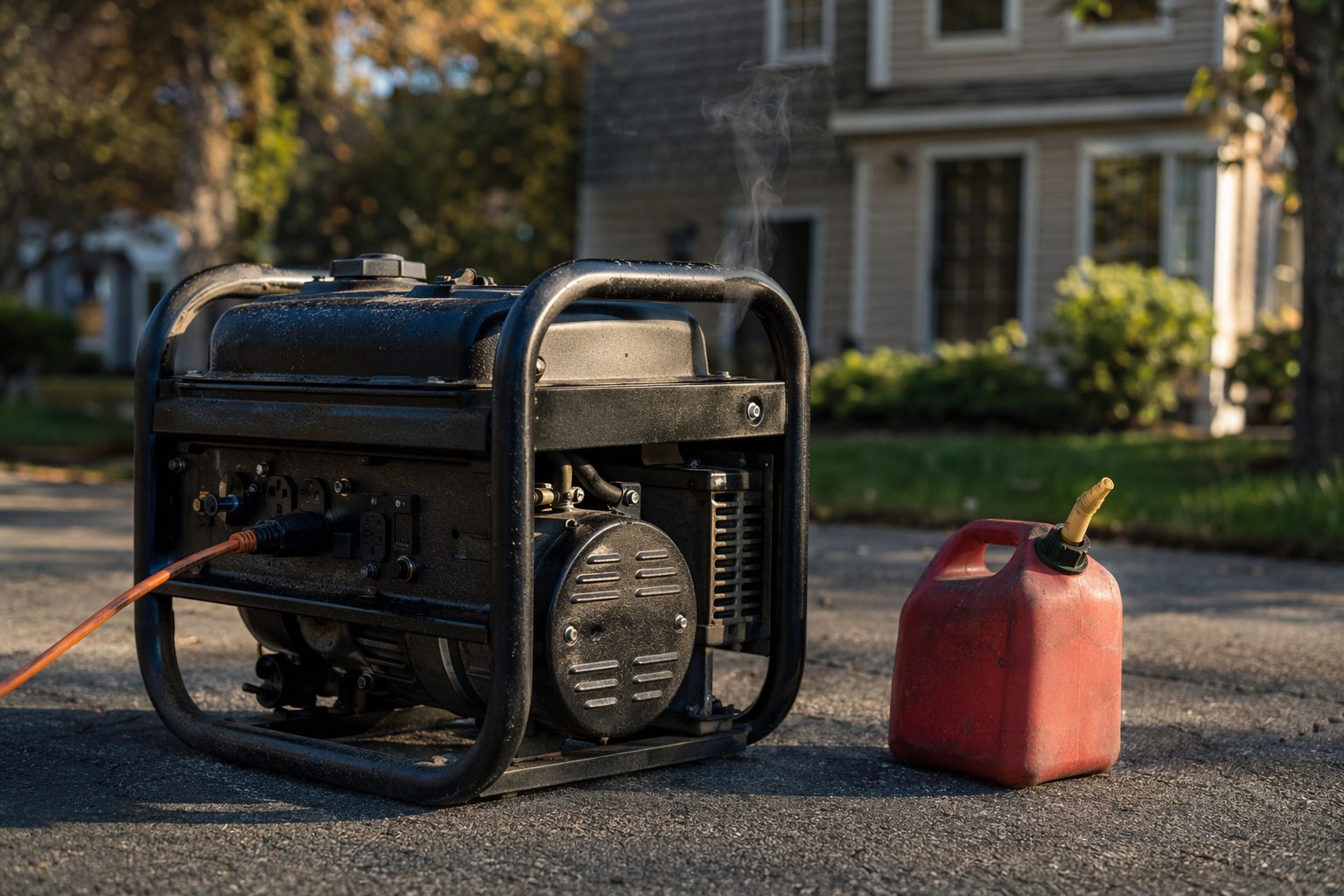
Here come the surprises. A 2,200W inverter generator burns roughly a gallon every 8-10 hours at quarter load. At $3.50-4.50/gallon, that’s about $0.40-0.55 per hour. A single 3-day outage running 8 hours a day burns ~3 gallons/day — call it $30-40 per outage event. Households that run a generator regularly for outages, job sites, or RV use can easily put 100-300 hours/year on it, which is $50-150/year in fuel alone.
Maintenance and lifespan
Generators are engines, and engines need care. Budget oil changes every 50-100 hours ($10-15 each), air filters and spark plugs ($20-30/year), and fuel stabilizer if it sits ($15/year). Critically, stale fuel is the number one reason generators fail to start in an emergency — so even a generator you never run still costs you fresh fuel and stabilizer every few months. A well-maintained inverter generator lasts 10-15 years; a neglected one can be dead in three.
5-year TCO
A $600 inverter generator used moderately (100 hours/year) climbs to roughly $1,400-2,200 over 5 years once you stack fuel, oil, filters, and stabilizer on top. The cheap sticker price is real — the cheap ownership cost is not.
Category 3: Whole-Home Batteries
Upfront cost
There’s no soft way to say it: a whole-home battery is expensive. A Tesla Powerwall 3 (13.5kWh) runs $13,000-15,000 installed; Enphase and FranklinWH systems are similar. A stacked portable-class system like the Bluetti AC500 with a B300K battery (5kWh and expandable) gives you a hybrid path at $3,000-4,000 — more than a power station, far less than a Powerwall, and movable. We break this comparison down further in power station vs. whole-home battery.
Operating cost
Essentially zero to recharge — and this is the only category that can run negative. If you have rooftop solar, a whole-home battery captures daytime production for nighttime use, saving $800-1,500/year in avoided grid purchases. With time-of-use rate arbitrage (charge off-peak, discharge on-peak), tack on another $400-1,200/year. This is the one architecture that can pay you back.
Maintenance and lifespan
Minimal maintenance, long life — typically 10-15 year warranties with 70% capacity retention. The catch is that the asset is bolted to your house; it doesn’t travel and generally stays with the home if you move.
5-year TCO
Pure backup-only math is brutal: $13,000-20,000 over 5 years with little operating offset. But add solar self-consumption and TOU arbitrage and the effective TCO can drop dramatically — in high-rate states the system can be cash-flow neutral or better. It’s the most expensive box and the only one that can become an investment.
The Head-to-Head TCO Table
Here’s the consolidated 5-year picture for a representative mid-tier unit in each category, sized for “essential loads” home backup (fridge, lights, internet, devices, intermittent small appliances).
| Factor | Power Station (1-2kWh) | Inverter Generator (2-4kW) | Whole-Home Battery (13kWh) |
|---|---|---|---|
| Upfront (incl. install) | $700-1,500 | $500-1,200 | $13,000-15,000 |
| Annual fuel/electric | $10-15 | $50-150 | ~$0 (or negative w/ solar) |
| Annual maintenance | ~$0 | $45-60 | ~$0 |
| Useful lifespan | 10-15 yrs | 10-15 yrs (if maintained) | 10-15 yrs |
| Indoor-safe | Yes | Never (CO risk) | Yes |
| Noise | 25-45 dB | 55-70+ dB | Silent |
| Runtime | Battery-limited | Unlimited w/ fuel | Battery-limited |
| 5-year TCO (backup-only) | $1,050-1,650 | $1,400-2,200 | $13,000-20,000 |
| Can pay you back? | No | No | Yes (solar/TOU) |
Two things jump out. First, the power station and the budget generator end up close on five-year cost, but the power station wins on safety, noise, and reliability-when-idle. Second, the whole-home battery is in a different universe on cost — justified only by solar, TOU rates, or genuinely frequent multi-day outages.
The Decision Framework
Run your situation through these five questions, in order. The first one that gives you a hard answer is your answer.
- Do you need indoor or apartment power? If a generator can’t safely run at your property, you’re choosing between a power station and a whole-home battery. Our power station guide for apartment dwellers covers this case in depth.
- Do you already have (or plan to add) rooftop solar with TOU rates? If yes, a whole-home battery is the only option that can pay for itself. If no, its financial case collapses to “expensive convenience.”
- How long are your typical outages? Under 12 hours: a power station handles it easily. Multi-day, repeatedly: a generator’s unlimited runtime — or a battery-plus-solar combo — earns its keep. See how long power stations last.
- What’s your highest-draw load? Phones, fridge, router, lights: any power station works. Well pump, central AC, electric dryer: you need a generator or a flagship/expandable battery. Run your numbers with how to size a power station.
- How often will you actually use it, and where will you store fuel? Rare-use buyers should lean toward a power station — a generator that sits is a generator that won’t start.
My Recommended Picks by Tier
Entry tier (~$700-900): cover the essentials, store it in a closet
The Anker SOLIX C1000 is the smartest first purchase for most homes. 1,000Wh, a 1,800W inverter (2,400W with surge tech), LiFePO4 cells, and a sub-60-minute recharge. It runs a fridge, router, and lights through a typical outage, doubles as camping and tailgating power, and has zero standby cost. This is the lowest-TCO entry point in the entire comparison.
Mid tier (~$1,000-1,500): real essential-loads backup
Two ways to go. For pure quiet, indoor-safe battery backup, the Jackery Explorer 2000 v2 doubles your capacity to ~2kWh and a 2,200W output, comfortably running essentials for a full day. If you anticipate multi-day outages and have outdoor space, the Champion 4500W dual-fuel inverter gives you unlimited runtime and the propane option that solves fuel shelf-life. The best-of-both-worlds buyers run a smaller power station and this generator — see the best power station and generator combo for outages.
Premium tier (~$2,000-4,000): whole-home-lite, expandable
The EcoFlow DELTA Pro 3 is the bridge between portable and whole-home. 4,096Wh base, a 4,000W inverter that handles 240V loads, and expandability to ~48kWh. Wire it to a transfer switch and you’ve replicated 80-90% of a Powerwall’s practical backup capability for a fifth of the cost — and you can take it camping. Pair it with the stackable Bluetti AC500 + B300K if you want a second expandable platform. For the genuine whole-home, automatic, solar-integrated experience, that’s when you step up to a Powerwall-class install — covered in our best home battery backup systems guide.
Frequently Asked Questions
Should I buy the biggest unit I can afford? No. Size to your actual essential loads plus ~25% headroom. Oversizing wastes money you could spend on a solar panel or a transfer switch that adds more real-world value. Run the numbers first.
Can I combine categories? Yes, and it’s often the smartest play. A power station for quiet overnight and indoor use, plus a generator for unlimited daytime runtime, covers nearly every scenario. The generator can even recharge the power station during its operating hours.
Will prices drop if I wait? LiFePO4 power station pricing has softened steadily, and major sales (Memorial Day, Prime Day, Black Friday) routinely cut 20-35% off flagships. If you’re not in immediate need, timing a purchase to a sale meaningfully improves your TCO.
The Bottom Line
Sticker price ranks the options exactly backwards. On true five-year cost of ownership, a quality portable power station is the lowest-cost, lowest-hassle choice for the majority of households — silent, indoor-safe, maintenance-free, and nearly free to operate. A generator earns its place only when runtime is unlimited and the budget is tight up front, and even then the fuel-and-maintenance tail erodes its head start. A whole-home battery is the most expensive box you can buy and the only one that can pay you back — but exclusively if you have solar, TOU rates, or relentless multi-day outages.
Decide on your most likely scenario, not your worst nightmare. Then run the four-bucket math before you run to checkout. If you want help pinning down your real load, start with how much power your home actually uses and let the numbers — not the sticker — make the call.
Recommended Power Stations
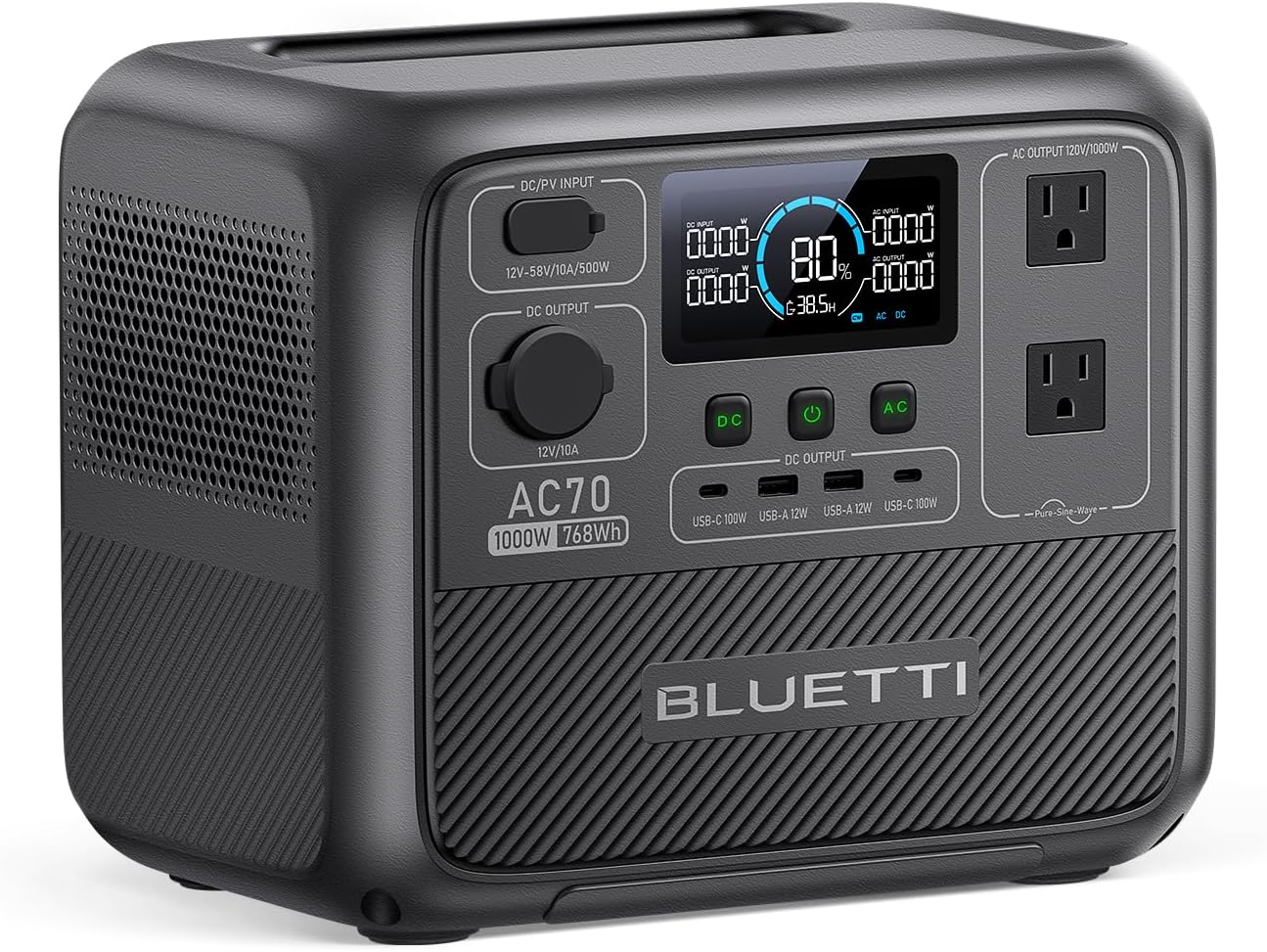
EcoFlow
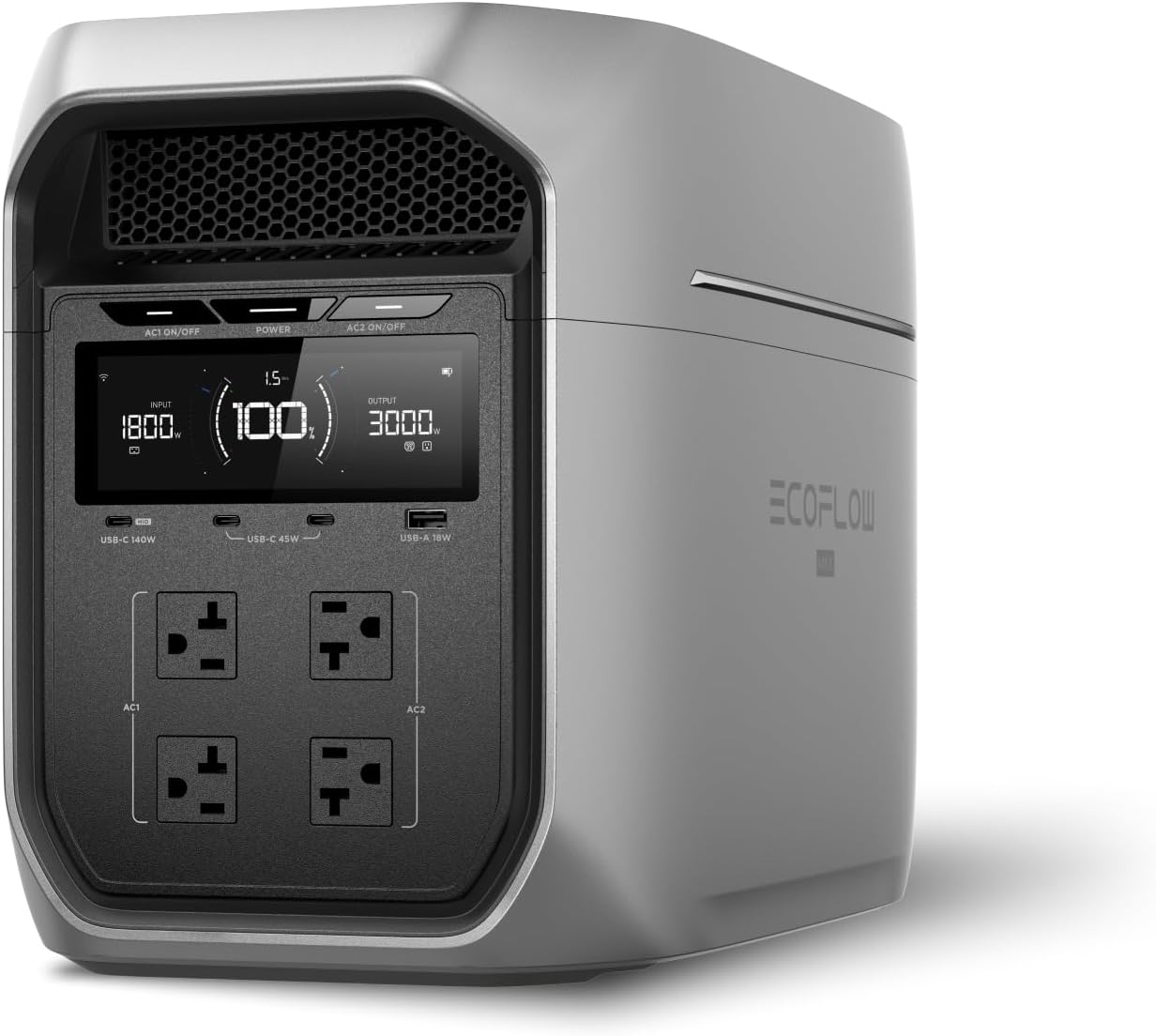
EcoFlow DELTA 3 Plus
EcoFlow's newest mid-range flagship. The DELTA 3 Plus improves on the Delta 2 with faster charging, LiFePO4 chemistry, and UPS functionality — all at a lower price.
Frequently Asked Questions
Which backup power option has the lowest total cost of ownership over 5 years?
For most households, a mid-size portable power station has the lowest 5-year total cost of ownership when you account for fuel and maintenance. A $1,000 power station with near-zero operating cost typically lands around $1,050-1,150 all-in over 5 years. A $600 inverter generator can climb to $1,400-2,200 once you add 100-300 hours of fuel, oil, and stabilizer. A whole-home battery has by far the highest TCO ($13,000-20,000) but adds value generators and power stations can't match if you have solar or time-of-use rates.
Do power station batteries really last 10 years?
The LiFePO4 (lithium iron phosphate) batteries in nearly every 2026 power station are rated for 3,000-6,000 full charge cycles to 80% capacity. If you cycle a unit fully once a week, 3,000 cycles is roughly 57 years of calendar life — you'll replace the unit for other reasons (capacity creep, port standards) long before the cells die. Realistically, budget for a 10-15 year service life, which is why power stations spread their upfront cost so thinly in TCO math.
Is a generator cheaper than a power station if I only use it for rare outages?
Surprisingly, often no. A generator that sits unused still costs you money: fuel goes stale in 3-6 months without stabilizer, carburetors gum up, and the number one reason generators fail in an emergency is old fuel. You'll spend $40-80/year on fresh fuel, stabilizer, and oil whether you run it or not, plus the risk of a no-start when you need it. A power station has zero standby cost beyond a recharge every few months, so for rare-use buyers it frequently wins on both TCO and reliability.
Ready to Buy? Here's What We Recommend
Based on our testing and this guide, these are the best options for most people: