Guide
How Much Power Does Your Home Actually Use? A Room-by-Room Breakdown

TL;DR
A room-by-room breakdown of home electricity usage, from kitchen appliances to HVAC. Learn your actual daily power consumption and how to size a power station for outages.
The average American home uses about 30 kWh of electricity per day. That’s roughly 900 kWh per month and 10,800 kWh per year. But that top-line number hides the real story: where that power actually goes varies dramatically room by room, and understanding the breakdown changes how you think about backup power.
Here’s what every room in your home actually consumes — and what it means for sizing a power station or backup system.
The Full House: Average Daily Breakdown
Before diving room by room, here’s the big picture. A typical US home’s 30 kWh daily consumption breaks down roughly like this:
- HVAC (heating/cooling): 40-50% (~12-15 kWh/day)
- Kitchen appliances: 15-20% (~5-6 kWh/day)
- Water heating: 10-15% (~3-4 kWh/day)
- Laundry: 5-10% (~2-3 kWh/day)
- Lighting: 5-10% (~2-3 kWh/day)
- Electronics/entertainment: 5-10% (~2-3 kWh/day)
- Other (garage, outdoor, misc): 5% (~1-2 kWh/day)
Now let’s break it down by room.
Kitchen
The kitchen is the second-biggest energy consumer after HVAC, and most of the draw comes in short, intense bursts.
| Appliance | Wattage | Typical Daily Use | Daily Wh |
|---|---|---|---|
| Refrigerator | 150W avg (compressor cycles) | 24 hrs (continuous) | 3,600Wh |
| Microwave | 1,000-1,200W | 15 min | 250-300Wh |
| Dishwasher | 1,800W | 1 hour (1 cycle) | 1,800Wh |
| Coffee maker | 900W | 10 min | 150Wh |
| Toaster | 850W | 5 min | 70Wh |
| Oven/range (electric) | 2,000-5,000W | 30 min | 1,500Wh |
Key insight: The fridge is the only kitchen appliance that runs continuously, but its average draw is modest — around 150W because the compressor cycles on and off. A modern Energy Star fridge uses about 1.5-2 kWh per day, not the 3.6 kWh the raw wattage suggests. This matters hugely for power station sizing during outages.
Living Room
Entertainment electronics draw less than most people expect. The real surprise is how little a modern TV uses.
| Appliance | Wattage | Typical Daily Use | Daily Wh |
|---|---|---|---|
| LED TV (55”) | 80-100W | 4 hrs | 320-400Wh |
| Gaming console | 150-200W | 2 hrs | 300-400Wh |
| Streaming device | 5-10W | 4 hrs | 20-40Wh |
| Wi-Fi router | 12W | 24 hrs | 288Wh |
| Sound bar | 30W | 4 hrs | 120Wh |
| LED lamp (2 bulbs) | 20W | 5 hrs | 100Wh |
Key insight: Your Wi-Fi router is one of the lowest-draw devices in your home, but it runs 24/7. During an outage, keeping the router alive costs almost nothing in power station capacity — about 288Wh per day. That’s trivial for even a small station.
Bedroom
The bedroom is where power stations shine during outages because the loads are tiny.
| Appliance | Wattage | Typical Nightly Use | Nightly Wh |
|---|---|---|---|
| CPAP machine | 30-60W | 8 hrs | 240-480Wh |
| Phone charging | 15W | 2-3 hrs | 30-45Wh |
| Tablet charging | 15W | 2 hrs | 30Wh |
| Bedside fan | 45W | 8 hrs | 360Wh |
| LED lamp | 10W | 2 hrs | 20Wh |
Key insight: A CPAP machine is the most critical overnight load for millions of Americans, and it’s one of the easiest to power with a portable station. At 30-60W, even a small 300Wh power station runs a CPAP all night. See our best power station for CPAP guide for specific recommendations.
Home Office
Remote work has made the home office a significant daily load — but still quite manageable.
| Appliance | Wattage | Typical Daily Use | Daily Wh |
|---|---|---|---|
| Desktop PC | 200-400W | 8 hrs | 1,600-3,200Wh |
| Laptop | 50-80W | 8 hrs | 400-640Wh |
| Monitor (27”) | 25-40W | 8 hrs | 200-320Wh |
| Wi-Fi router/modem | 12-20W | 24 hrs | 288-480Wh |
| Desk lamp (LED) | 10W | 8 hrs | 80Wh |
| Phone charger | 15W | 2 hrs | 30Wh |
Key insight: Laptops use 3-5x less power than desktop PCs. During an outage, switching to a laptop (with its own battery) plus a monitor extends your power station runtime dramatically. A 1,000Wh power station with UPS can keep a laptop-based home office running for a full workday.
Laundry Room
Laundry is an energy hog, but it’s also intermittent — you’re not running it 24/7.
| Appliance | Wattage | Per Load | Wh Per Load |
|---|---|---|---|
| Washing machine | 500W | 1 hr | 500Wh |
| Electric dryer | 3,000-5,000W | 1 hr | 3,000-5,000Wh |
| Gas dryer (motor/controls) | 300-600W | 1 hr | 300-600Wh |
Key insight: The electric dryer is one of the biggest single loads in your home. It draws 3,000-5,000W — well beyond what most portable power stations can handle. This is why generators remain essential for certain appliances. A gas dryer, however, only uses electricity for the motor and controls, drawing a much more manageable 300-600W.
HVAC
Heating and cooling dominate your electricity bill and are the primary reason you can’t run your whole house on a power station.
| System | Wattage | Daily Use (Active Season) | Daily Wh |
|---|---|---|---|
| Central AC | 3,000-5,000W | 6-10 hrs (cycling) | 10,000-25,000Wh |
| Furnace blower | 500W | 8-12 hrs (cycling) | 2,000-3,000Wh |
| Space heater | 1,500W | 4-8 hrs | 6,000-12,000Wh |
| Window AC unit | 500-1,500W | 6-8 hrs | 3,000-12,000Wh |
| Ceiling fan | 60W | 8 hrs | 480Wh |
| Portable fan | 45W | 8 hrs | 360Wh |
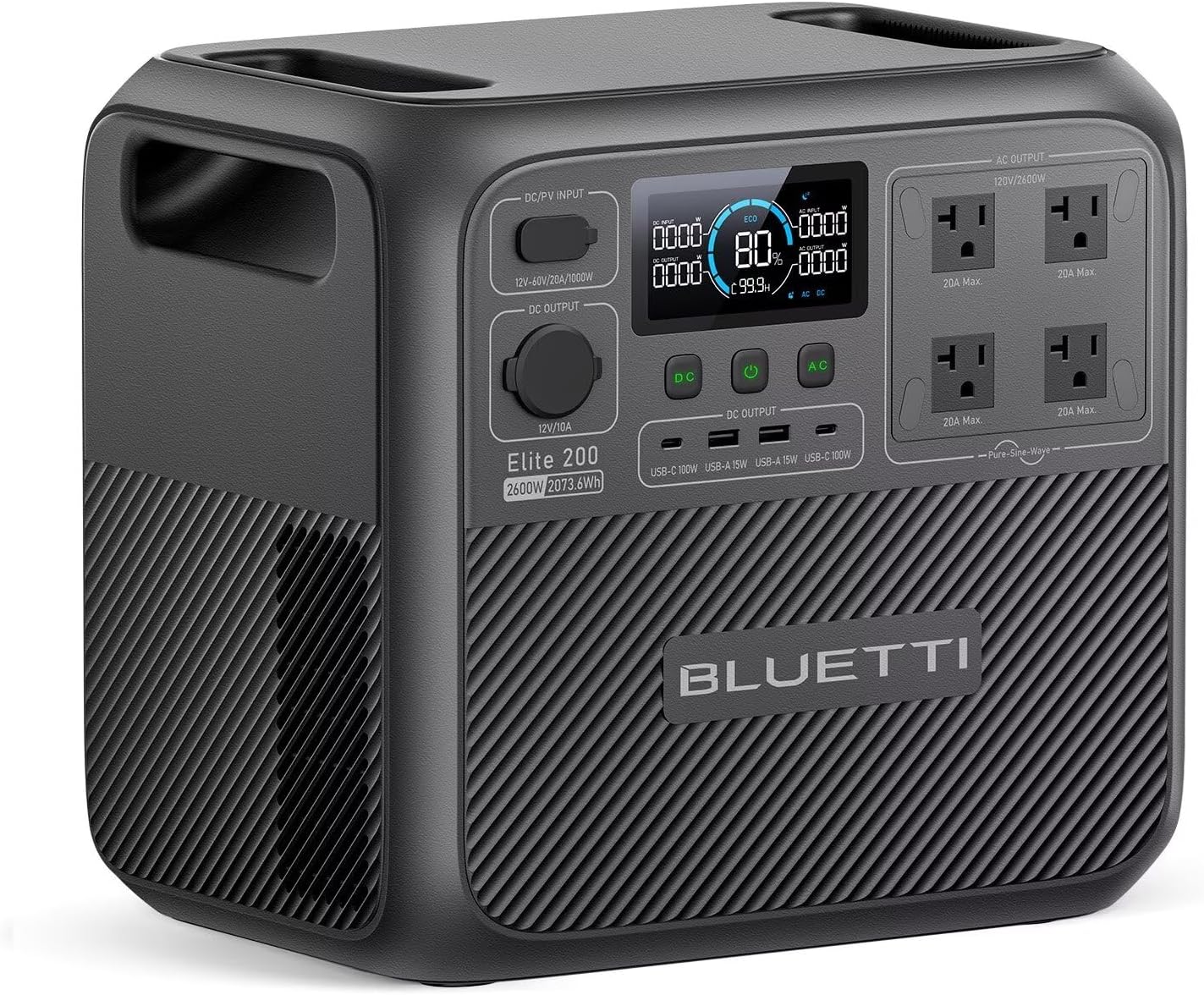
Key insight: Central AC alone can use 10-25 kWh per day — nearly your entire home’s daily average. This is why powering your whole house during an outage is impractical with a portable power station. But a window AC or space heater in one room? A 2,000Wh+ station like the Bluetti Elite 200 V2 can handle that for several hours.
What This Means for Power Station Sizing
Here’s the practical takeaway: during an outage, you don’t need to power your whole house. You need to power essentials. And essentials use far less than 30 kWh per day.
Essential outage loads (typical household):
| Load | Wattage | Hours | Wh Needed |
|---|---|---|---|
| Refrigerator | 150W avg | 12 hrs | 1,800Wh |
| LED lights (3-5 bulbs) | 30-50W | 6 hrs | 180-300Wh |
| Phone charging (2 phones) | 30W | 3 hrs | 90Wh |
| Wi-Fi router | 12W | 12 hrs | 144Wh |
| CPAP machine | 30W | 8 hrs | 240Wh |
| Total | ~2,450Wh |
That’s roughly 2,000-2,500Wh for 12 hours of essential power. A 1,000Wh power station covers the non-fridge essentials for a full night. A 2,000Wh station covers everything, including the fridge, through a typical 8-12 hour outage.
For help figuring out your specific needs, use our Power Station Calculator — input your devices, their wattages, and how long you need to run them, and it’ll tell you exactly what capacity to buy.
Bottom Line
Your home uses roughly 30 kWh per day, but you only need 2-3 kWh to keep essentials running during an outage. That gap is why a $500-1,000 power station is a practical backup solution for most households — you’re not trying to replace the grid, just bridge the gap until it comes back.
Check our best power stations for home backup to find the right size for your household, and read our guide on how to size a power station for a step-by-step walkthrough.
Recommended Power Stations
EcoFlow
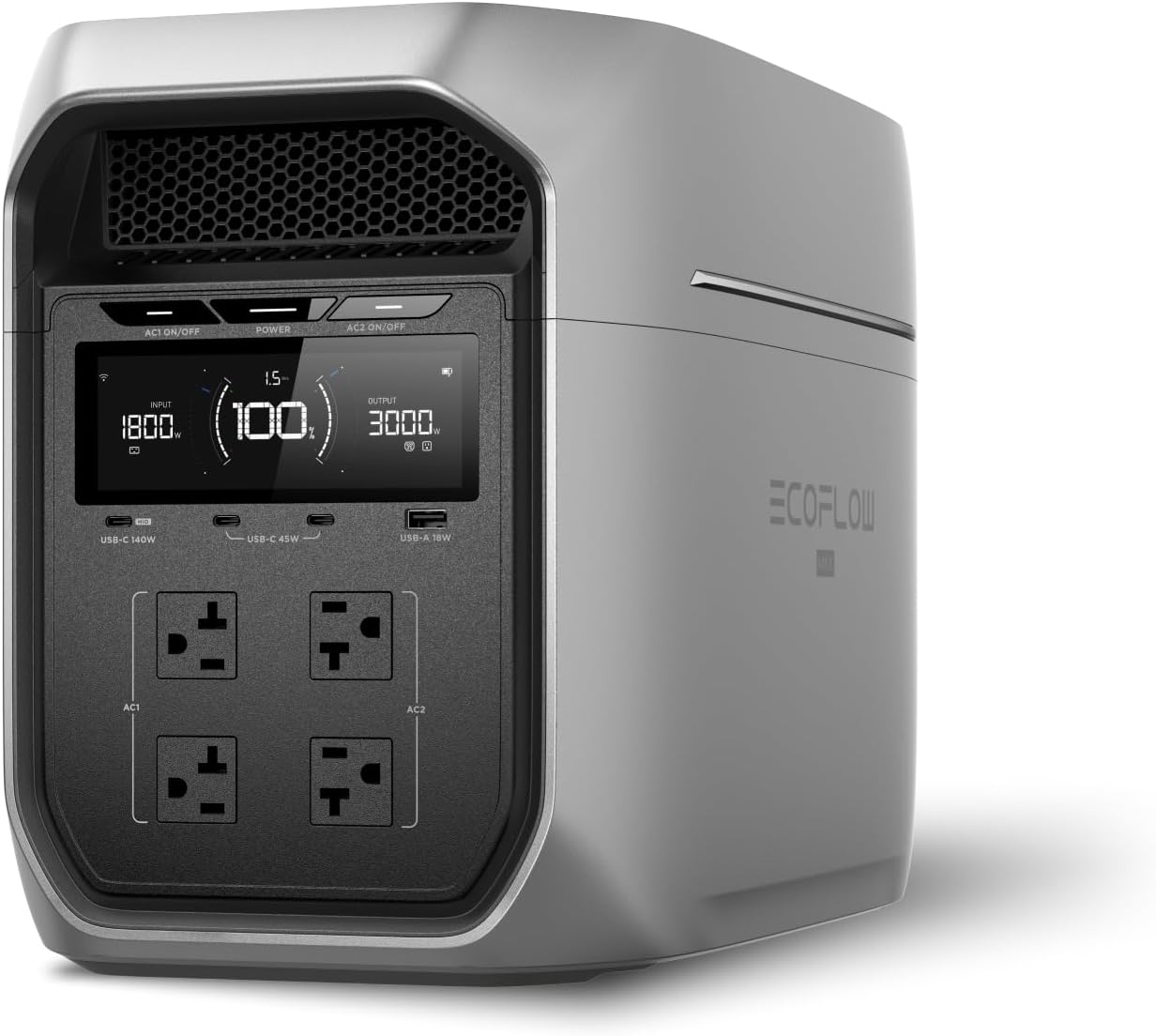
EcoFlow DELTA 3 Plus
EcoFlow's newest mid-range flagship. The DELTA 3 Plus improves on the Delta 2 with faster charging, LiFePO4 chemistry, and UPS functionality — all at a lower price.
Frequently Asked Questions
How much electricity does the average US home use per day?
The average US household uses approximately 30 kWh per day, or about 900 kWh per month. This varies significantly by region — Southern states average higher (35-40 kWh/day) due to air conditioning, while milder climates use less (20-25 kWh/day). Your actual usage depends on home size, appliances, climate, and habits.
What appliance uses the most electricity in a home?
HVAC (heating and cooling) dominates home electricity use, accounting for roughly 40-50% of total consumption. A central air conditioner draws 3,000-5,000W while running, and in hot climates, it runs for hours per day. After HVAC, the next biggest consumers are the electric dryer (3,000W), water heater (if electric, 4,500W), and oven/range (2,000-5,000W).
How big of a power station do I need to power my house during an outage?
You don't need to power your whole house — just the essentials. A fridge (150W), LED lights (50W), phone charging (15W), Wi-Fi router (12W), and a CPAP (30W) total roughly 260W continuous draw, consuming about 2,000-3,000Wh over 8-12 hours. A 1,000-2,000Wh power station handles most outages comfortably. Use our Power Station Calculator for a personalized estimate.
Ready to Buy? Here's What We Recommend
Based on our testing and this guide, these are the best options for most people: